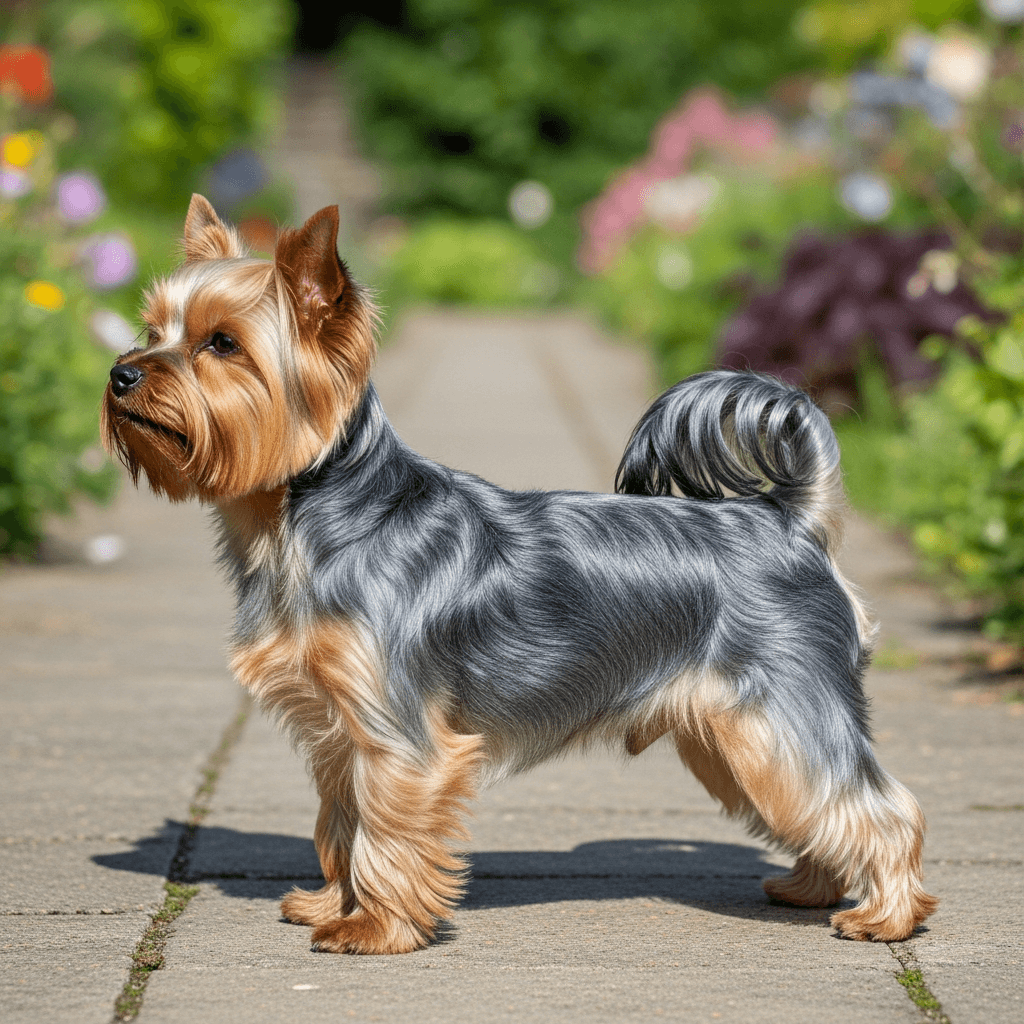
Yorkshire Terrier
FCI Group
3• FCI 86
Size
Small
Origin Country
GB
Height
15-25 cm
Weight
1.8-3.2 kg
Lifespan
12-17 years
Temperament
Overview
The Yorkshire Terrier, commonly known as the Yorkie, is a charming and energetic companion dog that has captured the hearts of dog lovers around the world. Its history dates back to the mid-19th century in northern England, where workers in the textile industry initially bred it for hunting rats and mice in factories and mines. Thanks to its extraordinary charm, silky coat, and friendly nature, the Yorkshire Terrier quickly became one of the most popular companion dogs in the world.
What sets the Yorkshire Terrier apart from other breeds? First and foremost, its long, shiny coat in a dark blue color with intense golden shades, which falls straight and evenly on both sides of the body, creating a distinctive part from the nose to the tip of the tail. This unique feature makes Yorkies incredibly visually appealing and they often appear at dog shows. Their height ranges from 15 to 25 cm, and their weight does not exceed 3.2 kg, making them ideal for living in smaller spaces, such as urban apartments.
Despite their small size, Yorkies possess a strong terrier personality and immense energy, which makes them excellent companions for active families. Their character combines intelligence, courage, and independence, although they are also very loyal and deeply attached to their owners. Their small, V-shaped erect ears and dark, shiny eyes give them a lively and intelligent expression that attracts attention.
Yorkshire Terriers have retained their hunting instinct, which can lead to chasing small animals or toys around the house. They are also excellent watchdogs, ready to alert their owners to any unfamiliar sounds or movements. Despite their small size, they do not hesitate to stand up for their territory.
If you decide to get a Yorkshire Terrier, it is important to remember a few key aspects of care. They require regular and careful grooming to keep their coat in top condition – daily brushing is a minimum. Additionally, they need an appropriate level of physical activity and mental stimulation to prevent behavioral issues such as excessive barking or destructive behaviors.
Yorkies do well in the company of other pets, provided they are properly socialized from puppyhood. They can be calm companions for older individuals and families with children who know how to respect and handle them gently. Their longevity, ranging from 12 to 17 years, makes them a long-term commitment that requires consistent care and attention.
The Yorkshire Terrier is a dog that combines charm, intelligence, and vivacity. I invite you to further explore details about their appearance, character, health, grooming, training, and fascinating history in our comprehensive guide.
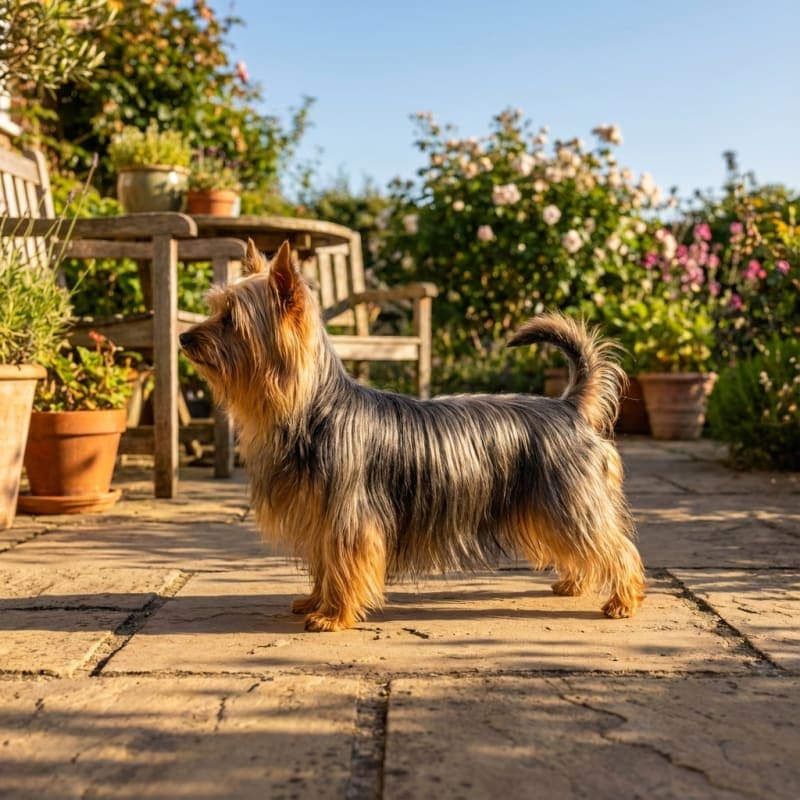
Yorkshire Terrier is a small dog with a distinctive, long, and silky coat, which is a true adornment of this breed. According to the FCI breed standard no. 86, the coat should be completely straight and shiny, falling evenly on both sides of the body, with a clear parting running from the nose to the tip of the tail. The coloration of the coat is very characteristic: the body is dominated by dark, steel-blue coloring (never silver-blue), which extends from the nape to the base of the tail, while the chest, head, and limbs feature intensely golden, reddish shades.
The body structure of the Yorkshire Terrier is compact and elegant. Their head is proportional to the body, rather small and flat, with a short muzzle and black nose. The jaws are even, with an excellent and regular scissor bite. Eyes are medium-sized, dark, and shiny, with a keen, intelligent expression, set straight forward. Small, erect V-shaped ears are covered with short hair in an intense reddish color.
The silhouette of the Yorkshire Terrier is very upright, with a proud posture giving the dog a dignified and important appearance. The back line is straight, and the ribs are moderately arched. The front limbs are straight, well-muscled, and covered with golden fur, which is slightly lighter at the ends than at the base. The hind limbs are also straight, with well-angled joints, covered with golden fur.
The tail, which in the past was often docked to half its length, is now increasingly left natural. It is carried slightly higher than the back line, covered with abundant, dark blue fur.
The movement of the Yorkshire Terrier is free, energetic, and vigorous, with good drive. When the dog moves, the back line remains straight, emphasizing its balanced build.
Breed dimensions:
- Height at the withers: 15-25 cm
- Weight: up to 3.2 kg (according to the FCI standard)
- Coat length: can reach floor length, requires regular trimming
Thanks to its silky fur and charming, proud appearance, the Yorkshire Terrier has earned the title of toy dog, ideal for companionship and shows. Their appearance attracts attention and makes them one of the most recognizable dogs in the world, and their small size makes them perfect companions both in homes and in urban apartments.
Yorkshire Terrier is a breed with a lively temperament and a strong personality, which fully reflects its terrier roots. According to the FCI breed standard, Yorkies are alert, intelligent, and full of vigor, with a balanced disposition. Despite their miniature size, they possess the courage typical of larger dogs and do not hesitate to defend their territory or beloved owner.
Attachment to family is one of the most important character traits of the Yorkshire Terrier. They are extremely social and loyal, often choosing one person as their favorite, although they have affection for the whole family. They love spending time with people and often demand attention and affection. Their need for closeness means they do not cope well with long periods of solitude – they may then exhibit undesirable behaviors, such as excessive barking or destroying objects.
Despite their small size, Yorkshire Terriers have a strong, dominant personality, which means they require consistent training and clear boundaries from a young age. Without proper socialization and training, they can become overconfident or even aggressive towards unfamiliar dogs, especially larger breeds. Their temperament is lively and energetic, making them excellent companions for active individuals.
The hunting instinct, inherited from ancestors used for hunting rodents, is still strongly present in Yorkshire Terriers. They may chase small animals, toys, or even leaves in the wind. At home, they often react to every sound and movement, making them excellent alarm dogs. They can be quite loud, barking at strangers, noises, or other animals – a trait that needs to be controlled through proper training.
Yorkshire Terriers can be suspicious of strangers, although with time and proper socialization, they become more open. It is important to acclimate them to different people, places, and situations from a young age, which will help develop a balanced character.
Interactions with children and other animals can be very positive, as long as the dog is properly socialized. Yorkies do best in families with older, calm children who can respect their small size and delicate build. Younger children may unintentionally hurt the dog, which can lead to defensive reactions.
The Yorkshire Terrier is a dog full of life and energy, bringing joy, smiles, and plenty of emotions to every home. Its brave character in a small body and deep attachment to the owner make it a unique companion for many years.
Yorkshire Terrier, despite its delicate appearance, is a relatively healthy breed that can live from 12 to 17 years with proper care. However, like any breed, Yorkies are predisposed to certain health issues that owners should be aware of to provide the best possible healthcare for their dog.
The most common health problems in Yorkshire Terriers:
- Heart diseases: Pulmonary artery stenosis, heart valve defects, patent ductus arteriosus (PDA) – regular cardiological check-ups are recommended, especially for older dogs.
- Orthopedic problems: Patellar luxation (luxatio patellae), Legg-Calvé-Perthes disease (necrosis of the femoral head) – manifesting as lameness and pain in the hind limbs.
- Dental and periodontal diseases: Due to their small mouths, Yorkies are particularly prone to tartar buildup, cavities, and gum diseases – this requires regular tooth brushing and veterinary check-ups.
- Respiratory problems: Collapsing trachea – characterized by a dry cough resembling honking, especially after exertion or excitement.
- Eye diseases: Cataracts, dry eye (keratoconjunctivitis sicca), progressive retinal atrophy (PRA) – can lead to vision loss if untreated.
- Skin problems: Alopecia (hair loss), allergic reactions to environmental or food allergens, dermatoses.
- Hypoglycemia: Particularly in puppies and very small individuals – low blood sugar can cause weakness, trembling, and in extreme cases, loss of consciousness.
- Liver diseases: Portosystemic shunt – a congenital vascular defect of the liver.
Obesity is another serious health issue that Yorkshire Terriers are at risk for if they are not adequately active and do not receive a healthy, balanced diet. Being overweight can lead to additional problems with joints, heart, and respiratory system.
Health prevention:
- Regular veterinary visits (at least once a year, every 6 months for older dogs)
- Vaccinations according to the vaccination schedule
- De-worming and protection against external parasites (fleas, ticks)
- Daily oral hygiene (brushing teeth with specialized dog toothpaste)
- Weight control and appropriate diet tailored to age and activity level
- Avoiding excessive exertion in high temperatures (Yorkies are sensitive to heat)
Despite these potential health threats, proper care, regular check-ups, and awareness of symptoms can help detect problems early and ensure that a Yorkshire Terrier has a long, healthy, and happy life.
Yorkshire Terrier Care is a key element of care for this breed, requiring time, commitment, and consistency. Their long, silky coat is one of the most distinctive features of the breed, but it also requires careful attention to keep it in excellent condition.
Brushing the Coat:
- Daily brushing is an absolute minimum to prevent tangling and matting.
- Use a metal brush with long pins and a comb with dense teeth for gentle detangling.
- Pay special attention to areas prone to tangling: behind the ears, under the armpits, on the belly, and around the limbs.
- Brushing is also a great opportunity to check the skin for irritations, parasites, or other issues.
Bathing and Coat Care:
- Yorkshire Terriers should be bathed every 2-3 weeks or more often if the dog gets dirty during walks.
- Use a mild shampoo for long-haired dogs and a conditioner to keep the coat soft and shiny.
- After bathing, thoroughly dry the coat with a hairdryer (on low heat) while brushing to avoid tangling.
- Many owners opt for a shorter haircut (e.g., puppy cut), which significantly simplifies grooming and is more practical for indoor dogs.
Visits to a Professional Groomer:
- Recommended every 6-8 weeks to maintain the appropriate length and shape of the coat.
- The groomer can also trim the hair around the eyes, ears, and paws for better hygiene and comfort for the dog.
- Professional grooming prevents tangling and makes daily grooming at home easier.
Eye Care:
- Yorkshire Terriers are prone to tearing, which can lead to dark streaks around the eyes.
- Wipe the area around the eyes daily with a moist, soft cloth or special dog wipes.
- Regularly trim the hair around the eyes to prevent irritation and infections.
Ear Care:
- Check the ears at least once a week for redness, unpleasant odors, or discharge.
- Clean the ears with a special ear cleaning solution for dogs and a soft cloth.
- Pluck excess hair from the ear canals (or ask the groomer to do this) to ensure proper ventilation.
Oral Hygiene:
- Daily tooth brushing with a specialized toothbrush and dog toothpaste is essential to prevent tartar buildup and periodontal disease.
- Provide dental chews and toys for cleaning teeth.
- Regular veterinary visits for dental check-ups and possible tartar removal (scaling).
Nail Trimming:
- Nails should be trimmed every 2-3 weeks to prevent walking issues and discomfort.
- Use special scissors or guillotine clippers for small dogs.
- If you are unsure, ask your veterinarian or groomer to show you the proper technique.
Caring for a Yorkshire Terrier can be time-consuming, but it is extremely important for their health, appearance, and well-being. Regular attention to their coat, eyes, ears, teeth, and nails will ensure the dog’s comfort and help avoid many health problems.
Yorkshire Terrier, despite its small size, has high exercise needs and requires daily physical activity and mental stimulation. These energetic dogs need regular walks and playtime to stay healthy, happy, and mentally balanced.
Daily walks:
- The Yorkshire Terrier needs at least 30-45 minutes of activity per day, divided into 2-3 walks.
- A walk is not just a time to relieve physiological needs, but also an opportunity for exploring the environment, socialization, and sensory stimulation.
- Despite their short legs, Yorkies can walk surprisingly long distances – they are resilient and full of energy.
- Remember to dress them appropriately on cooler days – Yorkshire Terriers are sensitive to the cold due to their lack of undercoat.
Play and activities:
- Yorkshire Terriers love to run and play, so it's worth providing them time to play in a park, garden, or safe, enclosed area.
- Fetching balls or toys is an excellent form of activity that combines physical effort with obedience training.
- Interactive toys (e.g., Kong, balls with hidden treats) stimulate the mind and prevent boredom.
- Scent games (searching for hidden treats) utilize their natural hunting instinct and are a great form of mental stimulation.
- Playing with other dogs – as long as the Yorkie is properly socialized, they love to play with other dogs, preferably of similar size.
Mental stimulation:
- Yorkshire Terriers are intelligent dogs that need intellectual challenges.
- Learning new tricks (e.g., Shake, Spin, Roll over) is a great way to engage the dog's mind.
- Dog puzzles and educational toys help develop intelligence and prevent boredom.
- Obedience training and agility for small dogs are excellent forms of activity that combine physical and mental effort.
Important activity notes:
- Avoid excessive exertion in high temperatures – Yorkies are sensitive to heat and can quickly overheat.
- Hunting instinct – Yorkshire Terriers may chase small animals (squirrels, birds, cats), so it's wise to keep them on a leash during walks or provide a safe, enclosed area for free play.
- Excessive excitement – without the right amount of exercise, Yorkies may exhibit undesirable behaviors such as excessive barking, destroying objects, or difficulty calming down.
- Behavioral problems related to lack of exercise can include separation anxiety, aggression, or destructive behaviors.
Providing a Yorkshire Terrier with the right amount of physical activity and mental stimulation is crucial for its health, happiness, and balanced character. Regular exercise also helps with weight control and preventing obesity, which is a common problem in this breed.
Training a Yorkshire Terrier is absolutely crucial for its proper development and harmonious integration into the family. Despite their small size, Yorkies have a strong terrier personality and require a consistent, firm, yet positive approach in training.
Start training early:
- Training should begin from the first days of the puppy in its new home, ideally at 8-12 weeks of age.
- Young puppies are more receptive to learning and more easily absorb new commands and rules.
- Early training helps establish strong foundations for future behavior and prevents the establishment of bad habits.
Positive reinforcement:
- Training should be based on positive reinforcements, such as treats, verbal praise, and affection.
- Avoid physical punishment and yelling – they can cause fear, aggression, and damage the bond with the dog.
- Yorkshire Terriers respond well to encouragement and a positive attitude, which effectively motivates them to learn.
- Reward immediately after the correct behavior so the dog associates the reward with the specific action.
Consistency and clear rules:
- Owners should establish clear rules and boundaries from the very beginning to prevent bad habits.
- Consistency is key – all family members should use the same rules and commands.
- Yorkshire Terriers may try to manipulate with their cute appearance to get what they want – it is important not to give in and stick to the established rules.
Basic commands:
- Sit – a basic command that calms the dog and prepares it for further instructions.
- Stay – teaches patience and self-control.
- Come – the most important command for the dog's safety, especially during off-leash walks.
- Lie down – a calming command useful in many situations.
- Leave it – prevents eating dangerous objects or chasing after animals.
Socialization:
- Early socialization is essential for a Yorkshire Terrier to grow into a balanced, confident dog.
- Expose the puppy to various people, places, sounds, and situations from a young age.
- Allow the dog to interact with other dogs of different breeds and sizes (under supervision) to learn appropriate social behaviors.
- Socialization helps prevent anxiety, aggression, and excessive distrust of strangers.
House training:
- Yorkshire Terriers can be difficult to house train – it requires patience and consistency.
- Establish a regular schedule for outings (after meals, after naps, in the morning and evening).
- Reward immediately after going in the right place.
- Consider using a hygiene mat or dog litter box in the apartment as an emergency option.
Group training and sessions with a trainer:
- Group training allows the dog to socialize with other dogs and people, which is extremely important for its social development.
- A professional trainer can help with behavioral issues, such as excessive barking, separation anxiety, or aggression.
- Group classes also offer mental stimulation and fun, which is beneficial for the active mind of a Yorkshire Terrier.
Challenges in training:
- Stubbornness – Yorkshire Terriers can be stubborn and independent, so they require patience and consistency.
- Excessive barking – Yorkies tend to bark at sounds, movement, or strangers; controlling this behavior requires early training and desensitization.
- Small dog syndrome – owners often indulge small dogs, leading to behavioral problems; treat the Yorkshire Terrier like any other dog and enforce the rules.
Training should be enjoyable for both the dog and the owner. Introduce variety in exercises and games to keep the dog's interest. With proper training, a Yorkshire Terrier can become a well-mannered, obedient, and well-behaved companion.
The Yorkshire Terrier Diet should be well-balanced and tailored to its nutritional needs to ensure health, energy, and a long life. Due to their small size and tendency to obesity, it is important to provide them with the right amount of food and choose high-quality food.
Choosing the right food:
- Owners should select high-quality food that contains all essential nutrients, including animal protein, healthy fats, carbohydrates, vitamins, and minerals.
- It is recommended to feed food specifically formulated for small breeds, which takes into account their specific energy needs and kibble size suitable for their small mouths.
- Look for food that lists meat (e.g., chicken, turkey, lamb, fish) as the first ingredient, not grains or fillers.
- Avoid food containing artificial colors, preservatives, and low-quality fillers.
Types of food:
- Dry food – helps clean teeth, is convenient, and has a longer shelf life.
- Wet food – more palatable, contains more water, which is beneficial for hydration.
- Mixed diet – a combination of dry and wet food can provide the best benefits of both types.
- Homemade diet (BARF) – fresh meat, vegetables, and fruits; requires consultation with a veterinarian or animal nutritionist to ensure proper nutritional balance.
Portions and feeding frequency:
- Yorkshire Terriers have a fast metabolism, so it is best to feed them 2-3 times a day with smaller portions instead of one large meal.
- Puppies (2-6 months): 3-4 meals a day
- Young dogs (6-12 months): 2-3 meals a day
- Adult dogs (over 12 months): 2 meals a day
- Portions should be adjusted according to the dog's weight, age, activity level, and health status – always check the manufacturer's feeding guidelines.
Avoid overfeeding:
- Yorkshire Terriers are prone to obesity, which can lead to health problems such as heart disease, diabetes, joint issues, and a shortened lifespan.
- Regularly monitor the dog's weight and adjust food portions based on activity level and body condition.
- Avoid giving table scraps, which may be too fatty, salty, or contain ingredients harmful to dogs (e.g., onions, garlic, chocolate, grapes).
Snacks and treats:
- Treats should make up a maximum of 10% of the daily calorie intake.
- Choose healthy snacks, such as pieces of cooked chicken, carrots, apples (without seeds), or special dental treats.
- Avoid highly processed treats with added sugar, salt, and artificial colors.
Water:
- The Yorkshire Terrier must have constant access to fresh, clean water throughout the day.
- Regularly change the water and clean the bowl to prevent bacterial growth.
- Proper hydration is especially important during hot days and after physical activity.
Special nutritional needs:
- Puppies need food rich in protein and calories to support growth and development.
- Older dogs (over 7-8 years) may require food with lower calorie content and higher fiber content to prevent obesity and support digestion.
- Dogs with food allergies may need hypoallergenic food with limited ingredients (e.g., lamb with rice, fish with potatoes).
- Dogs with health issues (e.g., heart, kidney, liver diseases) should receive therapeutic food recommended by a veterinarian.
Products toxic to dogs (NEVER feed):
- Chocolate, coffee, tea (contain theobromine and caffeine)
- Onions, garlic, leeks (damage red blood cells)
- Grapes, raisins (can cause kidney failure)
- Avocado (contains persin, toxic to dogs)
- Alcohol, sugary drinks, gum with xylitol
With a proper, balanced diet, portion control, and avoiding harmful products, the Yorkshire Terrier can enjoy health, energy, and longevity for many years.
Characteristic Traits
Pros
- Small size perfect for apartments
- Loyal and deeply attached to the owner
- Excellent watchdog and alert guardian
- Longevity from 12 to 17 years
- Intelligent and easy to teach tricks
- Energetic and lively companion
- No undercoat
- so less shedding.
Cons
- Requires daily coat care
- Can be noisy and bark a lot
- Needs regular physical activity
- Prone to dental and periodontal diseases
- Can be stubborn and dominant
- Sensitive to cold and heat
- Prone to obesity with improper nutrition
- Difficult to train in terms of cleanliness.
Behavioral Ratings
Breed History
The History of the Yorkshire Terrier is a fascinating tale of the transformation of a working dog into one of the most popular companion dogs in the world. This breed has its roots in northern England, in the county of Yorkshire, from which it derives its name.
The Origins of the Breed (1850s):
The Yorkshire Terrier was developed in the mid-19th century, during the industrial revolution in England. Around 1850, workers from Scotland came to Yorkshire in search of jobs in textile mills and coal mines, bringing their small terrier dogs with them. These dogs were used for hunting rats and mice in factories, mines, and workers' homes, where rodents posed a significant problem.
This breed originated from a crossbreed of several other terriers, including:
- Old Black and Tan Terrier – the main ancestor, responsible for the characteristic coloring
- Skye Terrier – contributed to the long, silky coat
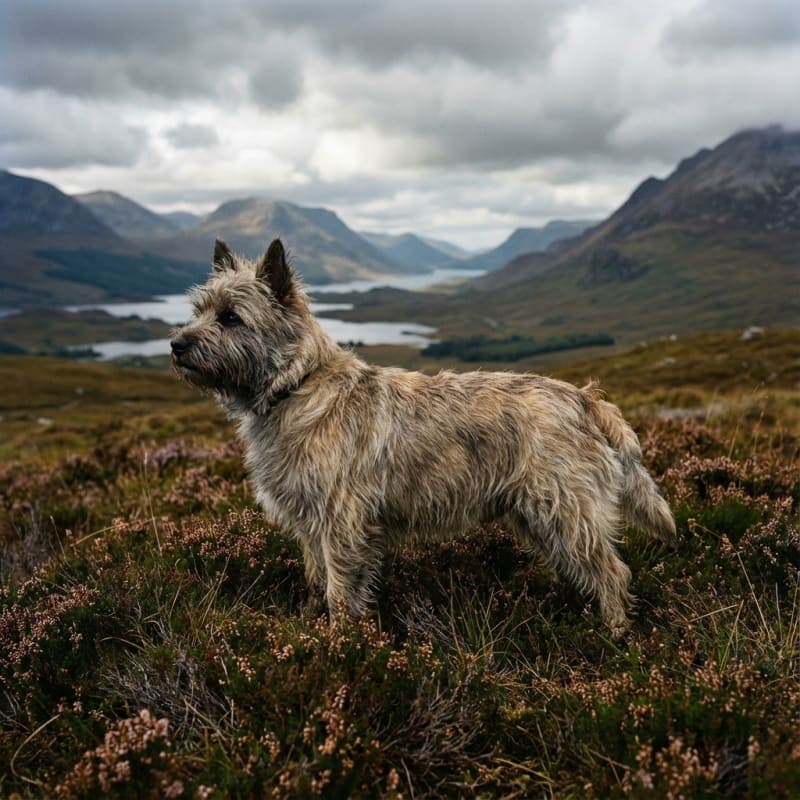
- Cairn Terrier – added terrier courage and temperament
- Maltese – influenced the delicacy and elegance of the build
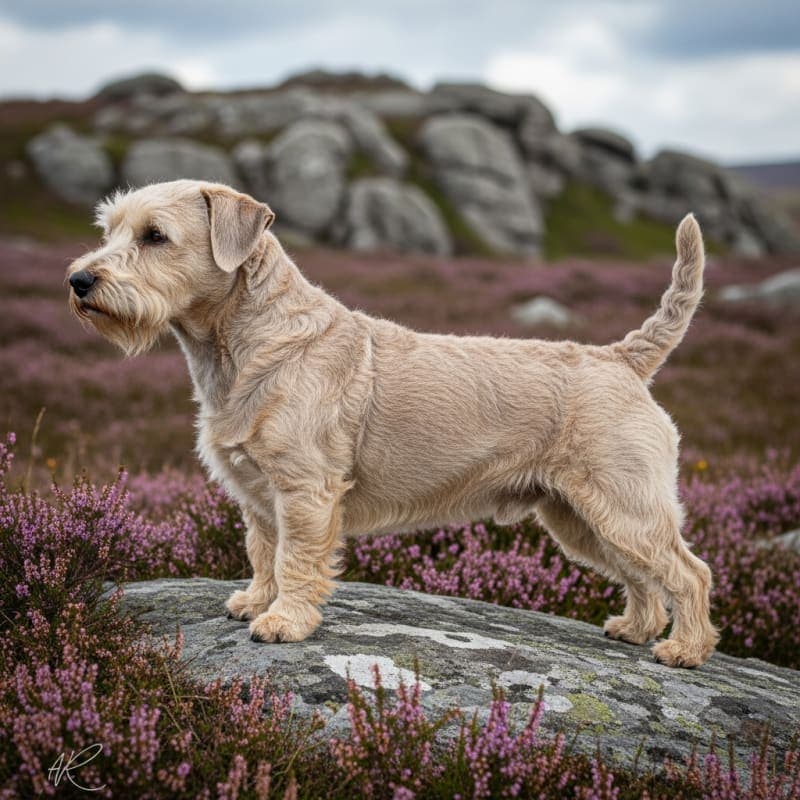
- Paisley Terrier and Clydesdale Terrier (now extinct) – Scottish terrier breeds that contributed to the development of the Yorkshire Terrier
The Development of the Breed (1860s-1880s):
Initially, these dogs were larger and more diverse in appearance than modern Yorkshire Terriers. Breeders focused on reducing size and improving coat quality to create an elegant companion dog. In the 1860s, the breed began to gain popularity not only among workers but also among the upper classes, who appreciated its charm and beauty.
In 1870, the breed officially received the name Yorkshire Terrier, reflecting its geographical origin. Previously, it was known by various names, such as Broken-haired Scotch Terrier or Toy Terrier.
Recognition and Popularity (Late 19th Century):
In 1886, the breed was officially recognized by the British Kennel Club as the Yorkshire Terrier, marking a milestone in its history. Breeders continued to refine the breed, focusing on long, shiny coats, small size, and distinctive body proportions.
One of the most influential dogs in the breed's history was Huddersfield Ben, born in 1865. He is considered the father of the Yorkshire Terrier breed because he won over 70 awards at dog shows and produced numerous offspring that significantly influenced the breed's development. His bloodline is present in most modern Yorkshire Terriers.
International Expansion (20th Century):
By the late 19th and early 20th centuries, Yorkshire Terriers reached the United States, where they quickly gained popularity among the elite. The American Kennel Club (AKC) officially recognized the breed in 1885. Throughout the 20th century, Yorkshire Terriers became one of the most popular companion dog breeds in the world, appearing in celebrity homes, dog shows, and media.
During World War II, the breed's popularity slightly declined, but it rebounded with renewed strength after the war. In the 1950s and 1960s, Yorkshire Terriers became a symbol of luxury and elegance, often accompanying movie stars and fashion figures.
The Modern Yorkshire Terrier:
Today, the Yorkshire Terrier is one of the most popular breeds in the world, beloved by millions of families and individuals. This breed has lost its original purpose as a working dog and has primarily become a companion dog, although it still retains its hunting instinct and terrier courage.
Yorkshire Terriers are regulars at dog shows, where their long, silky coats and elegant presence attract the attention of judges and the public. This breed has also become a favorite of the media and pop culture, appearing in films, television series, and on social media accounts of celebrities.
The breed standard for the Yorkshire Terrier is currently recognized by the Fédération Cynologique Internationale (FCI) under number 86, in Group 3 (Terriers), Section 4 (Miniature Terriers). The last update to the standard occurred in 2012.
This breed remains a symbol of charm, elegance, and loyalty, combining the heritage of a working dog with the refinement of a companion dog. The Yorkshire Terrier is a wonderful example of how selection and breeding can transform a breed in just a few generations.