Barbet
FCI Group
8• FCI 105
Size
Medium
Origin Country
FR
Height
53-65 cm
Weight
17-28 kg
Lifespan
11-13 years
Temperament
Overview
The Barbet, also known as the French water dog, is a breed with an incredibly rich history and unique charm. Its roots trace back to France, where for centuries it has served as a hunting dog, particularly valued during waterfowl hunts. The history of this breed dates back to the 16th century, making it one of the oldest breeds described in cynological literature.
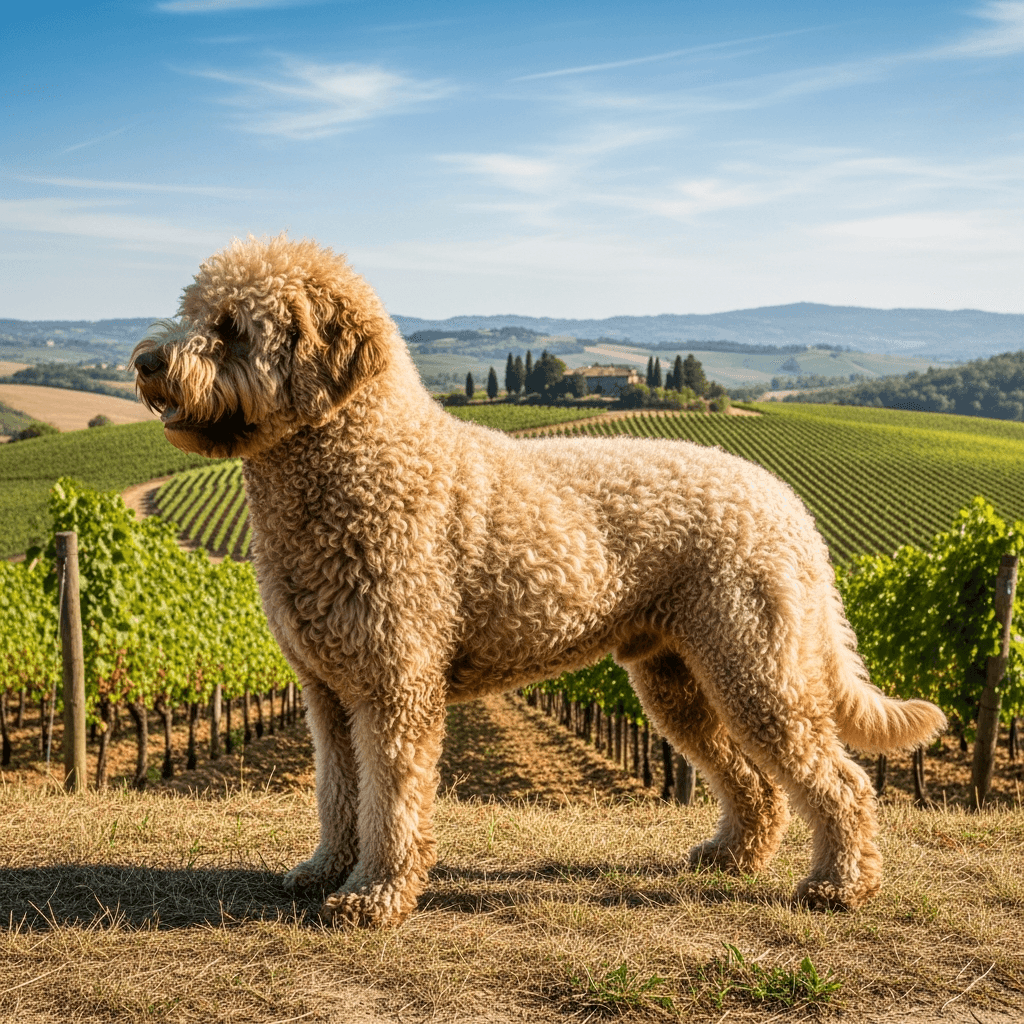
The Barbet is a medium-sized dog that stands out with its dense, woolly, and curly coat. This type of fur provides excellent protection against cold and moisture, allowing it to work in the most demanding weather conditions. The characteristic beard (in French barbe) gave the breed its name. It is this feature, along with the long hair on its head, that creates the unique image of this breed.
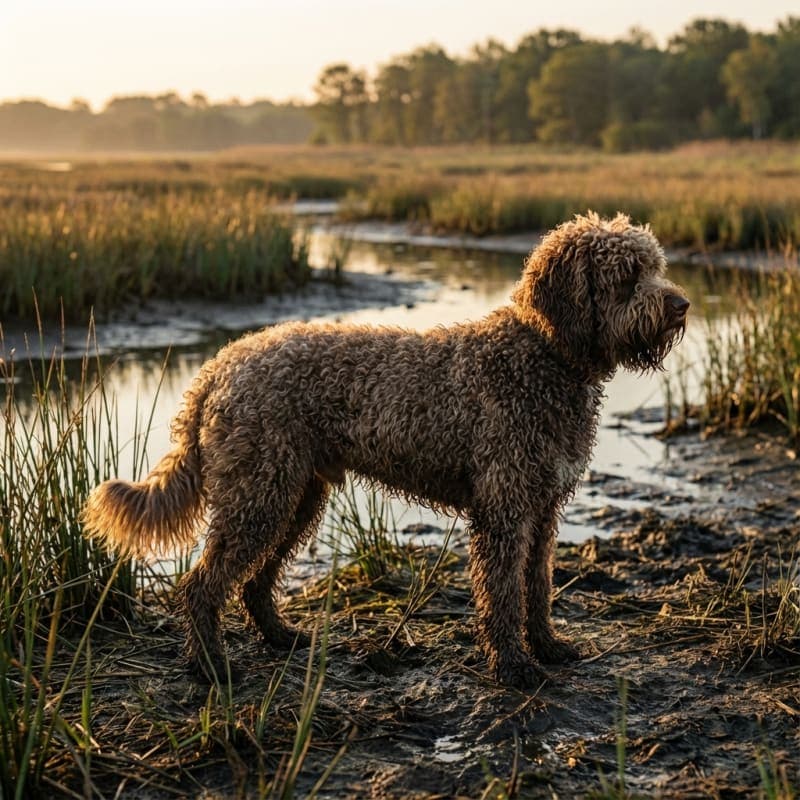
Over the centuries, the Barbet has gained a reputation as a versatile dog. Not only does it retrieve shot birds, but it also effectively searches for, locates, and flushes them out from hiding spots in aquatic vegetation. Its endurance and resilience make it excel in difficult weather conditions, which hunters around the world appreciate. The Barbet is a dog with a balanced temperament, very attached to its owner and extremely sociable. Its love for water is almost legendary – even the coldest temperatures do not pose a barrier for it. This makes it an ideal companion for all kinds of water activities.
The Barbet is distinguished by its high intelligence and versatility, allowing it to thrive in various roles. It can be both a hunting dog and a companion dog, making it exceptionally flexible in adapting to different lifestyles. However, for the Barbet to be happy and healthy, it needs plenty of physical and mental activity. This is crucial for its well-being and emotional balance.
In recent years, this breed has been gaining popularity in many countries. In 2018, it was officially recognized by The Kennel Club in the United Kingdom, confirming its growing reputation and appreciation for its unique traits. With its versatility, beautiful appearance, and friendly disposition, the Barbet captures the hearts of dog owners around the world. We encourage you to continue exploring knowledge about this extraordinary breed by checking out the next sections of our guide, which will detail the health, grooming, physical activity, training, nutrition, history, appearance, and behavior of the Barbet.
The Barbet is a dog of medium size and harmonious proportions, reaching a height at the withers of:
- Males: 58-65 cm
- Females: 53-61 cm
It is characterized by a strong build, with the body length (measured from the top of the shoulder to the ischial tuberosity) being slightly greater than the height at the withers. Its head is rounded, with a clearly defined stop. The muzzle is slightly shorter than the skull, and the nose is large and well-defined – black or chocolate, depending on the coat color.
The Barbet has long, drooping ears, completely covered with long hair that extends at least 5 cm beyond the tip of the nose when pulled forward. The hair on the head falls over the base of the nose, creating the breed's characteristic appearance. The beard is long and abundant, which is a hallmark of this breed.
The Barbet's coat is dense, woolly, and curly, providing excellent protection against cold and moisture. It can form light cords. This breed comes in various colors:
- Solid black
- Gray
- Chocolate (brown)
- Fawn
- Sandy
- White
- All shades of fauve with or without white patches
The Barbet has strong limbs, which are well-muscled and perpendicular to the ground. The paws are round and wide, well-furred, which is an adaptation for working in water. The Barbet's movement is free and energetic, and its gait is moderately long and graceful. The tail is slightly raised during movement, forming a characteristic hook at the end, which adds elegance and dynamism.
Overall, the Barbet is a dog with a beautiful, natural appearance that attracts attention with its distinctive woolly coat and balanced, noble expression. Its appearance reflects functionality – every aspect of its build is adapted for work in challenging aquatic conditions.
The Barbet is a dog with a very friendly and sociable temperament. It is characterized by a balanced temperament and a strong attachment to its owner. It loves spending time with family, which makes it intolerant of prolonged solitude. This is a dog that needs close contact with people and active participation in family life.
This breed is known for its positive attitude towards children and other animals, making it an excellent companion in large families or homes with other pets. The Barbet is a smart and attentive dog, which is why it needs regular physical and mental stimulation to prevent boredom and frustration. Without proper stimulation, it may exhibit undesirable behaviors.
Key behavioral traits of the Barbet:
- Sociability: Very social, enjoys contact with people and other dogs
- Attachment: Strongly bonded with its owner and family
- Joy of life: Enthusiastic and full of energy
- Love for water: Loves to swim even in very cold water
- Gentleness: Rarely shows aggression
Although the Barbet may be somewhat shy towards strangers upon first contact, it usually opens up quickly and is very friendly once it gets to know a new person. This breed is also quite active and has a high tendency to play, making it an ideal companion for those leading an active lifestyle.
The Barbet needs proper socialization from a young age to develop its skills and behavior in various situations. By nature, it is a dog with a gentle disposition that responds positively to consistent and positive training methods. Its intelligence and willingness to cooperate make it capable of achieving great results in various forms of activity, from hunting work to canine sports or animal-assisted therapy.
The Barbet is a breed of dog that typically lives from 12 to 14 years, although with proper care and genetic luck, it can live up to 15 years. Generally speaking, it is a healthy and resilient dog, but like many purebred breeds, it can be prone to certain hereditary conditions.
Most common health issues in Barbets:
- Hip Dysplasia (HD): Abnormal development of the hip joint, which can lead to pain and limited mobility later in life. Radiological examinations are recommended before breeding.
- Elbow Dysplasia (ED): Similar to hip dysplasia, it affects the elbow joints and can impact the dog's quality of life.
- Ocular Problems: Vision disorders such as entropion (inward rolling of the eyelids) or cataracts may occur. Regular eye examinations are advisable.
- Epilepsy: May occur in some individuals. It requires veterinary diagnosis and appropriate treatment.
- Ear Diseases: Due to their long, droopy ears and dense coat, Barbets can be prone to ear infections. Regular checks and cleaning are necessary.
It is important to monitor the weight of the Barbet, as being overweight can lead to additional health problems, especially when combined with a lack of proper physical activity. Obesity increases the risk of joint, heart, and diabetes issues.
To ensure your Barbet's health, you should:
- Ensure regular veterinary visits (at least once a year, twice a year for older dogs)
- Provide a proper diet tailored to age, weight, and activity level
- Ensure sufficient exercise and mental stimulation
- Conduct screening tests recommended for the breed (HD, ED, eyes)
- Maintain proper hygiene (especially ears and teeth)
- Implement parasite prevention and keep vaccinations up to date
When choosing a puppy, it is worth paying attention to a breeder who conducts health tests on the parents and cares for the well-being of their dogs. A responsible breeder should be able to provide genetic test results and health certificates for the breeding line.
The care of the Barbet is moderately demanding, but with regularity, it becomes a simple routine. The Barbet's coat is long, woolly, and curly, thus requiring systematic attention to keep it in good condition and prevent matting.
Brushing:
Regular brushing is essential – it is recommended to brush at least 2-3 times a week, and for dogs that frequently use water, even daily. Appropriate tools should be used:
- Slicker brush for detangling
- Metal comb for detecting and untangling mats
- Bristle brush for final smoothing
Brushing should be thorough, reaching down to the skin to remove dirt, dead hair, and prevent the coat from tangling.
Bathing:
The Barbet should be bathed as needed, usually every 6-8 weeks, but not too often to avoid damaging the natural oils in its skin. After bathing, it is important to dry the coat thoroughly, preferably using a dryer (on a low setting) to prevent matting.
Grooming:
The coat should be professionally trimmed about 3-4 times a year. Grooming not only improves the dog's appearance but also makes daily functioning and care easier. It is important that the trimming of the coat is adapted to the dog's activity:
- Hunting dogs may require shorter hair for greater comfort
- Show dogs are kept in their natural, longer form
- Companion dogs can have their coat at any length comfortable for the owner
Additional care:
- Ears: Regular cleaning (weekly) and checking for infections. Long, drooping ears are prone to inflammation.
- Nails: Trimming every 3-4 weeks or as needed
- Teeth: Brushing several times a week to prevent tartar buildup
- Eyes: Regular checking and cleaning around the eyes of discharge
- Paws: Checking paw pads, removing hair between toes
With a regular grooming routine, the Barbet will look beautiful and feel comfortable. It is worth starting to accustom the puppy to grooming procedures from a young age so that they are a positive experience for it.
The Barbet is a breed of dog that has a high demand for physical activity. It is a working dog, created for intensive work in water environments, so short, calm walks are not enough for it. The Barbet needs a lot of exercise to satisfy its energy and natural hunting instincts.
Minimum activity requirements:
- At least 1-2 hours of active movement daily
- Walks should be combined with intense play and exercises
- Ideally, owners should provide access to water at least a few times a week
The best forms of activity for the Barbet:
- Swimming: This is the absolute favorite activity of this breed! The Barbet loves water, and swimming is a natural form of movement for it. It excels by lakes, rivers, or the sea.
- Fetching: Both on land and in water. Balls, frisbees, training dummies, or water bumpers can be used.
- Running: It can accompany the owner during jogging or cycling (once it reaches the appropriate age and fitness)
- Playing with other dogs: Socialization and running together in a dog park
- Cynological sports: Agility, flyball, obedience, rally-o, nose work
- Hunting training: For working dogs – searching and retrieving
The Barbet is a very intelligent dog, so it is also worth introducing various mental exercises to prevent boredom and frustration:
- Scent games and searching for hidden treats
- Puzzles and interactive toys
- Learning new commands and tricks
- Obedience training
Owners should be aware that lack of adequate exercise can lead to serious problems:
- Excess energy and excitement at home
- Destructiveness (chewing furniture, destroying objects)
- Behavioral problems (barking, digging)
- Overweight and related health issues
- Depression and apathy
Therefore, the Barbet is an ideal companion for active individuals who can dedicate time to play and training together. Older or less active individuals may struggle to meet the exercise needs of this breed. If you dream of a dog that will accompany you on hikes, swimming, running, or other outdoor activities – the Barbet will be an excellent choice!
The Barbet training is a pleasure for both the dog and the owner, provided that appropriate methods are applied. This breed is very intelligent and eager to learn, but requires a varied approach to maintain its engagement and attention.
Characteristics of the Barbet important for training:
- High intelligence: Quickly learns new commands
- Willingness to cooperate: Loves to work with the owner
- Sensitivity: Responds positively to praise and rewards, poorly tolerates punishment
- Tendency to boredom: Needs variety in training
- Occasional stubbornness: May exhibit independent thinking
Recommended training methods:
The best results come from positive reinforcement methods, based on rewards and praise. The Barbet responds very well to:
- Treats: As a reward for following commands
- Play: Especially retrieving as a form of reward
- Verbal praise: Enthusiastic acknowledgment of successes
- Petting: Physical contact as reinforcement
Basics of training:
Owners should start training with basic commands and gradually introduce more advanced exercises. Key commands include:
- Sit
- Lie down
- Stay
- Come
- No or Leave it
- Heel (walking at heel)
Socialization – the foundation of upbringing:
Socialization is a key element of raising a Barbet. It is important to introduce them to various situations from a young age so they learn to respond appropriately:
- Contact with different people (children, adults, seniors)
- Meetings with other dogs and animals
- Diverse environments (city, forest, water, park)
- Various sounds (street noise, thunder, fireworks)
- Different surfaces (grass, asphalt, stairs, docks)
Group classes and clubs:
Group classes at dog schools can also be helpful, allowing for:
- Interaction with other dogs in a controlled environment
- Learning under the guidance of a professional trainer
- Practicing concentration despite distractions
- Social contact for the owner and sharing experiences
Advanced training:
The Barbet excels in various disciplines of canine sports and advanced training:
- Hunting training: Retrieving, searching, working in water
- Agility: Obstacle courses
- Obedience: Advanced obedience
- Nose work: Scent work, tracking
- Rally-O: A combination of obedience and agility
- Animal-assisted therapy: Thanks to its gentle nature
Tips for success:
- Consistency: Everyone in the family should apply the same rules
- Patience: Every dog learns at its own pace
- Short sessions: 10-15 minutes, several times a day, instead of long, exhausting training
- Variety: Change exercises to keep the dog interested
- Positive ending: Always end training on a success
- Start early: The younger the puppy, the easier it is to shape behaviors
The Barbet is a dog that values companionship and needs contact with its owner, so training should be a positive experience based on fun, rewards, and shared time. With the right approach, it will become a well-trained, obedient, and happy companion.
The Barbet's diet should be carefully tailored to its physical activity, age, weight, and health status. This breed tends to gain weight with an improper diet and lack of exercise, so it is important not to overfeed the dog and to provide a balanced diet.
Basic nutrition guidelines:
- High-quality food: Choose premium or super-premium foods rich in animal protein (meat, fish, poultry)
- Age-appropriate: Puppies, adult dogs, and seniors have different nutritional needs
- Consideration of activity: Very active dogs (hunting, sporting) need more calories
- Portion control: Follow the manufacturer's feeding guidelines, adjusting them to the individual needs of the dog
Desirable ingredients in a Barbet's diet:
- High-quality protein (minimum 25-30%): Meat, fish, poultry as the main source
- Fats (15-20%): For energy and healthy coat, rich in omega-3 and omega-6 fatty acids
- Carbohydrates: From whole grains, rice, sweet potatoes – for energy
- Vegetables and fruits: Source of vitamins, minerals, and fiber
- Glucosamine and chondroitin: Support for joints (especially in older dogs)
- Probiotics: For a healthy digestive system
Feeding frequency:
- Puppies (2-6 months): 3-4 meals a day
- Young dogs (6-12 months): 2-3 meals a day
- Adult dogs (over 12 months): 2 meals a day
- Senior dogs: 2 meals a day, possibly smaller portions more frequently
Regular meals at consistent times help maintain stable energy levels and support proper digestion.
What to avoid in a Barbet's diet:
- Human food: Especially fatty, salty, or spicy
- Table scraps: Can lead to obesity and digestive problems
- Toxic products: Chocolate, onions, garlic, grapes, raisins, xylitol, avocados, alcohol, caffeine
- Cooked bones: Can splinter easily and cause intestinal blockage or perforation
- Excessive treats: Should not make up more than 10% of daily caloric intake
Water – a key element:
The Barbet should have constant access to fresh water, especially:
- After intense physical activity
- After swimming (paradoxically, dogs can become dehydrated while swimming)
- On warm days
- When feeding dry food
Monitoring weight and condition:
Regularly check your Barbet's weight and condition:
- You should be able to feel the ribs under a thin layer of fat
- Visible waist when viewed from above
- Tucked belly when viewed from the side
If the dog is gaining weight, reduce portions or increase activity. If it is losing weight, consult a veterinarian.
Special dietary needs:
- Active/hunting dogs: Food with higher protein and fat content
- Dogs with joint problems: Additives of glucosamine, chondroitin, MSM
- Overweight dogs: Light or senior food, portion control
- Dogs with allergies: Hypoallergenic, single-protein food
- Seniors: Senior food with lower calories, higher digestibility
Consultation with a veterinarian:
It is advisable to consult with a veterinarian regarding the best diet for your pet, especially when:
- The dog has special health needs
- You plan to change the diet
- The dog is gaining or losing weight
- There are digestive or allergic issues
Proper nutrition is the foundation of health and long life for the Barbet. A well-balanced diet affects physical condition, coat quality, energy, immunity, and the overall well-being of the dog.
Characteristic Traits
Pros
- Child-friendly and good with other animals
- Intelligent and easy to train
- Excellent companion for water activities
- Versatile and adaptable
- Gentle and sociable temperament
- Suitable for active families.
Cons
- Requires a lot of daily physical activity
- Needs regular and time-consuming coat care
- May be too energetic for less active individuals
- Does not tolerate prolonged solitude
- Requires consistent training
- Needs frequent access to water for complete happiness.
Behavioral Ratings
Breed History
The history of the Barbet is incredibly rich and fascinating, dating back to the 16th century. It is one of the oldest French dog breeds, with roots deeply embedded in the culture and hunting tradition of France.
Origin and early history:
The Barbet was widely spread in France as early as the Middle Ages. The first documented mentions of the breed appear in literature from the 16th century, where it was described as a water dog used for hunting waterfowl. King Henry IV of France himself was a great admirer of this breed, and Barbets were held in high esteem at the royal court.
The breed's name comes from the French word barbe, meaning beard – a characteristic feature of this breed. The long, abundant fur on the muzzle creates a distinctive beard that has become the hallmark of the Barbet.
Barbet as an ancestor of many breeds:
Interestingly, the Barbet is considered to be a forebear of many other well-known water dog breeds and more:
- Poodle: Likely directly descended from the Barbet
- Portuguese Water Dog (Cão de Água Português)
- Irish Water Spaniel
- Newfoundland: Partially descended from Barbets
- Briard: A herding dog
- Otterhound: A hunting dog for otters
- Griffons: Various varieties
This shows how influential this breed was in the development of modern cynology.
Functions and uses through the centuries:
Over the centuries, the Barbet has served various functions:
- Hunting dog: Mainly for hunting waterfowl – ducks, geese, snipe. The Barbet not only retrieved shot birds but also searched for, located, and flushed them from dense aquatic vegetation.
- Ship dog: Used on ships as a helper for sailors – retrieving items from the water, assisting in rescuing shipwrecked individuals.
- Herding dog: In some regions, it helped guard flocks.
- Companion of the aristocracy: Valued in royal and noble courts.
Decline and near extinction:
Unfortunately, in the 20th century, this breed began to decline. Several factors contributed to the dramatic decrease in population:
- Two world wars that devastated Europe
- Decreased interest in waterfowl hunting
- Growing popularity of other breeds (especially poodles and retrievers)
- Lack of systematic breeding and protection of the breed
By the mid-20th century, the population of Barbets was so small that the breed was on the brink of extinction.
Revival and modernity:
Only in the 1980s and 1990s did a group of enthusiasts undertake efforts to rebuild the breed. Thanks to their determination and systematic breeding work, the Barbet was brought back to life.
Key moments in the revival:
- 1980-1990: Initiation of breeding programs in France
- 1980s: Recognition by the FCI (Fédération Cynologique Internationale)
- 2006: Publication of the applicable FCI standard (Standard No. 105)
- 2007: Recognition by the AKC (American Kennel Club) in the Foundation Stock Service class
- 2018: Official recognition by The Kennel Club in the UK
- 2020: Full recognition by the AKC in the Sporting Group
Barbet today:
In recent years, this breed has gained popularity in many countries. The Barbet is now valued not only for its hunting skills but also as a wonderful companion dog. Its gentle nature, intelligence, and versatility make it an ideal choice for active families.
Modern Barbets participate in:
- Hunting: Still used by hunters in Europe and North America
- Cynological sports: Agility, obedience, rally-o, nose work
- Shows and exhibitions: Growing number of show breeders
- Animal-assisted therapy: Due to their gentle disposition
- Family life: As beloved family members around the world
Although the population of Barbets is still relatively small compared to more popular breeds, their numbers are steadily increasing. This breed is attracting more and more attention due to its beautiful appearance, friendly character, and rich history. The Barbet is a living monument to French cynological heritage – a breed that has survived centuries and continues to delight dog lovers worldwide.