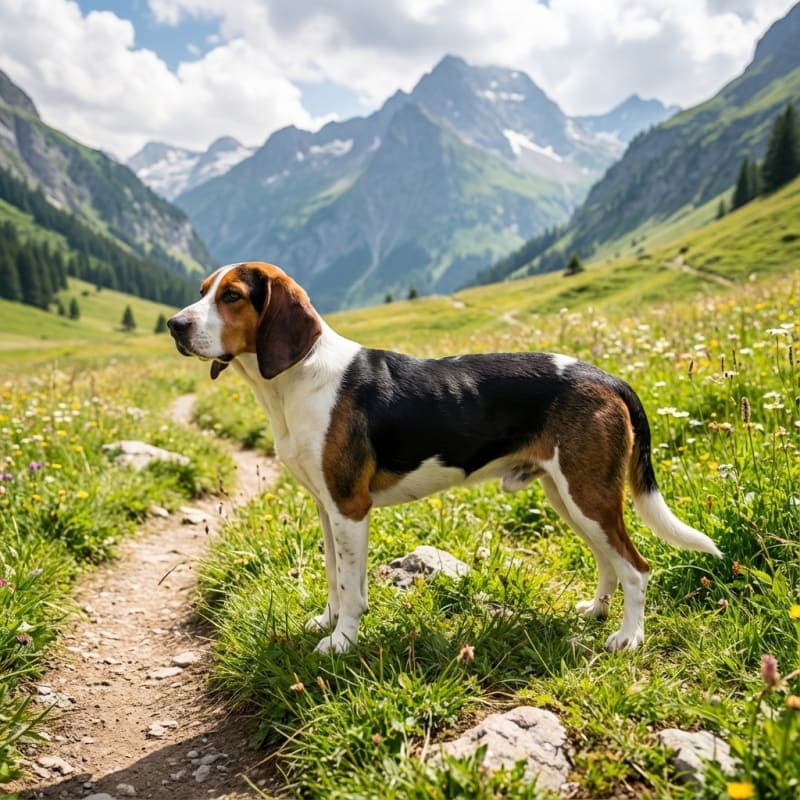
Bernese Mountain Dog
FCI Group
6• FCI 59
Size
Medium
Origin Country
CH
Height
47-59 cm
Weight
20-30 kg
Lifespan
12-14 years
Temperament
Overview
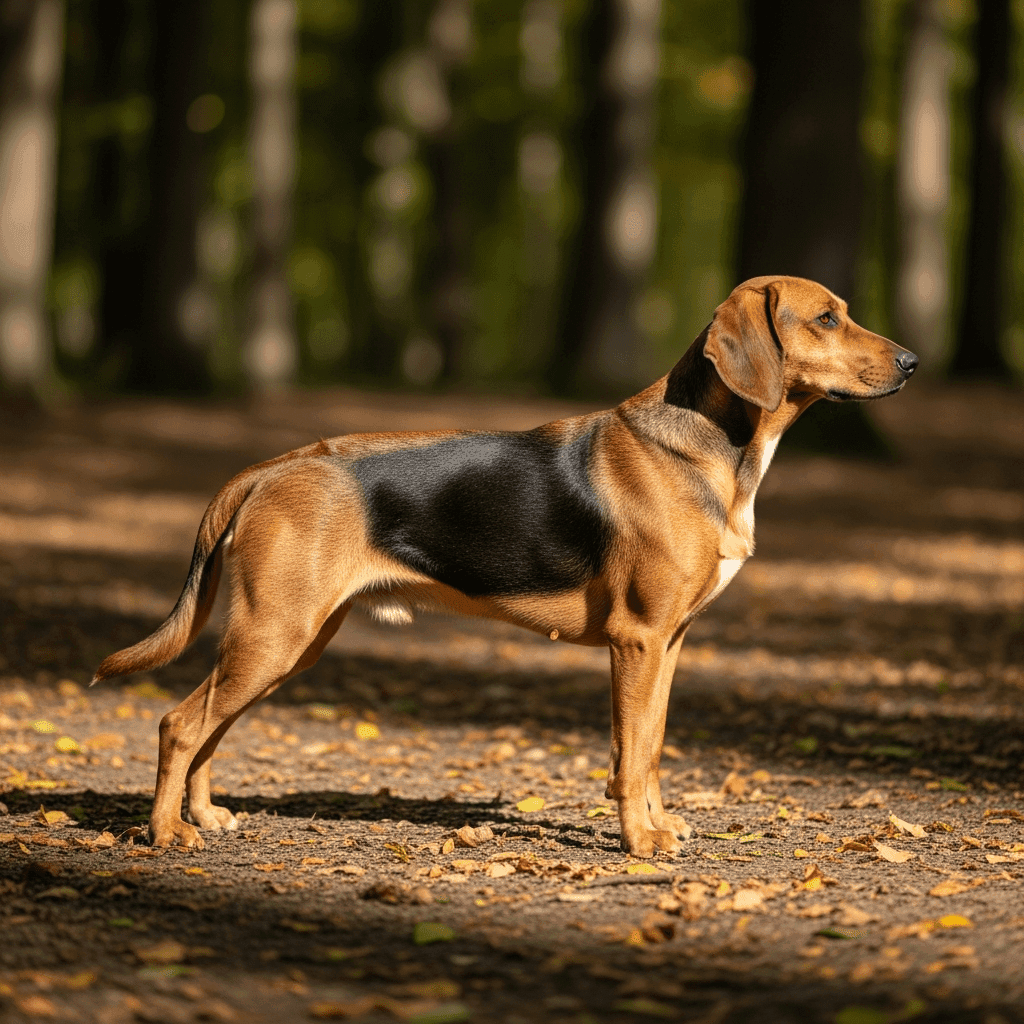
Bernese Hound (Schweizer Laufhund, Swiss Hound) is one of the four varieties of Swiss hounds – a breed with ancient roots dating back to Roman Helvetia. This medium-sized hunting breed originates from picturesque Switzerland, where it has gained fame over the centuries as an excellent tracker of hares, deer, foxes, and sometimes even wild boars. It is characterized not only by its beautiful, harmonious appearance but also by exceptional intelligence and an extraordinary sense of smell.
The characteristic physical features of the Bernese Hound are:
- Slim, harmoniously built silhouette
- Well-muscled limbs providing endurance
- Flexible back allowing for prolonged running
- Long, drooping ears giving an elegant appearance
- Short, smooth coat in a distinctive tricolor (black-white-brown)
The four varieties of Swiss hounds are distinguished by their remarkable ability to track scents over long distances, even in difficult terrain conditions. These dogs hunt independently with voice (giving tongue), which means they signal their position and the location of the trail to the hunter through characteristic barking. This has earned them a reputation as one of the best hunting breeds in the world. In the 15th century, they were sought after by Italian breeders, and in the 18th century, French hunters appreciated their exceptional predispositions for hunting hares.
Although the Bernese Hound is not commonly chosen as a companion dog, its wonderful temperament, loyalty, and gentle nature make it a potential exceptional companion for active individuals familiar with the specifics of hunting breeds. However, it requires proper training and early socialization to adapt well to the role of a family dog. It is known for its patience with children, but its strong hunting instincts require conscious management during walks.
This dog needs a lot of exercise and activity – a minimum of 60-90 minutes of intense effort daily. It feels best in large, open spaces where it can utilize its natural tracking abilities. Regular walks, trail runs, and scent games are key to its happiness and mental and physical health. Despite its exercise requirements, grooming the Bernese Hound is relatively simple – weekly brushing of its short coat is sufficient.
The Bernese Hound is a breed relatively resistant to diseases. Its lifespan ranges from 12 to 14 years. Like many hunting dogs, it may be prone to hip and elbow dysplasia and eye conditions (cataracts, progressive retinal atrophy). However, with proper veterinary care, a balanced diet rich in protein, and regular health check-ups, the risk of these conditions can be minimized, allowing you to enjoy its presence for many years. A well-raised and socialized Bernese Hound can become a joyful, loving family member, ready to accompany you on unforgettable adventures.
The Bernese Hound is a medium-sized dog with a harmonious, proportional body structure. According to FCI standard no. 59 (group 6, section 1.2), its dimensions are as follows:
- Height at the withers for males: 49-59 cm
- Height at the withers for females: 47-57 cm
- Weight: adjusted to height, maintaining proportions (approximately 20-30 kg)
The dog has a long, strong back and well-muscled, straight limbs, allowing it to run for long periods and remain tireless in challenging mountainous terrain. Its skeletal and muscular structure has been optimized over centuries of selective breeding for endurance and efficiency in hunting.
Head characteristics:
- Elongated, dry, and noble
- Narrow skull with a well-defined occipital protuberance
- Stop (the transition from skull to nose) moderately pronounced
- Black nose, well-developed with wide nostrils
- Muzzle long, slightly arched, never upturned
Ears and eyes: The ears are long, hanging, and slightly narrow at the base, set below the eye line, giving the dog an elegant, noble appearance characteristic of hounds. The eyes are brown or dark brown, with a gentle, friendly expression, slightly oval, and of medium size, with well-fitting eyelids.
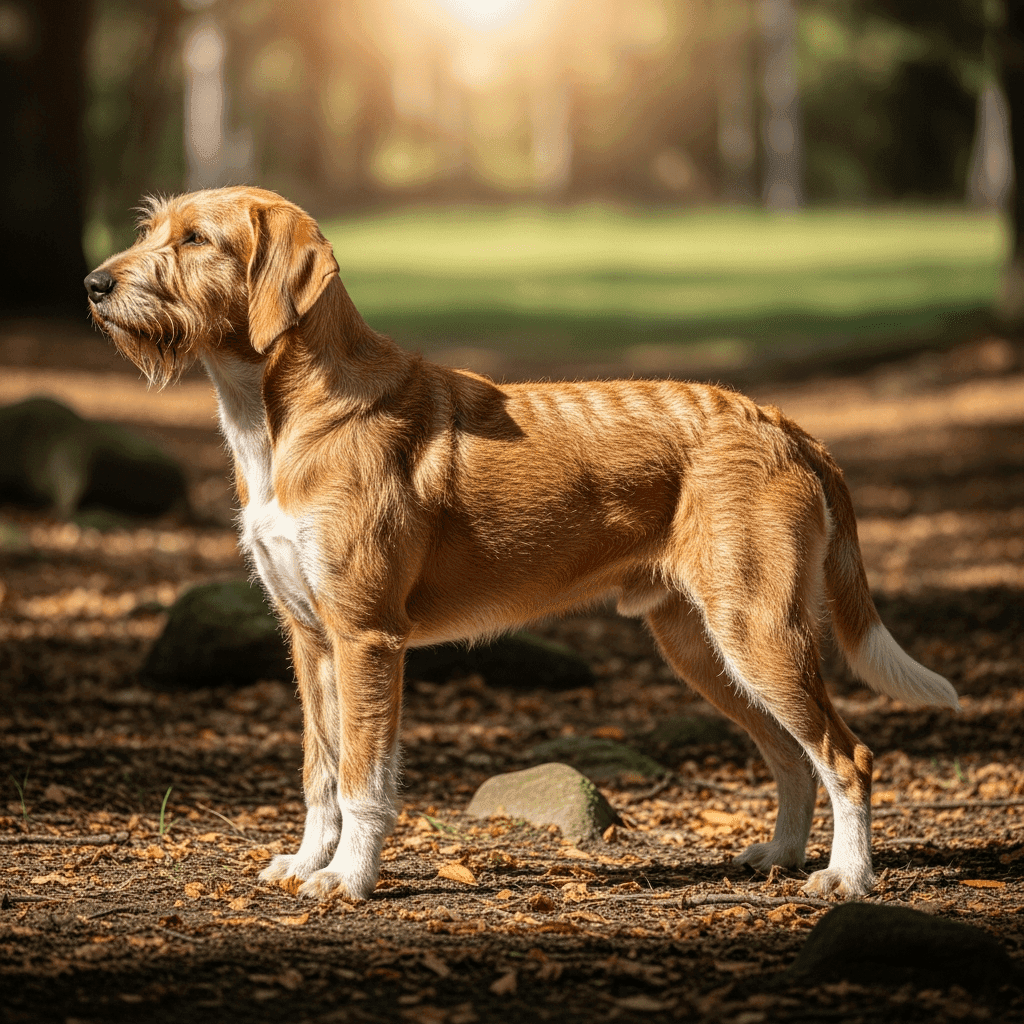
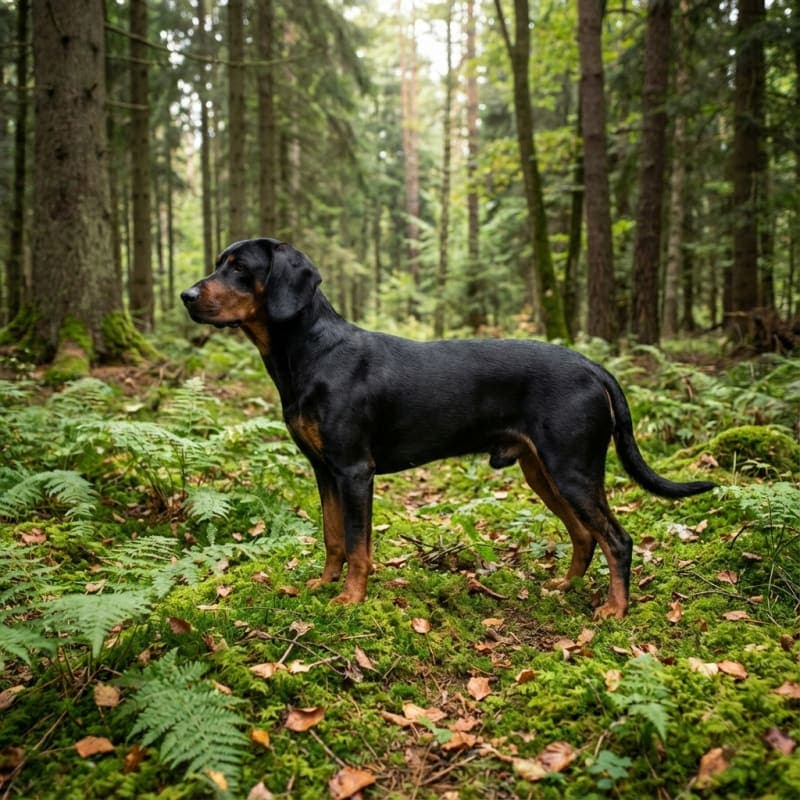
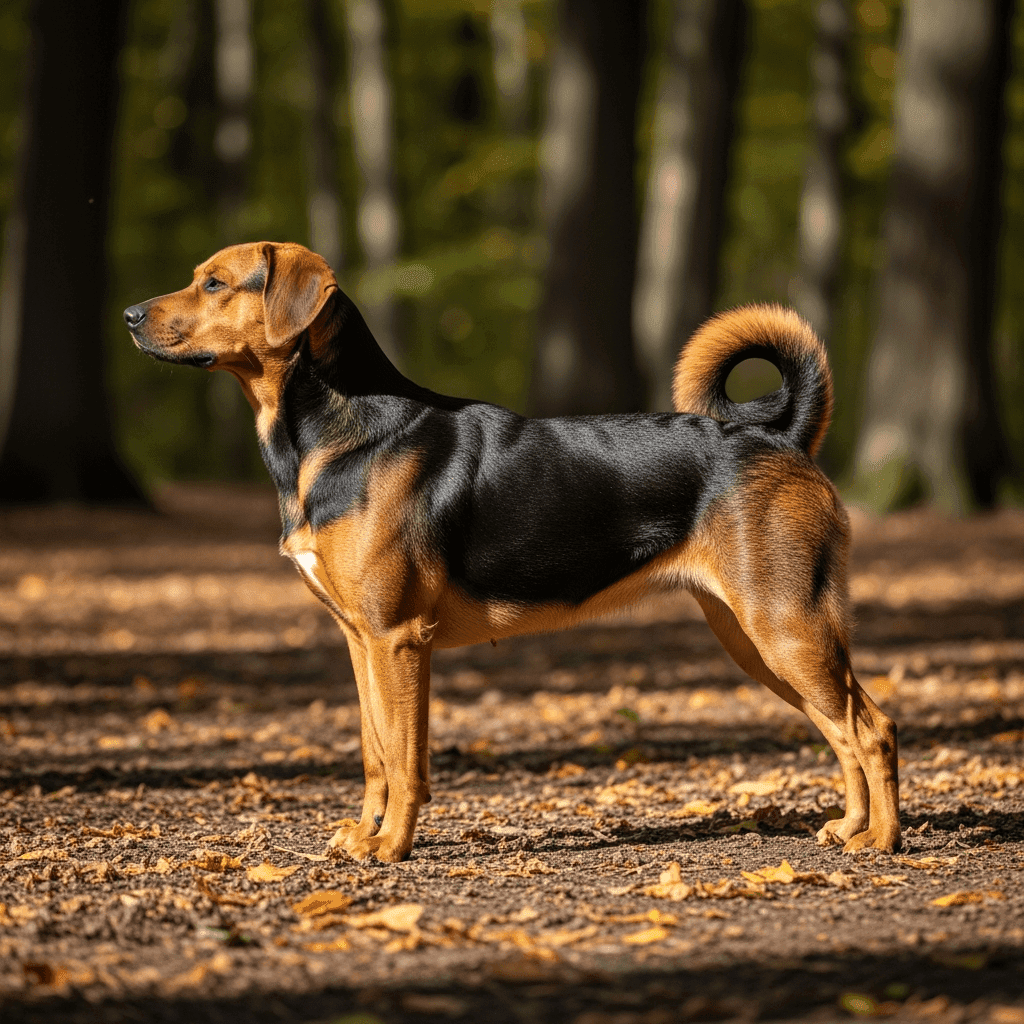
Coat and color: The coat of the Bernese Hound is short, smooth, and dense, fitting closely to the body, making grooming relatively simple. The Bernese variety is characterized by a distinctive tricolor: black and white with brown (tan) spots above the eyes, on the cheeks, the inner side of the ears, and on the limbs. Other Swiss varieties have different colors: Jura (black and tan), Lucerne (blue-speckled), Schwyz (white with orange).
Overall, the Bernese Hound exudes strength, endurance, and nobility. Its appearance is harmonious and proportional – it is a dog built for work, yet visually attractive and full of grace in movement.
The Bernese Hound is a dog with a friendly, gentle, and balanced temperament. Dogs of this breed are very sociable, deeply attached to their owners, and eager to cooperate. Their temperament is characterized by calmness and prudence in everyday life, which makes them well-suited for families with children, where they often demonstrate great patience, gentleness, and nurturing behavior.
Key personality traits:
- Gentleness and kindness – naturally friendly towards people
- Loyalty – strong bond with family and owner
- Intelligence – learns quickly, understands commands
- Balance – calm at home, energetic at work
- Sociability – works well with other dogs during hunts
This breed, however, possesses a strong hunting instinct, which means that dogs may be inclined to chase smaller animals (cats, rabbits, squirrels). Owners should be aware of this innate behavior and control their dogs during walks, especially in wooded areas or parks with wildlife. A leash or long training line is essential in places where it is not safe to let the dog off-leash.
The Bernese Hound is a dog that is loud by nature – it tends to bark, howl, and bay, which is a desirable trait in hunting work (signaling a trail), but can be problematic in urban environments or densely populated areas. Early voice control training and socialization with various acoustic stimuli can help mitigate this issue.
Although the Bernese Hound is not a typical guard dog, its alertness and barking barrier effectively signal the presence of strangers. It greets new people in a friendly manner, often after a loud welcome, but does not show aggression or excessive distrust. It is an open, non-confrontational dog that easily makes contact.
Dogs of this breed are quite independent in thinking, which stems from their history as self-sufficient trackers. This can lead to some stubbornness during training – the hound does not always immediately obey a command if its nose has detected an interesting trail. They require a consistent yet positive training approach based on reinforcement and rewards. Harsh training methods are completely inappropriate and can destroy the dog's natural predispositions.
In summary, the Bernese Hound is a dog that combines a friendly, family-oriented disposition with a strong hunting instinct. With the right approach, early socialization, and providing activities that match its nature, it can become a wonderful companion for active families or hunters.
The Bernese Mountain Dog is generally a healthy, resilient breed of dog with good genetic condition. The average lifespan of this breed is between 12 and 14 years, which is typical for medium-sized dogs. Centuries of selective breeding for hunting functionality have contributed to the preservation of good health and vitality in this breed.
Like many hunting dogs and working breeds, the Bernese Mountain Dog does have a tendency to experience certain genetic disorders that owners should pay special attention to:
Orthopedic disorders:
- Hip dysplasia (HD) – abnormal development of the hip joint leading to pain and limited mobility
- Elbow dysplasia (ED) – a similar condition affecting the elbow joints
- Signs: difficulty getting up, stiffness after resting, reluctance to jump, limping
- Prevention: HD/ED testing of parents before breeding, weight control, moderate activity in puppies
Eye disorders:
- Entropion and ectropion – abnormal positioning of the eyelids (inward or outward rolling)
- Cataract – clouding of the eye lens leading to vision loss
- Progressive retinal atrophy (PRA) – a genetic condition leading to blindness
- Prevention: regular eye examinations, genetic testing available for PRA
Ear disorders: Due to their long, drooping ears, dogs of this breed are prone to bacterial and fungal ear infections, especially after walks in damp areas or swimming. Symptoms include: unpleasant odor, discharge, ear rubbing, head shaking. Regular inspection and cleaning of the ears (once a week) are essential for prevention.
Health maintenance recommendations:
- Regular veterinary visits (every 6-12 months)
- Proper diet tailored to activity level
- Weight control – avoiding obesity, especially in older dogs (which burdens the joints)
- Physical activity appropriate for age (moderate in puppies, intense in adults)
- Vaccinations and deworming according to schedule
- Prevention of external parasites (ticks, fleas) – particularly important for dogs that frequent the woods
A proper diet, regular physical activity, systematic grooming, and health checks with a veterinarian will help keep the Bernese Mountain Dog in excellent health throughout its life. Choosing a puppy from a responsible breeder who conducts genetic testing on the parents significantly reduces the risk of hereditary disorders.
The care of the Bernese Mountain Hound is relatively simple and low-maintenance, thanks to its short, smooth coat. This dog does not require specialized grooming procedures or particularly time-consuming care, making it convenient for active owners.
Brushing the coat: Regular brushing is recommended once a week to remove dead hair, dust, and dirt. A rubber brush or grooming glove is sufficient, gently massaging the skin and removing loose hair. During natural shedding periods (spring, autumn), it is advisable to increase the brushing frequency to 2-3 times a week to speed up the process and maintain cleanliness in the home.
Bathing: Due to its active lifestyle and love for running in the field, the Bernese Mountain Hound may sometimes come home with mud, leaves, or other debris on its coat. In such cases, a bath may be necessary; however, it should not be done too often (maximum once every 4-6 weeks) to avoid stripping the coat of the natural oils that protect the skin. Use gentle, dog-specific shampoos for sensitive skin.
Ear care (CRITICAL): The long, drooping ears of the Bernese Mountain Hound are prone to infections, especially after walks in the forest, mud, or near water. Limited air circulation inside the ear promotes the growth of bacteria and fungi.
- Check the ears at least once a week
- Gently clean them with a cotton ball moistened with dog ear cleaning solution
- Do not insert cotton swabs deep into the ear canal
- Watch for signs of infection: unpleasant odor, discharge, redness, rubbing ears with paws
- If in doubt, consult a veterinarian
Nail care: Active dogs running on various terrains naturally wear down their nails. However, if you hear the sound of nails clicking on the floor while the dog is walking, it means they need trimming. Use a sharp guillotine clipper or nail grinder, being careful of the quick (the pink part of the nail containing blood vessels).
Oral hygiene: Regular tooth brushing (ideally 2-3 times a week) prevents tartar buildup and periodontal disease. Use a toothbrush and toothpaste designed for dogs. Additionally, dental treats and toys can be used.
In summary, the Bernese Mountain Hound is a breed with low grooming requirements. Weekly brushing, regular ear checks and cleaning, occasional baths, and basic hygiene will ensure that the dog looks and feels great.
The Bernese Mountain Dog is a breed of dogs with high physical activity needs. As a hunting dog bred for hours of tracking game in challenging mountainous terrain, it is accustomed to prolonged exertion and tireless running. Owners must be prepared to provide it with the appropriate amount of exercise and mental stimulation.
Minimum requirements: The Bernese Mountain Dog needs at least 60-90 minutes of intense physical activity daily, divided into 2-3 sessions. These are not leisurely walks on the sidewalk – this dog requires intense effort, such as:
- Trail running in the woods or park
- Long hikes with tracking elements
- Fetch games in large, open spaces
- Nosework and scent exercises (mantrailing, tracking)
- Running alongside a bike (canicross, bikejoring)
- Playing with other dogs in a dog park
Ideal environment: The Bernese Mountain Dog feels best in a home with a fenced, large yard or in an area with easy access to forests, meadows, and parks. This is a dog that does poorly in a small apartment without the opportunity for regular access to open areas. A fenced yard (min. 300-500 m²) allows it to run freely and explore scents, which is crucial for its mental well-being.
Safety during walks: Due to its strong hunting instinct, the Bernese Mountain Dog tends to chase small animals (rabbits, squirrels, cats). During walks in areas where it may be exposed to interactions with wild animals or other pets, it should be kept on a leash or a long training line (10-15 m). Letting it off-leash is only possible in safe, fenced areas.
Mental stimulation: In addition to physical activity, the Bernese Mountain Dog also needs mental challenges. Its intelligence and innate tracking abilities require regular exercises that engage its nose and mind:
- Games of searching for treats hidden in the house or garden
- Obedience training with new commands
- Recreational agility exercises
- Mantrailing (human tracking)
- Interactive toys like puzzle feeders
Consequences of insufficient exercise: Lack of appropriate activity in the Bernese Mountain Dog leads to:
- Destructive behaviors (destroying furniture, chewing)
- Excessive barking and howling
- Hyperactivity and difficulty calming down
- Frustration and behavioral problems
- Obesity and related health issues
In summary, regular, intense physical and mental activity is absolutely crucial for the health and well-being of the Bernese Mountain Dog. Owners should be prepared for daily, hours-long walks and various forms of activity to meet the needs of this energetic, working dog. This is not a breed for people leading a sedentary lifestyle or spending most of their time at work.
The training of the Bernese Mountain Dog should be based on positive reinforcement techniques and a consistent yet patient approach. This breed is intelligent and learns new commands quickly, but it needs an experienced owner who understands the specifics of hunting dogs and knows how to handle their strong hunting instincts and natural independence in thinking.
Basic training principles:
- Positive reinforcement – rewards, praise, treats for good behavior
- Consistency – the same rules apply at all times, all household members act uniformly
- Patience – hounds are intelligent but can be stubborn; don't get frustrated if the dog doesn't obey commands immediately
- Short sessions – 5-10 minutes of training several times a day is better than one long, exhausting session
- Avoiding harshness – harsh methods (yanking, shouting, physical punishment) are completely inappropriate and destroy the dog's natural predispositions
Early socialization (CRITICAL): Key to ensuring that the dog will be well-adjusted to family life and society. Between 8-16 weeks, the puppy should be systematically introduced to:
- Different environments (city, forest, park, pet store)
- Different people (children, adults, individuals of various ages and appearances)
- Other animals (dogs of different breeds, cats, farm animals)
- Various stimuli (cars, bicycles, loud noises, crowds)
- Basic grooming activities (ear cleaning, nail trimming, vet visits)
Basic commands: The Bernese Mountain Dog should master a basic set of commands in the first months of life:
- Sit – basic control command
- Lie down – calming, waiting
- Stay – remain in place until called
- Come (recall) – THE MOST IMPORTANT command for safety reasons
- Leave it – relinquishing interest in an object/animal
- Calm down – calming down, voice control
Training challenges: The Bernese Mountain Dog can be somewhat stubborn and independent, which stems from its history as a self-sufficient tracker. When its nose detects an interesting scent, it may ignore the owner's commands. Therefore:
- Train the Come command in controlled conditions using a long leash (10-15 m)
- Reward EVERY recall with high-value treats (chicken, cheese, liver)
- Never punish a dog that comes when called (even if it took a long time)
- Practice recall in places with varying levels of distraction
Advanced training and sports: The Bernese Mountain Dog needs variety and mental challenges. Activities that ideally utilize its natural predispositions include:
- Nosework – scent tracking (ideal!)
- Mantrailing – tracking people by scent
- Agility – obstacle course (recreational level)
- Rally obedience – obedience training in a sport format
- Canicross – running with the dog
- Trial hunting – utilizing the breed's purpose in work
Voice control: The Bernese Mountain Dog is naturally a loud dog. It is worth teaching it early on a command to control barking (e.g., Quiet or Enough). Do not try to eliminate barking entirely – it is a natural way of communication for this breed. Focus on teaching the dog when barking is acceptable and when it should calm down.
In summary, the Bernese Mountain Dog is a dog that requires consistent, patient training based on positive methods. With the right approach, early socialization, and engaging forms of training that utilize its instincts, it can become a wonderful companion and a well-behaved household pet. This breed is not suitable for novice owners who are unfamiliar with the specifics of hunting dogs.
The diet of the Bernese Mountain Hound should be tailored to its very active lifestyle and high energy requirements. Owners should choose high-quality foods that provide the necessary nutrients, vitamins, minerals, and energy needed for daily, intense activities. Proper nutrition is crucial for maintaining the dog's health, muscle condition, and vitality.
Basic nutrition guidelines:
- The food should be appropriate for the age (puppy, adult, senior)
- Consider the activity level – hunting dogs working seasonally may need more calories during the hunting season
- Monitor the dog's weight – underweight weakens, overweight burdens the joints
- Feed twice a day (adult dogs) – in the morning and evening
- Avoid feeding immediately before or after intense exercise (risk of stomach torsion)
Diet composition: The Bernese Mountain Hound, as a highly active hunting dog, requires a diet rich in high-quality protein that supports its muscular build and overall condition:
- Protein: 25-30% of the food composition (poultry, beef, lamb, fish)
- Fats: 12-18% – source of energy, skin and coat health (salmon oil, poultry fat)
- Carbohydrates: rice, oats, sweet potatoes – source of long-term energy
- Fiber: vegetables (carrots, broccoli, pumpkin) support digestion
- Vitamins and minerals: calcium, phosphorus (bone health), glucosamine, chondroitin (joints)
Feeding types:
- Dry food (kibble) – convenient, economical, cleans teeth; choose premium foods for active breeds
- Wet food (canned) – higher water content, tastier; can be mixed with dry food
- BARF diet (raw meat) – natural, but requires nutritional knowledge; consult a veterinary nutritionist
- Homemade food – cooked meat + vegetables + rice; requires supplementation of vitamins and minerals
Special energy needs: The Bernese Mountain Hound in intense hunting use (hunting season) may have higher caloric requirements – even 30-50% more than during periods of lower activity. In such cases:
- Increase food portions by 20-30%
- Choose food for active/working dogs (higher protein and fat content)
- Consider supplementation (glucosamine for joints, Omega-3/6 oils for recovery)
- Ensure access to water before, during, and after activity
Hydration (CRITICAL): Owners must ensure constant access to fresh water, especially after intense activities. Hunting dogs running in the field can quickly become dehydrated. Bring a water bottle and a collapsible bowl for longer walks and hikes.
Weight control: Regular weighing (once a month) and condition assessment are important to ensure the dog does not have overweight issues, which can lead to joint dysplasia and other health problems. Ideally, ribs should be felt under a thin layer of fat, but not visibly seen. A clearly defined waist seen from above is a good sign.
What to avoid:
- Table scraps (spices, salt, harmful fats)
- Chocolate, onions, garlic, grapes, raisins (TOXIC!)
- Cooked bones (risk of splintering and injuring intestines)
- Excessive treats (maximum 10% of daily caloric intake)
- Frequent food changes (gastrointestinal issues)
In summary, the diet of the Bernese Mountain Hound should be balanced, rich in high-quality protein, and tailored to its very high energy needs. Proper nutrition is the foundation for maintaining the health, condition, and physical fitness of this extremely active working dog.
Characteristic Traits
Pros
- Exceptional sense of smell and tracking abilities
- Gentle
- friendly nature
- perfect for families with children
- Easy maintenance due to short coat
- Healthy
- resilient breed with a long lifespan
- Wonderful companion for active individuals and hunters.
Cons
- Requires a lot of movement and space (at least 90 minutes a day)
- Strong hunting instinct
- tendency to chase small animals
- Naturally loud – barks
- howls
- and yelps
- Can be stubborn during training
- requires experience
- Prone to joint dysplasia and eye conditions
- Not suitable for living in the city or for inactive owners.
Behavioral Ratings
Breed History
The Bernese Hound (Schweizer Laufhund, Swiss Hound) is a breed with a rich and ancient history, dating back to the times of Roman Helvetia (the ancient name for Switzerland). These dogs were already used by Roman hunters to hunt wild game, and their exceptional tracking skills were valued throughout Europe. A mosaic discovered in Avenches (an ancient Roman city in Switzerland) depicts a pack of hounds that match the characteristics of modern Swiss hound varieties, confirming their presence in antiquity.
The Middle Ages and the Renaissance: In the 15th century, breeders from Italy sought Swiss hounds, appreciating their reliability and excellent tracking senses, which allowed for effective hunting even in difficult alpine terrains. In the 18th century, French hunters also began to take a keen interest in this breed due to its exceptional aptitude for hunting hares and other small forest animals. Swiss hounds were exported to France and Italy as valuable hunting dogs, contributing to the spread of their bloodlines.
Influences of foreign breeds: The native lines of Swiss hounds were certainly enriched by French hounds that were brought to Switzerland by mercenaries returning from wars. This influx of French hound blood contributed to the consolidation of breed traits and the improvement of hunting abilities, but Swiss breeders always ensured the preservation of the distinctive features of local varieties.
Breed standards:
- 1882 – the first official standard was established for five varieties of Swiss hounds (Bern, Jura, Lucerne, Schwyz, Turgow)
- 1909 – the standards were revised; it was noted that the Turgow variety had completely disappeared
- January 22, 1933 – a single common standard for the four remaining varieties of Swiss hounds was established
- Meanwhile, the old Jura variety of Saint Hubert type also disappeared (a relative of the modern bloodhound)
Modern times: Today, the Swiss hound (in four varieties: Bernese, Jura, Lucerne, Schwyz) is a breed recognized by the Fédération Cynologique Internationale (FCI) under standard number 59, belonging to group 6 (scent hounds and related breeds), section 1.2 (medium-sized hounds). The current standard was published on November 28, 2001, with the last update on June 28, 2002.
The Bernese Hound has been valued by European aristocracy for centuries as a reliable companion in hunting hares, deer, foxes, and sometimes even wild boars. Its ability to hunt independently with voice (giving tongue – signaling a trail by barking) made it an ideal dog for hunters operating in the challenging, mountainous terrain of Switzerland. Today, although it is rarely kept as a companion dog, its exceptional skills, loyalty, and friendly nature still make it popular among hunters and enthusiasts of working breeds in Switzerland, France, Italy, and other European countries.
This breed represents a living cultural heritage of Switzerland, being a symbol of the centuries-old hunting tradition of the alpine regions and a testament to the craftsmanship of Swiss dog breeders.