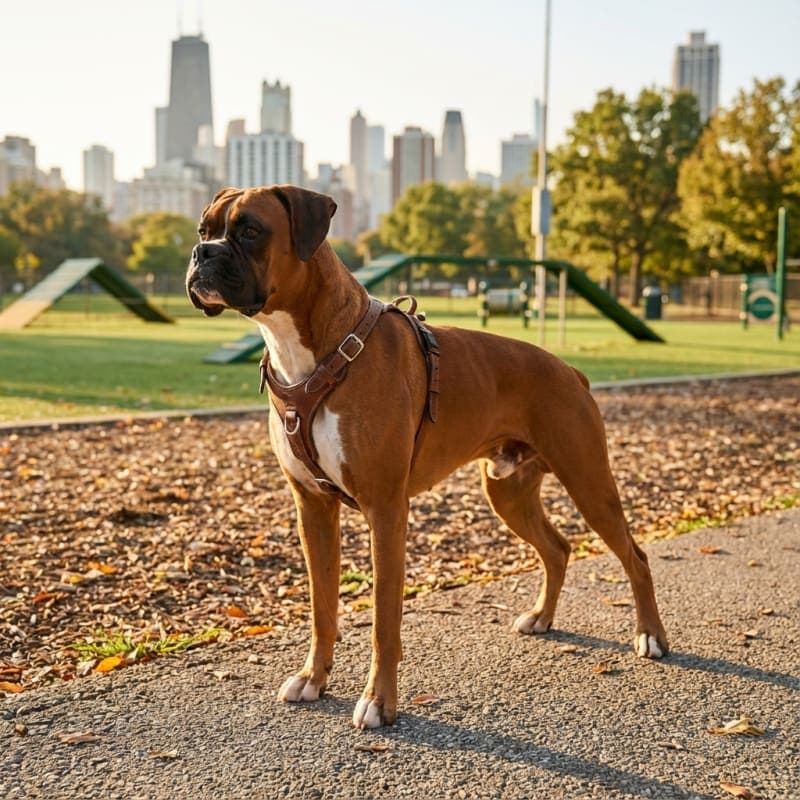
Boxer
FCI Group
2• FCI 144
Size
Medium
Origin Country
DE
Height
53-63 cm
Weight
25-38 kg
Lifespan
9-11 years
Temperament
Overview
The Boxer, known as Deutscher Boxer, is a medium-sized dog that has won the hearts of millions of dog lovers around the world. Its roots trace back to Germany, where, at the turn of the 19th and 20th centuries, systematic breeding of this exceptional breed began. The Boxer is characterized by its distinctive square build, broad muzzle with a short nose, and strong, well-developed bone structure.
This dog is full of energy, enthusiasm, and joy for life, loving physical activity and playtime with the whole family, especially with children. The FCI standard for this breed, updated in 2008, emphasizes its versatility as a companion, guard, and working dog. Boxers are known for their cheerful, balanced temperament and deep attachment to their families. Their intelligence and willingness to cooperate require regular training and mental stimulation to prevent behavioral issues.
The distinctive appearance of the Boxer – short, shiny coat, expressive head with a black mask, and muscular build – makes it easily recognizable. Boxers are also known for their alertness, courage, and loyalty, making them excellent guard dogs. At the same time, they are incredibly gentle and patient with children, making them ideal family dogs.
The temperament of Boxers is balanced – they combine energy with composure, joy with seriousness. With proper upbringing, they become wonderful life companions. Boxers need regular walks and intense physical activity to meet their high energy needs. Although their health may be prone to certain breed-specific conditions – such as cardiomyopathy, hip dysplasia, or respiratory issues related to their short nose – proper veterinary care and prevention are crucial.
In terms of grooming, Boxers are not very demanding due to their short coat; however, regular brushing and care for their ears, eyes, and skin folds are recommended. Boxers are deeply companionable dogs that desire to be close to their owner and do not tolerate prolonged solitude. Their history, temperament, appearance, and extraordinary personality make Boxers one of the most sought-after and beloved dog breeds worldwide.
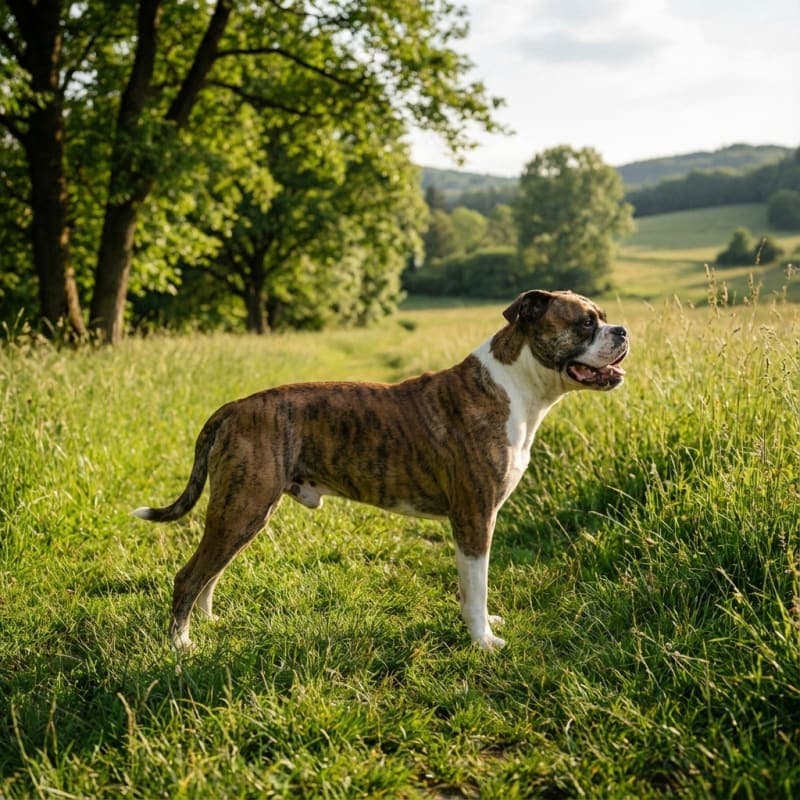
The Boxer is a dog with a characteristic square silhouette, distinguished by a strong bone structure and well-developed, clearly defined musculature. The FCI standard emphasizes that the muscles should be taut, strongly developed, and plastically shaped – which gives the Boxer an athletic, dynamic appearance.
Head and expression: The head of the Boxer is its most distinctive feature. It is proportional to the body, with a wide, blunt muzzle and strong jaws. The proportions of the head are precisely defined – the ratio of the length of the muzzle to the skull is 1:2. The muzzle is maximally wide and deep, with a characteristic slightly upturned nose. The lips are thick and fleshy, with the upper lip covering the lower jaw. Boxers have dark, intelligent eyes of medium size that express energy, curiosity, and friendliness. The characteristic black mask limited to the muzzle contrasts with the basic coat color and is one of the breed's identifying marks.
Coat color: Boxers come in two basic coat colors:
- Fawn (yellow) – in various shades, from light yellow (light beige) through red-yellow, red to dark red. Shades in the middle range are most preferred.
- Brindle – dark or black stripes on a fawn background, running towards the ribs. The stripes should be clearly distinguished from the base color.
Body structure: The Boxer has a compact, square build – the length of the body measured from the sternum to the ischial tuberosities is approximately equal to the height at the withers. The chest reaches to the elbows, is deep, and the sternum is clearly marked. The back is short, straight, and wide, with strong musculature. The loins are short and muscular. The forelimbs are straight, parallel, and well-muscled, with good bone structure. The hind limbs have strong muscles, clearly defined and firm. This structure provides the Boxer with stability, strength, and agility during movement.
Coat: The coat is short, hard, shiny, and tightly adheres to the body, which emphasizes the musculature and gives the Boxer an elegant appearance.
Ears and tail: Ears left natural are of appropriate size, set high on the sides of the highest point of the skull and lie close to the cheeks at rest. The tail is set rather high, carried upwards, of medium length, and remains natural (tail docking is prohibited in most European countries under animal protection regulations).
Dimensions: According to the FCI standard:
- Height at the withers for males: 57-63 cm
- Height at the withers for females: 53-59 cm
- Weight for males: about 30 kg (at a height of about 60 cm)
- Weight for females: about 25 kg (at a height of about 56 cm)
Movement: The movement of the Boxer is lively, powerful, and noble. The stride is energetic, flexible, with good reach and strong drive. The standard emphasizes that the movement should be confident, strong, and full of dignity, which perfectly reflects the character of this breed.
Boxers are known for their exceptional, friendly, and sociable temperament, which combines joy for life with loyalty and courage. The FCI standard emphasizes that a boxer should be confident, calm, and balanced. Their character is extremely important and requires careful attention.
In the family circle: Boxers are deeply attached to their family and show extraordinary loyalty. They are joyful, full of energy and enthusiasm, and their playful nature makes them excellent companions for children. A boxer is patient, gentle, and protective of the youngest family members, making them an ideal family dog. They love to participate in all family activities and desire to be the center of attention.
Alertness and defense: On the other hand, boxers can be suspicious and reserved towards strangers, which makes them excellent guard dogs. Their natural alertness, courage, and protective instinct make them willing to defend their family and territory. At the same time, they are not aggressive without reason – their reaction is thoughtful and controlled.
Socialization: It is crucial to provide boxers with appropriate socialization from a young age so they learn the proper responses to unfamiliar people, other dogs, and various situations. A well-socialized boxer is confident, friendly, and behaves well in different environments. Lack of socialization can lead to excessive suspicion or anxiety.
Intelligence and training: Boxers are very intelligent dogs that learn quickly and are eager to cooperate with their owner. Their sensitivity to human emotions makes them responsive to tone of voice and praise. However, they require a consistent yet gentle approach in training. They respond well to positive reinforcement and motivation, while harsh methods can be counterproductive.
Energy and need for activity: A boxer is a high-energy dog that needs regular stimulation both physically and mentally. They often exhibit tendencies towards destructive behaviors if left alone for too long without appropriate activities. Boredom and lack of activity can lead to behavioral problems such as excessive barking, chewing furniture, or hyperactivity.
Voice and barking: Boxers are quite vocal and often bark – they alert to approaching guests, react to strange sounds or movements. This is a natural trait of a guard dog that requires proper direction during training to prevent it from becoming a nuisance, especially in an apartment.
Emotional sensitivity: Boxers are very sensitive to changes in their environment and their owner's emotions. They can sense a person's mood and adjust their behavior accordingly. Therefore, it is important to ensure their mental comfort and provide a stable, calm home environment.
Intolerance of solitude: A boxer is a deeply companionable dog that does not tolerate prolonged solitude. Left alone for many hours, they may develop separation anxiety, which manifests as destruction of belongings, excessive barking, or other behavioral issues. They are ideally suited for families where someone is home or can take the dog along.
Defensive instincts: Strong defensive instincts make boxers willing to protect their family and territory. This makes them excellent guard and companion dogs that provide a sense of security.
Playfulness: Throughout their lives, boxers retain their puppy-like playfulness and enthusiasm. They love playing, retrieving, running, and engaging in any activities with their owner. This trait makes them incredibly cheerful and positively inclined companions.
Boxers are dogs with a life expectancy of 10 to 12 years, although some sources mention 9-11 years. Generally speaking, they are robust, resilient dogs, but their specific body structure – particularly the short nose and deep chest – along with genetic predispositions, make them prone to certain health issues.
Respiratory problems: Due to their short noses and upper respiratory tract structure, boxers may suffer from breathing problems, especially on hot days, during intense exertion, or stress. Brachycephalic syndrome (typical for short-headed breeds) can cause:
- Difficulty breathing
- Snoring and loud breaths
- Heat intolerance
- Risk of overheating
Cardiomyopathies: Boxers are particularly prone to heart diseases, including:
- Dilated cardiomyopathy (DCM) – weakening of the heart muscle
- Boxer cardiomyopathy (ARVC) – arrhythmogenic right ventricular cardiomyopathy, characteristic of this breed
Hip dysplasia (HD): Like many medium and large breeds, boxers can suffer from hip dysplasia – a developmental defect that leads to pain, stiffness, and in advanced cases, lameness. A responsible breeder performs X-ray examinations of the parents before breeding to minimize the risk of passing on the defect.
Spondylosis: Degenerative changes in the spine that can cause stiffness, pain, and limited mobility, especially in older dogs.
Gastric torsion (GDV): Due to their deep chests, boxers are prone to gastric torsion syndrome – a life-threatening condition that requires immediate veterinary intervention. To reduce the risk:
- Feed the dog 2-3 times a day in smaller portions
- Avoid intense exercise immediately before and after meals
- Ensure a calm eating environment without stress
Tendency to obesity: Boxers have a large appetite and a tendency to gain weight, especially if they do not receive adequate physical activity. Overweight leads to additional strain on the joints, heart, and shortens lifespan. Regular weight monitoring and adjusting the diet to the level of activity are crucial.
Hypothyroidism: Hypothyroidism can occur in boxers, leading to skin problems, weight gain, lethargy, and other symptoms. Diagnosis is relatively simple through blood tests, and hormone replacement therapy is effective.
Neoplasms: Unfortunately, boxers have a higher predisposition to developing tumors than many other breeds. The most common are:
- Mastocytosis (tumors of skin mast cells)
- Lymphomas
- Brain tumors
Skin and allergic problems: Boxers may suffer from food or environmental allergies, which manifest as itching, rashes, dermatitis, or ear infections.
Deafness in dogs with white coats: Boxers with a lot of white markings may be more prone to hearing problems, including congenital deafness. Responsible breeders perform BAER tests (hearing tests) on puppies before selling.
Prevention and care: To ensure a long, healthy life for a boxer:
- Regular veterinary visits (at least once a year, every 6 months for older dogs)
- Up-to-date vaccinations and deworming
- Cardiological examinations after 5 years of age
- A balanced diet tailored to age and activity level
- Weight control
- Avoiding intense exercise in heat
- Maintaining oral health
Boxers have short, shiny coats that do not require intensive grooming, making them relatively easy to maintain. However, regular care for the hygiene and condition of the coat and skin is important for the dog's health and comfort.
Brushing: It is recommended to brush regularly at least once a week using a soft brush or rubber glove. Brushing:
- Removes dead hair and minimizes shedding
- Stimulates blood circulation in the skin
- Distributes natural skin oils, giving the coat a healthy shine
- Allows for early detection of skin problems, ticks, or other abnormalities
Bathing: Boxers do not require frequent baths. Their skin is relatively dry and does not produce excessive sebum, which means they do not have a specific dog smell. Bathing should be done:
- Only when truly necessary (muddy, unpleasant odor)
- Using mild shampoos designed for dogs with sensitive skin
- No more than every 2-3 months, to avoid disrupting the skin's natural protective barrier
Ear cleaning: Regularly, at least once a week, checking and cleaning the ears is essential to prevent:
- Bacterial and fungal infections
- Buildup of wax and dirt
- Parasites (ticks, mites)
Eye care: Boxers have large, expressive eyes that require regular checking. You should:
- Check daily for discharge, redness, or irritation
- Gently wipe around the eyes with a damp, soft cloth
- Pay attention to excessive tearing, which may indicate allergies or blocked tear ducts
Care for skin folds: Some boxers have skin folds on their muzzle that can collect dirt, moisture, and bacteria. These areas should be regularly cleaned with a damp cloth and thoroughly dried to prevent skin infections and unpleasant odors.
Oral hygiene: Regular tooth brushing (ideally 2-3 times a week) using a dog toothbrush and toothpaste helps:
- Prevent tartar buildup
- Reduce the risk of periodontal disease
- Maintain fresh breath
Nail trimming: Nails should be regularly checked and trimmed as needed (usually every 3-4 weeks). If the dog actively runs on hard surfaces (asphalt, concrete), the nails may wear down naturally. Overly long nails can:
- Cause discomfort while walking
- Affect posture and skeletal structure
- Break, causing pain and bleeding
Skin inspection: During grooming, it is worth regularly checking the condition of the skin, paying attention to:
- Changes, lumps, growths (important due to predisposition to skin cancers)
- Redness, rashes, irritations
- Ticks, fleas, and other parasites
- Dry, flaky areas
Advantages of short coats: The short coat of boxers makes them relatively easy to keep clean and does not require professional grooming like long-haired breeds. Their skin is elastic, and the coat is shiny, which, with minimal grooming, provides an excellent aesthetic effect.
Boxers are very energetic, athletic dogs that require a lot of exercise and activity to maintain good physical condition, mental health, and balanced behavior. They are dogs made for work, and their energy and endurance need an appropriate outlet.
Daily needs: A boxer should receive at least 60-90 minutes of intense exercise daily, and for young, very active individuals, even more. Activities should include:
- Long, energetic walks
- Running (a boxer happily accompanies you on a jog)
- Fetch games
- Free running in a fenced area
- Interactive play with the owner
Canine sports: Boxers are excellent candidates for various dog sports that not only provide physical activity but also mental stimulation:
- Agility – utilizes the boxer's agility, speed, and intelligence
- Obedience – develops obedience and precision in command execution
- Cani-cross – running with a dog in the woods or terrain
- IPO/Schutzhund – protection sports that utilize natural instincts and intelligence
- Flyball – dynamic team play
- Tracking – scent work
Diversity and stimulation: Boxers love spending time outdoors and are eager to accompany their owners in various activities. It is important to diversify forms of movement – monotonous walks around the block will not satisfy their needs. Well-organized activities and varied engagements:
- Prevent boredom and behavioral problems
- Stimulate the mind and provide satisfaction
- Strengthen the bond between the dog and the owner
- Keep the dog in excellent physical condition
Consequences of lack of activity: Without adequate exercise, a boxer may:
- Become destructive – destroy furniture, chew on things
- Exhibit hyperactivity and difficulty concentrating
- Develop behavioral problems – excessive barking, jumping on people
- Gain weight, leading to health issues
- Show frustration and anxiety
Need for companionship: Boxers are very social and do not tolerate prolonged loneliness. They are ideal for families where someone is home or can take the dog along. Planning shared activities with family members helps keep the boxer in good physical and mental shape.
Safety notes: Due to their short noses and predisposition to respiratory problems:
- On hot days, intense exercise should be limited, especially during peak sunlight hours
- Provide access to shade and fresh water during activities
- Monitor the dog for signs of overheating – heavy breathing, blue gums, weakness
- Avoid intense exercise in stuffy, poorly ventilated areas
Activity for different age groups:
- Puppies (up to 12-18 months) – shorter, more frequent activity sessions, avoiding excessive strain on developing joints and bones
- Adult dogs – full, intense activity tailored to energy levels
- Seniors (over 8-10 years) – gentler forms of exercise, shorter walks, avoiding excessive strain on joints
Benefits of regular exercise: Regular, intense exercise:
- Keeps the dog in excellent physical condition
- Prevents obesity and related health issues
- Positively impacts mental health and balanced behavior
- Reduces stress and anxiety
- Strengthens the bond between the dog and the owner
- Increases lifespan and improves quality of life
Boxers are intelligent dogs, eager to learn and cooperate, which makes them relatively easy to train, especially when guided by consistent and experienced owners. However, their strong character, energy, and emotional sensitivity require a specific training approach.
Intelligence and willingness to learn: Boxers quickly learn new commands and are eager to cooperate with their owner. They are very bonded to their caregivers and want to please them, which motivates them to learn. This trait makes them excellent candidates for advanced training and canine sports.
Early start: It is worth starting training as early as possible – from 8-10 weeks of age. Boxer puppies are like sponges, absorbing knowledge and experiences. Early training allows for:
- Building a solid foundation of obedience
- Shaping proper habits
- Preventing the development of undesirable behaviors
- Utilizing the puppy's natural curiosity and openness
Positive reinforcement: Training based on positive reinforcement yields the best results. Boxers respond excellently to:
- Treat rewards – used as motivation during the learning of new commands
- Verbal praise – dogs are very sensitive to the tone of voice and enthusiasm of the owner
- Play as a reward – a favorite toy can be an excellent reinforcement
- Petting and physical contact – boxers love physical closeness with their owner
Avoiding harsh methods: It is important to avoid harsh, punitive training methods that can:
- Lead to behavioral problems
- Lower the dog's sense of security and self-confidence
- Destroy the bond between the dog and the owner
- Trigger fear or defensive aggression
Consistency and firmness: Although training should be gentle, consistency is key. The boxer must know clear rules and boundaries. The owner should be:
- Consistent in enforcing commands
- Firm but calm
- Clear in communication
- Predictable in reactions
Socialization: Socialization is absolutely crucial for boxers. They should from a young age:
- Meet different people – adults, children, people in uniforms
- Encounter other dogs and animals
- Experience various environments – city, park, stores, vehicles
- Get used to different sounds – traffic, sirens, fireworks
- Familiarize themselves with different surfaces and situations
Basic commands: Every boxer should master basic obedience commands:
- Sit, Lie down, Stay – basics of control
- Come – a key safety command
- Leave it, No – preventing undesirable behaviors
- Loose leash walking – comfort during daily walks
- Place – defining the dog's space
Advanced training: After mastering the basics, boxers can develop in:
- Advanced obedience
- Canine sports
- Defense training (if the owner has the appropriate qualifications)
- Learning tricks and fun commands
Short, frequent sessions: Short training sessions (10-15 minutes) repeated 2-3 times a day are more effective than long, exhausting training. Boxers, despite their high energy, can get bored with monotonous exercises.
Variety and fun: Training should be fun, diverse, and engaging. Boxers love challenges and new tasks. Monotony leads to boredom and loss of motivation.
Professional help: Owners, especially those with less experience, can benefit from:
- Group classes for puppies – great socialization and learning in a controlled environment
- Individual consultations with a trainer – personalized approach to specific issues
- Advanced classes – agility, obedience, defense sports
Joint work and bond: Properly conducted training not only teaches the boxer obedience but primarily:
- Builds a deep bond between the dog and the owner
- Provides mental stimulation necessary for this intelligent breed
- Gives the dog a sense of purpose and satisfaction
- Strengthens the dog's self-confidence
- Makes shared life harmonious and joyful
Boxers are dogs with a large appetite and a tendency to obesity, which makes their nutrition require special attention and discipline. A properly balanced diet is crucial for maintaining health, fitness, and longevity.
Caloric requirements: An adult boxer weighs on average 25-30 kg and needs about 1200-1800 kcal per day, depending on:
- Activity level (working or sporting dogs require more)
- Age (puppies and young dogs have higher needs, seniors lower)
- Individual metabolism
- Body condition (overweight dogs require calorie reduction)
High-quality food: Owners should choose premium or super premium dog food tailored to the needs of medium-sized dogs, which provide:
- High protein content (minimum 22-26% for adults, 26-30% for puppies) from high-quality sources – meat, fish
- Healthy fats (12-18%) that provide energy and support skin health
- Moderate amount of carbohydrates from whole grain sources (rice, oats, sweet potatoes)
- Vitamins and minerals – particularly important for heart health (taurine, L-carnitine)
- Omega-3 and omega-6 fatty acids for healthy skin and shiny coat
- Glucosamine and chondroitin to support joint health
Type of food: You can choose from:
- Dry food – convenient, economical, helps mechanically clean teeth
- Wet food – tasty, hydrating, easier to digest
- BARF diet (raw meat and bones) – natural, but requires knowledge of balancing and carries a bacteriological risk
- Homemade diet (cooked meat with vegetables) – requires consultation with a veterinarian or animal nutritionist
Feeding frequency: Due to the risk of gastric torsion, it is recommended to divide the daily portion into 2-3 smaller meals:
- Adult dogs – twice a day (morning and evening)
- Puppies – 3-4 times a day until 6 months of age
- Seniors – twice a day, possibly 3 smaller meals
- Prevents the feeling of overeating and discomfort
- Reduces the risk of gastric torsion
- Maintains a stable energy level throughout the day
- Helps with regular bowel movements
Weight control: Regular monitoring of weight and body condition is crucial. A healthy boxer should have:
- A visible waist when viewed from above
- Palpable ribs under a thin layer of fat
- A slightly tucked belly
- Joint strain and dysplasia
- Heart problems
- Shortened lifespan
- Decreased quality of life
Preventing gastric torsion: To minimize the risk:
- Avoid intense exercise directly before and at least an hour after meals
- Feed in a calm environment, without stress and competition from other animals
- Elevate bowls to an appropriate height (though this is controversial – some studies suggest elevated bowls may increase risk)
- Avoid large amounts of water immediately after eating
- Feed smaller portions more frequently
Hydration: Fresh water should be always available. Proper hydration is crucial for:
- Regulating body temperature (especially important in brachycephalic breeds)
- Proper kidney function
- Digestion
- Overall health
Puppy nutrition: Boxer puppies require special puppy food for medium breeds that supports proper bone, joint, and muscle development. Key points include:
- Do not overfeed – excessive growth rate leads to joint problems
- Ensure the proper calcium to phosphorus ratio
- Feed 3-4 times a day until 6 months
- Transition to adult food around 12-18 months of age
Senior nutrition: Older boxers (over 7-8 years) may require:
- Senior food with lower calories (less activity)
- A higher content of ingredients supporting joint health
- Supplements supporting cognitive function and heart health
- An easier-to-digest consistency
Prohibited products: Never give a boxer:
- Chocolate, coffee, tea (toxic)
- Grapes and raisins (damage kidneys)
- Onions, garlic, chives (destroy red blood cells)
- Avocado, macadamia nuts
- Chicken and fish bones (risk of choking and perforation)
- Sweets, candies, chewing gum with xylitol
- Fatty and spicy table scraps
Treats and snacks: Should be limited to a maximum of 10% of daily caloric needs. Use them as rewards during training, but remember to account for them in the daily calorie balance.
Special diets: In some cases, a boxer may require a special diet:
- Cardiac diet – for heart diseases (lower sodium content)
- Hypoallergenic diet – for food allergies
- Veterinary diet – for digestive, kidney issues, etc.
Characteristic Traits
Pros
- Cheerful
- joyful disposition
- Deep attachment and loyalty to family
- Excellent watchdog and alert
- Gentle and patient with children
- Intelligent and eager to learn
- Energetic and active playmate.
Cons
- Requires regular
- consistent training
- May suffer from cardiomyopathy and other health issues
- Does not tolerate prolonged solitude
- Tendency to obesity requires diet control
- Respiratory problems in heat due to short nose
- Requires a lot of exercise and stimulation.
Behavioral Ratings
Breed History
Boxers have a rich and fascinating history that dates back several centuries. Their ancestors were bullenbeisser, hunting dogs used in medieval Germany for hunting large game. This breed was developed through selective breeding in Germany at the end of the 19th century.
Bullenbeisser – the ancestors of boxers: The direct ancestor of the boxer was the small Brabant bullenbeisser (Brabanter Bullenbeisser), which was used by hunters during hunts. The task of these dogs was to catch the game revealed by hounds and hold it tightly until the hunter approached and dispatched the animal. For this task, the dog needed to have:
- The widest jaws with widely spaced teeth
- A short nose allowing it to breathe while holding the game
- Courage and determination
- Strength and endurance
The emergence of the modern boxer: At the turn of the 19th and 20th centuries, as hunting with bullenbeisser declined, German breeders – mainly from Munich – began the planned breeding of a new breed. They crossed bullenbeisser with English bulldogs to achieve:
- Soften the temperament
- Improve body proportions
- Standardize the type
- Create a versatile dog – both guarding and companion
Establishing the standard: In 1895, the first breed club – Deutscher Boxer Club was founded in Munich, which began work on standardizing the breed. The first official breed standard was developed in 1902 and became the basis for modern boxer standards worldwide.
Utility and military role: Boxers quickly gained a reputation as excellent working dogs. Their intelligence, courage, strength, and loyalty were highly valued. During World War I, boxers were used by the German army as:
- Messenger dogs (carrying messages between units)
- Sanitary dogs (locating wounded soldiers)
- Guard dogs
- Dogs for transporting small loads
Spread around the world: After World War I, boxers began to gain popularity outside Germany. In the 1920s, the breed reached Great Britain, where the British Boxer Club was established in 1936. During the same period, boxers made their way to the United States, where they quickly gained immense popularity.
Rise in popularity: In the 1940s and 50s, boxers became one of the most popular breeds in the USA and Europe. Their:
- Friendly, cheerful character
- Loyalty and attachment to family
- Excellent relationships with children
- Alertness and guarding abilities
- Distinctive, recognizable appearance
Modern times: Today, the boxer is one of the most popular dog breeds in both Europe and North America. According to the American Kennel Club (AKC), the boxer regularly ranks in the Top 10 most popular breeds. Although modern boxers rarely fulfill the working roles of their ancestors, their:
- Versatility as companion dogs
- Excellent performance in canine sports
- Therapeutic abilities (therapy dogs)
- Still valuable guarding traits
FCI Standard: The modern FCI (Fédération Cynologique Internationale) standard for boxers was updated in 2008 (standard no. 144). Classification:
- Group 2: Pinschers and schnauzers – molossoid breeds – Swiss herding dogs and other breeds
- Section 2.1: Molossoids, mastiff type
- With working trials
Heritage: The history of the boxer is closely linked to its role in human life – from wild hunting, through military service, to modern family life. This evolution reflects the remarkable adaptability, intelligence, and value of this breed. Boxers have retained the traits of their ancestors – courage, strength, determination – but have gained a gentle, friendly character that makes them one of the most beloved companion dogs in the world.