Field Spaniel
FCI Group
8• FCI 123
Size
Medium
Origin Country
GB
Height
N/A
Weight
18-25 kg
Lifespan
10-12 years
Temperament
Overview
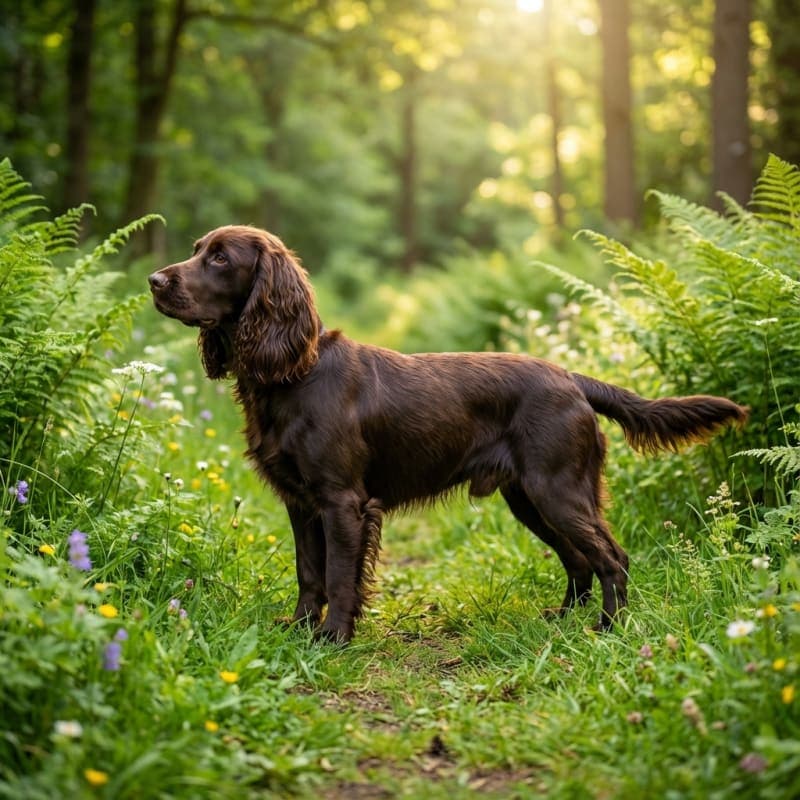
Field Spaniel is a dog breed that will surely attract the attention of dog lovers looking for a loyal, friendly, and incredibly sensitive companion. Originating from the United Kingdom, this beautiful and noble breed is characterized by its medium size and long, shiny coat in shades of black, liver, or golden.
Owners should dedicate time to daily grooming, which can be a wonderful way to strengthen the bond with their pet. The Field Spaniel was originally bred as a hunting dog for flushing and retrieving game, making it an ideal choice for active individuals who enjoy spending time outdoors.
Its skills in retrieving and flushing game are unmatched, but it is its extraordinary sensitivity and caring nature towards its owners that make it an exceptional family dog. Moreover, the Field Spaniel does not require as much exercise as other spaniels, making it more flexible regarding daily walks.
However, to be fully happy, it needs a moderate amount of exercise and the space that the countryside offers. In open terrain, this dog feels like a fish in water. The Field Spaniel will surely thrive in a home full of love and warmth, where it can spend time with the family.
This breed is extremely friendly and open to new acquaintances, which makes it unsuitable as a guard dog. Its intelligence is moderate, but with proper training, it can learn many useful commands.
It is worth noting that the Field Spaniel requires constant companionship to avoid separation anxiety issues. Therefore, it is best suited for homes where someone will always be with it. This dog is an excellent choice for individuals leading an active lifestyle, combining a love for nature with devotion to their four-legged companion.
The Field Spaniel is a medium-sized dog with a balanced, strong, and noble build, which reflects its purpose as a hunting dog. Height at the withers for males is about 46 cm, while body weight ranges from 18 to 25 kg, making it an ideal companion for active families.
Its head is noble with a well-shaped skull, a clearly defined occipital bump, and a long, dry muzzle. The eyes of the Field Spaniel are wide open, almond-shaped in shades of brown or hazel, giving it a gentle, serious, and intelligent expression.
The coat is long, smooth, shiny, and silky, occurring in various colors:
- Black
- Liver
- Blue roan
- Liver roan
- Any of the above with tan markings
The ears are moderately long, wide, and abundantly feathered, set low at eye level, which adds to its charm and elegant appearance. The chest is deep and well-developed, and the limbs are strong, muscular, and straight, indicating its ability to work as a hunting dog.
The tail is set low and should be carried level or slightly below the line of the back, never higher. The tail may be docked to one-third of its length. The Field Spaniel has an elegant and balanced appearance that attracts attention and evokes affection.
The Field Spaniel is a dog with a very friendly, sensitive, and independent temperament, making it an ideal companion for families and active individuals. This breed is known for its great affection towards its owners, as well as a strong need for closeness with people.
The Field Spaniel exhibits a moderate level of intelligence and is very attached to its family, which means it does not tolerate prolonged solitude and may suffer from separation anxiety. This dog is also very lively and eagerly participates in various forms of activity, from walks to playtime in the garden or outdoors.
The Field Spaniel is quite sociable and usually gets along well with other dogs and children; however, it is important to teach children how to treat the dog with respect and gentleness to avoid misunderstandings.
This breed also tends to be quite talkative, which can be bothersome, especially when left alone for extended periods. In such situations, it may bark out of boredom or frustration.
Field Spaniel owners should provide them with adequate physical and mental stimulation to prevent destructive behaviors that may arise from boredom or lack of activity. This dog also needs regular walks and playtime to help release its energy.
Overall, the Field Spaniel is a dog full of energy, affection, and love, which makes it an excellent companion for those leading an active lifestyle and willing to dedicate the appropriate amount of attention and time to it.
Field Spaniel has an average lifespan of 10 to 12 years. This breed is generally healthy and resilient, but it is prone to several genetic diseases and health issues that owners should be aware of.
The most common health problems include:
- Hip dysplasia - a developmental defect of the hip joint that can lead to limping and pain
- Cataracts - clouding of the eye's lens that can lead to vision loss
- Glaucoma - increased intraocular pressure that can damage the optic nerve
- Hypothyroidism - thyroid problems that can affect the dog's metabolism and energy
- Ear infections - due to their long, drooping ears
Field Spaniel owners should also pay attention to skeletal issues, especially at a young age, to avoid overloading the dog before reaching physical maturity, which typically occurs after 10-12 months.
Field Spaniels are less tolerant of extreme weather conditions, so it is advisable to provide them with appropriate protection from the cold, especially during winter. Their long fur is not sufficiently insulating, so these dogs should sleep indoors and have protective clothing on cooler days.
Proper nutrition and regular veterinary visits are crucial for maintaining the health of a Field Spaniel and for the early detection of any potential health problems.
Field Spaniel grooming is a key element of his daily care and requires regular owner involvement. This dog has long, silky fur that needs regular brushing to avoid tangling and matting.
Daily brushing is recommended to keep the coat in good condition, remove dead hair, and prevent the formation of mats. It is best to use a natural bristle brush or a comb with long teeth to reach the undercoat.
Additionally, special attention should be paid to the ears, which are long and heavily coated. They should be checked and cleaned regularly to avoid ear infections, which are a common problem in breeds with long, drooping ears. It is recommended to clean the ears at least once a week using a special ear cleaning solution.
Field Spaniels shed moderately, so frequent bathing is not necessary unless the dog is dirty after a walk or play in the field. During bathing, it is advisable to use gentle shampoos designed for dogs with long coats to avoid irritating their skin and to maintain the natural shine of the fur.
Regular nail trimming (every 2-3 weeks) and maintaining oral hygiene (brushing teeth 2-3 times a week) also contribute to the overall health and well-being of the dog.
Grooming a Field Spaniel requires time and commitment, but it brings a lot of satisfaction, and a well-groomed dog will look great and feel comfortable.
The Field Spaniel is a dog that requires moderate to high amounts of exercise. Daily physical activity is essential to keep the dog in good physical and mental condition and to prevent behavioral problems.
It is recommended that the Field Spaniel has about two hours of activity per day, which can include long walks, running, and outdoor play. An ideal solution is to combine a morning walk with an afternoon run or playtime in the garden.
This dog loves activity in open spaces where it can run freely, explore, and utilize its natural hunting instincts. The Field Spaniel is also an excellent companion for hunters, as its retrieving and flushing instincts make it great for hunting.
In addition to walks, it is worth engaging the dog in various forms of activity, such as:
- Fetching balls or frisbees
- Swimming (Field Spaniels love water)
- Agility or obedience training
- Hiking in the woods or rough terrain
- Scent games and searching for hidden objects
Owners should remember that a lack of adequate exercise can lead to behavioral problems such as hyperactivity, destructive behaviors, or barking. Well-organized walks and playtime are crucial for maintaining the physical and mental balance of this dog.
Field Spaniel training requires patience, consistency, and a gentle approach. This dog is intelligent but can also be independent and requires a firm yet gentle approach.
Aggression, shouting, and too fast a pace during training should be avoided, as the Field Spaniel is sensitive to stress and may become unwilling to cooperate or withdraw.
Proper training should be based on positive reinforcement, such as rewards, treats, and praise, which makes the dog more motivated to learn and more willing to follow commands.
It is worth focusing on basic commands, such as:
- Sit - a basic obedience command
- Lie down - calming the dog in various situations
- Come - calling the dog, especially important during off-leash walks
- Stay - teaching the dog to remain in place
- Fetch - utilizing natural hunting instincts
Training should be regular and tailored to the individual learning pace of the dog. Training sessions should be short (10-15 minutes) but frequent, to avoid overworking the dog and to maintain its interest.
Field Spaniels also require early socialization with other dogs, people, and various environments to develop their social skills and become more confident.
Regular participation in group classes or training can benefit both the dog and its owner, improving the relationship and cooperation between them. A well-trained Field Spaniel is a joyful, obedient, and balanced companion.
The Field Spaniel Diet should be well-balanced and tailored to its energy needs, age, weight, and activity level. This breed tends to gain weight, so it is important to avoid overfeeding and provide the appropriate amount of food.
It is recommended to feed the dog high-quality medium-sized dog food that contains the right nutrients, such as:
- Protein - from poultry, beef, or fish (min. 20-25%)
- Fats - for energy and a healthy coat (10-15%)
- Carbohydrates - from rice, potatoes, or vegetables
- Vitamins and minerals - for overall health and immunity
- Omega-3 and omega-6 fatty acids - for healthy skin and a shiny coat
It is also beneficial to introduce fresh fruits and vegetables as healthy snacks, such as carrots, apples (without seeds), or blueberries. Field Spaniels should have constant access to fresh water, especially after intense physical activity.
Regular meals at set times (twice a day for adult dogs) help stabilize the dog's metabolism and prevent digestive issues.
Owners should avoid giving the dog table scraps, as some human foods can be harmful to dogs (e.g., chocolate, onions, garlic, grapes).
Proper nutrition is crucial for maintaining the health, appropriate weight, and well-being of the Field Spaniel. Regularly monitoring the dog's weight and condition will help adjust the diet to its individual needs.
Characteristic Traits
Pros
- Friendly and open to new acquaintances
- a wonderful companion for active families
- gentle and affectionate towards owners
- flexible regarding daily walks
- an excellent hunting dog for retrieving.
Cons
- Requires daily coat care
- Not very effective as a guard dog
- Needs constant companionship
- Prone to separation anxiety
- Can be talkative.
Behavioral Ratings
Breed History
The Field Spaniel has a rich and fascinating history that dates back to the 19th century when it was created by crossing the old Sussex Springers with Cocker Spaniels. This dog was designed as a hunting dog, intended for flushing and retrieving game in challenging terrain.
Over the years, this breed faced various difficulties, including the threat of extinction in the early 20th century when changes in fashion and hunters' preferences led to a decline in interest in this breed.
The Field Spaniel was somewhat less popular than other spaniel breeds, and its dark coat made it difficult to track during hunts, which diminished its value in the eyes of hunters. Additionally, at one point, breeders aimed to elongate the dog's build, leading to health issues and a loss of functionality as a hunting dog.
In the 1950s, the number of Field Spaniels was so low that the Kennel Club revoked their right to obtain championship status. The breed was on the brink of extinction, and only a few dedicated breeders continued to work on its preservation.
Thanks to the determination of breeders and enthusiasts of the breed, the Field Spaniel was reactivated in 1969 and gained popularity as both a hunting dog and a companion. Breeders focused on returning to the original, more functional build, eliminating excessive elongation of the body.
Today, the Field Spaniel is valued for its wonderful temperament and retrieving skills, as well as being a great family dog that enjoys love and recognition in many homes. Although it is still not a popular breed compared to other spaniels, the Field Spaniel has loyal supporters who appreciate its unique character traits and beautiful appearance.