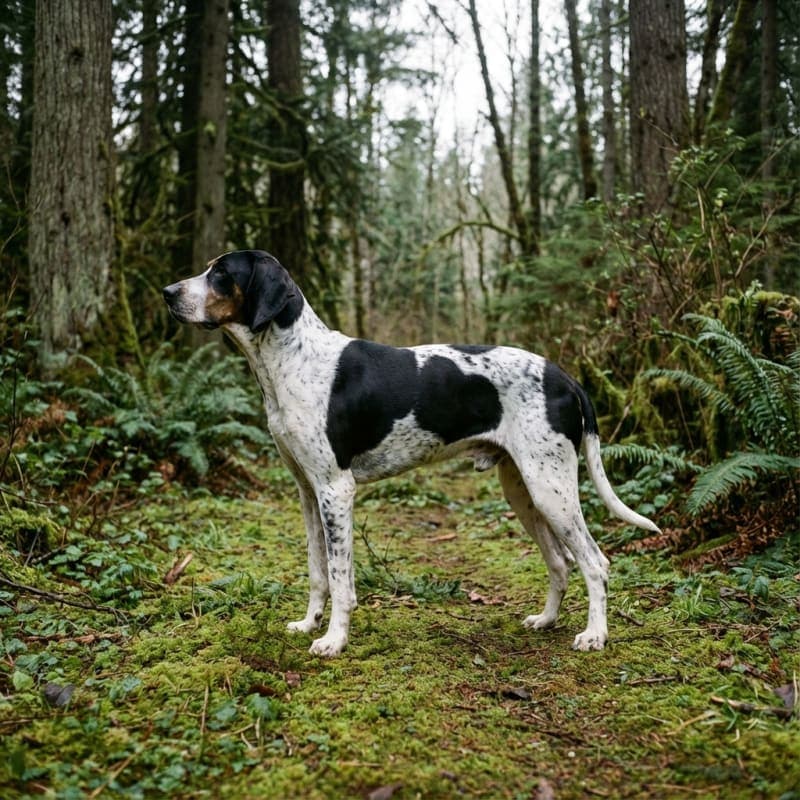
French hound black and white
FCI Group
6• FCI 220
Size
Large
Origin Country
FR
Height
62-72 cm
Weight
25-30 kg
Lifespan
10-12 years
Temperament
Overview
The French White and Black Hound, also known as Français blanc et noir, is a dog breed that attracts attention with its aristocratic elegance and impressive history dating back several centuries. Originating from France, where it has served the nobility in hunting large game, particularly deer and wild boar, its slim, harmonious silhouette and balanced build make it not only an effective, persistent hunter but also a beautiful, distinguished companion. Its short, strong, and dense coat with a characteristic white and black pattern makes it resistant to the whims of weather, moisture, and difficult terrain conditions.
This hound, classified in the group 6 FCI (section 1.1 - large hounds), stands out not only for its remarkable appearance but also for its extraordinary character. Energetic, persistent, and intelligent, it requires regular, intense physical and mental stimulation. This makes it a great companion for active adventures, long trips, and demanding challenges. Its height at the withers ranges from 65 to 72 cm for males and from 62 to 68 cm for females, which, combined with a weight of 25 to 30 kg, makes it a large, impressive dog that needs space and exercise.
The French White and Black Hound is a dog that is loyal, devoted, and deeply attached to its family, although it may sometimes show a certain independence and self-sufficiency typical of hounds. Owners should focus on positive, consistent training methods based on rewards and praise to address its potential stubbornness and strong hunting instinct. On the other hand, its natural motivation to act and outstanding predispositions for tracking and hunting make it a dog full of enthusiasm, passion, and readiness for new challenges.
In terms of health, the French White and Black Hound is generally a healthy, resilient breed, although it may be prone to conditions such as hip dysplasia, elbow dysplasia, or skin and ear problems. Regular veterinary visits, preventive check-ups, and attention to fitness are crucial for maintaining its good condition. The average lifespan of this breed is 10 to 12 years, which means many years of shared adventures, bonds, and unforgettable moments with this exceptional dog.
This dog absolutely needs space, freedom of movement, and activity, so it will not thrive in small apartments or urban environments without access to running areas. However, for active families, hunters, and those who value time spent outdoors, long trips, and adventures, the French White and Black Hound is an ideal, reliable companion. With its sociable nature, it gets along well with other dogs in a pack and with people, although it may be moderately wary and cautious of strangers. In this guide, you will find detailed information about its health, grooming, training, and many other aspects that will help you better understand, appreciate, and cherish this fascinating, noble breed.
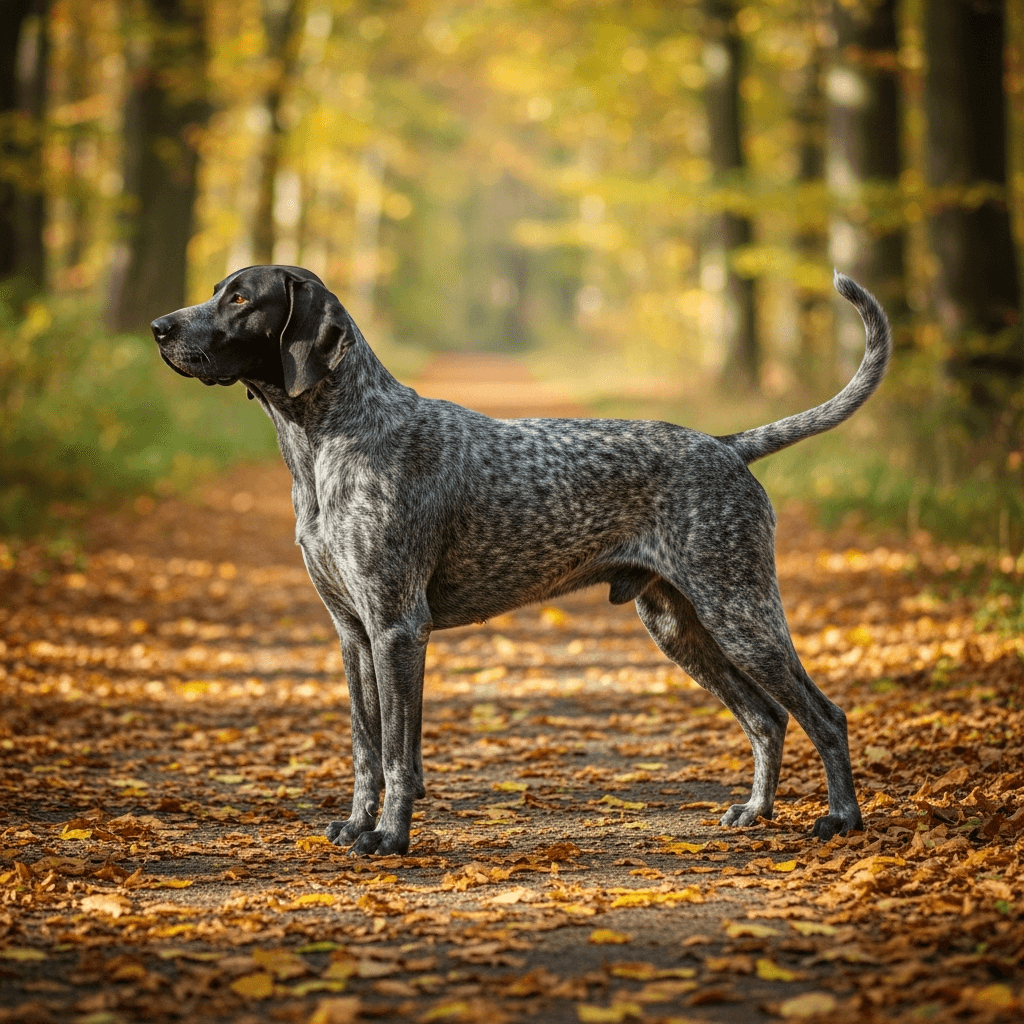
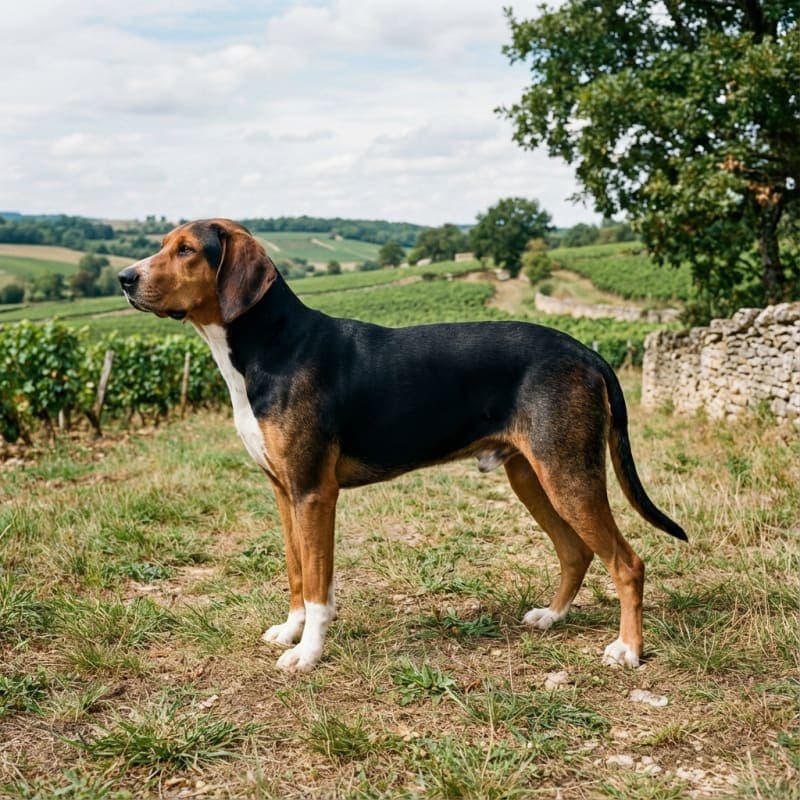
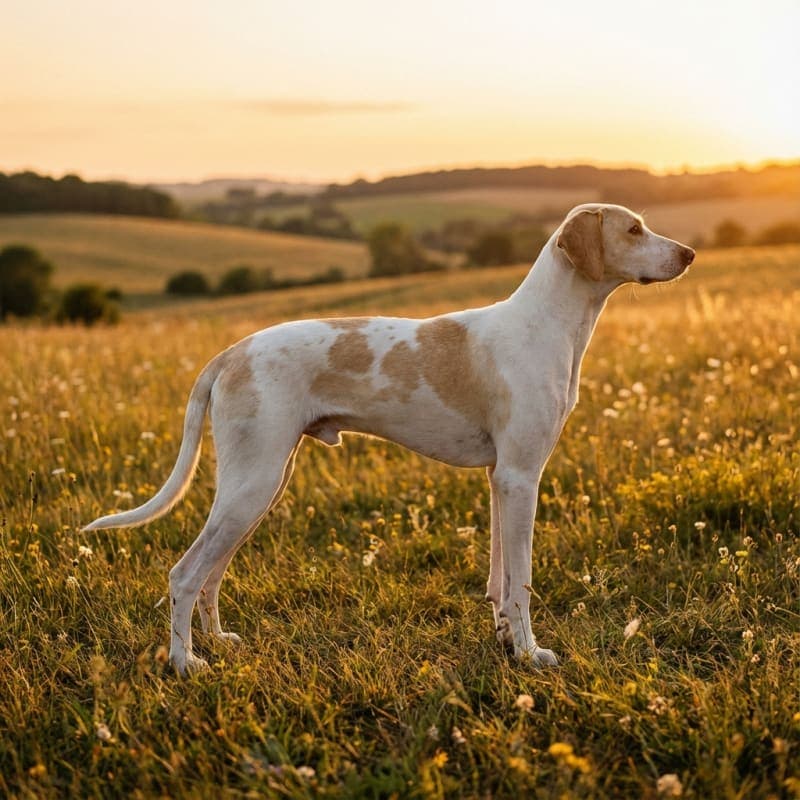
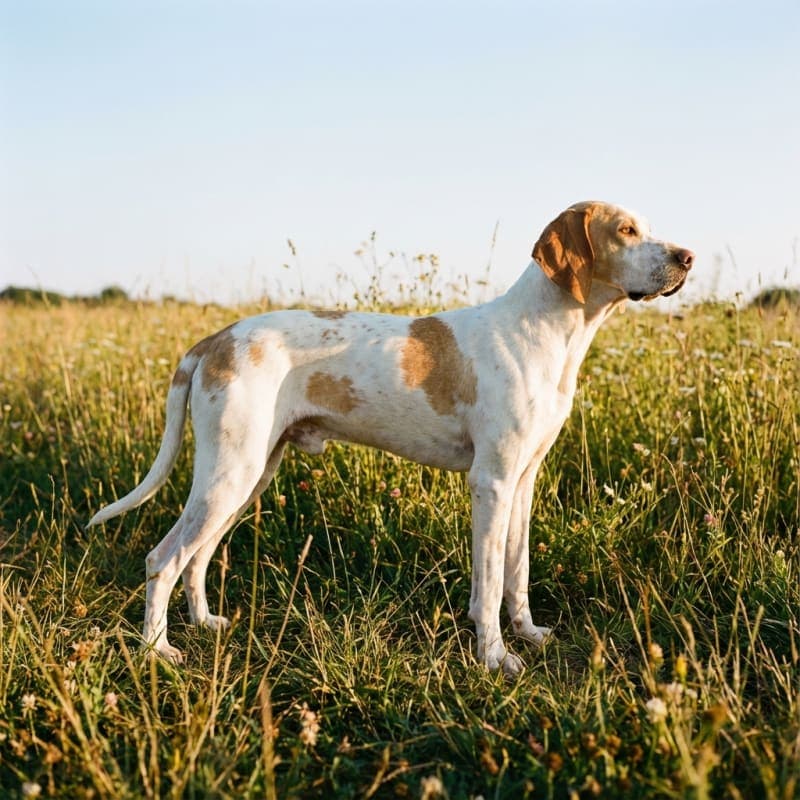
The French tricolor hound is a dog with an impressive, aristocratic appearance that attracts attention with its elegance, harmonious build, and distinguished posture. Its head is relatively large, long, and noble, with a slightly arched skull and a prominent, well-defined occipital bump. The dog's eyes are dark, large, and its gaze is intelligent, attentive, and trusting, full of gentleness and calmness. The ears are long, wide, set at the level of the eyes or slightly below, slightly turned, and should reach at least to the base of the nose, giving it a characteristic, recognizable expression.
The coat of the French tricolor hound is short, strong, dense, and well-adhering to the body, which makes it perfectly protected against various weather conditions, moisture, and cold. The coloration is white with black, well-defined spots that can cover significant parts of the body. Additional markings may appear on the body in the form of brown or blue-tan spots (blue mottle), which adds even more charm and character. The white coat predominates, and the black spots are clearly delineated and harmoniously distributed.
The dog's silhouette is slim, elegant, with a long, muscular neck, a strong, straight back, and a wide, deep chest, giving it a strong, athletic, and noble appearance. The height at the withers ranges from 65 to 72 cm for males and from 62 to 68 cm for females, making it a large, impressive dog that needs adequate space for living and activity. The body is proportional, well-balanced, with strong, straight limbs ending in compact paws with strong pads.
The tail is quite thick at the base, gradually tapering towards the end, long and elegantly carried, usually slightly raised during movement, which adds even more class and an aristocratic look. Overall, the French tricolor hound is a dog of outstanding elegance, strength, and harmony of proportions, combining nobility, functionality, and beauty, making it one of the most beautiful representatives of hound breeds.
The French Hound, black and white, is a dog with a balanced, stable, and calm temperament, characterized by deep loyalty, devotion, and a strong attachment to its family and owner. It is an intelligent dog, quick to learn and eager to cooperate, but its independent nature and strong, innate hunting instinct can sometimes make it stubborn, self-sufficient, and more difficult to train than companion breeds. The French Hound, black and white, is a sociable and pack-oriented dog that gets along well with other dogs and people, but it may be somewhat distrustful, cautious, and reserved towards strangers.
This breed does not tolerate being left alone at home for long periods and may suffer from separation anxiety, which can lead to behavioral problems such as destructive behaviors, excessive barking, or howling. The French Hound, black and white, is very active, energetic, and needs a lot of intense exercise, mental stimulation, and challenges, making it ideal for families, hunters, and people who lead an active, outdoor lifestyle. In relationships with children, it is usually gentle, patient, and tolerant, but due to its large size, strength, and exuberance, caution and supervision should be exercised in interactions with small children.
This is a dog that requires consistent, patient, and positive training to become a wonderful, balanced companion and family friend. A strong tracking and hunting instinct means that it may be prone to following interesting scents and escaping, so it requires a secure, fenced area or a leash during walks. It is a loud breed that enjoys using its distinctive, booming voice, which should be taken into account, especially in urban or densely populated environments.
The French hound, black and white, is a breed that generally enjoys good health, resilience, and endurance. The average lifespan is from 10 to 12 years, which is typical for dogs of this size and build. One of the most common health issues that representatives of this breed may encounter is hip dysplasia (HD) and elbow dysplasia (ED). This is a genetic condition in which the joints develop improperly, which can lead to pain, discomfort, and difficulty moving. Responsible breeders conduct screenings of the parents to minimize the occurrence of these conditions.
It is important to regularly monitor the dog's health, especially during the growth period of puppies, to avoid serious problems in the future. Providing a proper diet, avoiding obesity, and controlling activity levels can help prevent or alleviate the symptoms of dysplasia. In addition, the black and white French hound may be prone to skin infections, allergic dermatitis, and food or environmental allergies, which require appropriate care, hygiene, and possibly veterinary diagnostics.
Owners should also be vigilant for ear problems that can lead to infections, especially if the dog spends a lot of time outdoors, in humid conditions, or swimming. Long, drooping ears restrict airflow, which promotes the growth of bacteria and fungi. Regular cleaning and inspection of the ears are essential. Other conditions that may occasionally occur include eye problems, gastric dilatation volvulus (GDV), and some musculoskeletal disorders.
Providing the dog with a healthy, balanced diet, regular, vigorous physical activity, appropriate body weight, and routine veterinary visits will help keep it in excellent condition, health, and well-being for many years.
The care of the French white and black hound is relatively simple, not very time-consuming, and low-maintenance, making this breed attractive to many owners. It has a short, dense, strong, and well-fitting coat that does not require much attention or professional grooming. Regular brushing, at least once or twice a week, will help remove dead hair, dirt, and minimize shedding, which occurs twice a year, in spring and autumn. During the intense shedding period, it is advisable to significantly increase the frequency of brushing to keep the coat in good condition and minimize the amount of hair in the home.
Additionally, it is extremely important to regularly check and clean the dog's ears, as the French white and black hound, due to its long, drooping ears, is prone to ear infections, moisture accumulation, and dirt. Keeping the ears clean and dry, especially after walks in wet areas, swimming, or in humid conditions, will help prevent serious health problems. It is recommended to gently clean the ears with specialized products designed for dogs.
Nail care is also important, especially if the dog does not have the opportunity to naturally wear them down on hard surfaces during long walks. Regular nail trimming every few weeks will prevent overgrowth, discomfort, and mobility issues. Brushing the teeth several times a week, preferably daily, is also recommended to prevent gum disease, tartar buildup, and bad breath.
Bathing should be done relatively rarely, only when necessary, when the dog is very dirty, has an unpleasant odor, or after hunting in muddy terrain. Too frequent baths can disrupt the skin's natural protective oily layer. For the French white and black hound, grooming is not complicated or demanding, but it requires regularity, consistency, and attention to ensure the dog’s health, comfort, and well-being.
The French white and black hound is a breed that requires a very large amount of exercise, intense physical stimulation, and challenges. Due to its origin as a hunting and tracking dog, it has exceptionally high energy, endurance, and needs daily, long, and intense walks as well as outdoor play. It is ideally suited for activities such as running, cycling, hiking, trekking, work trials, or simulated hunting. This breed is known for its very high stamina, perseverance, and ability to work for many hours, making long, intense exercise sessions a natural pleasure and necessity for it.
Owners should provide the dog with at least 60-90 minutes of intense activity daily, preferably even more, to fully meet its physical, mental needs, and instincts. The French white and black hound is also a dog that loves to run, track, explore, and follow scents, so it should always be walked on a strong leash or in a safe, well-fenced yard or area to avoid escapes that may be caused by an irresistible urge to follow interesting scents and tracks of game.
The proper, regular amount of intense exercise will help keep the dog in excellent physical condition, maintain its body weight, and prevent serious behavioral problems that can arise from boredom, frustration, and lack of activity. Without the appropriate amount of exercise, the French white and black hound can become destructive, hyperactive, noisy, and difficult to manage. This is absolutely not a breed for people leading a sedentary lifestyle or for apartments. The ideal owner is an active person who loves the outdoors, long trips, and living close to nature.
Training a French tricolor hound can be both a challenge and a pleasure, depending on the owner's experience and consistency. This breed, due to its intelligence, quick learning ability, and eagerness to work, relatively quickly absorbs basic commands and behaviors. However, their independence, self-reliance, and very strong hunting instinct can sometimes make them stubborn, obstinate, and selectively obedient. Therefore, it is very important that training is conducted in a strictly positive, consistent, and patient manner, using rewards, praise, and positive reinforcement, which will help strengthen desired behaviors and build a strong bond with the dog.
Owners should be extremely consistent, patient, and determined, as the French tricolor hound may require additional time and repetitions to grasp certain commands, especially those related to recall and control. Early, systematic socialization, starting in the puppy stage, is absolutely crucial for the dog to learn appropriate behaviors in various situations, environments, and in contact with different people, animals, and stimuli. Recall training is extremely important, but due to the strong tracking instinct, the dog may be selectively obedient, especially when it picks up an interesting scent.
With proper, professional training, positive methods, and patience, the French tricolor hound can become an excellent, balanced companion that will work well with the owner and other household members. Avoid physical punishment, yelling, and negative methods, which can discourage the dog, ruin the relationship, and lead to problems. This breed responds best to consistency, clear rules, and positive reinforcement. For the best results, consulting with a professional trainer or instructor is recommended, especially if you plan to engage in hunting work.
The diet of the French white and black hound should be tailored to its active, intense lifestyle as well as its individual health needs and age. Owners should provide the dog with high-quality, balanced premium or super premium food that contains the appropriate, optimal amount of high-quality animal protein, healthy fats, carbohydrates, and a complex of vitamins and minerals to support its health, condition, energy, and endurance. It is generally recommended to feed food appropriate to the dog's age (puppies, adults, seniors), body weight, and activity level.
For the French white and black hound, it is extremely important to avoid overweight and obesity, as this can lead to serious health problems such as joint dysplasia, musculoskeletal issues, cardiovascular problems, and a shortened lifespan. Owners should regularly monitor the dog's weight, assess its body condition, and adjust the amount of food given based on the activity level, season, and needs. It is recommended to feed adult dogs twice a day with smaller portions instead of one large meal, which helps with better digestion and minimizes the risk of stomach bloating.
Additionally, fresh, clean water should always be available without restrictions to ensure proper hydration, especially after intense activity, on hot days, or during fieldwork. It is also important to regularly care for the dog's dental health by using dental treats, chews, and regularly checking the condition of the teeth and gums. For very active, working, or sporting dogs, it may be necessary to increase the caloric content of the diet or choose specialized food for high-activity dogs.
For puppies, it is recommended to use specialized food for large breed puppies that supports proper, controlled growth, development of bones, joints, and the muscular system. Regular consultations with a veterinarian regarding nutrition, supplementation, and diet will help tailor the feeding plan to the individual needs of the dog and its current health status.
Characteristic Traits
Pros
- Elegant and aristocratic appearance
- High intelligence and quick learning ability
- Deep loyalty to family
- Excellent hunting and tracking skills
- Sociable and gets along well with other dogs
- Healthy and resilient breed.
Cons
- Requires a lot of movement and activity
- Can be stubborn during training
- Not suitable for living in small apartments
- Strong hunting instinct may lead to escapes
- Noisy and likes to use its voice
- Does not tolerate long periods of solitude.
Behavioral Ratings
Breed History
The history of the French white and black hound is deeply connected to the long-standing tradition of hunting in France, where this breed was created for professional, specialized hunting of large game, particularly deer, wild boars, and roe deer. The ancestors of this noble breed are primarily dogs such as Gascon Saintongeois and English Foxhound, which had a fundamental influence on the development of the characteristic physical, behavioral, and hunting traits of the French white and black hound. This breed gained significant popularity in the 17th and 18th centuries when it was widely and intensively used by the French aristocracy, nobility, and court hunting circles for lavish, long hours of pack hunting.
As the years, centuries, and hunting needs changed, breeders carefully and systematically sought to create a dog with excellent, versatile hunting skills, endurance, intelligence, and pack cooperation, which gradually solidified the position of the French white and black hound as one of the most important, valued, and recognizable hound breeds throughout France. This breed also partially descended from the now-extinct Saintonge hound, which was known for its excellent condition, scent, and voice.
In 1957, the breed received an official standard, and in 1959 it was recognized by the International Canine Federation (FCI), with the standard being republished and updated in 1997 and 2009. Currently, the breed numbers around 2000 individuals, with 300-400 births annually, making it relatively numerous in France but rare outside the country's borders. Despite its considerable popularity in its homeland, particularly among hunters, the French white and black hound is relatively rare and little-known in other countries, making it an interesting, exclusive choice for hound enthusiasts and traditional hunting.
Today, the breed is valued for its outstanding hunting traits, balanced temperament, aristocratic appearance, and ability to work in a pack, making it one of the symbols of French canine heritage and hunting tradition.