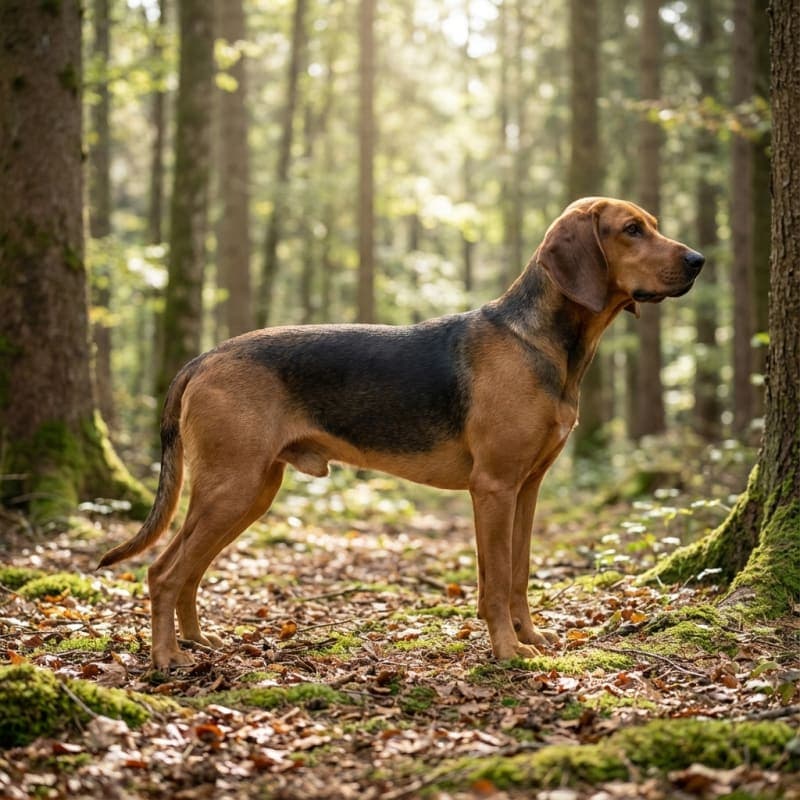
Bernese Mountain Dog
FCI Group
6• FCI 60
Size
Medium
Origin Country
CH
Height
33-43 cm
Weight
15-20 kg
Lifespan
12-14 years
Temperament
Overview
Bernese Hound, also known as the Swiss Hound (Schweizer Niederlaufhund), is a unique breed of hunting dogs with a rich history dating back to the turn of the 19th and 20th centuries. Originating from Switzerland, this dog was specifically bred for hunting small game in difficult, mountainous terrain and on enclosed hunting grounds. It is characterized by its excellent sense of smell, remarkable determination in tracking, and melodic voice while hunting, making it an exceptional hunting dog.
What distinguishes the Bernese Hound is its small stature and short legs, which allow it to move efficiently through rocky and densely overgrown areas. The height at the withers is only 33-43 cm, making it one of the smallest hunting dogs. Despite its small size, this dog is extremely efficient in its work – it can hunt independently, track game for hours, and does not lose energy even during long hunts.
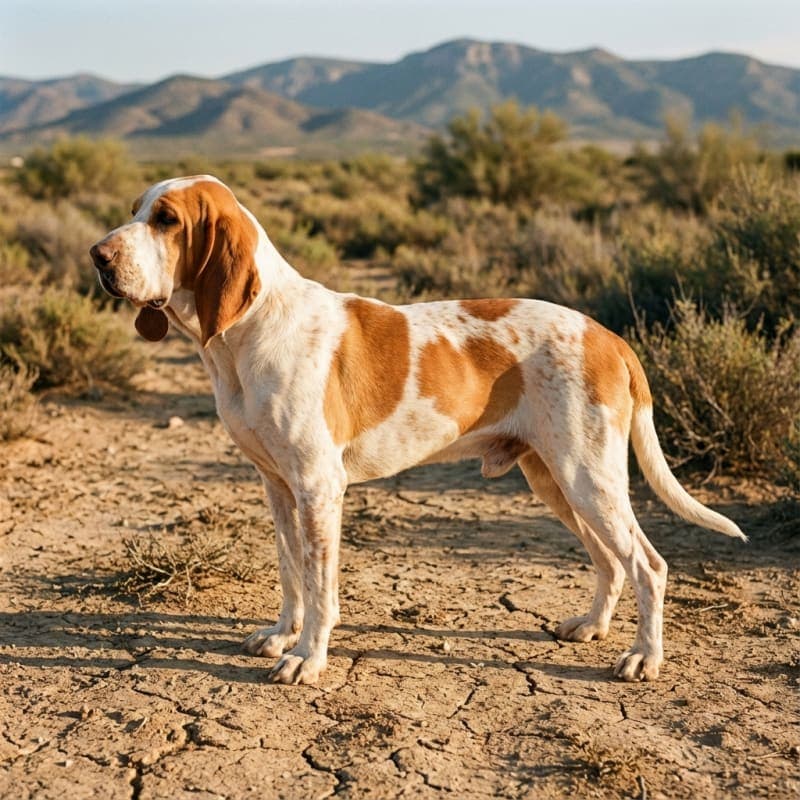
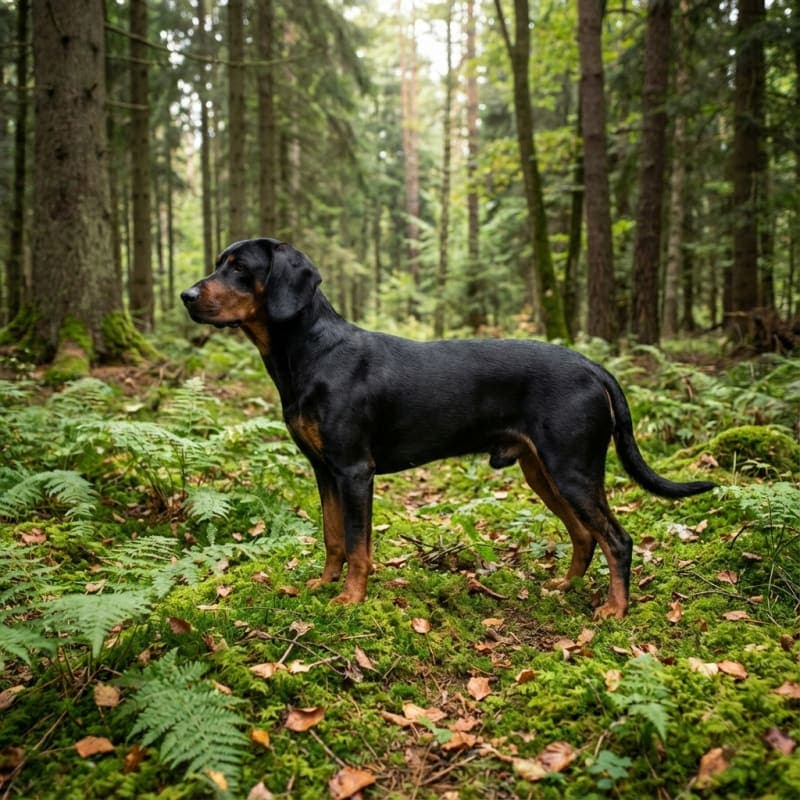
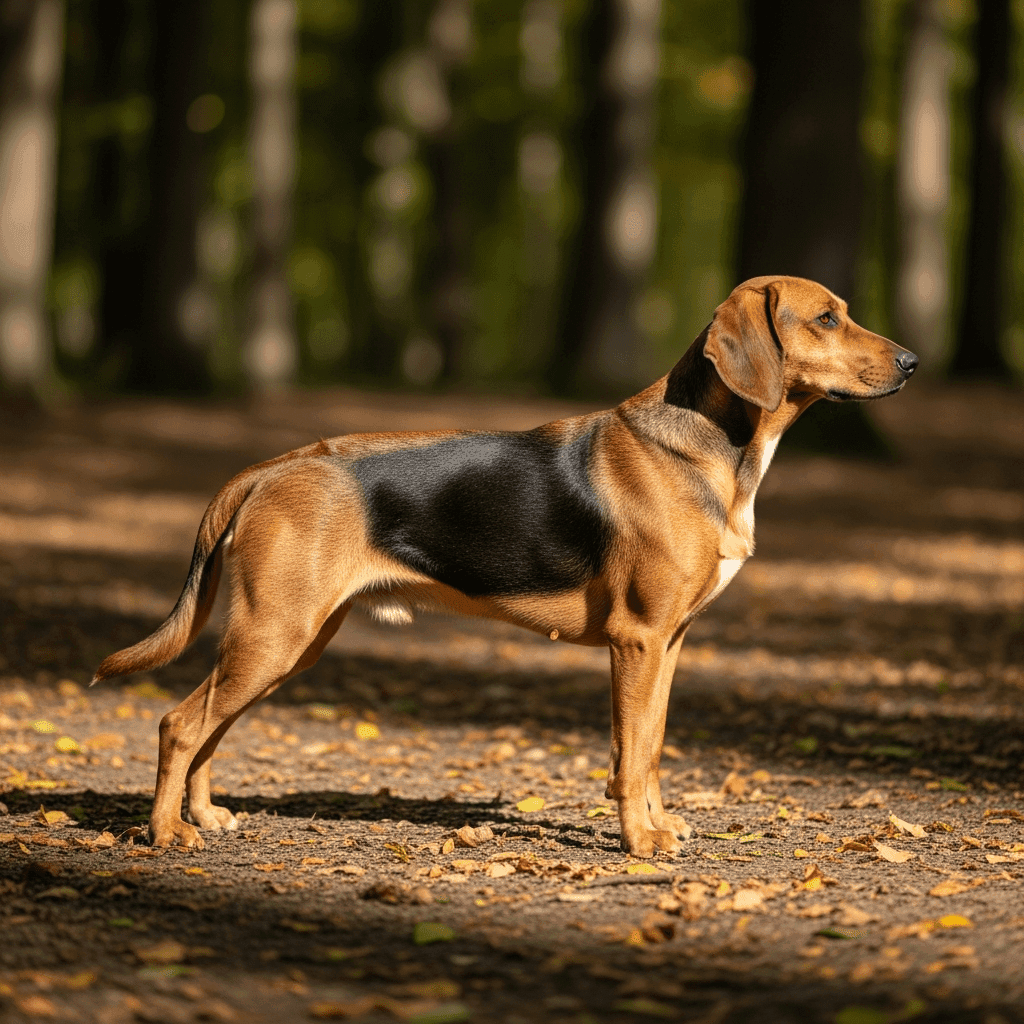
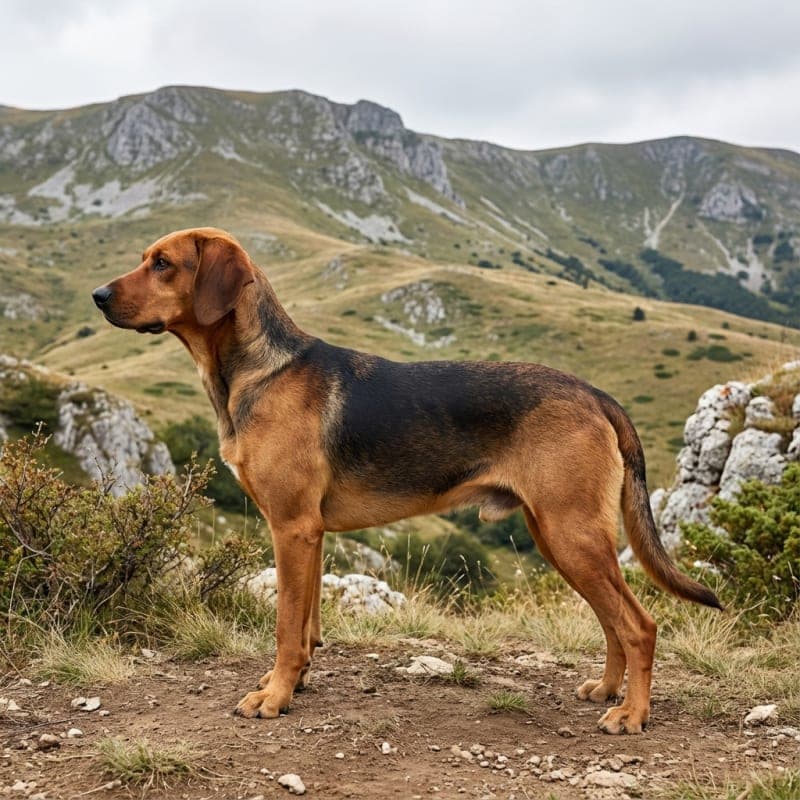
Characteristic of this breed are the long, drooping ears, which add charm and a gentle expression, and the short, smooth coat, which makes grooming easier. The coat color can vary – from tricolor (typical for the Bernese variety) with black, white, and orange-brown patches, to two-color combinations, and even solid shades. This color diversity makes each specimen unique.
The temperament of the Bernese Hound is a harmonious blend of hunting passion and friendly, family nature. These dogs are incredibly loyal to their owners and love to be the center of family attention. Despite their hunting independence, they need regular contact with people and feel best when they can participate in the daily life of their household. They are excellent companions for active families who enjoy long walks, mountain hikes, and outdoor adventures.
However, it is important to remember that high motivation for hunting can lead to a tendency to follow scents and chase after game. Therefore, it is crucial to provide the dog with a safe, fenced area and consistent training in obedience. Due to their intelligence, the Bernese Hound quickly learns new commands, but its hunting nature and a certain degree of stubbornness require the owner to have experience, patience, and the ability to use positive training methods.
An ideal guardian for the Bernese Hound is someone with experience in training hunting dogs or at least an active person willing to dedicate time to intensive exercise and mental stimulation for the dog. This breed requires at least 2 hours of physical activity daily – long walks, running in the field, playing fetch, or agility training are excellent ways to meet its exercise needs. Without the proper amount of movement, the dog may exhibit behavioral problems such as excessive barking or destruction of objects.
In summary, the Bernese Hound is a charming, energetic, and devoted breed that combines the traits of an excellent hunter with those of a wonderful family companion. It is an ideal choice for active, experienced owners who are ready to invest time in proper upbringing and provide the dog with plenty of exercise and outdoor adventures.
Bernese Mountain Hound is a dog with a characteristic, harmonious appearance that combines elegance, compact build, and hunting functionality. Its silhouette is rectangular – the body length clearly exceeds the height at the withers, giving it agility and allowing for efficient movement across difficult, mountainous terrain. The musculature is well-developed but not excessively massive, ensuring a balance between strength and agility. The height at the withers ranges from 33 to 43 cm (depending on gender), making it one of the smallest hounds in the world.
The head of the Bernese Mountain Hound is medium-sized, noble, and clean in lines. The skull is slightly convex, and the muzzle has an appropriate length, harmoniously proportional to the entire head. The expression is friendly and alert, reflecting its temperament. The eyes are dark, slightly oval, with a clear, intelligent gaze that attracts attention and evokes sympathy.
The most characteristic feature of this breed's appearance is its long, drooping ears, which are set low and carried close to the cheeks. They add charm and a gentle expression to the dog, as well as serve a practical function – helping to direct scents while tracking. The ears are covered with delicate, smooth fur.
The coat of the Bernese Mountain Hound is short, smooth, and dense, perfectly adhering to the body. It is easy to care for and weather-resistant, making it practical for a dog working in the field. The coloration is diverse and can take several variations:
- Tricolor (Bernese) – black patches with orange-brown and white markings, typical of the Bernese variety
- Two-color – white with orange or reddish-brown patches
- Black and tan – black with tan (orange-brown) markings
- Blue speckled – a less commonly seen coloration with blue-gray patches
The body is compact and well-built. The back is strong, straight, and well-muscled, while the loins are strong, providing stability during intense exertion. The chest is wide and deep, allowing for free breathing during prolonged tracking. Well-developed ribs ensure adequate lung capacity, essential for a hunting dog.
The limbs are strong, slender, and well-muscled, allowing for quick and agile movement in difficult terrain. Despite the short length of the legs, the proportions are harmonious, and the dog maintains elegance in motion. The paws are compact, with well-arched toes and thick pads, providing traction on rocky surfaces.
The tail is of medium length, carried in a harmonious extension of the line of the back or slightly raised during movement. It is covered with dense fur and adds elegance and expression to the dog while moving.
In summary, the Bernese Mountain Hound is a dog with a harmonious, compact silhouette and a pleasant, eye-catching appearance. Its body structure perfectly combines the traits of a functional hunter with those of an aesthetic, charming family companion. The variety of coat colors makes each specimen unique, and its elegance and proportionality make it attractive both in shows and in the field.
Bernese Mountain Dog is a breed with a fascinating, varied temperament, which harmoniously combines traits of hunting passion, friendly nature, and a certain degree of independence. These dogs are characterized by high motivation to hunt, which gives them a strong, innate tracking instinct. They are clever, agile, full of energy, and love to be active – such activity is a natural need for them, stemming from a long history of working in difficult mountainous terrain.
Their temperament can range from calm and balanced at home to lively, energetic, and enthusiastic during walks or hunts. This duality of character makes the Bernese Mountain Dog both a devoted, calm companion at home and an tireless worker in the field. The key to this breed's happiness is the right level of physical activity and mental stimulation – without it, the dog may become restless, hyperactive, and exhibit behavioral problems.
In relationships with people, the Bernese Mountain Dog is usually friendly, affectionate, and loyal. These dogs can form strong, deep emotional bonds with family members and are known for being devoted, faithful companions. Despite their independent hunting nature, they need regular social interaction and time spent with their owner to feel happy, fulfilled, and emotionally balanced. They love being the center of attention and actively participating in family life – their presence is always felt and brings joy.
Owners should be prepared for their dog to require regular interactions, play, and shared activities. The Bernese Mountain Dog is not a breed that will be satisfied with merely being a decoration in the home – it needs engaging tasks, challenges, and stimuli. The ideal situation is the opportunity to participate in outdoor adventures, mountain hikes, or even hunts, where it can fully utilize its natural skills.
However, due to their strong hunting instinct, they may be prone to chasing smaller animals, such as rabbits, squirrels, or birds. Therefore, it is extremely important to provide them with a safe, fenced environment and consistently work on obedience and impulse control. Their independence and a certain degree of stubbornness may require a experienced, consistent owner who employs positive training methods based on rewards and motivation.
Training the Bernese Mountain Dog should focus on socialization from a young age and teaching basic obedience to help it develop healthy, positive behaviors. It is important for the dog to learn when it can freely follow its instincts and when it must stay with the owner and obey commands. Proper training in impulse control is crucial for the dog's safety and the owner's comfort.
In the company of other dogs, the Bernese Mountain Dog usually behaves friendly and gets along well, especially if it has been properly socialized from puppyhood. They enjoy interacting with other animals, and their sociable nature allows them to play and cooperate with other breeds. They are also known to do well in families with children, although their energy and tendency for lively play can sometimes be too intense for young children. It is always advisable to supervise interactions between the dog and small children to ensure the safety of both parties.
In contact with other pets, such as cats or rodents, the Bernese Mountain Dog may exhibit hunting instincts, so early socialization is key. If the dog has been accustomed to the presence of other animals from puppyhood, it can learn to accept them as family members rather than potential prey.
In summary, the Bernese Mountain Dog is a lively, energetic, friendly, and loyal breed that thrives in active families ready to dedicate time to training, care, and providing the right amount of exercise. Their temperament combines traits of an independent hunter and a loving family companion, making them unique dogs for experienced owners who value harmony, activity, and a deep bond with their pet.
Bernese Mountain Dog is generally a healthy and resilient breed, which results from its long history of working in harsh mountain conditions and careful breeding selection. The average lifespan of these dogs ranges from 12 to 15 years, making them relatively long-lived compared to many other hunting breeds. However, it is important to pay attention to several health issues that may occur in this breed to ensure the best possible care and quality of life for the dog.
One of the most common health problems in the Bernese Mountain Dog is hip and elbow dysplasia. This genetic condition can lead to pain, stiffness in the joints, and mobility issues, especially in older age. Regular orthopedic examinations by a veterinarian, particularly for dogs intended for breeding, can help prevent the spread of this condition. A proper diet rich in joint-supporting ingredients (such as glucosamine and chondroitin) and moderate, regular physical activity can significantly reduce the risk of developing dysplasia.
Dogs of this breed may also be prone to ear infections, which is closely related to their long, drooping ears that can trap moisture, dirt, and debris. Without proper ventilation and regular cleaning, the ears can become an environment conducive to the growth of bacteria and fungi, leading to painful inflammations. Owners should regularly check their dog's ears – at least once a week – and gently clean them using special products recommended by a veterinarian. It is important to pay attention to symptoms such as scratching at the ears, shaking the head, or unpleasant odors, which may indicate an infection.
It is also recommended that owners maintain a healthy weight for their dog, as overweight can lead to many serious health problems, including heart disease, diabetes, joint issues, and a shortened lifespan. Due to their active lifestyle, the Bernese Mountain Dog requires an appropriate amount of calories, but not in excess. The key is a balanced diet tailored to the activity level and regular weighing of the dog to monitor its condition.
Attention should also be paid to oral and dental health. As with many breeds, neglecting dental hygiene can lead to tartar buildup, gum disease, and tooth loss. Regular tooth brushing and the use of special treats and toys that promote oral hygiene can help prevent these issues.
Additionally, some individuals may be prone to skin allergies, which can cause itching, skin redness, and hair loss. The causes can vary – from food allergies to reactions to environmental factors such as pollen or dust mites. If allergic symptoms occur, it is advisable to consult a veterinarian who can help determine the cause and apply appropriate treatment.
Proper veterinary care, regular vaccinations, deworming, and disease prevention are crucial to ensure a long, healthy, and happy life for the Bernese Mountain Dog. Owners should also consider regular check-ups, especially as the dog enters its senior years (around 8-9 years), to detect any potential health problems early and treat them effectively.
In summary, with proper care, a balanced diet, regular physical activity, and health prevention, the Bernese Mountain Dog can enjoy a long, healthy, and active life, being a loyal companion for many years.
The care of the Bernese Hound is relatively simple and uncomplicated, making this breed attractive to many potential owners who value functionality and ease of maintenance. Their short, smooth coat does not require intensive grooming or visits to a professional groomer. Regular brushing, at least once a week, is fully sufficient to remove dead hair, minimize shedding, and maintain a healthy, shiny coat.
It is advisable to use a soft brush made of natural bristles or a rubber grooming glove, which gently massages the skin, stimulates blood circulation, and removes dead hair without causing irritation. Brushing is also an excellent opportunity to examine the dog's skin for any changes, such as ticks, wounds, rashes, or other abnormalities, especially after long walks in the field.
If the dog plays outside and collects dirt, mud, or other contaminants, it is enough to wipe it down with a damp cloth or towel to remove the impurities from the coat. Too frequent baths can dry out the skin's natural protective layer and lead to irritation, so it is recommended to bathe the Bernese Hound only as needed – typically once every 2-3 months or when the dog is particularly dirty or has an unpleasant odor. It is worth using gentle, dog-specific shampoos that do not disturb the skin's natural pH.
An extremely important aspect of grooming is regularly checking and cleaning the ears. Due to their long, drooping ears, the Bernese Hound is more prone to the accumulation of dirt, wax, and moisture, creating ideal conditions for the development of bacterial and fungal infections. Owners should check the dog's ears at least once a week and gently clean them using special ear cleaning solutions available in pet stores or from veterinarians. Cotton swabs should never be used, as they can damage the delicate eardrum – it is sufficient to moisten a gauze pad or cotton ball and gently wipe the accessible part of the ear.
Another important aspect of grooming is trimming the nails. If the dog does not naturally wear them down while walking on hard surfaces, they should be regularly trimmed to prevent them from growing too long. Overgrown nails can lead to discomfort while walking, joint problems, and even painful ingrowth. It is recommended to trim the nails every 3-4 weeks using special scissors or clippers designed for dogs. If the owner does not feel confident performing this task, it is advisable to seek help from a veterinarian or professional groomer.
Oral hygiene is also an essential part of grooming, often overlooked by owners. Regularly brushing the dog's teeth – ideally 2-3 times a week – can significantly prevent the buildup of tartar, gum disease, and bad breath. It is important to use toothpaste designed for dogs (human toothpaste can be toxic to animals) and a soft toothbrush. Additionally, special dental treats, chew toys, or mouthwash can be used to support dental hygiene.
Owners should also be aware that a healthy diet and proper grooming can significantly impact their dog's overall health and well-being. Regular check-ups with the veterinarian will allow for early detection of potential problems and ensure that the dog remains in excellent condition.
In summary, grooming the Bernese Hound does not require a large time commitment or specialized skills – regularity, basic tools, and care for the dog's health are sufficient to enjoy its beautiful, healthy appearance and excellent well-being for many years.
Bernese Mountain Dog is a breed with very high physical activity needs, which directly stems from its history and purpose as a hunting dog. These dogs, originally bred for intense hunting in the challenging, mountainous terrain of Switzerland, possess extraordinary energy, endurance, and a constant need for movement. To remain healthy, happy, and emotionally balanced, they must be provided with a suitable, regular dose of physical exercise.
It is recommended that a Bernese Mountain Dog receives at least 2 hours of intense activity daily, spread over several sessions. This can include long walks, vigorous running in the field, mountain climbing, playing fetch, or training specialized hunting skills. The ideal environment for this breed is forested, mountainous areas, fields, and meadows, where the dog can freely explore its surroundings, track scents, and satisfy its natural instincts.
Thanks to its agility and endurance, the Bernese Mountain Dog excels in various dog sports disciplines, such as:
- Agility – obstacle courses that engage both the body and mind of the dog
- Obedience – training that develops focus, impulse control, and the bond with the owner
- Mantrailing – tracking scent trails, which perfectly matches the breed's natural abilities
- Canicross – running with the dog in a special harness, excellent for developing endurance
- Nosework – scent work that stimulates the tracking instinct
These activities not only help maintain excellent physical condition but also mentally stimulate the dog, which is extremely important for this intelligent and active breed. Lack of proper mental stimulation can lead to boredom, frustration, and behavioral problems.
Owners should be aware that lack of adequate exercise can lead to serious behavioral issues, such as:
- Excessive barking and howling
- Destruction of household items (furniture, shoes, cushions)
- Hyperactivity and nervousness
- Depression and apathy in extreme cases
- Tendencies to escape in search of stimulation
- Aggression or anxiety resulting from frustration
Therefore, it is crucial that physical activity is a regular, daily routine, rather than just an occasional addition. Owners should be prepared to dedicate time to long, vigorous walks, regardless of weather conditions – the Bernese Mountain Dog thrives in rain, snow, and cold thanks to its thick, protective coat.
It is also worth remembering that these dogs love to explore their surroundings, track scents, and follow trails, so providing them with a safe place to run freely, such as a fenced garden or enclosed forest areas, can be extremely beneficial. This allows them to run, play, and enjoy their natural environment, contributing to their overall mental and physical well-being.
Owners should also introduce a variety of activities so that their pets do not get bored and have the opportunity to develop their skills in different areas. A combination of walks, running, playing, obedience training, and dog sports will provide comprehensive stimulation and satisfaction.
In summary, the Bernese Mountain Dog is a breed for truly active people who love spending time outdoors, engaging in outdoor sports, and are willing to dedicate a significant part of the day to ensuring their dog gets the proper amount of exercise. For the right owners, these dogs will be excellent adventure companions, loyal and energetic partners for shared activities, and a source of endless joy and motivation for an active life.
The training of the Bernese Mountain Hound can be both an challenge and an extraordinary pleasure, depending on the owner's experience and the methods used. Dogs of this breed are intelligent, eager to learn, and quickly absorb new commands, but their characteristic hunting independence and a certain degree of stubbornness may require a consistent, patient, and experienced owner.
A key aspect of training the Bernese Mountain Hound is early socialization, which should begin as early as 8-12 weeks of the puppy's life. Introducing the young dog to various situations, environments, sounds, smells, people, and other animals will help it learn appropriate behaviors and develop confidence. Socialization also prevents the development of fears, aggression, and behavioral problems in the future.
Owners should strive to use positive training methods based on rewards, praise, and motivation. Using treats, toys, verbal praise, and petting as rewards for good behavior is extremely effective for this breed. The Bernese Mountain Hound responds well to positive reinforcement, which builds trust, a bond with the owner, and a willingness to cooperate. It is important that rewards are given immediately after the desired behavior is performed so that the dog can clearly associate the action with the consequence.
During training, it is important to avoid harsh, punitive methods, such as yelling, physical punishment, or tugging, as these can lead to fear, insecurity, loss of trust, and behavioral problems. The Bernese Mountain Hound is a sensitive dog that responds best to a gentle but consistent approach. If the dog makes a mistake, instead of punishing it, it is better to simply ignore the behavior or redirect the dog's attention to the desired action.
Regular short training sessions, lasting 10-15 minutes, are much more effective than long, exhausting training sessions. The Bernese Mountain Hound has high intelligence but also a tendency to get bored if tasks are monotonous or too repetitive. Therefore, it is worth introducing variety, play, and elements of interest into the training to maintain the dog's attention and motivation.
This breed responds well to routine and consistency, so establishing a regular schedule for training, feeding, and walks will help achieve better results. Dogs like to know what to expect, and predictability gives them a sense of security.
One of the most important elements of training is teaching leash walking and impulse control. Due to their strong hunting instinct, the Bernese Mountain Hound may have a tendency to pull after game, follow scent trails, or escape. Therefore, it is crucial to teach the dog to walk calmly by your side, respond to calls, and ignore distracting stimuli. Training basic commands, such as sit, stay, come, no, and leave it, is absolutely essential for the dog's safety and the owner's comfort.
It is also worth working on controlling barking, as the Bernese Mountain Hound, being a hunting dog, has a natural tendency to make sounds while tracking. Although the melodic voice of this breed is valued in hunting, it can be problematic in a home environment, especially in apartment buildings or densely populated urban areas.
Owners should also be prepared to be patient and persistent, especially when their dog shows stubbornness or independence. The Bernese Mountain Hound may sometimes selectively hear commands, especially if something more interesting (like a game trail) catches its attention. In such situations, it is crucial to maintain calmness, consistency, and a positive attitude.
It is worth considering participating in obedience courses or group training, which will not only help in learning basic commands but also provide socialization with other dogs and people. Professional trainers can also assist in addressing specific behavioral issues and adapting training methods to the individual needs of the dog.
For advanced owners, it is worth considering training in hunting skills, such as mantrailing, nosework, or simulated hunting, which will allow the dog to utilize its natural instincts in a controlled, safe manner. Such activities will provide the mental and physical challenge that is essential for this breed.
In summary, the proper approach to training the Bernese Mountain Hound—based on positive reinforcement, consistency, patience, and understanding of the breed's natural instincts—will make it a rewarding experience, building a bond and bringing joy to both the dog and its owner. With the right training, the Bernese Mountain Hound will become an obedient, balanced, and wonderful companion for many years.
A proper diet is a key element of health, well-being, and longevity for the Bernese Mountain Dog. Due to their active lifestyle, high energy needs, and specific breed requirements, it is extremely important to provide them with a balanced, high-quality food tailored to their age, size, activity level, and individual health needs.
Owners choosing this breed should opt for premium or super-premium foods that contain natural, high-quality ingredients such as:
- Meat as the first ingredient (chicken, beef, lamb, fish) – a source of high-quality protein essential for muscle building
- Healthy carbohydrates (brown rice, sweet potatoes, oats) – a source of energy for active dogs
- Vegetables and fruits (carrots, broccoli, berries, apples) – a source of vitamins, minerals, and antioxidants
- Healthy fats (fish oil, flaxseed oil) – supporting healthy skin, a shiny coat, and brain functions
- Joint-supporting ingredients (glucosamine, chondroitin) – particularly important for active hunting dogs
It is advisable to avoid foods containing artificial additives, preservatives, colorings, fillers, and excess grains, which can lead to allergies, digestive problems, and low-quality nutrition.
Adult dogs should be fed twice a day – in the morning and evening – which helps maintain a stable weight, healthy metabolism, and prevents feelings of hunger. Dividing the daily portion into two meals also reduces the risk of gastric torsion, which can affect deep-chested dogs, although the Bernese Mountain Dog is not among the breeds most prone to this condition.
However, it is important to pay attention to the amount of food given, adjusting it to the dog's activity level. Active hunting dogs need more calories than dogs with low activity levels. Overweight can lead to many health problems, such as:
- Joint dysplasia and orthopedic issues
- Heart and circulatory diseases
- Diabetes
- Reduced quality of life and shortened lifespan
Owners should regularly monitor their dog's weight and body condition, following the manufacturer's feeding guidelines and adjusting portions as needed. Ideally, a slight outline of the ribs should be felt under the layer of skin and muscle, and the silhouette should have a visible waist when viewed from above.
For puppies, it is extremely important to use food specifically designed for young dogs, which supports their rapid growth, bone development, muscle growth, and immune system. Puppies should be fed 3-4 times a day until about 6 months of age, after which they can gradually transition to two meals a day. It is important to avoid feeding puppies adult dog food, as it does not provide the appropriate amount of nutrients necessary for proper development.
For seniors (over 8-9 years), it is recommended to switch to food dedicated to older dogs, which contains fewer calories but more ingredients that support joint, heart, and immune system health. Seniors may have a slower metabolism and lower energy needs, so it is important to adjust their diet to prevent overweight.
Owners should also always provide access to fresh, clean water, especially after intense physical activity, on warm days, or after eating dry food. Dehydration can be dangerous for a dog's health and lead to serious complications.
When using treats and rewards during training, it is important to remember not to exceed 10% of the daily caloric requirement. Excess treats can lead to overweight and an unbalanced diet. It is advisable to choose healthy treats, such as dried meat, pieces of fruit (apple, banana), or vegetables (carrot, bell pepper).
Regular consultations with a veterinarian will help determine the best diet for a specific dog, taking into account its age, health status, activity level, and any food allergies. The veterinarian can also assist in monitoring weight and adjusting the feeding plan as needed.
In summary, proper nutrition is the foundation of a long, healthy, and happy life for the Bernese Mountain Dog. Investing in high-quality food, adjusting the diet to the individual needs of the dog, and regularly monitoring its condition will ensure that your pet enjoys excellent health, energy, and vitality for many years.
Characteristic Traits
Pros
- Excellent sense of smell and tracking skills perfect for hunting
- Friendly and loyal family companion
- Easy to care for thanks to short
- smooth coat
- Energetic and active – ideal for those who enjoy an active lifestyle
- Healthy and long-lived breed (12-15 years)
- Agile and resilient in challenging mountainous terrain
- Intelligent and eager to learn
- Excels in dog sports (agility
- mantrailing)
- Relatively small size making transport and care easier.
Cons
- Very high exercise needs (at least 2 hours a day)
- Strong hunting instinct may lead to chasing after game
- Requires an experienced owner for consistent training
- Can be stubborn and independent during training
- Tendency to bark and make sounds (natural voice of a hound)
- Requires a safe
- fenced area
- May be challenging for novice owners
- Susceptibility to ear infections requiring regular check-ups.
Behavioral Ratings
Breed History
The history of the Bernese Hound (Schweizer Niederlaufhund) dates back to the turn of the 19th and 20th centuries, when a system of hunting on closed, designated hunting grounds (so-called shoots) was introduced in Switzerland. With the development of this system and changes in the organization of hunts, traditional, larger hunting dogs, such as the Swiss Medium-sized Hounds (Schweizer Laufhunde), proved to be too fast, too expansive, and less suitable for hunting in confined spaces. These dogs tracked game too broadly, often crossing the boundaries of designated areas, causing logistical and organizational problems for hunters.
In response to this demand, Swiss breeders and hunters decided to breed a new breed – a smaller, more compact hunting dog with short legs that would be slower, more controlled, but equally efficient in tracking work. Thus, the Schweizer Niederlaufhund (Swiss Lowland Hound) was born, quickly gaining recognition as the ideal dog for hunting in difficult, mountainous terrain and on closed hunting grounds.
This breed was developed through careful selection of suitable individuals and intentional crossbreeding of dogs with desired traits – low height, solid build, excellent sense of smell, and melodic voice while tracking. Breeders aimed to produce dogs that would combine:
- Relatively low height at the withers (33-43 cm) – to slow down the pace of work
- Coat color similar to larger Swiss Hounds – to maintain visual continuity and tradition
- Melodic, harmonious voice while hunting – for easy location of the dog in the field
- Extraordinary determination and passion for tracking and working on the trail
- Endurance and resilience to difficult terrain and weather conditions
In 1905, the Schweizer Niederlaufhund Club was established, initially known as the Schweizerischer Dachsbracken Club (Swiss Dachsbracken Club). This organization focused on promoting, protecting, and standardizing the breed, as well as organizing breed exhibitions and working trials. The club played a key role in maintaining high breeding standards and preserving the genetic purity of the breed.
The Schweizer Niederlaufhund quickly gained popularity not only in Switzerland but also in neighboring European countries, where it was valued for its tracking skills, determination, and friendly, gentle nature. These dogs were used in hunting various species of animals, including hares, foxes, wild boars, and deer. Their ability to work in difficult mountainous terrain, dense forests, and rocky slopes made them invaluable assistants to hunters.
The breed standard was officially recognized by the Fédération Cynologique Internationale (FCI), the world canine organization, and assigned the number FCI 60 in group 6 (Hounds and related breeds), section 1.3 (Small hounds). The standard was last updated and approved in 2015, confirming that the breed is still actively developed and appreciated by the canine community.
Throughout the 20th century, the Bernese Hound remained primarily a working dog, mainly used by hunters, but over time it began to gain popularity as a family companion as well. Its friendly character, loyalty, intelligence, and moderate size led more and more families to adopt this breed as a household pet, appreciating its versatility – the ability to work in the field and be a wonderful, devoted companion at home.
Today, the Bernese Hound is still used in hunting in Switzerland, Germany, Austria, and other Alpine countries, but it is increasingly becoming a family dog, which fits perfectly into active households that value long walks, mountain climbing, and an active lifestyle. The breed has retained its original working traits – excellent sense of smell, determination, endurance – but has also gained recognition as a loyal, friendly, and intelligent companion for people who value contact with nature and active leisure.
Although the Bernese Hound remains a relatively rare breed outside Switzerland, its unique traits, fascinating history, and versatility are gaining more enthusiasts worldwide. Lovers of this breed appreciate its authenticity, lack of commercialization, and preservation of original working traits that make it a true hunting dog with an extraordinary character.