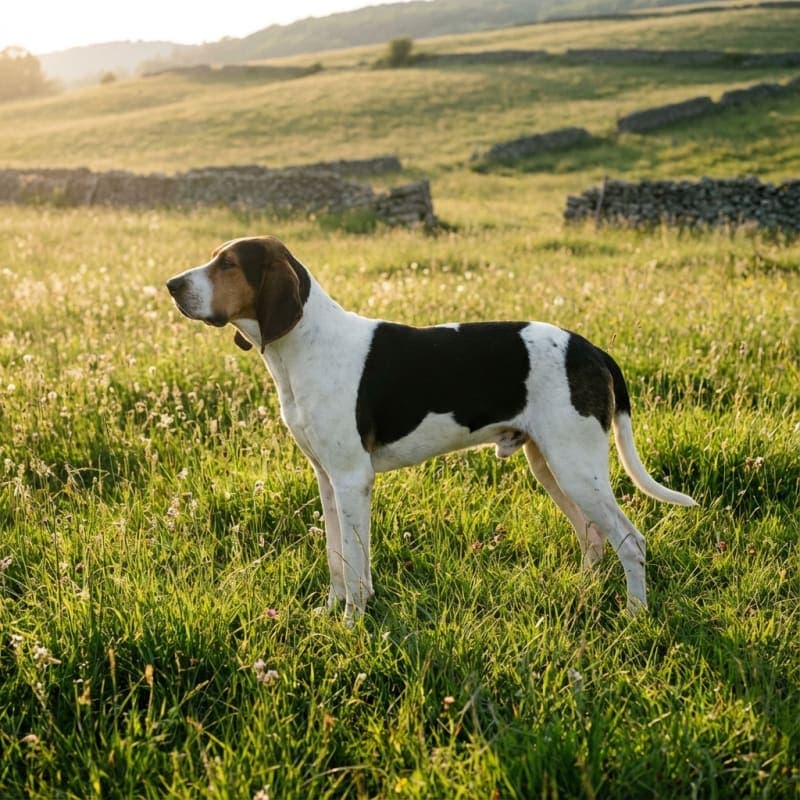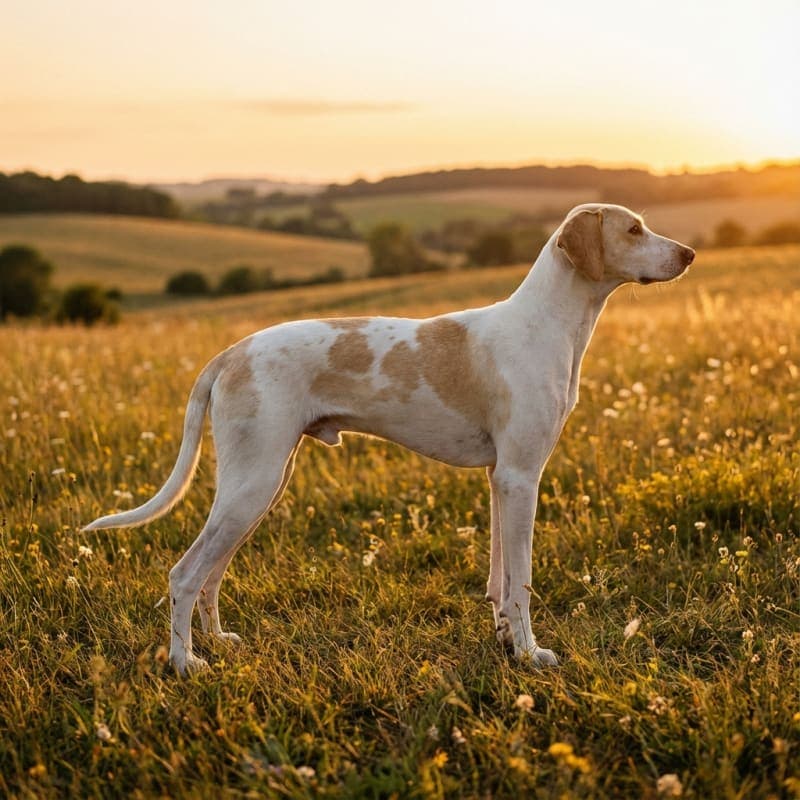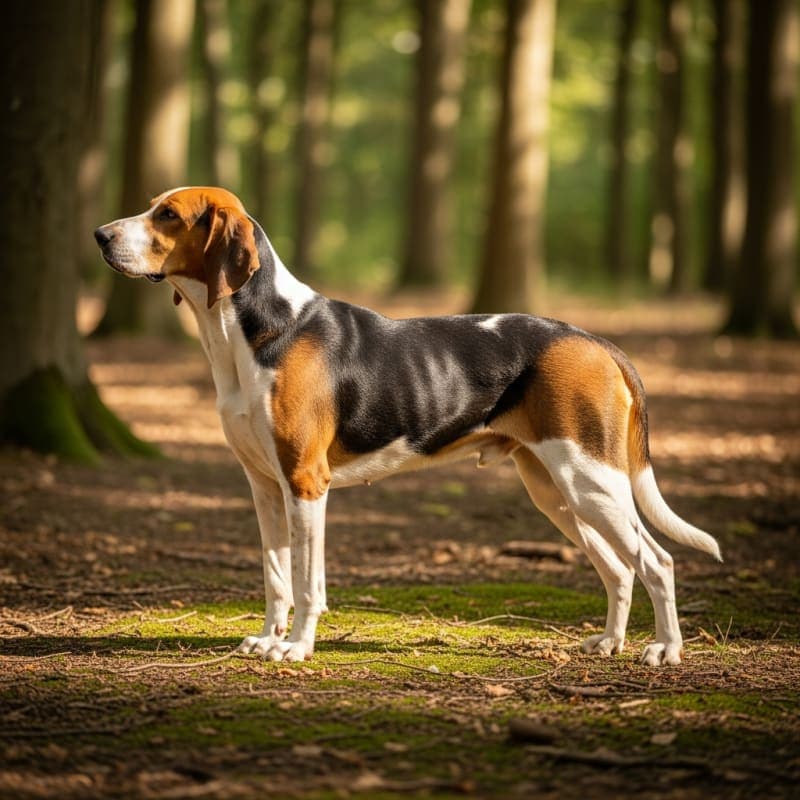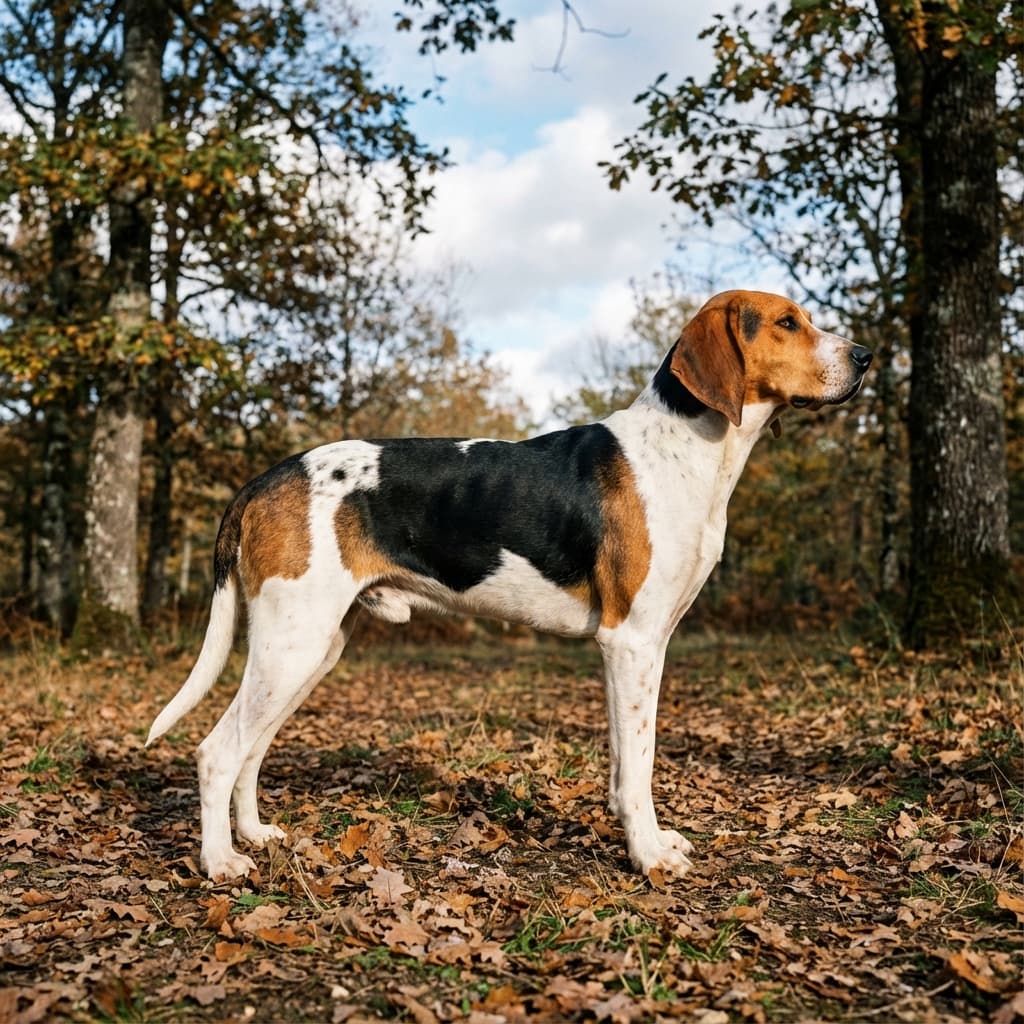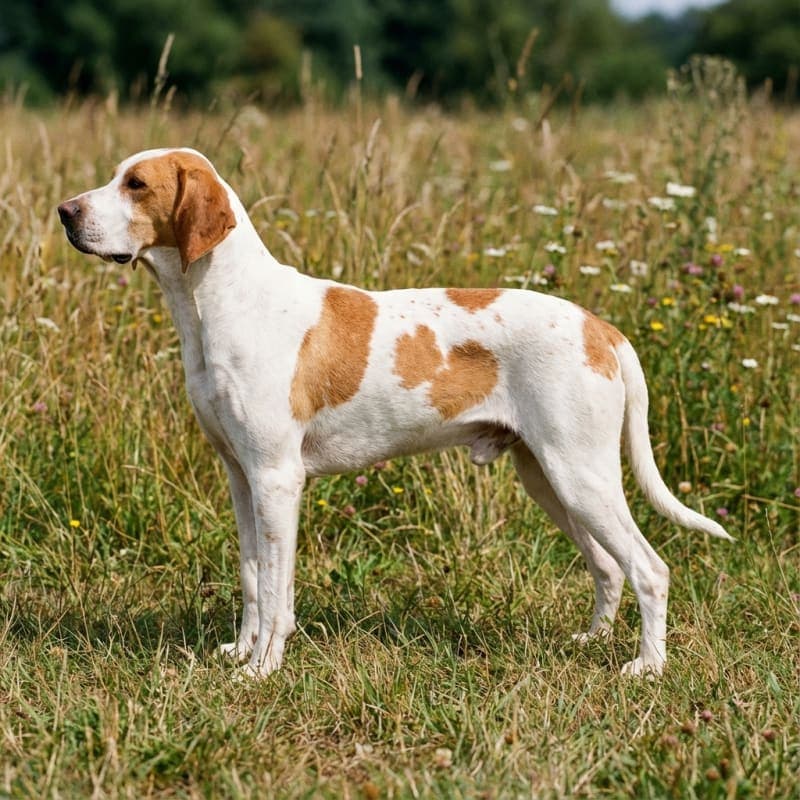
Large Anglo-French Hound, white and orange.
FCI Group
6• FCI 324
Size
Large
Origin Country
FR
Height
60-70 cm
Weight
28-30 kg
Lifespan
10-12 years
Temperament
Overview
The large Anglo-French hound, known as Grand anglo-français blanc et orange, is an extraordinary hunting dog breed that intrigues with its rich history and distinctive appearance. Originating from France, this breed has gained recognition among hunters and tracking dog enthusiasts for generations due to its remarkable agility, endurance, and excellent sense of smell.
Characterized by an impressive height of 60 to 70 cm and a weight of about 28-30 kg, it is a medium-sized dog with a strong, athletic build. Its short, shiny coat in white with orange or yellow patches catches the eye and gives it a unique, elegant appearance. Dark brown, large eyes and long, drooping ears are distinctive features that emphasize its gentle yet alert expression.
What sets this breed apart from other French hounds is the distinct English traits visible especially in the head structure – a wider skull and stronger muzzle reveal its crossbreeding with English Foxhounds. This unique blend of French and English hunting dog genes has created a breed with exceptional tracking abilities and excellent endurance during long hunts.
In terms of character, the Grand anglo-français blanc et orange is a dog full of energy and a passion for work. It requires a daily, intense dose of exercise and outdoor activity – long walks, runs, and playtime are part of its daily routine and necessity. Its sociability means it feels best in a pack – it loves the company of other dogs with whom it shares the joy of activity and play.
Despite its strong hunting instinct and independent nature, it can be extremely affectionate and loyal to its human family. This is a dog that forms a deep bond with its owner and household members, although it requires a suitable guide – a person who understands its needs and independent character. It needs a firm yet gentle approach and consistent training to develop its best traits.
This is not a breed for everyone – especially not for those living in small apartments or blocks without access to walking areas. The Grand anglo-français blanc et orange needs space, a garden, and opportunities for daily, intense exercise. It is ideally suited for a home in the countryside or on the outskirts of a city, where it can freely fulfill its natural needs.
In the right conditions – with an active owner, space to move, and proper training – this magnificent hound becomes a source of immense joy and satisfaction. If you are looking for a dog that combines hunting passion with a friendly, loyal disposition, and you are not afraid of the challenges associated with an active breed – this breed may prove to be the perfect choice.
Grand anglo-français blanc et orange is a dog with an exceptional, noble appearance that attracts attention with its elegance combined with strength and athleticism. Its silhouette is strong and balanced, indicative of excellent physical condition and the ability to perform hard, long-lasting work in the field.
Body dimensions: The height at the withers ranges from 60 to 70 cm, and the weight oscillates between 28 and 30 kg. This is a medium-sized dog, but with a solid, muscular build.
Head and skull: The skull is wide and flat, without a pronounced occipital protuberance, with a well-defined stop. The nose is black or orange-brown, and the muzzle is rather short, giving it a characteristic, strong appearance. The jaws extend beyond the lower jaw, giving the muzzle a square shape – a feature typical of the English ancestors of this breed.
Eyes and ears: The eyes are large, dark brown, expressing intelligence and alertness. The ears are long, fairly thick, slightly curled inward and drooping, set wide at the level of the eyes or slightly above.
Neck and body: The neck is straight, with a slight dewlap. The back is wide and muscular, the loins are short and strong, and the croup is rounded. The chest is deep and lowered, with long, slightly rounded ribs.
Limbs: The front limbs are strong, wide, and vertical, with shoulder muscles adhering to the chest. The hind limbs have muscular and meaty thighs, with slightly bent hocks close to the ground. The paws are quite round.
Tail: The tail is fairly long, sometimes with a few longer and coarser hairs at the tip (resembling ears of grain), slightly standing out.
Coat and coloration: The coat is short, smooth, and shiny. The coloration consists of a white base color with orange or yellow spots, creating a characteristic, very attractive pattern.
All these features make the Grand anglo-français blanc et orange not only a beautiful dog with a noble presence but also a well-built athlete capable of working for hours in the most difficult terrain.
Grand anglo-français blanc et orange is a dog with a balanced yet energetic temperament, which also possesses a strong, deeply rooted hunting instinct. This breed is characterized by a loyal and friendly attitude towards its human family, although it maintains a certain degree of independence typical of hunting dogs.
Relationships with family: Towards its owners, it is affectionate, loyal, and devoted. It forms strong emotional bonds with family members and enjoys spending time with them. However, due to its energy and enthusiasm for play, it may be too lively for small children. In the case of older children who can respect the dog and play with it appropriately, it creates great relationships full of mutual understanding.
Relationships with other dogs: Grand anglo-français blanc et orange excels in the company of other dogs – it loves to play in a pack, run together, and track. This breed was bred to work in a pack, so it has a natural tendency to cooperate harmoniously with other dogs.
Relationships with other animals: Due to its very strong hunting instinct, it may exhibit aggression or an excessive desire to hunt smaller animals, such as cats, rabbits, or other small mammals. In a home with other animals, it requires careful socialization from puppyhood.
Intelligence and training: This breed is moderately intelligent and willing to learn, especially when training is related to activity and work. However, it can also be stubborn and independent, which sometimes complicates obedience training. It requires a firm yet gentle and patient approach from its owner – harsh methods can have the opposite effect of what is intended.
Need for companionship: This is a dog that does not cope well with loneliness – if left alone for long periods, it may develop behavioral problems such as excessive barking, destruction of objects, or escaping. Therefore, it is extremely important to provide it with companionship, an adequate amount of physical activity, and mental stimulation, which will prevent frustration and negative behaviors.
Temperament: Despite its energetic nature, a well-raised and exercised dog of this breed can be calm and balanced at home. The key to harmonious coexistence is meeting its natural needs – movement, work, and contact with other dogs.
Grand anglo-français blanc et orange is a breed that generally enjoys good health and is not particularly prone to many genetic diseases. The average lifespan of this breed is between 10 to 12 years, which is typical for dogs of this size and build. They have a strong, resilient constitution, making them excellent companions for active individuals who lead an outdoor lifestyle.
The most common health issues:
- Hip and elbow dysplasia – this is a common problem in medium and large dogs. Responsible breeders conduct tests on their breeding stock to reduce the risk of passing this condition to offspring.
- Gastric torsion – due to their active lifestyle and deep chest, dogs of this breed may be at risk for this serious condition that requires immediate veterinary intervention. To minimize the risk, it is advisable to feed the dog several times a day in smaller portions and avoid intense exercise immediately after meals.
- Ear infections – long, drooping ears are prone to moisture and dirt accumulation, which can lead to infections. Regular checking and cleaning of the ears is crucial for maintaining the health of this body part.
- Obesity – although this is an active breed, a lack of adequate exercise combined with overfeeding can lead to overweight, which in turn can cause further health problems such as diabetes or joint diseases.
Tolerance to weather conditions: This breed tolerates cold well and can function in various weather conditions. However, on hot days, care should be taken not to overexert the dog with intense activity – it is better to plan activities for earlier or later hours.
Health prevention: Proper veterinary care, regular vaccinations, deworming, and preventive examinations (including joint, heart, and eye checks) are crucial for ensuring the health and longevity of the Grand anglo-français blanc et orange. With proper care and attention, dogs of this breed can enjoy an active, healthy life for many years.
The care of Grand anglo-français blanc et orange is relatively simple and does not require excessive attention or complicated grooming procedures. Their short, smooth coat means that it does not accumulate a lot of dirt or debris, and keeping it in good condition is not a problem.
Brushing the coat: Regular brushing, at least once a week, will help remove dead hair, stimulate blood circulation in the skin, and minimize shedding. During shedding periods – especially in spring and autumn – it is advisable to increase the brushing frequency to 2-3 times a week to effectively manage the larger amount of shedding hair.
Bathing: Baths should be given only when necessary – when the dog is very dirty or has an unpleasant odor. Overbathing can disrupt the skin's natural protective layer and lead to dryness and irritation. Gentle, dog-specific shampoos should be used.
Ear care: Due to their long, drooping ears that can trap moisture, dirt, and wax, regular ear cleaning is extremely important. Ears should be checked at least once a week and gently cleaned with a special ear hygiene solution to prevent infections and inflammation.
Nail trimming: Nail trimming is an essential part of grooming, as overly long nails can cause discomfort, walking problems, and joint pain. If the dog does not naturally wear down its nails during activities on hard surfaces, they should be trimmed every 3-4 weeks.
Dental hygiene: It is also important to remember to regularly clean the teeth or provide special dental chews to prevent tartar buildup and gum disease.
Grand anglo-français blanc et orange does not require special grooming procedures or visits to dog salons. Regular at-home grooming combined with a proper diet and activity will help keep its coat, skin, and overall appearance in excellent condition and health.
Grand anglo-français blanc et orange is a dog with very high physical activity needs. As a breed created for intense, long-lasting hunts, it is extremely energetic and requires daily, intensive efforts and outdoor play.
Minimum activity requirements: A minimum of two hours of activity per day is the absolute minimum to ensure this dog’s physical and mental health and well-being. Ideally, the activity should be even more intense and varied.
Ideal living conditions: This breed is ideally suited for life in the countryside or in a house with a large, fenced garden where it can run freely, explore its surroundings, and satisfy its natural hunting instincts. This is not a dog suitable for apartment dwellers or small flats without access to walking areas.
Types of activities:
- Long walks and runs – daily, multi-kilometer walks in varied terrain are a necessity.
- Play with other dogs – interaction with a pack of dogs, running and playing together is invaluable.
- Tracking and nosework – activities involving the use of scent, such as mantrailing or nosework, will satisfy the dog's hunting instinct.
- Dog sports – agility, obedience, rally obedience, or canicross are excellent forms of activity for this breed.
- Simulated hunting – training using scent trails or artificial game tracks.
Safety during activities: It is important to remember that Grand anglo-français blanc et orange may be prone to escaping, especially if it catches an interesting scent or trail. Therefore, it is very important to provide a safe, fenced environment and to be extremely vigilant during off-leash walks. It is advisable to train a solid recall from a young age.
Consequences of lack of activity: The right amount of exercise not only affects the dog's physical health (fitness, weight, joints, heart) but also its mental health. Lack of adequate activity leads to frustration, boredom, and serious behavioral problems – excessive barking, destruction of property, escaping, and difficulties in training.
If you are an active person who loves spending time outdoors, running, hiking, and engaging in sports – Grand anglo-français blanc et orange will be the perfect, tireless companion for any activity.
The training of the Grand anglo-français blanc et orange can be challenging, but with the right approach, patience, and consistency, excellent results can be achieved. This breed is intelligent and eager to learn, especially when training involves activity and work, but it can also be stubborn and independent – traits typical of hunting dogs.
Key training principles:
- Consistency – training must be conducted consistently, with clear rules and boundaries.
- Positive reinforcement – using treats, praise, play, and other rewards for good behavior is crucial. This breed does not respond well to harsh, punitive methods.
- Early start – training should begin as early as possible, ideally from 8 weeks of age, so the dog has time to learn basic commands, rules, and proper socialization.
- Patience and understanding – owners should be firm but also patient and understanding. Dogs of this breed may require more repetitions than other, more obedient breeds.
Essential commands: Due to their strong hunting instinct, it is particularly important to teach the dog a solid recall and other commands that ensure its safety in various situations (Sit, Stay, Come, Leave it, Wait). These commands can save the dog's life in threatening situations.
Socialization: Early and extensive socialization with different people, dogs, animals, and environments is essential. This helps shape a balanced, confident dog that copes well in various situations.
Group training: Classes with an experienced trainer or group training can be extremely beneficial for this breed, as they allow for socialization with other dogs, skill development, and learning in a controlled, positive environment.
Mental activity: The Grand anglo-français blanc et orange responds excellently to various forms of mental activity – scent games, searching for hidden objects, dog puzzles, learning tricks. It is worth introducing different tasks and games to keep its interest, engagement, and prevent boredom.
Working with the hunting instinct: Instead of fighting against the natural tracking instinct, it is worth utilizing it positively – for example, through mantrailing, nosework, or simulated hunting. This allows the dog to fulfill its natural needs in a controlled, acceptable manner.
With the right handler who dedicates time and energy to training, the Grand anglo-français blanc et orange can become a well-mannered, obedient (within reasonable limits), and happy dog that still retains its natural, hunting character.
Proper nutrition for the Grand anglo-français blanc et orange is crucial for its health, physical condition, and overall well-being. Due to its high physical activity and athletic build, this breed has high energy needs, so the diet must be appropriately balanced and tailored to its lifestyle.
Basic nutrition principles:
- High-quality food – it is advisable to choose premium or super premium foods that contain high-quality animal protein as the first ingredient, along with the appropriate amount of fats and carbohydrates.
- Proper proportions of ingredients – the diet should contain about 25-30% protein, 15-20% fats, and an appropriate amount of carbohydrates, vitamins, and minerals.
- Avoiding low-quality food – foods containing artificial additives, preservatives, colorings, and low-value ingredients (animal meals of unknown origin, excess grains) should be excluded.
Feeding frequency: It is recommended to feed the dog twice a day, at set times (morning and evening), to maintain balance in its diet and minimize the risk of gastric torsion. One large meal a day should be avoided.
Portion control: Dogs of this breed tend to overeat, so it is very important to control the amount of food and avoid leaving food out for the entire day. Free feeding can lead to obesity and related health problems.
Diet variety: In addition to dry food, the dog's diet can be enriched with:
- Fresh meat (poultry, beef, game) – cooked or raw (BARF diet)
- Fresh vegetables (carrots, broccoli, spinach, zucchini) – as a healthy addition
- Fruits (apples, pears, berries) – in moderation as treats
- Eggs – a source of protein and healthy fats
Access to water: It is extremely important for the dog to have constant access to fresh, clean water, especially after intense physical activity. Dehydration can lead to serious health issues.
Avoiding overeating before activity: To minimize the risk of gastric torsion, it is advisable to avoid intense physical exertion immediately after a meal – it is best to wait 1-2 hours before engaging in activity.
Adjusting the diet to age and activity: Puppies, adult dogs, and seniors have different nutritional needs. Similarly, highly active dogs (e.g., working, sporting) require more calories than moderately active dogs. It is advisable to consult a veterinarian to tailor the diet to the individual needs of the dog.
With proper diet, portion control, and adjustment of nutrition to lifestyle, the Grand anglo-français blanc et orange can enjoy excellent condition, a healthy weight, and a long, active life.
Characteristic Traits
Pros
- Agile and efficient hunter
- Affectionate and loyal to family
- Gets along perfectly with other dogs
- Original and elegant appearance
- Strong and resilient constitution
- Low grooming requirements.
Cons
- Requires a lot of exercise every day
- Independent and stubborn nature
- Not suitable for living in small apartments
- Strong hunting instinct
- Prone to escaping in pursuit of a trail.
Behavioral Ratings
Breed History
The history of Grand anglo-français blanc et orange dates back to the 19th century, when intensive efforts were made in France to develop excellent hunting dog breeds that would combine the best traits of French and English hounds. It was a golden age for hunting dog breeding in Europe, when the aristocracy and wealthy landowners were passionate about hunting and sought the ideal dogs for work in various terrain conditions.
This breed was created as a result of careful crossbreeding of English hounds, primarily Foxhounds, with local French hound breeds such as Grand chien courant français (now extinct), Poitevin, and other local varieties. The goal was to create a dog that would combine the endurance, speed, and strength of English Foxhounds with the excellent sense of smell, determination, and intelligence of French hounds.
In this context, the white and orange Anglo-French hound is one of the three officially recognized variants of the Grand Anglo-Français breed, alongside:
- Grand anglo-français tricolore (tricolor)
- Grand anglo-français blanc et noir (black and white)
All three variants share a common ancestry and character traits, differing only in coloration. From the very beginning, these breeds were valued for their exceptional hunting skills and excellent abilities to track game – both small (hares, foxes) and larger (deer, wild boars).
In the 20th century, due to changing needs of hunters, a decrease in wild animal populations, and the development of other forms of recreation, the popularity of this breed – like other hounds – began to gradually decline. Hunting large animals became less common, and the breeding of hunting dogs ceased to be as popular as in previous centuries.
Despite these changes, the Grand anglo-français blanc et orange still ranks among the top hunting dog breeds in France, where it is valued by traditional hunters and enthusiasts of historical breeds. Breeders strive to maintain the purity of the breed and the excellent hunting traits that made this breed famous in the past.
Modern dogs of this breed are used not only for traditional hunting but also as family companions for active individuals who appreciate their energy, loyalty, and extraordinary history. Although it is not a breed widely known outside of France, those who have the opportunity to meet the Grand anglo-français blanc et orange appreciate its unique traits and distinctive character.
The breed has been officially recognized by the FCI (Fédération Cynologique Internationale) and is classified in group 6 (hounds and related breeds), section 1.1 (large hounds), with a working test.