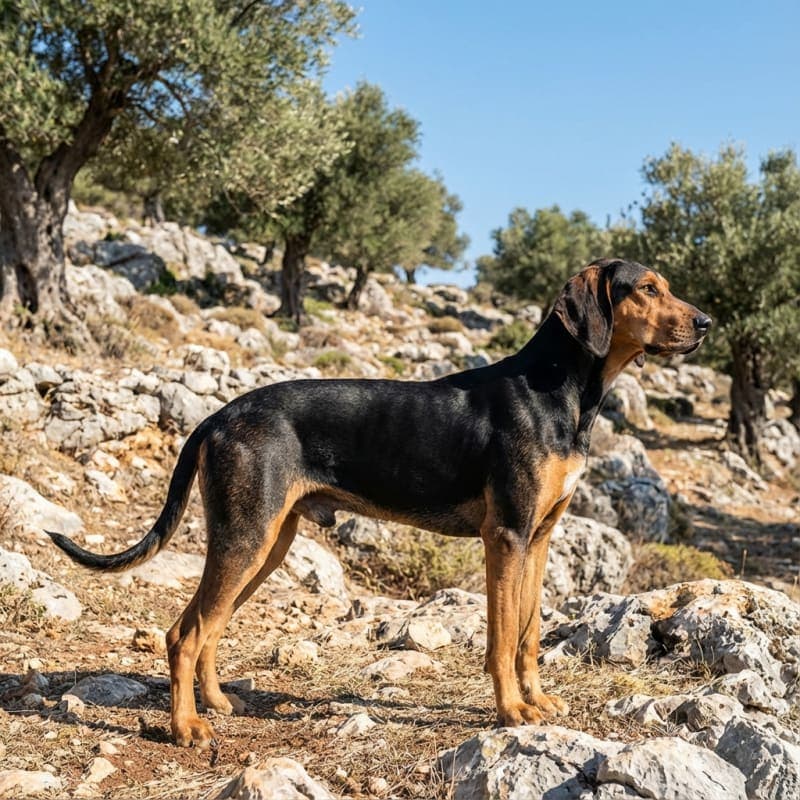
Greek Hound
FCI Group
6• FCI 214
Size
Medium
Origin Country
GR
Height
45-55 cm
Weight
17-20 kg
Lifespan
10-15 years
Temperament
Overview
Greek Hound, also known as Hellinikos Ichnilatis, is a unique breed that will certainly attract the attention of hunting dog enthusiasts and active owners. This medium-sized dog is characterized by an excellent sense of smell, extraordinary endurance, and a harmonious, resonant voice that makes it an ideal hunting dog. Originating from picturesque Greece, where it has accompanied hunters on their expeditions for centuries, the Greek Hound has a long and rich history. Thanks to its exceptional skills, it can work both independently and in a group, making it a versatile companion in any terrain.
Whether it's a lowland plain, a mountainous area, or even rocky and inaccessible terrains, the Greek Hound excels, demonstrating its remarkable adaptability and endurance. Its strong build, energetic temperament, and persistence in work make it one of the most valued hunting dogs in the Balkans. In its native country, it is not only a tool for hunters but also a symbol of hunting tradition and cultural heritage.
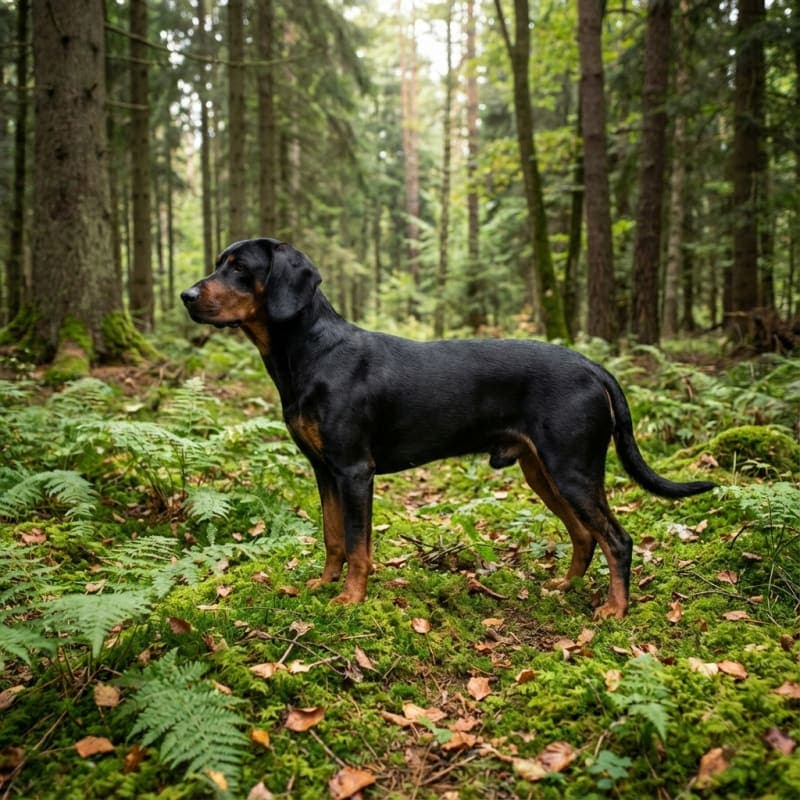
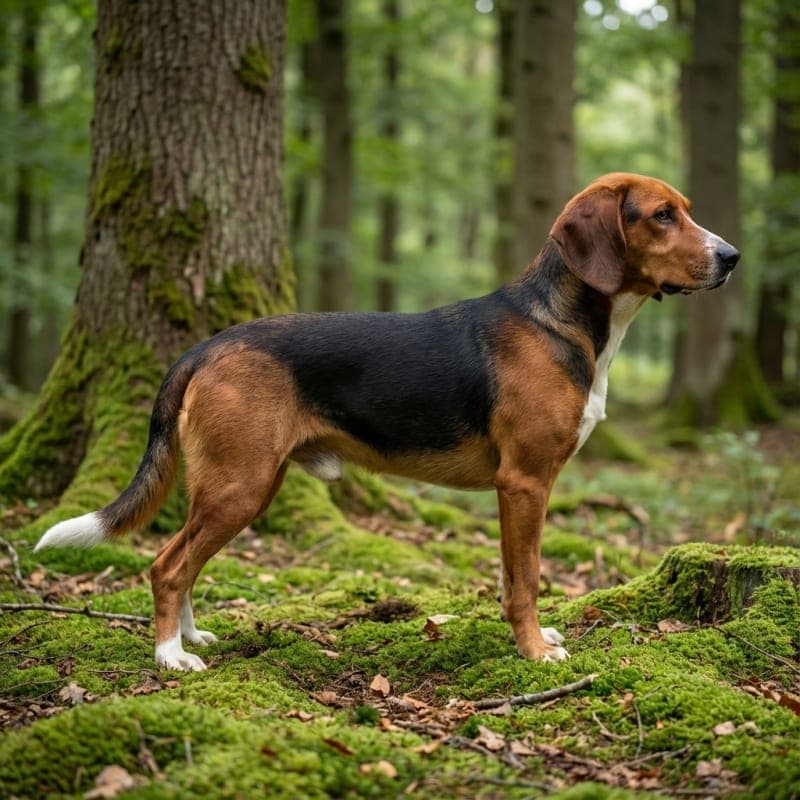
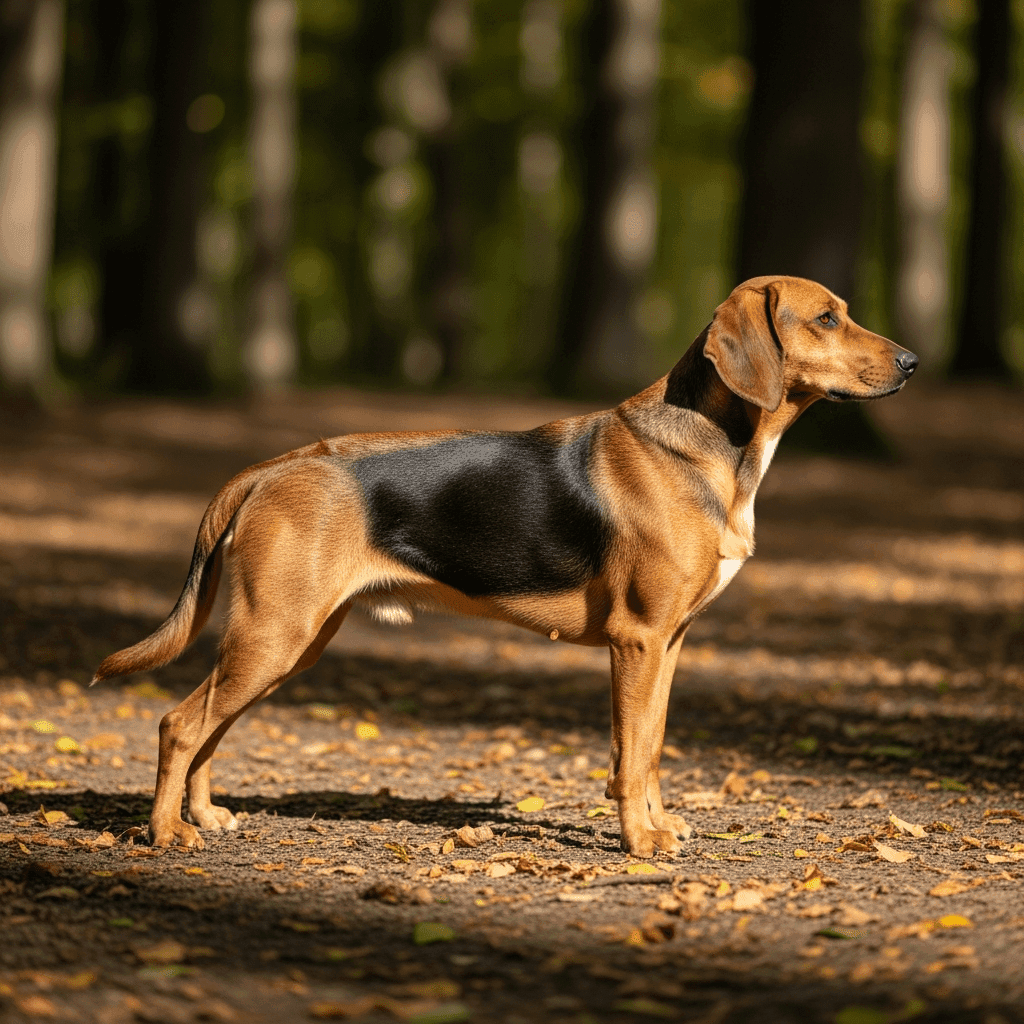
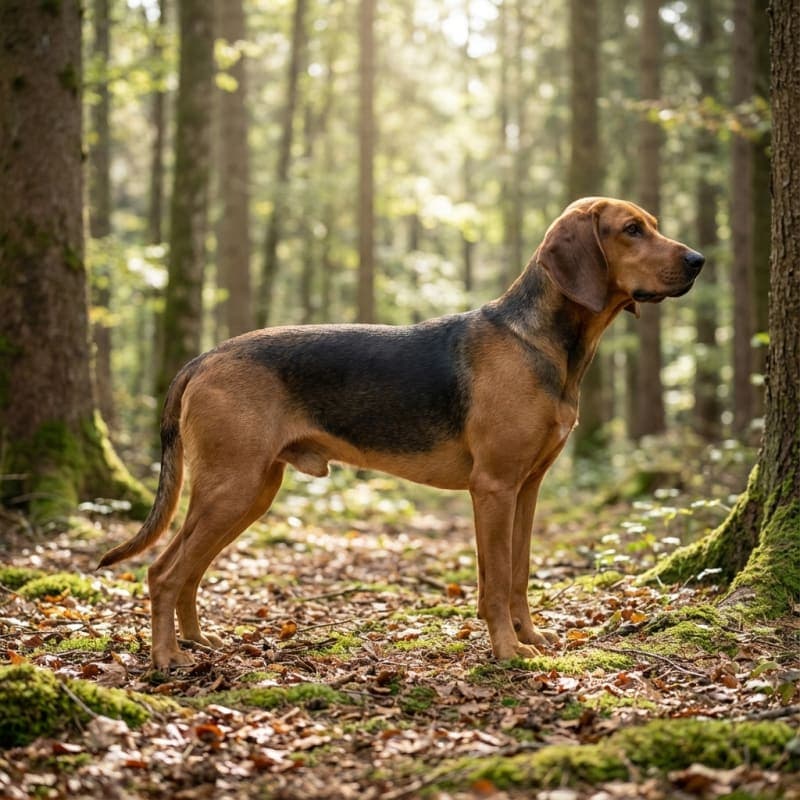
The Greek Hound stands out with its strong, proportional body structure, covered with short, dense fur in the classic black and tan coloration. Its long, noble head with a slightly flat skull and expressive brown eyes gives it an intelligent and alert appearance that immediately catches the eye. Harmonious proportions and lightness of movement allow this dog to move with extraordinary speed and agility, which is crucial in its hunting work. When you observe the Greek Hound in action, it is impossible not to notice its natural energy, vitality, and passion for tracking, which make it an ideal companion for active nature lovers.
Dogs of this breed are full of enthusiasm, cheerfulness, and zest for life, which brings a lot of positive energy into the home. They are exceptionally loyal to their owners and family, but they may be somewhat reserved or cautious around strangers, which is a typical trait for many hunting breeds. They require a lot of exercise, mental stimulation, and physical activity, making them perfect for families leading an active lifestyle who love long hikes, running, or canine sports. Due to their intelligence, the Greek Hound learns quickly and is eager to cooperate, but it may exhibit some independence and self-reliance in decision-making, which requires owners to be consistent, patient, and experienced in training.
This breed is also an excellent choice for families with children, as the Greek Hound is caring, patient, and gentle with younger family members. In the right living conditions, with adequate exercise, mental stimulation, and positive reinforcement, it becomes an irreplaceable companion in daily life. Its long history, valued hunting skills, and friendly character make this dog not only a loyal companion but also an active partner for shared adventures. Greek Hound can be an ideal choice for experienced dog owners looking for a dog that combines all these traits in harmonious balance.
The Greek Hound is a medium-sized dog with a harmonious, proportional, and athletic build that perfectly reflects its function as a durable hunting dog. According to the FCI standard, the height at the withers ranges from 47 to 55 cm for males and from 45 to 53 cm for females, with the ideal height for males being around 52 cm. The weight of the Greek Hound oscillates between 17 and 20 kg, providing it with adequate strength and endurance without losing agility and speed in the field. Its body proportions are perfectly balanced - the body length slightly exceeds the height at the withers, giving it stability and efficiency in movement during prolonged tracking.
Its coat is short, dense, and closely adhering to the body, which makes the dog look elegant, neat, and athletic. The structure of the coat provides excellent protection against weather conditions while working in diverse terrain. The coat color is a classic black and tan pattern, where black predominates on the back, sides, and upper body, while the tan markings appear on the muzzle, above the eyes, on the chest, legs, and under the tail. A small white patch may appear on the chest, which is an acceptable breed mark and does not constitute a fault.
The head of the Greek Hound is long, noble, and harmoniously developed - its total length corresponds to the height at the withers in a ratio of 4.35:10, giving the breed a characteristic, elegant profile. The skull has a slightly flat shape, with a small occipital bump and a not very pronounced frontal groove. The width of the skull does not exceed half of the total head length, resulting in a so-called cephalic index below 50. The stop (transition) is moderately pronounced, neither too deep nor too flat. The muzzle is equal in length or slightly longer than the skull, straight, with a black nose located on the line of the nasal bridge.
The eyes are of normal size, round or slightly oval, brown in color, with a lively, intelligent, and alert expression that immediately attracts attention. The gaze of the Greek Hound expresses intelligence, interest in the environment, and readiness to work. The ears are of medium length, wide at the base, rounded at the tips, and hang flat along the cheeks, which is typical for hound breeds. When the dog is attentive, the ears may be slightly raised at the base, giving it an even more alert appearance.
The neck is strong, muscular, without loose skin or a dewlap, and its length is proportional to the length of the head, emphasizing the harmonious silhouette of the dog. The body is well-built and proportional - the back is long, strong, and straight, the loins are slightly arched and muscular, and the croup is slightly sloping. The chest is well-developed, deep, and descends to the level of the elbows, providing adequate lung capacity and endurance during prolonged exertion.
The tail is rather short to medium in length, reaching a maximum of the hock joint, strong at the base, and gradually tapering towards the end. It is carried slightly curved or in a saber shape, never curled over the back. The limbs are straight, parallel, well-muscled, and end with compact, oval paws with strong, black claws.
The movement of the Greek Hound is fast, light, flexible, and efficient, which is a result of its excellent anatomical structure and body proportions. In a trot, the dog moves with long extension and strong push-off, allowing it to cover large distances without fatigue. Combined with its lively temperament, energy, and passion for work, this makes the Greek Hound not only functional as a working dog but also extremely visually appealing and impressive in motion.
The Greek Hound is distinguished by its characteristic, temperamental behavior, making it a wonderful companion for active, experienced owners and families who love outdoor life. This dog is full of energy, vitality, enthusiasm, and a desire to act. Its natural curiosity about the world makes it love to explore its surroundings, track scents, and hunt, which can sometimes lead to a tendency to wander or chase interesting trails. Therefore, it is extremely important to provide it with proper safety measures during walks - a well-fitted harness or collar and a strong leash, and in unsecured areas, a fenced area or a long training line.
The Greek Hound is a very social, family-oriented, and loyal dog that values the closeness of its owner and other family members. It is devoted, loving, and loves to be part of the daily life of the household. In the right socialization conditions, it can be an excellent watchdog - its alertness, attentiveness, and natural defensive instinct will ensure that it signals the presence of strangers with loud, resonant barking. At the same time, this breed is not excessively aggressive or unpredictable - with proper training and positive experiences with people, the Greek Hound can be polite and friendly.
In relationships with children, the Greek Hound is patient, caring, and gentle, making it an ideal companion for play and outdoor adventures. Its energetic temperament and desire for movement mean it loves to run, jump, and play with children in the garden or in nature. However, due to its natural energy and strength, it is important that children - especially younger ones - are properly taught how to interact with the dog, how to interpret its signals, and how to respect its space to avoid accidental injuries or misunderstandings. Adult supervision is always recommended during interactions between small children and any dog, regardless of breed.
The Greek Hound may be somewhat reserved or cautious towards strangers, which is a natural trait of many hunting and working breeds. However, this does not mean that it is distrustful or aggressive - with proper socialization from a young age, positive reinforcement, and regular positive experiences with various people, this dog can form friendly, balanced relationships with strangers. Early socialization is crucial for developing a confident, balanced character.
As a typical hunting dog with a strong chasing instinct, the Greek Hound has a natural inclination to track scents and chase smaller animals such as cats, rabbits, or squirrels. Its sense of smell is exceptionally developed, and its hunting instinct is deeply rooted in the breed's genetics. Therefore, it is very important to exercise caution and keep the dog on a leash during walks in unsecured areas or near wild animals. Proper recall training and positive reinforcement can significantly improve control, but the hunting instinct will always remain a part of this dog's nature.
Owners of Greek Hounds should be consistent, patient, and experienced in dog training to help the dog understand which behaviors are acceptable and which are not. This breed responds best to positive training methods based on reinforcement, rewards, and play. With the right approach, regular physical activity, mental stimulation, and consistent training, the Greek Hound can become a wonderful, balanced companion that will enjoy life to the fullest alongside its owner and family, combining its natural passion for work with love for people.
The Greek Hound, like many other dog breeds, may be prone to certain health issues; however, generally speaking, it is a breed that enjoys relatively good health, a long life, and natural resilience. Its history as a working dog, which has been bred primarily for functionality, endurance, and the ability to work in difficult terrain for centuries, has contributed to the development of a healthy gene pool. Nevertheless, every owner should be aware of potential health threats and regularly engage in preventive care.
A key aspect of keeping the Greek Hound in good condition is regular veterinary care and appropriate prevention of infectious diseases. Annual check-ups with a veterinarian are recommended, during which the doctor will assess the dog's health, conduct blood and urine tests, check the heart, and perform other necessary diagnostic examinations. Vaccinations, regular deworming, and prevention against fleas and ticks are essential, especially since the Greek Hound often spends time in areas where the risk of contact with parasites is increased.
Particular attention should be paid to eye health, as some individuals may be prone to vision problems such as progressive retinal atrophy (PRA) or cataracts. Regular ophthalmic check-ups can help in the early detection of these conditions and the application of appropriate treatment. Additionally, due to their long, drooping ears, Greek Hounds may be susceptible to ear infections, so it is important to regularly clean and check their ears to prevent moisture, bacteria, and fungi from accumulating.
Furthermore, due to their active lifestyle and intense exercise, Greek Hounds may be at risk of orthopedic injuries related to excessive physical exertion, such as sprains, strains, tendon injuries, or ligament damage. Therefore, it is crucial for owners to ensure an adequate amount of rest and recovery and to avoid overexerting the dog, especially at a young age when the skeletal system is still developing.
Greek Hounds may also be prone to issues with the musculoskeletal system, especially if they are overburdened or improperly fed during their growth period. Hip dysplasia (HD) and elbow dysplasia (ED) may occur, although they are not as common as in larger breeds. Therefore, it is recommended that young dogs have a properly balanced diet rich in calcium, phosphorus, and vitamin D, as well as a moderate amount of physical activity appropriate for their age to ensure proper development of the musculoskeletal system without overloading the joints.
Other potential health issues that owners should be aware of include:
- Heart diseases - regular cardiological examinations, especially in older dogs
- Skin and food allergies - attention to appropriate diet and quality of food
- Dental and gum problems - regular oral care
- Obesity - weight control and appropriate diet
Overall, regular veterinary check-ups, a proper balanced diet, age-appropriate physical activity, and attention to preventive care contribute to a long, healthy, and happy life for the Greek Hound. The average lifespan of this breed is around 12-14 years, and many individuals, with proper care, can enjoy health and vitality even longer. The key is the owner's awareness, observing the dog, and responding quickly to any concerning symptoms.
The Greek Hound has a short, dense, and close-fitting coat, which makes grooming this dog relatively simple, not very time-consuming, and does not require specialized skills. Unlike long-haired breeds or those requiring regular trimming, the Greek Hound is a breed with low grooming requirements, making it an ideal choice for owners who value simplicity in daily care. Nevertheless, regular grooming is essential for maintaining skin health, a beautiful coat appearance, and the overall well-being of the dog.
It is sufficient to regularly brush with a short brush or grooming glove, which will help remove dead hair, dirt, and pollen, as well as stimulate the natural oils in the skin, ensuring the coat has a healthy, shiny appearance. Brushing should occur at least once a week during normal periods, and during heavy shedding periods (in spring and autumn), the frequency can be increased to 2-3 times a week to effectively remove excess shedding hair and keep the coat in excellent condition. Regular brushing is also a great opportunity to check the skin for irritations, wounds, ticks, fleas, or other dermatological issues.
It is also important to remember to regularly check the ears, eyes, and teeth of the Greek Hound, which is an important element of comprehensive care. Due to their long, drooping ears that can trap moisture, Greek Hounds are somewhat more prone to bacterial and fungal ear infections. Using special veterinary ear cleaning solutions and gentle wipes will help prevent infections and keep the ears clean. It is recommended to check and clean the ears once a week or more often if the dog frequently swims or is in a humid environment.
Taking care of teeth by providing appropriate dental treats, chew toys, or regular brushing with a special toothbrush and dog toothpaste is an essential part of grooming that helps prevent tartar buildup, gum disease, and tooth loss in older age. Ideally, teeth should be brushed 2-3 times a week or daily if the dog gets used to it. The eyes should be clean, bright, and free of discharge - if necessary, they can be gently wiped with a damp, clean cloth.
Additionally, regular baths should only be conducted when truly necessary, e.g., when the dog is very dirty, smells, or has come into contact with toxic substances. Bathing too frequently can disrupt the natural protective barrier of the skin and lead to dryness, irritation, or dermatological problems. In most cases, a bath once every 2-3 months or only as needed is completely sufficient. Mild shampoos specifically designed for dogs should be used, which have the appropriate pH and do not irritate the skin.
Nails should be regularly trimmed (usually once a month) if the dog does not naturally wear them down during activities on hard surfaces. Overly long nails can cause discomfort, walking issues, and even joint damage. Paw pads should be checked after each walk, especially in rough terrain, during winter (road salt), or summer (hot asphalt), to ensure there are no wounds, cracks, or foreign bodies.
Proper, systematic grooming of the Greek Hound not only ensures its health and hygiene but also helps maintain the beautiful, natural appearance of its coat and strengthens the bond between the dog and the owner through positive, regular interactions. It is also an excellent opportunity to observe the dog and detect any concerning health changes early.
The Greek Hound is a dog that requires a significant amount of exercise, physical activity, and mental stimulation to maintain good physical condition, mental health, and overall well-being. Its nature as a resilient hunting dog, bred for centuries to track wild game over long distances in challenging, mountainous terrain, means it requires intense effort and regular outdoor activities. The Greek Hound is not a breed suitable for owners leading a sedentary lifestyle or living in small apartments without access to outdoor space - it needs room, freedom, and opportunities to let off steam.
It is recommended to provide the Greek Hound with at least 60-90 minutes of intense activity daily, and even more if the dog is young, energetic, and in good shape. This can include:
- Long walks - at least 2-3 times a day, for 30-45 minutes each
- Running - alongside a bicycle, during the owner's jogging, or freely in a safe area
- Mountain or forest hikes - ideal for this breed, allowing for natural tracking and exploration
- Fetching - playing with a ball, frisbee, or other toys
- Swimming - an excellent low-impact exercise
- Scent games - hiding treats, scent trails, nose work
Through active engagement, the dog not only burns energy and maintains good physical condition but also stimulates its senses, especially its highly developed sense of smell, which is crucial for its mental well-being. The Greek Hound is a dog that loves to work with its nose, track scents, and solve scent puzzles - neglecting this need can lead to frustration, boredom, and behavioral issues.
The Greek Hound also excels in canine sports, such as:
- Mantrailing - tracking human scent trails
- Nosework / Scent work - scent work
- Canicross - running in the field with the dog in a special harness
- Dog tracking - tracking trails
- Agility - obstacle course (though this is not a natural specialty of hounds)
- Obedience - competitive obedience
It is important to avoid monotonous, repetitive activities that can lead to boredom, lack of engagement, and behavioral problems. Variety in exercises is key - combining physical effort with mental and scent challenges allows for a holistic satisfaction of the Greek Hound's needs. A dog that does not get enough exercise and stimulation can become nervous, anxious, destructive (destroying furniture, chewing), and may also exhibit undesirable behaviors such as excessive barking, escaping, aggression, or compulsive behaviors.
Therefore, if you are considering adopting a Greek Hound, make sure you have the time, resources, energy, and passion to meet its high needs for physical and mental activity. This is not a dog that will be satisfied with a short walk in the morning and evening - it needs a real adventure, space to explore, and opportunities to utilize its natural instincts. In return, you will receive an incredibly loyal, healthy, happy, and vibrant companion who will be your partner in every outdoor activity.
Training a Greek Hound can be both enjoyable and rewarding, as well as present certain challenges, especially for inexperienced dog owners. Dogs of this breed are intelligent, sharp, and eager to learn, but their independent, self-sufficient nature and strong hunting instinct can sometimes make training difficult and require the owner to have patience, consistency, and experience working with hound breeds. The Greek Hound was bred to make decisions independently while tracking game in the field, so it is not a breed that blindly follows every command - it likes to think for itself and assess the situation.
Key to success is starting training and socialization at a very young age, when the puppy is still most receptive to learning, absorbing new experiences, and shaping desired behaviors. A critical period for socialization is 3-14 weeks, when the puppy should be exposed to a variety of stimuli, people, animals, environments, and situations in a positive, safe manner. Early socialization and positive experiences will help develop a confident, balanced adult dog.
It is advisable to use only positive training methods based on reinforcement, rewards, and motivation, such as clicker training, rewarding with treats, toys, verbal praise, and petting for desired behaviors. The Greek Hound reacts very poorly to harsh methods, physical punishment, yelling, or coercion, which can destroy the dog's trust in the owner, cause fear, anxiety, and lead to behavioral problems. Positive reinforcement increases the dog's motivation to learn, builds a bond, and makes training enjoyable for both parties.
Training sessions should be short (5-15 minutes), dynamic, varied, and fun to maintain the attention and engagement of the Greek Hound. Too long, monotonous sessions can lead to boredom, frustration, and loss of interest. It is also worth introducing elements of play into training, which allows for learning through play and naturally motivates the dog. The Greek Hound responds excellently to various activities, such as fetching, searching for hidden treats, and scent games, making training more interactive, natural, and enjoyable.
Basic commands to focus on include:
- Sit - basic control command
- Lie down - calming and control
- Stay / Wait - self-control and safety
- Come / Here - recall (CRUCIAL for safety!)
- Leave it / No - preventing unwanted behaviors
- Heel - walking at heel on a loose leash
Moreover, socialization is extremely important for this breed and should continue throughout the dog's life. Introducing the puppy to a variety of situations, contact with other people (of different ages, genders, appearances), animals (dogs, cats, other species), and environments (city, forest, beach, stores, public transport) will help it become a balanced, confident, and gentle adult dog. Lack of proper socialization can lead to fear, aggression, or excessive distrust of novelty.
Owners of Greek Hounds should be consistent, patient, calm, and demanding in their training efforts. This means establishing clear rules, boundaries, and expectations, and then consistently enforcing them. At the same time, one must be understanding of the breed's natural instincts and accept that a Greek Hound will never be perfectly obedient in every situation - its independence is part of its charm and history. The key is to find a balance between control and freedom.
Properly conducted training, based on positive methods, consistency, and understanding of the breed's natural needs, will not only improve the relationship between the dog and the owner but also positively influence the behavior of the Greek Hound in everyday life, ensure safety during walks, and make the dog a pleasure in every situation.
A proper, balanced diet is crucial for the health, condition, longevity, and overall well-being of the Greek Hound. Dogs of this breed have a relatively high energy requirement due to their active lifestyle, intense exercise, and natural metabolism of a working dog. Therefore, it is extremely important that their diet is well-planned, contains all the necessary nutrients in the right proportions, and is tailored to the individual needs of the dog - its age, weight, activity level, health status, and any special health requirements.
Owners should choose high-quality dog food - both dry (kibble) and wet (cans, pouches) - that is specifically tailored to the dog's age (puppies, adults, seniors), size (medium breeds), and activity level (active dogs, working dogs). It is important that the food is rich in high-quality animal protein (chicken, beef, fish, lamb), which is essential for building and repairing muscles, as well as appropriate proportions of fats, carbohydrates, vitamins, and minerals.
Key nutrients for the Greek Hound include:
- Protein (25-30%) - muscle building and repair, immune system
- Fats (12-18%) - energy source, healthy skin and coat, omega-3 and omega-6 fatty acids
- Carbohydrates - energy source, fiber supporting digestion
- Vitamins (A, D, E, K, B group) - support for metabolic processes
- Minerals (calcium, phosphorus, zinc, iron) - healthy bones, joints, teeth
- Glucosamine and chondroitin - joint support, especially in active dogs
- Probiotics and prebiotics - healthy gut flora
Greek Hounds can also benefit from natural, fresh additions to their diet, such as:
- Vegetables (carrots, broccoli, zucchini, pumpkin) - vitamins, minerals, fiber
- Fruits (seedless apples, berries, watermelon) - antioxidants, vitamins
- Natural cooked meat (chicken, turkey, beef) - high-quality protein
- Fish (salmon, sardines) - omega-3 fatty acids, DHA
- Eggs (cooked) - protein, biotin
- Flaxseed or salmon oil - healthy skin and coat
It is important to ensure that the dog has constant access to fresh, clean drinking water at all times, especially after intense physical exertion, on hot days, or after consuming dry food. Proper hydration is crucial for the body's proper functioning, temperature regulation, and toxin elimination.
Regular meals at set times of the day (preferably twice a day for adult dogs, 3-4 times for puppies) help maintain a healthy weight, stable energy levels, and prevent health problems associated with obesity or malnutrition. It is important to adjust portions to the individual needs of the dog and regularly monitor its weight and body condition. Obesity is a serious health issue that can lead to diabetes, heart disease, joint problems, and a shortened lifespan.
If the dog has special health requirements (food allergies, digestive issues, kidney disease, diabetes), it is advisable to consult a veterinarian and implement an appropriate therapeutic diet. A proper, tailored diet is not only the foundation of physical health but also affects well-being, energy levels, coat condition, cognitive functions, and the lifespan of the Greek Hound.
Characteristic Traits
Pros
- Exceptional endurance and condition
- Excellent sense of smell
- Strong loyalty to the owner
- Caring and patient with children
- Low grooming requirements
- Healthy and resilient breed.
Cons
- Requires a lot of movement and activity
- Strong hunting instinct
- May be reserved towards strangers
- Needs consistent training
- Tendency to escape for a scent.
Behavioral Ratings
Breed History
The Greek Hound, also known as Hellinikos Ichnilatis (Ελληνικός Ιχνηλάτης), has a long, rich, and fascinating history that dates back to ancient Greece, making it one of the oldest breeds of hounds in the Balkans and the Mediterranean basin. This breed was developed and established in Greece, where it has been valued, respected, and indispensable for its exceptional hunting skills, reliability, and ability to work in the difficult, mountainous, and rocky terrain characteristic of the Greek landscape for millennia.
In ancient times, during ancient Greece, hounds were widely used by the aristocracy, warriors, and hunters for hunting wild game such as boars, deer, hares, and even bears and wolves. The ancient Greeks valued dogs not only as tools of work but also as symbols of social status, courage, and hunting excellence. Many ancient literary sources, mosaics, and sculptures depict hunting scenes involving hounds, which attests to their long presence in Greek culture.
Its excellent sense of smell, remarkable endurance, resistance to harsh weather conditions, and natural tracking instinct made the Greek Hound an indispensable companion for Greek hunters, who relied on it during hunts in challenging terrain—both in low plains and in high, rocky mountains. Its ability to work independently, strong motivation to track, and harmonious, carrying voice that allowed hunters to follow the dog from a distance made it an ideal hunting dog.
Over the centuries, the Greek Hound has evolved, adapted, and been refined to meet the changing needs of hunters and living conditions in various regions of Greece. This breed has also been the subject of interest and breeding in different parts of the country, where local varieties may differ slightly in size, color, or working style, but always retained their essential breed characteristics—excellent sense of smell, endurance, harmonious voice, and typical black-and-tan coat.
Unfortunately, in the 20th century, due to world wars, economic crises, and social changes, many traditional Greek dog breeds, including the Greek Hound, found themselves on the brink of extinction. Interest in hunting declined, and with it, the popularity of hunting dogs. Many breeding lines were lost or mixed with other breeds. However, thanks to the efforts, dedication, and passion of breed enthusiasts, tradition lovers, and canine organizations, the Greek Hound began to be gradually rebuilt, protected, and promoted on the international stage.
In the 1950s, systematic efforts were initiated to protect and register the breed, and in 1959, the Greek Hound was officially recognized by the FCI (Fédération Cynologique Internationale) under standard number 214, in group 6 (Hounds and related breeds), section 1.2 (Medium-sized hounds). This official recognition contributed to the protection of the breed's purity, establishment of breeding standards, and promotion of the Greek Hound beyond the borders of Greece.
Today, the Greek Hound is recognized not only as a hunting dog with exceptional tracking abilities but also as a wonderful, loyal family companion and a symbol of Greek canine tradition. Its history, hunting skills, and friendly nature are appreciated by owners worldwide, and this breed is becoming increasingly popular among hound enthusiasts, active families, and those seeking an authentic, historical dog with a rich past. Many people choose to adopt the Greek Hound not only for its working abilities but also for its loyalty, intelligence, and friendly character, making it an ideal companion for life in the 21st century.