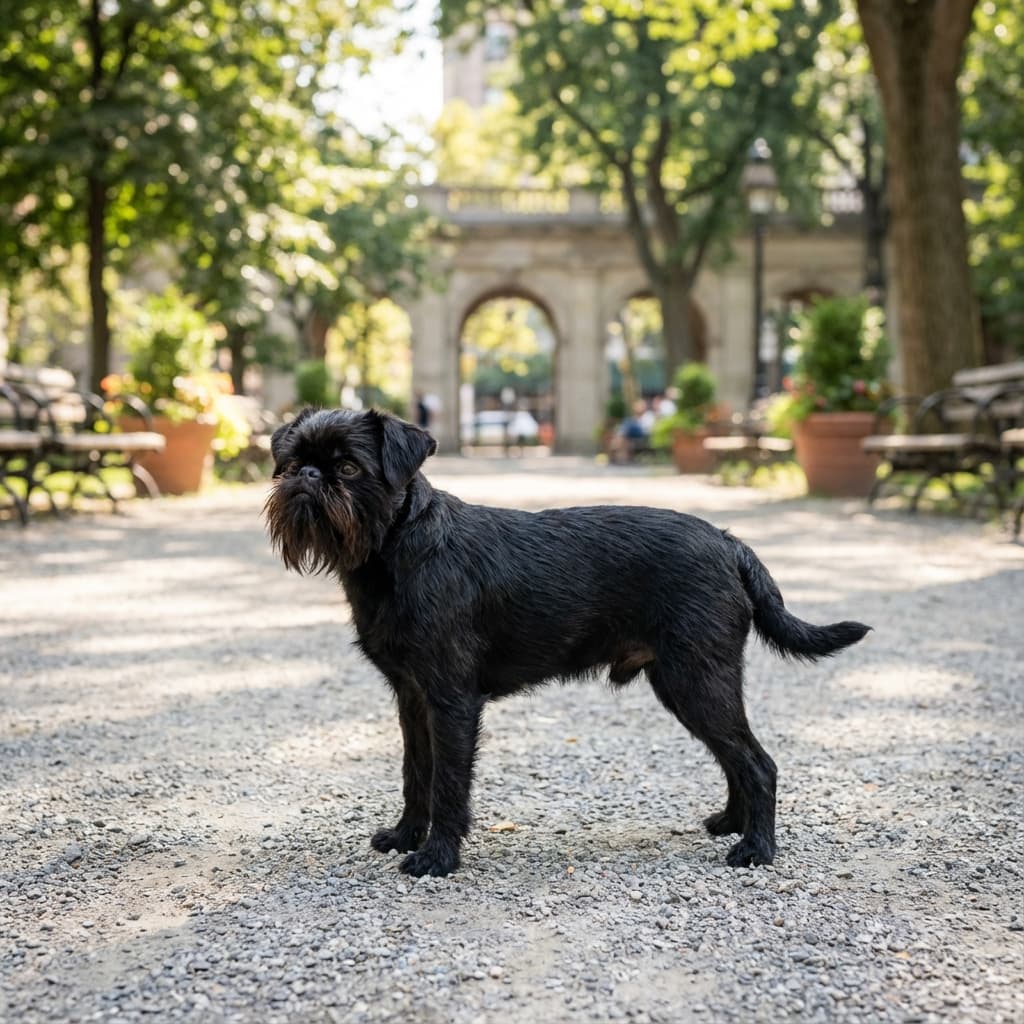
Belgian Griffon
FCI Group
9• FCI 81
Size
Small
Origin Country
BE
Height
20-28 cm
Weight
3.5-6 kg
Lifespan
12-14 years
Temperament
Overview
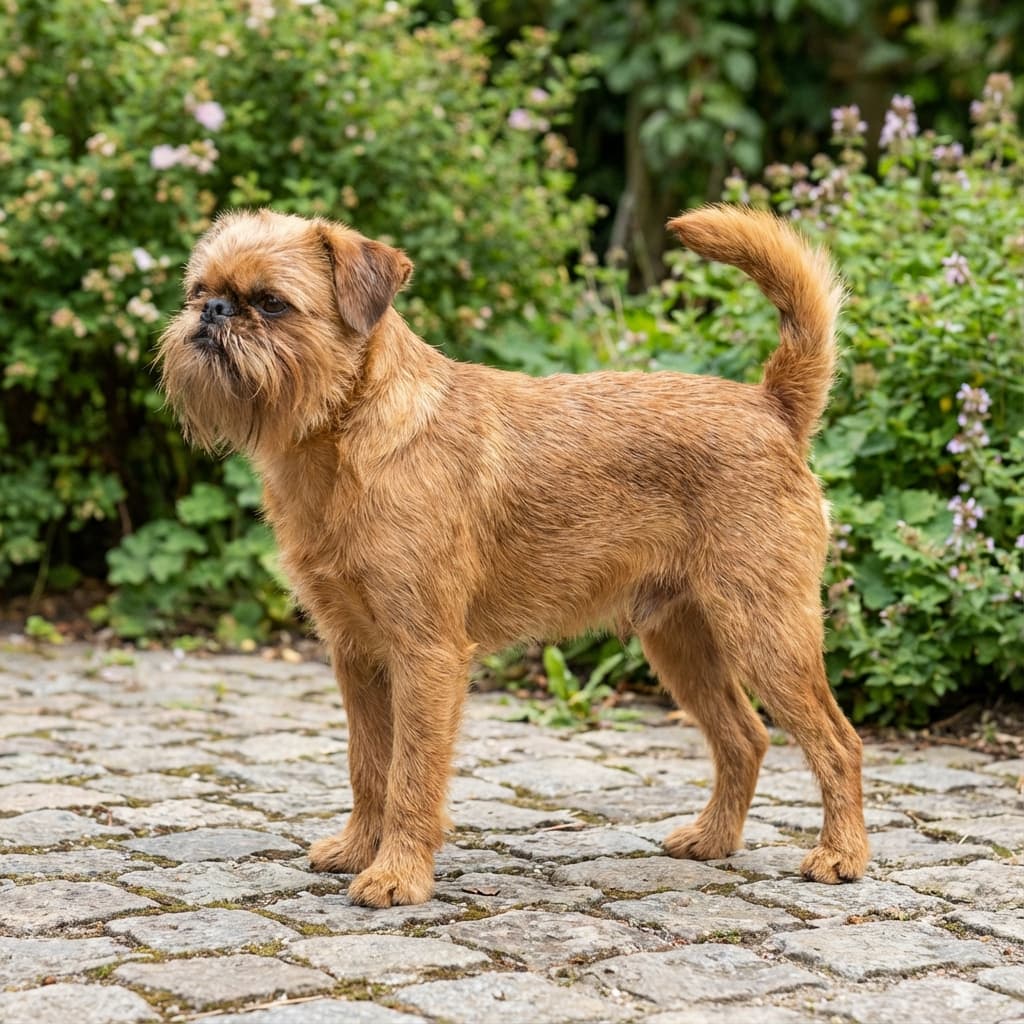
The Belgian Griffon, also known as Griffon Belge, is a small yet incredibly charismatic breed originating from Belgium. These compact dogs with an almost square silhouette combine alertness, intelligence, and devotion, making them exceptional companions. Despite their height at the withers being only 20–28 cm, and their weight ranging between 3.5 and 6 kg, Belgian Griffons exude confidence and character that surpass their size.
The most distinctive feature of this breed is their almost human-like expression – large, dark eyes full of intelligence, a short muzzle, and a keen gaze allow Griffons to communicate their emotions in a unique way. Their history dates back centuries when the ancestors of these dogs – small, rough-haired Smousje – guarded carriages and fought rodents in stables around Brussels. In the 19th century, through crossbreeding with Cavalier King Charles Spaniels and Pugs, the modern variety with a refined appearance and established breed type emerged.
The popularity of Griffons significantly increased in the late 19th century, particularly due to the interest of Queen Marie-Henriette of Belgium, who promoted the breeding of these dogs. In 1883, the first individuals were officially registered in the St. Hubert's Pedigree Book (L.O.S.H.), marking the beginning of their international career.
The Belgian Griffon has a long, rough coat with a dense undercoat that requires regular trimming and grooming. It comes in two main color variations: black and black and tan. Their temperament is balanced, lively, and proud – these dogs form strong bonds with their guardians while displaying alertness and courage.
As a companion breed, the Belgian Griffon excels in the company of people and other animals. Their intelligence facilitates training, although it requires patience and consistency. Regular physical and mental activity is crucial for the health and happiness of these dogs, who love walks, playtime, and interaction with their family.
Owners should be aware of certain health issues typical of the breed, including eye diseases (cataracts, retinal problems) and respiratory disorders related to their short muzzle. Regular veterinary visits, a proper diet, and weight management help prevent obesity and other health conditions. The average lifespan of a Belgian Griffon is 12–14 years.
The diet should be carefully balanced, rich in high-quality protein and nutrients. Monitoring portion sizes and avoiding low-nutritional treats is important. Proper hydration and regular monitoring of the dog's condition are essential for longevity.
In summary, the Belgian Griffon is a unique breed that combines a rich history, distinctive appearance, and loyal disposition. It is an excellent companion for active families, singles, and seniors who appreciate its intelligence, alertness, and unreserved love for its guardians.
The Belgian Griffon is a small dog with a nearly square silhouette, which harmoniously combines strength with elegance. The height at the withers is 20–28 cm, and the weight ranges between 3.5 and 6 kg. Despite its small size, this breed has a strong bone structure, giving an impression of solidity and proportionality.
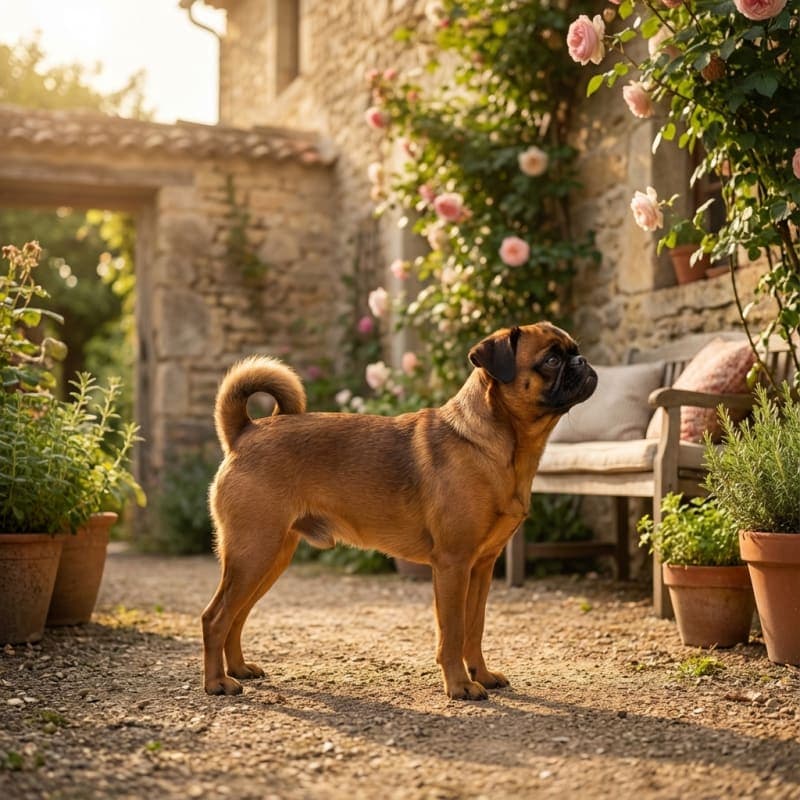
The most characteristic feature of the Belgian Griffon's appearance is its head. The forehead is well-rounded, and the eyes – large, round, and widely spaced – emanate intelligence and alertness. Their color is dark brown, almost black, which adds to their expressiveness. The nose is black, positioned at eye level, and the bridge of the nose is recessed, creating a flat profile line. The muzzle is very short, not exceeding 1.5 cm in length, which is typical for this breed and contributes to its unique, almost human expression.
The lips are black and closely adhere to the jaw, influencing the characteristic expression of the muzzle. The ears are small, set high, carried half-raised and drooping forward, emphasizing the breed's alert nature. In some countries, ears were traditionally cropped, but this practice is increasingly being abandoned in favor of a natural appearance.
The coat of the Belgian Griffon is rough-haired, with a dense undercoat, giving the dog an elegant and distinctive look. The hair reaches a length of about 2 cm and should be regularly trimmed to maintain a healthy appearance and prevent matting. Griffons come in two color variations:
- Black – a solid, deep color without signs of tan
- Black and tan – black with distinct reddish-brown markings on the limbs, chest, chin, and around the eyes
The limbs of the Belgian Griffon are strong, parallel, and well-muscled, providing stability and agility during movement. These dogs move with grace and dynamism, and their posture is always confident and proudly upright. The tail is set high and carried fairly high, but does not touch the back. When purchasing a tail, it was traditionally shortened by about 2/3 of its length, although this practice is becoming increasingly rare today.
The movement of the Belgian Griffon is parallel and harmonious, which emphasizes the proportionality of its body structure. Thanks to its solid construction and agile character, these dogs move gracefully, despite their compact build.
In summary, the Belgian Griffon is a breed with a unique, recognizable appearance that attracts attention due to its characteristic facial expression, elegant silhouette, and proud posture. Their striking features make them valued companions and participants in dog breed shows.
The Belgian Griffon is a breed with a balanced, alert, and affectionate temperament. These small dogs combine courage, intelligence, and a strong emotional bond with their owners, making them exceptional companions for both singles and families with children. Their personality is full of energy, joy, and curiosity about the world.
Belgian Griffons are very attached to their guardians and love to participate in the family's daily life. Their affectionate and friendly nature means they respond well to the emotions of household members and often intuitively sense their owners' moods. They are dogs that enjoy being the center of attention and cannot stand prolonged loneliness – they may show signs of stress if left alone for too long.
Despite their small size, Belgian Griffons are brave and fearless. Their alertness and guarding instinct make them respond well to unfamiliar sounds or people, warning their owners with energetic barking. However, they are not aggressive – their demeanor is more a sign of vigilance than hostility. After proper socialization, they usually turn out to be friendly towards strangers and other animals.
The behavior of the Belgian Griffon is full of vivacity and energy. These dogs love to play, walk, and engage in outdoor activities. Their naturally curious nature makes them eager to explore new environments, play with toys, and participate in interactive games. They are excellent companions for children, but due to their small size, it is important for children to learn to handle the dog carefully and respectfully.
Belgian Griffons do well in interactions with other animals, especially if introduced gradually and in a controlled manner. Early socialization is key to preventing excessive shyness or fearfulness. Owners should expose young Griffons to a variety of situations, sounds, places, and the company of other dogs and people to help them develop confidence and a balanced temperament.
The intelligence of Belgian Griffons makes them easy to train, although they require a consistent and patient approach. Positive reinforcement, rewards, and praise are the most effective training methods. Griffons love tasks that engage their minds, such as tricks, obedience commands, or games that stimulate intelligence.
With their balanced temperament, the Belgian Griffon excels as a companion dog in various environments – from city apartments to homes with gardens. Their adaptability, attachment, and cheerful disposition make them ideal companions for active families, seniors, and singles who value loyalty and the company of a four-legged friend.
In summary, the Belgian Griffon is a dog with a full character that combines alertness with affection, courage with intelligence, and energy with loyalty. It is a unique companion that will enrich the life of anyone who appreciates its distinctive personality.
The Belgian Griffon is a breed with relatively good health, but like any breed, it can be prone to certain ailments. The average lifespan of these dogs is 12–14 years, and their health largely depends on proper care, a balanced diet, and regular veterinary visits.
One of the most common health issues in Belgian Griffons is eye diseases. Due to their large, expressive eyes, this breed may be susceptible to conditions such as:
- Cataracts – gradual clouding of the lens leading to vision loss
- Retinal problems – disorders that can lead to retinal degeneration
- Exophthalmos – due to injury or infection
Regular eye examinations and maintaining eye hygiene are crucial for preventing serious conditions.
Another significant health issue is respiratory disorders, which are associated with a short muzzle (brachycephaly). Belgian Griffons may have difficulty breathing, especially on hot days or during intense physical exertion. Owners should avoid exposing their dog to high temperatures, ensure proper hydration, and limit intense activity on hot days. Symptoms may include:
- Loud breathing or snoring
- Quick fatigue during activity
- Shortness of breath after exertion
Belgian Griffons can also suffer from obesity, which results from an improper diet and lack of physical activity. Being overweight significantly impacts a dog's health, increasing the risk of diabetes, joint diseases, and cardiovascular problems. Owners should regularly monitor their dog's weight, adjust the amount of food given, and provide daily physical activity.
Other potential health issues include:
- Joint diseases – including hip dysplasia
- Skin problems – allergic dermatitis, bacterial or fungal infections
- Reproductive system disorders – difficulties in whelping in females due to the large head of the puppies
To ensure a long and healthy life for a Belgian Griffon, the following are essential:
- Regular veterinary visits – at least once a year, including dental check-ups
- Vaccinations and deworming – according to the veterinarian's recommendations
- Balanced diet – high-quality food appropriate for age and activity level
- Appropriate physical activity – 30–60 minutes daily
- Coat care and hygiene – regular brushing, trimming, and checking ears and teeth
Proper healthcare, prevention, and awareness of potential health issues significantly affect the quality of life of a Belgian Griffon. Responsible owners who take the time for regular check-ups and care for their dog's condition can enjoy the companionship of a healthy and happy canine for many years.
Grooming a Belgian Griffon is an essential element in maintaining its health, aesthetics, and overall well-being. This breed has a long, rough coat with a dense undercoat, which requires regular and systematic grooming to avoid matting, dullness, and skin problems.
Brushing the coat should be done at least 2–3 times a week, and during the shedding season, even daily. Regular brushing allows for:
- Removal of dead hair and dirt
- Prevention of tangles and dullness
- Stimulation of blood circulation and maintenance of healthy skin
- Early detection of skin changes, parasites, or wounds
Trimming the coat is a key aspect of grooming a Belgian Griffon. It involves manually plucking dead hair, which helps maintain the proper texture and length of the coat (about 2 cm). Trimming should be done every 6–8 weeks, preferably by a professional groomer or an owner who has been properly trained. Improper cutting with scissors can ruin the natural structure of the hair, leading to soft, fluffy fur that lacks the typical appearance.
Bathing should not be too frequent to avoid disrupting the natural protective layer of the skin. It is recommended to bathe a Belgian Griffon once every 4–6 weeks or as needed, using a gentle shampoo designed for rough-coated dogs. After bathing, the coat should be thoroughly dried to prevent colds or skin infections.
Ear care is particularly important for Belgian Griffons. Ears should be regularly checked for:
- Excess wax
- Debris and dust
- Unpleasant odor (a sign of infection)
- Redness or inflammation
Ear cleaning should be done once a week using a gentle ear cleaning solution designed for dogs.
Oral hygiene is another crucial aspect of grooming. Belgian Griffons, like many small dog breeds, can be prone to periodontal disease, tartar buildup, and cavities. It is recommended to:
- Brush teeth 2–3 times a week with a dog toothbrush and toothpaste
- Have regular dental check-ups with a veterinarian
- Provide dental chews that help with mechanical teeth cleaning
Nail trimming should be done every 3–4 weeks, depending on how much they wear down during walks. Overgrown nails can cause discomfort, mobility issues, and joint damage. If the owner does not feel confident trimming the nails themselves, it is advisable to seek help from a veterinarian or groomer.
Eye care is an additional element of daily grooming. Due to their large, expressive eyes, Belgian Griffons may be prone to infections and irritations. Eyes should be regularly checked for discharge, redness, or tearing. Gently wiping around the eyes with a damp, clean gauze will help maintain hygiene.
In summary, regular and systematic grooming of a Belgian Griffon not only improves its appearance but primarily supports the health of its skin, coat, ears, teeth, and nails. Responsible owners who dedicate time to daily care of their dog can enjoy the companionship of a healthy, well-groomed, and happy canine.
The Belgian Griffon is a breed that, despite its small size, needs regular physical activity and mental stimulation to maintain good condition, health, and a balanced temperament. These energetic dogs love movement, play, and exploring their surroundings, so owners should provide them with daily doses of activity.
Daily walks are the foundation of a Belgian Griffon's activity. It is recommended to have 2–3 walks a day, each lasting about 15–30 minutes, which totals 30–60 minutes of activity daily. Walks should be varied – it's worth choosing different routes to provide the dog with new scent, visual, and auditory stimuli, which stimulates its mind and prevents boredom.
Belgian Griffons respond well to interactive play that engages both body and mind. The best activities include:
- Fetching – balls, frisbee-type toys, plush toys
- Hide and seek with treats – develops the sense of smell and intelligence
- Tug of war – builds a bond with the owner and provides physical effort
- Obedience commands – reinforce discipline and concentration
The level of activity should be adjusted to the dog's age and condition:
- Puppies (up to 12 months) – shorter, more frequent play sessions (5–10 minutes), avoiding intense jumping and running on hard surfaces to protect developing joints
- Adult dogs (1–8 years) – full activity, 30–60 minutes daily, varied forms of movement
- Seniors (over 8 years) – gentler walks, shorter sessions, adjusted to their condition and any potential health issues
Belgian Griffons do well in various forms of activity, including:
- Agility – obstacle courses that develop agility and intelligence
- Obedience training – improving control and discipline
- Socialization play with other dogs – developing social skills
- Indoor play – puzzle toys, treat mazes, hide and seek games
Important notes regarding physical activity:
- Avoid intense exertion on hot days – due to their short snouts, Griffons may have breathing problems
- Ensure access to fresh water during and after activities
- Monitor signs of fatigue – heavy breathing, slowing down, reluctance to continue activity
- Avoid activities immediately after meals to prevent gastric torsion
Mental stimulation is just as important as physical activity. Belgian Griffons are intelligent and need intellectual challenges. Regular trick training, solving puzzle games, and learning new commands are excellent ways to engage the dog's mind and prevent behavioral problems resulting from boredom.
In summary, the Belgian Griffon is an active breed that requires regular physical and mental activity. Owners who dedicate time to daily walks, play, and training can enjoy the companionship of a healthy, happy, and balanced dog. Well-planned activity strengthens the bond between the owner and the dog and ensures longevity and quality of life for the four-legged friend.
Training a Belgian Griffon is a key element of its upbringing and emotional development. Thanks to intelligence, eagerness to learn, and a strong bond with the owner, Belgian Griffons are relatively easy to train, but they require a consistent, patient, and positive approach.
Basic training principles:
- Positive reinforcement – rewarding the dog for good behavior (treats, praise, play) is the most effective training method
- Consistency – everyone in the household should use the same rules and commands
- Patience – avoiding yelling, physical punishment, or negative reinforcement that can undermine the dog's trust
- Short training sessions – 10–15 minutes daily at the beginning, to avoid overwhelming the dog
Starting training – puppies:
Training should begin as early as 8–10 weeks of age. Young Griffons quickly learn basic commands, and early education shapes their behavior for life. The basic commands that are worth introducing at the beginning include:
- Sit – a basic command controlling the dog's position
- Lie down – teaches the dog calm behavior
- Come – crucial for safety during walks
- Stay – teaches the dog patience and self-control
- Leave it – prevents the dog from eating dangerous objects
Positive reinforcement in practice:
Belgian Griffons respond excellently to positive reinforcement. After the command is performed, the dog should be immediately rewarded with a treat, petting, or enthusiastic praise. It is important that the reward is given immediately after the command is performed, so the dog can associate its behavior with the reward.
Socialization – the foundation of a balanced temperament:
Socialization is just as important as training basic commands. Belgian Griffons should be exposed to a variety of situations, people, animals, and environments from a young age to develop confidence and a balanced temperament. Key elements of socialization include:
- Introducing them to other dogs in controlled conditions (dog parks, meetings with friends)
- Contact with diverse individuals (children, adults, seniors, people in hats, glasses)
- Exposure to various sounds (cars, street noise, household appliances)
- Exploring different places (parks, shopping malls, forests, beaches)
Advanced training and tricks:
Once the basic commands are mastered, Belgian Griffons are ready to learn more advanced tricks and tasks. Their intelligence and energy make them love intellectual challenges. Examples of advanced activities include:
- Agility – obstacle courses that develop agility, coordination, and intelligence
- Tricks – shaking paws, hugging, spinning, playing dead
- Distance commands – performing commands from a greater distance
- Scent games – searching for hidden treats, tracking scents
Preventing behavioral problems:
Proper training and socialization help prevent common behavioral problems such as:
- Excessive barking – teaching the Quiet command and rewarding calm behavior
- Separation anxiety – gradually getting the dog used to being alone, providing toys and stimulation
- Destruction of objects – ensuring an adequate amount of physical and mental activity
- Jumping on people – ignoring unwanted behavior and rewarding calm behavior
Creating a positive atmosphere during training:
Belgian Griffons are sensitive to tone of voice and the atmosphere during training. It is important that training sessions are joyful, full of encouragement and enthusiasm. Avoiding frustration and negative emotions will help build a strong bond between the owner and the dog and make learning enjoyable for both parties.
In summary, training a Belgian Griffon is a process that requires consistency, patience, and a positive approach. Regular training, socialization, and various forms of activity help raise a happy, balanced, and obedient dog. Owners who invest time in training can enjoy the company of an intelligent, alert, and loyal companion for many years.
Nutrition for the Belgian Griffon is a key element in ensuring its health, longevity, and proper condition. A proper diet should be balanced, tailored to the age, weight, activity level, and health status of the dog. Belgian Griffons tend to be prone to obesity, so it is important to control the amount of food given and the quality of the ingredients.
Basic nutrition guidelines:
- High-quality food – rich in animal protein (meat, fish), with a limited amount of grains and fillers
- Proper proportions – proteins, fats, carbohydrates, vitamins, and minerals in optimal amounts
- Portion control – avoiding overfeeding, which leads to obesity
- Constant access to fresh water – ensuring proper hydration
- Avoiding low-quality foods – containing artificial additives, colorings, preservatives, and fillers
Choosing food – dry, wet, or homemade?
- Dry food (kibble) – convenient, long-lasting, helps in mechanically cleaning teeth; recommended as the basis of the diet
- Wet food (cans, pouches) – more palatable, higher hydration, lower in calories; good as a supplement or for dogs with chewing problems
- Homemade food (BARF, cooked) – full control over ingredients, requires knowledge of balancing nutrients; recommended to consult with a veterinarian
Nutrition according to age:
- Puppies (2–12 months) – puppy food for small breeds, rich in protein (28–32%), fats (15–20%), and calcium and phosphorus for proper bone development; 3–4 meals a day
- Adult dogs (1–8 years) – food for adult small breed dogs, protein (20–26%), fats (10–15%); 2 meals a day
- Seniors (over 8 years) – food for older dogs, lower calorie content, additional ingredients supporting joints (glucosamine, chondroitin); 2 meals a day
Portion size:
The portion size depends on the weight, age, and activity level of the dog. General guidelines for an adult Belgian Griffon weighing 4–6 kg are 60–120 grams of dry food per day (divided into 2 meals). Always check the manufacturer's recommendations and consult with a veterinarian to adjust portions to the individual needs of the dog.
Ingredients to avoid:
- Chocolate – toxic to dogs, can lead to poisoning
- Onion, garlic – damage red blood cells
- Grapes, raisins – can cause kidney failure
- Avocado – contains persin, which is toxic to dogs
- Cooked bones – can splinter and cause choking or intestinal perforation
- Sweets, sugar – lead to obesity and diabetes
- Excess salt – can lead to dehydration and kidney problems
Healthy treats and supplements:
- Carrot, apple (without seeds) – healthy, low-fat snacks rich in vitamins
- Cooked chicken breast – a source of high-quality protein
- Dental chews – help in cleaning teeth
- Natural yogurt (without added sugar) – a source of probiotics supporting digestion
Monitoring weight and condition:
Regularly weighing the dog and assessing its condition are key elements in caring for its health. The ideal weight for a Belgian Griffon is 3.5–6 kg. Owners should regularly assess the dog's condition by:
- Touch – ribs should be felt under a thin layer of fat
- Visually – a visible waist when viewed from above, a noticeable belly tuck when viewed from the side
If the dog is overweight, portions should be reduced and physical activity increased. If it is too thin, it is advisable to consult a veterinarian to rule out health issues.
Hydration:
The Belgian Griffon should have constant access to fresh water. Owners should regularly refill the bowl and ensure its cleanliness. The amount of water consumed depends on activity, ambient temperature, and the type of food (wet food contains more water than dry).
In summary, proper nutrition for the Belgian Griffon involves providing a balanced, high-quality diet tailored to the dog's age and activity level, controlling portion sizes, and avoiding dangerous ingredients. Regular monitoring of weight, condition, and health status will help maintain its health, energy, and longevity.
Characteristic Traits
Pros
- Intelligent and easy to train
- Excellent family companion
- Fearless and alert
- Compact size perfect for apartments
- Strong emotional bond with the owner.
Cons
- Requires regular coat care and trimming
- May be prone to eye and respiratory health issues
- Needs regular physical and mental activity
- Struggles with prolonged loneliness.
Behavioral Ratings
Breed History
The Belgian Griffon is one of the three varieties of griffons originating from Belgium, alongside the Brussels Griffon (Griffon Bruxellois) and the Petit Brabançon. This breed has a long and rich history dating back to centuries ago, when small, rough-haired dogs known as Smousje were commonly found around Brussels.
Ancestors of the breed:
Smousje are small, rough-haired dogs that played important roles in the daily lives of Brussels residents for centuries. They were valued for:
- Guarding carriages – they watched over vehicles and alerted to threats
- Controlling rodents in stables – effectively eliminating rats and mice, protecting food supplies and the health of horses
- Companionship – their lively temperament and alertness made them valued companions
The 19th century – the birth of the modern breed:
In the 19th century, Belgian breeders began intentionally crossing Smousje with other breeds to shape the breed type and improve the appearance of the dogs. Key breeds that influenced the development of modern Belgian Griffons include:
- Cavalier King Charles Spaniel – introduced larger eyes, a rounder head, and a gentler temperament
- Pug – contributed to the shortening of the muzzle, black coloring, and a more compact body
As a result of these crosses, three varieties of griffons emerged, differing in coat length and color:
- Brussels Griffon (Griffon Bruxellois) – long, rough coat in red-brown color
- Belgian Griffon (Griffon Belge) – long, rough coat in black or black-and-tan color
- Petit Brabançon – short, smooth coat in various colors
Official recognition of the breed:
In 1883, the first griffons were officially registered in the Saint Hubert Pedigree Book (L.O.S.H.). These were the individuals:
- Topsy (L.O.S.H. no. 163)
- Foxine (L.O.S.H. no. 164)
This moment is considered the official beginning of organized and controlled breeding of the Belgian Griffon breed.
Royal patronage – Queen Marie-Henriette:
By the end of the 19th century, griffons gained particular popularity due to the interest of Queen Marie-Henriette of Belgium, who was a lover of the breed and a patron of breeding. The queen actively promoted the breed, participated in dog shows, and supported breeders. Her patronage significantly contributed to the rise in popularity of griffons not only in Belgium but also in other European countries.
International expansion:
Around 1900, Belgian Griffons began to be exported to other countries, where they quickly gained recognition as companion and show dogs. Their unique appearance, almost human-like facial expression, and affectionate temperament attracted the attention of breeders and dog lovers worldwide. The breed became popular in:
- France – as salon dogs of the aristocracy
- Great Britain – valued at dog breed shows
- The United States – as companion dogs for urban families
The 20th century – challenges and revival:
During World War I, the breeding of Belgian Griffons suffered significantly – many breeding lines were lost, and the population of the breed drastically declined. Similar challenges occurred during World War II, when breeding nearly came to a halt. However, thanks to the commitment of Belgian and international breeders, the breed was rebuilt after the war.
In the second half of the 20th century, Belgian Griffons regained popularity as companion dogs, particularly valued in urban environments for their compact size, alertness, and attachment to their owners.
Modern times:
Today, the Belgian Griffon is recognized as a breed with a unique character and personality. The FCI (Fédération Cynologique Internationale) classifies griffons in Group 9 – Companion and Toy Dogs, Section 3 – Belgian Toy Dogs, without a working trial. The FCI standard no. 81 (Griffon Belge) was last updated in 2003.
Modern breeders strive to preserve not only the appearance but also the temperament, health, and functional traits of the breed. Belgian Griffons are valued as:
- Companion dogs – for families, singles, and seniors
- Show dogs – participating in international dog breed shows
- Guard dogs – despite their small size, they are alert and respond to threats
In summary, the Belgian Griffon is a breed with a rich history that has evolved from a small guard dog in the stables of Brussels to a cherished companion dog worldwide. Their intelligence, alertness, unique appearance, and devotion to their owners make them exceptional representatives of Belgian cynology.