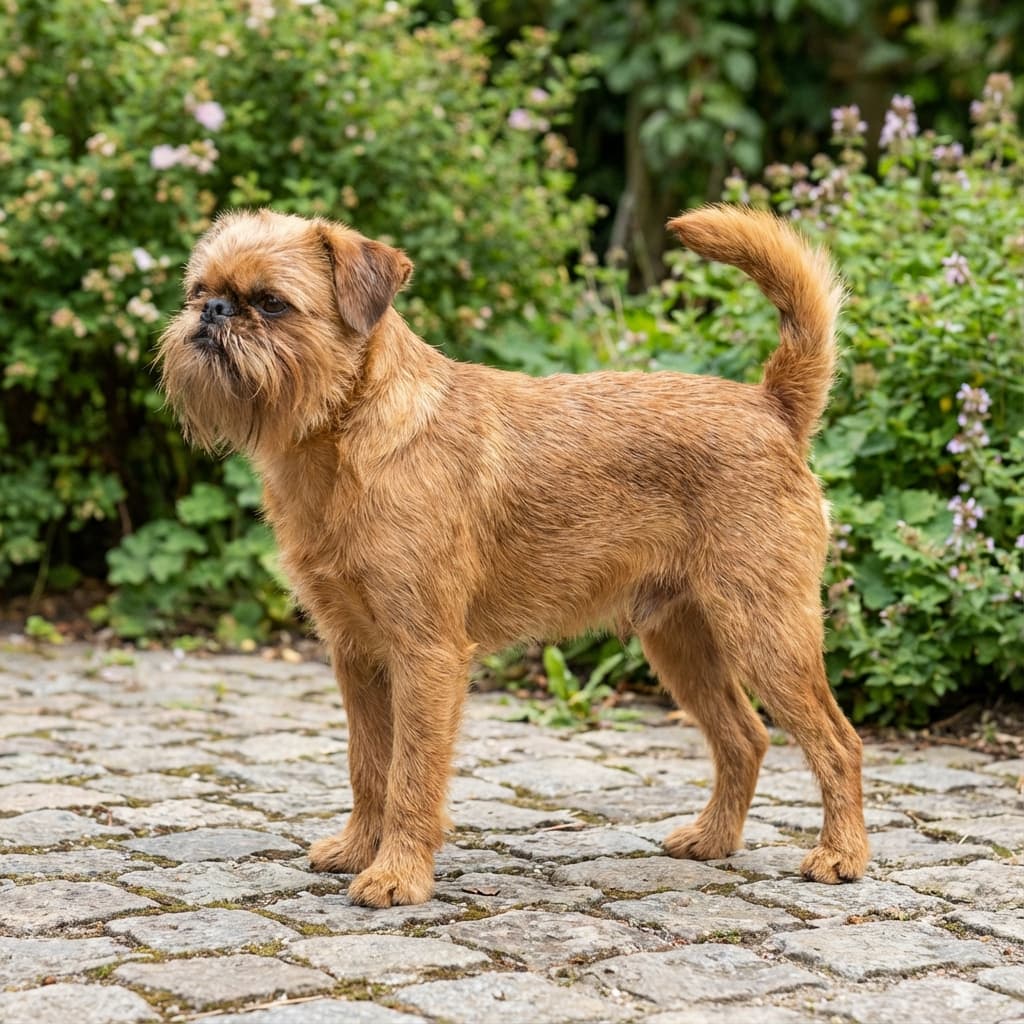
Brussels Griffon
FCI Group
9• FCI 80
Size
Small
Origin Country
BE
Height
20-28 cm
Weight
3.5-6 kg
Lifespan
12-14 years
Temperament
Overview
Brussels Griffon is an exceptionally charming small dog that attracts attention not only with its distinctive appearance but also with its unique personality full of vigor and devotion. This Belgian breed has a long and fascinating history as a companion and guard dog, dating back many centuries.
Characteristic rough coat and expressive face with an almost human expression give Brussels Griffons a unique look that makes them recognizable worldwide. Their small size makes them ideal companions in both apartments and houses with gardens. They live on average from 12 to 14 years, which is an impressive result for such a small breed.
The Brussels Griffon is distinguished by its extraordinary attachment to its owner – its loyalty and devotion make it an inseparable family member. Moreover, despite their small size, their natural alertness and activity make them excellent alarm dogs that will immediately react to disturbing sounds or the presence of strangers.
Over the centuries, the breed gained popularity due to royal interest – Queen Marie-Henriette of Belgium herself was a great lover of Griffons, which significantly contributed to their spread in Europe. Their unique appearance and temperament continue to attract dog lovers around the world to this day.
The intelligence and natural curiosity of Brussels Griffons make them excellent playmates, requiring appropriate mental stimulation and consistent training. They are also emotionally sensitive, which means they need a gentle yet firm approach in training and warm relationships with their family.
Their history is full of fascinating events – from their original role in protecting stables from rodents, through their presence in royal courts, to their contemporary popularity in media culture. Despite their small size, the Brussels Griffon has a huge heart and a vivid personality that will undoubtedly enrich the life of anyone who decides to adopt one. In the following sections of the guide, you will find detailed information about health, grooming, physical activity, training, nutrition, and the history of this extraordinary breed.
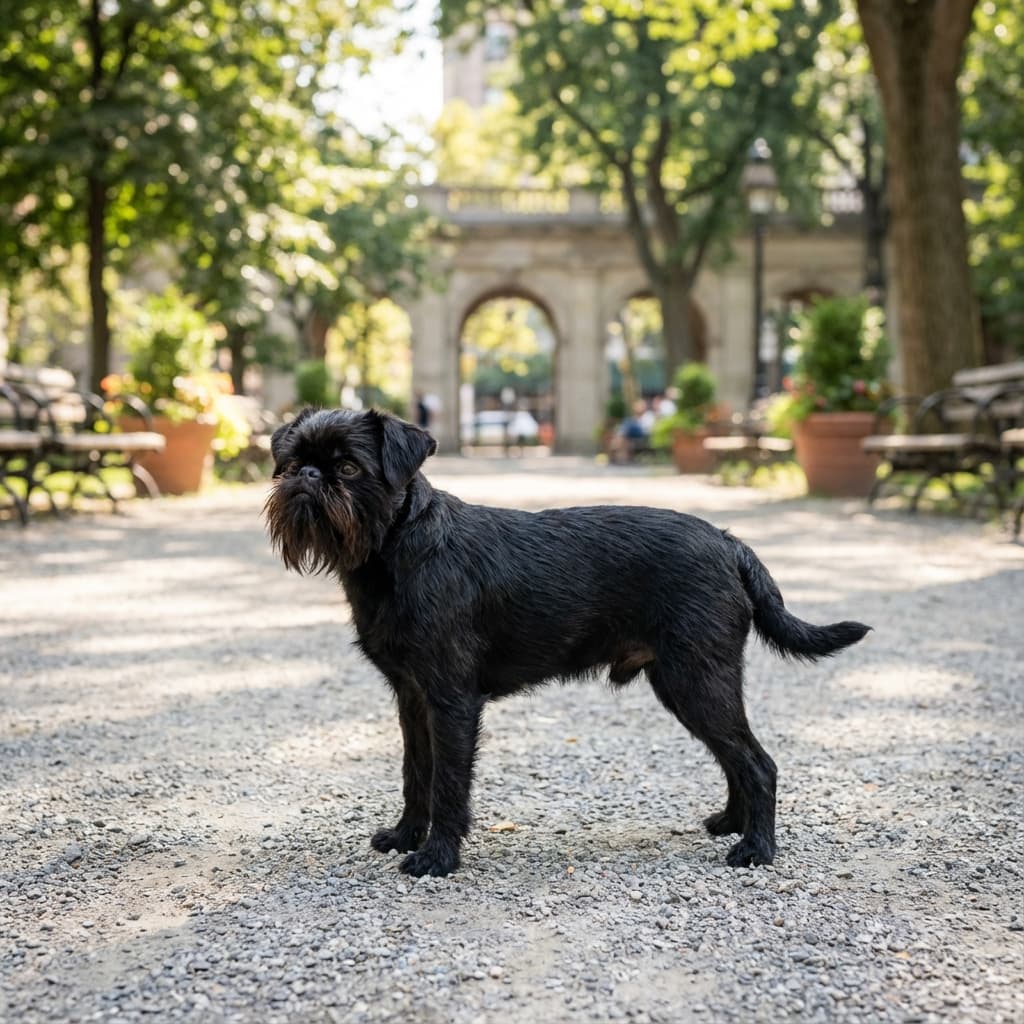
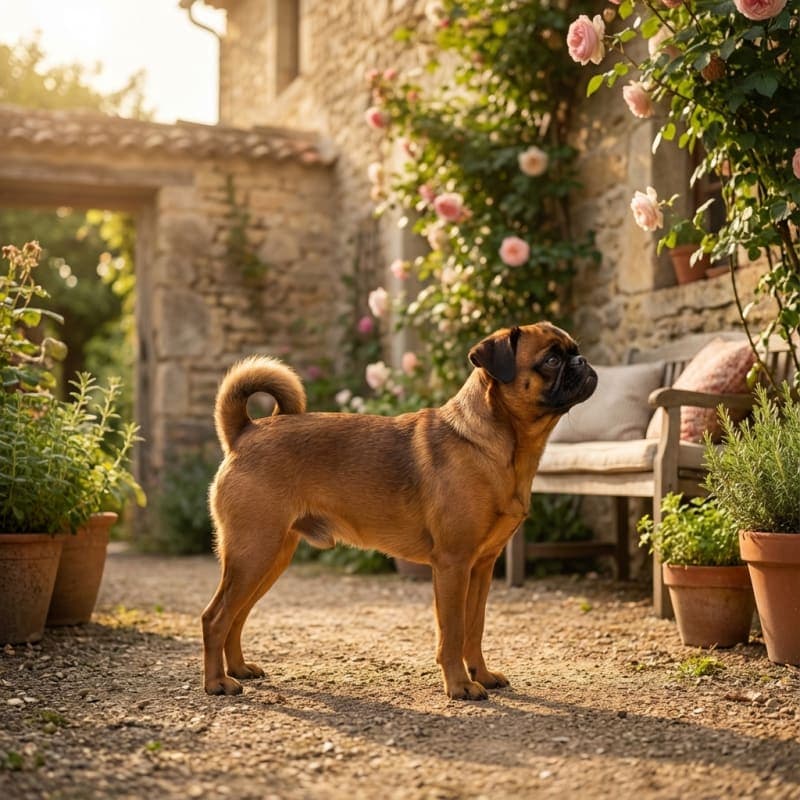
The Brussels Griffon is a small dog with a distinctive and unique appearance that immediately catches the eye. Its silhouette is proportional, strong, and compact, with an almost square body structure that gives it a stable and balanced look.
Dimensions and build:
- Height at the withers: usually from 20 to 28 cm
- Weight: from 3.5 to 6 kg
- Build: compact, strong, almost square
- Movement: elegant and confident despite its small size
Coat and coloration:
The coat of the Brussels Griffon is rough, hard, and dense, giving it a characteristic, somewhat tousled appearance. The coloration can be diverse:
- Red (from light to dark shades)
- Reddish with black tips
- Black with red markings
Head and face:
The head is a large and very expressive part of the body, giving the Brussels Griffon an almost human expression. Round, dark eyes are large and shiny, full of intelligence and curiosity. The short nose gives the profile a distinctive and characteristic look for the breed. The jaw usually shows a slight underbite, which is typical for this breed.
Ears and tail:
The ears are small, set high on the head. They can be natural (standing or semi-erect) or cropped, although natural ears are currently preferred. The tail is carried quite high and can be of natural length or docked, depending on national regulations regarding tail docking.
The Brussels Griffon is a dog that draws attention with its extraordinary appearance, characteristic posture full of confidence, and expressive facial expressions that often resemble human emotions.
The Brussels Griffon is a dog with a balanced yet vigorous temperament, characterized by an extraordinary attachment to its owner. Its character is full of energy, curiosity, and intelligence, making it an excellent companion for active and engaged individuals.
Family relationships:
Griffons are extremely loyal and devoted to their guardians, often choosing one person as their favorite family member. They can be quite clingy and enjoy constant contact with people – they are not dogs that tolerate long periods of solitude well. In contact with the family, they are affectionate, playful, and full of energy.
Socialization and relationships with others:
Griffons are usually sociable and enjoy interactions with people, but they require proper socialization from puppyhood. With proper upbringing, they get along well with other dogs, although they may show a tendency to dominate despite their small size. They may initially be wary of strangers, but once they accept a new person, they become friendly.
Intelligence and training:
The intelligence of Griffons means they can quickly learn new commands and tricks; however, their natural stubbornness and independence can pose a challenge during training. They require a consistent but positive approach – harsh methods can harm their sensitive nature.
Instincts and behaviors:
Brussels Griffons have a moderate hunting instinct, which means they may show interest in smaller animals such as cats, rodents, or birds. Early socialization with other pets is crucial. They are naturally alert and tend to bark when they hear unusual sounds – this makes them excellent alarm dogs.
Emotional needs:
It is important to provide Griffons with adequate mental and physical stimulation, as boredom can lead to undesirable behaviors such as excessive barking, destruction of objects, or separation anxiety. Interactive toys, scent games, and regular walks will help keep them in good mental condition.
Overall, the Brussels Griffon is a dog that combines charm, intelligence, courage, and devotion, making it a wonderful companion for families willing to give it the attention and love it needs.
The Brussels Griffon is a relatively healthy breed; however, like any other, it can be prone to certain health issues characteristic of small breeds and brachycephalic dogs. The average lifespan of this breed ranges from 12 to 14 years, which is quite a long time for such a small dog.
Most common health problems:
- Hip dysplasia – a genetic condition affecting the proper development of the joints
- Patellar luxation – the kneecap dislocating from its normal position, common in small breeds
- Eye problems – such as cataracts, corneal dystrophy, or dry eye syndrome
- Breathing difficulties – related to the short skull and flat nose
- Dental problems – a tendency to accumulate tartar and periodontal disease
Temperature sensitivity:
Brussels Griffons have short noses and flat faces, making them very sensitive to high temperatures and potentially having difficulty regulating heat. On hot days, it is essential to provide the dog with access to fresh water, shade, and an air-conditioned room. Intense exercise should be avoided on hot days, as it can lead to overheating.
Tendency to obesity:
Due to their small body structure and ease of gaining weight, owners should closely monitor their pets' weight. Being overweight can lead to serious health issues, such as:
- Heart and circulatory diseases
- Diabetes
- Worsening joint problems
- Breathing difficulties
Health prevention:
Regular veterinary visits (at least once a year) and attention to prevention are crucial for keeping the Brussels Griffon in good condition. Recommended preventive examinations include:
- Orthopedic examination (hip and patellar joints)
- Ophthalmological examination
- Weight and physical condition check
- Regular teeth cleaning and dental check-ups
- Vaccinations and deworming
Delicate build:
Due to their small and delicate body structure, Brussels Griffons may be prone to injuries from improper handling, falls, or jumping from heights. Extra caution should be exercised in homes with small children, who must learn to handle the dog gently.
A proper diet, appropriate exercise tailored to the breed's capabilities, and regular veterinary care can significantly impact the health, lifespan, and quality of life of the Brussels Griffon.
The Brussels Griffon has a rough, hard coat that requires regular but not overly time-consuming grooming to maintain its healthy appearance and proper texture. Proper grooming not only enhances the dog's appearance but also affects its comfort and health.
Coat care:
Although the coat of Brussels Griffons is not particularly demanding, regular trimming (plucking dead hair) is recommended at least 2-3 times a year. Trimming helps:
- Remove dead hair and prevent its accumulation
- Maintain the proper texture of the coat
- Stimulate the growth of new, healthy hair
- Prevent matting
Owners should brush their Brussels Griffon at least 2-3 times a week with a special brush for rough-coated hair. Regular brushing will help keep the coat in good condition and minimize shedding. Brussels Griffons do not shed as heavily as breeds with double coats, but consistency is key to success.
Nail care:
Nails should be regularly trimmed (usually every 3-4 weeks) to prevent overgrowth, which can lead to:
- Pain and discomfort while walking
- Posture and joint problems
- Potential nail breakage
Ear hygiene:
Brussels Griffons require regular checking and cleaning of their ears (usually once a week) to prevent infections. Ears should be gently wiped with a cotton ball moistened with a special dog ear cleaning solution. Pay attention to:
- Unpleasant odor from the ears (may indicate an infection)
- Redness or swelling
- Excessive scratching of the ears
Oral hygiene:
Regular tooth brushing (ideally daily or at least 2-3 times a week) is crucial for maintaining oral health and preventing:
- Build-up of tartar
- Gum disease
- Tooth loss in older age
- Unpleasant breath
Eye care:
The eyes of Brussels Griffons are large and prone to dirt. They should be regularly checked and rinsed with warm water or a special eye solution to remove discharge, dust, and other impurities. Watch for:
- Excessive tearing
- Redness of the eye's white part
- Swelling around the eyes
Bathing:
Brussels Griffons do not require frequent baths – usually, a bath every 6-8 weeks or as needed (when the dog is dirty or has an unpleasant odor) is sufficient. Mild shampoos designed for rough-coated dogs should be used.
With proper and regular grooming, the Brussels Griffon can enjoy a healthy, well-groomed appearance, which is important for both its comfort and health, as well as aesthetics.
The Brussels Griffon is a dog with a moderate need for exercise. Although it does not require intense training like working or hunting breeds, it needs a daily dose of physical and mental activity to maintain health, good condition, and proper behavior.
Basic exercise needs:
It is recommended that Brussels Griffons have at least 30-45 minutes of activity daily, which can include:
- Leisurely walks around the neighborhood (2-3 times a day)
- Playing fetch (ball, squeaky toys)
- Light running over short distances
- Scent games (searching for treats)
- Playing with other dogs of similar size
Adjusting activity to the breed's capabilities:
Due to their small size and short skull (brachycephalic structure), Brussels Griffons are not suited for intense physical exertion, such as:
- Running long distances
- Intensive agility training
- Long mountain hikes
- Activity in high temperatures
It is important that the activity is tailored to the dog's age, physical condition, and respiratory capabilities. Special care should be taken on hot days – Brussels Griffons may have difficulty breathing and regulating their temperature.
Activity at home:
Brussels Griffons are also inclined to play indoors, making them ideal companions for people living in apartments. Indoor activities can include:
- Playing with interactive toys
- Obedience exercises (commands, tricks)
- Scent games (hiding treats in the house)
- Playing tug-of-war (in moderation)
Preventing obesity:
Owners should remember that Brussels Griffons may be prone to weight gain if they are not sufficiently active or if their diet is too caloric. Regular walks and play are crucial for:
- Maintaining a healthy weight
- A healthy cardiovascular system
- Good joint and muscle condition
- Proper mental well-being
Mental stimulation:
It is also worth introducing various forms of mental activity to stimulate the dog's intelligence and prevent boredom, which can lead to undesirable behaviors such as:
- Excessive barking
- Destruction of objects
- Separation anxiety
- Obsessive behaviors
A properly balanced physical and mental activity will help the Brussels Griffon maintain health, good condition, and a happy, balanced temperament throughout its life.
Training a Brussels Griffon can be both a challenge and a pleasure. This breed is intelligent, curious about the world, and eager to learn, making it a good candidate for training; however, it requires an appropriate approach that takes into account its sensitive and independent nature.
Basic training principles:
It is important that training is conducted in a positive manner, using rewards and praise, as Griffons are emotionally sensitive and do not respond well to harsh methods or punishment. Key elements of effective training include:
- Consistency – clear rules and steady expectations
- Positive reinforcement – rewards, praise, treats
- Patience – understanding the breed's natural stubbornness
- Short sessions – 5-10 minutes, several times a day
- Diversity – avoiding monotony in exercises
Basic commands:
Owners should start by teaching basic obedience commands, which are the foundation for further training:
- Sit – a basic control command
- Lie down – helps calm the dog
- Stay – teaches self-control and patience
- Come – crucial for the dog's safety
- No – a basic prohibitive command
Once the basics are mastered, more advanced skills can be gradually introduced, such as tricks, interactive games, or basic agility tailored for small dogs.
Early socialization:
It is also crucial to socialize the Griffon early from puppyhood so that it learns to accept:
- Other dogs of various sizes and breeds
- Other pets (cats, rodents)
- Strangers of different ages
- Diverse environments (city, park, forest)
- New sounds and situations
A well-socialized Griffon will be confident, balanced, and less prone to aggression or fear in new situations.
Dealing with stubbornness:
Brussels Griffons tend to be quite stubborn and independent, which can pose a challenge during training. Owners must be:
- Patient and persistent in their efforts
- Consistent in enforcing rules
- Creative in motivating the dog
- Firm, but never aggressive
Group training classes:
Classes in training groups can be very helpful as they allow for:
- Establishing positive interactions with other dogs
- Learning in a controlled environment with distractions
- Sharing experiences with other owners
- Professional support from a trainer
Barking control:
Griffons have a natural tendency to bark, which can become a problem without proper training. It is important to teach the dog the command Quiet and reward calm behavior. Identifying the causes of barking (boredom, anxiety, need for attention) and responding appropriately is essential.
House training:
Small dogs, including Griffons, can have difficulties with house training. The key is:
- Regular outings (every 2-3 hours for puppies)
- Rewarding for going in the right place
- Patience and no punishment for accidents
- Consistency in the established schedule
Properly conducted training will not only strengthen the bond between the dog and its owner but also provide the Griffon with a sense of security, fulfillment, and satisfaction. A well-trained Brussels Griffon is a joyful, obedient, and confident companion for life.
Nutrition for the Brussels Griffon is a key element in maintaining its health, energy, and longevity. Due to their small size, Griffons do not require large amounts of food; however, the quality of food is fundamental to their health and well-being.
Basic nutrition guidelines:
Owners should choose high-quality food for small breeds that provide all the necessary nutrients in the right proportions. Key dietary components include:
- Protein (minimum 20-25%) – from meat, fish, or poultry
- Fats (10-15%) – for energy and healthy skin/coats
- Carbohydrates – complex energy sources (rice, oats, sweet potatoes)
- Vitamins and minerals – to support the immune system
- Fiber – for proper digestion
Adjusting diet according to age and activity:
The diet should be tailored to the specific life stage of the dog:
Puppies (2-12 months):
- Puppy food for small breeds (higher protein and calories)
- 3-4 meals a day
- Adjusted for rapid growth
Adult dogs (1-7 years):
- Adult food for small breeds
- 2 meals a day
- Adjusted for activity level
Senior dogs (over 7 years):
- Senior food for small breeds (lower calories, higher fiber)
- 2 meals a day
- Support for joints and digestive system
Weight control and obesity prevention:
Griffons can be prone to weight gain, so it is extremely important to:
- Strictly adhere to the recommended daily portion
- Avoid overfeeding and excessive treats
- Weigh the dog regularly (at least once a month)
- Monitor physical condition (visible waist, palpable ribs)
- Adjust calorie intake according to activity level
Overfeeding can lead to serious health problems, such as diabetes, heart disease, joint issues, and a shortened lifespan.
Dietary supplements:
It is also worth introducing healthy supplements to the Griffon's diet to enrich its menu:
- Fresh vegetables – carrots, broccoli, spinach (cooked or raw)
- Fruits – apples (without seeds), berries, bananas (in small amounts)
- Natural treats – pieces of poultry, dried meat, liver
- Supplements – omega-3 for healthy coats, probiotics for digestion (after consulting a veterinarian)
Dangerous and prohibited foods:
It is essential to avoid giving the dog human food, especially those that can be toxic to them:
- Chocolate – contains theobromine (deadly toxic)
- Onions and garlic – destroy red blood cells
- Grapes and raisins – damage kidneys
- Avocado – contains persin (toxic to dogs)
- Sweets with xylitol – cause a rapid drop in blood sugar
- Alcohol – damages the liver and brain
- Poultry bones – can splinter and cause intestinal perforation
Access to water:
Fresh, clean water should be always available for the dog to ensure proper hydration. The water bowl should be regularly cleaned and the water changed at least twice a day.
Veterinary consultations:
Regular visits to the veterinarian will help monitor the Griffon's health and adjust the diet as needed. The veterinarian may recommend:
- Specialized food for dogs with specific health issues
- Dietary supplements (for joints, coat, teeth)
- Adjusting portions based on the dog's condition
A properly balanced diet, tailored to the individual needs of the Brussels Griffon, is the foundation of its health, energy, and long, happy life alongside its owner.
Characteristic Traits
Pros
- Ideal for apartments
- Long-lasting
- Alert and active
- Intelligent and easy to train
- Devoted to the owner
- Excellent companion
Cons
- Requires a gentle approach
- Needs mental stimulation
- Emotional sensitivity
- Tendency to bark
- Can be stubborn
- Sensitive to high temperatures.
Behavioral Ratings
Breed History
The Brussels Griffon has a rich, fascinating history that dates back many centuries. This breed originates from Belgium, and its roots are closely tied to the Brussels region, where it has accompanied people for centuries as a working and companion dog.
Original Origin (before the 19th century):
The ancestors of the Brussels Griffons, known as Smousje (or Smoutshond), were small, rough-coated dogs that had been common in the Brussels area for centuries. They were working dogs, serving practical functions:
- Stable protection – combating rodents (rats and mice)
- Guarding carriages – alerting drivers to approaching strangers
- Accompanying urban craftsmen – as companion dogs
These small, energetic dogs were popular among the urban population due to their hunting abilities and alert temperament.
Formation of the Modern Breed (19th century):
In the 19th century, through planned crossbreeding with other breeds, a new type of dog emerged, characterized by a more distinctive appearance and nobler lineage. The following breeds were used for crossbreeding:
- Ruby King Charles Spaniel – which gave the breed a round head, large eyes, and red shades in the coat
- Pug – which introduced a shorter skull, flat nose, and black coat color
- Possibly Yorkshire Terrier – to maintain small size and rough-haired texture
The result of these crossbreeds was the emergence of three varieties of the breed, which are now recognized as separate, though closely related:
- Brussels Griffon (Griffon Bruxellois) – rough-coated, red coat
- Belgian Griffon (Griffon Belge) – rough-coated, black or black-and-tan coat
- Petit Brabançon – short-haired variant (smooth coat)
Official Recognition of the Breed (late 19th century):
In 1883, the first Brussels Griffons were officially registered in the Saint Hubert's Pedigree Books (L.O.S.H.) – a Belgian canine association. The first registered representatives were:
- Topsy (L.O.S.H. no. 163)
- Foxine (L.O.S.H. no. 164)
This event marked the beginning of formal breeding of the breed according to established standards.
Royal Patronage (late 19th/early 20th century):
Around 1900, Brussels Griffons gained immense popularity due to royal interest from Queen of Belgium Marie-Henriette, who was a great lover of this breed. Her passion significantly contributed to:
- The rise in prestige of the breed in Europe
- The export of many specimens abroad
- The spread of the breed among the aristocracy and higher classes
- The establishment of higher breeding standards
Thanks to royal patronage, Griffons became a symbol of elegance and good taste, attracting the attention of breeders across the continent.
International Expansion (early 20th century):
In the early 20th century, Brussels Griffons began to be exported to:
- England – where they gained a following in the 1890s
- France – where they quickly became favorites of the Parisian aristocracy
- The United States – where they were recognized by the American Kennel Club (AKC)
- Other European countries – where the breed gained popularity among companion dog enthusiasts
World Wars Period (20th century):
During the First and Second World Wars, the population of Brussels Griffons dramatically declined due to wartime hardships, food shortages, and destruction in Europe. The breed survived thanks to the efforts of dedicated breeders who undertook the task of rebuilding the population after the wars.
Modern Era (21st century):
Today, Brussels Griffons are highly sought after worldwide as:
- Companion dogs – ideal for city dwellers
- Show dogs – regularly presented at international dog shows
- Media dogs – often appearing in films and series (e.g., in the movie As Good as It Gets with Jack Nicholson)
The breed is officially recognized by all major canine organizations, including FCI (Fédération Cynologique Internationale), AKC (American Kennel Club), and Kennel Club (UK).
FCI Standard:
According to the FCI standard, Brussels Griffons belong to:
- Group 9 – Companion and Toy Dogs
- Section 3 – Small Belgian Dogs
- Without working trial
Their history – from humble beginnings as dogs saving stables from rodents, through their presence at royal courts, to modern popularity in media culture – makes the Brussels Griffon a breed with an exceptionally rich cultural and historical heritage.