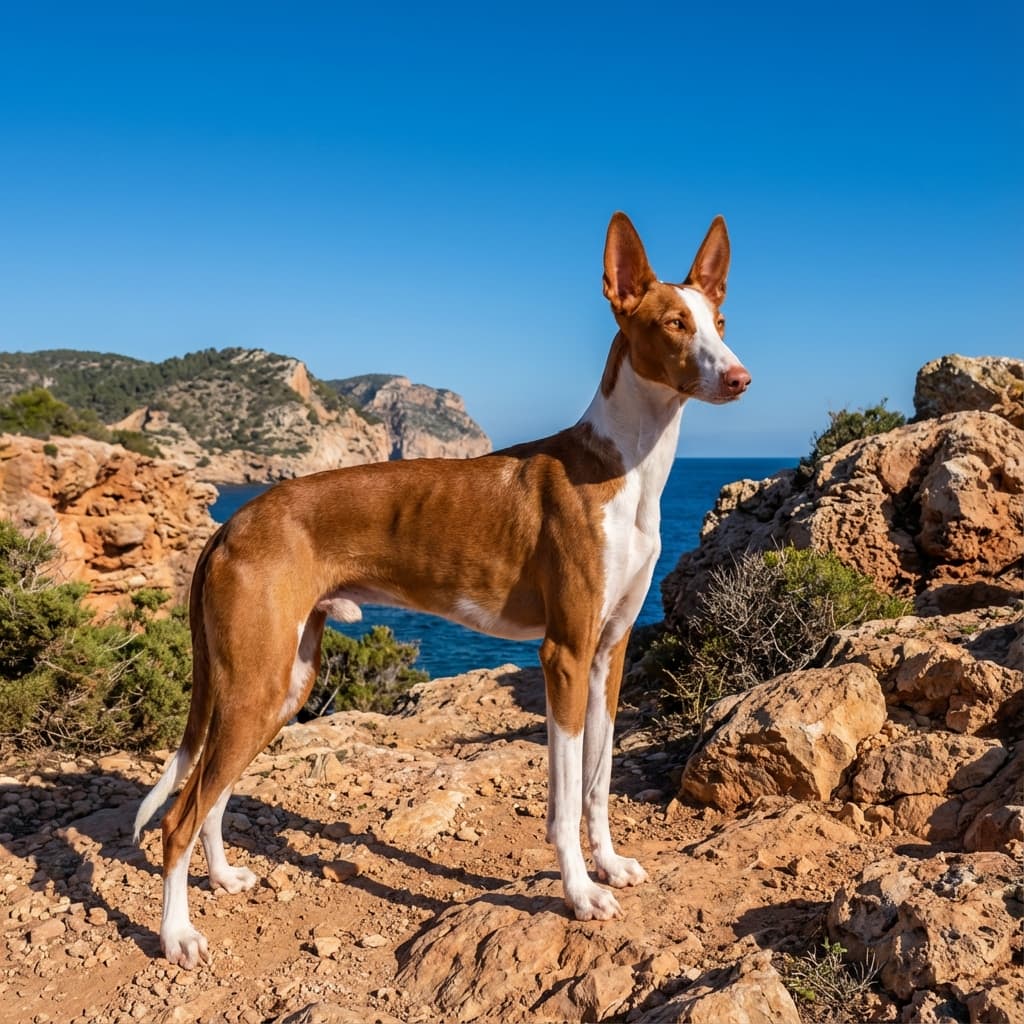
Ibizan Hound
FCI Group
5• FCI 89
Size
Large
Origin Country
ES
Height
60-72 cm
Weight
20-25 kg
Lifespan
10-12 years
Temperament
Overview
The Ibizan Hound, also known as Podenco Ibicenco, is a fascinating dog breed whose roots trace back to ancient Egypt. Originating from the picturesque Balearic Islands, particularly the island of Ibiza, this dog stands out not only for its distinctive appearance but also for its extraordinary hunting abilities. The Ibizan Hound is an excellent example of a primitive-type dog that has preserved its natural instincts and hunting skills for thousands of years.
Its slender, elegant silhouette and long, strong legs testify to its agility and speed – key traits during hunts for rabbits and hares. What sets this breed apart from other hunting dogs is its unique combination of excellent scent, exceptional hearing, and good eyesight, which it utilizes while tracking game. The Ibizan Hound can hunt both day and night, easily locating its prey even in dense underbrush.
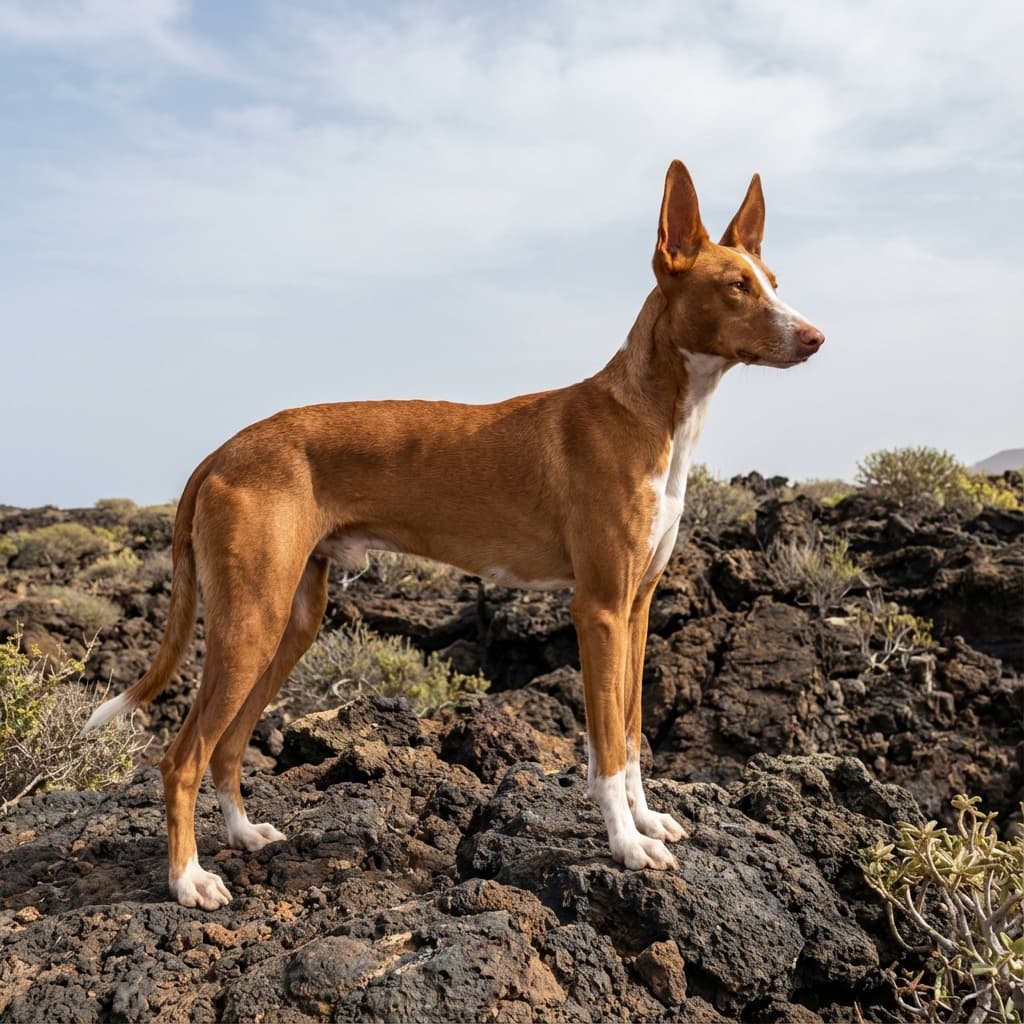
This breed is characterized by a short, dense coat that most commonly appears in shades of white, red, or their beautiful combinations. Its large, stiff, upright ears and slanted, light-colored eyes in amber or green give it an exceptionally intelligent and alert expression. This not only makes the dog look attractive but also reflects its characteristic attentiveness and perceptiveness.
The Ibizan Hound is known for its high energy level and requires a significant amount of exercise to maintain physical health and mental balance. Therefore, if you are an active person who loves spending time outdoors, The Ibizan Hound may be the perfect choice for you. Its independent temperament can pose a challenge, especially for novice owners, but with the right training approach, consistency, and early socialization, this dog becomes a loyal and devoted life companion.
Owners should be prepared to dedicate time to regular training, long walks, and active play. This will not only strengthen the bond with the dog but also allow it to utilize its natural intelligence and innate learning abilities. The Ibizan Hound can live from 10 to 12 years, making it an excellent companion for many years. Although the breed typically enjoys good health, it is important to be aware of its specific needs and potential health issues.
The Podenco Ibicenco is a dog with a long, slender body characterized by a graceful, harmonious build and an elegant appearance reminiscent of ancient Egyptian depictions of dogs. This breed exhibits exceptional lightness and flexibility in every movement.
Dimensions and silhouette: The height at the withers ranges from 60 to 72 cm, with males typically being taller than females. The weight oscillates between 20-25 kg, which, given their build, makes these dogs look slim and athletic. The body is long in relation to its height, with a straight back line and a slightly sloping hindquarters.
Head and eyes: The breed has a distinctive long, narrow head shaped like a cone, with a clearly defined occiput and a gentle, flat forehead. The muzzle is long and elongated, of the same length as the skull. The nose is flesh-colored, harmonizing with the coat. The eyes are slanted, small to medium-sized, with an expression full of intelligence. Their color ranges from amber to green, depending on the dog's coat.
Ears: This is one of the most characteristic features of the breed. The ears are large, stiff, naturally erect, and very mobile. They are set fairly low and have an elongated triangular shape. Their mobility allows the dog to precisely locate the source of sound while hunting.
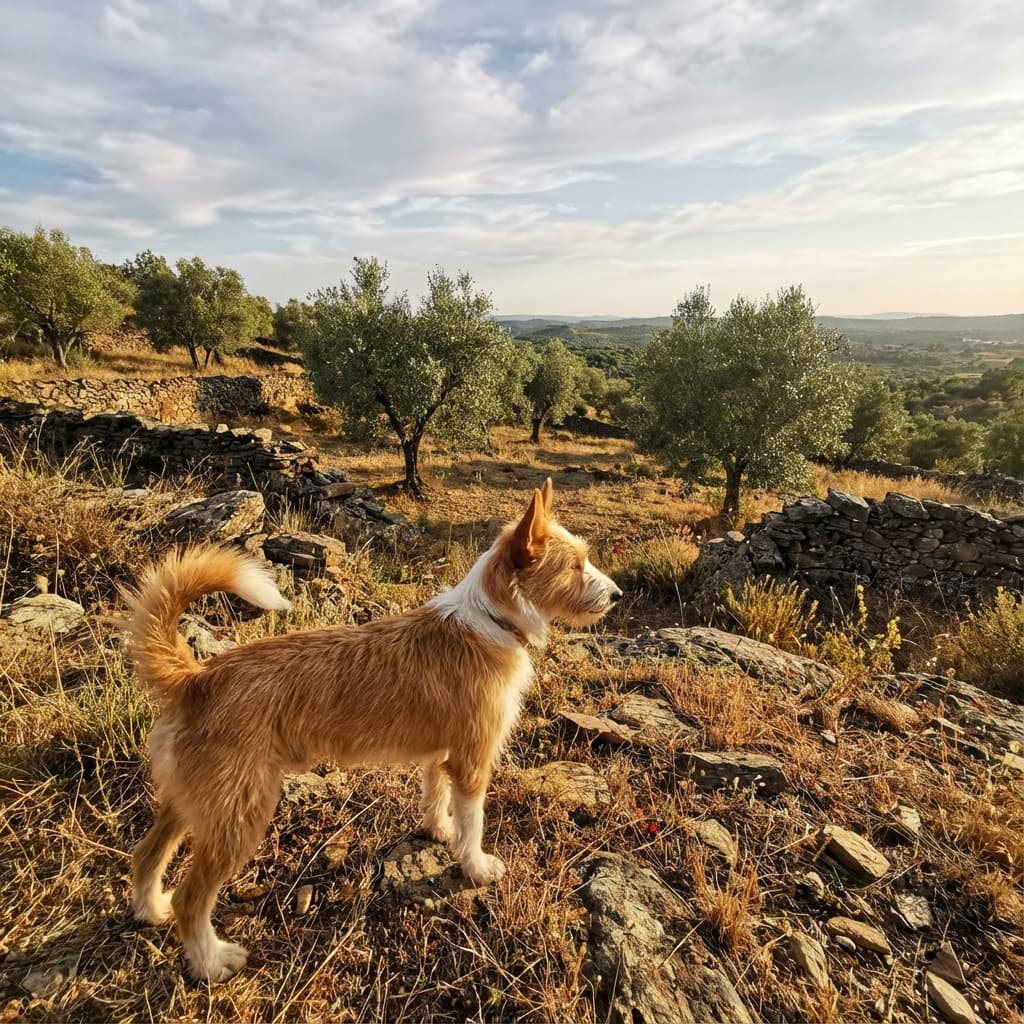
Coat and coloration: The Podenco Ibicenco can have short or slightly longer hair (there is also a rough-haired variant, although it is rarer). The coat is dense, hard to the touch, and closely adheres to the body. The most common colors are white, red (from light to deep red), and their combinations. Dogs with symmetrical markings are particularly valued.
Limbs and movement: The limbs are long, strong, and completely straight, with clearly defined muscles. The paws are elongated, resembling the shape of a rabbit's foot, which provides excellent propulsion during running. The movement is light, elegant, and efficient – the dog moves with naturalness and grace.
Tail: Long, set low, reaching to the hock. At rest, it hangs freely; during movement or excitement, it is raised in a characteristic arc, but it is never curled over the back.
The Podenco Ibicenco is a dog with a lively temperament and a distinctly independent character, stemming from its long history as a self-sufficient hunting dog. This breed is characterized by intelligence, alertness, and the ability to make quick decisions, making it a fascinating, though sometimes demanding, companion.
Personality and temperament: Despite its independence, the Podenco from Ibiza is deeply attached to its family and forms strong emotional bonds with household members. It can be affectionate and gentle towards familiar people, eagerly participating in family life and valuing closeness with its caregivers. At the same time, it maintains a certain degree of distance and dignity typical of primitive-type dogs.
Relationships with strangers: Towards strangers, the Podenco Ibicenco is usually reserved and observant. It does not show aggression but can be wary and prefers to keep a safe distance until it assesses the situation. This caution is a natural defensive trait, not a sign of cowardice. With proper socialization from a young age, it can become more open to new people.
Hunting instinct: Owners must be particularly aware of this breed's strong, innate hunting instinct. The Podenco from Ibiza tends to chase everything that moves – from birds and cats to small animals. This drive is extremely strong and difficult to control even with intensive training. For this reason, the dog should only be let loose in safe, fenced areas.
Energy and activity: This is a breed with a very high energy level that requires a significant amount of exercise and mental stimulation every day. Without adequate activity, it can become destructive, restless, or develop undesirable behaviors. The Podenco Ibicenco loves to run, jump (it can jump to considerable heights!), and explore its surroundings. Long walks, running, and play are the minimum it needs.
Intelligence and learning: Dogs of this breed are extremely intelligent and learn new things quickly. However, their independence means they are not always willing to follow commands. The Podenco Ibicenco tends to think for itself and assess whether a given command makes sense. This is not a breed for those seeking an unconditionally obedient dog.
Socialization: Early and extensive socialization is absolutely crucial. Puppies should be systematically introduced to a variety of situations, places, people, and other animals. This will help them become more adaptable and open to new experiences in adult life. A properly socialized Podenco Ibicenco can coexist well with other dogs, although caution should always be exercised in interactions with small animals.
Family life: With proper upbringing and sufficient activity, the Podenco from Ibiza can be a wonderful family dog for active households. It does well with older children who understand the need to respect the dog's space. Due to its energy and strength, it may be too boisterous for small children.
The Podenco Ibicenco belongs to breeds with naturally good health and high resilience, which is a consequence of its long history as a working dog in the challenging conditions of the Mediterranean climate. The average lifespan is between 10 to 12 years, although many individuals can live even longer with proper care.
Overall endurance: Dogs of this breed are exceptionally resilient and well adapted to the hot, dry climate in which they evolved. Their slim body structure, short coat, and efficient thermoregulation make them well-suited to high temperatures. However, this same build makes them sensitive to cold – in low temperatures, they may need additional protection in the form of dog clothing, especially during longer walks in winter.
Typical health problems: Although the Podenco Ibicenco is generally a healthy breed, there are several health issues that owners should be aware of. Due to their athletic lifestyle and intense activity, they may experience injuries to joints, muscles, or tendons, especially in dogs trained for hunting or sports. It is important to gradually build their fitness and avoid overexertion in young, developing dogs.
Hip dysplasia: While not a common problem in this breed, it can occur. Responsible breeders conduct screening tests and eliminate dogs affected by this condition from breeding. When purchasing a puppy, it is advisable to ask for documentation of the parents' health tests.
Sensitivity to anesthetics: Like other breeds with a slim build and low body fat percentage, the Podenco Ibicenco may exhibit increased sensitivity to certain anesthetics. Before any procedure requiring sedation or anesthesia, it is important to inform the veterinarian about the dog's breed.
Ear problems: Large, upright ears are prone to contamination and injury. They should be regularly checked for signs of inflammation, redness, or unpleasant odors. After outdoor activities, it is advisable to check for any grass seeds or other foreign bodies that may have entered the ears.
Digestive issues: Some individuals may be sensitive to certain food ingredients. It is important to observe the dog's reactions to its diet and consult with a veterinarian if necessary regarding optimal nutrition.
Prevention: Regular veterinary visits, up-to-date vaccinations, deworming, and flea and tick prevention are essential for keeping the dog in good condition. Due to the active lifestyle of this breed, it is particularly important to protect against parasites that the dog may encounter while exploring green areas. Owners should also monitor the dog's weight and physical condition, adjusting the amount of food and activity to meet its individual needs.
The Podenco Ibicenco is a breed that does not require complicated grooming, which is one of its many advantages for owners who value simplicity in daily care. Thanks to its short, dense coat and the breed's natural cleanliness, keeping it in good condition is not time-consuming.
Coat care: The short coat of the Podenco Ibicenco is self-cleaning and practically does not require intensive grooming. Regular brushing at least once a week with a natural bristle brush or rubber glove will help remove dead hair, separate the natural protective layer of the skin, and keep the coat in perfect condition. During seasonal shedding periods (spring and autumn), it is advisable to increase the brushing frequency to 2-3 times a week to more effectively remove the increased amount of shedding hair.
Bathing: This breed typically does not shed large amounts of hair and does not have a characteristic dog odor, making it suitable for people sensitive to allergens. Baths should only be conducted when necessary – usually a few times a year or after intense walks, hunting, when the dog is particularly muddy or has an unpleasant smell. Too frequent bathing can remove the natural protective layer of the skin and lead to dryness. Mild shampoos specifically designed for dogs should be used.
Ear care: The large, upright ears of the Podenco Ibicenco require regular checks, especially after outdoor activities. At least once a week, the inside of the ears should be checked for dirt, excessive wax buildup, redness, or unpleasant odors, which may indicate the onset of inflammation. Ears should be gently cleaned using special solutions and cotton pads, avoiding inserting anything deeply into the ear canal. After bathing or swimming, it is advisable to ensure that the ears are dry.
Dental hygiene: Regular oral hygiene is crucial for the health of the entire body. Teeth should be brushed 2-3 times a week with a dog toothbrush and toothpaste to prevent tartar buildup and gum disease. Alternatively, special dental chews and cleaning toys can be used. Regular veterinary visits should include a dental check-up.
Nail trimming: Active dogs often naturally wear down their nails while running on hard surfaces, but in many cases, regular trimming every 3-4 weeks is necessary. Overly long nails can cause discomfort, affect walking, and lead to joint problems. If you can hear the nails clicking on the floor when the dog walks, it means they are too long. Trimming should be done carefully to avoid cutting the nerve and blood vessels in the nail.
General check: During each grooming session, it is worthwhile to conduct a general check of the dog's body – examining the skin for rashes, wounds, ticks, or other anomalies, as well as checking the paw pads for cracks or injuries. Such regular checks allow for early detection of potential health issues.
The Ibizan Hound is an exceptionally active and energetic breed that requires a significant amount of exercise and stimulation, both physical and mental. These dogs were bred for intense rabbit hunting in challenging Mediterranean terrain, which is why their need for activity is very high and should not be underestimated by potential owners.
Daily exercise needs: The Ibizan Hound requires a minimum of 60-90 minutes of intense exercise daily, although many individuals will be happier with even more activity. However, it's not just about the length of walks – their intensity and variety are equally important. This breed thrives alongside owners who lead an active lifestyle and can regularly offer them diverse forms of activity.
Ideal forms of activity: The Ibizan Hound loves to run, making it an ideal companion for jogging, cycling (with the dog running alongside), or long, energetic walks. Due to its hunting abilities, it particularly excels in open spaces where it can run freely and explore. However, it is important to remember that due to the dog's strong hunting instinct, it should only be let off-leash in safe, well-fenced areas.
Cynological sports: This breed excels in various dog sports that allow it to utilize its natural talents. The following are particularly recommended:
- Coursing (chasing a mechanical hare) – an ideal sport that utilizes natural hunting abilities
- Agility – performs excellently due to the breed's agility and intelligence
- Nosework – utilizing its excellent sense of smell in scent detection training
- Canicross – running alongside the dog
- Trekking – long mountain or forest hikes
Mental stimulation: In addition to physical activity, the Ibizan Hound also requires regular mental stimulation. This is an intelligent breed that quickly becomes bored if there are no appropriate intellectual challenges. The following activities work well:
- Training using scent and hiding treats
- Interactive toys and puzzles for dogs
- Learning new commands and tricks
- Diverse walking routes in new, stimulating environments
Safety during activities: During all forms of activity, safety must be a priority. The Ibizan Hound has a very strong prey drive and may take off after a bird, cat, or other small animal, completely ignoring its owner's calls. For this reason:
- The dog should only be let off-leash in fenced areas
- During walks in public places, a leash should be used
- Near roads, the dog must always be on a leash
- It is worth considering a long training leash for exercises in the field
Adjustment to age: Young puppies and adolescent dogs should not be overloaded with too intense exercise before their bones and joints fully develop. Intense training and sports should be gradually introduced after about 12-18 months of age. Older dogs may require adjustments to the intensity of activity according to their capabilities, although most Ibizan Hounds remain active well into old age.
Consequences of lack of activity: Insufficient exercise and stimulation can lead to the development of behavioral problems, such as furniture destruction, excessive barking, digging holes in the garden, or general anxiety and frustration. A well-stimulated physically and mentally Ibizan Hound is a calm, balanced companion at home.
The Ibizan Hound is an intelligent and clever breed that can be both rewarding and challenging to train. The key to success is understanding the specifics of this breed and applying appropriate training methods tailored to its independent nature.
Early training initiation: Training should begin as early as possible, ideally during the puppy stage. Young Ibizan Hounds are more adaptable and open to learning, although their independent character is already evident from the earliest weeks of life. The first 16 weeks of life are a critical socialization period when the puppy should be systematically introduced to a variety of people, animals, places, and situations.
Foundation – positive reinforcement: Due to the independent and sensitive nature of the Ibizan Hound, the most effective training method is positive reinforcement. This breed responds excellently to rewards in the form of treats, verbal praise, and play. Harsh training methods, yelling, or physical punishment are completely ineffective and can lead to fear, loss of trust, and total refusal to cooperate. The Ibizan Hound remembers negative experiences and may become distrustful of an owner who uses force.
Consistency and firmness: Despite using positive methods, the owner must be consistent and firm. The Ibizan Hound will quickly take advantage of any inconsistency and may try to test boundaries. Rules must be clear and unchanging – if something is forbidden, it must always be forbidden, without exceptions. At the same time, firmness should not turn into harshness – it’s about a calm, confident, and consistent approach.
Basic commands: Learning basic obedience commands is absolutely crucial. Particularly important commands include:
- Sit – a basic control command
- Stay – essential for the dog's safety
- Come – the most crucial command, requiring intensive training
- No – a command to interrupt undesirable behavior
- Lie down – useful in everyday situations
Challenge of the recall command: The command Come is particularly difficult for the Ibizan Hound due to their strong hunting instinct. When the dog sees potential prey, it may completely ignore the owner's call. Therefore, recall training must be intensive, long-lasting, and conducted in controlled conditions using a long training leash. Even a perfectly trained Ibizan Hound may not be 100% reliable in the field, so safety requires the use of a leash in unfenced areas.
Socialization: Early and broad socialization is just as important as basic training. The puppy should be regularly introduced to:
- Different people (men, women, children, elderly individuals)
- Other dogs of various sizes and breeds
- Different environments (city, countryside, park, forest, car)
- Various sounds (cars, loud noises, household appliances)
- Different surfaces (grass, asphalt, stones, sand)
Advanced training: After mastering the basics, the Ibizan Hound can successfully learn more advanced commands and tricks. This intelligent breed loves mental challenges and responds well to variety in training. You can introduce:
- Advanced obedience
- Scent training
- Agility elements
- Thinking games
Short, dynamic sessions: The Ibizan Hound tends to get bored quickly with repetitive exercises. The best results come from short (10-15 minutes), dynamic training sessions conducted several times a day. Training should be varied and end on a successful note to keep the dog motivated and in a positive mindset.
Patience and realistic expectations: Owners must understand that the Ibizan Hound will never be a breed characterized by absolute obedience typical of herding or retrieving dogs. This breed maintains its independence and will sometimes make its own decisions. Success in training is not total submission but the development of mutual respect and effective communication between the dog and the owner.
The Podenco Ibicenco requires a balanced, high-quality diet that supports its active lifestyle and lean, athletic build. Proper nutrition is the foundation of health, energy, and longevity for this breed.
Basic nutrition principles: Due to its high level of activity and fast metabolism, the Podenco Ibicenco needs food rich in high-quality protein to support muscle mass and recovery after exercise. Protein should primarily come from animal sources – meat, poultry, or fish. The optimal protein content in food for an adult, active Podenco is about 25-30%.
Dietary components: High-quality food should contain:
- Animal protein (meat, poultry, fish) as the first ingredient
- Healthy fats (salmon oil, flaxseed oil) providing energy and supporting skin and coat health
- Carbohydrates from easily digestible sources (rice, oats, sweet potatoes) for energy
- Fruits and vegetables as a source of fiber, vitamins, and antioxidants
- Glucosamine and chondroitin supporting joint health in active dogs
- Omega-3 and omega-6 fatty acids for skin, coat, and immune system health
Food quantity: Due to its dynamic nature and lean build, the Podenco Ibicenco rarely tends to gain weight; however, every dog is different. The amount of food should be adjusted to:
- The dog's age (puppies, adults, seniors)
- Activity level (racing dogs vs. home companions)
- Health status and metabolism
- Season (more calories may be needed in winter)
Meal frequency: Adult dogs should receive meals 2-3 times a day instead of one large feeding. This division has several advantages:
- Reduces the risk of gastric torsion
- Provides a stable energy level throughout the day
- Better digestion and absorption of nutrients
- Helps maintain stable blood sugar levels
Puppy nutrition: Podenco Ibicenco puppies should receive special food for medium-sized puppies that supports their proper development. Young dogs require more protein and calories than adults. Puppies up to 6 months old should be fed 3-4 times a day, then gradually transition to 2-3 meals a day. The transition to adult dog food should occur around 12-18 months of age.
Water: Constant access to fresh, clean water is absolutely crucial, especially for such an active breed. A water bowl should always be available, and the water should be changed regularly. After intense exercise, dogs should be allowed to cool down before drinking large amounts of water to avoid digestive issues.
Dry vs. wet food: Most Podenco Ibicenco do well on high-quality dry food, which also helps clean their teeth. Wet food can be used as a supplement or for dogs with dental issues. Some owners choose a mixed diet (dry + wet) or natural feeding (BARF diet).
Natural feeding (BARF): Some owners opt for natural feeding with raw ingredients. This diet can be very beneficial but requires in-depth knowledge and careful balancing of nutrients. Before switching to BARF, it is advisable to consult with a veterinarian specializing in dog nutrition.
What to avoid: Avoid low-quality food with a lot of grain fillers, artificial colors, and preservatives. The Podenco Ibicenco may be sensitive to certain ingredients, so it is important to observe the dog's reactions to the diet. Absolutely forbidden products include chocolate, grapes, raisins, onions, garlic, xylitol, and other substances toxic to dogs.
Weight monitoring: Regularly check the dog's weight and body condition. In a healthy Podenco Ibicenco, the last two ribs should be visible (or palpable under a thin layer of fat), a clear waist should be seen from above, and a tucked abdomen should be visible from the side. If the dog is gaining or losing weight, the amount of food should be adjusted, and a veterinarian should be consulted.
Characteristic Traits
Pros
- High intelligence and quick learning ability
- Excellent hunting and athletic skills
- Attractive and elegant appearance
- Deep loyalty to family
- Generally good health and endurance
- Easy grooming and minimal shedding.
Cons
- Requires a very large amount of exercise and activity
- Strong hunting instinct that is difficult to control
- Independent temperament may hinder training
- May be distrustful of strangers
- Sensitive to low temperatures
- Requires a safe
- fenced area.
Behavioral Ratings
Breed History
The Podenco Ibicenco has one of the oldest and most fascinating histories among all contemporary dog breeds. Its origins date back to ancient times, and the particular resemblance to dogs depicted in Egyptian frescoes and artifacts led to the belief for a long time that this breed directly descends from the dogs of the pharaohs.
Ancient roots: Images of dogs remarkably similar to the modern Podenco Ibicenco have been found in Egyptian tombs dated as far back as around 3400 B.C. These dogs were immortalized in frescoes, sculptures, and everyday objects, indicating their high status in ancient Egyptian society. Particularly famous is the image of Anubis – the god of mummification and the afterlife, often depicted with the head of a dog with large, upright ears resembling those of the Podenco.
Phoenician theory: The most widely accepted theory suggests that the ancestors of the Podenco Ibicenco were brought to the Balearic Islands by ancient sailors – most likely the Phoenicians around the 8th century B.C., although some historians also point to the Carthaginians or Romans as possible introducers of the breed. The Phoenicians were outstanding sailors and traders who established trading colonies throughout the Mediterranean, including Ibiza. They brought hunting dogs with them, which were perfectly suited for hunting rabbits – the main source of meat on the islands.
Isolation and preservation of breed purity: A key factor that allowed the Podenco Ibicenco to maintain its unique breed purity for thousands of years was the geographical isolation of the Balearic Islands. For centuries, these dogs developed in a relatively closed population, with minimal influence from other breeds. Natural selection and deliberate breeding by local hunters shaped the breed's characteristic traits – excellent sense of smell, exceptional hearing, agility, and endurance.
Hunting specialization: In the rocky, low-vegetation areas of Ibiza, the Podenco developed a unique hunting technique. Unlike many other hunting dogs that primarily rely on sight or smell, the Podenco Ibicenco uses all senses – smell, hearing, and sight – equally. This versatility made it indispensable in the challenging Mediterranean terrain. The dogs hunted both day and night, locating rabbits in dense underbrush, among rocks, and in burrows.
Traditional hunting methods: Traditionally, hunting on Ibiza was done with entire packs of Podenco, interestingly, these packs usually consisted solely of females or packs with one male. This was due to the observation that males are more conflict-prone and cooperate less effectively during hunting. The dogs worked as a team – when one dog indicated game, the others surrounded it at a distance, maintaining a waiting position. They only barked when they saw or heard the prey and when they had it surrounded. A characteristic feature was the rapid wagging of the tail both when indicating and catching the prey.
The enconillarse phenomenon: Unique to this breed is the phenomenon referred to by the Spanish term enconillarse, which literally means to take a rest. After catching many thousands of rabbits, some dogs from the same pack would stop hunting until they received significant rest. This behavior, noted in the FCI standard, shows the deep bond between the breed and its work, as well as the need to respect the natural rhythms of the dogs.
International recognition: For centuries, the Podenco Ibicenco remained a local breed known mainly in the Balearics and in some parts of Spain. It was not until the 20th century that the breed began to gain international recognition. The Fédération Cynologique Internationale (FCI) officially recognized the breed and published the first standard in 1982, which was updated in 2000. This recognition paved the way for the breed's spread beyond Spain.
Modern times: Today, the Podenco Ibicenco is valued not only as a hunting dog but also as a family companion for active owners. Although the breed's population remains relatively small compared to other breeds, the Podenco is gaining increasing popularity in Europe, the United States, and other countries. The breed is used in various canine sports, including coursing (chasing a mechanical hare), agility, and dog shows.
Modern DNA studies: Recent genetic studies have shed new light on the breed's origins. It turned out that despite its visual resemblance to ancient Egyptian dogs, the Podenco Ibicenco is genetically closer to other European breeds than to Middle Eastern dogs. This suggests that the characteristic appearance may have been the result of evolutionary convergence – the independent development of similar traits in response to similar environmental conditions and functional demands. Regardless of the exact genetic origin, the historical bond of this breed with the Mediterranean region and its millennia-old hunting tradition remains undeniable.