Portuguese Podengo
FCI Group
5• FCI 94
Size
Medium
Origin Country
PT
Height
40-70 cm
Weight
4-30 kg
Lifespan
12-14 years
Temperament
Overview
Portuguese Podengo, also known as the Portuguese hunting dog, is a unique breed that captivates with its rich history and versatility. Originating from Portugal, it is one of the oldest dog breeds in the world, making it particularly interesting for dog lovers.
These intelligent and lively dogs come in three sizes: small (pequeno), medium (médio), and large (grande). Additionally, their coat can be short and smooth or long and rough, allowing every breed enthusiast to find a variant that suits their preferences and living conditions.
The Portuguese Podengo is a high-energy dog that requires both regular physical activity and mental stimulation. Without adequate exercise and intellectual engagement, it can become restless and develop undesirable behaviors. Thanks to its primitive origins, it can adapt to challenging environmental conditions and thrive in almost any situation, making it an ideal companion for active individuals.
The history of this breed dates back to ancient times – some sources indicate its connections to Egyptian, Phoenician, and Roman dogs, highlighting its unique genetic heritage. In the past, the Portuguese Podengo was primarily used for hunting rabbits and other small game. The smallest variety, pequeno, also served as a rat hunter on Portuguese caravels during the great geographical discoveries of the 15th century.
Its natural ability to bond with people makes it an excellent family companion; however, it requires consistent training and socialization from a young age. Its spirited character demands patience and commitment from the owner, but the reward is a loyal and devoted friend for years to come.
Despite its popularity in Portugal, this breed remains relatively rare outside its country of origin, making it a valuable and unique choice. With its diverse skills, it can serve various roles – from a hunting dog and guard to a family friend. In recent decades, intensive efforts have been made to protect and promote this exceptional breed on the international stage.
Portuguese Podengo is a dog with harmonious proportions and a strong, athletic build. Depending on the variety, the dimensions are as follows:
- Pequeno (small): height 20-30 cm, weight 4-6 kg
- Médio (medium): height 40-54 cm, weight 16-20 kg
- Grande (large): height 55-70 cm, weight 20-30 kg
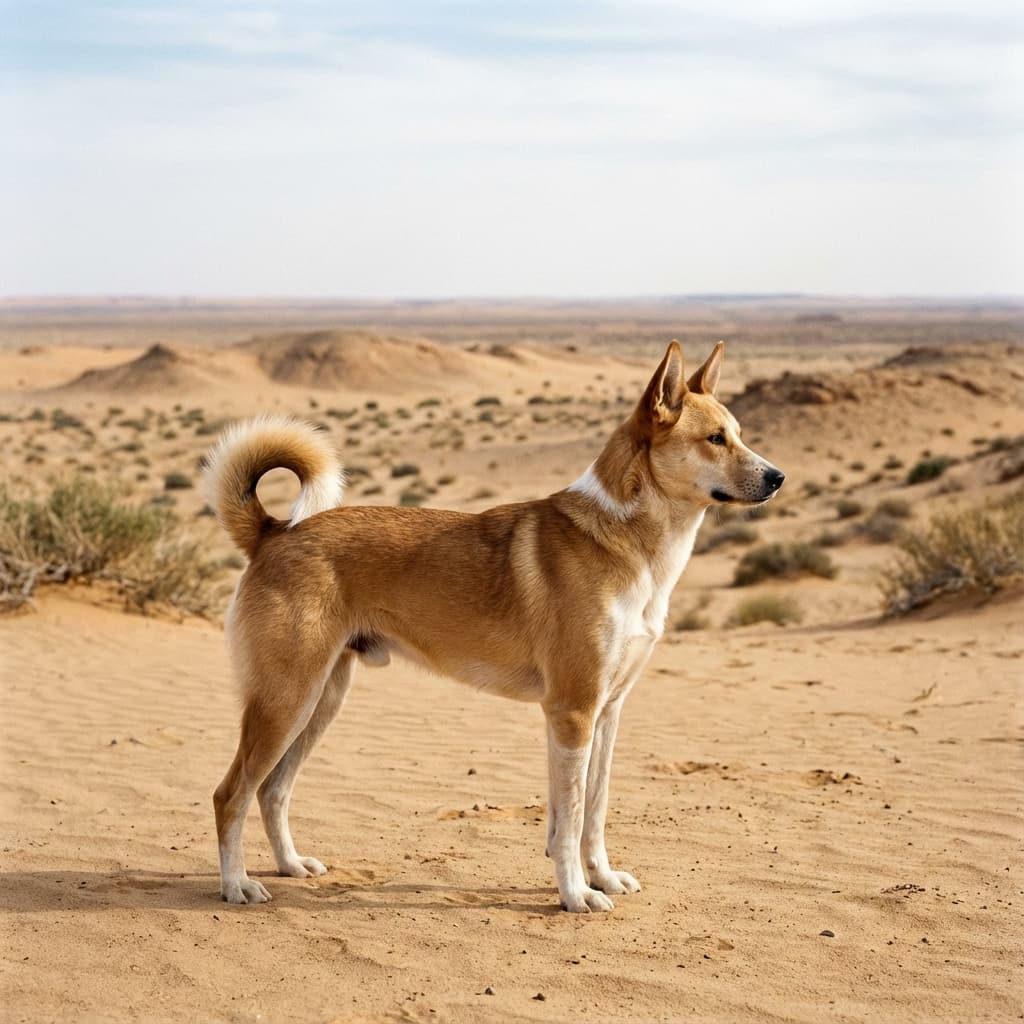
The breed is characterized by a four-sided, pyramid-shaped head with a dry build that narrows towards a pointed muzzle. The skull is flat or slightly convex, with a distinct stop. The eyes are small, set obliquely, and range in color from honey to amber to chestnut, giving the dog a lively and intelligent expression.
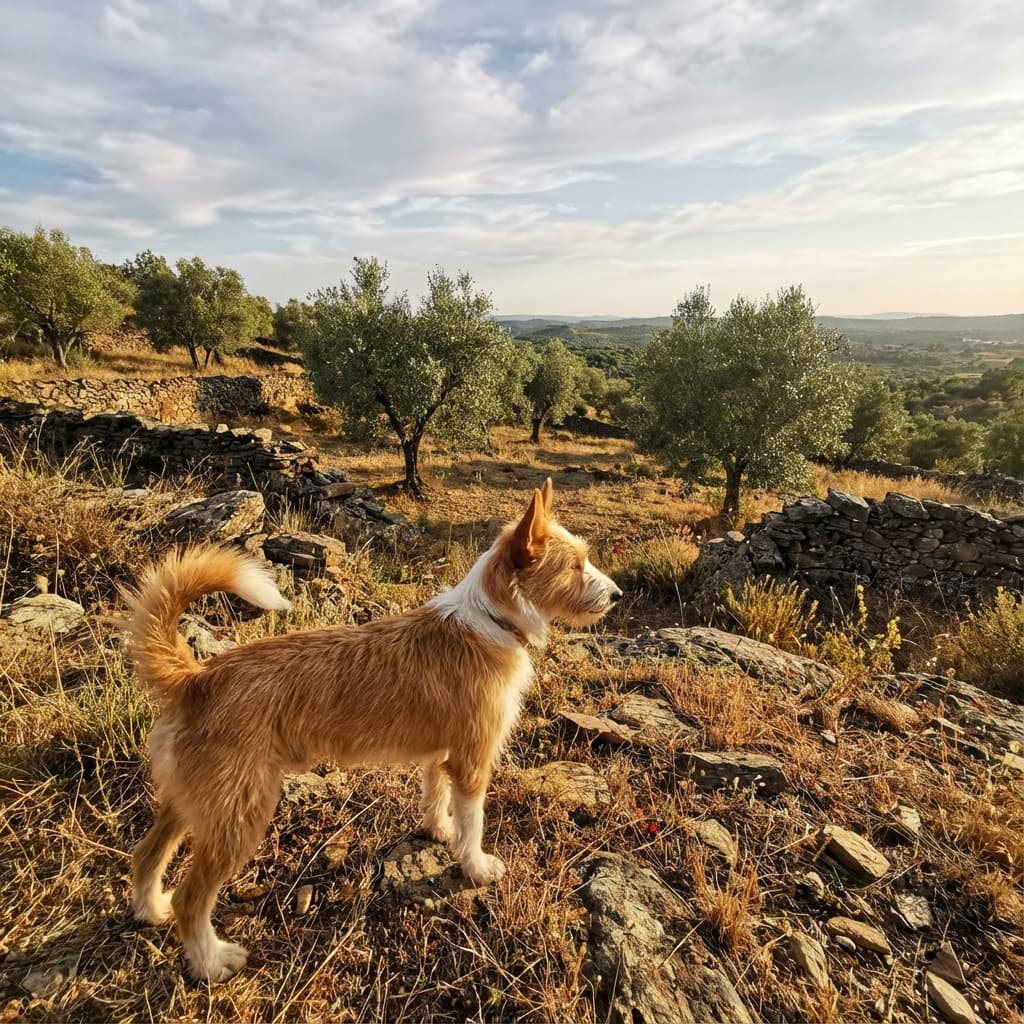
The ears are one of the most distinctive features of the breed – they are triangular, wide at the base, set at medium height, carried upright, and extremely mobile. They respond excellently to the slightest sounds, which was crucial during hunts.
The neck is strong, well-muscled, and harmoniously transitions into the body. The back is straight or slightly sloping, and the chest is deep and of medium width, providing a large lung capacity. The loins are straight, wide, and well-muscled. The tail is set high, strong and thick at the base, carried horizontally, in a slight curve or sickle shape.
The coat comes in two varieties:
- Short and smooth – dense, uniform length all over the body
- Long and rough – medium length, thick to the touch, matte, with or without a light undercoat
Acceptable colors are all shades of yellow and fawn (from light to dark), black, and brown. Colors can appear solid or with white markings, less frequently white with spots. The skin is thin, closely adhering to the body, highlighting the athletic silhouette.
Portuguese Podengo is a dog with a very expressive and temperamental character, requiring a close bond with its owner. In family relationships, it is extremely friendly, lively, and playful, making it an excellent companion for children. Its high energy and eagerness to play make it a great fit for active households.
Due to its strong hunting instincts, this breed may show some reserve towards strangers. This is not aggression, but rather a natural caution typical of primitive dogs. Therefore, early and consistent socialization is crucial, allowing the dog to learn appropriate behavior in various situations.
The Portuguese Podengo is characterized by a strong attachment to its owner and family members, which makes it poorly tolerate prolonged loneliness. Left alone for many hours, it may develop destructive behaviors or bark excessively. This is a dog that needs companionship and regular interaction.
This breed is distinguished by high intelligence and good learning ability, although it may sometimes exhibit independence and stubbornness, typical of hunting dogs. This requires a patient, consistent, and positive approach to training. Harsh training methods are absolutely discouraged and can ruin the relationship with the dog.
This breed has a very strong hunting instinct, which means that during walks it may attempt to chase small animals. Therefore, it is important to secure the area and keep the dog on a leash in unfenced places. In a home with other animals, it requires proper habituation from puppyhood.
Although it is not a typical guard dog, its alertness and suspicion towards strangers make it an excellent alarm, warning of approaching unknown individuals. It is an active and energetic dog that needs an owner with a similar lifestyle – it will thrive with people who enjoy long walks, mountain hikes, or canine sports.
Portuguese Podengo is a breed considered to be exceptionally healthy and resilient, which is a result of its long history and natural selection. The average lifespan of these dogs ranges from 12 to 15 years, with smaller varieties (pequeno) often living even longer, reaching 16-17 years.
Thanks to its primitive origins and centuries of work in the challenging conditions of the Portuguese climate, the breed has developed a strong resistance to many ailments. It does not show a predisposition to typical genetic diseases found in many purebred dogs.
The most commonly encountered health issues are:
- Dental and gum diseases – require regular oral hygiene and veterinary check-ups
- Obesity – especially in inactive or overfed dogs
- Joint problems – may occur in older individuals, especially larger varieties
- Traumatic injuries – resulting from high activity and boldness during play
Owners should ensure regular veterinary check-ups, vaccinations, and deworming. A well-balanced diet rich in high-quality protein and essential nutrients is crucial for maintaining health and condition.
The breed is naturally adapted to living in a warm, Mediterranean climate, making it resilient to high temperatures. However, its short coat and minimal undercoat mean that these dogs can be sensitive to intense cold – during the colder months, it is advisable to provide them with appropriate shelter or protective clothing during long walks.
Health prevention also includes regular ear examinations (especially in long-haired varieties), eye checks, and maintaining appropriate nail length. With proper care, the Portuguese Podengo can enjoy a long, healthy, and active life.
The care of the Portuguese Podengo is relatively simple and low-maintenance, making this breed attractive to those who value low upkeep costs. The requirements vary depending on the type of coat.
Short-haired variety (smooth):
- Requires brushing once a week with a rubber glove or a natural bristle brush
- Removes dead hair and stimulates the skin
- Maintains the natural shine of the coat
- During shedding season (spring, autumn), frequency may increase to 2-3 times a week
Long-haired variety (rough):
- Requires brushing 2-3 times a week with a stiff-bristle brush
- Prevents matting, especially behind the ears and on the limbs
- During shedding season, daily brushing is recommended
- Occasionally, hand plucking of dead hair (trimming) can be performed
Bathing should be done only when absolutely necessary – excessive washing can lead to dry skin and loss of natural protective oils. 3-4 baths a year are sufficient, unless the dog gets muddy or into unpleasant substances.
After walks, especially in the woods or rural areas, be sure to check the skin for ticks, wounds, scratches, or grass seeds. Ears also require regular inspection – moisture and dirt can lead to infections.
Additional grooming elements:
- Oral hygiene – brushing teeth 2-3 times a week, dental chews
- Nail trimming – every 4-6 weeks, if they do not wear down naturally
- Ear cleaning – once a week with a gentle ear solution
- Eye check – removing discharge with a damp cotton ball
Regular grooming is not just a matter of aesthetics, but primarily health prevention, which allows for early detection of potential skin problems, parasites, or disease changes.
Portuguese Podengo is a breed with very high exercise needs, which directly stems from its hunting origins and primitive nature. Without the appropriate amount of physical activity and mental stimulation, the dog may develop behavioral problems.
Minimum exercise requirements:
- Daily walks – at least 60-90 minutes a day, divided into 2-3 outings
- Intensive effort – running, retrieving, playing with other dogs
- Mental stimulation – training, scent games, interactive games
- Free running – regular access to a safe, fenced area
Ideally, the dog should have the opportunity for free running in a fenced area, where it can expend energy and follow its instincts. It is important to remember that the Portuguese Podengo has a strong hunting instinct and will chase anything that moves – therefore, letting it loose without a fence is very risky.
Recommended forms of activity:
- Running with the owner – jogging, Nordic walking, long-distance running
- Cycling – with the dog running alongside (requires training)
- Agility – an excellent form of activity combining physical and mental effort
- Mantrailing – nose work utilizing natural tracking abilities
- Simulated hunting – coursing, working with a rabbit lure
- Mountain hiking – long trips in varied terrain
- Water games – swimming, retrieving from water (not all individuals like water)
Owners who do not utilize the dog as a hunter can engage it in various canine sports that satisfy its natural instincts. The Portuguese Podengo has excellent endurance and can easily accompany long, multi-hour activities.
Regular exercise not only improves the dog's physical condition but also supports its mental and emotional health. A tired dog is a happy dog – activity helps prevent behavioral problems such as excessive barking, destructiveness, or escaping.
It is worth remembering that the Portuguese Podengo is a very intelligent dog and needs challenges. Monotonous physical activity alone is not enough – mental stimulation is also necessary through learning new commands, strategic games, and problem-solving.
Training the Portuguese Podengo should start as early as possible, ideally at 8-10 weeks of age, when the puppy arrives in its new home. This breed, despite its high intelligence, can be a challenge due to its independence and strong hunting instinct.
Key principles of effective training:
- Consistency – rules must be constant, and all household members should adhere to them
- Positive reinforcement – rewarding desired behaviors with treats, praise, and play
- Short sessions – 10-15 minutes, several times a day, to maintain the dog's attention
- Variety – monotony quickly bores the intelligent Podengo
- Patience – avoiding physical punishment and yelling, which destroy the bond with the dog
Basic commands to teach:
- Sit – fundamental control command
- Stay – crucial for safety
- Come – the most important command due to the hunting instinct
- Lie down – calming and control
- Leave it – protection against eating something dangerous
- No – universal interruption of undesirable behavior
Early socialization is absolutely crucial for the Portuguese Podengo. The puppy should be systematically introduced to:
- Different people (adults, children, elderly individuals)
- Other dogs and animals
- Diverse environments (city, forest, crowded places)
- Noises and sounds (cars, sirens, firecrackers)
- Different surfaces (asphalt, grass, stairs, bridges)
Due to its strong hunting instinct, special attention should be paid to the recall command. Exercises should start in a controlled environment, gradually increasing distance and the level of distractions. Never punish the dog when it comes when called – even if it was doing something wrong beforehand.
The Portuguese Podengo does not cope well with isolation and loneliness, so it is important to teach it to gradually stay alone at home. Start with very short periods (5-10 minutes) and gradually extend the time, rewarding calm behavior.
This breed does not tolerate harsh training methods – physical punishment, pulling, and yelling can lead to a loss of trust and the development of fears. Instead, use positive reinforcement and ignore undesirable behaviors.
For advanced owners, it is recommended:
- Obedience courses – under the guidance of a professional trainer
- Agility – combines training with physical effort
- Mantrailing – utilizing natural tracking abilities
- Trickdogging – teaching fun tricks, mental stimulation
With consistent, positive training and proper socialization, the Portuguese Podengo will become a well-behaved, socialized, and obedient companion that will bring joy to the whole family.
Portuguese Podengo requires a balanced, high-quality diet that meets its high energy needs resulting from an active lifestyle. Proper nutrition is crucial for the health, condition, and longevity of the dog.
Basic nutritional requirements:
- High protein – at least 25-30% in dry matter, supports muscle development and maintenance
- Healthy fats – 12-18%, a source of energy and omega-3/omega-6 fatty acids
- Carbohydrates – moderate amount, preferably from easily digestible sources
- Vitamins and minerals – a complete set for proper body function
Due to their high activity, calories should be adjusted to the level of exercise. A working or very active dog will need more energy than an individual leading a quieter lifestyle. Improper portion adjustment can lead to obesity or underweight.
Recommended types of food:
- Premium/super premium dry food – convenient, complete, appropriately balanced
- High-quality wet food – can be an addition or the entirety of the diet
- BARF diet (raw meat) – for experienced owners, requires knowledge and supplementation
- Homemade cooked food – prepared according to veterinary nutritionist recommendations
Feeding should be adjusted to age and physiological state:
- Puppies (2-12 months) – 3-4 meals a day, food for medium/large breed puppies
- Adult dogs (1-8 years) – 2 meals a day, food for active dogs
- Seniors (8+ years) – 2 meals a day, food for older dogs with reduced calories
- Pregnant/nursing bitches – increased portions, food for puppies or pregnant bitches
It is important to avoid overfeeding, as the Portuguese Podengo tends to gain weight, especially with insufficient activity. Obesity leads to serious health problems: joint diseases, heart issues, diabetes.
Principles of proper feeding:
- Regular meal times – consistent daily rhythm
- Avoiding table scraps – they can be unhealthy and lead to obesity
- Limiting treats – a maximum of 10% of daily caloric intake
- Fresh water always available – especially when feeding dry food
- Monitoring weight – regular weighing and body condition assessment
Products prohibited for dogs that can be toxic:
- Chocolate, coffee, tea (theobromine, caffeine)
- Onion, garlic, leek (damage to red blood cells)
- Grapes, raisins (kidney damage)
- Xylitol (artificial sweetener – deadly dangerous)
- Avocado, macadamia nuts, alcohol
If in doubt about the diet or noticing digestive problems, it is always advisable to consult a veterinarian or veterinary nutritionist. A properly balanced diet is the foundation for a long, healthy life for the Portuguese Podengo.
Characteristic Traits
Pros
- Versatility of use
- Excellent family companion
- Very good health condition
- Adaptability to various conditions
- Low maintenance requirements
- Long lifespan
- Intelligence and ease of learning.
Cons
- Very high exercise needs
- Strong hunting instinct
- Tendency to escape and chase
- Requires consistent training
- Does not cope well with loneliness
- Rarity of the breed outside of Portugal.
Behavioral Ratings
Breed History
Portuguese Podengo is one of the oldest dog breeds in the world, with origins shrouded in the mysteries of antiquity. This breed belongs to the group of primitive podenco-type dogs, which have inhabited the Mediterranean basin for millennia.
According to the most probable theories, the ancestors of the Podengo arrived on the Iberian Peninsula with the Phoenicians and Romans in ancient times, around 600-200 BC. These dogs likely shared common roots with Egyptian dogs, as evidenced by similarities to depictions of dogs from the time of the pharaohs.
In the 8th century, during the Moorish invasion, the genetic pool was further enriched by an influx of North African dogs. It was these centuries of crossbreeding and natural selection in the challenging conditions of the Portuguese climate that shaped the breed's distinctive characteristics.
The Portuguese Podengo has adapted perfectly to the Portuguese terrain and climate, evolving morphologically and functionally over the centuries. As a result, three distinctly different size varieties emerged:
- Grande (large) – hunting deer, wild boars, larger game
- Médio (medium) – hunting rabbits in open areas
- Pequeno (small) – hunting rabbits in burrows, exterminating rodents
The smallest variety pequeno gained particular historical significance from the 15th century, when Portuguese sailors took these dogs on their caravels during the great geographical discoveries. The dogs served as rat hunters, protecting food supplies from rodents. This allowed the Podengo pequeno to reach distant corners of the world.
In Portugal, the Podengo has been a symbol of rural and hunting culture for centuries. These dogs were commonly used on farms as:
- Hunting dogs – mainly for rabbits
- Guard dogs – protecting the farm from intruders
- Pest controllers – rats, mice, voles
- Companions in daily life
Despite its cultural and practical significance, the breed remained unknown outside of Portugal for a long time. It was only in the 20th century that systematic breeding work and standardization began. The first official registration took place in 1902.
The official recognition by the FCI (Fédération Cynologique Internationale) occurred in 1954 for the grande variety, and in subsequent years for the other variants. The current FCI standard dates back to 2008 (published in 2009).
In the second half of the 20th century, the breed found itself in serious danger of extinction. Social changes, urbanization, and the decline in the importance of traditional hunting led to a dramatic decrease in population. Fortunately, thanks to the efforts of Portuguese cynologists and breed enthusiasts, this trend was reversed.
Today, the Portuguese Podengo is gaining increasing popularity outside of Portugal, especially in the USA, the UK, Scandinavian countries, and other European nations. It is valued both as a hunting dog and as a wonderful family companion for active owners.
In 2013, the American Kennel Club (AKC) officially recognized the Podengo Pequeno, significantly raising the breed's prestige on the international stage. Today, the breed is protected as Portuguese national heritage and a symbol of the country's cultural identity.
The Portuguese Podengo is a living testament to how natural selection and cooperation with humans can create a functional, healthy, and versatile breed that has survived for millennia and continues to impress with its skills and character.