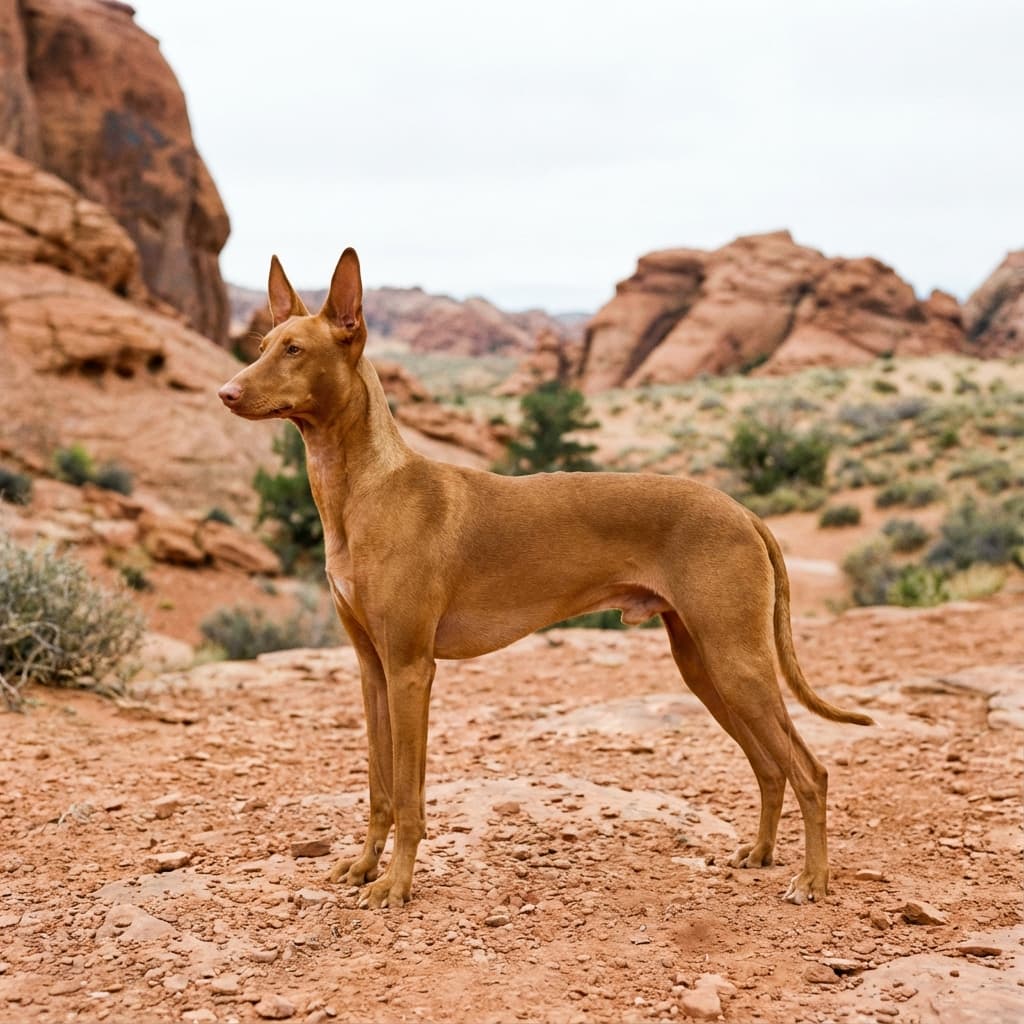
Pharaoh's Dog
FCI Group
5• FCI 248
Size
Medium
Origin Country
XX
Height
53-63.5 cm
Weight
20-25 kg
Lifespan
11-13 years
Temperament
Overview
The Pharaoh Hound, also known as Kelb tal-Fenek (Maltese rabbit dog), is one of the most fascinating dog breeds with an exotic origin. It originates from Malta, where it has served for centuries as an indispensable helper in hunting rabbits in the island's difficult, rocky terrain.
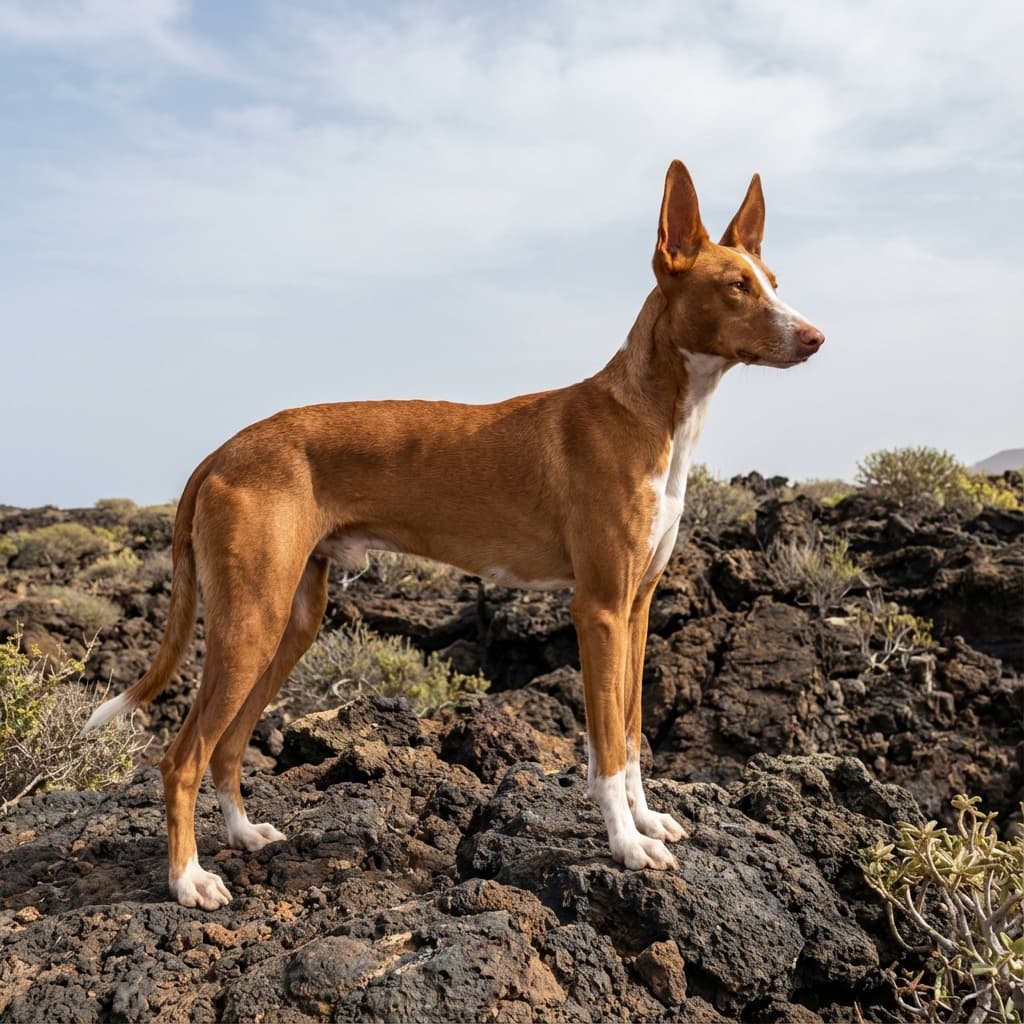
These medium-sized dogs are characterized by extraordinary elegance and noble posture. Their long, dry neck and slim, athletic build combined with strong limbs give them exceptional grace and balance in movement. The FCI standard emphasizes the harmonious structure of these dogs – males reach a height of 56 to 63.5 cm, while females range from 53 to 61 cm at the withers, with an ideal body weight between 20 and 25 kg.
The coat of the Pharaoh Hound is short, close-fitting, and shiny, in a fawn or red-sand color with distinctive white markings on the chest, tail, and toes. An extraordinary feature of this breed is the ability to blush – the dog's nose and ears turn pink due to emotions, making it even more unique.
The Pharaoh Hound is a breed known for its extraordinary intelligence and sensitivity. Their keen intellect makes them excellent companions who quickly form a deep bond with the family. They are affectionate, friendly, and playful, which makes them well-suited as family dogs. They can be somewhat wary of strangers, but their loyalty to household members is unwavering.
Their energy and activity mean they require regular, intense exercise and mental stimulation to remain in excellent physical and mental condition. The hunting instinct in these dogs is very strong – they hunt both by sight and smell, also utilizing their excellent hearing while tracking.
It is worth remembering that due to their Mediterranean origin, the Pharaoh Hound is not adapted to cold weather conditions. Owners should ensure they provide appropriate living conditions, especially in cooler climates – a warm bed and protection from frost are essential.
In the further sections of our guide, we will discuss all aspects of life with this exceptional breed in detail, including health, grooming, exercise requirements, training methods, nutrition, and the fascinating history of the Pharaoh Hound. This noble breed certainly deserves a closer look!
General build: The Pharaoh Hound is a medium-sized dog with a noble posture and clearly defined body contours. Its silhouette is both graceful and strong. It is characterized by very fast, free, and fluid movement, as well as a vigilant, sharp expression in its eyes.
Dimensions: The height at the withers ranges from 56 to 63.5 cm for males and from 53 to 61 cm for females. The body is flexible, with an almost straight line of the back. The length of the torso from the sternum to the ischial tuberosity is slightly greater than the height at the withers. The croup has a slight downward slope from the loins to the base of the tail.
Head: The head is long, well-shaped, and has the form of a blunt wedge when viewed from both the side and above. The facial part is slightly longer than the skull. The frontal stop is barely marked. The skull is long, slender, and precisely shaped.
Eyes and ears: The eyes are amber-colored, harmonizing with the coat, oval, and moderately deep-set, giving the dog an intelligent, sharp expression. The ears are set at medium height, standing when the dog is alert, very mobile, wide at the base, thin, and large.
Neck and torso: The neck is long, slender, muscular, and slightly arched. The throat line is clean, without loose skin. The torso is flexible with an almost straight line of the back.
Coat and coloration: The coat is short, close-fitting, and shiny, in fawn or red-sand color (from light fawn to chestnut). Acceptable white markings include: a white tip on the tail (highly desirable), a white star on the chest (called an arrow), white toes, and a narrow white stripe along the center line of the face.
Limbs: The front limbs are straight and parallel, with long shoulder blades well angled back and strong wrists. The hind limbs are strong and muscular, with well-angled knee joints and parallel when viewed from behind. The feet are strong, with well-arched, compact toes (cat-like feet), not turned outward or inward. The pads are strong.
Tail: Set at medium height, thick at the base and tapering towards the end (whip-shaped), reaching slightly below the hock when at rest. Carried high and curved in motion. A tail between the legs is undesirable.
Characteristic feature: The nose and ears blush with emotion – blushing is a unique trait of this breed.
Basic temperament: The Pharaoh Hound is a breed with an exceptionally friendly, intelligent, and sociable disposition. They are alert, sharp, friendly, affectionate, and playful. These character traits make them excellent family dogs that love spending time with their loved ones.
Relationships with family: The Pharaoh Hound forms a deep emotional bond with its owner and family members. Their sensitivity and affection make them very emotional – they value physical closeness and the presence of household members. They do not handle loneliness well and should not be left alone for long hours without engagement, as this can lead to behavioral problems.
Relationships with children: They are excellent playmates for children due to their gentleness and patience. Their tendency to play makes them eager participants in active activities with younger family members.
Attitude towards strangers: They can be somewhat distrustful of strangers, which makes them good alarm dogs. However, with proper socialization from puppyhood, they accept strangers without aggression. Their alertness and perceptiveness allow them to quickly signal the presence of unknown individuals.
Energy level: These dogs are very active and energetic, requiring regular, intense physical exercise and mental stimulation. Without the appropriate amount of movement, they can become restless or develop undesirable behaviors.
Hunting instinct: As a primitive hunting breed, the Pharaoh Hound has retained a strong hunting instinct. They hunt both by sight (sight hounds) and smell, also using their excellent hearing while tracking. They may chase small animals, birds, or fast-moving objects. For this reason, they require a safe, fenced area and a strong leash during walks.
Intelligence and learning: Due to their high intelligence, they quickly absorb new commands and respond well to positive training methods. At the same time, they may exhibit some independence of thought, which sometimes requires patience and consistency in training.
Socialization: Proper upbringing and early socialization are crucial for ensuring this dog has a healthy, balanced, and happy life in the family. A well-socialized dog is friendly, confident, and easily adapts to different situations.
Life expectancy: The Pharaoh Hound is generally a healthy and long-lived breed, characterized by an average lifespan of 11 to 14 years. With proper care, a balanced diet, and regular physical activity, many individuals reach the age of 13-14 in good condition.
General resilience: This breed does not have many specific health problems characteristic of purebred dogs. This is largely a result of a long history of natural selection and a lack of intensive breeding intervention in their structure.
Most common ailments:
- Hip dysplasia – as with many medium and large breeds, hip dysplasia can occur. Regular breeding examinations and maintaining an appropriate body weight minimize the risk.
- Ophthalmic issues – eye diseases may occur, including progressive retinal atrophy (PRA) or cataracts. Regular eye examinations are recommended.
- Patellar luxation – dislocation of the kneecap may occur in some individuals, especially with excessive joint strain.
- Thyroid diseases – hypothyroidism may occur, although it is not common in this breed.
Sensitivity to cold: Due to their short coat and Mediterranean origin, these dogs are very sensitive to low temperatures. In winter, they may be at risk of frostbite, especially around the ears, toes, and tail tip. It is essential to provide a warm bed, limit walk time on freezing days, and use protective dog clothing.
Weight control: It is important for owners to monitor their dog's weight, as the tendency to gain weight may increase with age or insufficient physical activity. Obesity increases the risk of joint problems and heart diseases.
Sensitivity to anesthesia: Pharaoh Hounds, like other sighthound and primitive breeds, are sensitive to general anesthesia based on barbiturates. Before any surgical procedure, it is important to inform the veterinarian about this breed to use safer anesthetic agents.
Prevention: Regular veterinary visits (at least once a year), vaccinations, deworming, and external parasite control are crucial for maintaining health. Ophthalmic examinations and hip X-rays are also recommended for dogs intended for breeding.
Minimal grooming requirements: The Pharaoh Hound is a dog with short, close-lying fur, which means its grooming needs are minimal compared to long-haired breeds. It is an excellent choice for those who prefer breeds with low grooming requirements.
Coat brushing: Regular brushing once or twice a week with a soft brush or rubber glove is sufficient to remove dead hair and keep the coat shiny. The coat is smooth, short, and does not tend to mat. During shedding (spring and autumn), it is advisable to increase the brushing frequency to 3-4 times a week.
Bathing: The Pharaoh Hound does not require frequent baths – a bath every 2-3 months or as needed when the dog gets dirty is enough. Too frequent washing can dry out the skin. Gentle, dog shampoos suitable for sensitive skin should be used.
Ear care: The Pharaoh Hound's ears are large, erect, and require regular cleaning (once a week) to avoid the buildup of dirt and moisture that can lead to ear infections. The inner part of the ear should be gently wiped with moist, specialized dog wipes or a cotton ball dampened with ear cleaning solution.
Dental hygiene: Regular tooth brushing (2-3 times a week, preferably daily) prevents the formation of tartar and gum disease. Dental treats and chewing toys that support oral hygiene can also be used.
Nail care: Nails should be trimmed regularly (every 3-4 weeks) if they do not wear down naturally during walks. Too long nails can cause discomfort, walking problems, and joint damage. Special dog nail clippers should be used, and care should be taken not to cut the nerve and blood vessel.
Skin check: While brushing, it is worth checking the skin for irritations, rashes, ticks, or other parasites. The short coat makes it easier to quickly detect any abnormalities.
Protection against cold: In the colder months of the year, it is advisable to invest in protective dog clothing (jackets, sweaters) to protect the dog from hypothermia during walks. This is particularly important for dogs with low body fat content.
Low tendency to shed: Thanks to its short coat and moderate shedding, the Pharaoh Hound is suitable for people with mild dog hair allergies (though no breed is 100% hypoallergenic).
High exercise requirements: The Pharaoh Hound is a breed with a very high energy level that requires a lot of movement and physical activity. As a primitive hunting dog, it has retained a strong need for intense physical effort and mental stimulation.
Minimum amount of activity: It is recommended to provide at least 60-90 minutes of intense exercise daily, divided into two or three sessions. Calm walks are not enough – the dog needs opportunities to run, jump, and engage in active play.
Ideal forms of activity:
- Running – The Pharaoh Hound loves to run and can accompany its owner during jogging or biking (with proper acclimatization).
- Fetching – Playing with a ball, frisbee, or other fetching toys is great for engaging the dog physically and mentally.
- Games that stimulate hunting instincts – Hide and seek, scent tracking, or simulated hunting (lure coursing) perfectly match the natural tendencies of this breed.
- Cynological sports – Agility, flyball, rally obedience, or coursing are excellent forms of activity that combine movement with obedience training.
- Free running – If possible, it is worth providing the dog with a safe, fenced area where it can run off-leash.
Exploring the environment: These dogs are very energetic and curious, so they need regular walks and opportunities to explore new places, sniff, and discover their surroundings. Varying walking routes provides additional mental stimulation.
Risk of escape: It is important to remember that the Pharaoh Hound has a strong hunting instinct and is prone to escaping in pursuit of small animals, birds, or moving objects. Therefore, during walks, it is advisable to use a strong leash and provide a safe, highly fenced area for free running (a fence at least 180 cm high).
Consequences of insufficient activity: Dogs do not cope well with prolonged isolation and lack of engagement. Without the appropriate amount of exercise, they can develop behavioral problems such as: destroying objects, excessive barking, nervousness, apathy, or depression.
Mental stimulation: In addition to physical effort, the Pharaoh Hound also needs intellectual challenges – scent puzzles, educational games, learning new commands, or interactive toys help keep the dog in good mental condition.
Weather adaptation: On hot days, it is advisable to avoid intense exercise in the middle of the day – it is better to plan activities for early morning or evening. In winter, the time spent outside should be shortened, and the dog should be provided with warm protective clothing.
Intelligence and Learning Ability: The Pharaoh Hound is a very intelligent breed that responds well to positive training methods based on rewards, praise, and motivation. Their sharp minds allow them to quickly grasp new commands and understand their owner's expectations.
Early Socialization: Owners should start training and socialization from an early puppy age (from 8-12 weeks of life) to ensure the dog has appropriate experiences with various people, animals, sounds, and situations. A well-socialized dog is confident, friendly, and easily adapts to changes.
Basic Obedience: Key commands such as Sit, Stay, Come, Lie Down, and Go to Place should be taught systematically from the first days. The recall command (Come) is particularly important due to this breed's strong hunting instinct.
Training Methods: Success in training depends on consistency, patience, and positive reinforcement. These dogs are naturally obedient but may also show some independence of thought, which sometimes requires perseverance. The best results are achieved through:
- Using rewards in the form of treats, verbal praise, and petting
- Short, dynamic training sessions (10-15 minutes) to maintain the dog's attention
- Regular exercises (daily) with gradually increasing difficulty
- Diversifying training with games and new challenges
Avoiding Negative Methods: It is important to avoid physical punishment, shouting, and negative methods that can lead to behavioral problems, loss of trust, and fear. The Pharaoh Hound is emotionally sensitive and reacts poorly to harsh treatment.
Training Challenges: Due to their high energy and strong hunting instinct, there may be difficulties in maintaining focus when the dog notices something interesting (e.g., a small animal). Therefore, it is important to:
- Consistently reinforce the recall command
- Train in controlled conditions before moving to more distracting environments
- Gradually increase the level of distraction during exercises
Canine Sports: The Pharaoh Hound excels in various canine sports such as agility, flyball, rally obedience, coursing, and nosework. These activities further stimulate their minds, strengthen the bond with their owner, and satisfy their natural need for movement.
Advanced Training: After mastering the basics, it is worthwhile to introduce more complex commands and tasks. The Pharaoh Hound enjoys intellectual challenges and eagerly learns new tricks.
Key Principles: Proper training and socialization are essential to ensure the dog has a healthy, balanced, and happy life. Training should be enjoyable for both the dog and the owner, building mutual trust and a bond.
Basics of a balanced diet: The Pharaoh Hound's diet should be well-balanced and tailored to its age, level of physical activity, and health status to provide the appropriate amount of energy and all essential nutrients.
High-quality food: Proper nutrition should be based on high-quality food that contains meat as the main ingredient (at least 25-30% animal protein), as well as vegetables, fruits, and possibly whole grains or grain-free alternatives. Choose food specifically designed for medium-sized, highly active dogs.
Body weight control: Due to the tendency to gain weight, it is important to monitor portion sizes and food quality. Regularly weighing the dog (once a month) and adjusting portions according to activity level will help maintain an ideal body weight. Obesity increases the risk of joint, heart, and diabetes problems.
Avoiding excess treats: Avoid giving the dog too many treats, especially those high in fats and sugars. Treats should make up no more than 10% of the daily calorie intake. During training, it is advisable to use healthy snacks, such as pieces of carrot, apple, or specialized low-calorie training treats.
Supplementation: It is worth considering providing the dog with dietary supplements that support its health:
- Omega-3 fatty acids (from fish oil or flaxseed) – support skin, coat, cardiovascular, and joint health
- Glucosamine and chondroitin – especially for older dogs, support joint and cartilage health
- Probiotics – support gut health and strengthen immunity
- Vitamins and minerals – if the homemade diet does not provide a complete balance
Hydration: An adequate amount of fresh water is crucial for the proper functioning of the body. Owners should ensure that the dog has constant access to clean, fresh water, especially after intense physical activity and on hot days.
Feeding frequency: Adult dogs should be fed twice a day (morning and evening) to prevent overeating and digestive issues. Puppies require 3-4 meals a day. Dogs should not be fed directly before or after intense exercise to reduce the risk of gastric torsion.
Individual needs: Regular consultations with a veterinarian will help tailor the diet to the individual needs and health status of the dog. Older dogs, puppies, pregnant or nursing dogs, and those with health issues require specially tailored diets.
Prohibited products: Avoid giving the dog toxic products, such as: chocolate, onions, garlic, grapes, raisins, xylitol, avocado, alcohol, and poultry bones.
Characteristic Traits
Pros
- High intelligence and emotional sensitivity
- Tenderness and friendliness towards family
- Elegant and noble appearance
- Unwavering loyalty to owners
- High energy and tendency to play
- Minimal grooming requirements
- Good health condition
- Excellent dog for canine sports.
Cons
- Distrust of strangers
- Requires a lot of intense exercise daily
- Strong hunting instinct and tendency to escape
- Not adapted to cold climates
- Struggles with loneliness
- Sensitive to general anesthesia
- Can be independent in thinking.
Behavioral Ratings
Breed History
Ancient roots: The history of the Pharaoh Hound dates back to very distant times and is shrouded in mystery and legends. Traditionally, it has been believed that this breed originates from ancient Egypt, where it accompanied pharaohs as early as 4000 B.C. Artifacts and wall paintings from this period depict dogs with elongated, elegant silhouettes and large, erect ears, resembling the modern Pharaoh Hound.
Egyptian theory: According to this theory, the breed evolved from Tesem dogs, which were used by Egyptian nobility for hunting gazelles and other animals. These dogs were highly valued for their sight, speed, and intelligence. According to legend, Phoenician traders transported these dogs to Malta around 1000 B.C., where the breed developed in isolation for centuries.
Modern DNA studies: However, modern genetic studies have shown that the Pharaoh Hound has no direct connection to the dogs of ancient Egypt. DNA analysis suggests that this breed was recreated in the 19th or 20th century in Malta, likely through selective breeding of local dogs with traits reminiscent of ancient hunting dogs.
Malta and hunting tradition: Regardless of its exact origin, the Pharaoh Hound quickly gained popularity among the residents of Malta as a hunting dog specializing in hunting rabbits in the island's difficult, rocky terrain. There, it gained the Maltese name Kelb tal-Fenek, which literally means rabbit dog.
International recognition: In the 19th and 20th centuries, the breed began to be appreciated beyond Malta as well. Its unique, exotic appearance and friendly temperament attracted the attention of dog lovers worldwide. In 1974, the Pharaoh Hound was officially recognized as the national dog of Malta – one of the few countries with an official national dog.
Breed standards: The breed has been officially recognized by the Fédération Cynologique Internationale (FCI) and other canine organizations. The breed is overseen by Great Britain, which is responsible for the official breed standard.
Modern times: Modern Pharaoh Hounds are regarded as a national treasure of Malta and are often showcased at dog shows around the world. Due to their intelligence, sensitivity, and elegant appearance, they have also become popular pets, ideal for active families who value the companionship of dogs with a unique character.
Retention of primitive traits: Despite modern breeding, the Pharaoh Hound has retained many traits of primitive dogs – independent thinking, a strong hunting instinct, excellent physical condition, and the ability to work in difficult terrain. This makes it still resemble its ancient ancestors, regardless of its actual genetic origin.