Japanese chin
FCI Group
9• FCI 206
Size
Small
Origin Country
JP
Height
22-25 cm
Weight
3-4 kg
Lifespan
12-14 years
Temperament
Overview
The Japanese Chin, often referred to as the Japanese Spaniel, is an incredibly fascinating breed of dog that captivates with its charming disposition and elegant appearance. It is worth taking a closer look at this breed, whose roots reach far back to Asia, combining the traits of an excellent companion and an aristocratic pet.
Despite its name, the Japanese Chin actually originates from China, from where its ancestors made their way to Japan as a precious gift from the Korean rulers of the Silla dynasty in the 8th century (732 AD). Since then, this breed has gained immense popularity, especially among the Japanese aristocracy and the imperial family, highlighting its unique status and deep cultural significance in the history of the Far East.
These small companion dogs have won the hearts of countless animal lovers thanks to their gentle temperament, high intelligence, and boundless devotion to their guardians. Their compact size makes them an ideal choice for people living in urban apartments, as well as for those seeking a faithful companion for everyday life. The Japanese Chin is known for its ability to adapt perfectly to various lifestyles and the needs of its family, making it an incredibly versatile and adaptable breed.
This breed is also distinguished by its unique and fascinating history. During the reign of Shogun Tsunayoshi Tokugawa (1680-1709), the Japanese Chin was treated as a true member of the imperial family and bred in Edo Castle as a luxurious lap dog, which only emphasizes its special significance in the culture and history of Japan. It was during this time that it gained the title of favorite in aristocratic homes, where its exceptional elegance, grace, and gentle disposition were particularly valued.
In 1853, Commodore Perry from the USA arrived in Japan and took several Japanese Chins to the United States, two of which were gifted to Queen Victoria. From that moment on, the breed began to gain popularity in the West as well. Since 1868, the Japanese Chin has been favored as a lap dog by ladies of high society, and it currently enjoys popularity as a great companion dog worldwide.
We encourage you to explore our comprehensive guide, which in the following sections details the health, grooming, exercise needs, training, nutrition, history, appearance, and behavior of Japanese Chins. Discover why this extraordinary and charming breed has become a favorite among dog owners around the world and learn how you can provide your pet with the best possible care and a happy life.
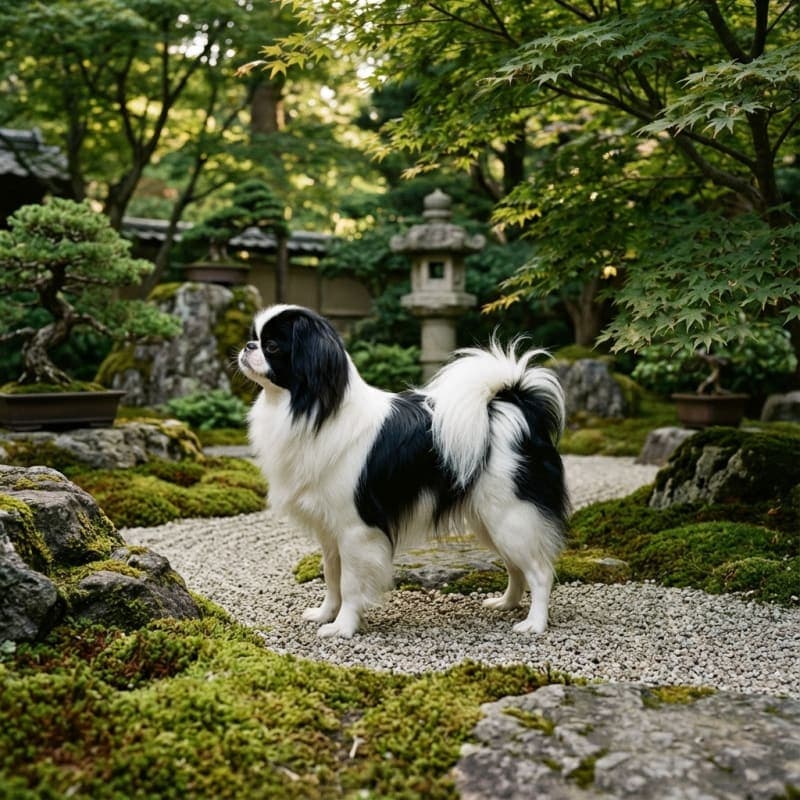
The Japanese Chin is a small dog with an extraordinarily elegant appearance, characterized by a wide, rounded skull and a short muzzle typical of brachycephalic breeds. Its eyes are large, round, and shiny, set wide apart, giving it a distinctive, expressive look and adding an extraordinary charm. The ears are long, triangular, and set high on the head, covered with abundant, long hair, which makes the dog look extremely dignified and aristocratic.
The body structure of the Japanese Chin is proportional and harmoniously built. The height at the withers is usually around 25 cm, although the FCI standard does not specify exact measurements, focusing rather on overall proportions. The torso is square, with a short, straight back and a deep chest. The tail is carried high over the back, often forming a characteristic plume and is covered with abundant, long hair that creates a stunning cascade.
The coat of the Japanese Chin is one of its most distinctive features. It is silky, straight, and long, forming a lush framing around the neck (the so-called ruff), on the ears, tail, and hind legs. The most commonly seen colors are:
- White with black patches - the most classic and popular coloration
- White with red patches - equally valued and recognized by standards
- White with patches in shades of orange or lemon
A characteristic white spot (lightning) on the forehead is particularly desirable and adds even more charm to the breed. The overall appearance of the Japanese Chin exudes elegance, grace, and an aristocratic character that attracts the gaze and admiration of lovers of this unique breed.
The Japanese Chin is a dog with a gentle, friendly, and exceptionally charming temperament. It is intelligent, graceful, and possesses a characteristic, almost cat-like independence that makes it unique among companion dogs. This breed is known for its social nature, which makes it an excellent dog for family life and an ideal companion for those who value close contact with their pet.
The Japanese Chin does not tolerate prolonged solitude and requires close, daily contact with its owner and family members. It forms deep emotional bonds and is extremely devoted to its caregivers. Despite its small size, it is quite confident and can defend its territory, although it is not bothersome when it comes to barking - it plays the role of a vigilant observer rather than a loud guardian.
This breed is also characterized by:
- Good tolerance of other animals - the Japanese Chin gets along well with other dogs and pets, provided it is properly socialized from a young age
- Gentleness towards children - it is patient and gentle, although due to its small size, it requires careful handling by small children
- Intelligence and perceptiveness - it quickly learns household habits and can understand the family routine
- Cat-like behaviors - it often jumps to high places, enjoys observing its surroundings from above, and can be independent
Owners should remember that the Japanese Chin, although it is a social and gentle dog, also needs consistency in training to avoid behavioral problems. It should not be allowed to dominate, as despite its small size, it can develop what is known as the small dog syndrome if not properly guided. Early socialization and gentle but firm training are crucial for the development of a balanced and happy Japanese Chin.
The Japanese Chin has an average lifespan of 12 to 14 years, although with proper care and a healthy lifestyle, some individuals can live even longer. This breed is generally healthy and resilient, but like many brachycephalic (short-nosed) dogs, it has some specific health requirements that owners should be aware of.
Due to its short skull and flat face, the Japanese Chin may be prone to breathing problems, especially in hot and humid weather conditions. Owners should avoid excessive physical exertion during heat and provide their dog with adequate ventilation and access to shade and fresh water. This breed poorly tolerates extreme temperatures - both heat and severe cold.
The Japanese Chin is also prone to obesity, so it is extremely important not to overfeed the dog and to exercise it regularly within its capabilities. Being overweight can lead to additional health problems, including joint and heart issues.
Common health problems that the Japanese Chin may face include:
- Patellar luxation (dislocated kneecap) - a common issue in small breeds, may require surgical treatment
- Eye problems - due to its large, protruding eyes, the breed is susceptible to corneal injuries, inflammations, and dry eyes
- Heart diseases - particularly valve diseases that can develop with age
- Skin allergies - allergic reactions to food or environmental factors may occur
- Brachycephalic syndrome - breathing problems related to skull structure
- Dental problems - small breeds often struggle with tartar buildup and gum diseases
Regular veterinary visits, a proper diet, maintaining a healthy weight, and attention to hygiene (especially of the eyes, teeth, and ears) are crucial for ensuring the Japanese Chin has a long and healthy life. It is also worth considering health insurance for the dog to protect financially in case of more serious health issues.
The Japanese Chin has a long, silky coat that requires regular but not overly time-consuming grooming to keep it in excellent condition and looking beautiful. It is recommended to brush the dog 2-3 times a week, which will help remove dead hair, prevent matting, and maintain the natural shine of the coat.
During shedding, which typically occurs twice a year (in spring and autumn), it may be necessary to brush daily to effectively limit the amount of hair in the home and prevent tangles. Although the coat of the Japanese Chin is long, it has a silky texture that does not tend to mat excessively, making grooming easier.
Baths should be given every 4-6 weeks or as needed when the dog is dirty. The Japanese Chin should not be bathed too often to avoid drying out its delicate skin and stripping the coat of its natural oils. When bathing, it is advisable to use gentle, dog-specific shampoos that will not irritate the skin.
Particular attention should be paid to:
- Eyes - due to their large, protruding eyes, the area around the eyes should be gently wiped daily with a damp, soft cloth to remove discharge and prevent tear stains
- Ears - regular checking and cleaning of the ears (once a week) with a special ear cleaning solution to prevent infections
- Teeth - brushing teeth 2-3 times a week or daily to prevent tartar buildup and gum disease
- Nails - trimming every 2-3 weeks if they do not wear down naturally during walks
- Facial folds - in some individuals, the skin folds should be regularly cleaned to prevent the accumulation of dirt and moisture
Owners should also regularly check the paw pads and remove debris from between the toes, especially in winter (salt, sand) and summer (pebbles, plant debris). Proper grooming not only makes the Japanese Chin look beautiful but also prevents many health problems and ensures the dog's comfort in life.
The Japanese Chin does not have high physical activity requirements, making it an ideal dog for people living in urban apartments and for owners who prefer a calmer lifestyle. It only needs regular, gentle walks totaling about 30-45 minutes a day, divided into two or three shorter sessions.
This breed prefers walks at a moderate pace on flat terrain, and its short legs and body structure are not suited for long, strenuous runs or extreme physical activities. The Japanese Chin is more of a walking companion than a sporty training partner.
It is important to remember the specific needs of this breed:
- Avoid exertion in heat - due to the brachycephalic syndrome, the Japanese Chin does not tolerate hot and humid conditions well; walks in hot weather should be limited to cooler times of the day (early morning or late evening)
- Adjust activity to capabilities - this dog tires easily, so it should not be pushed or forced into excessive exertion
- Provide a safe environment - due to its small size and delicate build, it should be kept away from areas where large, boisterous dogs may be present
- Protect from extreme weather - in winter, it may need protective clothing, and in the rain, walks should be shortened
The Japanese Chin greatly values time spent with its owner, so interactive play at home or in the garden will be an excellent additional form of activity for it. It enjoys interactive toys, fetch games (at a moderate pace), and mental games that engage its intelligence.
This dog exhibits feline behaviors and often prefers to observe the world from high points or to rest quietly on the couch with its owner, rather than engage in intense physical activity. This trait makes it an ideal companion for older individuals, those with limited mobility, and for those seeking a calm yet affectionate companion.
The Japanese Chin is a smart dog that quickly learns new commands and can understand the household routine, but at the same time possesses a strong, independent character that can sometimes make training a challenge. This breed occasionally exhibits cat-like independence and may make decisions on its own, which requires patience and consistency from the owner.
The most important rules in training a Japanese Chin:
- Use only positive methods - rewards, praise, treats, and play are the keys to success; harsh methods or physical punishment are completely inappropriate and can destroy the bond with the dog
- Be patient and consistent - the Japanese Chin may be resistant to repeating the same commands, so it is important to be persistent and not give up
- Keep training sessions short - 5-10 minutes, several times a day is better than long, exhausting sessions
- Utilize its intelligence - the Japanese Chin loves tricks and mental games that engage its mind
- Start early socialization - from a puppy, introduce the dog to various situations, sounds, people, and animals
Early socialization and training are key elements that will help shape a balanced, confident, and well-mannered dog. Japanese Chin puppies should be exposed to positive experiences with different people, animals, places, and situations from the earliest weeks of life.
Basic commands worth teaching a Japanese Chin include: Sit, Stay, Come, Lie down, and Leave it. This breed responds well to various tricks and games, such as giving a paw, spinning in circles, or retrieving light toys that engage both its mind and body.
It is also important to teach the Japanese Chin to stay home alone for short periods to prevent separation anxiety issues. Gradually increase the time alone, always rewarding calm behavior. Due to the social nature of the breed, this may require additional patience and consistency.
Avoid the small dog syndrome - do not allow the Japanese Chin to exhibit behaviors that would be unacceptable in a larger dog (e.g., jumping on people, aggressive defensive behaviors, excessive barking). Treat it as a full-fledged dog requiring consistent training, not as a toy or a pet.
The Japanese Chin has moderate dietary requirements, but the quality of the diet is crucial for its health, coat condition, and overall well-being. It is important to feed it high-quality food that provides all the essential nutrients, including the right proportions of protein, fats, carbohydrates, vitamins, and minerals.
It is imperative to avoid overfeeding, as this breed has a clear tendency to gain weight, which can lead to serious health problems such as heart, joint, and breathing issues. Obesity is particularly dangerous in brachycephalic dogs, as it further exacerbates already compromised breathing.
On average, an adult Japanese Chin needs 150 to 300 grams of food per day, depending on:
- The weight and size of the dog (typically 3-5 kg)
- The level of physical activity
- The age and metabolism
- The caloric content of the chosen food
- The health status and any existing conditions
It is recommended to divide the daily portion into two or three smaller meals throughout the day to ensure better digestion, maintain stable energy levels, and avoid health issues such as hypoglycemia (low blood sugar), which can occur in small breeds.
Important aspects of feeding a Japanese Chin:
- Access to fresh water - always provide unlimited access to clean, fresh water
- Quality of food - choose foods with high-quality protein sources (meat, fish) and avoid foods with excessive fillers and artificial additives
- Appropriate kibble size - smaller kibble size is ideal for small dogs with short snouts
- Regularity of meals - feed at consistent times of the day to establish a healthy routine
- Weight control - regularly monitor the dog's weight and adjust the amount of food as needed
- Treats in moderation - snacks should not make up more than 10% of the daily caloric intake
Consider homemade feeding or a BARF diet (raw meat and bones), but always under the supervision of a veterinarian or pet nutritionist to ensure that the diet is complete and balanced. Some Japanese Chins may have a sensitive stomach or food allergies, which may require a specialized diet or the elimination of certain ingredients.
For Japanese Chin puppies, it is advisable to use special puppy food for small breeds for the first 9-12 months of life to support proper development. Older dogs may require senior food with adjusted calorie content and ingredients that support joint and cognitive functions.
Characteristic Traits
Pros
- Gentle and charming temperament
- High intelligence
- Perfectly adapts to various lifestyles
- Ideal for apartments and for elderly people
- Beautiful silky coat
- Low physical activity requirements.
Cons
- Requires regular coat care
- Can be stubborn in training
- Needs constant attention and companionship
- Sensitive to extreme temperatures
- Prone to respiratory issues (brachycephaly)
- Tendency to gain weight.
Behavioral Ratings
Breed History
The Japanese Chin breed has a long and fascinating history that dates back over a thousand years and connects the cultures of China, Korea, and Japan. Despite its name suggesting Japanese origins, the ancestors of this breed actually lived in China, where they were bred by Buddhist monks in temples and monasteries and valued by the imperial family.
According to ancient documents and historical records, the ancestors of the Japanese Chin were gifted as a precious present by the rulers of Korea (during the Silla dynasty, 377-935) to the Japanese imperial court in the year 732. Over the following centuries, a large number of these dogs made their way to Japan, also through imperial envoys sent to China (during the Tang dynasty, 618-910) and North Korea (the Po H'ai dynasty, 698-926), who brought back dogs of this breed.
In Japan, the Japanese Chin quickly gained particular status and recognition. This breed was valued for its friendly disposition, elegant appearance, and ability to be an excellent companion for the aristocracy and imperial families. These dogs were treated with the utmost respect and surrounded by luxury.
A particularly important moment in the breed's history occurred during the reign of Shogun Tsunayoshi Tokugawa (1680-1709), who was a well-known animal lover. During this period, the Japanese Chin was bred as a luxurious lap dog in Edo Castle (modern-day Tokyo) and treated almost like a member of the imperial family. It was during this time that the breed gained the status of a symbol of prestige and refinement.
The first documented introduction of the Japanese Chin to the West was in 1613, when British captain Searles brought one of these dogs to England. However, a true breakthrough occurred in 1853, when Commodore Matthew Perry from the USA, during his famous mission to Japan, brought several Japanese Chins to the United States. Two of these dogs were gifted to Queen Victoria, which significantly contributed to the breed's popularity in Europe.
Since 1868, during the Meiji Restoration, the Japanese Chin was particularly favored as a lap dog by aristocratic ladies from the upper social classes. This breed became a symbol of elegance, refinement, and high social status both in Japan and in Western countries.
Today, the Japanese Chin is widely distributed around the world as an excellent companion dog, valued for its charming character, beautiful appearance, and rich history. The breed is officially recognized by all major kennel organizations, including the FCI (Fédération Cynologique Internationale), AKC (American Kennel Club), and The Kennel Club in the UK.
Modern Japanese Chins still retain the traits that made them so valuable in imperial times - elegance, intelligence, devotion, and charm that has delighted aristocrats for centuries. This breed remains a living testament to the rich cultural and artistic history of the Far East and a bridge connecting tradition with modernity.