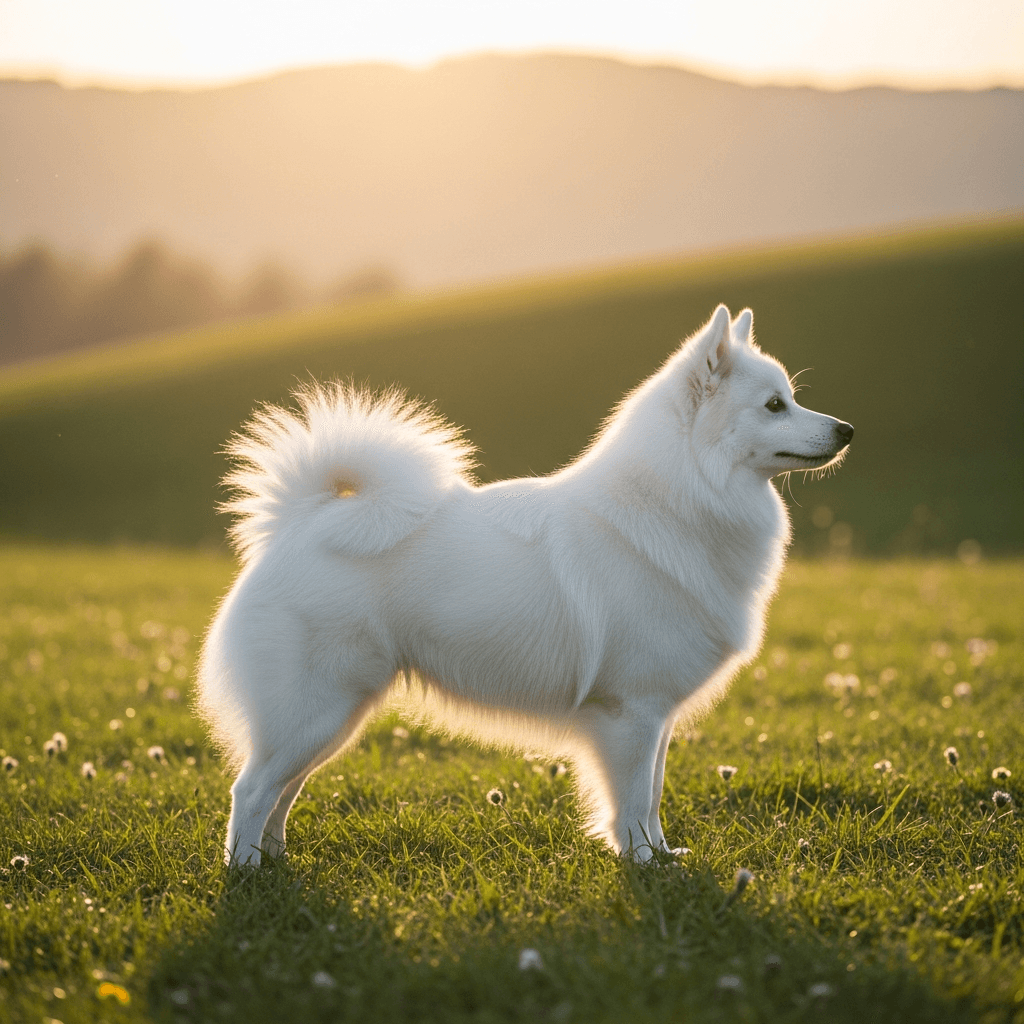
Japanese Spitz
FCI Group
5• FCI 262
Size
Small
Origin Country
JP
Height
30-38 cm
Weight
5.9-10 kg
Lifespan
12-16 years
Temperament
Overview
The Japanese Spitz, also known as Nihon Supittsu, is an extremely charming and energetic companion dog that certainly attracts attention with its magnificent, snow-white coat and charming appearance. This breed originated in Japan, where it was developed in the 1920s and 1930s through careful selection and crossbreeding of various types of Spitz dogs imported from Canada, the United States, Australia, and China.
The Japanese Spitz debuted at a dog show in Tokyo in 1921, generating immense interest with its elegance and harmonious build. The characteristic square silhouette, deep chest, rounded head, and proudly carried tail over the back give it an exceptionally harmonious and noble appearance that inspires admiration worldwide.
The Japanese Spitz is a dog with a friendly, cheerful, and extremely sociable temperament. Its loyalty to its owners is legendary, and it shows particular love and patience towards children, making it an excellent companion for families with young members. This dog stands out for its high intelligence and willingness to cooperate, which greatly facilitates its training, although it may sometimes exhibit a slight stubbornness typical of Spitz breeds.
It has a natural guarding instinct and alertness, making it an excellent watchdog, warning owners of unwanted guests with loud barking. The breed standard clearly states that excessive noisiness is undesirable, so proper socialization and upbringing are crucial.
The coat of the Japanese Spitz is long, straight, and extremely dense, with a rich undercoat, which requires regular and systematic grooming. During shedding periods, especially in spring and autumn, this dog sheds a significant amount of hair, necessitating more frequent brushing, even daily. Although its thick, double coat provides excellent protection against the cold in winter, it can lead to overheating during hot summer days, so special care must be taken to provide the dog with a cool place to rest.
The average lifespan of a Japanese Spitz is 12-14 years, although with proper care, a correct diet, and regular veterinary visits, some individuals may live even longer, enjoying good health into old age. The Japanese Spitz is a dog that harmoniously combines beauty, intelligence, a cheerful disposition, and devotion, making it ideal for active people who value energy, elegance, and the character of a small but brave and proud dog.
Proper socialization from puppyhood and consistent, positive training are absolutely crucial to ensure that this dog behaves well in various life situations, joyfully welcomes guests, and does not show excessive mistrust towards strangers.
In summary, the Japanese Spitz, despite its small size (30-38 cm tall at the withers), can be a wonderful, alert guardian of the family home and an extremely loyal, loving friend, making it an incredibly valuable companion in any family wishing for a dog with a beautiful appearance and wonderful character. Its versatile traits, elegance, and cheerful disposition make it worthwhile to explore all the details regarding health, grooming, exercise, training, nutrition, history, appearance, and behavior, which you will find in the further, detailed sections of our comprehensive guide to this fascinating Japanese breed.
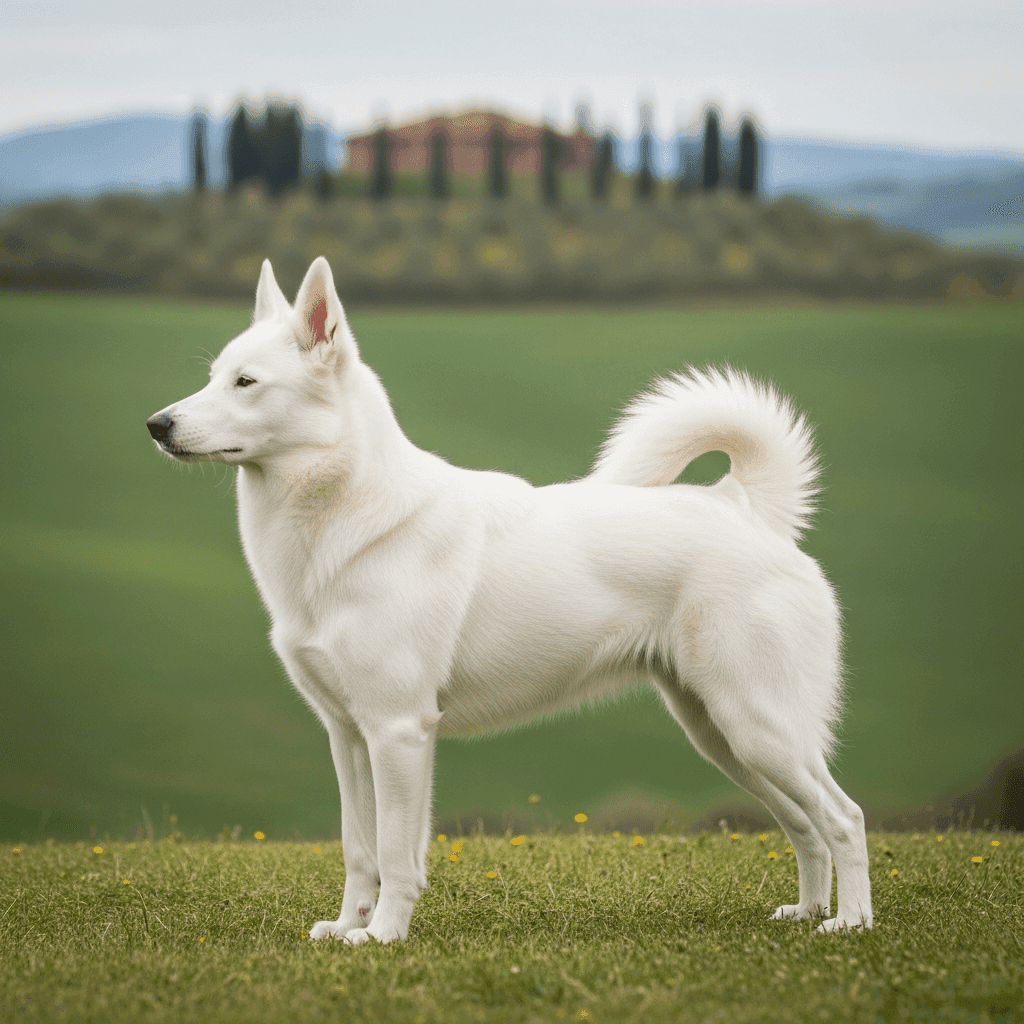
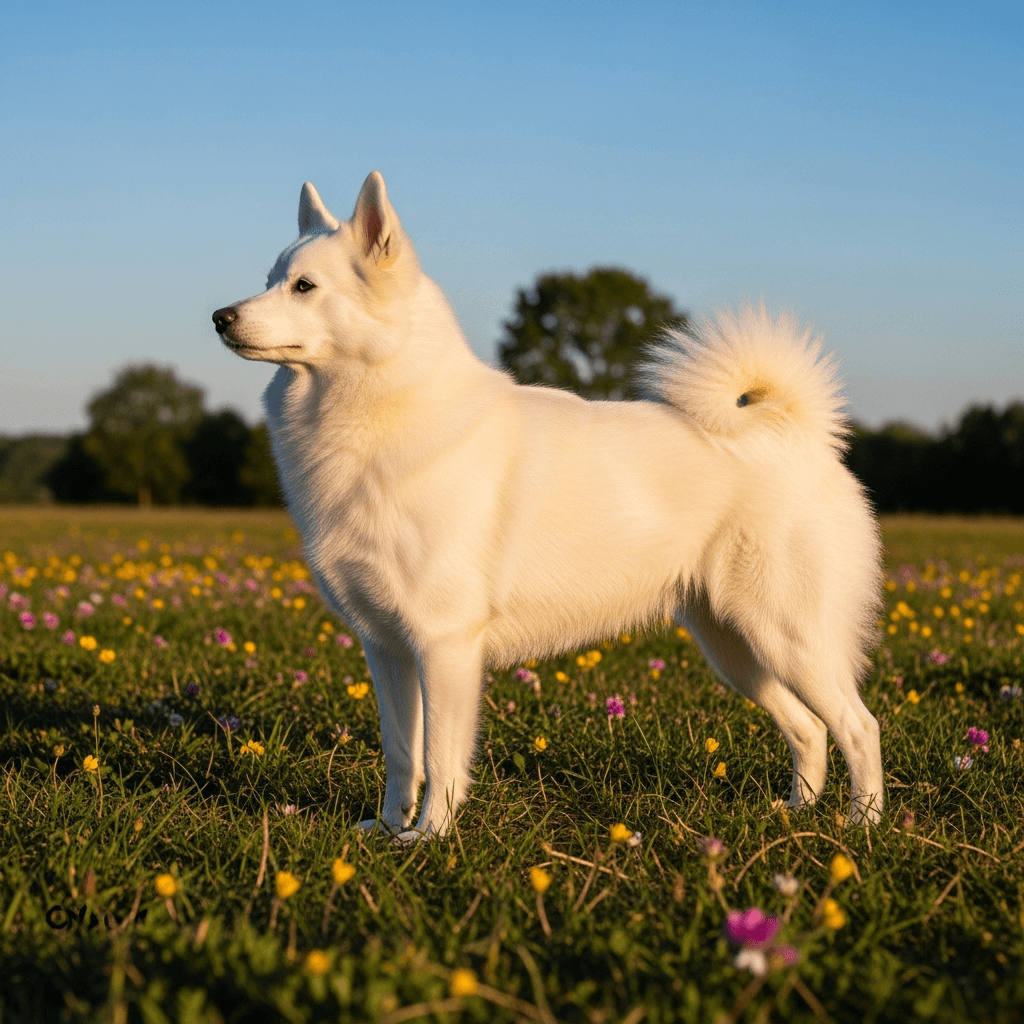
The Japanese Spitz is a dog of exceptional, captivating beauty that immediately catches the eye with its pure snow-white, fluffy coat and an incredibly harmonious, elegant silhouette. This breed is characterized by a proportional, square-like body structure (the ratio of height at the withers to body length is 10:11), with a deep, well-developed chest and a straight, strong back, giving it a noble and balanced appearance.
Breed dimensions: The height at the withers ranges from 30 to 38 cm according to the official FCI standard, with females typically being slightly smaller and more delicate than males. The weight usually oscillates between 5-10 kg, depending on the sex and build of the individual.
The head is proportional to the body, moderately wide and elegantly rounded, with a clearly defined, but not overly steep stop (the transition from forehead to muzzle). The forehead is moderately convex, giving the dog an intelligent and alert expression.
The eyes are dark, almond-shaped, set slightly obliquely, which gives the Spitz a penetrating, lively, and intelligent expression. The eyelids are black, beautifully contrasting with the white coat and emphasizing the distinctiveness of the gaze.
The ears are characteristic of Spitz-type breeds: relatively small, triangular, erect, set high on the head and slightly forward-facing, which emphasizes the alert, always ready-to-act appearance of the Spitz. The ears are covered with shorter hair.
The muzzle is pointed, with a straight nose bridge, harmoniously narrowing towards the nose. The nose is small, round, and always intensely black. The lips are tightly fitting, black, and the dentition is complete with a scissor bite.
The tail is one of the most distinctive features of the breed – carried proudly over the back or on the back, of moderate length, abundantly feathered with long, fluffy hair creating a spectacular flag or plume. The tail creates a beautiful accent to the overall silhouette.
The coat is double, consisting of a long, straight, stand-off outer coat and a dense, soft undercoat, making the Japanese Spitz perfectly resistant to cold weather conditions. The hair on the muzzle, forehead, ears, and lower parts of the limbs is significantly shorter, creating a beautiful contrast with the long, abundant coat on the rest of the body, especially on the neck (forming a magnificent mane), torso, and tail. The only acceptable coat color is pure snow-white – any spots or shades are disqualifying.
The limbs are straight, parallel, strong, and muscular, with black or dark claws and black paw pads. The paws are small, round, compact, of a cat-like type.
The entire build of the Japanese Spitz emanates elegance, dignity, harmony, and the spirit characteristic of Spitz-type breeds, creating an image of a dog full of grace, vitality, and nobility.
The Japanese Spitz has a friendly, cheerful, and extremely sociable disposition, making it an excellent companion dog and an ideal family member. The FCI standard describes the temperament of this breed as intelligent, cheerful, and exceptionally sensitive to the moods of its surroundings. This breed is full of energy, life, and enthusiasm, which makes it perfectly suited for active families with children, with whom it loves to spend time playing together.
The Japanese Spitz is characterized by deep loyalty and devotion to its owners, creating extremely strong emotional bonds with them. It loves being around people, participating in all family activities, and being the center of attention. This is a dog that does not cope well with loneliness and long periods without contact with its family.
Guarding instinct: Despite its small size, the Japanese Spitz has a natural, strong guarding instinct, which means it will vigilantly observe its surroundings, warn its owners of unfamiliar people approaching the house, and defend its territory with loud, booming barking. However, it is important to remember that the breed standard clearly states that excessive noise is undesirable, so proper socialization and training from a young age are absolutely crucial.
The Japanese Spitz may be somewhat suspicious and reserved towards strangers upon first meeting, so it is extremely important to provide it with broad, positive socialization from the earliest weeks of life. Owners should consistently ensure that the puppy and young dog have frequent contact with a variety of people (adults, children, seniors), other dogs, animals, and different life situations (street noise, travel, visits to new places), which will help it develop positive, balanced behaviors and confidence in every situation.
The Japanese Spitz is active, lively, and loves to play, so it is worth providing it with daily, varied forms of physical activity (walks, running, fetching) and mental stimulation (strategic games, training, searching for treats). This dog loves the company of other dogs and readily forms friendships with them during playtime.
This breed tends to express its emotions vocally – barking with joy, excitement, when it wants to draw attention, or to warn about something unusual. This is a natural communicative trait of spitzes, but owners must be consistent in teaching the dog when barking is acceptable and when it should remain calm.
The Japanese Spitz is generally easy to train due to its intelligence, willingness to cooperate, and desire to please its owner, but owners must be patient, consistent, and use only positive reward-based training methods to achieve the best results in training and build trust. This dog may sometimes exhibit a typical spitz-like slight stubbornness or independence, so starting training early and establishing clear rules are key to successful upbringing.
The Japanese Spitz is a breed that, despite its small size, is generally healthy, resilient, and long-lived when provided with proper veterinary care, a balanced diet, and adequate physical activity. The average lifespan of a Japanese Spitz is between 12 and 14 years, although with exemplary veterinary care, genetics free from burdens, and a healthy lifestyle, some individuals can reach even 15-16 years, enjoying good health and vitality into old age.
However, it is important for owners and potential breeders to be fully aware of the potential health issues that, although relatively rare, can occur in this breed. The most common conditions observed in Japanese Spitz include:
- Patellar luxation – an orthopedic condition involving the improper positioning of the patella in the groove of the femur, which can lead to limping and discomfort. It requires monitoring and, in severe cases, surgical intervention.
- Tracheal collapse – more common in small breeds, leading to a characteristic dry cough resembling honking. Caution is required when using collars (harnesses are recommended).
- Hip dysplasia – abnormal development of the hip joint, which can lead to pain and arthritis. Less common in small breeds, but possible.
- Cataracts and other eye diseases – progressive clouding of the lens leading to impaired vision, as well as other ophthalmic conditions. Regular eye examinations are recommended.
- Eye infections and tearing – due to the specific structure around the eyes, Spitz may be prone to irritations.
The Japanese Spitz may also be prone to food and environmental allergies, which can lead to persistent itching, skin irritations, hair loss, and secondary infections. Identifying allergens and implementing an appropriate elimination diet or treatment are crucial for the dog's comfort.
Thermoregulation: Due to their dense, double, insulating coat, Japanese Spitz can have serious difficulties in hot summer days, leading to the risk of overheating and heatstroke. It is extremely important to provide them with a cool, shaded place to rest during heat, constant access to fresh water, to avoid intense exertion during the hottest hours of the day, and opportunities to cool down (e.g., cooling mats, dog pools). In winter, however, thanks to their perfectly insulating double coat, the Japanese Spitz copes well with cooler temperatures and loves playing in the snow.
Health prevention: A proper, balanced diet tailored to age, weight, and activity level, regular daily physical activity to prevent obesity, systematic brushing of the coat, dental health monitoring (prevention of periodontal disease), and periodic, at least annual check-ups with a veterinarian including a full clinical examination are absolutely crucial for maintaining the health, well-being, and longevity of the Japanese Spitz.
It is also recommended to choose puppies only from responsible, reputable breeders who conduct genetic testing on the parents and work to eliminate genetic burdens from breeding lines.
The care of the Japanese Spitz is a key and time-consuming element in maintaining the health, comfort, and beautiful appearance of this breed. This dog has a characteristic, long, dense, double coat consisting of long, straight, standing guard hairs and a thick, soft undercoat, which requires regular, systematic brushing to prevent matting, tangling, and to ensure proper skin hygiene.
Brushing: During normal times of the year, it is recommended to brush the Japanese Spitz a minimum of 2-3 times a week, using a pin brush and a comb to remove loose hairs and prevent tangling. Brushing should be thorough, reaching down to the skin to remove dead hairs from the undercoat.
Shedding: During periods of intense seasonal shedding, particularly in spring and autumn, the Japanese Spitz sheds a truly enormous amount of undercoat, creating real tufts of hair throughout the house. During this time, daily, or even twice-daily brushing is essential to minimize the amount of fur in the home, speed up the shedding process, keep the skin in good condition, and ensure the dog's comfort. Using a furminator or an undercoat brush is particularly helpful during this period.
Bathing: The Japanese Spitz should be bathed relatively infrequently – every 2-3 months or as needed (e.g., after getting dirty during a walk), depending on the dog's activity level, weather conditions, and coat condition. Too frequent bathing can dry out the skin and remove natural protective oils. It is extremely important to use only high-quality, gentle shampoos and conditioners specifically designed for dogs with white coats, to avoid irritating the delicate skin and to maintain the snow-white color of the fur. After bathing, the coat should be thoroughly dried, preferably using a hairdryer on a low setting while simultaneously combing the hair.
Ear care: The ears of the Spitz should be checked regularly (once a week) for signs of redness, unpleasant odor, or excessive wax, which may indicate an infection. Cleaning the ears with specialized solutions designed for dogs should be done as needed.
Oral hygiene: Regular (preferably daily or at least 2-3 times a week) brushing of the teeth with a special toothpaste and toothbrush for dogs is essential to prevent the buildup of tartar, periodontal disease, and future tooth loss.
Nail care: Nails should be regularly trimmed (every 3-4 weeks) using special clippers if they do not wear down naturally during walks. Too long nails can cause discomfort, walking problems, and injuries.
Eye check: Eyes should be checked daily and any discharge should be gently removed with clean, damp gauze.
Proper, systematic care of the Japanese Spitz is undoubtedly time-consuming and requires regular dedication, but it is absolutely essential for ensuring the dog's health, comfort, beautiful appearance, and well-being throughout its life.
The Japanese Spitz is a dog with moderate but regular exercise needs, requiring about 30-60 minutes of physical activity daily, divided into several walks and play sessions throughout the day. Despite its small size, this breed is energetic, lively, clever, and loves various forms of activity, so it is worth providing stimulating and interesting activities that combine physical movement with mental challenges.
Walks: Daily walks are essential not only for physical health but also for the mental well-being of the Spitz. This dog loves to explore new places, discover scents, and observe its surroundings. Walks should be varied – changing routes, walking pace, and introducing play elements (fetching, searching) will make them more interesting.
Play: The Japanese Spitz loves interactive games with its owner, such as fetching a ball, frisbee, squeaky toys, tug-of-war, hide and seek, or searching for hidden treats. These activities engage both the body and mind of the dog, providing full stimulation.
Socialization: It is extremely important to provide the Japanese Spitz with regular opportunities for socialization with other well-behaved dogs of various breeds and sizes, as well as contact with diverse people, which will help it develop positive social behaviors, confidence, and avoid fear of unfamiliar situations. Playing with other dogs in a safe, fenced park is an excellent form of exercise and learning social interactions.
Mental activity: The Japanese Spitz is intelligent and needs mental stimulation just as much as physical. Obedience training, learning new tricks, strategic games (scent mats, puzzle toys, searching), dog dancing, or agility (in a recreational form) are excellent ways to occupy its lively mind and prevent boredom.
Living conditions: The Japanese Spitz feels best when it can spend time outdoors in a safe, fenced garden where it can move freely, play, and observe its surroundings. However, this breed also adapts well to apartment living, provided that owners ensure daily, regular doses of exercise, mental stimulation, and quality time together. The Japanese Spitz also enjoys playing indoors, especially with children, with whom it loves to spend time.
Loneliness: Owners must remember that the Japanese Spitz should not be left alone at home for long periods (more than 4-6 hours a day), as it does not cope well with loneliness, which can lead to separation anxiety, destructive behavior (destroying furniture, chewing), excessive barking, and stress. If owners work all day, they should consider hiring a dog walker, enrolling the dog in a daycare, or providing it with the company of another pet.
Attention to heat: Due to its thick double coat, the Japanese Spitz may have difficulty regulating its temperature on hot days. During heat, intense exercise should be limited to early mornings or late evenings, ensuring constant access to shade and fresh water, and avoiding physical exertion during the hottest hours of the day.
Regular daily physical and mental activity will help keep the Japanese Spitz in excellent physical condition, a healthy weight, a great mood, and a balanced mental state throughout its life.
The Japanese Spitz is a smart, alert, and eager-to-learn dog, which makes training relatively easy and enjoyable, provided that owners use appropriate, positive reward-based training techniques, patience, and consistency. This breed has a natural desire to please its owner and a strong motivation to cooperate, which significantly facilitates the education process.
Training methods: It is crucial that training sessions are short (10-15 minutes), frequent, fun, and maximally positive so that the dog does not lose interest and focus. The most effective methods are based on positive reinforcement – rewarding the dog with treats, verbal praise, petting, or its favorite toy for each correct execution of a command. This approach reinforces positive habits, builds a strong bond based on trust, and facilitates the acquisition of new skills.
Basic commands: The Japanese Spitz should master basic obedience commands such as: Sit, Stay, Lie down, Come, Leave it, No, which are the foundation for safe and harmonious coexistence. Learning should begin as early as possible, starting from 8-10 weeks of the puppy's life.
Socialization: Early, broad, and positive socialization of the Japanese Spitz puppy is absolutely crucial from the youngest weeks of life (starting from 8-10 weeks). Owners should systematically and safely introduce the puppy to:
- Diverse people (children, adults, seniors, people in uniforms, wearing hats, with umbrellas)
- Other well-mannered dogs of various breeds and sizes
- Different animals (cats, rabbits, birds)
- Diverse sounds (traffic, subway noise, thunder, fireworks, vacuum cleaner)
- Various environments (park, forest, city, pet store, veterinary clinic)
- Different situations (car travel, veterinary visits, bathing, grooming)
Proper socialization will help the puppy gain confidence, learn to react calmly in various circumstances, and avoid future behavioral problems such as anxiety, defensive aggression, or excessive distrust of strangers.
Stubbornness and independence: The Japanese Spitz, like many spitz breeds, may sometimes exhibit a degree of stubbornness, independence, or selective hearing in certain situations, especially if training is boring, monotonous, or too harsh. Therefore, absolute consistency in applying rules, patience, creativity in diversifying training sessions, and positive reinforcement are key in training this breed.
Barking control: Due to its natural guarding instinct and tendency to express emotions vocally, it is extremely important to teach the Japanese Spitz the command Quiet or Enough early on to control excessive barking and prevent problems with neighbors, especially in apartment buildings. Training should be based on rewards for silence and ignoring barking for attention-seeking.
Advanced training: The Japanese Spitz, thanks to its intelligence, agility, and willingness to work, can excel in advanced forms of training such as agility (obstacle courses), dog dancing, trick training, rally obedience, or even animal-assisted therapy, providing it with additional mental and physical stimulation.
Starting training early, having clear, consistently followed rules, using positive methods, patience, and regular, short training sessions are absolutely crucial for the successful upbringing of a well-behaved, confident, and happy Japanese Spitz.
The Japanese Spitz has moderate nutritional needs that should be carefully tailored to its individual age, weight, level of daily physical activity, health status, and metabolism to ensure optimal health, energy, and longevity. Owners should choose only high-quality commercial food (dry or wet) or a balanced homemade diet prepared under the supervision of a veterinarian or certified pet nutritionist, rich in high-quality animal protein, healthy fats, carbohydrates, and essential vitamins and minerals.
Type of food: Foods for small breeds are specially formulated with smaller kibble sizes, suited to the size of the Spitz's mouth, and contain appropriately concentrated nutrients. Owners can choose between:
- Dry food (kibble) – convenient, long-lasting, helps with mechanical cleaning of teeth
- Wet food (cans, pouches) – more palatable, contains more water, better for dogs with dental issues
- Homemade diet (BARF, cooked) – requires careful balancing, consultation with a nutritionist
- Mixed diet – a combination of dry and wet food
Feeding frequency: It is recommended to feed twice a day (morning and evening) to avoid overeating, digestive problems (bloating, gastric torsion), and to stabilize energy levels throughout the day. Puppies require more frequent feeding (3-4 meals a day), while adult dogs (over 12 months) can eat twice a day.
Portions: The amount of food depends on the dog's weight, age, and activity level. Typically, a Japanese Spitz needs about 40-80 grams of dry food per kilogram of body weight per day, divided into two meals. Exact recommendations can be found on the food packaging, but it is best to consult with a veterinarian.
Weight control: It is extremely important to regularly monitor the dog's weight (weighing once a month), as the Japanese Spitz, like many small breeds, has a natural tendency to gain weight if not adequately active or receiving too many calories. Obesity leads to serious health problems, such as diabetes, heart disease, joint issues, and a shortened lifespan. Owners should be able to feel the dog's ribs under a thin layer of fat and see a clear waist from above.
Snacks and treats: Training treats should make up no more than 10% of the daily caloric intake. Overfeeding with treats, table scraps (especially fatty, salty, sweet), and foods toxic to dogs (chocolate, onions, garlic, grapes, raisins, xylitol, avocado, alcohol, caffeine) should be avoided.
Access to water: The dog must have constant, unlimited access to fresh, clean drinking water throughout the day. The bowl should be washed daily.
Food allergies: If the Japanese Spitz shows signs of allergies (itching, skin problems, vomiting, diarrhea), a consultation with a veterinarian is necessary, and an elimination or hypoallergenic diet with a limited number of ingredients or new protein sources may need to be introduced.
Senior diet: Older dogs (over 7-8 years) require senior food, tailored to their changing metabolism, lower activity levels, and health needs (support for joints, heart, kidneys).
A proper, balanced diet tailored to individual needs, regular weight monitoring, and consultations with a veterinarian are the foundation of health and a long, active life for the Japanese Spitz.
Characteristic Traits
Pros
- Friendly and cheerful disposition
- Intelligence and ease of training
- Loyalty to the family
- Natural guarding instinct
- Beautiful snow-white coat
- Excellent dog for families with children
- Good adaptation to apartment living.
Cons
- Requires regular and time-consuming coat care
- Intense shedding in spring and autumn
- Can be stubborn during training
- Risk of overheating on hot days
- Tendency to bark
- Does not cope well with loneliness
- Suspicious of strangers without socialization.
Behavioral Ratings
Breed History
The Japanese Spitz has a fascinating, relatively young history that began in the early 20th century in Japan. The breed's roots trace back to larger, white German spitzes that arrived in Japan around 1920 via the Siberian continent and northeastern China, most likely along with European settlers and traders.
This breed was first publicly showcased at a dog show in Tokyo in 1921, where it generated immense interest and enthusiasm among Japanese dog lovers with its pure white, fluffy coat, elegant silhouette, and charming, cheerful character. From that moment on, Japanese breeders began systematic work to create and refine this unique breed.
Then, in 1925, two pairs of white spitzes were imported from Canada to Japan, significantly enriching the gene pool and accelerating the breed's development. Between 1925 and 1936, the import of spitzes from various countries continued, including Canada, the United States, Australia, and China, allowing Japanese breeders to conduct thoughtful, careful selection and crossbreeding of the best individuals to create the optimal breed type.
The offspring of the imported dogs were systematically crossed to develop a breed with desired traits: harmonious body structure, pure white coat, friendly temperament, and healthy condition. Japanese breeders focused on reducing the size of the original, larger German spitzes to create the ideal companion dog with moderate dimensions, perfectly suited to living conditions in Japanese homes.
After the end of World War II, in 1948, the Japan Kennel Club (JKC) officially established a unified, comprehensive standard for the Japanese spitz, which serves as the basis for the standard still in effect today. This standard precisely defined the desired appearance, body structure, character, and breed traits, enabling further controlled development of the breed and its international recognition.
The Japanese spitz quickly became one of the most valued and popular companion dog breeds in Japan, and its popularity gradually spread to other countries, particularly in Asia, Europe, and America. In 1964, the breed was officially recognized by the Fédération Cynologique Internationale (FCI), paving the way for international exhibitions and breeding.
The FCI standard classifies the Japanese spitz in Group 5 (Spitz and Primitive Types), Section 5 (Asian Spitz and Related Breeds), without working trials. The official FCI standard No. 262 was published in 1987 and updated on June 16, 1999.
Today, the Japanese spitz is valued worldwide as a wonderful companion, family, and home dog, combining characteristics typical of spitz breeds – such as a dense, beautiful coat, agility, intelligence, alertness, and an incredibly friendly, cheerful, loyal disposition. This breed enjoys stable, albeit moderate, popularity among small dog enthusiasts who appreciate its beautiful appearance and wonderful character, making it ideal for active families living in both houses and apartments.
The history of the Japanese spitz perfectly illustrates how thoughtful, responsible breeding work can create a new, unique breed with exceptional traits that delights owners with its beauty, intelligence, and devotion for generations.