Lhasa Apso
FCI Group
9• FCI 227
Size
Small
Origin Country
XX
Height
25-30 cm
Weight
4-7 kg
Lifespan
14-18 years
Temperament
Overview
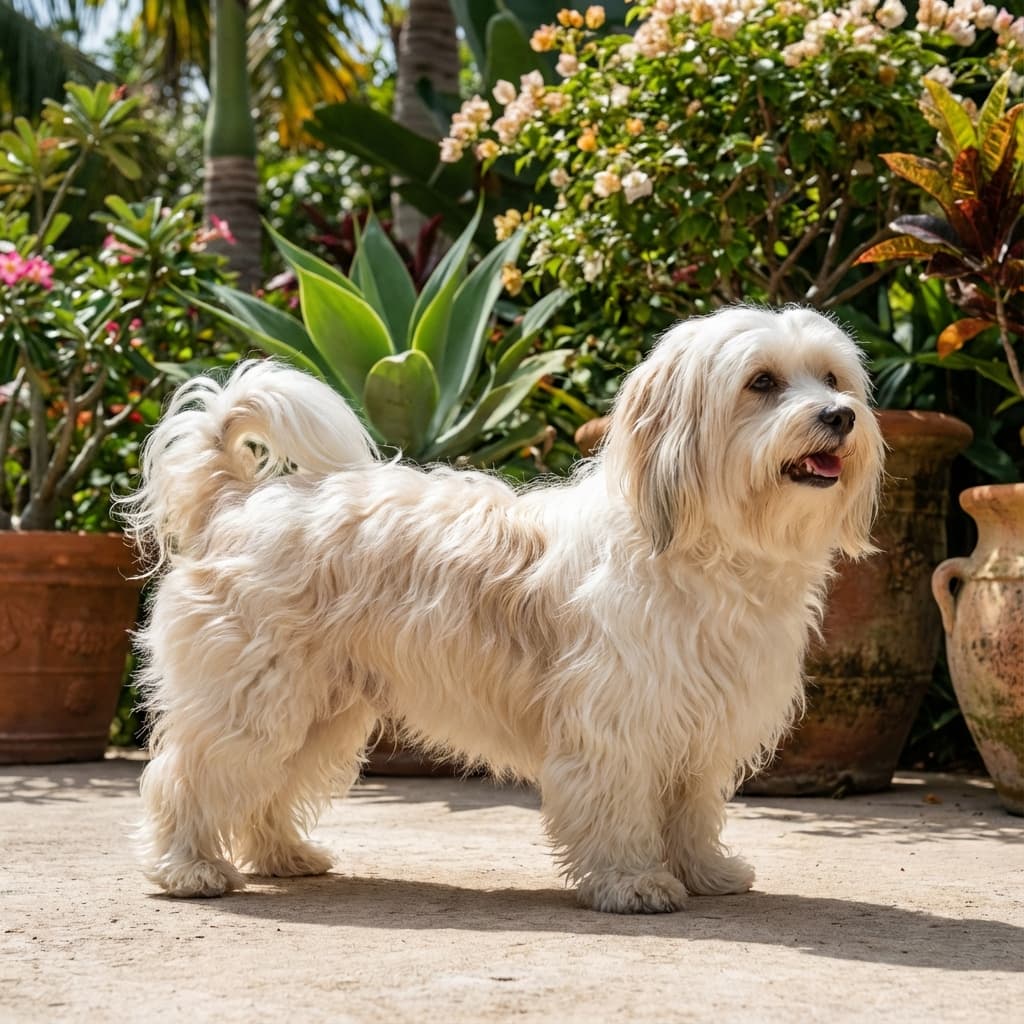
Lhasa Apso is a small decorative dog that has won the hearts of many dog lovers thanks to its unique character and irresistible charm. Its roots trace back to picturesque Tibet, where it served as a guardian in Buddhist monasteries, protecting monks from danger. The long, thick, and hard coat that protected it from the harsh high-altitude climate has become one of its most recognizable features. The Lhasa Apso is distinguished by its harmonious body structure and beautiful coat in various colors – from golden, through sandy, honey, to dark gray, slate, or black.
With a height at the withers of about 25 cm and a weight ranging from 4 to 7 kg, the Lhasa Apso is an ideal companion for city dwellers, especially those living in apartments. Its cheerful and sociable nature makes it thrive in the company of both children and the elderly. Although the Lhasa Apso is extremely sociable, one cannot forget its vigilant nature. It is a balanced dog but wary of strangers, which makes it an excellent little home guardian.
Its long hair on the head falls over the eyes, protecting them from wind, dust, and the blinding glare of the sun – a feature developed over centuries of living in the high-altitude conditions of Tibet. The lush whiskers and beard give it a distinctive appearance that is hard to confuse with any other breed. Lhasa Apso owners must remember that this dog needs close contact with people and requires consistency in training. Its strong personality can be a challenge, as it is independent and self-sufficient, meaning it does not always wait for its owner's commands.
Despite its small size, the Lhasa Apso stands out for its intelligence and sensitivity, making it a loyal and devoted companion. Its unique personality and distinctive appearance make it a breed worth considering for anyone looking for a faithful dog with a strong character. In the following sections of the guide, you will find detailed information regarding the health, grooming, physical activity, training, nutrition, history, appearance, and behavior of the Lhasa Apso, which will help you better understand and care for this exceptional pet.
The Lhasa Apso is a dog with a harmonious and balanced body structure, attracting attention with its long and dense coat. Height at the withers is about 25 cm, with an ideal height of around 25.4 cm for males and slightly less for females, weighing between 4 to 7 kg. Its coat is double-layered – consisting of long, hard guard hairs and a dense undercoat that provides thermal insulation in harsh climatic conditions.
Coat color can be extremely diverse, ranging from gold, sandy, honey, to dark gray, slate, and even black, white, or parti-color (two-colored). All shades are equally desirable according to breed standards. The head of the Lhasa Apso is moderately narrow, tapering towards the eyes, with a distinct arch behind the temples, but without a flat or domed appearance of the skull.
Its eyes are dark, oval, and of medium size, set straight on the front of the skull, giving it a vigilant and intelligent expression. The ears are hanging, heavily coated, and abundantly covered with long hair. The tail is set high and carried cheerfully over the back, often with a characteristic curled tip, abundantly covered with long hair.
The Lhasa Apso has strong, straight front limbs with well-developed shoulders and strong forearms, while the hind limbs are well-muscled with good angles at the joints. The paws are round, similar to those of a cat, with hard pads and abundantly covered with hair between the toes. The long hair on the head falls over the eyes, creating a natural shield, but does not hinder its vision – allowing it to remain alert and ready to interact with its surroundings. The overall silhouette exudes strength, elegance, and a proud, confident character.
The Lhasa Apso is a dog with a cheerful and confident disposition, which makes it an excellent companion for both children and the elderly. Its temperament is alert, balanced, and independent, yet it can be somewhat wary of strangers, a trait stemming from its historical role as a guard dog in Tibetan monasteries. This alertness and caution make the Lhasa Apso a great little home alarm that will signal the presence of unknown individuals.
Thanks to its intelligence and sensitivity, the Lhasa Apso easily adapts to various situations and environments, making it a flexible life companion. It is a dog that tolerates solitude better than many other toy breeds, but still needs regular interactions with people to feel fulfilled and happy. The Lhasa Apso can be very cheerful, energetic, and playful, but it can also calm down, relax, and enjoy the peaceful company of its owner.
Owners should be consistent in training their pet, as the Lhasa Apso, despite its small size, may try to take on a dominant role in the household. Without proper socialization and training, it can develop undesirable behaviors such as excessive barking, dominance over other dogs, or overprotectiveness of its owners. However, with the right approach, working with the Lhasa Apso on training and socialization is key to raising a happy, balanced, and confident dog that will be an excellent companion in everyday life and various situations.
The Lhasa Apso is a dog with an impressive lifespan of 12 to 15 years, although many individuals live even 16-18 years with proper care. Its sturdy build and genetic resilience, developed over centuries of living in the harsh conditions of Tibet, make it quite resistant to many diseases. However, like any breed, the Lhasa Apso can be prone to certain breed-specific conditions.
Some of the most common health issues include:
- Progressive retinal atrophy (PRA) – a degenerative eye condition leading to vision loss
- Cataracts – clouding of the eye's lens, which can develop in older age
- Entropion – a problem with eyelids rolling inward, causing discomfort and irritation to the cornea
- Patellar luxation – an orthopedic issue involving dislocation of the kneecap, common in small breeds
- Kidney dysplasia – a congenital kidney issue that can lead to kidney failure
- Skin problems – resulting from improper care of their dense coat, including allergies and infections
It is important for owners to regularly visit the veterinarian, monitoring their pet's health through annual check-ups. Special attention should be paid to the dog's diet and weight to avoid obesity, which can lead to serious health problems, including heart disease, diabetes, and joint issues. Regular ear cleaning, eye care, and maintaining oral hygiene are key elements of health prevention for the Lhasa Apso.
Grooming a Lhasa Apso requires regular and careful attention due to its long, thick, and abundant coat. Daily brushing is absolutely essential to prevent tangling and matting, as well as to remove dead hair. Neglecting daily grooming can lead to serious skin problems, discomfort for the dog, and the need for drastic trimming.
Regular baths are recommended, usually every 2-4 weeks, to keep the coat in good condition and remove dirt. High-quality shampoos designed for long-haired breeds and conditioners should be used to facilitate combing and prevent tangling. After bathing, the coat should be thoroughly dried and brushed to avoid matting.
Owners should also:
- Regularly check the ears – due to their hanging structure and abundant hair, they are prone to infections
- Clean the eyes – remove discharge and debris that accumulates around the eyes under the long hair
- Maintain oral hygiene – regular tooth brushing prevents tartar buildup and gum disease
- Trim the nails – if they do not wear down naturally during walks
- Check the skin – skin problems can develop under the thick coat that are not visible to the naked eye
During shedding periods, which occur in spring and autumn, grooming should be even more intensive to effectively remove dead hair. Many owners opt for regular assistance from a professional groomer, which makes it easier to keep the coat in excellent condition. Caring for a Lhasa Apso's coat is not just a matter of aesthetics but also of the dog's health and comfort.
The Lhasa Apso is not a breed that requires the intense physical exertion typical of working or sporting dogs. A daily walk at a moderate pace lasting 20-30 minutes is sufficient to meet its basic exercise needs, provide mental stimulation through exploring new scents and environments, and maintain a healthy weight.
Although the Lhasa Apso is not a typical sporting dog, it is active enough to enjoy play and interactions with other dogs and people. Owners should provide their dog with a variety of activities to satisfy its mental and physical needs, as boredom can lead to undesirable behaviors.
Recommended forms of activity for the Lhasa Apso:
- Hide and seek games with treats – stimulate the natural tracking instinct and engage the sense of smell
- Interactive toys – dog puzzles that require problem-solving to earn a reward
- Short training sessions – teaching new commands and tricks provides mental stimulation
- Fetch games – with a ball or favorite toy at home or in the garden
- Socialization with other dogs – controlled meetings with friendly dogs during walks
The Lhasa Apso thrives in an apartment and does not need a large garden, but it requires regular walks to maintain mental and physical balance. It is important not to overexert it with excessive exercise, especially on very hot or cold days, due to its dense coat and small size. Moderate physical activity combined with regular mental stimulation is the key to a happy and healthy Lhasa Apso.
Training a Lhasa Apso can be a challenge, as this breed is characterized by a certain independence, self-sufficiency, and stubbornness. Unlike breeds that are very eager to cooperate, such as shepherds or retrievers, the Lhasa Apso has its own opinions and does not always immediately follow commands. Owners should start training early, from puppy age, to establish rules and structures that will help raise a well-behaved dog.
Training sessions should be short (5-10 minutes), but regular and conducted daily, so that the Lhasa Apso can easily absorb new commands without boredom or frustration. It is important to be consistent in training, as this breed quickly picks up on any inconsistencies and will use them to its advantage. Owners should use only positive reinforcement methods, such as treats, praise, and play, to motivate their pet.
Key elements of Lhasa Apso training:
- Early socialization – exposure to different people, animals, sounds, and environments during puppyhood
- Basic commands – Sit, Stay, Come, Lie down, Place
- House training – consistently teaching the dog to relieve itself in the appropriate place
- Barking control – teaching the Quiet command to prevent excessive alerting
- Acceptance of grooming – getting used to brushing, bathing, nail trimming
- Independence – gradually teaching to stay alone at home without separation anxiety
Due to their sensitivity and independence, it is important to avoid harsh training methods, shouting, or physical punishment, which can lead to fears, loss of trust, and undesirable behaviors. The Lhasa Apso responds best to patience, consistency, and positive reinforcement. Socialization is also crucial for the Lhasa Apso to become a confident dog capable of interacting calmly with other dogs and people, without excessive distrust or defensive aggression.
The Lhasa Apso diet should be balanced, nutritious, and rich in high-quality nutrients to ensure its health, energy, and well-being. Owners should choose premium or super-premium foods that are specifically tailored to the needs of small breeds, preferably dedicated to long-haired dogs or those with sensitive skin.
The Lhasa Apso has a tendency to gain weight, especially if it leads a low-activity lifestyle typical of apartment dogs. Therefore, it is important to carefully control the amount of food given, follow the manufacturer's portion recommendations, and avoid overfeeding with treats and table scraps, which can be a hidden source of calories.
Feeding recommendations for Lhasa Apso:
- Regular meals – preferably twice a day (morning and evening) instead of one large meal
- High-quality protein – from poultry, beef, or fish as the main ingredient
- Omega-3 and omega-6 fatty acids – for healthy skin and shiny coat
- Portion control – weighing food instead of measuring with cups, monitoring the dog's weight
- Limited treats – no more than 10% of daily caloric intake
- Fresh water – constant access to clean, fresh drinking water
It is worth considering adding supplements that support skin and coat health to the diet, such as salmon oil, biotin, or vitamin complexes, especially if the dog's coat is dull, brittle, or if there are skin issues. Some Lhasa Apsos may have a sensitive digestive system, so any changes in diet should be introduced gradually over a period of 7-10 days to avoid digestive problems.
Owners should regularly monitor their dog's weight and condition – ribs should be felt under the layer of fur but not visible, and the dog should have a clearly defined waist when viewed from above. If there are any doubts regarding the diet, it is best to consult a veterinarian or animal nutritionist.
Characteristic Traits
Pros
- Cheerful and confident character
- Gets along perfectly with children
- Ideal for city living
- Loyal and faithful companion
- Long average lifespan
- Alert little home guardian.
Cons
- Requires consistent upbringing
- May be distrustful of strangers
- Needs close contact with people
- Requires daily grooming
- May be stubborn during training.
Behavioral Ratings
Breed History
The history of the Lhasa Apso dates back to ancient times and is inextricably linked to Tibet, where this breed has been bred for hundreds, if not thousands of years. At a time when Tibet was an inaccessible high-altitude region for foreigners, Lhasa Apsos were bred exclusively in Buddhist monasteries and the palaces of the Tibetan aristocracy as guard and companion dogs.
Their role at that time was not only practical but also deeply symbolic and spiritual. They were considered talismans that brought luck, good fortune, and spiritual protection. According to Tibetan Buddhist beliefs, Lhasa Apsos were incarnations of monks who had not yet reached a sufficiently high spiritual level to transition to nirvana. Therefore, they were respected and treated with great reverence, living in luxurious conditions alongside their owners.
Lhasa Apsos served as small guardians within the rooms of monasteries and palaces, while larger Tibetan mastiffs guarded the outer areas. Their alertness and loud alarm in the event of strangers approaching made them excellent watchdogs. Due to their sacredness and value, Lhasa Apsos were not objects of trade – they could only be given as precious gifts to important figures, diplomats, and foreign guests, which was considered a great honor.
In the 1920s, Lhasa Apsos were first brought to Great Britain by British colonial officials and travelers who received them as gifts from Tibetan dignitaries. They quickly gained popularity among the British aristocracy and dog lovers. Initially, they were confused with other long-haired oriental breeds and were all called Lhasa Terriers. It was only later that a distinction was made, particularly between the Lhasa Apso and the Tibetan Terrier, which is larger and was used for different purposes.
In 1933, the first breed club dedicated to Lhasa Apsos was established in Great Britain, formally recognizing them as a distinct breed. Over the years, Lhasa Apsos became increasingly recognized as excellent companion dogs, not just watchdogs. In 1935, the breed was officially recognized by the American Kennel Club (AKC), initially classified as a terrier, and then reclassified in 1955 to the group of decorative and companion dogs, contributing to their further popularity in Europe and North America.
Today, Lhasa Apsos are valued worldwide as loyal, intelligent, and distinctive companion dogs that have retained their Tibetan traits – alertness, independence, and proud character – while adapting to modern life as beloved family members.