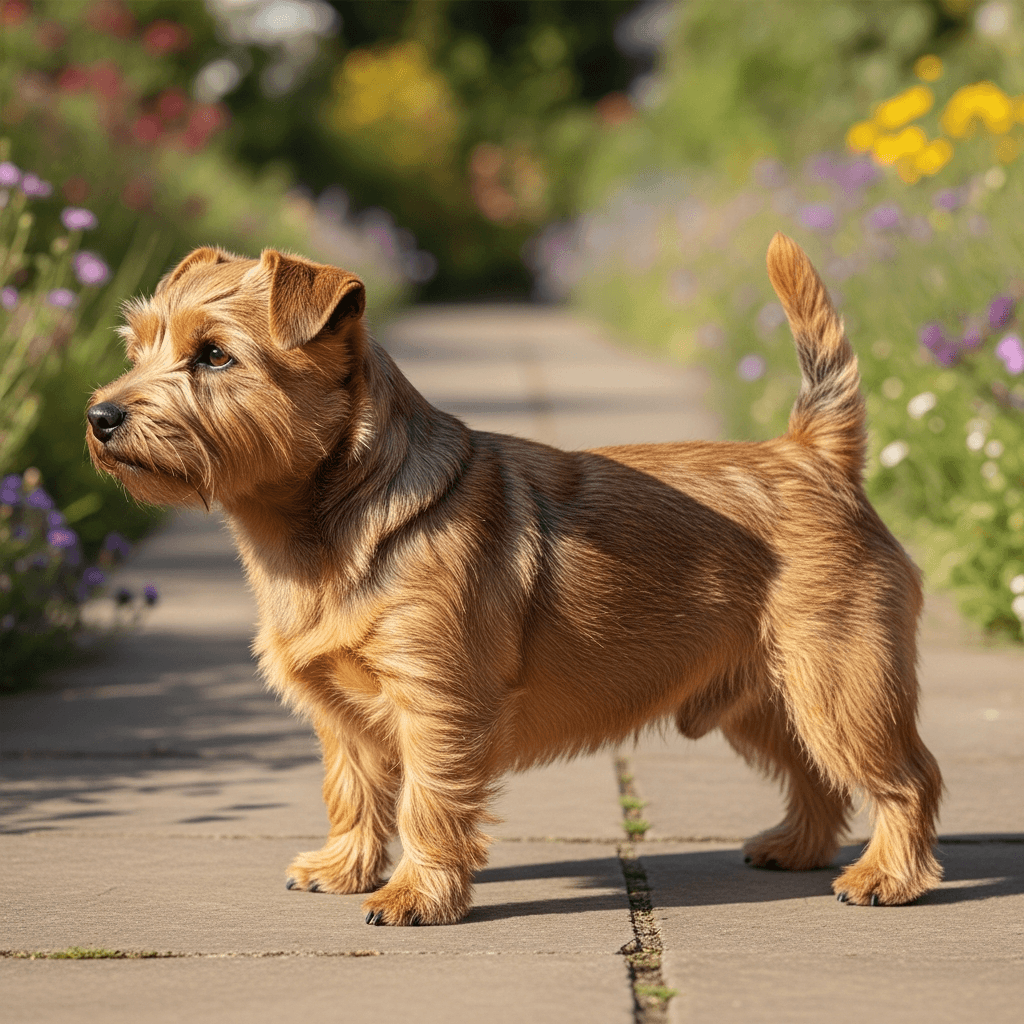
Norfolk Terrier
FCI Group
3• FCI 272
Size
Small
Origin Country
GB
Height
25-25 cm
Weight
5-6 kg
Lifespan
12-15 years
Temperament
Overview
The Norfolk Terrier is one of the smallest terrier breeds, with roots in the eastern counties of England. This small but sturdy dog has won the hearts of dog lovers around the world thanks to its fearless character and remarkable versatility.
Despite its modest size, the Norfolk Terrier is a dog with an exceptionally compact and strong build, making it an ideal companion for both family life and field work. In the 19th century, this breed was primarily used for hunting foxes, badgers, and for controlling rodents on farms. Today, the Norfolk Terrier is valued not only for its historical hunting skills but also for its warm relationships with family and wonderful temperament.
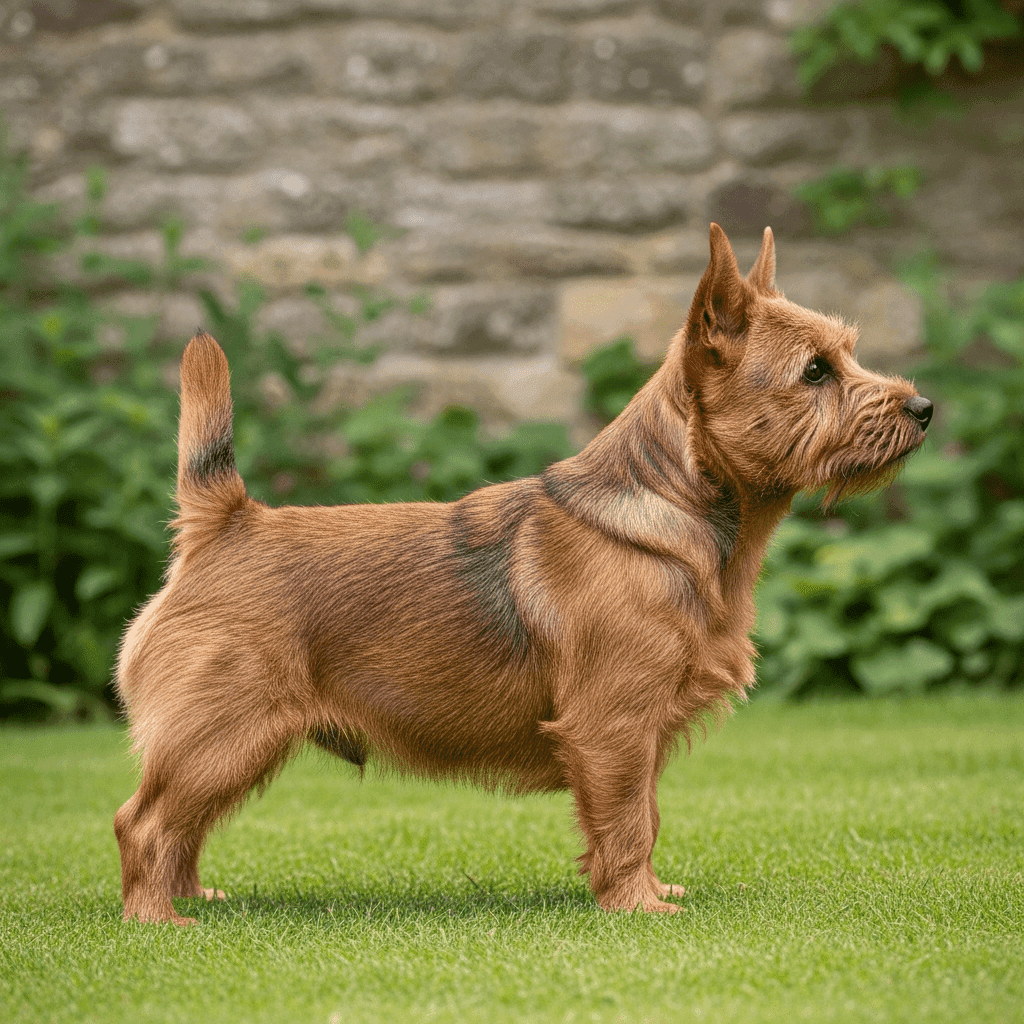
Characteristic features of the Norfolk Terrier include a head with a broad skull and a distinct stop, as well as an exceptionally intelligent expression in its eyes. Its oval, deeply set eyes exude alertness and sharpness of mind. The most recognizable feature of the breed is its V-shaped ears that fold forward, giving the dog an irresistible charm and gentle expression. The Norfolk Terrier's hard, wiry coat provides natural protection against changing weather conditions, which was extremely important during field work.
The coat colors of the Norfolk Terrier come in beautiful shades of red, wheaten, and also in an elegant combination of black and tan. The height at the withers is about 25 cm, making it one of the smallest representatives of the terrier group. However, don't be fooled by its small size – the Norfolk Terrier is a true bundle of energy and joy of life, perfectly suited for active families.
The Norfolk Terrier is a dog that feels just as comfortable in an apartment as it does on outdoor adventures, where it can expend its unrestrained energy. Its history as a working dog, endurance, intelligence, and exceptional character make it a breed that is valued and admired worldwide. The Norfolk Terrier is an excellent companion for both children and adults, always ready for play, adventure, and active time spent together.
In the following sections of this guide, you will discover all aspects of life with a Norfolk Terrier – from health and grooming to exercise and training requirements, as well as proper nutrition and the fascinating history of the breed. We invite you to read on to learn more about this iconic little terrier and find out why it is so special and loved by owners around the world.
The Norfolk Terrier is a small dog with a strong, compact, and very proportional build. Its ideal height at the withers is about 25 cm, making it one of the smallest breeds in the terrier group. Despite its small size, the Norfolk Terrier is characterized by exceptional strength and physical condition.
A distinguishing feature of the breed is its short, strong back and compact, muscular body, which provides the dog with great agility, endurance, and mobility. This build was crucial in times when the Norfolk Terrier worked as a hunting dog, navigating difficult terrain and chasing agile animals.
The head of the Norfolk Terrier is broad with a clearly defined stop and a strong, wedge-shaped muzzle. The muzzle is strong, well-formed, and proportional to the skull. The eyes are oval, deeply set, and have a beautiful dark brown or black color, giving the dog an expression full of intelligence, alertness, and friendliness.
The most characteristic feature of the Norfolk Terrier is its V-shaped ears, slightly rounded at the tips, which fall forward, lying close to the cheeks. It is the shape of the ears that distinguishes the Norfolk Terrier from the Norwich Terrier, which has upright ears. The drooping ears give the Norfolk Terrier a charming, gentle expression.
The coat of the Norfolk Terrier is hard, wiry, and dense, closely adhering to the body. This coat structure provides excellent protection against rain, wind, and cold, which was extremely important when working in the variable weather conditions of eastern England. Beneath the tough outer coat lies a dense, soft undercoat.
The coloring of the Norfolk Terrier comes in several beautiful varieties:
- Shades of red (from light to dark red)
- Wheaten (light, golden shade)
- Black and tan (black with red markings)
- Grizzle and tan (a mix of gray and red)
The limbs of the Norfolk Terrier are well-muscled, straight, and parallel, providing a solid, confident gait and strong drive during movement. The paws are rounded, compact, with thick pads, perfectly adapted for moving over various terrains.
The tail of the Norfolk Terrier is traditionally docked to medium length (though docking is now banned in many countries), carried upright or slightly curved. When in motion, the tail is raised, emphasizing the confident and energetic character of the breed.
The appearance of the Norfolk Terrier is not only charming and full of character but also functional. It is a versatile dog whose build perfectly reflects its original purpose as a working dog and its current role as a beloved family companion.
The Norfolk Terrier is a dog with a cheerful, sociable, and extremely lively temperament. Its character makes it an excellent companion for both adults and children. Despite its small size, the Norfolk Terrier displays exceptional courage and confidence, which is typical of all terriers.
This breed is characterized by sharp intelligence and a great curiosity about the world, often leading to the discovery of new places, sounds, and scents. The Norfolk Terrier loves to be part of family life and actively participates in all household events. It is a dog that cannot stand loneliness and feels best in the company of its beloved people.
Norfolk Terriers are extremely loyal to their owners and quickly form strong emotional bonds with their family. Their sociable nature means they usually get along well with other dogs and pets, especially if they have been properly socialized from a young age.
However, it is important to remember a few key aspects of the Norfolk Terrier's behavior:
- Hunting instinct – as a hunting dog, the Norfolk Terrier may exhibit a strong instinct to chase smaller animals, such as cats, rabbits, or rodents. This requires proper training and supervision.
- Need for closeness – the Norfolk Terrier does not like to be left alone for long hours. Prolonged loneliness can lead to separation anxiety and destructive behaviors.
- Vocalization – like most terriers, the Norfolk can be quite loud and bark at unfamiliar sounds or people, making it a good watchdog.
- Energy and need for stimulation – this is a high-energy breed that requires regular physical and mental stimulation. Boredom can lead to undesirable behaviors such as digging, chewing, or excessive barking.
The Norfolk Terrier is also a dog that is confident but not aggressive. The breed standard emphasizes that while the Norfolk is fearless, it is not a dog that starts fights. This is an important trait that makes it more sociable than some other terrier breeds.
In the right conditions, with proper socialization, regular exercise, and attention from its owner, the Norfolk Terrier can be a wonderful, joyful companion that brings a tremendous amount of energy, humor, and love to its family's life. It is a dog that, despite its small size, has a big heart and an indomitable spirit.
The Norfolk Terrier is generally a healthy and resilient breed of dog that, with proper care, can enjoy a long and active life. The average lifespan of a Norfolk Terrier is 12-15 years, which is typical for small breeds. However, like any breed, the Norfolk Terrier is predisposed to certain health issues that owners should be aware of.
The most common health problems in the Norfolk Terrier breed:
Hip dysplasia – Although it is more common in larger breeds, dysplasia can also affect the Norfolk Terrier. This condition occurs when the hip joint does not develop properly, which can lead to pain, stiffness, and limited mobility. Early detection through X-rays can help manage this condition.
Eye problems – Norfolk Terriers may be prone to various eye diseases, including:
- Cataracts – clouding of the eye's lens that can lead to vision loss
- Progressive retinal atrophy (PRA) – a hereditary condition leading to blindness
- Retinal dysplasia – abnormal development of the retina
Regular eye examinations can help in the early detection of these problems.
Heart diseases – Norfolk Terriers may be susceptible to certain heart conditions, especially in older age. Regular veterinary check-ups, including heart auscultation, are crucial for early detection of cardiac issues.
Skin and allergic problems – Some Norfolk Terriers may suffer from food or environmental allergies, which manifest as itchy skin, rashes, or skin infections. A proper diet and hygiene can help manage these issues.
Dental problems – Small dog breeds, including the Norfolk Terrier, are more prone to gum disease and dental issues. Regular tooth brushing and dental check-ups are extremely important.
Prevention and healthcare:
- Regular veterinary visits – at least once a year for adult dogs, more frequently for puppies and seniors
- Up-to-date vaccinations – protection against infectious diseases
- Parasite prevention – regular deworming and protection against ticks and fleas
- Proper diet – balanced nutrition tailored to age and activity level
- Maintaining a healthy weight – obesity can lead to many health problems
- Regular physical activity – helps maintain physical and mental health
- Genetic testing – responsible breeders conduct genetic tests on parents before breeding
It is important to choose puppies from responsible breeders who conduct health screenings on their breeding dogs and can provide health documentation for the puppy's parents. With proper veterinary care, a balanced diet, and regular activity, a Norfolk Terrier can enjoy a long, healthy, and happy life alongside its family.
The Norfolk Terrier has a characteristic hard and wiry coat that requires regular and specific grooming to maintain its healthy appearance and protective properties. Proper coat care is crucial not only for aesthetics but also for the health and comfort of the dog.
Brushing:
Regular brushing is essential for keeping the Norfolk Terrier's coat in good condition. It is recommended to brush at least 2-3 times a week, using a wire brush or comb designed for wiry coats. Brushing helps:
- Remove dead hair and loose undercoat
- Prevent matting and tangling of the coat
- Distribute natural skin oils
- Prevent skin problems
- Maintain the characteristic texture of the coat
Trimming (stripping):
The Norfolk Terrier requires a special procedure called trimming or stripping, which involves manually pulling out dead hair. This process is crucial for maintaining the hard, wiry texture of the coat characteristic of the breed. Trimming should be done 2-3 times a year, preferably by an experienced groomer familiar with the specifics of terrier breeds.
Important: Clipping with a machine is not recommended for the Norfolk Terrier, as it alters the coat's structure, making it soft and losing its natural protective properties.
Trimming and shaping:
Between trimmings, it may be necessary to trim the coat in specific areas:
- Around the ears – to maintain cleanliness and prevent infections
- Between the paw pads – for comfort while walking
- Around the eyes – to ensure good visibility for the dog
- Around the anus – for hygiene reasons
Bathing:
The Norfolk Terrier does not require frequent baths – usually once every 4-6 weeks or as needed (e.g., after playing in the mud). Too frequent bathing can weaken the coat's natural protection and cause skin problems. Mild shampoos designed for dogs with wiry coats should be used.
Ear care:
The drooping ears of the Norfolk Terrier require regular checking and cleaning, as they may be more prone to infections. Check the ears once a week, clean them with a gentle dog ear cleaner, and remove excess hair from the ear canals.
Dental care:
Regular tooth brushing (preferably daily or at least 2-3 times a week) is crucial for the oral health of the Norfolk Terrier. Small breeds are particularly prone to dental issues, so prevention is extremely important.
Nail trimming:
Nails should be trimmed every 3-4 weeks or when they become too long and can be heard clicking on the floor. Long nails can cause discomfort, walking problems, and paw deformities.
Grooming during shedding:
The Norfolk Terrier does not shed as heavily as breeds with soft coats, but it periodically loses dead hair. During heavy shedding periods (usually in spring and autumn), more frequent brushing may be necessary – even daily – to remove loose hair.
Taking care of the coat and overall grooming of the Norfolk Terrier requires some time commitment, but it is crucial for their health, comfort, and maintaining the breed's characteristic appearance. If the owner does not feel confident in self-grooming, regular visits to a professional groomer (every 2-3 months) are an excellent solution.
The Norfolk Terrier is a breed full of energy and vigor that requires regular physical activity to maintain its physical and mental health. Despite its small size, the Norfolk Terrier has significant exercise needs and loves to spend active time with its family.
Minimum exercise requirements:
The Norfolk Terrier needs at least 60 minutes of physical activity per day, which can be divided into several sessions:
- Two walks a day (20-30 minutes each)
- Play sessions in the garden or park
- Time for free running (in a safe, enclosed area)
- Interactive play with the owner
Types of activities suitable for the Norfolk Terrier:
Walks and hikes – The Norfolk Terrier loves to explore the world. Regular walks on different routes provide both physical exercise and mental stimulation through new scents and sights. With its endurance, the Norfolk can accompany owners on longer hikes.
Dog sports – The Norfolk Terrier excels in various dog sports:
- Agility – an obstacle course ideal for agile and energetic dogs
- Flyball – a fast-paced team game combining running and retrieving
- Obedience – obedience competitions that strengthen the bond with the owner
- Earthdog trials – competitions simulating hunting in burrows, ideal for terriers
- Rally obedience – a sport combining obedience with elements of an obstacle course
Play with other dogs – The Norfolk Terrier is usually sociable with other dogs and loves to play together. Regular visits to the dog park or organized meetups with other dogs are excellent forms of physical activity and socialization.
Fetching games – Although not a typical retrieving dog, many Norfolk Terriers enjoy running after balls, frisbees, or other toys.
Mental games – The Norfolk Terrier is an intelligent breed that needs mental stimulation as much as physical. Interactive toys, scent mats, and hiding treats are excellent ways to tire the dog's mind.
Important notes about exercise:
Hunting instinct – The Norfolk Terrier has a strong hunting instinct and may spontaneously chase small animals such as squirrels, rabbits, or cats. For this reason, it should be kept on a leash in areas where it may encounter small animals or where there is no safe fencing.
Digging – As a terrier, the Norfolk has a natural tendency to dig. Providing it with adequate exercise and play can help reduce this behavior in the garden.
Age adjustment – Puppies and young dogs need shorter but more frequent exercise sessions. Older dogs may require less intense activity but still need regular movement.
Weather conditions – With its wiry coat, the Norfolk Terrier does well in various weather conditions, but in extreme heat, exercise intensity should be reduced, and access to water and shade should be provided.
Consequences of insufficient exercise:
Insufficient physical activity can lead to:
- Overweight and obesity
- Behavioral problems (destruction, excessive barking)
- Frustration and anxiety
- Excessive digging
- Training difficulties
Regular exercise not only helps maintain a healthy weight and physical condition for the Norfolk Terrier but also contributes to its mental well-being, reduces stress, and strengthens the bond between dog and owner. A Norfolk Terrier that receives the right amount of activity is a happy, balanced, and obedient companion.
The Norfolk Terrier is a smart and quick-witted breed that quickly learns new commands and tasks. Its natural curiosity and willingness to cooperate make it enjoyable to train, although sometimes its terrier independence can pose a challenge for the owner.
Character traits affecting training:
- Intelligence – quickly understands what is expected of it
- Stubbornness – can be independent and sometimes prefers to do things its own way
- Sensitivity – responds well to positive reinforcement, poorly to harsh methods
- Energy – needs active training sessions that combine learning with play
- Hunting instinct – can be distracted by scents and small animals
Early socialization and puppy training:
The key to a well-behaved Norfolk Terrier is early socialization, which should begin in puppyhood. Between 3 to 14 weeks of age, a puppy is particularly open to new experiences, making this time ideal for:
- Meeting different people (children, adults, seniors)
- Interacting with other dogs and animals
- Getting accustomed to various sounds (cars, vacuum cleaners, thunderstorms)
- Exploring different surfaces and environments
- Positively acclimating to grooming and veterinary visits
Training methods:
The Norfolk Terrier responds best to positive reinforcement methods. Punishments and harsh approaches can lead to stubbornness or fear, complicating the learning process. Recommended techniques include:
- Rewarding with treats – small, tasty snacks as motivation
- Verbal praise – enthusiastic words of recognition
- Play – using favorite toys as rewards
- Clicker training – precisely marking desired behaviors
- Short, dynamic sessions – 5-10 minutes several times a day
Basic commands to teach:
Every Norfolk Terrier should master basic obedience commands:
- Sit – a basic control command
- Lie down – useful in various situations
- Stay – important for the dog's safety
- Come / Recall – CRITICALLY IMPORTANT due to the hunting instinct
- Leave it – prevents eating dangerous things
- Heel – walking without pulling on the leash
Dog schools and group classes:
Enrolling a Norfolk Terrier in dog school classes has many benefits:
- Professional guidance from experienced trainers
- Socialization with other dogs in a controlled environment
- Learning to focus despite distractions
- Building a bond between the dog and owner
- Addressing behavioral issues
Challenges in training a Norfolk Terrier:
Stubbornness and independence – The Norfolk Terrier, like most terriers, can be stubborn. This requires the owner to have patience and consistency. It is important to be firm but fair and not to give up when the dog tests boundaries.
Selective obedience – Norfolk may sometimes perform commands perfectly at home but ignore them outside, especially when it catches an interesting scent. Regular practice of commands in various locations and situations is crucial.
Recall – Due to its strong hunting instinct, teaching a reliable recall is ABSOLUTELY CRUCIAL. It is worth spending extra time on this command, practicing it in different places and with increasing levels of distraction.
Barking – The Norfolk Terrier can be loud. Early training of the command Quiet or Enough can help control excessive barking.
Advanced training:
After mastering the basics, the Norfolk Terrier can continue learning in:
- Advanced obedience
- Agility and other dog sports
- Earthdog trials (competitions for terriers)
- Tricks and stunts – Norfolk loves to learn fun tricks
- Nose work – scent detection
Consistency and patience:
The most important rule in training a Norfolk Terrier is consistency. All family members should use the same rules and commands. The dog must know what is expected of it and what the boundaries are.
A Norfolk Terrier that receives proper training, socialization, and mental stimulation becomes a well-behaved, obedient, and happy companion that is a joy in any situation – whether at home, during walks, or in the company of other people and animals.
Proper nutrition for the Norfolk Terrier is a key element in maintaining its health, energy, and longevity. A well-balanced diet should be tailored to the dog's age, weight, activity level, and any special health needs.
Nutrition needs of the Norfolk Terrier:
The Norfolk Terrier, being a small, active breed, has a relatively high energy requirement per kilogram of body weight. However, due to its small size, the total amount of food is not large – usually between 150 to 300 grams of dry food per day for an adult dog, depending on its weight and activity level.
Nutrients:
- Protein (25-30%) – essential for maintaining muscle mass and energy; best sources include meat (chicken, beef, lamb, fish)
- Fats (12-18%) – a source of energy and essential omega-3 and omega-6 fatty acids for healthy skin and coat
- Carbohydrates – a source of energy; choose foods with whole grains or grain-free options (potatoes, sweet potatoes)
- Vitamins and minerals – support immune system function, vision, bones, and overall health
- Fiber – aids digestion and gut health
Choosing food:
High-quality food specifically formulated for small adult breeds will be the best choice for the Norfolk Terrier. When selecting food, pay attention to:
- Ingredients – meat as the first ingredient
- No artificial colors, preservatives, or fillers
- Appropriate kibble size – for small jaws
- Manufacturer's reputation and veterinarian reviews
Types of food:
- Dry food (kibble) – convenient, helps clean teeth, long shelf life
- Wet food (canned) – more palatable, good for dogs that drink little water, more expensive
- BARF diet (raw meat and bones) – requires knowledge and careful preparation to ensure complete balance
- Homemade cooked food – requires consultation with a veterinarian or canine dietitian to be complete
Feeding by age:
Puppies (2-12 months):
- Special food for small breed puppies
- Higher caloric needs (supporting growth)
- 3-4 meals a day for young puppies
- Gradual transition to 2 meals around 6-8 months of age
Adult dogs (1-7 years):
- Food for small adult breeds
- 2 meals a day (morning and evening)
- Adjust portions according to activity level
Seniors (7+ years):
- Food for older small breed dogs
- Lower caloric content (less activity)
- Additional joint support (glucosamine, chondroitin)
- 2 meals a day
Weight control and obesity prevention:
The Norfolk Terrier tends to gain weight, especially if overfed or not receiving enough exercise. Obesity can lead to serious health issues such as diabetes, heart disease, and joint problems.
How to prevent obesity:
- Measure food portions according to the manufacturer's recommendations (tailored to the dog's weight)
- Limit treats to no more than 10% of daily caloric intake
- Avoid feeding from the table (human food is too caloric and can be harmful)
- Regularly monitor the dog's weight and body condition
- Provide adequate exercise
Water:
Fresh, clean water should be available to the Norfolk Terrier at all times. Regularly change the water in the bowl (at least once a day) and keep the bowl in an easily accessible place. Small dogs can be prone to dehydration, especially on hot days or after intense activity.
Treats and snacks:
Treats can be used as rewards during training, but they should make up no more than 10% of the daily caloric requirement. Choose healthy options:
- Small pieces of cooked meat (chicken, beef)
- Carrots, apple (without seeds), blueberries
- Special dog treats (low-calorie)
- Dental chews for dental health
PROHIBITED products for dogs:
- Chocolate (toxic!)
- Onion and garlic (toxic!)
- Grapes and raisins (toxic!)
- Xylitol / sweeteners (toxic!)
- Avocado, macadamia nuts, alcohol
- Cooked bones (can splinter)
Changing food:
If you need to change the Norfolk Terrier's food, do so gradually over 7-10 days, mixing the new food with the old in increasing proportions. A sudden change can cause gastrointestinal issues.
Consultation with a veterinarian:
It is recommended to consult with a veterinarian to determine the best diet for a specific Norfolk Terrier, especially if the dog has special health needs, food allergies, or weight issues. The veterinarian can help select the appropriate food and determine the right portions.
Proper, balanced nutrition combined with regular physical activity will help keep the Norfolk Terrier in excellent condition, health, and energy for many years, ensuring a long and happy life.
Characteristic Traits
Pros
- Friendly and sociable character
- Excellent companion for families with children
- Intelligent and easy to train
- Healthy and resilient breed
- Low tendency to excessive shedding.
Cons
- Requires a lot of daily movement and activity
- Can be stubborn during training
- Needs regular coat care and trimming
- Strong hunting instinct
- Can be loud and barky.
Behavioral Ratings
Breed History
The history of the Norfolk Terrier is a fascinating tale of a small but fearless dog whose roots trace back to the eastern counties of England. This breed has a long tradition as a working dog, and its development is closely linked to the history of the Norwich Terrier, from which the Norfolk Terrier was officially separated only in the 20th century.
Early beginnings (19th century):
In the 19th century, in the eastern England, particularly in the counties of Norfolk and Suffolk, various small terriers were bred that served as versatile working dogs on farms. Their main task was to combat pests such as rats, mice, and hunting foxes and badgers. These small but brave dogs had to be strong and courageous enough to face wild animals in their burrows.
At that time, there was no clear classification of breeds – they were simply local small red-brown terriers or English terriers, known from the areas around Norwich and Norfolk. They were crossed with various other terrier breeds to achieve desired traits.
Influence of other breeds:
Various breeds contributed to the shaping of the Norwich and Norfolk Terrier:
- Glen of Imaal Terrier – an Irish terrier bringing strength and endurance
- Cairn Terrier – a Scottish terrier, particularly its red-orange lines
- Dandie Dinmont Terrier – contributing to the distinctive build
- Border Terrier – influencing temperament and hunting skills
- Irish Terrier – adding red coloring and courage
From these mixtures emerged reddish, small terriers with harsh coats that became the foundation of the current Norwich and Norfolk Terrier.
Breed development (late 19th - early 20th century):
By the end of the 19th century, these small terriers began to gain popularity not only as working dogs but also as companions for students at the University of Cambridge. They were then referred to as Trumpington Terrier or Cantab Terrier. Students appreciated these dogs for their small size, which allowed them to live in dormitories, and for their lively, sociable disposition.
A key figure in the breed's development was Frank Jones, an Irish breeder who imported and bred these small terriers from 1880 to 1900. For some time, the breed was known as Jones Terrier.
Official recognition (1932):
In 1932, the Kennel Club in the United Kingdom officially recognized the breed as Norwich Terrier. At that time, the breed included dogs with both prick ears and drop ears. Both varieties could come from the same litter and were crossed with each other.
Separation of breeds (1964):
For decades, breeders debated the separation of the two ear types into distinct breeds. Ultimately, in 1964, the Kennel Club in the United Kingdom officially divided the breed:
- Norwich Terrier – the variety with prick ears
- Norfolk Terrier – the variety with drop ears
The name Norfolk Terrier comes from the county of Norfolk in eastern England, where the breed has its roots. The separation allowed breeders to focus on preserving the distinctive traits of each variety.
Spread around the world:
The Norfolk Terrier quickly gained popularity beyond the United Kingdom. In the United States, the American Kennel Club (AKC) initially recognized the breed as Norwich Terrier in 1936, and the split into two breeds occurred in 1979.
Today, the Norfolk Terrier is valued worldwide as a great companion dog that has retained many traits of its working ancestors – courage, perseverance, intelligence, and an indomitable spirit.
Modern role:
Although the Norfolk Terrier is rarely used as a hunting dog anymore, its hunting instincts remain strong. Many Norfolk Terriers participate in earthdog trials – competitions simulating hunting in burrows, allowing them to utilize their natural skills.
The breed standard of the FCI (Fédération Cynologique Internationale) includes a distinctive mention of the acceptability of honorary scars from honest wear – a testament to the brave history of the breed as a working dog that did not shy away from confrontations with wild opponents underground.
Today, the Norfolk Terrier is primarily a beloved family companion that combines the heritage of a brave hunting dog with the warmth, loyalty, and joy of a modern house pet. Its history as a versatile worker, student mascot, and family friend makes it one of the most versatile and charming terrier breeds in the world.