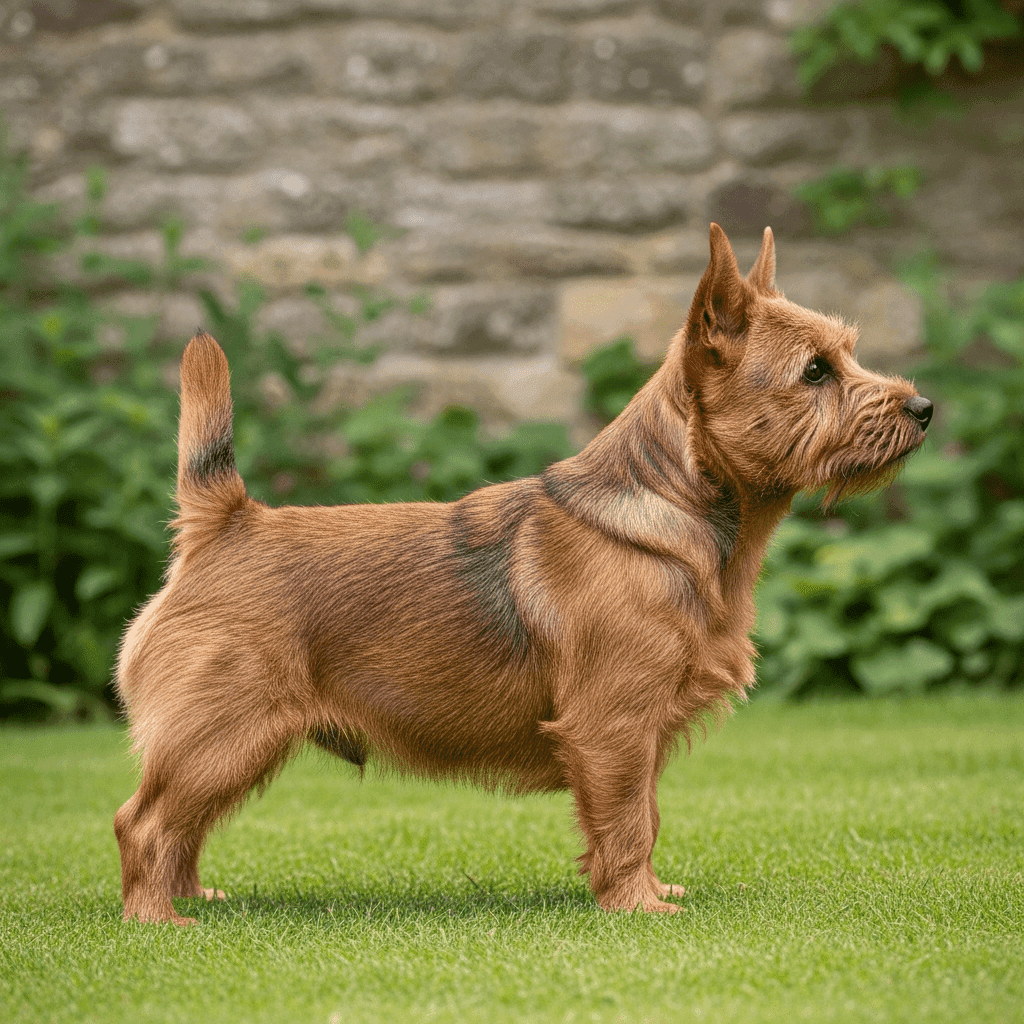
Norwich Terrier
FCI Group
3• FCI 72
Size
Small
Origin Country
GB
Height
25-26 cm
Weight
5-5.5 kg
Lifespan
12-14 years
Temperament
Overview
Norwich Terrier is one of the smallest terrier breeds, which, despite its small size, exudes energy, courage, and an indomitable character. Originating from the United Kingdom, this breed is characterized by its compact and strong build, short limbs, and solid bone structure, making it an ideal companion both at home and during outdoor activities. The history of the Norwich Terrier dates back to the mid-19th century when these fearless dogs were bred in Norfolk County for hunting foxes, badgers, and for controlling rats on farms. The ancestors of this breed included Glen of Imaal terriers, red Cairn Terriers, and Dandie Dinmont Terriers, from which the current form of the Norwich and Norfolk Terrier emerged.
The Norwich Terrier is a dog with a friendly and cheerful disposition, who loves the company of people and excels as a family companion. Despite its small size, this breed is characterized by boundless courage and determination – the Norwich Terrier never backs down from a challenge, although it is not aggressive and does not provoke fights. This social and intelligent breed thrives in families with children, as long as it is provided with appropriate supervision during play. A strong hunting instinct means that the Norwich Terrier may chase smaller animals, so proper socialization from a young age is extremely important.
Thanks to its intelligence and willingness to cooperate, Norwich Terriers are relatively easy to train; however, they require a consistent approach and training based on positive reinforcement. Their independent character and strong personality can sometimes pose a challenge, but with the right owner involvement, they become obedient and wonderful companions. Owners should also ensure a balanced diet to prevent obesity, which is one of the most common health issues in this breed. Regular veterinary visits and systematic check-ups are crucial for maintaining the Norwich Terrier's health in excellent condition. These dogs live on average from 12 to 14 years, and a proper diet, regular physical activity, and health care allow them to enjoy a long and happy life. The Norwich Terrier is not just a dog – it is a true friend full of life and ready for any adventure!
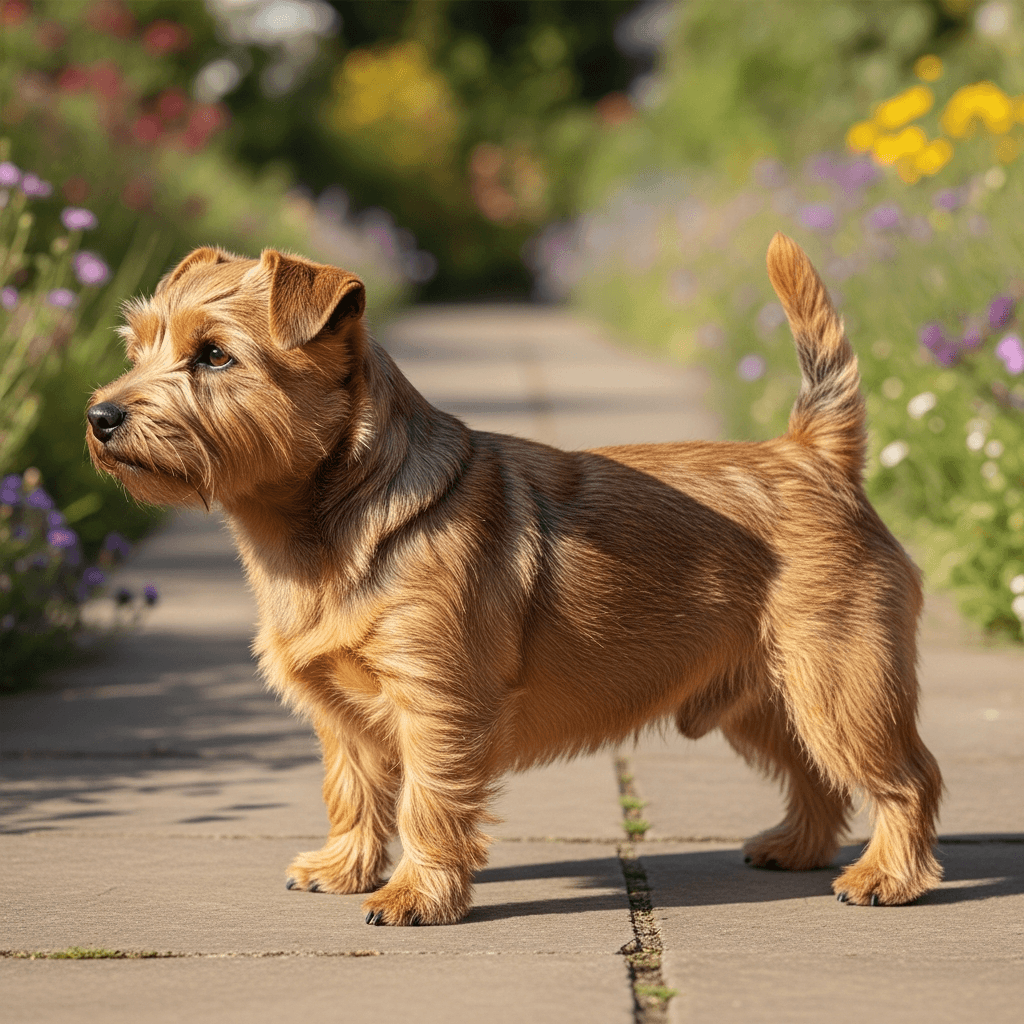
The Norwich Terrier is one of the smallest terriers, with a compact, strong, and harmonious body structure. The ideal height at the withers is about 25 cm, making it a compact yet extremely resilient dog. The breed is characterized by hard, wiry fur that lies close to the body and provides protection against adverse weather conditions. The coat comes in various shades, including all shades of red, wheaten colors, and black with tan. On the neck and shoulders, the fur forms a distinctive ruff, which adds to the dog's expressiveness and character.
A distinctive feature of the Norwich Terrier is its medium-sized, erect ears with pointed tips, which give it a vigilant and energetic expression. The eyes are oval, medium-sized, dark brown or black, full of expression and intelligence. The muzzle is strong, wedge-shaped, with strong jaws and an excellent, regular scissor bite. The body is compact, with a strong, straight back and a deep chest, indicating good condition and endurance. The tail is of medium length, usually carried high, which further emphasizes the confidence and energy of this breed. The limbs are short but very strong and muscular, with good bone structure, providing the Norwich Terrier with agility and endurance during activities. The paws are round, compact, with thick pads, ideal for moving over varied terrain.
The Norwich Terrier is a dog with a friendly, cheerful, and sociable disposition, who loves spending time with people and is deeply devoted to its family. Despite its small size, this breed exudes great confidence and boundless courage – the Norwich Terrier never backs down from a challenge and is completely fearless, although it is not an aggressive or fight-provoking dog. Its temperament makes it an excellent companion for families with children, as long as both parties are properly socialized and supervised during playtime.
Norwich Terriers have a high hunting instinct, which means they may chase after small animals such as squirrels, rabbits, or rodents. Therefore, it is important that they are well trained in basic commands and have proper socialization from a young age. These dogs are intelligent, curious about the world, and eager to learn, but their strong and independent character requires a consistent approach and training based on positive methods. The Norwich Terrier is a joyful, active, and vigorous dog that brings a lot of happiness to its owners. Its loyalty and attachment to the family make it not just a companion but a true member of the household.
The Norwich Terrier is a breed that generally enjoys good health and a long life, but like any other, it can be prone to certain genetic and age-related conditions. The average lifespan of a Norwich Terrier ranges from 12 to 14 years, which is typical for small dog breeds. The most common health issues that Norwich Terriers may suffer from include heart diseases, particularly mitral valve disease, which often occurs in older dogs. Other typical conditions include patellar luxation, which can lead to limping and discomfort while moving, as well as eye diseases such as cataracts or glaucoma, which can affect the dog's vision in older age.
Owners of Norwich Terriers should be vigilant for any signs of health problems, such as changes in appetite, unusual behavior, difficulty moving, coughing, shortness of breath, or changes in behavior. Early diagnosis is crucial for effective treatment of many conditions. Additionally, Norwich Terriers can be prone to weight gain, especially when they do not get enough exercise or are fed too large portions. Obesity can lead to many serious health issues, including joint diseases, diabetes, and cardiovascular problems. Therefore, it is extremely important to ensure the dog gets an adequate amount of physical activity and to monitor the quantity of meals and treats given.
Regular visits to the veterinarian, vaccinations, deworming, and preventive check-ups are absolutely essential for maintaining the Norwich Terrier's health in excellent condition. Attention to oral hygiene, regular teeth cleaning, and monitoring the condition of the skin and coat also contribute to the overall health of the dog. With proper care, a balanced diet, regular physical activity, and love and attention from the owner, a Norwich Terrier can lead a long, happy, and healthy life, full of joy and energy.
The Norwich Terrier requires regular grooming to maintain its health, appearance, and comfort. Their coat is tough and wiry, which means they do not shed excessively; however, they require systematic brushing to remove dead hair, dirt, and to prevent matting. It is recommended that owners brush their Norwich Terriers at least once a week, using a brush with stiff bristles or a comb designed for wiry coats, which will help keep the coat in excellent condition and ensure a healthy appearance.
A very important aspect of grooming a Norwich Terrier is hand stripping, also known as trimming, which should be done at least twice a year. Hand stripping involves manually pulling out dead hair, allowing for coat replacement and ensuring the healthy growth of new, strong, and resilient hair. Clipping with a machine is not recommended, as it can weaken the coat's structure and change its color and texture. A professional dog groomer or an experienced groomer can help maintain the coat's proper condition.
When it comes to bathing, it should not be too frequent, as it can strip the coat of its natural oils, leading to dryness and loss of shine. Typically, a bath every few months is sufficient unless the dog gets dirty or starts to smell unpleasant. During bathing, it is advisable to use gentle shampoos designed for wiry coats. It is also very important to take care of ear, eye, and dental hygiene. Regular ear cleaning prevents the buildup of wax and infections, while brushing teeth at least a few times a week helps prevent tartar buildup and periodontal disease. Eyes should be gently wiped with a damp cloth to remove any discharge. Additionally, regular nail trimming is important to prevent excessive growth and discomfort while walking. Proper grooming of the Norwich Terrier not only affects its appearance but also its overall well-being, comfort, and health.
The Norwich Terrier is a breed that, despite its small size, requires a large amount of physical activity to maintain health, good condition, and a positive mood. These energetic and active dogs need at least an hour of intense exercise daily, which can include long walks, running, playing in the park, and various forms of outdoor activities. Norwich Terriers are known for their strong hunting instinct, making them great companions for hiking, trekking, or playing fetch. With the right physical effort, these dogs are happy, balanced, and their energy is channeled in a constructive way.
Owners should remember that Norwich Terriers love to explore and investigate their surroundings, so it is important for them to be well-trained in commands, have proper training, and be able to move safely on a leash during walks in public places. Due to their hunting instinct, Norwich Terriers may chase small animals, so they cannot always be allowed to run freely in unsecured areas. Daily physical activity is absolutely crucial because without proper exercise, a Norwich Terrier can become bored and frustrated, which can lead to undesirable behaviors such as destroying furniture, excessive barking, or digging holes in the garden.
Additionally, providing the dog with opportunities for socialization with other animals and people is equally important to develop their social skills, confidence, and to prevent anxiety or aggression towards strangers. Ideal forms of activity for a Norwich Terrier also include sports activities such as agility, tracking, or canine intelligence sports that engage both the body and mind of the dog. Regular exercise not only supports the physical health of the Norwich Terrier but also has a huge positive impact on its mental health, emotional balance, and overall quality of life.
The Norwich Terrier is considered a breed that is relatively easy to train, but it requires a consistent approach, patience, and training based on positive reinforcement. These intelligent and curious dogs are eager to learn new things; however, their strong character and independence can make training require determination and commitment from the owner. Norwich Terriers respond excellently to rewards in the form of treats, toys, praise, and attention, which motivates them to follow commands and reinforce positive behaviors.
The key to effective training of a Norwich Terrier is to start training as early as possible, preferably during the puppy stage when the dog is most open to learning and shaping behaviors. Basic commands such as Sit, Stay, Come, Lie Down, and walking on a loose leash should be taught systematically and with full consistency. It is important to avoid using training methods based on punishment or violence, as they can induce fear, uncertainty, and negative effects on the dog's behavior. Norwich Terriers are sensitive to their owner's tone of voice, so positive reinforcement works much better than harsh methods.
In addition to basic obedience training, Norwich Terriers excel in advanced forms of training, such as agility, tracking, obedience, or dog sports that allow them to utilize their energy, intelligence, and hunting instinct in a positive way. Regular training not only improves obedience and control over the dog but also strengthens the bond between the owner and the pet, provides mental stimulation for the dog, and helps prevent boredom and behavioral problems. It is also important for a Norwich Terrier to have proper socialization from a young age to learn appropriate interactions with other dogs, people, and various environments. With proper training, a Norwich Terrier becomes an obedient, confident, and wonderful companion for life.
The diet of a Norwich Terrier should be balanced, high-quality, and tailored to their age, weight, activity level, and individual health needs. Owners should choose premium foods that contain the appropriate proportions of animal protein, healthy fats, carbohydrates, vitamins, and minerals essential for the proper development and maintenance of the dog's health. Due to the tendency of Norwich Terriers to gain weight, it is extremely important to control portion sizes, avoid overfeeding, and adjust the amount of food to the dog's activity level.
Regularly feeding meals at consistent times of the day, preferably divided into two meals, helps maintain a healthy weight and supports digestion. It is important to avoid snacks between meals and limit treats, which should make up no more than 10% of the dog's daily caloric intake. Owners should also pay attention to the quality of the ingredients in the food – the best foods contain meat as the main ingredient, avoid unnecessary fillers, preservatives, and artificial colors. Fresh water should be available to the dog at all times to ensure proper hydration, which is crucial for the body's proper functioning.
For Norwich Terriers with additional health needs, such as food allergies, digestive issues, kidney or heart diseases, it is advisable to consult a veterinarian to tailor the diet to specific requirements. There are also specialized veterinary diets and supplements that can support joint health, coat, skin, and the overall condition of the dog. Regular monitoring of weight, physical condition, and health status of the Norwich Terrier allows for quick responses to any issues and ensures the dog has a long, healthy, and happy life.
Characteristic Traits
Pros
- Friendly and sociable character
- Easy to train
- Very active and full of energy
- Excellent family companion
- Brave and fearless
- Small size perfectly suited for apartment living.
Cons
- Requires regular and intense physical activity
- Strong hunting instinct may lead to chasing behaviors
- Requires consistent training from puppy age
- Tendency to gain weight
- Requires regular grooming.
Behavioral Ratings
Breed History
The Norwich Terrier has a rich and fascinating history that dates back to the mid-19th century when these brave and fearless dogs were bred in Norfolk County, England. Their ancestors included Glen of Imaal terriers, red Cairn Terriers, Dandie Dinmont Terriers, and other local terrier breeds from the East Anglia region, which were primarily used for hunting rats, foxes, and badgers on farms and in rural households. This breed was valued for its courage, determination, and ability to work both above and below ground, where the Norwich Terrier excelled in battling fierce opponents in their burrows.
In the 19th century, Norwich Terriers were known as typical short-legged terriers with a healthy, compact body structure, which made them invaluable helpers for farmers and hunters. Their breed standard began to develop in the late 19th century, and in 1932, the Norwich Terrier was officially recognized by the Kennel Club in the United Kingdom. Initially, the breed included both varieties with erect ears and those with dropped ears, known as Norwich Terrier with erect ears and Norwich Terrier with dropped ears. In 1964, the breeds were finally separated, and the variety with dropped ears was given a new name – Norfolk Terrier, while the Norwich Terrier retained its name for the variety with erect ears.
Over the years, the Norwich Terrier gained increasing popularity not only as a working dog but also as a friendly family companion. The breed standard emphasizes the acceptability of honorable scars resulting from normal wear and work, reflecting the practical nature of this breed and its authentic history as a working dog. Today, the Norwich Terrier is valued worldwide both as a show dog and as a wonderful companion that combines traditional terrier traits – courage, intelligence, and tenacity – with a friendly and cheerful disposition.