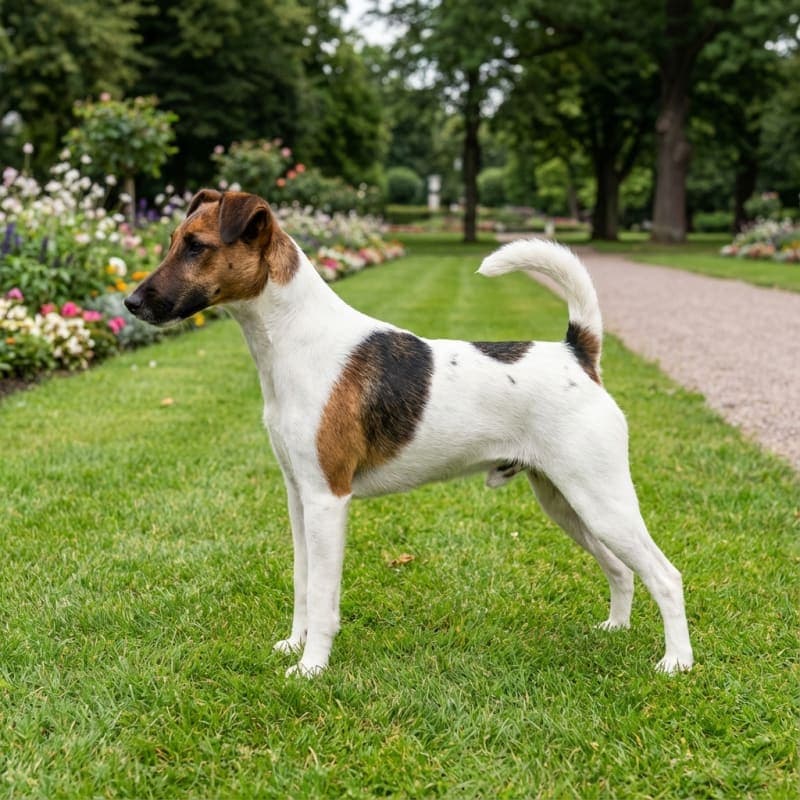
Smooth Fox Terrier
FCI Group
3• FCI 12
Size
Small
Origin Country
GB
Height
N/A
Weight
6.8-8.2 kg
Lifespan
10-14 years
Temperament
Overview
Smooth Fox Terrier is one of the oldest and most classic breeds of British terriers, captivating with its elegance, intelligence, and tireless hunting spirit since the 19th century. It is a dog of small size but huge personality - the quintessence of terrier character in an elegant, athletic silhouette.
The FCI standard describes it as 'active and lively', with bones and strength in a small package, never clumsy or thick. Its stance resembles a well-made, short-backed hunter, covering a lot of ground. This is an ideal description of the Fox Terrier - despite its small size, it exudes strength and athleticism.
The history of the Smooth Fox Terrier dates back to at least the 18th century, when it was an invaluable companion to fox hunters in England. Its task was to flush the fox from its den after the foxhounds led the hunters to the prey's hiding place. This required a dog that was brave, agile, strong, and small enough to fit into a tight den. The first official breed standard was developed in 1876, making it one of the oldest dog breed standards.
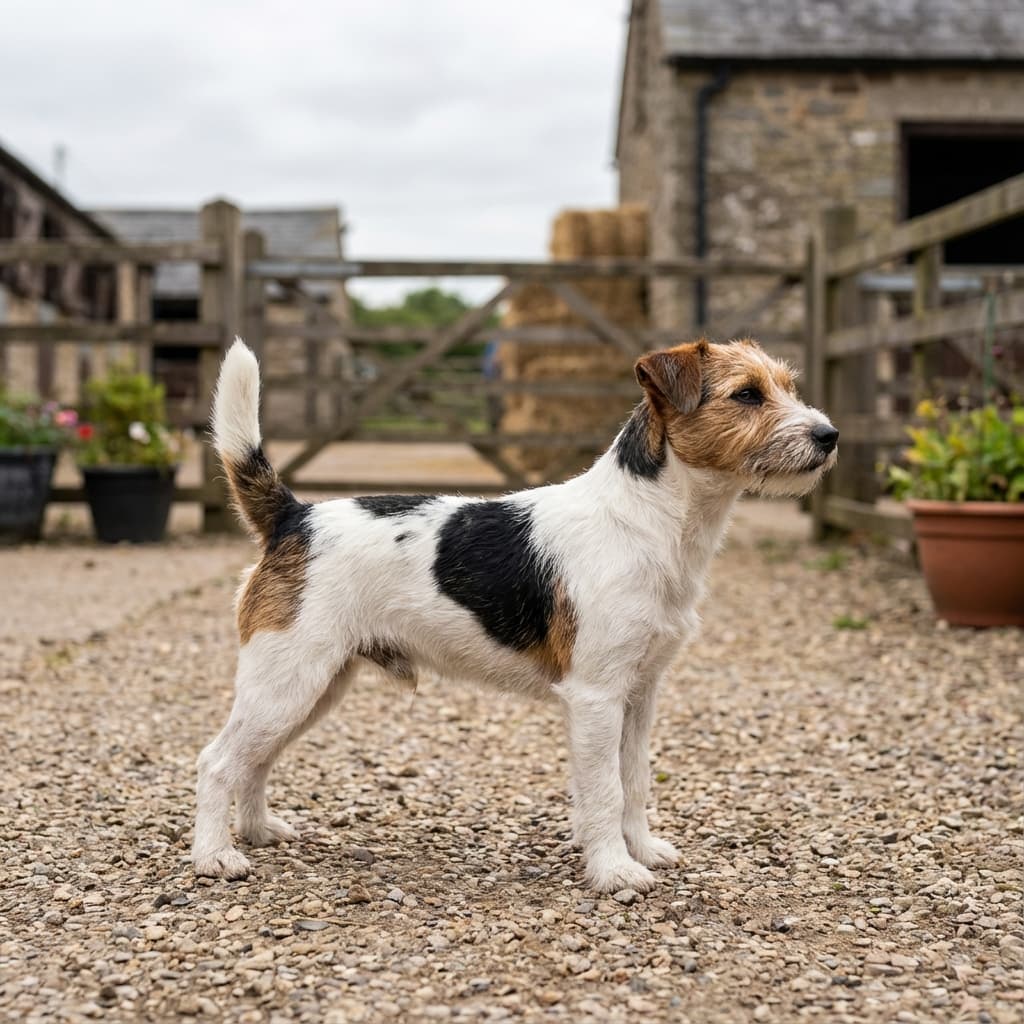
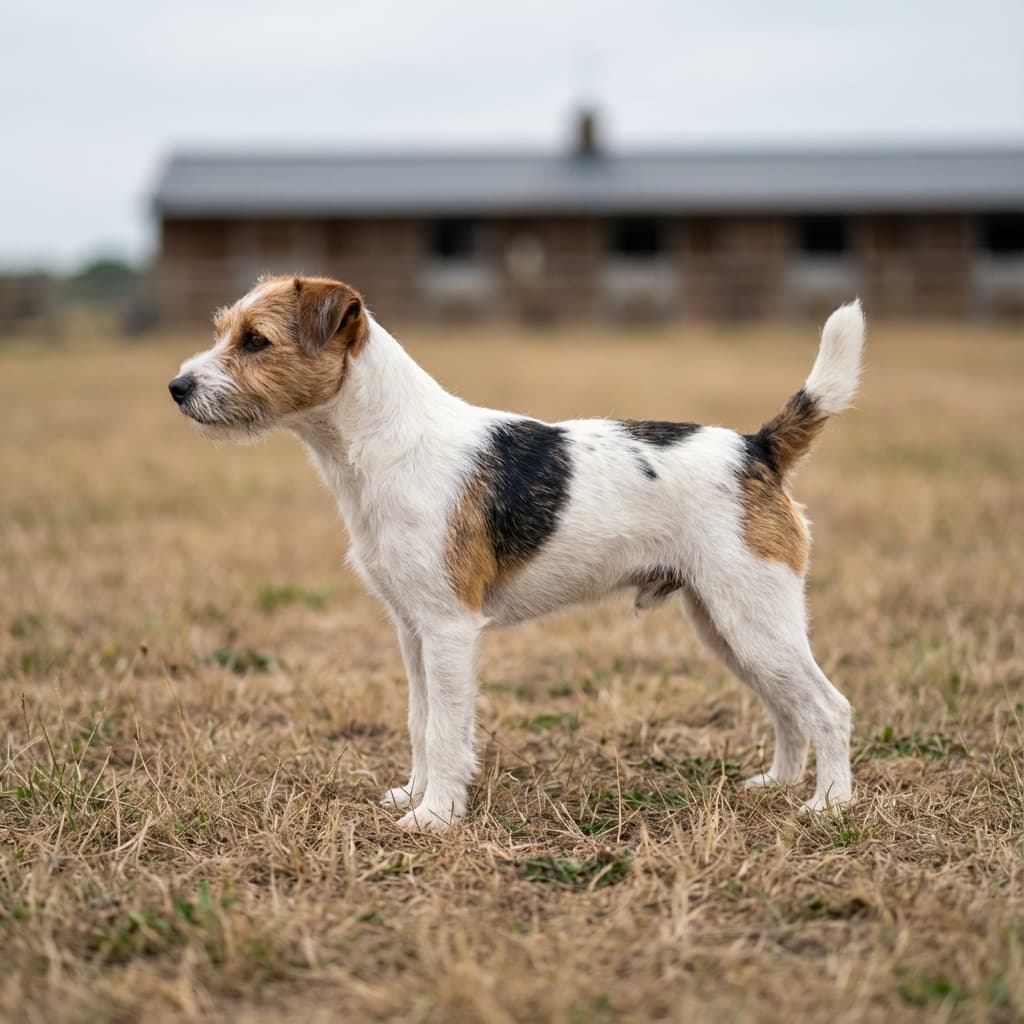
The appearance of the Smooth Fox Terrier is truly distinctive. A flat skull, gradually narrowing towards the eyes, small dark eyes with a keen, intelligent expression, and characteristic V-shaped ears that fold forward towards the cheeks give it a unique expression. Its coat is straight, smooth, hard, and dense - 'smooth coat' in contrast to the Wire Fox Terrier. The predominant white coloration with patches of black, tan, or black and tan makes it easily visible in the field during hunts.
In terms of size, the FCI standard does not specify an exact height, but it does provide optimal weight:
- Males: 7.3-8.2 kg (16-18 pounds)
- Females: 6.8-7.7 kg (15-17 pounds)
Proportions are key - the dog should not be 'leggy' or too short in the legs. Balance and harmony of build are a priority.
The temperament of the Smooth Fox Terrier is its true hallmark. The FCI standard uses wonderful descriptors: 'alert, quick of movement, keen of expression, on tiptoe of expectation'. This perfectly describes the Fox Terrier - a dog always ready for action, full of energy and curiosity about the world. Additionally: 'friendly, forthcoming and fearless' - a combination of traits of an ideal companion and hunter.
The Smooth Fox Terrier requires a experienced, active owner who will appreciate its terrier nature and provide it with the right amount of exercise, mental stimulation, and tasks to perform. This is not a dog for those seeking a calm, lazy companion. But for the right person, the Fox Terrier is a wonderful, loyal friend, ready for any adventure, full of humor, and tireless in play.
Smooth Fox Terrier has a truly distinctive, elegant appearance that combines the functionality of a hunting terrier with show ring elegance. The FCI standard emphasizes that the dog should be 'active and lively, bone and strength in small compass', but never 'cloddy or coarse'.
General Appearance:
- The dog should not be 'leggy' or too short in the legs
- The stance resembles a well-made, short-backed hunter
- Covers a lot of ground - movement is efficient and economical
- Balance and proportions are key - harmony of build
Weight and Size:
The FCI standard provides exact weight ranges:
- Males: 7.3-8.2 kg (16-18 pounds)
- Females: 6.8-7.7 kg (15-17 pounds)
- Height: The standard does not specify an exact height, but typically around 38-39 cm at the withers
Head and Skull:
The head of the Smooth Fox Terrier is one of the most important breed characteristics:
- Skull: Flat, moderately narrow, gradually narrowing towards the eyes
- Stop: Slight but noticeable
- Nose: Black
- Muzzle: Upper and lower jaws strong and muscular, dropping only slightly below the eyes. The length of the muzzle noticeably shorter than the length of the skull from the stop to the occiput
- Teeth: Scissor bite - upper teeth closely overlap the lower, set perpendicular to the jaws
- Cheeks: Indistinct, not filled
Eyes:
- Dark, small, deep-set
- Possibly round in shape
- Not bulging
- Full of fire, life, and intelligence
- Express a keen expression
Ears:
- Small, V-shaped
- Falling forward, close to the cheek
- Not hanging down by the head like a Foxhound
- Ear fold above the level of the skull
- Moderate thickness
Neck:
- Clean, muscular, without loose skin
- Moderate length
- Gradually widening towards the shoulders
Body:
- Back: Short, straight, strong, without signs of weakness
- Loin: Strong, slightly arched
- Chest: Deep but not wide. The lower line of the chest deeper than the elbows. Ribs moderately arched - the last ribs deep
- Underline: Belly slightly tucked up
Tail:
- Set high, carried gaily, but not curled over the back or wrapped
- Well attached, strong
- Traditionally docked in countries where it is legal - leaving about 3/4 of the length
- In countries where docking is prohibited - natural tail, carried high
Front Limbs:
- Shoulders: Long, well laid back, sloping at an angle, with clearly defined scapulae at the withers
- Legs: Straight when viewed from any angle, strong bones. Elbows perpendicular to the body, working freely at the sides
- Wrists: Short, strong, perpendicular
- Paws: Round, compact, small; toes moderately arched; pads strong and hard; toes not turning outward or inward
Hind Limbs:
- Strong and muscular, without cow hocks or turning outward
- Thighs: Long and powerful
- Hock joints: Low set, well angulated
- Hind paws: Compact like the front ones
Coat and Color:
Coat:
- Straight, smooth, hard, dense, and abundant - 'smooth coat'
- The belly and inner thigh should not be bare
- Coat lies close to the body
- No undercoat or very minimal
Color:
- Predominant white (white should predominate)
- Accepted patches: - Black - Tan - Black and tan
- Brindle, red, liver, or blue patches are highly undesirable
- Typically patches on the head (ears, around the eyes) and sometimes on the body
Movement:
- Front and hind legs move straight forward and parallel
- Elbows move perpendicular to the body without interference
- Hock joints do not converge
- Good reach in front and drive from behind
- Movement is free and effortless, covering a lot of ground
Disqualifications and Serious Faults:
- Nose other than black
- Ears 'prick', 'tulip', or 'rose'
- Overshot or undershot
- Brindle, red, liver, or blue markings
Summary:
Smooth Fox Terrier is an elegant, compact dog with a harmonious build, combining strength with agility. The predominant white coat with black or tan patches, characteristic V-shaped ears, small dark eyes full of intelligence, and smooth, shiny coat create a unique image. More important than specific dimensions are proportions and balance - the dog should look like a compact, athletic hunter, ready for action. This is the classic silhouette of the British terrier at its best.
Smooth Fox Terrier has a truly fascinating temperament that combines typical terrier traits with exceptional elegance and intelligence. The FCI standard describes him in wonderful words that perfectly capture his nature.
Basic temperament according to the FCI standard:
- 'Alert': The Fox Terrier is always on guard, nothing escapes his attention
- 'Quick of movement': Lightning-fast reactions, agility of a cat
- 'Keen of expression': An intelligent gaze that reveals an analytical mind
- 'On tiptoe of expectation': Literally - the Fox Terrier often stands on the tips of his paws, ready to act at any moment
- 'Friendly, forthcoming and fearless': An ideal description of his character
Relationship with family:
The Smooth Fox Terrier is a wonderful family dog for the right people:
- Loyal and devoted: He forms a strong bond with his family
- Friendly: Loves human company, is open to guests
- Fun and energetic: Always ready to play, loves being the center of attention
- Great with children: With proper upbringing, he is a wonderful companion for kids - resilient, fun, tolerant. Loves active play
- IMPORTANT: Like every terrier, he does not tolerate being pulled by the tail or ears. Children must learn respect
- Does not like solitude: The Fox Terrier is a social dog and may suffer when left alone for long periods
With other animals:
This is an area that requires special attention:
- With other dogs: The Fox Terrier can be conflictual, especially with same-sex dogs. He has a strong terrier temperament and does not shy away from confrontation, even with much larger dogs. Early socialization is KEY
- Can be dominant: Tries to establish a leadership position in the dog group
- Strong prey drive: The Fox Terrier was bred to hunt foxes, rabbits, and rats. Small animals (cats, rabbits, hamsters, birds) may be seen as prey. Living with a cat is difficult unless the dog has been raised with it from puppyhood (and even then it is not fully safe)
- Chasing: Anything that moves quickly (squirrel, cat, bicycle) can trigger the chase instinct
Characteristic behaviors of the Fox Terrier:
- Digging: The instinct to dig is strong. The Fox Terrier can dig up a garden in a short time, especially when something intrigues him
- Barking: The Fox Terrier uses his voice to communicate - warns of intruders, expresses excitement. He can be loud if not properly trained
- Alertness: An excellent watchdog - nothing escapes his attention
- 'Terrier stare': Characteristic intense, focused stare at something interesting (bird, squirrel, cat) - the dog is completely absorbed, often trembling with excitement
- High jumps: The Fox Terrier can jump really high - easily clears low fences
- Escaping: If he catches a scent, he may ignore calls and follow the smell. Secure fencing is a must
Intelligence and independence:
- Very intelligent: The Fox Terrier learns quickly and understands complex commands
- Independent thinker: For centuries he has worked independently in burrows, making his own decisions. This means he can be stubborn and selectively listen to commands
- Requires motivation: He is not a 'eager to please' breed like a retriever. He needs a reason to cooperate
- Problem solver: If you block his way, he will find another. If you hide a toy, he will find it
Energy level:
- VERY high: The Fox Terrier is a little dynamo machine
- Needs 1-2 hours of intense activity daily
- Short walks are not enough - he needs running, playing, hunting, training
- A bored Fox Terrier is a destructive Fox Terrier
Courage (gameness):
- The Fox Terrier is fearless - the standard says 'fearless'
- Does not shy away from larger dogs, predators, challenges
- This courage was essential for fighting a fox in a tight burrow
- The owner must protect the Fox Terrier from his own courage - he may get into conflict with much larger dogs
Behavioral problems (if poorly managed):
- Excessive barking
- Aggression towards other dogs
- Destructiveness (chewing furniture, digging)
- Escaping (digging under fences, jumping)
- Obsessive chasing of small animals
- Hyperactivity
- Dominance over the owner (if hierarchy is not established)
Ideal family for the Smooth Fox Terrier:
- Active, enjoy outdoor activities (hiking, jogging, sports)
- Experienced dog owners or willing to learn
- With a sense of humor - the Fox Terrier is funny and sometimes troublesome
- With a securely fenced garden (high fence!)
- Without other small pets (cats, rabbits)
- With time for training, play, and mental stimulation
- Able to provide firm but positive leadership
Who is NOT the Fox Terrier for?
- Beginner owners without experience with terriers
- People with a sedentary lifestyle
- Families with very small children (under 6 years) - too energetic
- People who are often away from home
- People with many other animals
- People looking for a calm, obedient dog
Summary:
The Smooth Fox Terrier is a 'perfect storm' of terrier traits: intelligence, energy, courage, independence, prey drive - all in a small, elegant package. He is a dog 'on tiptoe of expectation' - always ready, always alert, always seeking adventure. For the right family - active, experienced, with a sense of humor - the Fox Terrier is a wonderful companion: loyal, fun, brave, and always ready for shared adventures. But this is not a dog for everyone. It requires understanding of terrier nature, consistency in upbringing, and a lot of activity. The FCI standard perfectly summarizes his nature: 'friendly, forthcoming and fearless' - friendly to family, open to the world, and absolutely fearless. He is the essence of a terrier.
Smooth Fox Terrier is generally a healthy and long-lived breed, especially compared to many modern show breeds. Its functional build - lack of extreme features such as very short muzzle, excessively long back, or overly arched ribs - means fewer health problems than in many other breeds.
Life expectancy:
- Average: 12-15 years
- Many individuals live 14-16 years with proper care
- There are cases of Fox Terriers reaching 17-18 years
- This longevity results from solid genetics and functional build
Overall health condition:
The Smooth Fox Terrier has a functional body structure without extreme features, which translates to fewer problems:
- Straight back - fewer spine problems
- Normal muzzle length - no respiratory issues
- Proportional build - good weight distribution
- Active lifestyle - good muscle and joint condition
Potential health issues:
Although generally healthy, the Fox Terrier may be prone to certain conditions:
1. Eye problems:
- Primary Lens Luxation (PLL): Displacement of the eye lens. Can lead to pain, glaucoma, and blindness. DNA test available - responsible breeders test breeding stock
- Cataracts: Can occur, especially in older dogs
- Distichiasis: Extra eyelashes growing in the wrong place, irritating the cornea
- Regular eye examinations (CERF/ECVO) are recommended
2. Deafness:
- Similar to other breeds with predominant white coloring, congenital deafness may occur
- Approximately 5-10% of Fox Terriers may be born deaf in one or both ears
- Related to the white coat gene (piebald gene)
- BAER (Brainstem Auditory Evoked Response) test should be performed on puppies at 5-6 weeks of age
- Responsible breeders do not use deaf dogs for breeding
3. Hip Dysplasia:
- Less common than in large breeds, but may occur
- Can lead to arthritis and pain in older age
- Hip scoring recommended for breeding stock
4. Luxating Patella:
- The patella 'pops' out of its normal position
- Can cause limping, pain, arthritis
- Milder cases may not require treatment, more severe - surgery
5. Epilepsy:
- Some lines of Fox Terriers may be prone to epilepsy
- Symptoms: seizures, convulsions, loss of consciousness
- Often manageable with anti-epileptic medications
6. Legg-Calvé-Perthes Disease:
- Necrosis of the femoral head, occurring in small breeds
- Symptoms: limping, hip pain, usually at 4-12 months of age
- Requires surgical treatment
7. Cerebellar Ataxia:
- Rare hereditary neurological disorder
- Symptoms: coordination problems, unsteady gait, tremors
- Manifests at a young age (3-6 months)
- No treatment, the disease progresses
8. Skin problems:
- Allergies: The Fox Terrier may suffer from food or environmental allergies
- Symptoms: itching, redness, hair loss, skin infections
- Demodicosis: Skin parasites (Demodex), especially in young dogs
9. Heart problems:
- Tetralogy of Fallot: Congenital heart defect (rare, but may occur)
- Mitral Valve Disease: More common in older dogs
- Heart examination recommended for breeding stock
10. Tumors:
- Mast Cell Tumors: Skin tumors, can be benign or malignant
- Regular skin checks for lumps and changes
Obesity - a problem to manage:
- The Fox Terrier has a tendency to overeat
- Obesity puts stress on joints, heart, shortens lifespan
- Portion control and regular activity are key
- Ideal condition: ribs felt under a thin layer of fat, visible waist
Temperature sensitivity:
- Cold: Short coat and lack of undercoat mean the Fox Terrier is not well insulated. On frosty days, it may need a coat
- Heat: The white coat reflects the sun, but the dog can still overheat during intense activity. Provide shade and water
Prevention and healthcare:
- Choosing a breeder - KEY: A responsible breeder tests breeding stock for: - Deafness (BAER test) - PLL (DNA test) - Hip dysplasia (hip scoring) - Eye examinations (CERF/ECVO) - Heart examination
- Regular veterinary check-ups: Annual check-ups, vaccinations, parasite prevention
- Weight control: Regular weighing, adjusting portions
- Physical activity: Regular exercise keeps muscles and joints in good condition
- Dental health: Brushing teeth 2-3 times a week, dental chews
- Skin checks: Regular checks for lumps, skin changes
Health tests recommended by breed clubs:
- BAER test (deafness) - puppies 5-6 weeks
- Eye examination (CERF/ECVO) - annually
- DNA test for PLL (Primary Lens Luxation)
- Hip evaluation (OFA, PennHIP)
- Cardiac exam
- Patellar luxation evaluation
Summary:
The Smooth Fox Terrier is one of the healthier terrier breeds, especially compared to many modern show breeds. Its functional build, solid genetics, and lack of extreme features mean fewer health problems. Main concerns are PLL (DNA test available), deafness in white individuals (BAER test), joint dysplasia, and epilepsy in some lines. The key is choosing a responsible breeder who tests breeding stock. With proper care, a balanced diet, regular activity, and basic veterinary check-ups, the Fox Terrier can enjoy a long, healthy, and active life for 12-15 years or longer. Regular veterinary visits, weight control, and an active lifestyle are crucial for maintaining the health of this energetic breed.
Grooming a Smooth Fox Terrier is relatively simple and low-maintenance, making the breed attractive for those who do not want to spend hours on grooming tasks. Its short, smooth coat requires minimal work, but consistency is key.
Coat:
The Smooth Fox Terrier has a 'smooth coat' - straight, smooth, hard, and dense fur, which is one of the defining characteristics of the breed:
- Brushing: 2-3 times a week with a natural bristle brush or rubber glove
- Brushing removes dead hair, dirt, and distributes the skin's natural oils
- This is also a great time for bonding with your dog and checking the skin for lumps or changes
- Increase frequency during shedding (spring and fall) - to daily brushing
Shedding:
- The Smooth Fox Terrier sheds moderately year-round
- Twice a year (spring/fall) it sheds more heavily
- White hairs are very noticeable on dark furniture and clothing!
- Regular brushing minimizes the amount of hair in the house
- This is NOT a hypoallergenic or non-shedding breed
Bathing:
- The Fox Terrier requires a bath relatively rarely - every 6-8 weeks or when dirty
- Too frequent bathing can dry out the skin and strip natural oils
- Use a mild dog shampoo, preferably one designed for short-haired breeds
- For white dogs: Whitening shampoo can help maintain the cleanliness of white fur
- Rinse shampoo thoroughly - residues can cause skin irritation
- Dry the dog with a towel - short fur dries quickly
Coat cleaning without bathing:
- To maintain freshness between baths, use dry shampoo or dog wipes
- Especially useful for white areas that can get dirty
Coat shine:
- After brushing, you can wipe the coat with a chamois cloth or silk cloth - this will add shine
- This is an old show trick that makes the coat gleam
Nails:
- Trim nails every 2-4 weeks if they do not wear down naturally
- Long nails can cause discomfort, walking problems, and paw deformities
- If you hear 'clicking' on the floor, the nails are too long
- Use a sharp dog nail clipper or grinder (Dremel)
- An active Fox Terrier on hard surfaces may wear down nails naturally
- If you do not feel confident, a groomer or veterinarian can do this
Ears:
- The Fox Terrier has V-shaped, drooping ears, which means a risk of infection due to limited ventilation
- Check ears weekly - dirt, wax, redness, unpleasant odor
- Clean with ear cleaner as needed - moisten a cotton ball and gently wipe the visible part of the ear
- DO NOT insert cotton swabs deep into the ear canal!
- If the dog frequently shakes its head or scratches its ears - a vet visit is needed (possible infection)
Eyes:
- The small, dark, deeply set eyes of the Fox Terrier rarely require special care
- Wipe tear stains with a damp cotton ball
- Regularly check for redness, discharge
- White dogs may have tear staining under their eyes - use special products to remove them
Teeth:
- Oral hygiene is very important
- Tooth brushing: Ideally daily, at least 2-3 times a week
- Use a dog toothbrush and toothpaste (human toothpaste is toxic!)
- Dental chews: Dental treats, chew toys help clean teeth
- Regularly check teeth - tartar, bleeding gums, pain
- Professional cleaning: A veterinarian may recommend professional dental cleaning (scaling) under anesthesia every few years
Maintaining white fur:
The white coat of the Fox Terrier requires extra attention:
- Whitening shampoo - removes stains
- Regular cleaning - white paws, belly, and muzzle get dirty faster
- Dog wipes - quick cleaning after walks
- Avoid mud and wet grass - if possible, especially before shows
- Tear stains: Special products for removing discoloration under the eyes
- Saliva: Wipe the muzzle after eating and drinking - prevents staining
Show grooming:
If you are showing your Fox Terrier, grooming is more demanding:
- Bathing: One or two days before the show
- Whitening shampoo and conditioner for shine
- Drying: Towel + low-temperature dryer (if the dog tolerates it)
- Trimming whiskers: Optional, according to the judge/handler's preference
- Nails: Short trimmed, smoothed
- Shine: Wipe with a chamois cloth for a shiny coat
- Tail: If docked (in countries where legal) - maintain an aesthetic appearance
- Chalk: Some exhibitors use chalk on white areas just before entering the ring (must be brushed out before presentation)
Additional tips:
- Start early: Get your puppy used to grooming from 8 weeks - brushing, bathing, nail trimming
- Positive reinforcement: Reward your dog after each grooming session
- Consistency: Routine is better than occasional intense sessions
- Health check: Grooming is a time to check overall condition - lumps, skin changes, limping, pain
Professional groomer:
- The Fox Terrier DOES NOT require a professional groomer regularly
- You can visit a groomer for: - Bathing (if you don't want to do it at home) - Nail trimming - Cleaning anal glands (if an issue) - Show preparation
Summary:
Grooming a Smooth Fox Terrier is simple and low-maintenance - one of the breed's advantages. The short, smooth coat requires only regular brushing 2-3 times a week and occasional baths (every 6-8 weeks). Key tasks include brushing teeth (2-3 times a week), trimming nails (every 2-4 weeks), and checking ears. The white coat requires extra attention - whitening shampoo and regular cleaning. This is a low-maintenance breed compared to many others, making it attractive for busy owners. Consistency and getting the puppy accustomed to grooming early are crucial.
Smooth Fox Terrier is a dog with a very high energy level that requires a significant amount of exercise and mental stimulation to be happy and healthy. The FCI standard describes it as 'active and lively' and also mentions that it is 'capable of standing up to any amount of exercise' - able to endure any amount of exercise. This is not an exaggeration - the Fox Terrier really needs a LOT of activity.
Minimum exercise requirements:
- 1-2 hours of intense activity daily - absolute minimum
- This should include a combination of walks, running, play, and training
- Young Fox Terriers (1-3 years) may require even more - 2-3 hours
- A simple walk on a leash is not enough - the Fox Terrier needs opportunities to run, explore, and exert itself intensely
Types of activities ideal for a Fox Terrier:
1. Long walks and hikes:
- The Fox Terrier loves long walks, preferably in varied terrain
- The walk should be dynamic, not lazy - the Fox Terrier needs pace
- IMPORTANT: Always on a leash in public places! A strong hunting instinct means it may chase a squirrel and ignore calls
- Safe fencing or a long line in unsecured areas
2. Running / Jogging:
- The Fox Terrier can be a great jogging partner for those running at a moderate pace
- An adult dog can run 5-10 km without any problem
- NOTE: Puppies and young dogs (up to 12-18 months) should not run long distances - risk of joint and growth plate injuries
3. Fetch games:
- Most Fox Terriers love to fetch - balls, frisbees, toys
- 15-20 minutes of intense fetching can tire a dog as much as an hour of walking
- Use durable toys - the Fox Terrier has strong jaws
4. Earthdog trials / Go-to-Ground:
- This is a natural activity for the Fox Terrier - tests mimicking work in burrows
- A tunnel with obstacles leading to a 'cage' with artificial prey (rats behind bars)
- Available in some countries as a sport (AKC Earthdog, Working Terrier Club in the UK)
- The Fox Terrier loves these tests - it's a true joy and fulfillment of its instincts
5. Agility:
- The Fox Terrier is a great agility dog - agile, fast, intelligent
- It loves obstacles, tunnels, slalom
- Excellent form of both physical and mental stimulation
- It can be a bit independent (terrier nature), but with the right motivation, it performs excellently
6. Flyball:
- A team sport where dogs run through an obstacle course, catch a ball, and return
- The Fox Terrier loves speed and competition
- Great way to burn energy
7. Barn Hunt:
- A sport involving finding rats (in safe cages) hidden in hay bales
- Ideal for the Fox Terrier - utilizes its hunting instinct and tracking abilities
- Available in the USA, growing in other countries
8. Obedience training / nosework / trick training:
- The Fox Terrier also needs mental stimulation
- 10-15 minutes of training to learn new commands can tire a dog more than half an hour of walking
- Nosework: Scent work - tracking scents, great for terriers
- Trick training: Learning tricks - the Fox Terrier is intelligent and enjoys challenges
9. Play with other dogs:
- WITH CAUTION: The Fox Terrier can be conflictual towards other dogs
- If well-socialized, controlled play with dog friends can be a great way to burn energy
- Best with dogs of the opposite sex, similar energy, and size
- ALWAYS supervised - play can quickly turn into conflict
10. Swimming:
- Some Fox Terriers enjoy water and swimming (though not all!)
- Swimming is excellent full-body exercise, gentle on the joints
- Never force a dog into the water if it is afraid
What happens if a Fox Terrier does not get enough exercise?
A bored, insufficiently stimulated Fox Terrier can develop serious behavioral problems:
- Excessive barking: Expressing frustration through loudness
- Destructiveness: Chewing furniture, cushions, shoes, destroying the garden
- Digging: Holes in the garden, ruining the lawn, attempts to dig under the fence
- Escaping: Jumping fences, digging under them in search of adventure
- Hyperactivity: Inability to calm down, jumping on people
- Aggression: Frustration may manifest as aggression towards other dogs
- Obsessive behaviors: Chasing tails, lights, shadows
Adjusting exercise to age:
- Puppies (2-12 months): Short, frequent sessions (5-15 minutes several times a day). Avoid long distances and jumps - bones and growth plates are still developing. Natural play in the garden is sufficient
- Young dogs (1-3 years): Highest energy level - 'perpetual motion machine'. Require 2-3 hours of activity daily. This is also the age for testing boundaries
- Adult dogs (3-8 years): 1-2 hours of intense activity. More balanced but still energetic
- Seniors (8+ years): Adjust to fitness level. Still need exercise, but less intense. Walks, gentle play. Many older Fox Terriers are still very active!
Weather conditions:
- Heat: The white color of the coat reflects the sun, but the Fox Terrier can still overheat. On hot days (25°C+): - Exercise early in the morning or late in the evening - Avoid intense exertion in the middle of the day - Provide shade and water - Watch for signs of overheating
- Cold: Short coat and lack of undercoat mean poor insulation. On freezing days (below 0°C), consider dog clothing
- Rain and mud: The Fox Terrier has no problem with wet weather, but its white coat will get very dirty!
Safety during exercise:
- ALWAYS on a leash in public places - strong prey drive!
- Strong leash and collar/harness: The Fox Terrier is strong and can pull with great force
- Identification: Microchip and ID tag on the collar - in case of escape
- High fencing (minimum 1.5 m): The Fox Terrier can jump high and dig under fences
- Avoid dog parks if the Fox Terrier is aggressive towards other dogs
Summary:
The Smooth Fox Terrier is a energetic, athletic dog that requires 1-2 hours of intense activity daily. The FCI standard states it is 'capable of standing up to any amount of exercise' - and that is true! Ideal activities include long walks, running, fetching, earthdog trials, agility, barn hunt, and mental games. A bored Fox Terrier can be destructive, loud, and difficult to manage. A combination of physical activity and mental stimulation is key. The Fox Terrier is not a breed for those with a sedentary lifestyle - it needs an active owner. But for the right person who dedicates time to exercise and play, the Fox Terrier is a wonderful, energetic companion, ready for any adventure. Remember: a tired Fox Terrier is a happy Fox Terrier!
Training a Smooth Fox Terrier is one of the most rewarding yet demanding experiences. This dog is intelligent, quick to learn, but independent and sometimes stubborn - a typical terrier. Success in training requires understanding its nature, consistency, a positive approach, and a lot of patience.
Characteristics of Fox Terrier Learning:
- High intelligence: The Fox Terrier quickly understands what you expect from it - it can master a new command in just a few repetitions.
- Independent thinker: For centuries, it has worked independently in burrows, making its own decisions without human help. This means it has its own opinions about everything.
- Strong-willed: The Fox Terrier is not an 'eager to please' breed like the Golden Retriever. It needs to be convinced that cooperation is worthwhile.
- Easily bored: Repetitive exercises bore it. It prefers variety and challenges.
- Motivated by food and play: Most Fox Terriers are highly motivated by treats and favorite toys.
- Selective hearing: If something more interesting catches its attention (a squirrel!), it may completely ignore commands.
Key Training Principles for Fox Terriers:
1. Early Start and Socialization:
- Training should start from the first day at home (usually at 8 weeks).
- A puppy is like a sponge - it absorbs knowledge. Waiting for it to 'grow up' is a missed opportunity.
- Socialization (8-16 weeks) - CRITICAL: Introduce the puppy to: - Different people, dogs, places, sounds, surfaces - Positive experiences with other dogs are crucial due to potential aggression between dogs in adult life.
2. Positive Reinforcement:
- The Fox Terrier responds best to reward-based training.
- Use high-value treats (chicken, cheese, liver), praise, toys.
- NEVER use harsh punishments or violence: The Fox Terrier may become frightened, stubborn, or aggressive.
- Timing is key - the reward must come within 1-2 seconds of the desired behavior.
3. Consistency:
- The Fox Terrier tests boundaries CONSTANTLY.
- If you allow something once and prohibit it the next time, the dog will be confused and will fight for 'its right.'
- All family members must follow the same rules.
- Consistency does not mean harshness, but predictability and clear boundaries.
4. Short, Varied Sessions:
- 5-10 minutes of training several times a day is better than a one-hour session.
- The Fox Terrier quickly gets bored with repetition - introduce variety.
- End the session on a positive note, when the dog still wants more.
5. High Motivation:
- Use very high-value rewards.
- Some Fox Terriers are more motivated by toys than food - find what works for your dog.
- Vary the rewards to maintain interest.
Basic Commands and Skills:
1. Basic Obedience:
- 'Sit': The first command. The Fox Terrier can learn it in a few minutes.
- 'Stay': Requires patience. The Fox Terrier does not like to be still.
- 'Heel': Walking on a loose leash. VERY important - the Fox Terrier tends to pull.
- 'Down': A submissive position; some Fox Terriers resist.
- 'Wait': Stopping before crossing a threshold, before eating.
2. Recall - KEY:
- Due to its strong prey drive, reliable recall can save its life.
- Train in controlled conditions with a long line initially.
- Use VERY high-value rewards (the best treats reserved ONLY for recall).
- Never call the dog to punish it - always associate recall with something positive.
- NOTE: Even a well-trained Fox Terrier may ignore recall if it sees a squirrel. A secure fence is a must!
3. 'Leave it / Drop it':
- Extremely important due to hunting instincts.
- Train exchanges - the dog drops an item in exchange for something better.
- Can save a life if the dog grabs something toxic or a small animal.
4. 'Quiet':
- The Fox Terrier can be loud - it barks to alert, express excitement.
- Learning the 'quiet' command is important for harmony at home and relationships with neighbors.
5. Impulse Control:
- Teach waiting before eating, before going through doors, before throwing a ball.
- The Fox Terrier is impulsive - learning self-control is crucial.
Challenges in Training a Fox Terrier:
- Stubbornness: It may refuse to perform a command it already knows well. 'I don't feel like it' is a common attitude.
- Selective hearing: Ignores commands when something more interesting is happening.
- Easily bored: Repetitive exercises bore it.
- Aggression towards other dogs: The most challenging issue. Requires professional help if it develops.
- Strong prey drive: Difficult to train reliable recall in the presence of small animals.
- Tendency to dominate: May try to dominate the owner if hierarchy is not established.
Advanced Training and Sports:
- Agility: The Fox Terrier can excel - fast, agile, intelligent.
- Earthdog trials: A natural sport for the Fox Terrier - working in burrows.
- Barn Hunt: Searching for rats in haystacks.
- Flyball: A team sport where dogs run through an obstacle course.
- Obedience competition: Requires a lot of work, but some Fox Terriers achieve titles.
- Nosework: Working with the nose - utilizes tracking abilities.
- Trick training: Learning tricks - the Fox Terrier enjoys challenges.
Behavioral Problems and Solutions:
- Excessive barking: Training 'quiet' on command, managing triggers, ensuring sufficient activity.
- Digging: Provide a designated digging area (sandbox), increase mental stimulation.
- Destructiveness: Increase physical and mental activity, interactive toys, appropriate exercise amount.
- Aggression towards dogs: Professional behaviorist, desensitization, counter-conditioning, NEVER punish for aggression.
- Chasing small animals: Recall training, managing the environment, do not let loose in areas with squirrels/cats.
When to Seek Professional Help?
- Aggression towards people or dogs.
- Extreme destructiveness.
- Separation anxiety.
- Dominance issues.
- Obsessive behaviors.
- Don't wait: The sooner you start working with a professional trainer/behaviorist, the better the results.
Training Classes:
- Puppy classes: Great for socialization and basic obedience.
- Basic obedience: Basic commands.
- Advanced obedience: Advanced skills.
- Agility, earthdog, barn hunt classes: Dog sports.
Summary:
Training a Smooth Fox Terrier is a demanding but rewarding experience. This dog is intelligent, quick to learn, but stubborn and independent - a typical terrier. The key is early socialization, positive reinforcement, consistency, short varied sessions, and high motivation. The Fox Terrier will never be as obedient as a Border Collie - it will always have its own opinions. But with the right approach, it can be a well-mannered, responsive companion. It is not a dog for novice owners. But for someone willing to invest time, effort, and understanding of terrier nature, the Fox Terrier can be a wonderful partner in both daily life and dog sports. Remember: the Fox Terrier is 'on tiptoe of expectation' - always ready, always alert. Use this energy and intelligence in a constructive way!
The diet of the Smooth Fox Terrier should be balanced, high-quality, and tailored to its activity level. This is a small but very active and energetic dog that needs proper fuel, but at the same time, it tends to overeat, which requires portion control.
Basic nutrition guidelines:
- High-quality food: Choose food with meat as the first ingredient, without unnecessary fillers (corn, wheat as main ingredients)
- Protein: The Fox Terrier, as an active dog, needs a diet rich in protein (min. 25-30% for adult dogs, 28-32% for puppies)
- Fats: Healthy fats (omega-3, omega-6) for energy and healthy skin/coats (15-20%)
- Carbohydrates: A moderate amount from quality sources (sweet potatoes, brown rice, oats)
Amount of food:
The Smooth Fox Terrier is a small dog (7-8 kg), but its caloric needs are relatively high due to its activity:
- Adult dog (7-8 kg): about 500-700 kcal per day, depending on the activity level
- Very active dog (agility, earthdog, long hikes): may need up to 800-900 kcal
- Less active / senior: 400-500 kcal
- Always check the manufacturer's feeding guidelines and adjust to the individual needs of the dog
- The Fox Terrier easily gains weight - it's better to slightly underfeed than to overfeed
Feeding frequency:
- Puppies (8 weeks - 6 months): 3-4 meals a day
- Young dogs (6-18 months): 2-3 meals a day
- Adult dogs (18+ months): 2 meals a day (better than one large meal)
- Dividing the daily portion into 2 meals maintains stable energy levels and reduces the risk of digestive problems
Weight control - IMPORTANT:
The Fox Terrier has a tendency to overeat:
- Ideal weight: 6.8-8.2 kg (females lighter, males heavier), according to the FCI standard
- Condition test: - You should feel the ribs under a thin layer of fat (but they should not be visible) - Visible waist when viewed from above (narrowing behind the ribs) - Slightly tucked belly line when viewed from the side
- Obesity is a problem: It burdens small joints, the heart, shortens life, and reduces the desire for activity
- Weigh your dog regularly (every 2-4 weeks) and adjust portions
Treats and snacks:
- Training treats should make up max 10% of daily caloric intake
- The Fox Terrier is very food motivated, which makes training easier, but it's easy to exceed the calorie limit
- Use small treats (pea-sized) during training
- Alternative: use part of the daily food portion as training rewards
- Healthy options: carrot, apple (without seeds), green beans, cooked chicken
- Avoid: chocolate (toxic!), grapes, raisins, onion, garlic, xylitol, avocado
Water:
- Fresh water available at all times
- Especially important after intense activity and on hot days
- Change the water daily, clean the bowl regularly
Types of diet:
1. Dry food (kibble):
- The most convenient option
- Helps maintain dental health (scraping tartar)
- High-quality brands: Orijen, Acana, Taste of the Wild, Carnilove
- Check the ingredients: meat as the first ingredient, min. 25-30% protein
2. Wet food:
- Higher water content, more palatable
- More expensive, less convenient
- Can be mixed with dry food (e.g., 75% dry, 25% wet)
3. BARF / raw diet:
- Raw meat, meaty bones, vegetables, fruits
- Requires knowledge and time
- Potential benefits: better condition, healthy coat, clean teeth
- Risks: unbalanced diet, bacteria (Salmonella), choking hazards from bones
- Consultation with a veterinarian recommended
4. Home-cooked diet:
- Meat, rice, vegetables, supplements
- Requires consultation with a veterinary nutritionist
- Time-consuming but full control over ingredients
Special dietary considerations:
Food allergies:
- The Fox Terrier may be prone to allergies
- Symptoms: itchy skin, redness, digestive issues, ear infections
- Most common allergens: beef, chicken, wheat, soy, corn
- Elimination diet: Try a diet with a single protein source (lamb, duck, fish) for 8-12 weeks
- Hypoallergenic foods or limited ingredient diets (LID)
Adjusting diet by age:
- Puppies (up to 18 months): Puppy food for small breeds, higher protein and calorie content. CONTROL growth - too rapid growth can lead to joint problems
- Adults (18 months - 8 years): Adult food for small breed dogs, tailored to activity level
- Seniors (8+ years): Senior dog food, lower calorie content, joint supplements (glucosamine, chondroitin)
Supplements:
- Omega-3 fatty acids (fish oil): Healthy skin and coat, joint support
- Glucosamine and chondroitin: Joint support, especially for older or active dogs
- Probiotics: Gut health
- Most high-quality foods contain appropriate ingredients - supplements only after consultation with a veterinarian
Special cases:
- Sporting dogs (agility, earthdog): May need more calories and protein. Consider food for active/sporting dogs
- Dogs with health issues: Veterinary diet after consultation with a veterinarian
Summary:
The Smooth Fox Terrier needs a high-quality, balanced diet rich in protein and healthy fats, tailored to its high activity level. Portion control is important - the Fox Terrier easily gains weight. Ideal weight: 6.8-8.2 kg (according to FCI), ribs should be felt under a thin layer of fat. Feed the dog twice a day, monitor treats (max 10% of calories), and regularly check weight. With proper nutrition, the Fox Terrier can maintain great physical condition, energy, and a healthy coat throughout its life. Remember: obesity is the enemy of the active terrier - a lean, muscular Fox Terrier is a healthy Fox Terrier!
Characteristic Traits
Pros
- Elegant and classic appearance
- High intelligence and quick learning
- Energetic and full of life - ideal for active individuals
- Bold and confident ('fearless')
- Friendly towards family ('friendly forthcoming')
- Great for dog sports (agility earthdog barn hunt)
- Easy maintenance (short coat)
- Longevity (12-15+ years)
- Small size but athletic build
- Excellent watchdog (alert and vocal).
Cons
- Requires 1-2 hours of intense activity daily
- Strong hunting instinct - dangerous for small animals
- May be aggressive towards other dogs (especially of the same sex)
- Independent and stubborn - not 'eager to please'
- Tendency to bark (loud)
- May dig and destroy the garden
- Requires a high fence (jumps high)
- Selective hearing - ignores commands when something interests it
- Not for novice owners
- Requires early and ongoing socialization
- Easily bored - needs variety
- Tendency to obesity - requires portion control
- May escape if it catches a scent (prey drive).
Behavioral Ratings
Breed History
Smooth Fox Terrier has a long and fascinating history that dates back at least to the 18th century, and probably much further. It is one of the oldest British terrier breeds, which played a key role in the development of many other terrier breeds and remains an icon of classic English hunting.
Early roots (before the 18th century):
Terrier-type dogs have existed in Britain for centuries, used by farmers and hunters to control pest populations:
- Terrier comes from the Latin word 'terra' (earth) - working dogs 'underground' in burrows
- Early mentions of small dogs hunting foxes, badgers, and rats appear as early as the Middle Ages
- These early terriers were diverse - different sizes, colors, and coat types
Development as a breed (18th-19th century):
The true development of the Fox Terrier as a distinct breed began in the 18th century when fox hunting became a popular sport among the English aristocracy:
- The task of the Fox Terrier: To follow packs of foxhounds during the hunt. When the foxhounds led hunters to the burrow where the fox was hiding, the Fox Terrier's job was to enter the burrow and flush out the fox or kill it there
- This required a dog that was: - Small enough to fit into the tight fox burrow - Fast enough to keep up with horses and foxhounds all day - Brave and determined to confront an angry fox in a dark, cramped burrow - Intelligent and independent to make its own decisions underground
Breeding regions:
The Fox Terrier was bred in various parts of England, particularly:
- Shropshire, Cheshire, Staffordshire: Major breeding centers
- Each region had its lines, but all were essentially the same type of terrier
- Crossbreeding with local terriers, beagles (for scent), and likely greyhounds (for speed and elegance)
Standardization of the breed (19th century):
1850-1870: Dog shows and standardization:
- In the mid-19th century, the first dog shows began to be organized in Britain
- The Fox Terrier quickly became popular at shows due to its elegant appearance and character
- 1862: First shows with classes for Fox Terriers
- Initially, Smooth (short-haired) and Wire (rough-haired) Fox Terriers were shown together as one breed
1876: First official standard:
- In 1876, the first official standard for the Fox Terrier breed was developed
- It is one of the oldest dog breed standards in the history of cynology
- The standard was very detailed and precise, helping to unify the type
1876: Establishment of the Fox Terrier Club:
- In the same year (1876), the Fox Terrier Club was established in England - one of the oldest breed clubs in the world
- The club played a key role in promoting and standardizing the breed
Separation of Smooth and Wire (early 20th century):
- Initially, Smooth and Wire Fox Terriers were considered varieties of the same breed
- They differed only in coat type (smooth vs. rough)
- Breeders often crossed both types
- 1984: The Kennel Club (UK) officially separated Smooth and Wire Fox Terrier into two distinct breeds
- Since then, crossing between them has been banned in breed breeding
Golden age of popularity (late 19th - early 20th century):
The Smooth Fox Terrier was at the height of its popularity:
- Dog shows: The Fox Terrier was the 'king of the shows' - the most frequently exhibited and awarded breed
- Westminster Kennel Club Dog Show (USA): The Fox Terrier (Smooth and Wire combined) won Best in Show a record 15 times (more than any other breed!)
- Popularity among the aristocracy: Owning a Fox Terrier was a sign of good taste and status
- The breed was exported worldwide - USA, Canada, Australia, Europe
Famous Fox Terriers in history:
- 'Caesar': The favorite dog of King Edward VII (Britain). After the king's death in 1910, Caesar followed the coffin in the funeral procession - a symbol of loyalty
- 'Asta': A Fox Terrier (Wire) in the 'The Thin Man' film series (1930s-40s) - one of the most famous dog movie stars
- 'Nipper': A Fox Terrier (Smooth mix) famous from the painting 'His Master's Voice' - the dog listening to a gramophone, the logo of HMV and RCA Victor
Decline in popularity (mid to late 20th century):
- After World War II, the popularity of the Fox Terrier began to decline
- Reasons: - Change in lifestyle - fewer people hunted - Rise in popularity of companion breeds (poodle, cocker spaniel) - The terrier character (stubborn, energetic) did not fit the urban lifestyle
- Wire Fox Terrier became more popular than Smooth (more 'showy' appearance)
Modern times (21st century):
- The Smooth Fox Terrier is now a relatively rare breed, especially compared to its peak popularity
- Wire Fox Terrier is more popular (3-4 times more registrations)
- Dedicated fan base: People who love Fox Terriers are very devoted to them
- Still at shows: The Fox Terrier regularly wins in the terrier group and Best in Show
- Working Fox Terriers: Some still work with Working Terrier Clubs in the UK, participating in earthdog trials in the USA
- FCI recognition: Standard No. 12, Group 3 (Terriers), Section 1 (Large and medium-sized Terriers)
- Current standard: Approved on 30.10.2016, published on 07.02.2017
Influence on other breeds:
The Fox Terrier played a key role in the development of many other breeds:
- Rat Terrier (USA): Fox Terrier × various terriers + hounds
- Jack Russell Terrier / Parson Russell Terrier: Although they developed parallel, they were crossed with Fox Terriers to improve type
- Toy Fox Terrier: Miniaturization of the Fox Terrier
- Brazilian Terrier: Fox Terrier × local dogs in Brazil
Summary:
The Smooth Fox Terrier has a rich, nearly 300-year history as a classic British hunting terrier. From working in fox burrows in the 18th century, through the golden age of popularity at shows in the 19th and early 20th centuries, to its modern status as a relatively rare but valued breed. The first official standard from 1876 makes it one of the oldest standardized dog breeds. The Fox Terrier has won Westminster Best in Show a record 15 times (combined Smooth and Wire). Although its popularity declined in the 20th century, it still has a dedicated fan base that appreciates its classic elegance, intelligence, and tireless terrier spirit. It is a living legend of cynology that shows how long a well-bred, functional breed can endure.