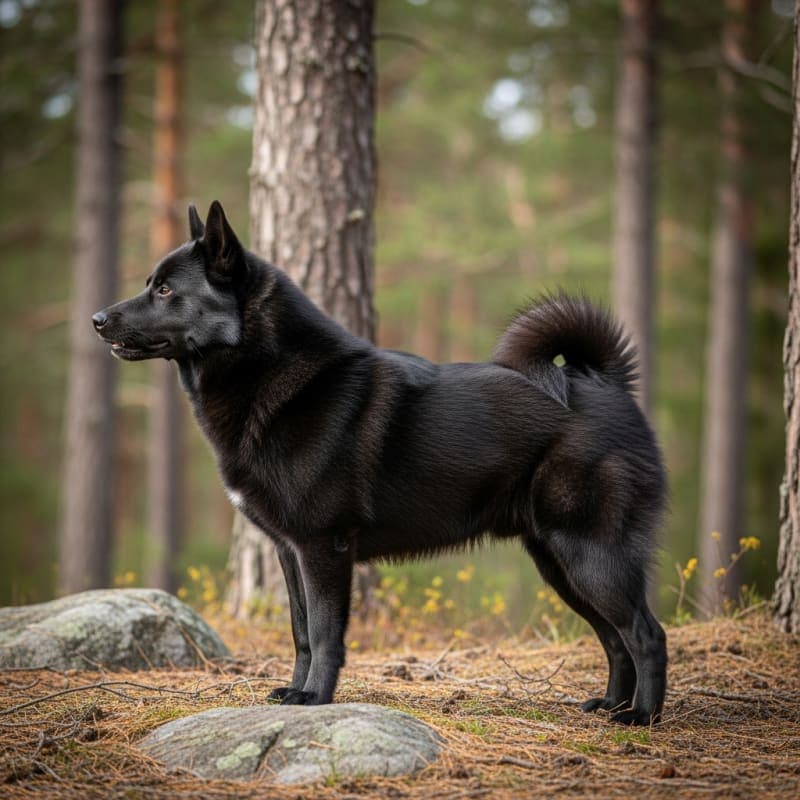
Black Elkhound
FCI Group
5• FCI 268
Size
Medium
Origin Country
NO
Height
43-49 cm
Weight
N/A
Lifespan
12-15 years
Temperament
Overview
The Norwegian Elkhound Black, more widely known as the Black Elkhound, is a fascinating hunting dog breed with a rich history dating back to the Viking era. Originating from the harsh terrains of Norway, this dog has accompanied humans for centuries as an invaluable helper in moose hunting and in protecting homes from wild animals and intruders. This breed, a typical representative of the northern spitz group, attracts attention with its square body structure, strong, muscular neck, and proud demeanor.
Characteristic of the Black Elkhound is its dense, hard coat of intensely black color, which fits snugly against the body and serves as a natural protective barrier against the harsh Scandinavian climate. Because of this, the dog excels in both cold, snowy winters and during rainy, cool days. Its courage, energy, and unwavering determination make it an ideal companion for active families and enthusiasts of hunting and outdoor activities.
The Black Elkhound is extremely sociable and loyal to its family, gets along well with children, and can coexist with other animals, provided it has been properly socialized from puppyhood. However, due to its strong hunting instincts and independent nature, it requires a firm, consistent handler who can provide the appropriate structure, training, and regular physical and mental activities. Future owners must be prepared for daily walks, runs, mountain hikes, and various forms of activity to satisfy the natural need for movement of this energetic breed.
The Black Elkhound reaches a height of 46 to 49 cm in males, while females are slightly smaller – from 43 to 46 cm. Its shiny black coat sometimes has small white markings on the chest or paws, which, although accepted, are undesirable according to the breed standard. Proper socialization and consistent training from an early age are absolutely crucial to shape a balanced, obedient, and confident dog. The Black Elkhound also requires regular mental stimulation – tasks, challenges, and problems to solve – that will allow it to utilize its full natural abilities and intelligence.
We invite you to continue exploring our detailed guide, where you will find comprehensive information about the health, grooming, training, nutrition, history, appearance, and behavior of the Black Elkhound. Learn more about this unique breed to better understand its unique needs, character traits, and requirements that make it a wonderful, devoted companion for well-prepared owners.
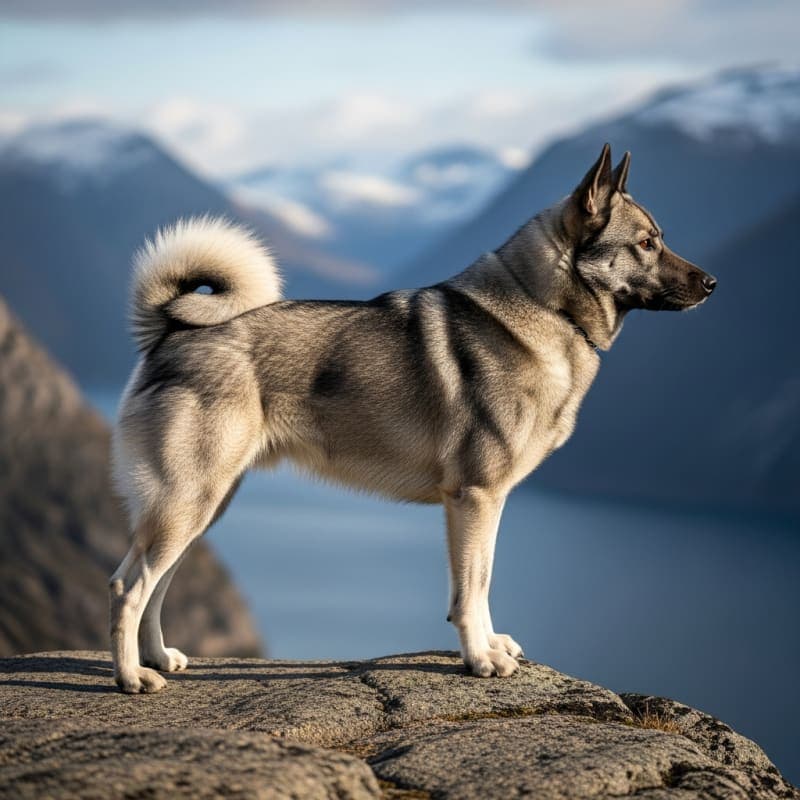
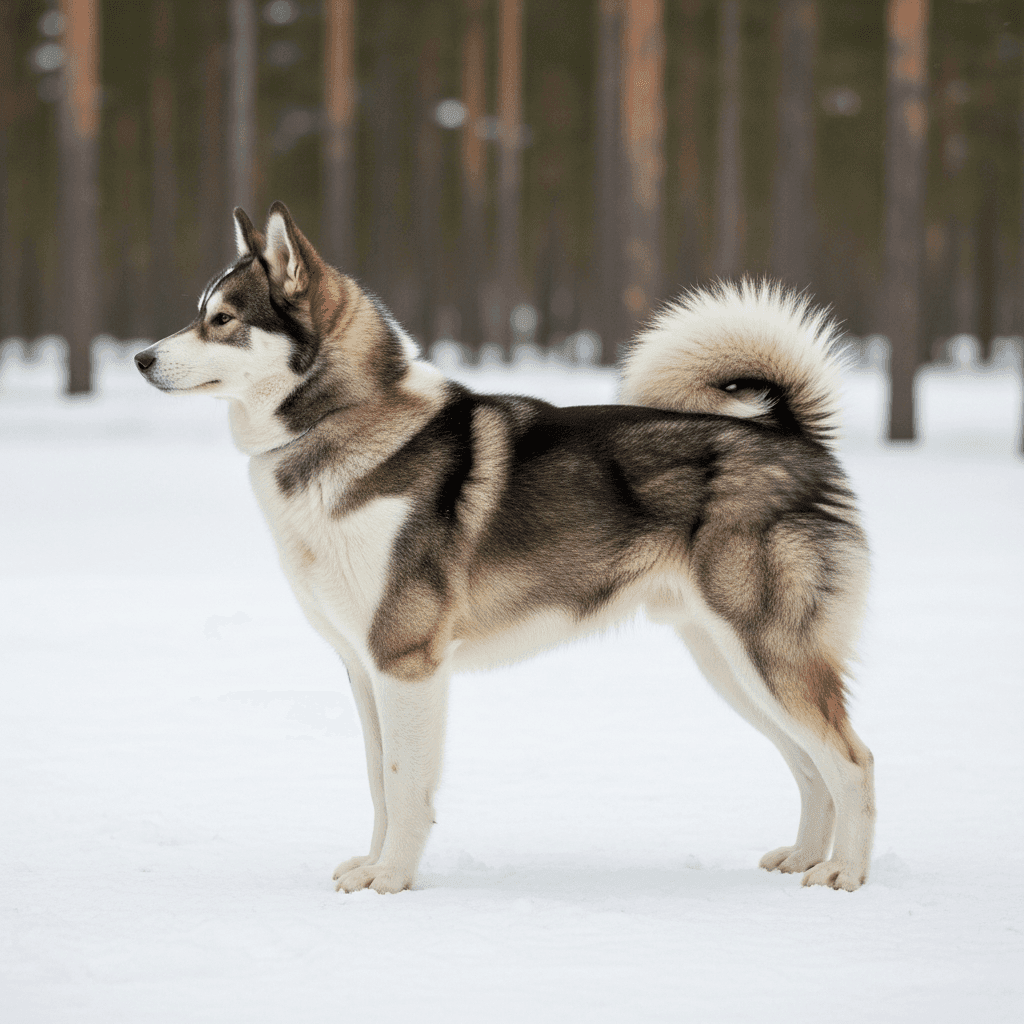
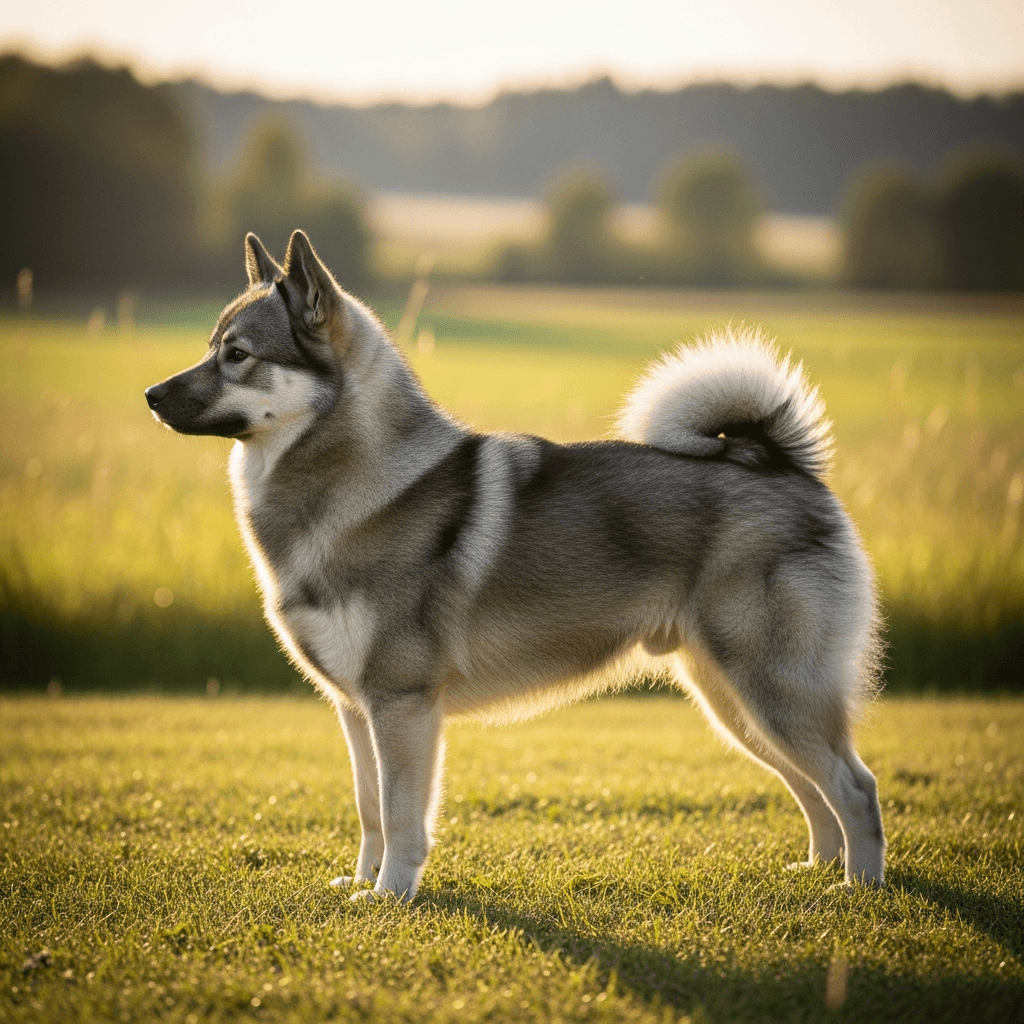
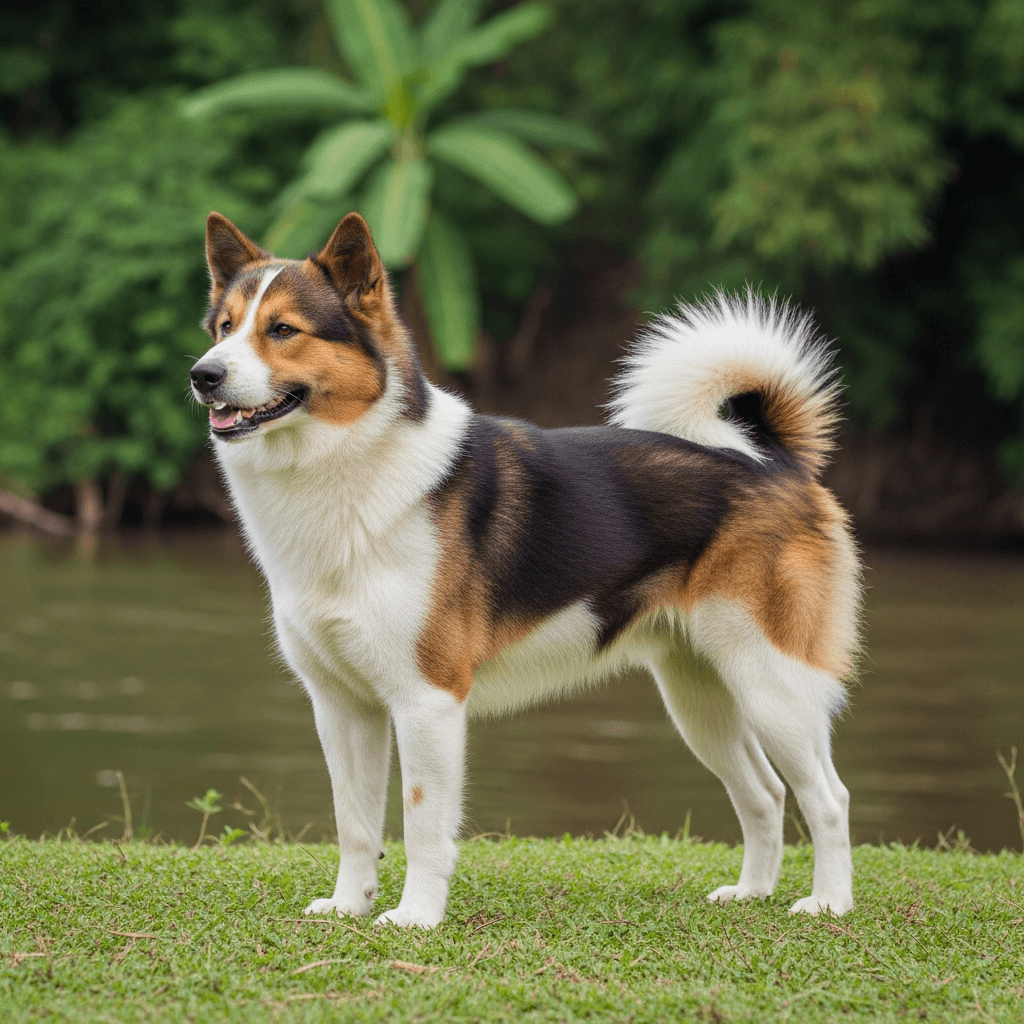
The Norwegian Elkhound Black is a dog with a typical northern spitz body structure, characterized by a harmonious, square silhouette, in which the height at the withers equals the length of the body. Its height ranges from 46 to 49 cm for males and from 43 to 46 cm for females. This dog presents itself as strong, compact, and athletic, with well-developed musculature and a proud posture.
The head has a wedge shape, tapering towards the nose. It is relatively light and clean in lines, quite wide between the ears. The skull is almost flat, with a distinct but not abrupt stop. The muzzle has a straight nasal bridge, and its length is equal to the length of the skull. The nose is always black, with tightly fitting lips. The dentition is complete, with a scissor bite.
The eyes are dark brown, preferably in the darkest shade possible, not protruding, with a lively and alert expression. The ears are set high, erect, pointed, with their height slightly exceeding the width at the base, which emphasizes the breed's characteristic alertness and readiness for action.
The neck is of medium length, strong and muscular, without loose skin. The withers are well-defined, the back is straight and strong, the loins are well-developed, wide, and straight. The croup is wide and well-muscled. The chest is relatively deep, with well-arched ribs.
The coat is dense, hard, and close-fitting to the body. The hair is shorter on the head and front parts of the limbs, longer on the chest, neck, under the tail, and on the back of the thighs and limbs. The coat is glossy black. Small white markings on the chest, toes, or paws are tolerated, although undesirable according to the FCI standard.
The tail is short, thick at the base, covered with dense hair, and tightly curled over the back. The overall presentation of the black Elkhound exudes strength, agility, endurance, and readiness to work in difficult terrain conditions.
The Norwegian Elkhound Black is a fearless, energetic, and brave dog with a strong character and distinct personality. Its temperament makes it an excellent companion for active, experienced owners who can provide it with the right living conditions and consistent leadership. This breed is known for its friendly and loyal disposition towards family members, but it requires a strong, assertive leader who will establish clear rules and hierarchy.
The black Elkhound gets along well with children and can become their devoted, watchful guardian. It is loyal and dedicated to its owners, forming strong emotional bonds with the family. However, due to its strong hunting instincts developed over centuries of selection, dogs of this breed may show a tendency to hunt smaller animals, which requires special caution in interactions with other pets, especially rodents, cats, or birds.
This breed is characterized by a strong need for exploration and terrain investigation. The black Elkhound may follow interesting scents, so it is extremely important to provide it with a safe, well-fenced environment and appropriate security in the garden. It can be somewhat independent and stubborn, which is a natural trait of hunting dogs that had to make independent decisions while hunting in challenging terrain.
Key to developing a balanced character is early training and socialization from a young age. A dog that has experienced a variety of situations, people, animals, and environments at a young age grows into a confident, calm, and predictable companion. A properly raised and socialized Norwegian Elkhound Black becomes a wonderful, loving, loyal, and reliable family member who shares the joys of an active life with its owners.
The Norwegian Elkhound Black is generally a healthy and resilient breed, with an average lifespan of 12-15 years. However, like many other purebred dogs, it can be prone to certain hereditary and acquired conditions that owners should be aware of and monitor.
One of the most common health issues in this breed is hip dysplasia – a hereditary condition where the hip joint socket does not fit properly with the head of the femur. This can lead to pain, limping, reduced mobility, and eventually the development of osteoarthritis. Responsible breeders conduct X-ray examinations of the hip joints of the parents before breeding, which significantly reduces the risk of this condition in the offspring.
The breed may also be prone to cataracts and other ophthalmic issues, so regular eye examinations by a veterinary ophthalmologist are recommended. Thyroid problems, especially hypothyroidism, can also occur in this breed.
Overweight and obesity pose a significant health risk for the Black Elkhound, leading to additional joint, heart, and metabolic problems. Therefore, it is crucial to monitor the dog's weight, adjust an appropriate, balanced diet, and ensure regular physical activity.
Regular veterinary check-ups – at least once a year for adult dogs and more frequently for seniors – are essential for the early detection of potential health issues. Proper vaccinations, regular parasite prevention (deworming, protection against ticks and fleas), and attention to oral hygiene (tooth brushing, tartar control) are the foundation of maintaining health.
With proper veterinary care, a balanced diet, and regular activity, the Norwegian Elkhound Black can enjoy a long, healthy, and active life alongside its family.
The care of the Norsk Elghund Sort is not complicated, but it requires regularity and consistency, especially during periods of intense shedding. Their thick, double coat, consisting of a hard, straight outer coat and a soft, dense undercoat, requires brushing at least once or twice a week during normal periods.
During the shedding season, which usually occurs twice a year (in spring and autumn), brushing should be done even daily to effectively remove dead hair and undercoat. Regular brushing not only improves the appearance of the coat and prevents matting but also helps prevent skin problems, improves circulation, and allows for early detection of potential parasites, wounds, or skin changes.
For grooming, it is best to use a slicker brush or a comb with metal teeth, and during the shedding season, a specialized furminator or other undercoat removal tool will be helpful. Brushing should be done gently but thoroughly, reaching the undercoat.
Baths are usually only needed when the dog is noticeably dirty or emits an unpleasant odor – too frequent washing can disrupt the natural protective lipid layer of the skin and weaken its defense barrier. During baths, mild, dog-specific shampoos should be used.
Equally important is ear hygiene – ears should be regularly checked and cleaned with specialized products to prevent infections, wax buildup, and bacterial growth. Special attention should be paid to dogs that swim a lot or spend time in a humid environment.
Oral hygiene is crucial for the overall health of the dog. Brushing teeth at least 2-3 times a week with a special toothbrush and dog toothpaste helps maintain healthy gums, prevents tartar buildup, and periodontal diseases that can lead to serious health issues.
Nails should be regularly checked and trimmed with specialized clippers or a file if they do not wear down naturally during walks on hard surfaces. Overly long nails can cause discomfort, walking problems, and changes in posture.
Proper, regular grooming not only keeps the dog in excellent physical and aesthetic condition but also strengthens the bond between the dog and the owner through positive interactions and building trust.
The Norwegian Elkhound Black is a breed that is very energetic and active, requiring a significant amount of regular physical exercise and mental stimulation. Dogs of this breed were bred to work in the harsh conditions of Scandinavian forests, tracking and hunting moose – some of the largest forest animals – which has shaped their incredible endurance, strength, and determination.
Owners of the Black Elkhound should provide it with a minimum of 60 to 90 minutes of intense activity daily, preferably divided into several sessions. Ideal forms of activity include long walks in varied terrain, running alongside a bicycle (for adult, healthy dogs), mountain hiking, forest excursions, fetch games, and free running in a safe, enclosed area.
This breed is well-suited for dog sports, such as:
- Agility – an obstacle course that develops agility and cooperation
- Obedience – obedience competitions testing the precision of command execution
- Tracking – tracking scents, a natural activity for this hunting breed
- Canicross – running with a dog in a special harness
- Nosework – scent work, searching for odors
A lack of adequate exercise and stimulation can lead to serious behavioral problems, such as hyperactivity, destructive behavior (chewing furniture, digging in the garden), excessive barking, escaping, and general dissatisfaction and frustration. A bored Black Elkhound can become a real challenge for its owner.
Mental stimulation is also very important – interactive toys, scent puzzles, learning new commands and tricks, and games of hide and seek. A dog that is tired both physically and mentally is calmer, more balanced, and happier.
It is worth engaging the Norwegian Elkhound Black in varied activities to prevent monotony and maintain its interest. Changing walking routes, exploring new environments, and interacting with other well-socialized dogs enrich the life of this active breed and satisfy its natural needs.
The training of the Norsk Elghund Sort should begin as early as possible, preferably during the puppy stage, from the moment the puppy is introduced to its new home (around 8-10 weeks of age). The earlier positive, consistent training starts, the better results will be achieved in the future.
This breed is intelligent, alert, and eager to learn, possessing excellent memory and natural problem-solving abilities. However, the black Elkhound can also be stubborn, independent, and self-reliant in its thinking – traits developed over centuries of selecting hunting dogs that had to make decisions independently while hunting in challenging terrain, away from the hunter.
Therefore, a patient, consistent, and firm approach from the owner is crucial. The dog must understand that the owner is the leader and guide, and that the rules are clear, fair, and unchanging. Lack of consistency or allowing undesirable behaviors can lead to obedience issues.
Positive reinforcement methods – rewarding desired behaviors with treats, praise, play, and attention – are strongly recommended. They result in significantly better outcomes than punishments or negative methods, while also strengthening the bond of trust and cooperation between the dog and the owner. The black Elkhound responds excellently to positive motivation and happily follows commands if it knows it will be rewarded for it.
Socialization is absolutely crucial and should begin during the so-called critical socialization period (3-14 weeks of age). The puppy should be exposed to a variety of:
- People (of different ages, appearances, behaviors)
- Animals (other dogs, cats, farm animals)
- Environments (city, park, forest, beach, public transport)
- Sounds (cars, city noise, thunder, fireworks)
- Surfaces (grass, asphalt, stairs, smooth floors)
A well-socialized dog is confident, calm, and predictable in various life situations.
The Norsk Elghund Sort responds excellently to training in the form of play – exercises should be short (5-15 minutes), dynamic, varied, and end successfully. It's worth introducing new challenges, tricks, and tasks to maintain interest and prevent boredom.
Basic commands that every black Elkhound should master include: Sit, Lie down, Stay, Come, Heel, Leave it. The recall command Come is particularly important, considering the hunting instincts and tendency for independent adventures.
A dog of this breed, with proper, consistent training and socialization, becomes a loyal, obedient, and reliable companion with whom one can enjoy shared activities at the highest level of cooperation.
The diet of the Norsk Elghund Sort should be balanced, complete, and tailored to the individual needs of the dog, taking into account its age, weight, level of physical activity, health status, and any allergies or food intolerances.
Owners should choose high-quality foods – both dry (kibble) and wet (canned) – that contain meat or fish as the main, first ingredient on the ingredient list. Balanced proportions of animal protein (about 25-30% for active adult dogs), fat (12-18%), and carbohydrates (ideally from whole grains or vegetables) provide adequate energy and nutrients.
For black Elkhound puppies, it is crucial to use food dedicated to medium breeds, with the appropriate ratio of calcium and phosphorus to support proper bone and joint development, which is particularly important in the context of preventing hip dysplasia. Puppies should be fed 3-4 times a day until about 6 months of age.
Adult dogs are best fed twice a day – in the morning and evening – which helps maintain stable energy levels and prevents digestive issues such as bloating or gastric torsion (especially in deep-chested dogs). Portions should be measured according to the manufacturer's recommendations and adjusted to the dog's actual level of activity.
Older dogs (seniors over 7-8 years) may require senior food with lower calories, higher fiber content, and ingredients that support joints (glucosamine, chondroitin, omega-3 fatty acids).
It is extremely important to avoid excessive treats and snacks, which can account for up to 30-40% of daily calorie intake, leading to overweight and obesity – a serious health issue. Treats should make up a maximum of 10% of daily caloric intake and be included in the overall nutritional balance.
The dog should have constant, unrestricted access to fresh, clean water, which should be regularly changed, especially during periods of high activity and on hot days.
Dietary supplementation may be indicated for older dogs, dogs with joint issues (glucosamine, MSM, collagen), skin problems (omega-3 and omega-6 fatty acids), or nutritional deficiencies. However, any supplementation should always be consulted with a veterinarian to avoid overdosing or interactions with medications.
Owners considering a BARF diet (Biologically Appropriate Raw Food) – a natural diet based on raw meat, bones, vegetables, and fruits – should thoroughly familiarize themselves with the principles of a balanced raw diet and ideally consult with a veterinary nutritionist to avoid nutrient deficiencies.
Regular monitoring of the dog's weight and condition – by observing the silhouette, the ability to feel the ribs under a thin layer of fat, and a visible waist from above – allows for early detection of overweight and appropriate adjustment of portions.
Characteristic Traits
Pros
- Courage and unwavering determination
- An excellent companion for active families
- Loyal and friendly towards children
- Resilience to harsh weather conditions
- High intelligence and learning abilities
- Outstanding tracking and hunting skills.
Cons
- Requires a firm and experienced handler
- Needs a lot of regular physical activity
- Strong hunting instincts require control
- Can be stubborn and independent
- Requires consistent training and socialization
- Intense shedding twice a year.
Behavioral Ratings
Breed History
The Norwegian Elkhound Black, also known as Elkhund czarny or Norsk Elghund Sort, has a long, fascinating, and rich history that dates back to the Viking Age – around the 8th to 11th centuries AD. Archaeologists have discovered bones of dogs very similar to modern Elkhounds in archaeological sites dated even to periods 5000-6000 years ago, which indicates the ancient origins of this group of Scandinavian dogs.
This breed was developed in the harsh, mountainous, and forested regions of Norway as a versatile working dog, particularly for hunting moose (elg in Norwegian) – hence the name Elkhund, which literally means moose dog. These dogs were also used for hunting bears, wolves, lynxes, and other large, dangerous animals inhabiting Scandinavian forests.
The hunting method of the Elkhound was unique and required immense courage: the dog tracked the game independently, often several kilometers away from the hunter, and upon finding a moose it would surround it with loud, characteristic barking, keeping the animal in place until the hunter arrived with a rifle. This required exceptional bravery, intelligence, endurance, and the ability to make independent decisions – traits that are still evident in the character of modern Elkhounds.
In addition to hunting, Elkhounds served as guard dogs, protecting farms and herds from predators and intruders, and were also used as sledge dogs for transporting goods and supplies in harsh winter conditions.
Elkhund czarny (Norsk Elghund Sort) is a black variant of the more popular gray variety (Norsk Elghund Grå), which has been officially recognized as a separate breed. Although less known than its gray cousin, the black Elkhound has gained recognition among hunters for its excellent tracking abilities, perseverance, and resilience to extreme weather conditions.
The breed was officially recognized by the Fédération Cynologique Internationale (FCI) and classified in group 5 (Spitz and primitive breeds), section 2 (Northern hunting dogs). The breed standard was published on August 9, 1999.
Over the years, particularly in the 20th and 21st centuries, the Norsk Elghund Sort has gained popularity beyond Norway, reaching countries in Western Europe, North America, and other parts of the world. Its exceptional traits – courage, loyalty, intelligence, energy, and beautiful black coat – have made it valued not only as a hunting dog but also as a family companion, sporting dog, and show dog.
Today, the black Elkhound is appreciated for both its traditional hunting skills and its ability to be a wonderful, devoted companion for active families who can appreciate its unique heritage, temperament, and needs. The breed remains a living testament to the rich culture and hunting traditions of Norway and the deep bond between humans and dogs, shaped by thousands of years of cooperation.