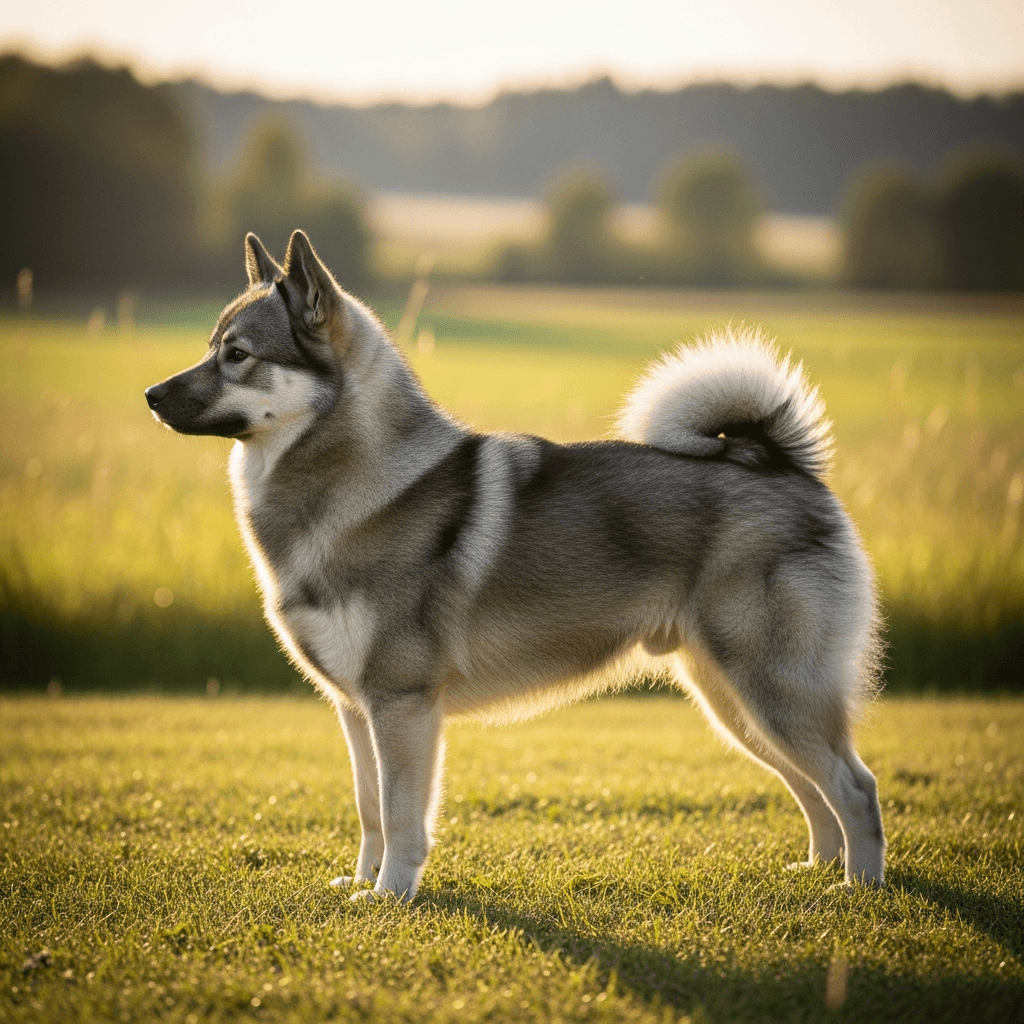
Västgötaspets
FCI Group
5• FCI 14
Size
Medium
Origin Country
SE
Height
31-33 cm
Weight
9-14 kg
Lifespan
12-14 years
Temperament
Overview
The Västgötaspets, also known as the Swedish Vallhund, is a unique breed of herding dogs originating from Sweden. Although small in size, these energetic canines impress with their strong character and extraordinary vitality from the very first encounter. This breed was originally bred as a herding and driving dog for working with cattle, making it an excellent fit for farms and as a versatile companion for active owners. With its unique personality traits – friendliness, intelligence, and remarkable energy – the Västgötaspets captures the hearts of dog lovers around the world.
Biologically related to the Welsh Corgi, the Västgötaspets is distinguished by its characteristic compact body structure and lively, alert behavior. Dogs of this breed are extremely loyal, devoted to their owners, and exhibit a natural vigilance towards strangers. Their cheerful and sociable temperament makes them excellent companions for both families with children and individuals seeking an active partner. The Västgötaspets is a dog that requires regular physical activity – daily walks of at least an hour and various forms of play, such as running, swimming, fetching, or agility training, are absolutely essential to meet its physical and mental needs.
The Västgötaspets enjoys a well-deserved reputation as an exceptionally intelligent breed, which greatly facilitates the training process. It strives to please its owner, quickly absorbing new commands and tricks. Training should begin as early as possible, ideally during puppyhood, using methods based on positive reinforcement to build a strong bond of trust between the dog and its handler. The breed features a double coat of medium length – the outer layer is coarse and weather-resistant, while the undercoat is soft and dense, providing excellent protection against various weather conditions. Regular grooming, at least twice a week, is crucial for maintaining the coat in excellent condition and controlling the natural shedding process.
The strong herding instinct means that the Västgötaspets may exhibit tendencies to herd children, other pets, or even moving objects. When near wildlife, it is advisable to keep the dog on a leash to avoid unwanted situations. With proper, early socialization, this breed gets along well with children, other dogs, and even cats living in the same household. The average lifespan of a Västgötaspets ranges from 12 to 14 years, providing owners with many wonderful years full of joy and shared adventures. Due to its versatility, distinctive appearance, and energetic temperament, the Västgötaspets has gained international recognition as one of the most interesting Nordic breeds.
The Västgötaspets is a small but exceptionally well-built dog with a distinctive, easily recognizable appearance. Its height at the withers ranges from 31 to 33 cm, and its weight oscillates between 9 and 14 kg, with males usually being slightly larger than females. The breed is characterized by a proportional, elongated body structure with strong, short limbs, making it surprisingly agile and fast despite its low stature.
The head of the Västgötaspets is distinctly muscular, with a wedge-shaped structure, nearly flat skull, and a well-defined forehead slope. The muzzle is strong, slightly shorter than the length of the skull. The ears are medium-sized, pointed, and stand erect, giving the dog a vigilant, lively expression. The eyes are dark brown, oval, and of medium size, expressing intelligence and attentiveness. The nose is always black and well-formed.
The body is strongly muscled, with a straight, strong back and short, well-developed loins. The chest is deep, well-developed, and reaches the elbows, allowing for free breathing during intense work. The tail can be naturally long, carried down or slightly curved, or naturally short (the so-called "natural bobtail"), which is one of the breed's distinctive features – both variants are fully accepted by the standard.
The coat of the Västgötaspets is double: the outer layer is coarse to the touch, of medium length, and well-fitting to the body, while the undercoat is soft, dense, and provides thermal insulation. The coloration can occur in several color variations – from gray-brown, through gray-yellow, to red-brown, with characteristic darker hairs forming a so-called "saddle" on the back, sides, and neck. Lighter shades are desirable on the muzzle, throat, chest, belly, and legs. White markings may appear on the chest, legs, and tip of the tail, but should not dominate. The overall appearance of the Västgötaspets is harmonious, full of energy, and reflects its character as a versatile herding and companion dog.
The Västgötaspets is a breed with an incredibly friendly, energetic, and balanced temperament, characterized by a strong attachment to its family. It is a very sociable dog that gets along well with children and other pets, provided it has undergone proper socialization from a young age. The breed is distinguished by its alertness, loyalty, and boundless devotion to its owners, making it not only an excellent companion but also an effective watchdog.
The Västgötaspets has a strongly developed herding instinct, which may manifest as a tendency to gently herd children, other animals, or moving objects – this is a natural behavior resulting from centuries of selection for work with livestock. For this reason, it is important to keep the dog on a leash near wildlife and to conduct consistent obedience training.
Representatives of this breed do not tolerate prolonged periods of solitude – they need close contact with their family and may develop behavioral problems such as excessive barking, destructive behaviors, or separation anxiety when regularly left alone for many hours. The Västgötaspets is a dog that desires to be an active participant in family life and feels great when it can accompany its owners in daily activities.
Intelligence and a willingness to cooperate make the Västgötaspets easy to train and quick to learn new commands. It enjoys mental challenges and excels in various dog sports disciplines. Due to its unique personality, the Västgötaspets is gaining recognition as both a companion dog and a guardian – its courage and natural alertness ensure that it reliably alerts the family to approaching strangers or unusual situations.
It is worth emphasizing that despite its energetic nature, the Västgötaspets can relax perfectly at home, provided its needs for physical activity and mental stimulation are regularly met. This breed thrives in families, and their cheerful temperament, intelligence, and devotion make them excellent companions for all household members – from the youngest to the seniors.
The Västgötaspets is generally a healthy and resilient breed with a relatively long average lifespan of 12 to 14 years. Like many purebred dogs, the Västgötaspets can be prone to certain hereditary conditions, making it crucial to choose a responsible breeder who conducts appropriate health tests on their breeding animals.
One of the most serious health issues occurring in this breed is progressive retinal atrophy (PRA) – a hereditary eye condition that leads to gradual vision loss and ultimately total blindness. It is a genetic disease for which DNA tests are available, so responsible breeders test their dogs before allowing them to breed. Early symptoms may include problems seeing in low light and loss of orientation at night.
The Västgötaspets may also be susceptible to hip dysplasia, a condition involving improper development of the hip joint that can lead to pain, lameness, and difficulty moving, especially as the dog ages. Dysplasia has both genetic and environmental components – a proper diet, weight management, and avoiding excessive joint strain during puppyhood can help minimize the risk.
Due to its short legs and elongated body structure, the Västgötaspets may also be prone to spinal problems, including intervertebral disc disease. It is important to avoid situations that force the dog to perform repetitive jumps from heights and to avoid excessive strain on the spine.
Despite these potential health issues, the Västgötaspets is known as a strong, resilient dog with robust physical condition. With its double coat, it handles harsh weather conditions well, especially in cooler climates. However, on hot days, it is advisable to provide the dog with appropriate conditions – access to shade, fresh water, and avoiding intense activity during the hottest hours.
Key to maintaining the health of the Västgötaspets are regular veterinary check-ups, a proper diet tailored to age and activity level, and maintaining a healthy weight. Obesity poses a serious problem for this breed, as it further strains the joints and spine, increasing the risk of orthopedic issues and metabolic diseases, including diabetes and heart disease.
Västgötaspets, characterized by a double coat of medium length, requires regular grooming to maintain its healthy appearance and minimize shedding. The outer layer of the coat is coarse, thick, and lies close to the body, while the undercoat is soft, dense, and provides thermal insulation. This coat structure protects the dog from various weather conditions but requires systematic care.
During non-shedding periods, brushing the dog two to three times a week with a stiff-bristled brush or a comb with metal teeth is usually sufficient to remove dead hair, prevent matting of the undercoat, and distribute natural protective oils along the coat. Regular brushing not only keeps the coat in excellent condition but also provides a great opportunity to check the skin for irritations, ticks, or other dermatological issues.
The Västgötaspets undergoes intense shedding twice a year, typically in spring and autumn, when it changes its undercoat to adapt to changing weather conditions. During this time, the dog requires much more frequent brushing – even daily – to effectively remove the dead undercoat and minimize the amount of hair settling on furniture and floors. During intense shedding periods, specialized tools such as a furminator or an undercoat rake can be helpful.
In addition to regular brushing, basic grooming is essential and includes:
Nail trimming – usually every 3-4 weeks, depending on how quickly they wear down during activities on hard surfaces. Overly long nails can cause discomfort, walking problems, and increase the risk of breaking.
Ear cleaning – every 2-3 weeks using a special dog ear cleaning solution. The Västgötaspets has erect ears that are well-ventilated but still require regular checking and cleaning to prevent wax buildup and potential infections.
Oral hygiene – regular tooth brushing (ideally daily, at least 2-3 times a week) with a special dog toothbrush and toothpaste helps prevent tartar buildup, periodontal disease, and bad breath.
Bathing – The Västgötaspets does not require frequent bathing. It is recommended to bathe only when absolutely necessary (if the dog gets dirty or starts to smell unpleasant), usually no more than once every 2-3 months. Too frequent bathing can strip the natural protective oils from the coat and skin, leading to dryness and irritation. Gentle shampoos specifically designed for dogs should be used.
Maintaining a systematic grooming routine is crucial not only for the dog's health and comfort but also provides an excellent opportunity to strengthen the bond between the owner and the four-legged friend, which is extremely important for both parties.
The Västgötaspets is a breed with high exercise requirements, needing regular and intense physical activity to maintain physical health, mental balance, and well-being. As a herding dog bred to work with cattle, the Västgötaspets possesses exceptional endurance and boundless energy that must be properly utilized.
It is recommended to provide this breed with at least 60-90 minutes of activity daily, preferably divided into several sessions. This can include long, dynamic walks, intense running sessions, swimming (which is excellent low-impact exercise for the joints), fetching, or various forms of interactive play with the owner. The Västgötaspets loves to be actively involved in family activities and excels as a companion during hiking, cycling, or jogging.
It is extremely important to provide the Västgötaspets not only with physical activity but also with mental stimulation. This breed is very intelligent and needs intellectual challenges to avoid boredom and frustration. They excel in:
• Obedience training – regular practice of basic and advanced commands
• Agility – a canine sport that perfectly utilizes the breed's agility and intelligence
• Flyball – a dynamic discipline combining speed, agility, and teamwork
• Nosework – exercises utilizing the natural sense of smell
• Obedience – advanced obedience training
• Intellectual games – interactive toys, dog puzzles, hiding treats
It is worth noting that the Västgötaspets has a strongly developed herding instinct, which means it may have a tendency to chase moving objects – other animals, bicycles, runners. Therefore, near wildlife or in unfenced areas, the dog should always be kept on a leash until it is fully trained in obedience and recall.
This breed thrives in active households where it can accompany its owners in various forms of activity. The Västgötaspets also enjoys participating in dog sports, which are ideal for utilizing their natural energy, intelligence, and willingness to cooperate.
However, it is essential to consider the appropriate dosing of activity for puppies and young dogs – too intense exercise during the growth period can negatively affect the development of joints and the spine. Puppies should play freely at their own pace, avoiding strenuous, repetitive jumps or prolonged running on hard surfaces.
Meeting the physical and mental needs of the Västgötaspets is absolutely crucial for its well-being. Insufficient activity can lead to behavioral problems such as excessive barking, destructive behaviors, hyperactivity, or difficulties in focusing during training.
The Västgötaspets is an exceptionally intelligent dog breed, characterized by its quick learning ability and natural desire to cooperate with its owner. As a result, training this breed is usually a pleasure for both the dog and the handler. The Västgötaspets seeks to please its owner and responds excellently to positive reinforcement, making it an ideal candidate for learning both basic commands and advanced tricks.
Starting training from a young age is absolutely crucial for the proper behavioral development of the Västgötaspets. Puppies should begin basic obedience training as early as 8-10 weeks old, when they are most receptive to learning new behaviors and rules. The earlier consistent training begins, the stronger and healthier the bond between the dog and the owner will be.
Methods based on positive reinforcement work best for this breed. The Västgötaspets responds well to rewards in the form of treats, toys, enthusiastic praise, and playtime with the owner. Physical punishment or aggressive training methods are completely unacceptable and can lead to behavioral problems, loss of trust, and anxiety. Consistency, patience, and a positive attitude are the foundations of effective training.
Socialization is just as important as obedience training itself. The Västgötaspets should be systematically introduced to a variety of people, dogs, other animals, sounds, environments, and situations from a young age. Proper socialization helps shape a confident, balanced dog that does not exhibit fear or excessive reactivity in new situations. Puppy classes and controlled meetings with other dogs are excellent ways to develop social skills.
The Västgötaspets shows great potential for learning advanced canine disciplines, such as:
• Obedience – advanced commands and precise cooperation
• Agility – an obstacle course utilizing agility and speed
• Nosework – scent work, searching for smells
• Rally-O – a combination of obedience and navigating a course
• Trickdog – learning complex tricks and sequences of behaviors
Diversity in training is key to maintaining the engagement and motivation of the Västgötaspets. Repetitive, monotonous exercises can quickly bore this intelligent breed. It is worthwhile to regularly introduce new commands, tricks, and challenges to keep the training fresh and exciting.
Control of herding instinct should be an integral part of training. The Västgötaspets may exhibit a tendency to herd children, other animals, or moving objects. It is important to work on redirecting this natural behavior to acceptable activities and to teach the dog solid recall and the command "leave it."
Consistency in setting rules and boundaries is extremely important. The Västgötaspets needs clear, consistent rules to understand what is expected of it. All family members should use the same commands and rules to avoid confusing the dog.
Training sessions should be short (10-15 minutes) but frequent (2-3 times a day) to maximize focus and knowledge retention. The Västgötaspets is sensitive to the owner's tone of voice and body language, so communication should be clear, calm, and confident.
Overall, the Västgötaspets is a breed that will certainly succeed in training, provided the owner approaches it with patience, consistency, enthusiasm, and an understanding of the natural needs and instincts of this exceptional breed.
A proper, balanced diet is the foundation of health, vitality, and longevity for the Västgötaspets. This breed, although small in size, has a relatively high energy requirement due to its active nature, high metabolism, and constant energy levels. Proper nutrition is crucial for maintaining a healthy body weight, physical condition, and overall well-being.
Choosing high-quality food is absolutely essential. Owners should select food that is appropriate for the dog's age (puppy/junior, adult, senior), weight, and level of physical activity. The food should contain high-quality sources of animal protein (meat, fish) as the first ingredient, a complex of carbohydrates, healthy fats, as well as essential vitamins, minerals, and nutrients that support joint, skin, and coat health.
Feeding frequency should be adjusted according to the dog's age:
• Puppies (2-6 months) – 3-4 meals a day at regular intervals
• Young dogs (6-12 months) – 2-3 meals a day
• Adult dogs (12 months and older) – 2 meals a day (morning and evening)
• Seniors (8-10 years and older) – 2 meals a day, possibly smaller portions more frequently
Dividing the daily food portion into two meals is recommended as it helps maintain stable energy levels throughout the day, aids digestion, and reduces the risk of stomach problems.
Weight control is extremely important for the Västgötaspets. Overweight and obesity pose a serious health problem for this breed due to their elongated body structure and short legs – excess weight significantly burdens the spine and joints, increasing the risk of hip dysplasia, spinal problems, heart disease, and diabetes. Owners should regularly monitor their dog's weight and adjust food portions according to physical condition and activity level.
Avoiding overfeeding is crucial. The Västgötaspets may be prone to weight gain, especially if it receives too many training treats or table scraps. Treats should make up no more than 10% of daily calorie intake, and their amount should be included in the overall energy balance.
Dietary supplementation can be beneficial in certain situations:
• Omega-3 and Omega-6 fatty acids – support skin and coat health, reduce inflammation, support brain function
• Glucosamine and chondroitin – support joint health, especially in older or active dogs
• Probiotics – support gut health and digestion
• Antioxidants – support the immune system and combat free radicals
Before introducing any supplementation, it is advisable to consult with a veterinarian to ensure it is appropriate and safe for the specific dog.
Healthy treats can complement the diet. In addition to dry or wet food, fresh fruits and vegetables safe for dogs can be introduced into the diet, such as:
• Carrots (raw or cooked) – low-calorie, support dental health
• Apples (without seeds) – a source of fiber and vitamins
• Pumpkin – excellent for digestion, a source of fiber
• Berries (blueberries, raspberries) – rich in antioxidants
• Green beans – low-calorie, high in fiber
Prohibited products for Västgötaspets (and all dogs) include: chocolate, onions, garlic, grapes, raisins, avocado, xylitol, alcohol, caffeine, and fatty or heavily seasoned foods.
Access to fresh water is absolutely essential throughout the day, especially after intense physical activity, on hot days, and after meals. A bowl of water should always be available and replenished with fresh, clean water.
Maintaining an appropriate, balanced diet tailored to individual needs is key to ensuring the Västgötaspets's health, vitality, and long, happy life alongside its family.
Characteristic Traits
Pros
- Friendly and loyal disposition
- Exceptional intelligence and ease of training
- Versatility and working abilities
- Sociable nature
- good with children.
Cons
- High physical and mental demands
- Strong herding instinct requiring control
- Regular grooming
- intense shedding twice a year.
Behavioral Ratings
Breed History
The Västgötaspets, also known as the Swedish Vallhund, is one of the oldest Nordic breeds, with a history that dates back over a thousand years to the legendary times of the Vikings. This breed originates from the Västergötland region in southwestern Sweden, where it has played an indispensable role as a versatile working dog on farms and agricultural estates for centuries.
The Västgötaspets was used by the Vikings as a herding and driving dog for cattle, primarily to herd cows and sheep by nipping at their heels – hence its English name "Swedish Vallhund," where "vallhund" literally means "herding dog" or "cattle dog." In addition to herding work, these dogs also served guard functions, caught pests (rats and mice), and acted as loyal companions in the harsh life on Nordic farms.
There is a long-standing, fascinating discussion regarding the genetic connections between the Västgötaspets and the Welsh Welsh Corgi – both breeds exhibit striking similarities in body structure, proportions, and behavior. One theory suggests that the Vikings may have brought corgi-type dogs from the British Isles to Sweden during their raids and trading expeditions in the 8th to 11th centuries. An alternative theory posits the reverse direction of transfer – that Västgötaspets-type dogs may have been taken from Sweden to Wales. However, contemporary genetic studies suggest that the Västgötaspets is an authentic, native Swedish breed that has developed independently for hundreds of years in the geographical isolation of the Västergötland region.
Regardless of the historical controversies, the true heroes of preserving this breed were Count Björn von Rosen and school director K.G. Zettersten. In the early 1940s, Count von Rosen learned that in the Västergötland region, particularly in the plains around the town of Vara, there still existed a small but relatively uniform population of these old herding-type dogs. In 1942, von Rosen and Zettersten conducted systematic searches, finding a sufficient number of individuals with a homogeneous breed type to start a breeding program.
Thanks to their efforts and dedication, in 1943 the breed was officially recognized by the Swedish Kennel Club (SKK) under the name "Svensk Vallhund" (Swedish Herding Dog). The name "Västgötaspets" was also originally used, referring to the region of origin (Västergötland + "spets" meaning spitz). In 1948, the breed gained international recognition through registration with the Fédération Cynologique Internationale (FCI) as standard number 14, in group 5 (Spitz and primitive types), section 3 (Nordic guard and herding dogs).
The breeding program led by Zettersten focused on preserving the authentic breed type without losing working abilities. There was a conscious effort to avoid overly intense selection for aesthetic qualities at the expense of functionality – the priority was to maintain a healthy, resilient breed with a strong herding instinct, high intelligence, and versatility.
In the second half of the 20th century, the Västgötaspets gradually gained popularity beyond the borders of Sweden. In 1964, the first individuals arrived in England, followed by other European countries. In 1986, the breed was recognized by the American Kennel Club (AKC) and in 2007 was officially allowed to participate in shows with full registration status.
Today, the Västgötaspets is a valued breed worldwide, both as a versatile working dog and a wonderful family companion. Its unique traits – a combination of compact, strong build, high intelligence, extraordinary energy, and friendly character – attract lovers of Nordic dogs. The Västgötaspets also excels in canine sports such as agility, obedience, nosework, and herding, where it can utilize its natural abilities and instincts.
Despite its growing international popularity, the Västgötaspets remains a relatively rare breed. Responsible breeders around the world continue the mission of von Rosen and Zettersten, ensuring the preservation of the health, temperament, and authentic working traits of this exceptional Swedish breed – a true living heritage of the Vikings and Nordic herding traditions.