Pekingese
FCI Group
9• FCI 207
Size
Small
Origin Country
CN
Height
15-25 cm
Weight
3.2-4.9 kg
Lifespan
12-14 years
Temperament
Overview
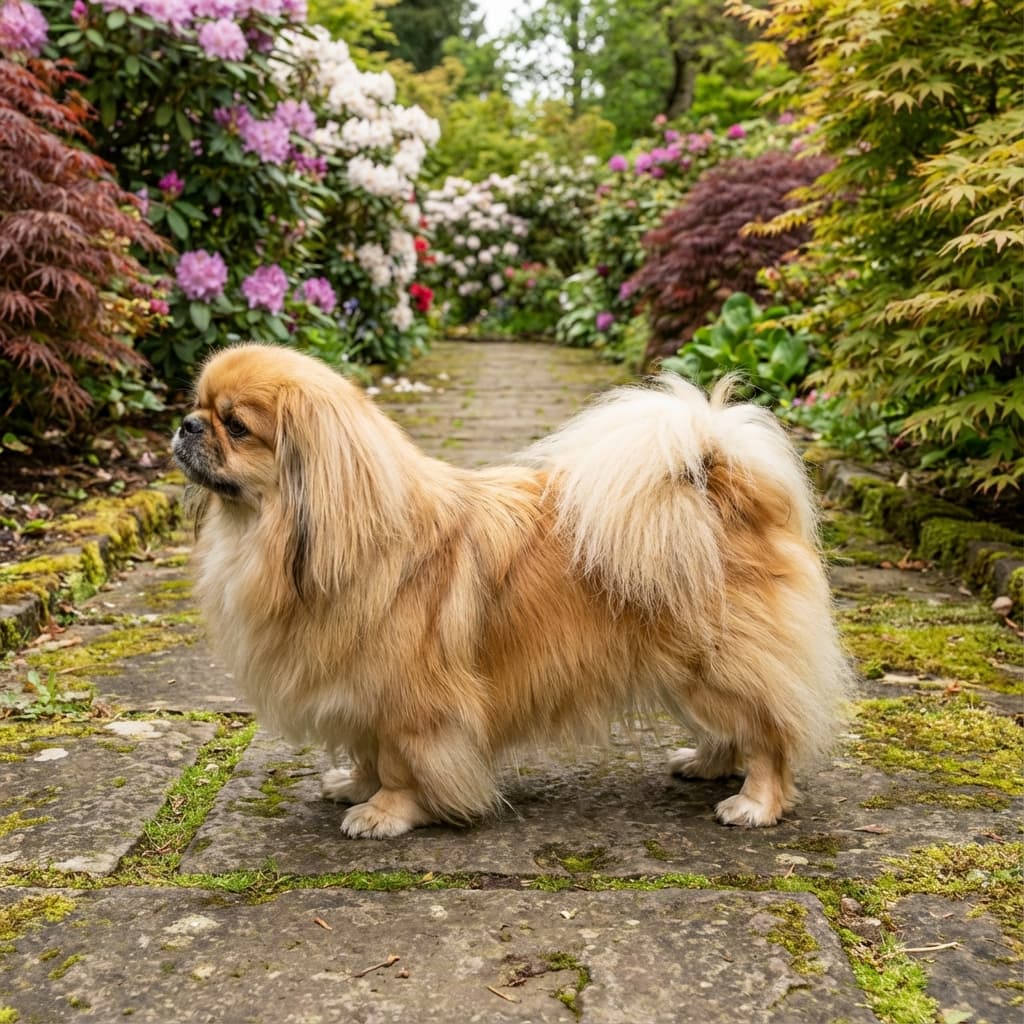
The Pekingese, also known as the lion dog, is a breed full of charm and mystery. These small dogs originate from China and boast an extraordinary history dating back thousands of years. Their majestic appearance and bold temperament make them stand out at first glance. Despite their small size – usually weighing between 3 to 5 kg – Pekingese are characterized by a strong build and distinct bone structure. Their wide skull and short nose, surrounded by long, dense fur forming a characteristic mane, give them an unusual, royal charm.
The Pekingese is a decorative dog that does not require intense physical activity. Therefore, they make excellent companions for older individuals or residents of smaller spaces, such as apartments. Their complex temperament means they can be both affectionate and independent. However, they do require consistent training and early socialization to avoid behavioral issues. The Pekingese can be stubborn, but the right approach allows them to learn many tricks and basic commands.
Although Pekingese form strong attachments to their owners, they are not overly expressive in showing affection. This makes them potentially less ideal for families with small children who may not always understand their subtle communication style. Despite this, their history as sacred animals in ancient China and later popularity among the British aristocracy – including Queen Victoria herself – adds a specific charm and class to them.
Today, Pekingese are valued worldwide as both companions and show dogs. Their presence in many homes is a testament to their extraordinary character and beautiful appearance, making them one of the most recognizable dog breeds in the world. As you read on, you will discover more detailed information about the health, grooming, activity, training, nutrition, history, appearance, and behavior of Pekingese, which will surely enrich your knowledge about this fascinating breed.
The Pekingese is a small dog with a dignified and lion-like appearance. Its build is moderately stocky, with short legs and a strong, dense body. An adult Pekingese should not weigh more than 5 kg, and its height at the withers is about 15-25 cm.
Characteristic features of the head:
- The skull is wide and flat, with a clearly defined stop
- The nose is short, wide, and black, with large, open nostrils
- The eyes are dark, round, and shiny, adding to their expressiveness
- The ears are heart-shaped, long, and covered with abundant hair
The coat is long, straight, and dense, forming a characteristic mane around the neck, which gives the dog a majestic appearance worthy of a lion. The tail is set high, curled, and slightly bent over the back, also covered with long hair. Pekingese can come in various colors – except for albino and liver. Their coat should be healthy, shiny, and well-maintained, which emphasizes the elegance of this breed.
The Pekingese is a dog with a diverse and fascinating temperament, combining courage, loyalty, and confidence. Despite its small size, it can be very self-assured and is not afraid of larger dogs. This breed can be quite independent and stubborn, which makes training require patience and consistency.
Pekingese are generally quiet, but they can be loud when they notice something suspicious – they make excellent alert dogs. Their behavior towards strangers is rather reserved, but they are not aggressive. They usually form strong attachments to their owners, although they are not very expressive in showing affection. Due to their independence, Pekingese tolerate solitude well and do not tend to exhibit destructive behavior.
Their relationships with children can be cool – Pekingese prefer a calm environment and are more suitable for older individuals or those who lead a less active lifestyle. They are not the best playmates for small children who may not understand their need for personal space.
Proper training and socialization are crucial to ensure that a Pekingese has good manners and social skills, as well as to avoid behavioral problems. With the right approach, a Pekingese can become a wonderful, loyal companion with a unique character.
Pekingese have an average lifespan of 12 to 14 years, but like any breed, they are prone to certain health issues. Their brachycephalic structure – characterized by a short nose – makes them more susceptible to breathing problems, especially in warm conditions. Owners should absolutely avoid walks on hot days to prevent dangerous heat strokes.
Most common health issues in Pekingese:
- Breathing problems related to brachycephalic structure
- Eye disorders: distichiasis (abnormal eyelash growth), progressive retinal atrophy (PRA)
- Elbow dysplasia
- Congenital hernias
- Periodontal disease
Due to their tendency to gain weight, it is crucial to provide a balanced diet and regular physical activity to keep them in good shape. Owners should also regularly check their Pekingese's teeth and maintain their hygiene, as this breed is prone to dental issues.
Overall, Pekingese are relatively healthy but require attention and proper veterinary care to enjoy a long and healthy life. Regular veterinary visits and health prevention will help detect any problems at an early stage.
Pekingese have a long and dense coat that requires regular and careful grooming to avoid tangles, mats, and dirt. Owners should brush their dogs at least once a week, and during shedding season even daily, to remove dead hair and minimize the amount of fur in the home.
Grooming recommendations:
- Regular brushing (minimum 1-2 times a week)
- Visits to a professional groomer every 2-3 months
- Daily cleaning around the eyes, which are sensitive and prone to irritation
- Regular teeth brushing (2-3 times a week) to prevent dental issues
- Nail trimming every 3-4 weeks
- Ear inspection and cleaning once a week
Due to their long, abundant coat, Pekingese are among the breeds that require visits to professional groomers to maintain their appearance and coat health at the highest level. Neglecting grooming can lead to serious skin problems and discomfort for the dog.
Keeping a Pekingese clean is not easy, but with the right regularity and care, one can ensure a healthy, attractive appearance worthy of a true lion.
Pekingese are companion dogs that do not require intense physical exercise. Their daily exercise needs can be met through one or two calm walks each day, allowing them to stretch their legs and satisfy their social needs. However, owners should be aware that Pekingese can tire quickly, so walks should be tailored to their individual fitness level.
Activity recommendations:
- 1-2 calm walks per day (15-20 minutes each)
- Time for free running in a safe, fenced area
- Avoiding excessive activity, especially on hot days
- Mental games and obedience training as an alternative to physical exertion
It is also important to provide them with time for free running in a safe place, such as a garden or park, but they should not be forced into excessive activity. Due to their independent nature, Pekingese can entertain themselves, making them ideal dogs for older people or those who lead a quiet lifestyle.
It is worth remembering that despite their low exercise requirements, regular activity is essential for keeping them healthy and feeling good. Pekingese tend to gain weight, so an appropriate amount of exercise helps maintain their physical condition.
Training a Pekingese can be a challenge because this breed has a strong and independent character. Owners must be consistent, patient, and gentle in their training approach. Early socialization and training are crucial to avoid behavioral issues such as disobedience or excessive distrust of strangers.
Basic training principles for a Pekingese:
- Starting with basic commands: Sit, Stay, Come
- Consistency and patience – the key to success
- Avoiding violence or overly harsh training methods
- Using positive reinforcement (rewards, praise, treats)
- Short, regular training sessions (5-10 minutes)
- Early socialization with other dogs and people
By starting with basic commands, you can build trust and a positive relationship with your dog. Pekingese can be stubborn learners, so it is important to avoid using violence or overly harsh methods, as this can lead to fear and distrust. Using rewards in the form of treats and praise for good behavior can be an effective motivational method.
Over time and with the right approach, a Pekingese can learn many tricks and commands, which will bring satisfaction to both the dog and its owner. The key is to respect their independent nature and to adapt training methods to the individual character of the dog.
Pekingese tend to gain weight, so it is crucial for their diet to be properly balanced. They should receive high-quality food that is rich in protein and nutrients that support their health and maintain proper condition.
Nutritional recommendations for Pekingese:
- High-quality food rich in animal protein
- Portions adjusted to weight, age, and activity level
- Avoiding table scraps and high-calorie foods
- Regular, small meals (2-3 times a day)
- Limited treats (maximum 10% of daily caloric intake)
- Constant access to fresh water
It is important to avoid feeding the dog table scraps and high-calorie foods that can lead to obesity and related health problems. Food portions should be adjusted to their weight, age, and activity level. Regularly providing small meals throughout the day is recommended to avoid excessive hunger and snacking.
Pekingese also enjoy treats, but they should be given in moderation to maintain their weight within normal limits. Water should always be available to ensure proper hydration. Owners should also regularly monitor their dog's weight and adjust the diet as needed, consulting with a veterinarian regarding the optimal diet.
Characteristic Traits
Pros
- Ideal for elderly people
- Does not require much movement
- Strong loyalty
- Charming lion-like appearance
- Handles solitude well.
Cons
- Not suitable for small children
- Can be stubborn
- Requires consistent training
- Requires regular coat care
- Breathing problems
Behavioral Ratings
Breed History
Pekingese have a long and rich history, dating back thousands of years. Their origins trace back to the Tang dynasty in ancient China, where they were considered sacred and extremely valuable animals. In ancient China, Pekingese were surrounded by a special cult and were a symbol of wealth and high social status. Anyone who killed or stole a Pekingese could be punished with death – such great value was attributed to these small dogs.
This breed was exclusively bred by the aristocracy and Chinese emperors for centuries, who treated them as talismans of luck and symbols of power. Their popularity dramatically increased after their arrival in England in the 19th century. A turning point was the destruction of the Summer Palace in Beijing in 1860 during the Second Opium War.
Several Pekingese were rescued at that time and transported to England, where they quickly gained fame among the aristocrats. Queen Victoria became a great admirer of this breed, which sparked a fashion for Pekingese in British high society. One of the rescued dogs was gifted to Queen Victoria and was named Looty.
Since then, Pekingese have become popular worldwide, gaining recognition as companion and show dogs. Today, they are valued for their loyalty, courage, and unique appearance, being one of the most recognizable and cherished dog breeds with an ancient lineage.