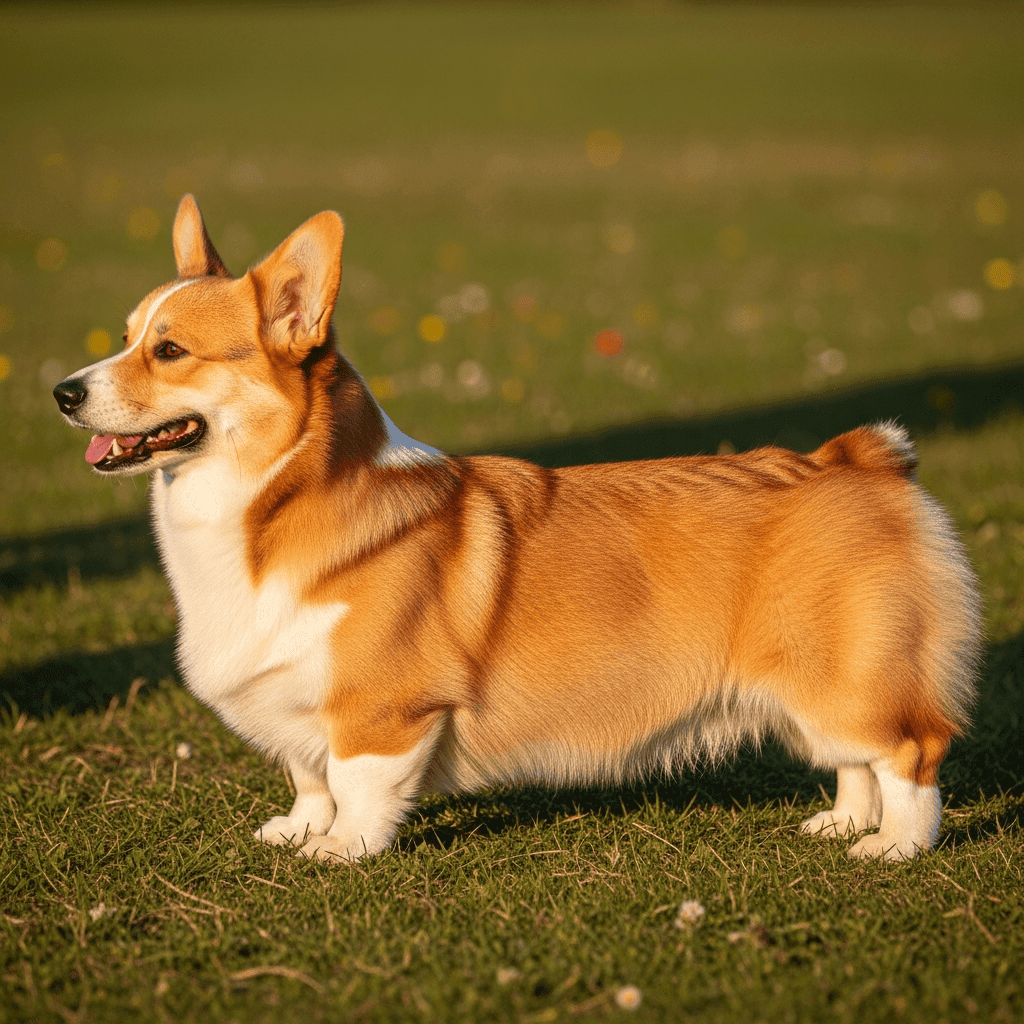
Welsh Corgi Pembroke
FCI Group
1• FCI 39
Size
Small
Origin Country
GB
Height
25-30 cm
Weight
9-12 kg
Lifespan
12-15 years
Temperament
Overview
The Welsh Corgi Pembroke is an incredibly charming dog breed with a rich British herding history. These small yet energetic dogs have been assisting shepherds in herding cattle for centuries – their low, stocky build allows them to nimbly avoid kicks from livestock. The characteristic fox-like head with round, brown eyes and medium-sized, erect ears gives them an exceptionally keen and alert expression.
The coat of the Welsh Corgi Pembroke is of medium length, straight, and dense, with a well-developed undercoat, making it resistant to changing weather conditions. The most commonly seen colors are solid red, tricolor (black and tan with white), and red and tan, often with distinctive white markings on the paws, chest, and neck. Their friendly appearance has been further popularized by Queen Elizabeth II, who was a lifelong owner of this breed.
Despite their small size – standing only 25–30 cm at the withers – the Welsh Corgi Pembroke possesses impressive energy and vigor. Their friendly, open temperament makes them great companions for families with children and other pets. Due to their high intelligence, they quickly learn new commands and are ideal for training in obedience or dog sports such as agility. Modern Corgis primarily serve as companion dogs, forming strong bonds with their owners and enjoying every moment spent together. However, it is important to remember that due to their characteristic body structure (long torso, short legs), they are prone to spinal issues, so regular, moderate exercise and weight control are essential.
The Welsh Corgi Pembroke is distinguished by its characteristic low silhouette and solid, compact build. The head has a fox-like shape – wide between the ears, with a moderate stop and a slightly tapering muzzle. The eyes are well-set, round, medium-sized, in brown color (shade matched to the coat), which gives them an expression of intelligence and alertness.
The ears are medium-sized, erect, and slightly rounded at the tips. According to the FCI standard, a line drawn from the tip of the nose through the center of the eye should intersect or be close to the tip of the ear, emphasizing the harmonious proportions of the head. The body is of medium length, not too short, with a horizontal back line and a strong, muscular build.
Physical parameters of the breed:
- Height at the withers: 25–30 cm
- Males' weight: 10–12 kg
- Females' weight: 9–11 kg
- Body slightly longer than high (proportions 3:5 length of muzzle to skull)
The coat is medium-length, straight, and dense, with a well-developed undercoat resistant to weather conditions. The coat color can be:
- Solid red (in various shades)
- Tricolor – black and tan with white
- Black and tan
- White markings permissible on the paws, chest, neck, and a small amount of white on the head and muzzle
The tail was traditionally docked, but now more and more individuals have a naturally long tail, carried above or below the back line during movement. There are also natural bobtails (short congenital tails). The silhouette of the Welsh Corgi Pembroke exudes energy, alertness, and joy of life – their dynamic posture and vivid personality make them incredibly recognizable and loved around the world.
Welsh Corgi Pembroke is a breed with a bold, friendly, and open temperament. According to the FCI standard, these dogs are hardworking, sociable, and never nervous or aggressive. Their high intelligence and natural desire to work make them excellent companions for both families with children and active singles.
Corgi Pembrokes exhibit a strong herding instinct – they may gently herd children or other animals, nipping at their heels, which is a natural behavior stemming from their herding background. Therefore, early socialization and training are crucial to shape appropriate behavioral responses.
Key personality traits:
- Loyalty to family – they become strongly attached to their guardians
- Cheerful, optimistic disposition – full of energy and zest for life
- Alertness – despite their small size, they can be excellent alarm dogs
- Sociability – they feel comfortable in the company of people and other animals (after proper socialization)
- Intelligence and sharpness of mind – they quickly learn new commands
Due to their intelligence, Welsh Corgi Pembrokes require regular mental stimulation. Without proper engagement, they may become bored, leading to undesirable behaviors such as excessive barking or destruction of objects. They excel in dog sports (agility, obedience, frisbee) and interactive play.
Corgis also have a strong character and may exhibit some independence or stubbornness, which requires consistency from the owner in training. Nevertheless, with the right approach based on positive reinforcement, they become obedient, cooperative dogs. Their cheerful, energetic nature brings a lot of joy to the home and makes them invaluable companions for many years.
Welsh Corgi Pembroke is generally a healthy breed; however, due to its characteristic body structure (long torso, short legs), it is prone to certain orthopedic and genetic conditions. Owners should be aware of these risks and regularly monitor their dog's health.
The most common health issues in Welsh Corgi Pembroke:
- Intervertebral disc disease – due to the long spine and short legs, the breed is particularly susceptible to disc damage, which can lead to pain, paralysis, and in extreme cases, complete paralysis. It is important to avoid jumping from heights, excessive running up and down stairs, and uncontrolled sudden movements.
- Hip dysplasia (HD) – can occur in this breed and lead to pain and limited mobility. Reputable breeders conduct joint examinations on breeding dogs.
- Cataracts and other eye conditions – occur in older individuals, so regular eye examinations are recommended.
- Heart diseases (cardiomyopathies) – may appear in some individuals.
- Obesity – Corgis tend to gain weight, which further stresses the spine and joints and leads to serious health problems. Weight control is absolutely crucial!
- Von Willebrand's disease (blood clotting disorder) – occurs rarely, but it is worth being aware of.
Prevention and recommendations:
- Regular veterinary visits (at least once a year, more often for older dogs)
- Weight control – maintaining proper body weight is the most important element in preventing spinal disorders
- Moderate, regular physical activity – avoiding jumps and sudden movements
- A balanced diet tailored to age and activity level
- Genetic testing for dogs intended for breeding
- Maintaining good back muscle condition through appropriate exercises
With proper care, correct diet, and regular activity, a Welsh Corgi Pembroke can enjoy a healthy life for 12–15 years. The key is owner awareness and a proactive approach to the dog's health.
The care of the Welsh Corgi Pembroke is relatively simple but requires regularity, especially during periods of intense shedding. The coat of this breed is of medium length, straight, and dense, with a well-developed undercoat that protects against cold and moisture.
Brushing:
- During normal periods: at least once a week to remove dead hair and prevent matting.
- During spring and autumn shedding: daily or every other day – Corgis shed quite intensely twice a year, which requires increased attention.
- Use a brush with dense bristles and an undercoat comb (furminator) – this helps effectively remove excess hair.
Bathing:
Corgis do not require frequent baths – a bath every 2–3 months or when the dog is particularly dirty is sufficient. Excessive washing can lead to dry skin and loss of natural oils that protect the coat. Use gentle shampoos designed for dogs.
Ear care:
Due to their upright ears, which are well-ventilated, ear problems occur rarely. Nevertheless, it is worth regularly (once a week) checking the ears for dirt, redness, or unpleasant odor. Clean the ears with a gentle dog ear cleaning solution.
Dental care:
Oral hygiene is very important! Brush your dog's teeth 2–3 times a week with a special toothbrush and toothpaste for dogs. Regular care prevents tartar buildup, gum inflammation, and tooth loss. Additionally, dental treats can be used.
Nail trimming:
Nails should be trimmed every 3–4 weeks if they do not wear down naturally during walks. Too long nails can cause discomfort and walking problems. If you do not feel confident, ask a veterinarian or groomer for help.
Checking paws and pads:
Regularly check the paws for wounds, cracks in the pads, or ingrown nails, especially after walks in rough terrain.
Overall, the care of the Welsh Corgi Pembroke is not demanding, but it requires consistency. Regular brushing sessions are also a great opportunity to strengthen the bond with your dog and observe its health.
Welsh Corgi Pembroke is a energetic and hardworking breed that needs regular physical activity to maintain physical and mental health. These former herding dogs love movement, play, and mental challenges.
Recommended amount of exercise:
- Minimum 45–60 minutes of activity daily – walks, play, training
- Ideally divided into 2–3 sessions (morning, afternoon, evening)
- Intensity adjusted to age, fitness level, and weather conditions
Appropriate forms of activity:
- Walks – daily hikes at varying paces (slow and energetic)
- Fetch games – ball, frisbee (avoid jumps and sudden movements!)
- Agility – an excellent form of activity for intelligent Corgis (with appropriate obstacles)
- Obedience – mental and physical stimulation
- Scent games (nosework) – utilizing natural instincts
- Swimming – an excellent, joint-safe way to stay active (under supervision)
- Outdoor excursions, trekking
IMPORTANT RESTRICTIONS (due to body structure):
- ❌ Avoid jumping from heights (from sofas, beds, cars) – a huge strain on the spine!
- ❌ Limit running up and down stairs – it can lead to disc disease
- ❌ Do not allow standing on hind legs – it can damage the spine
- ✅ Use ramps or lift the dog when it needs to go to a higher level
Mental stimulation:
Just as important as physical activity! Welsh Corgi Pembroke are very intelligent and need mental challenges:
- Interactive toys and puzzles for dogs
- Learning new tricks and commands
- Scent games (finding hidden treats)
- Obedience training
Without the right amount of exercise and mental stimulation, Corgis can get bored, which leads to: excessive barking, destruction of objects, hyperactivity, or behavioral problems. Regular activity also helps with weight control, which is crucial for spinal health. Walking and playing together is a great opportunity to build a bond with your dog and ensure it has a happy, fulfilled life!
Welsh Corgi Pembroke is a very intelligent breed that quickly learns new commands and enjoys working with its owner. Their natural cleverness and willingness to work make training a pleasure, as long as appropriate methods are used.
Best training methods:
- Positive reinforcement – rewarding desired behaviors with treats, praise, and play. Corgis respond excellently to this type of motivation.
- Consistency – clear rules and their enforcement. Corgis can be stubborn, so the owner must be firm (but never aggressive).
- Short, intense sessions – 10–15 minutes of training 2–3 times a day. This helps avoid boredom and loss of concentration.
- Early start – training should begin as early as 8–10 weeks of the puppy's age.
Socialization (CRITICALLY IMPORTANT!):
Due to their strong herding instinct and alertness, early and intensive socialization is crucial. The puppy should be exposed to various stimuli:
- Different people (adults, children, strangers)
- Other dogs and animals
- Different environments (city, forest, stores, public transport)
- Various sounds (cars, children playing, household appliances)
A well-socialized Corgi is friendly, confident, and calm in various situations.
Basic commands to teach:
- Sit, Lie down, Stay
- Come (To me) – the most important safety command!
- Leave it / Drop it
- No (don't pull on the leash)
- Quiet (control barking)
Advanced training activities:
- Agility – an excellent form of activity for agile and intelligent Corgis
- Obedience – precise execution of commands
- Nosework – utilizing natural instincts
- Tricks (roll over, shake, spin, etc.) – excellent mental stimulation
Common challenges in training:
- Stubbornness and independence – Corgis may try to test boundaries. Consistency is needed.
- Herding instinct – they may nip at heels, especially of children. This behavior should be curbed from puppyhood.
- Barking – they can bark a lot, especially when bored or insufficiently stimulated. Teaching the Quiet command is crucial.
- Food motivates – use treats wisely to avoid obesity.
❌ What to AVOID:
- Physical punishment – never hit a dog!
- Shouting and aggression – leads to fear and loss of trust
- Monotony – Corgis get bored quickly, vary the training
With the right approach based on positive reinforcement and consistency, Welsh Corgi Pembrokes become obedient, cooperative dogs that joyfully learn new things. Training is also an excellent opportunity to build a strong bond with the dog and develop its natural talents.
A proper diet is the foundation of health for the Welsh Corgi Pembroke. This breed has a strong tendency towards obesity, which, due to its specific body structure (long spine, short legs), leads to serious orthopedic problems. Weight control is absolutely crucial!
Basic nutrition guidelines:
- High-quality food – choose premium products with a high meat content (min. 60–70%), low grain content, and no artificial additives.
- Adjust portion sizes according to age, weight, and activity – puppies, adult dogs, and seniors have different needs.
- Regular, set feeding times – 2 meals a day for adult dogs (puppies 3–4 times).
- Portion control – accurately measure the amount of food according to the manufacturer's or veterinarian's recommendations.
- Avoid feeding from the table – human food often contains ingredients harmful to dogs and leads to obesity.
Type of food:
- Dry food – convenient, helps clean teeth, stores well
- Wet food – higher hydration level, tasty, but spoils faster
- BARF diet (raw meat and bones) – requires knowledge and consultation with a veterinarian
- It is possible to combine different types of food (e.g., dry + wet)
Key nutrients:
- Protein (25–30%) – building block of muscles, preferably from animal sources
- Fats (12–15%) – energy, healthy skin and coat
- Carbohydrates (moderately) – energy, fiber
- Vitamins and minerals – support for the immune system, bones, and joints
- Omega-3 and omega-6 fatty acids – support for cognitive functions, healthy coat
WEIGHT CONTROL (MOST IMPORTANT!):
Due to the tendency towards obesity, regularly monitor the dog's weight:
- Weigh every 2–4 weeks
- Adult male: 10–12 kg
- Adult female: 9–11 kg
- The dog should have a noticeable waist and ribs that can be felt under a slight layer of fat
- If the dog is gaining weight – reduce portions and increase physical activity
Treats and rewards:
- Should constitute at most 10% of the daily calorie intake
- Choose healthy, low-calorie options (e.g., carrot, apple, special diet treats)
- Use small pieces during training – taste, not quantity, is important
- Avoid sweets, chocolate, onions, garlic, grapes – they are toxic to dogs!
Access to water:
Ensure the dog has constant access to fresh, clean water. Change the water daily and clean the bowl regularly.
Supplementation:
- Omega-3 fatty acids (salmon oil) – support for joints and coat
- Glucosamine and chondroitin – support for joints (especially in older dogs)
- Probiotics – digestive health
- Consult supplementation with a veterinarian!
Diet and age:
- Puppies (0–12 months) – puppy food, rich in protein and calories, 3–4 meals a day
- Adults (1–7 years) – adult dog food, 2 meals a day
- Seniors (8+ years) – senior dog food, reduced calorie content, joint support
With a properly balanced diet and weight control, the Welsh Corgi Pembroke can enjoy a healthy life for many years. Regular consultations with a veterinarian will help tailor the diet to the individual needs of the dog.
Characteristic Traits
Pros
- Friendly and sociable nature
- High intelligence and ease of training
- Loyalty to the family
- Energetic and full of vigor
- Low grooming requirements
- Ideal for apartment living (despite their energy)
- Excellent companion dogs for families with children.
Cons
- Susceptibility to spinal disorders (discopathy)
- Strong tendency towards obesity
- Requires regular physical and mental activity
- May be stubborn during training
- Herding instinct (nipping at heels)
- Intense shedding twice a year
- May bark a lot without proper training.
Behavioral Ratings
Breed History
Welsh Corgi Pembroke is one of the two distinct breeds of Corgi (alongside Welsh Corgi Cardigan), with a history dating back to at least the X century. The breed originates from Pembrokeshire county in southwestern Wales, where it served for hundreds of years as a herding dog for cattle.
There are several legends regarding the origin of the Corgi. One of the more charming tales suggests that Corgis were the steeds of fairies and elves in Welsh mythology – hence the characteristic saddle-like markings on the backs of some individuals. A more credible theory indicates that the ancestors of the Pembroke Corgi were brought to Wales around 1107 by Flemish weavers who settled in the area. The breed likely shares common ancestors with Scandinavian breeds, such as the Swedish Vallhund.
Herding Role:
Welsh Corgi Pembrokes were used as herding dogs for cattle – their low stature allowed them to avoid kicks from livestock, while their short legs enabled quick maneuvers. These dogs nipped at the heels of cattle, forcing the herds to move in the right direction. They were particularly valued for their intelligence, endurance, and courage.
Official Breed Recognition:
- Until 1934, Corgi Pembroke and Cardigan were considered one breed.
- In 1925, Corgis were first exhibited at the Kennel Club show in the UK.
- In 1934, the FCI (Fédération Cynologique Internationale) officially separated Pembroke and Cardigan into two distinct breeds.
- FCI standard for Pembroke: group 1, section 2 (herding dogs for cattle), without working trial.
Royal Patronage:
The international popularity of the Welsh Corgi Pembroke is largely due to the British royal family. In 1933, the Duke of York (later King George VI) gifted his daughter – the future Queen Elizabeth II – a Corgi puppy named Dookie. Since then, Queen Elizabeth became the most famous enthusiast of this breed and bred Pembroke Corgis for over 70 years. She owned more than 30 Corgis and several Dorgis (crossbreeds of Corgis and Dachshunds). The last Corgi of the queen, Willow, passed away in 2018, marking the end of this breeding line.
Thanks to royal patronage, the breed gained immense popularity worldwide. Corgis became a symbol of British culture and national identity.
Modern Times:
Today, Welsh Corgi Pembrokes primarily serve as companion dogs, although some individuals are still used for herding work on farms in Wales. The breed enjoys immense popularity on social media, in films, and in pop culture – their adorable stature and cheerful character have made them one of the most recognizable dogs in the world. In 2022, the FCI updated the breed standard, reflecting changes in the assessment of the appearance and behavior of Pembroke Corgis.
Welsh Corgi Pembroke is a breed with a rich history, strong character, and extraordinary charm, which has accompanied humans for centuries – from Welsh shepherds to the British monarchy – and continues to win the hearts of millions around the world.