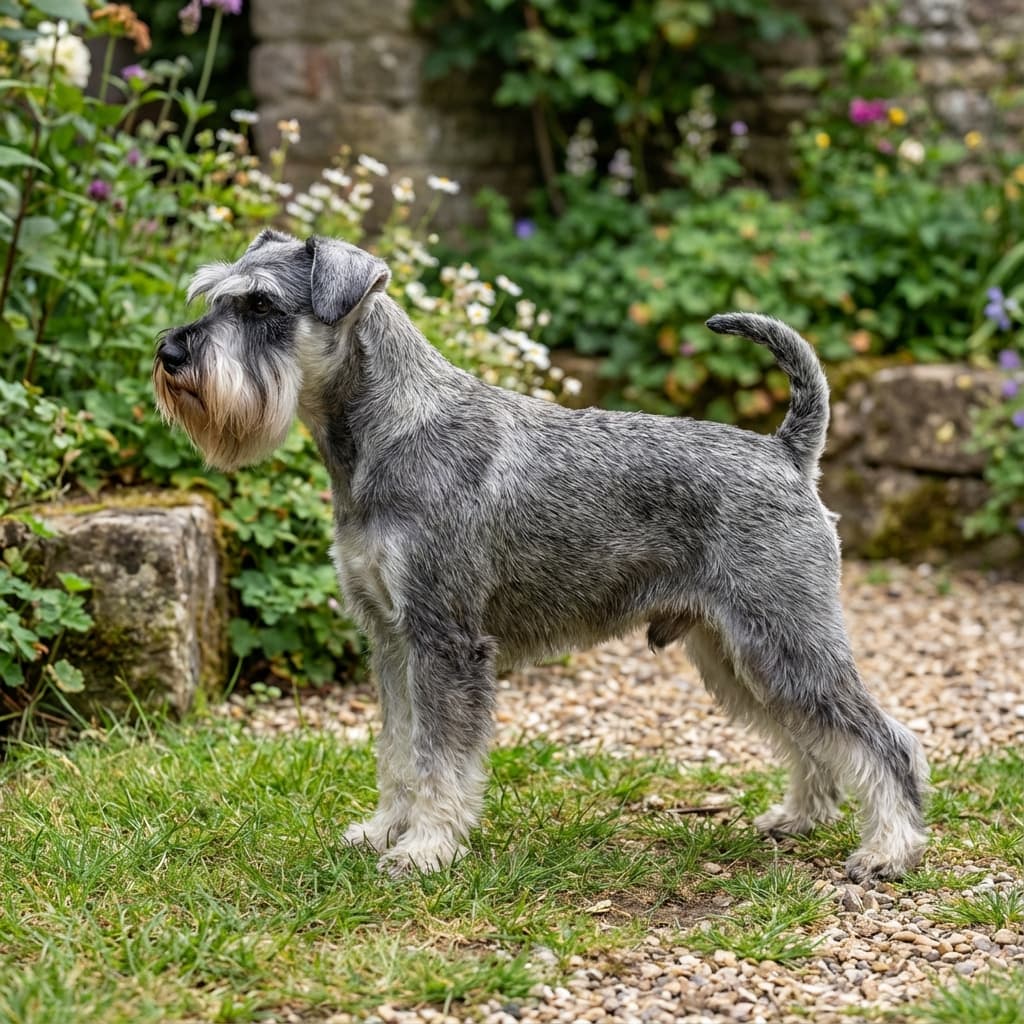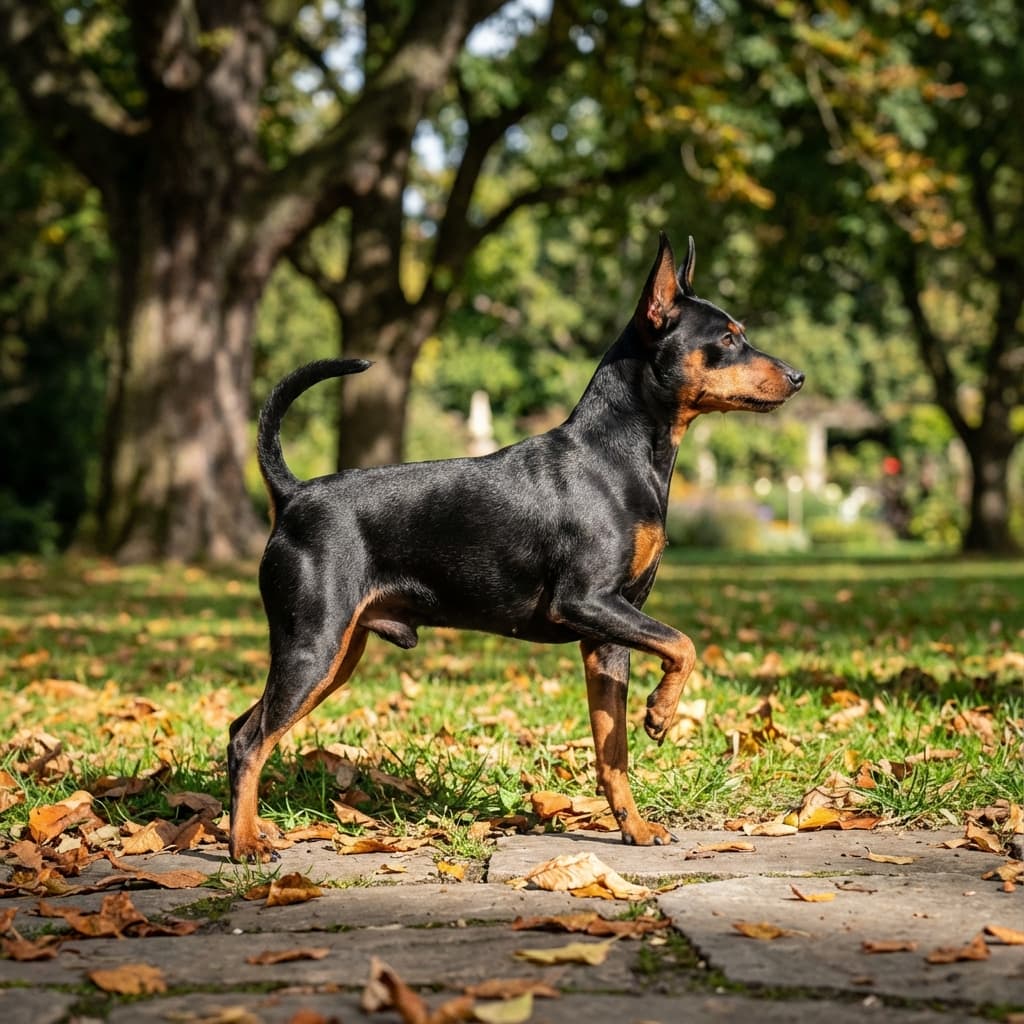
Miniature Pinscher
FCI Group
2• FCI 185
Size
Small
Origin Country
DE
Height
25-30 cm
Weight
4-6 kg
Lifespan
10-15 years
Temperament
Overview
Miniature Pinscher, also known as Zwergpinscher, is a small yet spirited dog that has been winning the hearts of dog lovers around the world for centuries. Its origins trace back to Germany, where, at the turn of the 19th and 20th centuries, breeders aimed to create a breed that combined small size with strength, courage, and remarkable self-confidence.
Despite its compact dimensions, the miniature pinscher is a true ball of energy, always ready for action and full of zest for life. This lively and clever dog reaches a height of 25 to 30 cm at the withers and weighs between 4 to 6 kg, making it an ideal companion for both city dwellers and those in rural areas.
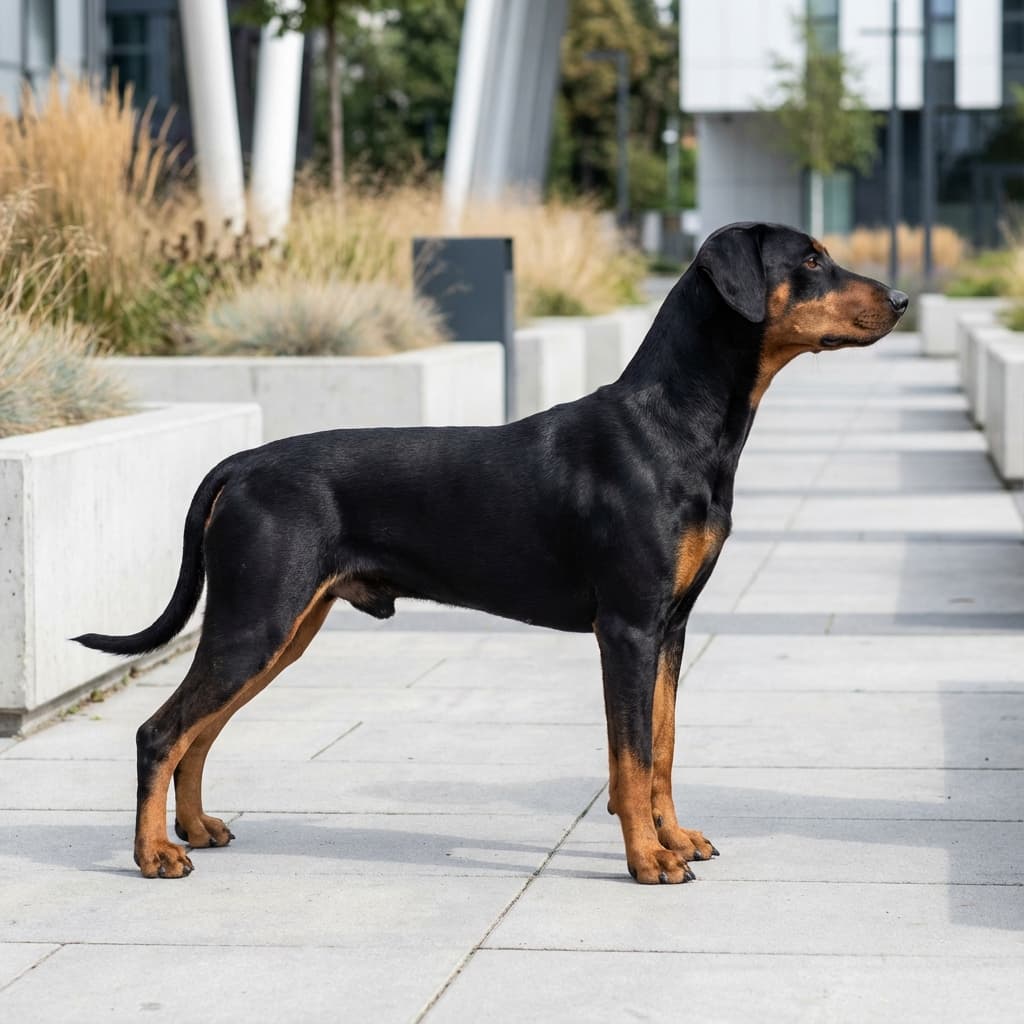
The short, dense, and shiny coat of the miniature pinscher requires minimal grooming, and the coat comes in two elegant versions: solid red and black with tan markings that are intense and clearly defined. The characteristic temperament of this breed often makes the dog the center of attention in any company.
The miniature pinscher is an incredibly affectionate dog that enthusiastically participates in family life and excels in the role of a loyal companion. Its intelligence and innate guarding instinct make it alert and ready to protect its loved ones in any situation.
Training a miniature pinscher is relatively simple, although it requires consistency and a positive approach. This breed loves to learn and perform new tricks, quickly absorbing new commands and tasks. The miniature pinscher needs a daily dose of exercise to maintain its physical and mental health at the highest level.
Regular walks and active play outdoors are key to the happy life of this energetic pet. In an urban environment, miniature pinschers thrive as long as they are provided with sufficient physical activity and mental stimulation.
Despite its small size, the miniature pinscher requires a diet rich in nutrients and high-quality protein to support its active lifestyle. Food tailored to its age, weight, and activity level is essential for a healthy and long life for this dog.
This breed is also known for its exceptional longevity – with proper care, regular veterinary visits, and a healthy diet, a miniature pinscher can live from 12 to even 16 years, being a loyal companion for many wonderful years. The miniature pinscher is a dog full of passion, energy, and joy of life, whose lively disposition and deep bond with family make it a wonderful companion for anyone seeking an active and loyal friend.
Body structure and proportions
The Miniature Pinscher is a dog with a compact, elegant, and harmonious body structure. It reaches a height of 25 to 30 cm at the withers and weighs between 4 to 6 kg, making it a small but definitely not delicate dog. Its silhouette is distinctly square, where the length of the body corresponds to the height at the withers, creating a proportional and balanced figure.
Head and expression
The head is proportional to the rest of the body and features a strong, elongated skull with a flat top and a well-defined stop. The muzzle has a blunt wedge shape with a straight nasal bridge and an intensely black nose. The eyes are dark, oval, full of sparkle and intelligence, giving the Pinscher a characteristic, attentive expression. The ears are set high, hanging, in a V shape, gently adhering to the cheeks.
Body and limbs
The neck is elegantly arched, muscular, smoothly transitioning into strong shoulders. The body is short, strong, and well-built, with a straight or slightly sloping top line. The chest is moderately wide and deep, and the belly has a nice, subtle transition from the chest. The tail is natural, preferably in a sickle or saber shape.
The limbs are strong, straight, with well-muscled forearms and compact paws with a cat-like shape. Short, dense, smooth, and shiny coat that lies close to the body makes the dog always look well-groomed and elegant. The coat comes in two main variations: solid red (from red to reddish-brown) and black with tan markings, featuring intense, clearly defined tan points.
Temperament and Personality
The Miniature Pinscher is known for its intense temperament, liveliness, and extraordinary energy. By nature, it is a lively, confident, brave, intelligent, and independent dog. Its alertness and innate guarding instinct make it an excellent alarm dog that quickly responds to any changes in the environment and unfamiliar sounds.
Relationships with Family and Other Animals
Miniature Pinschers are extremely attached to their guardians and often show very strong emotional bonds with the entire family. They love to be the center of attention and enjoy playing with children and other pets, provided they have been properly and early socialized. Their intelligence makes them easy to train; however, they can also show stubbornness and independence, so it is crucial to use consistent, positive training methods.
Character Traits
Miniature Pinschers are known for their natural desire to explore their surroundings, so it is important to remain vigilant during walks to avoid unexpected escapes. Their temperament can sometimes take on dominant forms, which is why early socialization and systematic training are absolutely essential for the proper development of social skills and behaviors. Proper care, patience, consistency, and love from their guardians make the Miniature Pinscher an excellent family dog that brings joy, energy, and devotion to the daily life of every household member.
General Health Status
The Miniature Pinscher is generally a healthy and resilient breed; however, like all purebred dogs, it may be prone to certain hereditary conditions and those specific to small dogs. Owners should be aware of the typical health issues that may arise in this breed to provide appropriate prevention and quick intervention when necessary.
Most Common Conditions
One potential health issue that Miniature Pinschers are susceptible to is hip dysplasia, which can lead to chronic pain, stiffness, and significant mobility limitations. Additionally, they may experience eye problems, such as cataracts or progressive retinal atrophy (PRA), which can negatively affect the dog's vision.
Miniature Pinschers are also prone to dental problems, including tartar buildup and periodontal disease, making it extremely important to maintain regular oral hygiene through tooth brushing and the use of specialized dental treats.
Prevention and Veterinary Care
Owners should remember to schedule regular veterinary visits to systematically monitor the dog's overall health, carry out necessary vaccinations, and deworming according to the specialist's recommendations. Proper diet and regular physical activity are crucial for maintaining the health and condition of the Miniature Pinscher. Maintaining an appropriate weight is essential to avoid obesity, which can lead to numerous health problems, including diabetes, heart disease, and excessive joint strain.
With proper veterinary care, a balanced diet, and an active lifestyle, a Miniature Pinscher can enjoy good health and live up to 16 years, being a loyal companion for many wonderful years.
Basic Coat Care
Grooming a Miniature Pinscher is relatively simple and low-maintenance, thanks to its short, dense, and sleek coat that does not require complicated grooming procedures. The coat is smooth, shiny, and natural, making it difficult for dirt and debris to stick to it.
Regular brushing, at least once a week, will help remove dead hair, stimulate the skin, and keep the coat in excellent condition and healthy shine. It is also recommended to bathe the dog as needed, especially if it has frequent contact with mud, dust, or other contaminants. It is advisable to use gentle shampoos specifically designed for dogs to avoid skin irritation and maintain the natural protective barrier of the skin.
Oral Hygiene
Miniature Pinschers have a strong tendency to accumulate tartar and develop periodontal disease, so it is extremely important to regularly care for their teeth. Owners should use appropriate dental treats, specialized chewing toys, and systematically brush their pet's teeth with a dog toothbrush and toothpaste to effectively prevent dental problems and bad breath.
Ear and Nail Care
In addition to caring for the coat and teeth, special attention should also be paid to the ears of the Miniature Pinscher. They should be regularly checked and gently cleaned to avoid infections, wax buildup, and bacterial growth. Miniature Pinschers have V-shaped hanging ears that should be kept clean and dry.
Nails should be regularly trimmed to prevent excessive growth, which can lead to discomfort, walking problems, and joint damage. Regular visits to a professional groomer can also help keep the dog in excellent condition, especially before shows, competitions, or other important events. Proper grooming of a Miniature Pinscher not only ensures its health and comfort but also significantly strengthens the emotional bond between the dog and its owner.
Physical Activity Needs
The Miniature Pinscher is a breed with a high energy level that requires regular and varied physical activity to maintain health, good condition, and mental balance. Due to their lively and energetic temperament, Miniature Pinschers need daily walks and an appropriate amount of time for play and exploration of their surroundings.
It is recommended to provide the dog with at least 30 to 60 minutes of activity daily, which can include leashed walks, free running in a safe, enclosed area, and interactive play with the owner. Miniature Pinschers love activities that engage both their body and mind, such as fetching, searching for hidden toys, or agility exercises.
Forms of Activity and Mental Stimulation
It is worthwhile to regularly take the dog on trips to the park, where it can run, sniff, and play with other well-socialized dogs. Social interactions with other canines are extremely important for the development of social skills and the confidence of the Miniature Pinscher.
If the Miniature Pinscher does not receive an adequate amount of exercise and mental stimulation, it may become overly active, restless, or frustrated at home, which can lead to undesirable behaviors such as destroying objects, excessive barking, or difficulty concentrating.
Adjusting Activity to Age and Condition
Owners should also remember to adjust the level and intensity of activity to the dog's age, physical condition, and health status. Younger dogs and puppies may need more exercise and play, while older dogs may require shorter, less intense activities and more rest. It is important to regularly monitor the dog's health and consult with a veterinarian to tailor activities to its individual needs.
Miniature Pinschers are versatile dogs, which means they can successfully participate in various forms of physical activity and dog sports, such as agility, obedience, or rally, which can be a wonderful way to strengthen the bond between the dog and its owner while developing its skills. Regular, systematic physical activity is absolutely crucial for the health, happiness, and longevity of the Miniature Pinscher.
Training Basics and Early Start
Training a miniature pinscher can be both enjoyable and rewarding, as well as present certain challenges due to their high intelligence and sometimes stubborn and independent nature. It is extremely important to start training as early as possible, ideally during the puppy stage, to systematically reinforce positive behaviors and teach the dog basic commands such as Sit, Stay, Come, and Lie Down.
Training Methods and Motivation
Miniature pinschers are very bright, quickly learning new commands and tasks; however, they can also display independence and a tendency to test boundaries, making it crucial to be consistent, patient, and firm during the training process. Positive reinforcement, such as treats, favorite toys, and verbal praise, is absolutely essential in training a miniature pinscher as it motivates them to cooperate and builds positive associations with learning.
Training sessions should be short (10-15 minutes) but regular, conducted several times a day to keep the dog's attention high and avoid boredom or frustration. It is also beneficial to introduce various forms of activity, such as play with other well-socialized dogs, exercises at home, or training in new, unfamiliar environments, to keep the dog in excellent physical and mental condition.
Dog Sports and Socialization
Miniature pinschers can be excellent dogs for dog sports such as agility, obedience, rally, or dog dancing, allowing them to constructively express their energy, intelligence, and natural abilities. Owners should also systematically ensure their dog is socialized from a young age to provide them with confidence in various life situations, with different people, and other animals.
Proper training and early, systematic socialization are absolutely crucial for the healthy emotional and social development of a miniature pinscher, enabling them to become a balanced, confident, and well-mannered family dog and companion.
Basics of a Healthy Diet
The diet of a miniature pinscher should be appropriately balanced, nutritious, and carefully tailored to their age, weight, level of physical activity, and individual health needs. Owners should choose only high-quality food that contains all the essential nutrients, including high-quality animal protein, healthy fats, carbohydrates, vitamins, and minerals.
Feeding Frequency and Weight Control
Miniature pinschers are small dogs with a fast metabolism, so it is extremely important not to overfeed them and to regularly monitor their weight to effectively avoid obesity, which can lead to many serious health problems, including diabetes, heart disease, joint issues, and excessive strain on the spine.
It is recommended to feed the dog at regular, consistent intervals, preferably twice a day – in the morning and evening – to maintain their energy at an appropriate, stable level and to prevent digestive problems. It is also beneficial to add fresh fruits and vegetables to the miniature pinscher's diet as a healthy snack, such as carrots, seedless apples, or cucumbers.
Safe and Unsafe Foods
However, it is imperative to avoid foods that can be toxic or dangerous for dogs, such as chocolate, grapes, raisins, onions, garlic, avocados, xylitol, and products containing caffeine. It is important to regularly monitor the dog's weight and overall condition to continuously adjust the diet to their actual needs and to consult with a veterinarian if there are any doubts.
Hydration and Supplementation
Miniature pinschers should have constant, unrestricted access to fresh, clean drinking water to ensure proper hydration and the correct functioning of all systems. In some cases, a veterinarian may recommend supplementation, such as omega-3 fatty acids to support skin and coat health or glucosamine for joint protection.
Proper, conscious nutrition is absolutely crucial for the health, condition, vitality, and longevity of a miniature pinscher, so owners should be fully aware of the quality of the food, ingredients, and nutritional value of the products they provide to their beloved pets.
Characteristic Traits
Pros
- Small and handy size
- Intelligent and quick to learn
- Minimal coat maintenance
- Excellent family dog and companion
- Alert and brave guard.
Cons
- Requires a lot of movement and activity
- Can be stubborn and independent
- Needs consistent training and socialization.
Behavioral Ratings
Breed History
The Origins of the Breed in Germany
The Miniature Pinscher, also known as the Zwergpinscher, has a fascinating history that dates back to the 19th century in Germany. This breed was created through careful breeding of larger pinschers, such as the German Pinscher, with smaller local dogs to produce a small yet strong, brave, and alert dog that could successfully serve as both a farm guardian and a loyal companion for the family.
The Development and Popularization of the Breed
Miniature Pinschers quickly gained recognition and popularity among German breeders, and their numbers in official pedigree books significantly increased in the first decades of the 20th century. By 1925, the number of registered Miniature Pinschers exceeded an impressive 1300 individuals, reflecting the immense popularity of this breed at that time.
The breed was particularly valued for its courage, loyalty, alertness, and remarkable confidence, making it an ideal watchdog for guarding farms, stables, and homes against rodents and intruders. Among breeders and owners, two basic coat colors were established from the numerous color variations: solid red and black and tan.
Modern Times and Breed Standards
As time went on, Miniature Pinschers gained recognition not only as guard dogs but also as companion dogs, contributing to their widespread recognition, popularity, and distribution throughout Europe and beyond, including the United States. In 2007, the FCI (Fédération Cynologique Internationale) published the current breed standard for the Miniature Pinscher, which details its physical characteristics, proportions, temperament, and requirements regarding structure and disposition.
Today, the Miniature Pinscher is one of the most recognizable, valued, and beloved breeds among companion dogs worldwide, and its popularity shows no signs of waning. Owners around the globe appreciate their loyalty, intelligence, courage, and extraordinary energy, which make them excellent, faithful companions in the daily lives of every family.