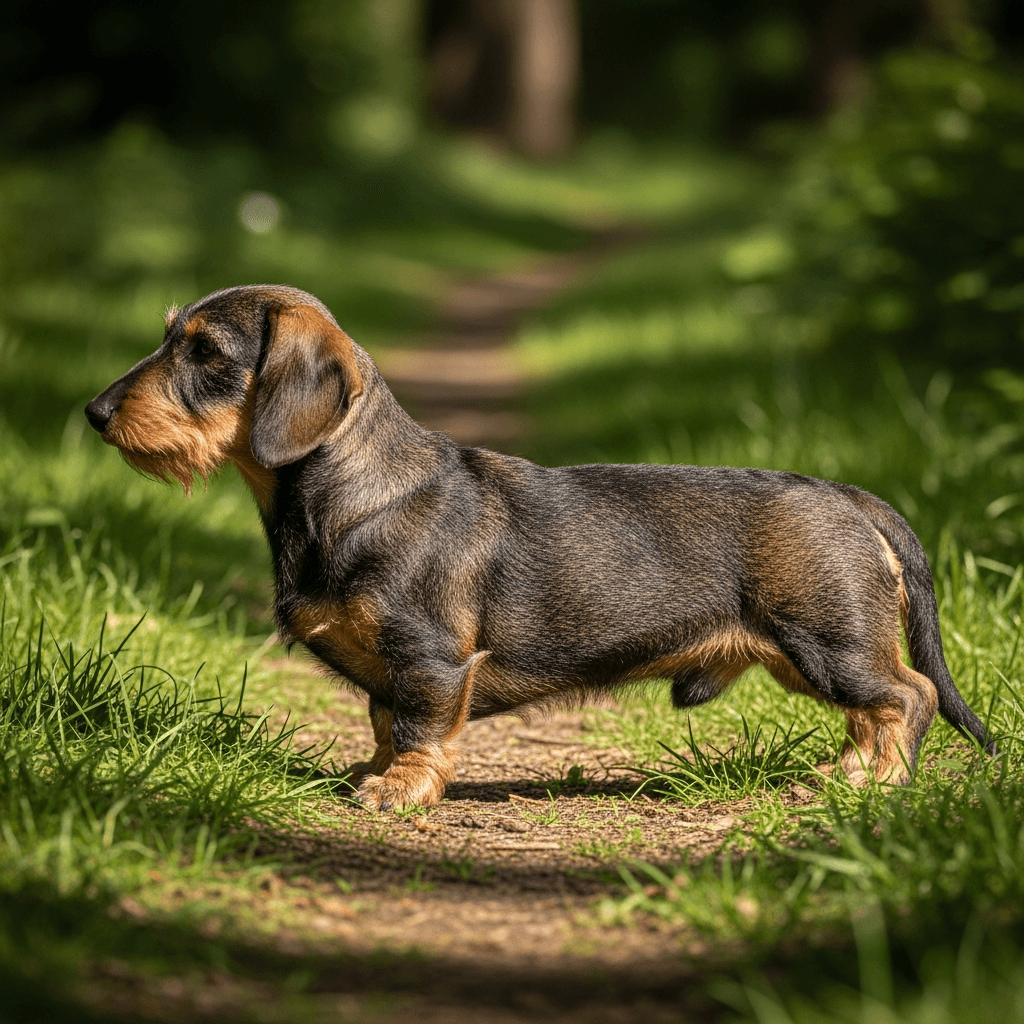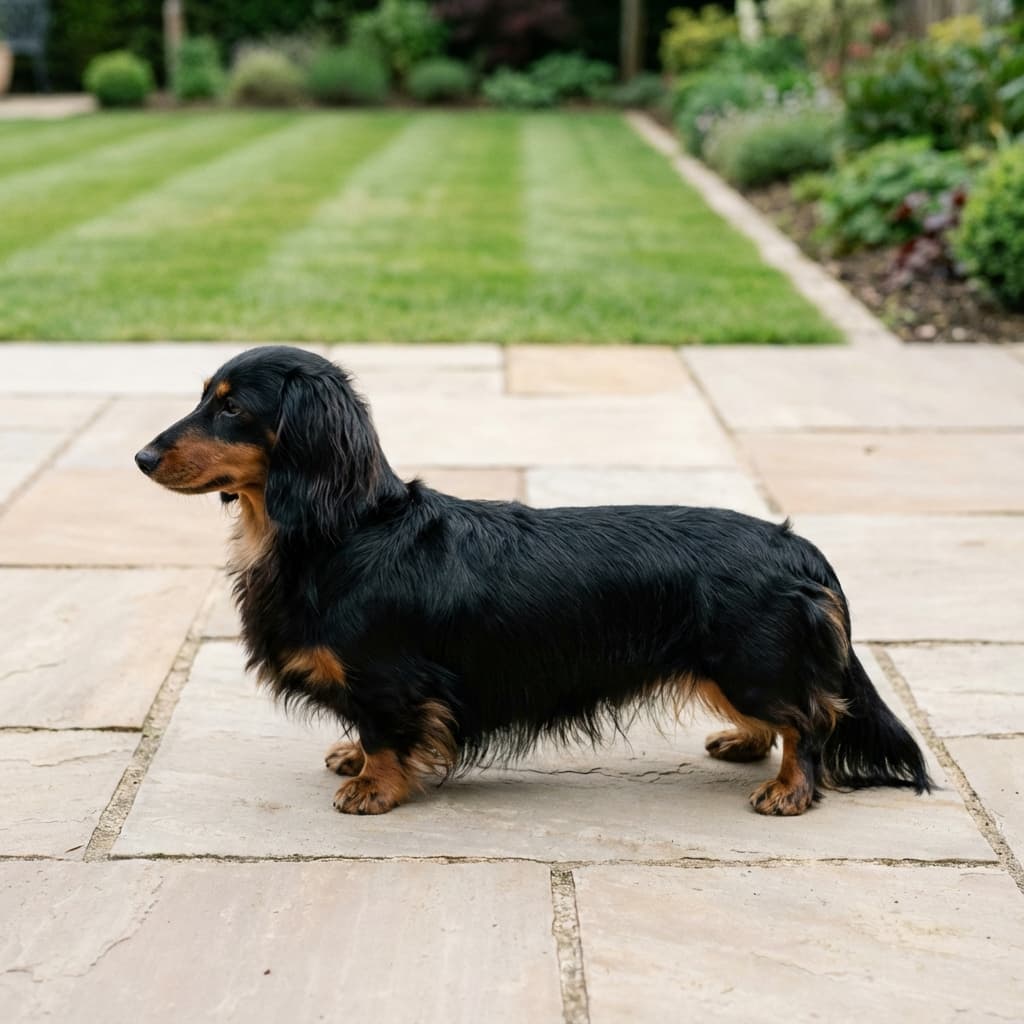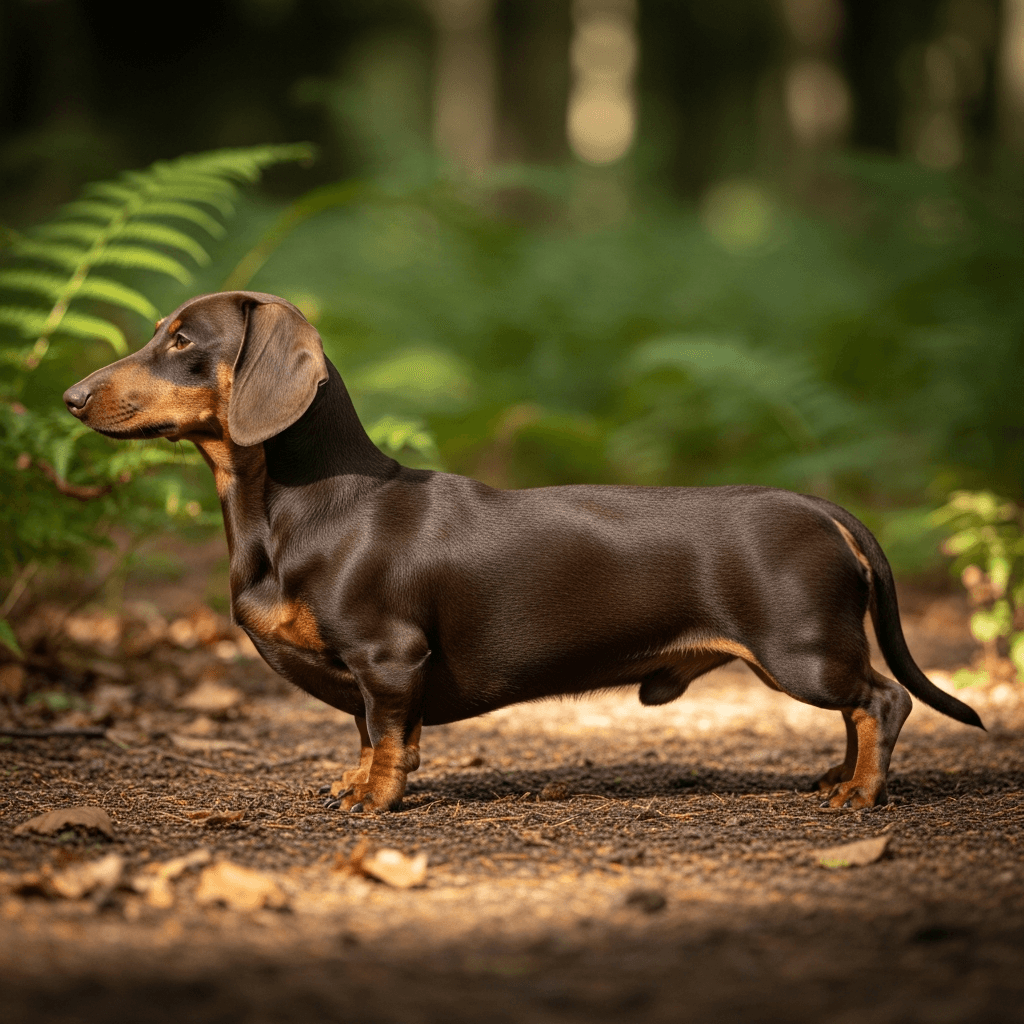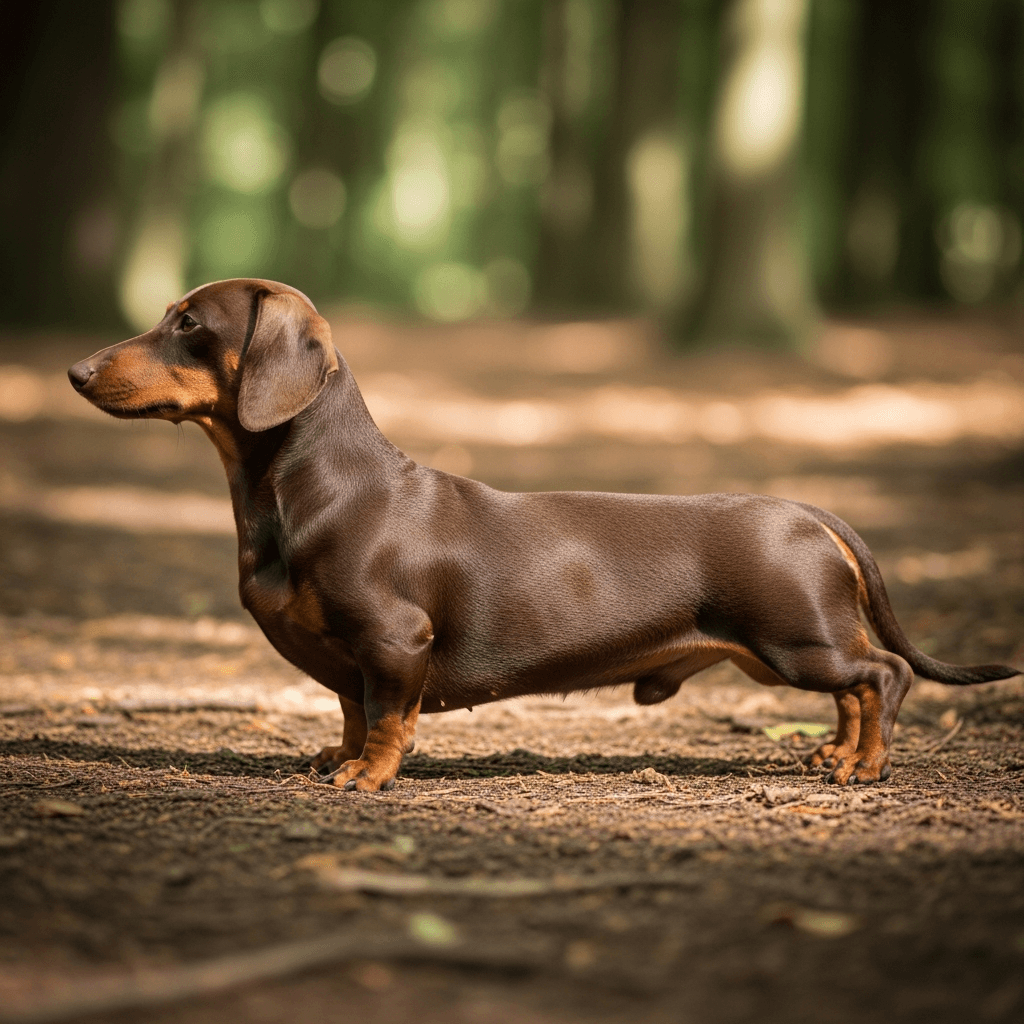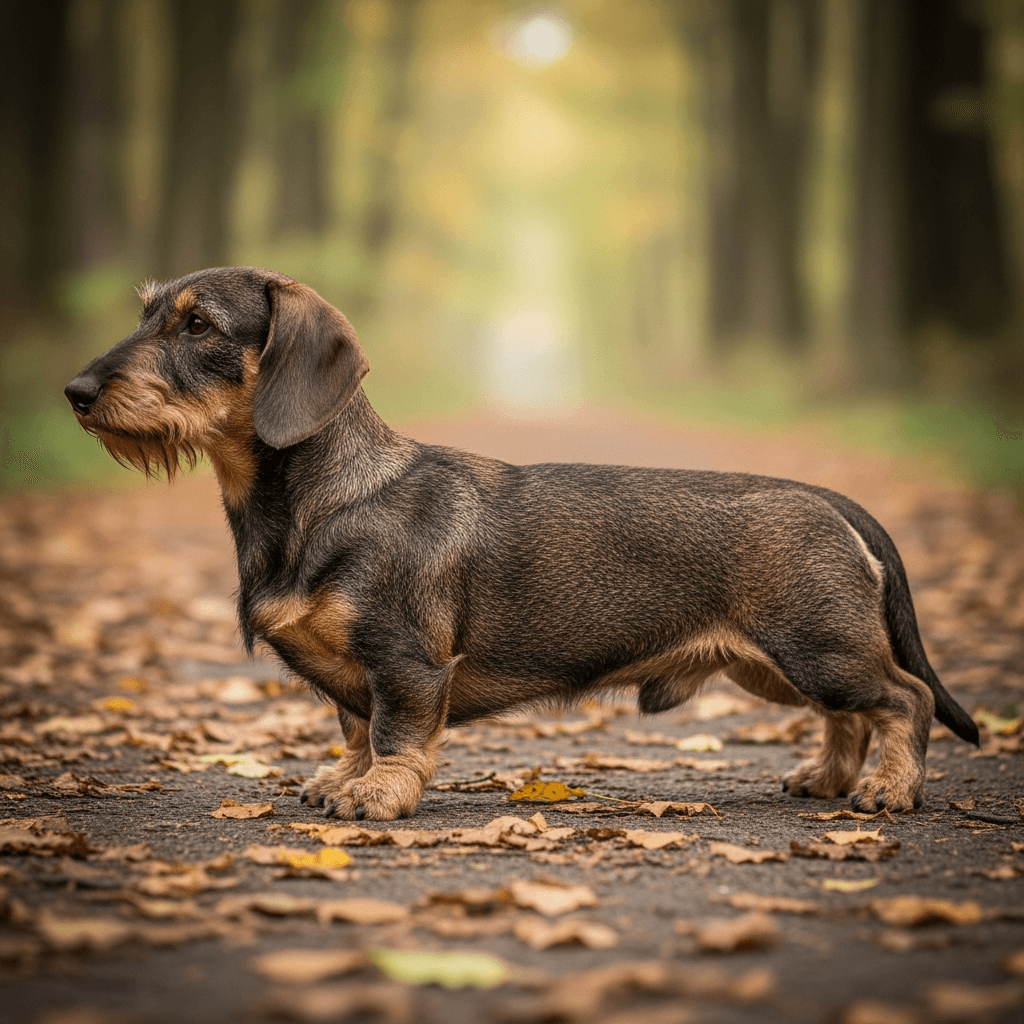
Wire-haired rabbit dachshund
FCI Group
4• FCI 148G
Size
Small
Origin Country
DE
Height
27-32 cm
Weight
3-4 kg
Lifespan
12-16 years
Temperament
Overview
Wirehaired Rabbit Dachshund is an incredibly fascinating breed that will surely attract the attention of dog lovers with strong personalities. Originating from Germany, this small yet energetic dog has a rich history dating back to the Middle Ages, when dogs of this breed, due to their unique body structure, made excellent hunters.
Their low silhouette and elongated body were ideal for hunting small game, both on the surface and in underground burrows. The Wirehaired Rabbit Dachshund is the smallest variety among dachshunds, making it a perfect companion for those who prefer smaller dogs with a big character.
Characteristic of this breed is the elongated head with a keen expression in the eyes, giving it an intelligent and friendly appearance. Their coat comes in three varieties – short-haired, long-haired, and wire-haired, with the wirehaired rabbit dachshund standing out due to its rough, dense coat that is resistant to harsh weather conditions.
These dogs have a balanced temperament while simultaneously brimming with energy, which means they require regular physical activity. They are known for their loyalty and friendliness, making them ideal family companions. The intelligence of dachshunds allows them to learn quickly, but their natural stubbornness can pose a challenge during training. They require patience and consistency, but these efforts are worth it, as the wirehaired rabbit dachshund is a dog with a huge personality, full of determination and perseverance.
In the further part of the guide, you will learn more about their health, grooming, exercise needs, and fascinating history. You will also discover details about their distinctive appearance and behavior that make this breed unique. Get ready for an exciting journey into the world of dachshunds, which impress with their courage, intelligence, and tenacity.
The wire-haired rabbit dachshund is characterized by its unique appearance, which distinguishes it from other breeds. Its silhouette is low and elongated, with a well-muscled body, allowing for agile movement both on the ground and in narrow burrows.
Dimensions and build:
- Height at the withers: from 27 to 32 cm
- Chest circumference: up to 30 cm (measured at a minimum age of 15 months)
- Weight: usually 3-4 kg
- Silhouette: low, elongated, with strong musculature
Head characteristics: The head of the dachshund is elongated, with pronounced eyebrows and a keen expression in its eyes, giving it an intelligent appearance. The eyes are medium-sized, almond-shaped, and range in color from dark reddish-brown to black-brown. The ears are set high, rounded at the tips, reaching the corners of the mouth.
Coat: The coat of the wire-haired dachshund is dense, rough to the touch, with a well-developed undercoat, which protects it from adverse weather conditions. It forms a characteristic beard on the muzzle, and the eyebrows are distinctly marked. The topcoat lies close to the body.
Coloration: The coloration of the dachshund can be very diverse:
- Solid colors: from red through reddish-brown to sandy
- Two-colored: black and tan or chocolate and tan
- Marbled (merle): dark base (black, red, or gray) with irregular gray or beige spots
- Brindle: red or yellow with dark stripes
Tail: The tail is of medium length, carried along the line of the back or slightly drooping, forming a harmonious extension of the back line. Overall, it creates the impression of a dog with a strong, healthy, and agile body, making the wire-haired rabbit dachshund visually appealing and functionally well adapted to its original purpose.
The wire-haired rabbit dachshund is a dog with a strong personality and a balanced temperament, combining friendly traits with natural hunting instincts. By nature, they are friendly and sociable dogs that get along well with family and – after proper socialization – with other animals.
Character traits:
- Loyalty: Dachshunds are exceptionally loyal to their owners and often form a very strong emotional bond with them.
- Courage: Despite their small size, dachshunds exhibit remarkable courage and confidence.
- Intelligence: They learn quickly and understand commands, although they may be selective in following them.
- Stubbornness: Their characteristic stubbornness can make them somewhat difficult to train, but with the right approach and consistency, excellent results can be achieved.
- Alertness: Their hunting instinct makes them alert and sensitive to sounds in their surroundings.
Behavior at home: Dachshunds are excellent watchdogs – they will gladly inform you of any noise or visitor. They can be somewhat noisy, which should be taken into account during training. Their hunting nature means they love to sniff, track, and explore their environment, which should be considered during walks and playtime.
Social relationships: Proper socialization from a young age is crucial for shaping a harmonious and balanced dog. Dachshunds tolerate children well if treated with respect. With other dogs, they may show some dominance, especially towards larger breeds – they are unaware of their small size!
With proper upbringing, patience, and consistent training, the wire-haired rabbit dachshund will become a wonderful companion in everyday life – loyal, intelligent, and full of character.
The wire-haired rabbit dachshund, like any purebred breed, has its characteristic health predispositions that should be taken into account. Proper prevention and awareness of potential problems will help ensure a long and healthy life for the dog.
Most important health issues:
1. Disc disease (intervertebral disc disease)
Due to their characteristic body structure – elongated spine and short legs – dachshunds are particularly susceptible to spinal problems, mainly disc disease. This can lead to pain, limited mobility, and in extreme cases, paralysis. Prevention:
- Maintaining a healthy body weight (obesity significantly strains the spine)
- Avoiding jumps from high places (furniture, stairs)
- Providing proper spinal support (e.g., dog stairs)
- Moderate, regular physical activity without extreme loads
2. Dental problems
Dachshunds can suffer from dental issues, including tartar and periodontal disease. Recommended prevention: regular teeth cleaning (at least 2-3 times a week), dental chews, periodic veterinary check-ups.
3. Skin allergies
This breed may experience contact or food allergies, manifested by itching, skin redness, or hair loss. Owners should closely monitor the dog's skin condition and quickly respond to concerning symptoms.
4. Eye problems
Eye conditions such as cataracts or progressive retinal atrophy (PRA) may occur, especially in older individuals.
Health prevention:
- Regular check-ups with the veterinarian (at least once a year)
- Timely vaccinations
- Regular deworming (every 3-6 months)
- Weight control and adjusted diet
- Proper physical activity without excessive strain on the spine
- Maintaining oral hygiene
Life expectancy: With proper care, wire-haired rabbit dachshunds live on average 12-16 years, and some individuals can reach up to 18 years. Proper health care is an investment in the long and happy life of your four-legged friend.
Grooming a wire-haired rabbit dachshund requires regularity and attention to keep its characteristic coat in excellent condition and to ensure the overall health and hygiene of the dog.
Coat care:
Brushing
The wiry coat of the dachshund requires regular brushing at least once a week to remove dead hair, prevent matting, and maintain natural shine. Recommended tools:
- Brush with stiff natural or synthetic bristles
- Medium-toothed metal comb
- Furminator for removing undercoat (use cautiously, no more than once every 2 weeks)
Trimming (plucking)
Wire-haired dachshunds require regular trimming – plucking dead guard hairs. This should be done about 2-3 times a year. You can learn this technique yourself or use the services of a professional groomer. Trimming helps maintain the proper structure of the coat and its protective properties.
Hair cutting
Regular hair cutting is essential, especially in the areas of:
- Ears (prevents dirt accumulation)
- Chin and beard
- Paws (between the toes)
- Anal area (hygienic reasons)
Baths:
Baths should be given only when necessary – usually every 2-3 months or when the dog gets dirty. Bathing too frequently can dry out the skin and weaken the natural protective layer of the coat. Use gentle shampoos designed for wire-haired dogs.
Ear hygiene:
The dachshund's ears should be checked regularly (once a week) and cleaned as needed using special ear cleaning products for dogs. Droopy ears are more prone to infections, so monitoring is particularly important.
Oral hygiene:
Regular teeth cleaning (2-3 times a week) with a toothbrush and dog toothpaste prevents tartar buildup and periodontal disease.
Nail care:
Nails should be trimmed as needed, usually once every 3-4 weeks. Overly long nails can cause discomfort, pain, and walking problems. If you hear the characteristic clicking of nails on the floor while walking – it's a sign that it's time to trim them.
Skin check:
During brushing, check the skin for:
- Ticks (especially after walks in the woods)
- Redness or rashes
- Lumps or other abnormalities
- External parasites
Proper grooming not only improves the dog's appearance but also affects its health, well-being, and quality of life. A regular grooming routine is also an excellent opportunity to strengthen the bond with your dachshund.
The wire-haired rabbit dachshund is a dog with a high energy level that requires regular physical activity to maintain physical health, good mental well-being, and an appropriate weight. Properly meeting its exercise needs is crucial for a happy and balanced dog.
Daily exercise needs:
Walks:
Daily walks are essential – it is recommended to have a minimum of 30-60 minutes of activity per day, preferably divided into 2-3 shorter sessions. Dachshunds love to explore their surroundings, sniff, and track, so walks should provide them with the opportunity to exhibit natural hunting behavior.
Types of activities:
- Walks on varied terrain – meadows, forests, parks (be careful of burrows and holes that the dachshund might jump into!)
- Fetch games – balls, toys (avoid throwing high to protect the spine)
- Searching for hidden treats – engages the sense of smell and hunting instinct
- Playing with other dogs – a great opportunity for socialization
- Interactive toys – treat balls, dog puzzles
Mental activity:
Dachshunds are intelligent dogs that also need mental stimulation. Incorporate training elements during walks:
- Obedience exercises in different locations
- Searching for hidden objects (nosework)
- Learning new tricks
- Strategic games requiring problem-solving
Dog sports:
Dachshunds are agile and eager to participate in various sports activities:
- Agility – obstacle course (adapted for small breeds, without high jumps)
- Obedience – obedience competitions
- Rally-O – a combination of obedience and agility
- Earthdog trials – competitions for burrowing dogs (specifically for dachshunds!)
- Nosework – scent searching
IMPORTANT – Spine protection:
Due to the specific body structure of the dachshund, it is necessary to avoid activities that may excessively strain the spine:
- ❌ High jumps (e.g., jumping off the couch, bed)
- ❌ Going up and down stairs (especially with a puppy)
- ❌ Standing on hind legs (begging)
- ❌ Extremely intense running on uneven terrain
- ✅ Provide steps for the dog or ramps to furniture
- ✅ Carry the dachshund when navigating stairs (especially young and older dogs)
Benefits of regular activity:
- Maintaining a healthy weight (preventing obesity that strains the spine)
- Better mental well-being and stress reduction
- Reducing excess energy and destructive behaviors
- Strengthening muscles that support the spine
- Socialization and interaction with the environment
- A stronger bond between the dog and owner
Adjusting activity to age:
- Puppies (up to 12 months): Short, frequent play sessions, avoiding overload during growth
- Adult dogs (1-8 years): Full activity according to guidelines
- Seniors (8+ years): Gentler, condition-adjusted walks, greater emphasis on comfort
Remember that the wire-haired rabbit dachshund is a hunting dog in a compact package – it needs movement and activity to be happy and healthy. Regular exercise is not a luxury but a basic need for this energetic breed!
Training a wire-haired rabbit dachshund can be both rewarding and challenging. This breed combines high intelligence with characteristic independence and stubbornness, which requires the owner to have patience, consistency, and the right training approach.
Characteristics of the dachshund as a learner:
- Intelligence: Dachshunds quickly understand new commands and can make associations
- Stubbornness: Their hunting background has made dachshunds independent and capable of making decisions on their own
- Selective obedience: A dachshund may know a command perfectly but decide that they don't want to follow it at that moment
- Sensitivity: Despite their strong character, dachshunds are sensitive to the tone of voice and mood of their owner
Best training methods:
1. Positive reinforcement
The most effective method is reward-based training:
- High-value treats (small pieces to avoid weight gain)
- Verbal praise (in an enthusiastic tone)
- Playing with a favorite toy as a reward
- Petting and cuddling
❌ Avoid physical punishment and yelling – dachshunds can become distrustful or even more stubborn. They operate on the principle: The more you yell, the more convinced I am that I am right.
2. Consistency and patience
The key to success with a dachshund is ironclad consistency:
- Rules must be clear and non-negotiable
- All family members should use the same commands
- Do not give in when the dachshund tries to manipulate (and they will try!)
- Be patient – they may need more repetitions than other breeds
3. Short, frequent training sessions
Dachshunds have limited patience for monotonous exercises:
- Training sessions: 5-10 minutes, 2-3 times a day
- Vary the exercises to avoid boredom
- End training on a positive note (successful execution)
- Train in different locations to reinforce behavior in various conditions
Basic commands to teach:
Stage 1 – Basics (from 8 weeks of age):
- Sit – basic control command
- Lie down – calming and control
- Stay – safety in various situations
- Come – CRITICAL command for safety (dachshunds have a strong hunting instinct!)
- No – interrupting undesirable behavior
Stage 2 – Advanced:
- Leave it – impulse control (especially important during walks)
- Quiet – controlling barking
- Go to your bed – managing space
- Heel – walks without pulling
Socialization:
Proper socialization is just as important as obedience training:
Critical periods:
- 3-12 weeks of age – the most important period for socialization
- 3-6 months – continuation and reinforcement
What to teach a dachshund:
- Meeting different people (adults, children, in various outfits)
- Interactions with other dogs (different breeds and sizes)
- Various environments (city, forest, dog-friendly stores, public transport)
- Different sounds (cars, thunder, vacuum cleaner, doorbell)
- Handling by a veterinarian and groomer
Group classes:
Participating in group classes (puppy kindergarten, obedience courses) is very beneficial:
- Learning in the presence of other dogs (greater distractions)
- Professional guidance from a trainer
- Socialization with other dogs in a controlled environment
- Learning from different instructors
Common challenges and solutions:
Problem: Selective deafness to the Come command
✅ Solution: Always reward for coming (even if it takes a long time), train on a long leash, never punish after coming (the dog will associate coming with punishment)
Problem: Excessive barking
✅ Solution: Teach the Quiet command, reward for calmness, do not reinforce barking with attention, identify causes (boredom, fear, needs)
Problem: House training difficulties
✅ Solution: Frequent outings (especially after meals and naps), established schedule, rewards for going outside, patience
Problem: Destructive behaviors
✅ Solution: Adequate physical and mental activity, chew toys, limiting access to valuable items
Advanced training:
Once the basics are mastered, dachshunds can participate in:
- Agility – for small breeds
- Obedience – obedience competitions
- Earthdog trials – natural burrowing trials for dachshunds
- Nosework – scent tracking
- Trick training – learning tricks (fun and engaging)
Golden rules for training a dachshund:
- Be more stubborn than your dachshund (difficult, but possible!)
- Reward immediately (within 2 seconds of the behavior)
- Short sessions, frequently repeated
- End on a success
- Never give up – the dachshund will notice and take advantage
- Make training fun, not a chore
- Remember: Your dachshund knows the command, they just don't always feel like following it
Proper training of a wire-haired rabbit dachshund not only improves their behavior but also strengthens the deep bond between the dog and the owner. A trained dachshund is a happy dachshund that understands its place in the family and feels secure in a world full of rules.
The nutrition of the wire-haired rabbit dachshund is a key element affecting its health, physical condition, and lifespan. A properly balanced diet should be tailored to the dog's age, weight, activity level, and individual needs.
Specific nutritional needs of the dachshund:
Due to its specific body structure (long spine, short legs), weight control is absolutely critical for dachshunds. Being overweight significantly increases the risk of spinal problems, including dangerous disc disease. Every extra kilogram is a huge burden on the dachshund's back.
Choosing food:
High-quality food
Choose premium or super premium foods that contain:
- High-quality animal protein (meat as the first ingredient): 22-28% for adult dogs
- Moderate fat content: 10-15% (dachshunds easily gain weight)
- Low glycemic index carbohydrates: brown rice, oats, sweet potatoes
- Omega-3 and omega-6 fatty acids: for healthy skin and coat
- Glucosamine and chondroitin: support for joints and spine
- Vitamins and minerals: complete supplementation
Types of food:
- Dry food – convenient, helps clean teeth, stores well
- Wet food – more palatable, higher water content, better for dogs with dental problems
- BARF diet (raw meat and vegetables) – requires knowledge and supplementation, consultation with a veterinarian recommended
- Homemade food – cooked meat and vegetables, requires proper balancing
Food quantity – A KEY issue:
A wire-haired rabbit dachshund typically weighs 3-4 kg. Typical daily requirements:
- Dry food: about 60-90g per day (depending on the calorie content of the food and activity level)
- Wet food: about 250-350g per day
- Mixed diet: a combination of dry and wet food in appropriate proportions
IMPORTANT: Always check the manufacturer's recommendations and adjust portions to:
- The dog's current weight
- Level of physical activity
- Age (puppies, adults, seniors have different needs)
- Physiological state (pregnancy, lactation, recovery)
Feeding schedule:
Puppies (up to 12 months):
- 2-4 months: 4 meals a day
- 4-6 months: 3 meals a day
- 6-12 months: 2-3 meals a day
- Special food for small breed puppies
Adult dogs (1-7 years):
- 2 meals a day (morning and evening) – recommended
- Consistent feeding times
- Food for adult small breed dogs
Seniors (8+ years):
- 2 meals a day
- Senior food for small breeds (less calorie-dense, more joint support)
- Possibly 3 smaller meals if the dog has digestive issues
Healthy additions and treats:
Recommended snacks (max 10% of daily calorie intake):
- Fresh vegetables: carrots, broccoli, asparagus, zucchini, cucumber
- Fruits: apples (without seeds), berries, strawberries, pears (in small amounts)
- Natural chews: pig ears, beef tendons
- Training treats: small, low-calorie pieces of meat or special treats
❌ PROHIBITED PRODUCTS – TOXIC TO DOGS:
- 🚫 Chocolate (theobromine – toxic!)
- 🚫 Onion and garlic (damage red blood cells)
- 🚫 Grapes and raisins (kidney failure)
- 🚫 Avocado (persin – toxic)
- 🚫 Xylitol (artificial sweetener – deadly dangerous!)
- 🚫 Chicken bones (risk of choking and intestinal perforation)
- 🚫 Caffeinated drinks and alcohol
- 🚫 Large amounts of salt
- 🚫 Macadamia nuts
Hydration:
Fresh water must be available at all times. Change the water daily and clean the bowl regularly. Dogs fed dry food drink more than those on a wet diet.
Weight control – the most important element:
How to check if the dachshund has the correct weight:
- ✅ Ribs should be felt under a light layer of fat, but not visible
- ✅ Visible waist (narrowing) behind the ribs (viewed from above)
- ✅ The belly (viewed from the side) should not hang below the chest line
Regular weighing:
- Puppies: weekly
- Adult dogs: monthly
- Dogs prone to weight gain: every 2 weeks
Supplementation:
If you are using complete commercial food, additional supplementation is usually not necessary. In some cases, a veterinarian may recommend:
- Glucosamine and chondroitin – support for spine and joints
- Omega-3 (fish oil) – skin condition, coat, anti-inflammatory functions
- Probiotics – gut health
- Multivitamin supplements – only if homemade diet or in case of deficiencies
⚠️ Always consult supplementation with a veterinarian – excess vitamins can be harmful!
Changing food:
If you plan to change food, do it gradually over 7-10 days:
- Days 1-2: 75% old food + 25% new
- Days 3-4: 50% old + 50% new
- Days 5-6: 25% old + 75% new
- Day 7+: 100% new food
This helps avoid stomach problems (diarrhea, vomiting).
Special diets:
In some situations, a veterinary diet may be needed:
- Food allergies – hydrolyzed protein or limited ingredients
- Kidney problems – less protein and phosphorus
- Liver problems – special hepatic diet
- Overweight – light food (fewer calories, more fiber)
- Sensitive stomach – easily digestible food
Summary – Golden rules for feeding a dachshund:
- 🔑 Weight control is key – obesity = spinal problems!
- 🥩 High-quality food with a good source of protein
- 📏 Measure portions, do not feed by eye
- 🚫 Avoid overfeeding and too many treats
- 💧 Always fresh water
- ⏰ Regular feeding times
- 👨⚕️ Regular consultations with a veterinarian regarding diet
- ⚖️ Systematic weighing and condition monitoring
Proper nutrition is the foundation of a long and healthy life for your wire-haired rabbit dachshund. Investing in good food and weight control is the best prevention against many diseases, especially those related to the spine!
Characteristic Traits
Pros
- Friendly and loyal companion
- Ideal for those who prefer smaller dogs
- Excellent weather resistance due to rough coat
- Balanced temperament perfect for families
- Intelligent and quick to learn
- Strong hunting instinct and alertness
- Minimal space requirements.
Cons
- Can be stubborn during training
- Requires regular physical activity
- Needs consistent upbringing
- Prone to spine problems
- Requires regular grooming
- Can be noisy
- Tendency to gain weight.
Behavioral Ratings
Breed History
The wire-haired rabbit dachshund has a rich and fascinating history, dating back to the Middle Ages in Germany. Its ancestors were hunting dogs that were used for hunting game, both on the surface and in underground burrows.
The origins of the breed – medieval Germany:
The dachshund breed (German: Dachshund, literally badger dog; English: Dachshund) developed in Germany around the 15th-16th century. They were originally bred for hunting badgers (Dachs) and foxes. Their unique body structure – long spine, short legs, strong jaws – was perfectly adapted for:
- Penetrating narrow animal burrows
- Fighting game independently underground
- Pulling hunted game to the surface
- Tracking scent trails due to their excellent sense of smell
Dachshunds were valued by hunters for their courage, perseverance, and independence – traits essential for hunting alone in dark burrows, where the dog cannot rely on human assistance.
The development of varieties:
As breeding progressed, three varieties of dachshunds were distinguished according to coat type:
- Short-haired dachshund – the oldest, original variety
- Long-haired dachshund – developed through crossbreeding with spaniels (probably around the 17th century)
- Wire-haired dachshund – developed through crossbreeding with terriers and pinschers (around the 18th-19th century)
and three varieties according to size:
- Standard dachshund – the largest (chest circumference over 35 cm)
- Miniature dachshund – medium (circumference 30-35 cm)
- Rabbit dachshund – the smallest (circumference up to 30 cm) – our hero!
Wire-haired rabbit dachshund – specialization:
The rabbit dachshund was specifically bred for hunting rabbits (Kaninchen in German). Its smaller size allowed it to penetrate even narrower rabbit burrows that standard dachshunds could not access. The addition of terrier genes (probably Scottish Terrier or Dandie Dinmont Terrier) gave it:
- Rough, tough coat resistant to weather conditions
- Additional courage and determination
- Protection against scratches and bites during hunts
Standardization of the breed:
In 1888, the Deutsche Teckelklub (German Dachshund Club) was established – the first official club dedicated to this breed. This was a milestone in the history of dachshunds:
- The first breed standards were established
- Breeding books were initiated
- The appearance and characteristics of the breed were standardized
- The breed was spread beyond Germany
International recognition:
FCI (Fédération Cynologique Internationale) recognized dachshunds as a German breed and assigned them to:
- Group 4: Dachshunds
- FCI Standard No. 148: includes all varieties of dachshunds
The FCI standard describes in detail the characteristics of each of the nine varieties of dachshund (3 coat types × 3 sizes).
Dachshunds in the 20th century – from hunter to companion:
In the 20th century, dachshunds underwent a transformation from strictly hunting dogs to companion dogs:
- Hunting for badgers and foxes gradually declined
- Dachshunds began to be valued for their friendly nature, loyalty, and compact size
- They became popular in cities as family dogs
- They retained their hunting instincts but were rather used in dog sports (earthdog trials)
Historical curiosities:
- 🎨 Dachshunds were favorites of artists – Pablo Picasso had a dachshund named Lump
- 👑 Queen Victoria loved dachshunds and popularized them in Great Britain
- 🇺🇸 In the USA, dachshunds became a symbol of Germany (unfortunately, during the world wars, they faced hostility)
- 🏆 In 1972, the mascot of the Munich Olympics was a dachshund named Waldi – the first Olympic mascot in history!
Dachshunds today:
Today, wire-haired rabbit dachshunds are valued worldwide as:
- Wonderful family dogs – loyal, intelligent, full of character
- Compact companions – ideal for apartments and small houses
- Sporting dogs – participating in earthdog trials, agility, nosework
- Show dogs – popular at dog breed shows
- Sometimes still hunting dogs – used in some countries for hunting small game
Hunting heritage in the character of the modern dachshund:
Despite the transformation into companion dogs, dachshunds have retained their hunting roots:
- Strong tracking and scenting instinct
- Independence and ability to make decisions on their own
- Courage and determination (often disproportionate to their size!)
- Tendency to dig (searching for burrows)
- Loud barking (communication between the hunter and the dog underground)
Summary:
The history of the wire-haired rabbit dachshund is a fascinating journey from a specialized hunting dog hunting in rabbit burrows in medieval German forests to a beloved family companion around the world. This small breed with a big heart and an even bigger personality has come a long way, retaining its unique body structure, characteristic coat, and relentless character that make it special to this day.
Today, the wire-haired rabbit dachshund is a living testament to several hundred years of intentional breeding, combining hunting heritage with the ideal family dog – small in size, big in character, and unwavering in courage.