Shar Pei
FCI Group
2• FCI 309
Size
Medium
Origin Country
CN
Height
44-51 cm
Weight
18-25 kg
Lifespan
10-13 years
Temperament
Overview
Are you looking for a unique dog that will attract attention with its appearance and personality? Shar Pei is a breed that definitely deserves your attention. Known for its characteristic folds in the skin and blue-black tongue, the Shar Pei has a rich history that dates back over 2000 years. Originating from China, this extraordinary dog has gained international popularity due to its unique appearance and versatility.
Although originally used as a fighting and guarding dog, today the Shar Pei is valued primarily as a calm and loyal family companion. In cities along the South China Sea, this breed has gained recognition among farmers for its hunting and farm protection skills. Its compact and strong body structure, standing between 44 to 51 cm at the shoulder and weighing between 18 to 25 kg, makes it a medium-sized dog, ideal for living in various housing conditions.
The characteristic skin folds on the head, neck, and body are one of the most recognizable attributes of this breed, serving as its hallmark. The short, stiff coat is available in many colors - from black, through chocolate and blue, to cream and fawn, which further emphasizes the unique character of the Shar Pei.
However, the Shar Pei is not just about its distinctive appearance, but above all about its unique temperament. Calm, independent, yet deeply attached to its family - it can be an excellent companion in everyday life. Its natural distrust of strangers requires early and consistent socialization, but with the right approach, it becomes an open and friendly dog.
Regular walks and moderate physical activity are crucial for the health and well-being of the Shar Pei, even though it does not require intense exercise like hunting or herding breeds. If you are considering bringing a Shar Pei into your home, remember that this dog requires consistency, proper grooming, and care, but it will reward you with unwavering loyalty and unconditional love. This comprehensive guide will help you explore all the essential aspects related to this extraordinary breed - from health and grooming to training and behavior, as well as its fascinating history.
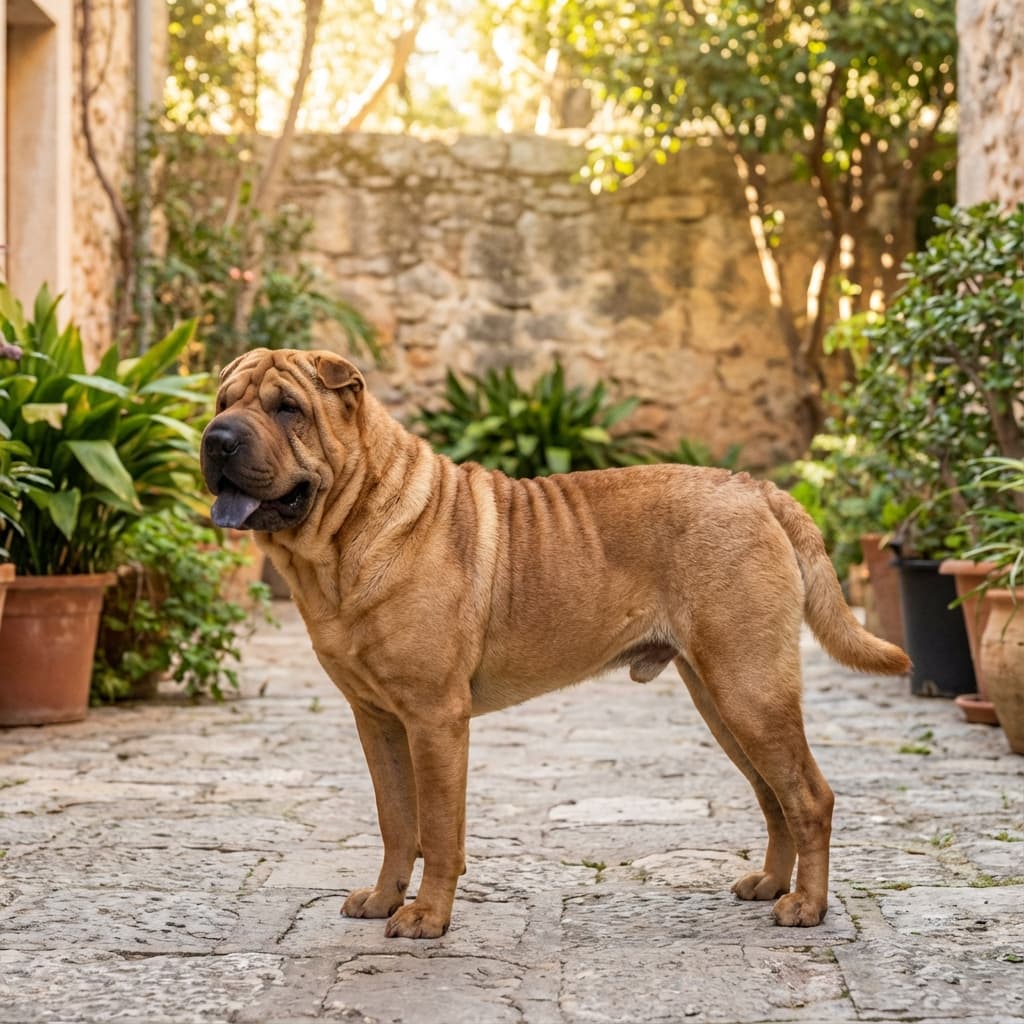
The appearance of the Shar Pei is extremely distinctive and recognizable from afar. This breed belongs to medium-sized dogs, with a compact and strong body structure. The height at the withers ranges from 44 to 51 cm, while the weight oscillates between 18 and 25 kg. The Shar Pei has a large, broad skull with a clearly defined stop that marks the transition between the forehead and the muzzle.
Its muzzle is wide and relatively short, giving it a unique appearance reminiscent of a hippopotamus - hence the English term muzzle often referred to as hippopotamus muzzle. However, the most characteristic feature is the deep skin folds that are abundant on the head, neck, and torso, creating unique wrinkles that are the hallmark of this breed.
The eyes of the Shar Pei have a almond shape and are dark, which adds to their mysterious, penetrating expression. The ears are small, triangular, and set high on the head, further emphasizing the unique appearance of the head. The tail of the Shar Pei is thick at the base and can be carried high - curled or rolled over the back in a distinctive manner.
The coat of this breed is:
- Short, stiff, and straight
- No longer than 2.5 cm
- Very distinctive, somewhat rough texture
- Without an undercoat, making the breed sensitive to extreme temperatures
As for the coat colors, there are various shades, including black, chocolate (brown), blue, beige (fawn), red, and fawn (isabella). The breed standard does not allow for a white coat. It is also worth noting that the tongue of the Shar Pei is blue-black, which is an additional characteristic feature of this fascinating breed.
The behavior and temperament of the Shar Pei is a complex mosaic of traits, full of interesting contrasts. These dogs are widely known for their calm, independent nature, which sets them apart from many other breeds. They are deeply attached to their families and extremely loyal to household members, while also exhibiting natural reserve and distrust of strangers.
In relationships with family members, Shar Pei are gentle, affectionate, and capable of showing deep feelings. However, they may maintain a certain distance from unfamiliar people, which is a natural expression of their guarding instinct. Therefore, owners should ensure that these dogs receive proper socialization from the earliest weeks of life to help them function appropriately in various social situations.
Shar Pei are also valued for their intelligence and learning abilities, making them excellent candidates for training. They easily absorb new commands and quickly learn the rules of the household. However, their independent, sometimes stubborn nature may require patience and consistency in the training process. Owners should use only positive training methods based on rewards and avoid any violence or shouting that could discourage the dog from cooperating.
Due to their history as fighting and guarding dogs, Shar Pei are:
- Natural guardians of their territory
- Alert and attentive to potential threats
- Confident and brave in situations requiring defense
- Prone to loud barking as a warning
Although they are generally not aggressive, their strong personality and history as fighting dogs mean that they may require special attention in interactions with other dogs, especially those of the same sex. Proper training and socialization from puppyhood are crucial to ensure harmonious coexistence of Shar Pei with other animals and people in various situations.
The health of Shar Pei is a topic that requires special attention and awareness from potential owners, as this breed is predisposed to several specific health problems, mainly related to its characteristic skin folds. The average lifespan of a Shar Pei is between 10 to 13 years, with proper care and prevention significantly impacting the quality and length of their life.
Although dogs of this breed have a solid, strong build, their characteristic skin folds can lead to various dermatological issues, such as:
- Skin infections (pyoderma) - resulting from the accumulation of moisture and dirt in the folds
- Skin allergies - both food-related and environmental
- Atopic dermatitis - a chronic allergic condition
- Demodicosis - mange caused by mites
It is extremely important to regularly check and clean the skin folds to prevent the accumulation of moisture, dirt, and microorganisms that can lead to painful infections. The Shar Pei is also particularly susceptible to eye conditions, such as entropion (inward rolling of the eyelids) and ectropion (outward rolling of the eyelids), which can cause serious irritation, corneal ulcers, and lasting discomfort.
Additionally, individuals of this breed may experience:
- Shar Pei fever (FSF - Familial Shar Pei Fever) - a hereditary inflammatory condition
- Amyloidosis - the deposition of amyloid protein in the kidneys and liver
- Gastrointestinal problems - including megaesophagus (enlargement of the esophagus)
- Hip dysplasia - an orthopedic condition
- Thyroid problems - hypothyroidism
Owners should be aware that Shar Pei has a natural tendency to gain weight, so diet control and ensuring adequate exercise are crucial for maintaining proper condition. Overweight can lead to additional strain on the joints, heart problems, and worsening of other conditions.
It is also worth remembering that due to the lack of undercoat, Shar Pei does not tolerate extreme temperatures well - both cold and heat. Providing appropriate conditions at home and avoiding long walks on hot, sunny days or during severe frosts is essential for their health and comfort. Regular veterinary check-ups and a proactive approach to health will significantly increase the chances of a long, happy life for your Shar Pei.
Shar Pei grooming is relatively simple compared to many long-haired breeds, but it requires regular attention and consistency, especially in terms of keeping the characteristic skin folds clean. The hair of this breed is short, coarse, and stiff with a unique, rough texture, which means it does not require intensive daily brushing.
Nevertheless, regular brushing once or twice a week is definitely recommended to:
- Remove dead hair and dirt
- Stimulate blood circulation in the skin
- Check the condition of the skin and detect any potential issues
- Reduce the amount of hair in the home during shedding
The most crucial aspect of Shar Pei care is regular inspection and cleaning of the skin folds. These folds can accumulate moisture, sweat, dirt, and food debris, creating an ideal environment for the growth of bacteria and fungi that can lead to painful infections. Owners should:
- Check the folds daily, especially on the head, neck, and around the tail
- Gently clean them with damp, soft wipes
- Thoroughly dry each fold after washing
- Use special veterinary products as recommended by the veterinarian if necessary
Baths should be performed regularly, but not too often - usually once every 4-6 weeks or as needed. Only neutral pH shampoos specifically designed for dogs with sensitive skin should be used to avoid irritating the delicate skin of the Shar Pei. After bathing, it is extremely important to thoroughly dry the entire body of the dog, paying special attention to all skin folds.
Some owners use powders or talcs in the folds, but this practice is not necessary and can even lead to additional problems, such as clogged pores or the formation of lumps. It is better to focus on maintaining dryness and cleanliness of the natural folds.
Other grooming aspects include:
- Nail trimming - every 2-4 weeks to prevent discomfort and walking issues
- Ear cleaning - once a week, checking for signs of infection
- Oral hygiene - regular tooth brushing several times a week
- Eye check - daily inspection for any discharge or irritation
Regular visits to a professional groomer can be helpful, especially for novice owners who are just learning the proper care of Shar Pei. A groomer can also assist in keeping the dog in excellent condition and in early detection of potential skin-related health issues.
Shar Pei is not a breed that requires intense physical activity, however, regular walks and moderate exercise are absolutely essential for maintaining their health, proper weight, and good mental well-being. These dogs have a moderate need for movement and will be satisfied with three walks a day totaling around 60-90 minutes.
Walks do not need to be particularly intense or fast - Shar Pei prefers a calm, steady walk over a strenuous run. Owners should provide their dogs with a variety of stimuli during outings, such as:
- Exploring new routes and areas
- Sniffing and discovering scents
- Short play sessions with favorite toys
- Meetings with other well-socialized dogs
- Basic obedience exercises during the walk
Shar Pei adapts well to urban life and makes an excellent apartment dog, provided they are given regular outings in fresh air. However, they should have access to green areas - parks, squares, or dog runs - where they can run freely, explore their surroundings, and socially interact with other animals.
It is extremely important not to overload Shar Pei with physical activity, especially on hot, sunny days. Due to their build - flat muzzle and characteristic skin folds - this breed is sensitive to high temperatures and can easily overheat. On hot days, one should:
- Plan walks early in the morning or late in the evening
- Avoid intense exertion in full sun
- Provide access to shade and fresh water
- Monitor the dog for signs of overheating (heavy breathing, drooling)
- Consider shorter, more frequent walks instead of one long one
In winter, due to the lack of undercoat, Shar Pei may require additional protection from cold and moisture. It is worth investing in appropriate dog clothing - jackets, sweaters, or coats - especially during freezing days and in rainy, windy weather. Wet skin folds are particularly prone to problems, so after walks in the rain, the dog should be thoroughly dried.
In addition to walks, valuable activities can also include:
- Mental games - scent mats, interactive toys, searching for treats
- Simple obedience exercises - strengthening the bond and stimulating the mind
- Calm play sessions at home or in the garden
- Training basic tricks - engaging and rewarding
Regular physical activity is crucial for preventing obesity, to which Shar Pei has a natural tendency. Excess weight can lead to serious health problems, including joint strain, heart disease, diabetes, and worsening respiratory issues. Therefore, a balanced diet combined with the right amount of exercise is the foundation for a long and healthy life for your Shar Pei.
Training a Shar Pei can be an interesting challenge for both novice and experienced dog owners due to their independent nature and strong personality. Owners should start the training and socialization process as early as possible in the puppy's life, ideally from 8-10 weeks of age, to ensure proper social development and the acquisition of basic commands.
The key to success in training a Shar Pei is to use only positive training methods based on rewards and positive reinforcement. Shar Pei absolutely do not respond well to harsh methods, yelling, physical punishment, or coercion, which can destroy the dog's trust and completely discourage them from cooperating. The proper approach to training should be based on three pillars:
- Patience - understanding that each dog learns at their own pace
- Consistency - clear, unchanging rules and expectations
- Positive reinforcement - rewarding good behavior with treats, praise, and play
Training sessions should be short (10-15 minutes), frequent, and engaging to maintain the dog's attention and avoid boredom or frustration. Shar Pei are intelligent and can quickly learn new commands, but their independent, sometimes stubborn nature may lead them to question the owner's authority or simply ignore commands if not properly motivated.
The basic commands that every Shar Pei should master are:
- Sit - a basic control command
- Stay or Wait - teaching self-control
- Come or Here - crucial for safety
- Lie down - a relaxation command
- Leave it or No - preventing unwanted behaviors
- Loose leash walking - comfort during walks
It is advisable to use treats as rewards during training; however, care should be taken not to overdo the quantity due to the Shar Pei's tendency to gain weight. A good solution is to count the calories from treats against the daily food portion or use part of the regular meal as training rewards.
Training should also include intensive socialization aspects, which are absolutely crucial for this breed. Shar Pei must learn proper interactions with:
- Other dogs of various breeds, sizes, and genders
- Diverse people - children, elderly individuals, in various outfits
- Different animals - cats, birds, small rodents
- Diverse environments - busy streets, parks, public transport
- Various stimuli - noise, crowds, traffic
Regular, positive encounters with other well-socialized dogs and diverse experiences in controlled conditions will help develop the Shar Pei's social skills and reduce their natural distrust of strangers. Puppy kindergarten classes led by experienced trainers can be an excellent starting point on this path.
Owners should be particularly aware that Shar Pei may exhibit tendencies toward dominance over other dogs, especially of the same sex, stemming from their history as fighting dogs. Therefore, it is extremely important to establish clear rules, boundaries, and hierarchy in the family from day one. The dog must understand that the owner is a calm, confident leader who can be trusted.
Advanced training may include:
- Obedience training at a higher level
- Canine sports - rally obedience, tracking
- Therapy dogs - for appropriately socialized individuals
- Guard training - utilizing natural instincts in a controlled manner
If the owner encounters difficulties in training or behavioral issues (excessive aggression, anxiety, destructive behaviors), consulting a professional behaviorist or certified dog trainer is highly recommended. Early intervention can prevent the entrenchment of undesirable behaviors and ensure harmonious coexistence of the Shar Pei with the family for many years.
Nutrition for Shar Pei is a key element in caring for their health, condition, and longevity. Due to the breed's natural tendency to gain weight and their predisposition to skin problems and food allergies, the diet must be carefully planned, balanced, and tailored to the individual needs of each dog.
The basic principles of feeding Shar Pei include adjusting the diet to:
- The dog's age - puppies, adults, and seniors have different needs
- Weight and condition - avoiding underweight, but primarily overweight
- Activity level - more active dogs require more calories
- Health status - any allergies or diseases require a special diet
- Food preferences - while maintaining nutritional value
Owners should choose high-quality commercial foods - both dry and wet - that contain:
- High animal protein content (25-30%) from meat, fish, or poultry
- Moderate amount of healthy fats (12-18%) for energy and skin condition
- Appropriate carbohydrates from easily digestible sources (rice, potatoes, sweet potatoes)
- Vitamins and minerals - especially omega-3 and omega-6 for skin health
- No artificial colors, preservatives, or fillers
It is absolutely essential to avoid low-quality foods that contain excessive grains, unspecified by-products, or artificial additives. These can lead to serious health problems such as obesity, food allergies, digestive issues, or deterioration of skin and coat condition.
Due to the frequent occurrence of food allergies in Shar Pei, it is worth considering:
- Hypoallergenic foods with a limited number of ingredients
- Elimination diets - identifying potential allergens
- Foods with novel protein sources - lamb, duck, rabbit, game
- Grain-free foods - if the dog shows grain intolerance
- Veterinary diets - in case of severe allergies or diseases
The frequency and size of meals should be adjusted to the dog's age:
- Puppies (2-6 months) - 3-4 meals per day
- Young dogs (6-12 months) - 2-3 meals per day
- Adult dogs (1+ years) - 2 meals per day at regular times
- Seniors (7+ years) - 2 meals per day, possibly senior food
Regular, consistent feeding times are extremely important as they help avoid digestive problems, stabilize blood sugar levels, and make it easier to predict the dog's physiological needs. Additionally, it is advisable to limit the amount of treats and snacks to a maximum of 10% of daily caloric intake to avoid exceeding the recommended dose and leading to obesity.
Shar Pei should have constant access to fresh, clean water throughout the day to maintain proper hydration. Water in the bowl should be changed daily, and the bowl should be cleaned regularly to prevent bacterial growth.
Owners should also regularly monitor the weight and condition of their Shar Pei by:
- Weighing weekly (especially puppies)
- Assessing body condition - ribs should be palpable but not visible
- Observing the waist when looking down at the dog
- Checking energy levels and physical condition
- Monitoring the state of the coat and skin
Products that should be absolutely avoided in a Shar Pei's diet include:
- Chocolate and cocoa - toxic to dogs
- Grapes and raisins - can damage kidneys
- Onions and garlic - destroy red blood cells
- Cooked bones - can splinter and cause choking
- Avocado - contains toxic persin
- Sweets with xylitol - can be fatal
- Alcohol, caffeine, and salt in large amounts
If there are any doubts regarding diet, food intolerances, allergies, or adjusting nutrition to specific health needs, it is always advisable to consult a veterinarian or veterinary nutritionist. A professional can help select an optimal feeding plan that will ensure your Shar Pei's health, vitality, and long, happy life.
Characteristic Traits
Pros
- Extremely loyal to family
- Unique and recognizable appearance
- Does not require intense exercise
- Excellent guard dog
- Intelligent and quick to learn
- Calm temperament
- Suitable for urban living.
Cons
- Requires careful and early socialization
- may be distrustful and reserved towards strangers
- needs regular care for skin folds
- predisposed to skin and eye problems
- tendency to gain weight
- sensitive to extreme temperatures
- may show dominance over other dogs.
Behavioral Ratings
Breed History
The history of the Shar Pei breed is as fascinating as the appearance of these extraordinary dogs, reaching back hundreds, even over two thousand years into Chinese civilization. The roots of this breed can be traced back to the Han dynasty, which ruled from 206 BC to 220 AD, making the Shar Pei one of the oldest recognized dog breeds in the world.
This breed developed mainly in southern China, in provinces located along the South China Sea, particularly in the Guangdong (Canton) region and near the town of Dah Let. Local farmers and fishermen valued these dogs for their versatility and usefulness in rural daily life.
Originally, the Shar Pei was used in several different roles:
- Hunting dog - hunted wild boars, deer, and other animals
- Guard dog - protected farms, homes, and property from intruders
- Herding dog - helped in managing livestock
- Fighting dog - participated in dog fights, a popular entertainment in ancient China
It was as a fighting dog that the Shar Pei gained the most fame in antiquity. Its distinctive skin folds provided an extraordinary advantage in the fighting arena - the loose skin made it difficult for opponents to get a strong grip, and even if they bit the Shar Pei, the dog could still turn in its skin and counterattack. The stiff, coarse coat further complicated biting for rivals, acting as natural armor.
Over time, due to its loyalty, intelligence, and protective skills, the Shar Pei began to be increasingly valued as a companion and guardian, gradually moving away from its original role as a fighting dog. Its popularity grew among Chinese farmers and townspeople who appreciated its versatility.
However, the 20th century brought dramatic challenges for this ancient breed. During the communist regime in China after 1949, dog ownership was seen as a symbol of bourgeoisie and Western decadence. Dogs were mass slaughtered, and their breeding was banned or severely restricted. High taxes on dog ownership made keeping a pet a luxury that most of the population could not afford.
By the 1970s, the Shar Pei was on the brink of extinction. It was estimated that only a few dozen individuals remained worldwide, mainly in Hong Kong, Macau, and Taiwan - territories not under the direct control of the communist authorities of mainland China.
The rescue for the breed came through the tireless efforts of Matgo Law, a Hong Kong breeder and dog enthusiast, who in 1973 made a desperate appeal to breeders and dog lovers in the West, particularly in the United States. His call Save the Chinese Shar Pei was published in a dog breeders' magazine and received an extraordinary response.
American breeders enthusiastically responded to the appeal, importing the first specimens to the USA. In 1974, the Chinese Shar-Pei Club of America (CSPCA) was established, which began systematic work on rebuilding the population and establishing the breed standard. Thanks to these efforts, the number of dogs began to gradually increase.
In 1978, the Guinness Book of Records recognized the Shar Pei as the rarest dog breed in the world, which paradoxically contributed to increased interest in the breed and its popularity. In the 1980s, the breed experienced a true boom in popularity in the United States and Europe, becoming a fashionable and desirable dog.
Official international recognition came gradually:
- 1988 - The American Kennel Club (AKC) officially recognized the breed
- 1992 - The Fédération Cynologique Internationale (FCI) accepted the breed standard (FCI Standard No. 309)
- 1990s - Kennel Clubs in the UK, Canada, and Australia also recognized the Shar Pei
Today, the Shar Pei enjoys stable popularity worldwide, particularly in the United States, the United Kingdom, Germany, and other European countries, where it has become a favorite family dog. This breed is also increasingly valued in China itself, where after years of neglect, it is experiencing a renaissance as a symbol of Chinese canine heritage.
The Shar Pei is also achieving success at dog shows around the world, where their unique appearance and character are highly regarded by judges. Representatives of the breed are winning champion titles, and the best specimens are sought after by breeders worldwide.
The modern Shar Pei, while retaining many traits of its ancestors - loyalty, courage, and independence - has primarily become a companion and family dog, valued for its calm temperament and deep attachment to its caregivers. The history of this breed - from ancient fighting dog to near extinction, to international success - is a testament to the remarkable resilience and value that people see in this unique representative of Chinese cynology.