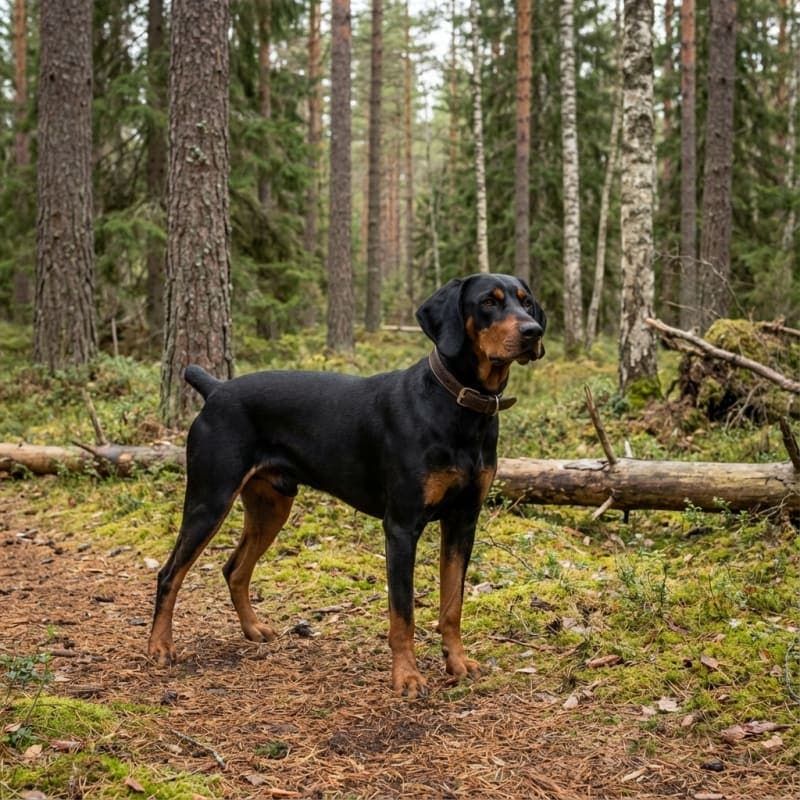
Smaland Hound
FCI Group
6• FCI 129
Size
Medium
Origin Country
SE
Height
42-54 cm
Weight
15-18 kg
Lifespan
12-14 years
Temperament
Overview
Swedish Elkhound (Smålandsstövare) is a fascinating breed of hunting dogs originating from the picturesque region of Småland in southern Sweden. This medium-sized hound is characterized by its remarkable stamina and exceptional hunting abilities, which have been valued by Swedish hunting families for centuries. Its primary task has traditionally been hunting foxes and hares, although it has never been used for hunting deer or large game.
What distinguishes the Swedish Elkhound from other hound breeds? Above all, its deep loyalty and warm, friendly attitude towards family, although it maintains a natural caution and reserve in interactions with strangers. It thrives in families leading an active lifestyle and in rural areas, where it can fully utilize its natural hunting instincts and excellent sense of smell.
The history of this breed dates back to the 19th century when there was a rich variety of hounds with diverse appearances and origins in the Småland region. Some of them had ancestors among German, Polish, and Baltic dogs that accompanied soldiers returning to Småland after the great wars from 1611 to 1718. As a result of crossbreeding these dogs with local farm-type spitz and the addition of English hound blood, the Swedish Elkhound was created. It quickly gained popularity among farmers and hunters who needed versatile, resilient dogs to work in challenging terrain conditions.
The official recognition of the breed occurred in 1921 when the Swedish Kennel Club accepted the first breed standard. Interestingly, the initial standard allowed for both dogs with naturally short tails (the so-called bobtail) and those with long tails. The breed standards have been updated multiple times over the decades to reflect the expectations of breeders and to preserve the characteristics of this exceptional breed.
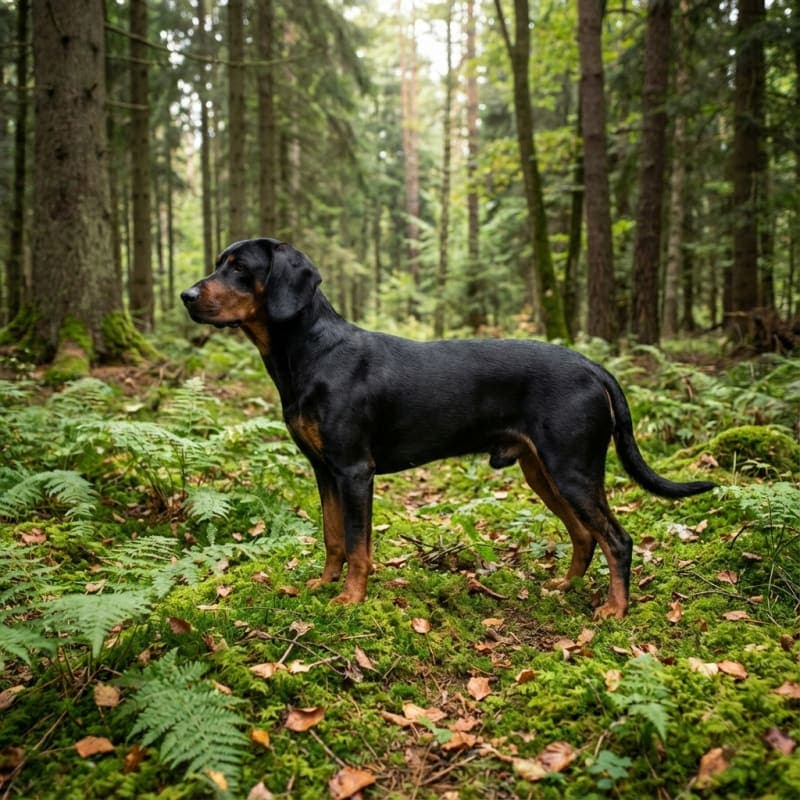
The body structure of the Swedish Elkhound is solid yet surprisingly elegant and harmoniously balanced. Its silhouette is almost square with a deep, well-developed chest, the depth of which is nearly half the height of the dog at the withers. Its rough, medium-length coat provides excellent protection against adverse weather conditions – rain, snow, and cold. The characteristic black color with distinct tan markings and white accents on the chest and paws adds to its unique character.
The temperament of the Swedish Elkhound is friendly, balanced, and full of energy. It loves spending time with family, especially with children, with whom it forms a deep bond and enjoys playing. Due to its high intelligence and natural willingness to cooperate, it is relatively easy to train, making it a good choice even for novice owners – provided they can offer it the right amount of exercise and mental stimulation. Without regular physical activity, it may develop destructive habits.
In summary, the Swedish Elkhound is a breed that combines the traits of an excellent working dog and a devoted family companion. Its natural hunting instincts, excellent sense of smell, stamina, and friendly disposition make it well-suited for various conditions – both as a hunting dog and a beloved family friend. This is a dog that brings joy, energy, and devotion to the lives of its owners. Discover more about the health, care, training, and fascinating history of this unique Swedish breed in our detailed guide.
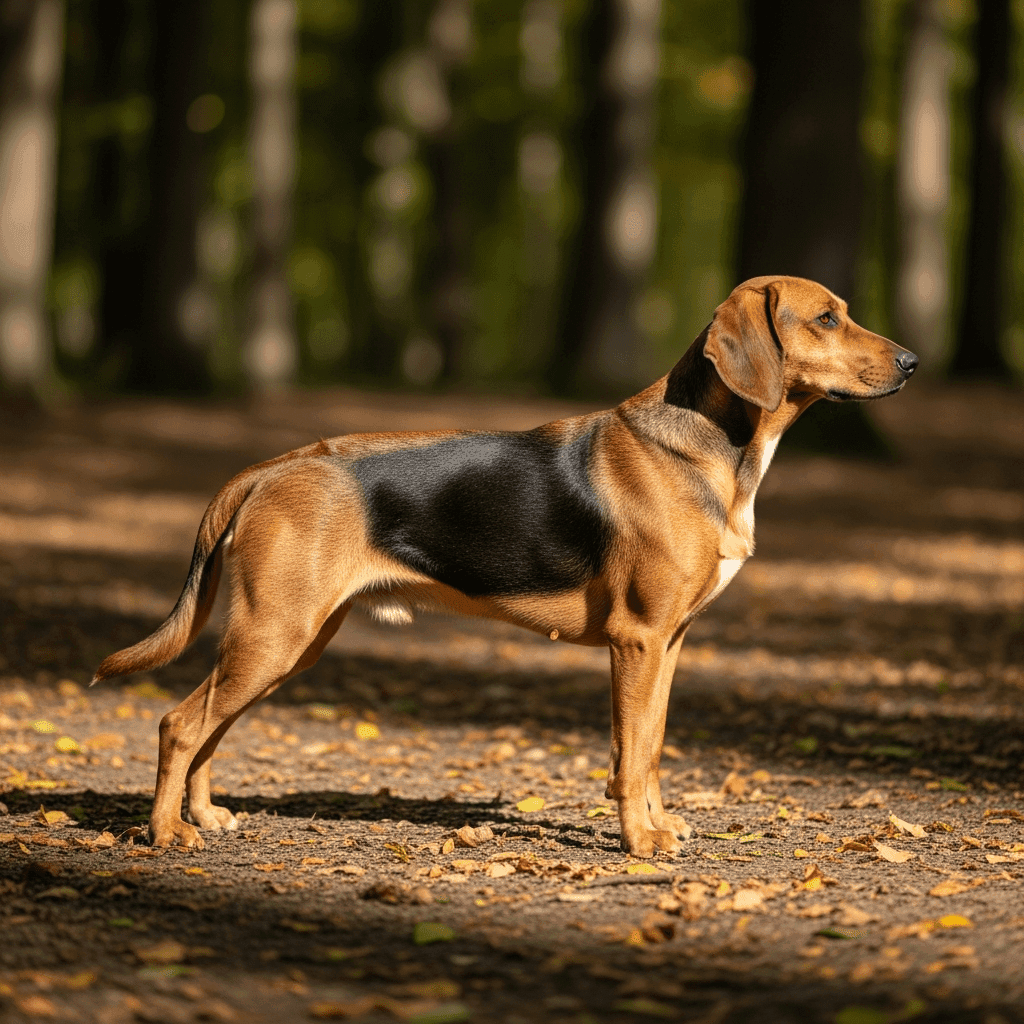
Body construction: The Småland Hound is a dog with a solid yet elegant and harmonious build. Its silhouette is almost square, meaning that the length of the body is roughly equal to the height at the withers. This gives the impression of a balanced, compact dog with excellent proportions. The height at the withers is from 46 to 54 cm for males and from 42 to 52 cm for females. The weight ranges from 15 to 18 kg, depending on the sex and build of the individual.
Coat and coloring: The coat of the Småland Hound is of medium length, rough to the touch, and closely adhering to the body, providing excellent protection against adverse weather conditions – rain, snow, and frost. The coat color is predominantly black with distinct tan markings over the eyes, on the muzzle, chest, legs, and under the tail. Small white accents on the chest, paws, and tip of the tail are permissible and often occur in the breed, adding extra charm to the dogs.
Head and expression: The head is of medium length, well-defined, and proportional to the rest of the body. The muzzle is well-developed, strong, with a black nose and well-opened nostrils. The eyes are almond-shaped, dark brown, and express calmness, intelligence, and alertness. The ears are set at medium height, of medium length, slightly rounded at the tips, and hang down along the head, creating the characteristic expression of a hound.
Tail: A distinctive feature of the breed is the variety of tail lengths. Some dogs are born with a naturally short tail (the so-called bobtail), while others have a tail of standard length. Regardless of the length, the tail should not be carried high above the line of the back during movement – it should be carried low or at the level of the back, giving the dog an elegant, balanced appearance while working in the field.
Chest and limbs: The chest is deep and well-developed, reaching almost to the elbows, which provides excellent lung capacity and endurance during long hunts. The limbs are straight, strong, and muscular, with well-developed joints, allowing the dog to move efficiently across diverse terrain – from forests to mountainous areas.
Character towards family: The Småland Hound is a dog with a friendly, balanced, and loyal temperament. It shows deep attachment to its family and is very warm towards children, with whom it forms a special bond. It loves to spend time with them, play, and participate in family activities. Its gentle nature makes it an excellent companion for household members of all ages.
Attitude towards strangers: At the same time, this breed is known for a certain natural distrust and reserve towards strangers, making it a good guardian of the home and property. The Småland Hound is not aggressive but will watch unfamiliar people attentively and signal their presence vocally. Proper socialization from a young age helps to mitigate excessive distrust and shapes balanced behavior towards new individuals.
Hunting instinct: The Småland Hound has a strongly developed hunting instinct, which is a natural heritage of its purpose as a hunting dog. This means it may be inclined to chase small animals, cats, squirrels, or birds. Owners should be aware of this trait and ensure proper training from a young age, as well as provide safe walks on a leash in areas where other animals may be present.
Intelligence and training: This dog is intelligent, sharp, and eager to cooperate with its owner, making it relatively easy to train. It responds best to methods based on positive reinforcement – rewards, praise, and play. However, it requires consistency, clear rules, and patience. The Småland Hound is also moderately independent, which means that during walks, it may be highly focused on scent trails and require additional attention from the handler.
Activity needs: Owners should be prepared for the fact that the dog will need regular, intense physical activity and mental stimulation. Without the appropriate amount of exercise and engaging activities, it may develop destructive behaviors such as excessive barking, chewing furniture, or digging. This breed thrives in active families that can provide daily challenges and outdoor adventures.
General health condition: The Småland Hound is a breed known for its sturdiness, resilience, and longevity. The average lifespan is between 12 to 14 years, and many individuals live even longer with proper care and a balanced diet. This breed generally does not show a tendency towards serious genetic diseases, which positively distinguishes it from many other breeds.
Resistance and adaptation: The Småland Hound has a strong immune system, making it relatively resistant to infections and contagious diseases. It tolerates cold well and is adapted to work in difficult weather conditions – rain, snow, and frost. Its rough, dense coat provides natural thermal protection. However, it should be noted that they may be sensitive to heat and high temperatures, so during the summer months, it is advisable to provide them with access to shade and fresh water and to avoid intense activities during the hottest hours of the day.
Typical ailments: Although the breed is generally healthy, owners should be aware of a few potential health issues:
- Hip Dysplasia (HD): As with many medium-sized breeds, the Småland Hound may be prone to hip dysplasia. This is significant in the context of their high physical activity. Responsible breeders conduct X-ray examinations of the parents before breeding to minimize the risk of passing the defect to the offspring.
- Ear infections: Due to their drooping ears, the Småland Hound may be susceptible to ear infections, especially after swimming or being in a humid environment. Regular checking and cleaning of the ears is crucial for maintaining auditory health.
Health prevention: Owners should ensure regular veterinary visits, up-to-date vaccinations, and parasite prevention (deworming, protection against ticks and fleas). Monitoring the dog's weight and providing an adequate amount of exercise helps maintain joint and cardiovascular health throughout their life.
General coat care: The care of the Swedish Elkhound is relatively easy and does not require complicated procedures or visits to a professional groomer. Their coat is of medium length, rough to the touch, and closely adheres to the body, which means it does not mat and does not require frequent trimming or clipping.
Brushing: During the shedding period, which usually occurs twice a year (in spring and autumn), daily brushing is recommended to effectively remove dead hair and minimize its presence in the home. In the remaining months, brushing 2-3 times a week is sufficient. Natural bristle brushes or rubber gloves for removing dead undercoat work best for grooming.
Bathing: The Swedish Elkhound does not require frequent baths unless necessary due to heavy soiling – for example, after intense play in mud or water. Too frequent bathing can remove the natural protective oily film from the skin and lead to irritation. A bath every 2-3 months or as needed, using gentle shampoos designed for dogs, is sufficient.
Ear cleaning: Regular ear cleaning is particularly important for the Swedish Elkhound, as its drooping ears can be prone to moisture, dirt, and wax accumulation, which promotes infections. Ears should be checked and cleaned at least once a week, using special ear cleaning solutions for dogs and soft cotton balls or gauze. Never insert cotton swabs deeply into the ear canal.
Nail trimming: The Swedish Elkhound also requires regular nail trimming, which should be done every 3-4 weeks, depending on the rate of wear. Overly long nails can cause discomfort while walking and lead to joint problems. If you can hear the clicking of nails on the floor while the dog is walking, it means they are already too long.
Oral hygiene: Daily or at least several times a week tooth brushing is recommended to maintain oral health and prevent tartar buildup and gum disease. Use toothpaste specifically designed for dogs and a soft toothbrush. Additionally, dental chews can be used to support natural oral hygiene.
High exercise needs: The Småland Hound is a dog with high exercise needs, requiring at least 1.5 to 2 hours of intense activity daily. This breed was developed for long-term hunting and working in difficult terrain, which is why it possesses immense stamina and energy that must be regularly expended.
Types of activities: Various forms of movement and activities that engage both the body and mind are ideal for them:
- Long walks: Daily, vigorous walks in diverse terrain – forests, meadows, mountain paths.
- Running: Accompanying the owner during jogging or running – the Småland Hound happily covers long distances.
- Hiking: An excellent companion on hiking trails, resilient and energetic even in challenging terrain.
- Water play: Many individuals love swimming and playing by the water, which is a great form of physical activity, especially on hot days.
- Scent games and mantrailing: Exercises that engage the sense of smell – tracking, searching for hidden objects or toys, which greatly stimulates the dog's mind.
- Agility and canine sports: The Småland Hound can successfully participate in various dog sports, such as agility, rally obedience, or nosework.
Importance of activity: This dog thrives in an active household and will be happy if it can regularly participate in various forms of physical activity with its owner. The Småland Hound is not suitable for people leading a sedentary lifestyle or preferring quiet evenings on the couch – without adequate exercise, it becomes unhappy and frustrated.
Consequences of lack of exercise: It is important to emphasize that insufficient physical activity and mental stimulation can lead to serious behavioral problems, such as:
- Excessive, persistent barking
- Chewing furniture, shoes, and household items
- Destructive behaviors in the home and garden (digging holes, damaging fences)
- Restless behavior and difficulty relaxing
- Escaping from the property in search of adventures
Therefore, it is crucial for future owners of the Småland Hound to be aware of its high exercise needs and be ready to dedicate time and energy to daily, intense outdoor activities.
General characteristics of training: Training the Swedish Elkhound is relatively simple and satisfying, as this breed is intelligent, alert, and eager to cooperate with its owner. This dog responds well to positive training methods based on rewards, praise, and play, which motivate it to learn and strengthen the bond with the handler.
Training methods: Owners should use consistent commands and clear signals to facilitate learning. Short, dynamic training sessions (10-15 minutes) work best to keep the dog engaged and prevent boredom. Rewarding good behavior with treats, toys, or verbal praise is crucial for effective training. Clicker training also works great with this breed.
Training challenges: However, it is important to remember that the Swedish Elkhound has a independent nature and a strong hunting instinct, which can lead to difficulties in maintaining focus, especially when the dog detects interesting scents or spots small animals. During walks, it may be inclined to follow a scent trail, ignoring the owner's commands. Therefore, it is essential that training is not only short but also interesting and engaging to maintain the dog's concentration.
Basic commands: Learning basic obedience commands is absolutely crucial:
- Sit – the basic command for the sitting position
- Lie down – the lying position, useful in situations requiring calmness
- Stay – the command to maintain position
- Come – recall, particularly important due to the hunting instinct
- Leave it – a command to disengage from unwanted objects or trails
Socialization: Socialization with other dogs, people, and various environments is absolutely crucial from a puppy age to prevent excessive distrust of strangers and develop balanced behavior. The Swedish Elkhound should gradually be introduced to various stimuli from 8-12 weeks of age – city sounds, other animals, cars, children, different surfaces, and situations.
Advanced training: The Swedish Elkhound excels in various forms of advanced training, such as:
- Mantrailing and scent tracking
- Nosework (scent detection)
- Rally obedience (a combination of obedience and agility)
- Hunting training (for dogs intended for fieldwork)
With high intelligence and a willingness to cooperate, with the right approach and consistency, the Swedish Elkhound can achieve high levels of obedience and be an excellent, well-trained companion.
Basics of a balanced diet: The diet of the Swedish Elkhound should be well-balanced, high-quality, and tailored to their active lifestyle. As dogs with high energy needs due to intense physical activity, they require food rich in nutrients that support health, fitness, and recovery after exertion.
Choosing food: Owners should choose high-quality dog food – both dry (kibble) and wet (cans, pouches) – that provides the appropriate nutrients:
- Protein: A high content of animal protein (poultry, beef, fish) is crucial for muscle health, tissue recovery, and maintaining good physical condition. The optimal protein content in food is about 25-30%.
- Fats: Healthy animal and plant fats provide energy and support skin and coat health. The fat content should be around 15-20%.
- Vitamins and minerals: Essential for the proper functioning of the body, strengthening the immune system, and maintaining bone and joint health (calcium, phosphorus, vitamin D).
- Omega-3 and Omega-6 fatty acids: Support skin and coat health as well as brain functions.
Amount of food: Due to their high physical activity and fast metabolism, it is important to provide the right amount of calories. However, the Swedish Elkhound can be prone to overweight, especially if their activity level decreases (e.g., in winter or as they age). Therefore, it is crucial to:
- Control the amount of food given according to the manufacturer's recommendations and the dog's activity level
- Avoid overfeeding and excessive treats
- Regularly monitor the dog's weight and body condition
- Adjust portions according to age, weight, and activity level
Water: Fresh, clean water should be always available, especially after intense physical activity, on hot days, and during feeding dry food. Proper hydration is key to kidney health and the proper functioning of the body.
Treats and rewards: It is also worth considering giving healthy treats as rewards during training and play. However, they should only make up a small part of the diet – a maximum of 10% of daily caloric intake. Good options include:
- Dried meat (poultry, beef, fish)
- Natural dental chews
- Fresh vegetables (carrots, cucumber, bell pepper)
- Apple slices (without seeds)
Feeding at different life stages: It is important to remember that nutritional needs change with the dog's age:
- Puppies (up to 12 months): Require puppy food, rich in protein and calcium, supporting the growth and development of bones and muscles. Feeding 3-4 times a day.
- Adult dogs (1-7 years): Adult dog food, tailored to the activity level. Feeding 2 times a day.
- Senior dogs (over 7-8 years): Senior dog food, with lower calories, supporting joint and digestive health. Feeding 2 times a day.
A proper diet, tailored to the individual needs of the Swedish Elkhound, is the foundation of their health, energy, and a long, happy life.
Characteristic Traits
Pros
- Loyal and deeply devoted to family
- Friendly towards children and household members
- Easy to train due to intelligence
- Excellent sense of smell and hunting instinct
- Resilient and tough in harsh conditions
- Ideal for active families and hunters.
Cons
- Requires a lot of movement and activity
- Strong hunting instinct can be a challenge
- May be cautious and distrustful of strangers
- Needs mental stimulation and scent games
- Not suitable for people leading a sedentary lifestyle.
Behavioral Ratings
Breed History
Origins of the breed: The Småland Hound has a rich and fascinating history, dating back to at least the 17th century, when various breeds and types of hounds with diverse appearances and origins existed in the picturesque region of Småland in southern Sweden. This region, known for its dense forests, challenging terrain, and rich hunting tradition, provided an ideal environment for the development of durable, versatile hunting dogs.
External influences: Many of these early hounds had their roots in German, Polish, and Baltic dogs that accompanied soldiers returning to Småland after the great wars from 1611 to 1718 (the Swedish wars, including the Thirty Years' War and conflicts with Poland and the Baltic states). Soldiers brought hunting dogs from the countries they passed through, and these dogs began to interbreed with local Swedish breeds.
Breed development: As a result of the natural crossing of these foreign hounds with local farm-type spitz dogs and the addition of English hound blood (likely imported in the 18th and 19th centuries), the proper type of Småland Hound emerged. These dogs were valued by Swedish farmers and hunters for their endurance, excellent sense of smell, versatility in work, and ability to hunt in the challenging, mountainous, and wooded terrain of Småland.
Diversity of early types: In the 19th century, the size, color, and tail length of Småland Hounds varied significantly. Some dogs were black and tan, others were red or yellow. White markings were common. Interestingly, some dogs were born with a naturally short tail (the so-called bobtail), which became a characteristic feature of the breed. The short tail was practical for working in dense underbrush and forests, where a long tail could easily get damaged.
Recreation and standardization: In the early 20th century, when many traditional Swedish breeds began to decline in favor of imported foreign breeds, great efforts were made to recreate the old type of Småland Hound, particularly the variety with a naturally short tail. Breeders and breed enthusiasts began systematically selecting and crossing the best individuals that represented the traditional type of dog from the Småland region.
Official recognition: The breed was officially recognized by the Swedish Kennel Club (Svenska Kennelklubben) in 1921, when the first official breed standard was approved. Interestingly, the original standard allowed for both dogs with naturally short tails and those with standard-length tails to preserve genetic diversity and the traditional character of the breed. Breed standards have been updated and revised multiple times over the following decades to reflect breeders' expectations, improve the breed's health, and maintain its unique characteristics.
Role and purpose: The Småland Hound was and still is primarily a hunting dog, used for hunting foxes and hares. Unlike many other hound breeds, it was never used for hunting deer or other large game. This selective use shaped its temperament, size, and working style – this dog is durable, energetic, has an excellent sense of smell, and a distinctive, loud voice, which it uses to signal a trail.
Modern times: Today, the Småland Hound is valued not only as a superb hunting dog but also as a devoted family companion for active families. Although it remains a relatively rare breed outside of Sweden, it is gaining increasing recognition in other European countries among hound enthusiasts and hunters. Its loyalty, friendly disposition, endurance, and perseverance make it a blend of an excellent working dog and a beloved family friend. This breed is a living testament to Sweden's rich hunting tradition and its commitment to preserving native dog breeds.