Scottish Shorthaired Shepherd
FCI Group
1• FCI 296
Size
Medium
Origin Country
GB
Height
51-61 cm
Weight
20-30 kg
Lifespan
12-14 years
Temperament
Overview
Scottish Short-Haired Shepherd, also known as Smooth Collie, is a dog of exceptional intelligence, elegant build, and gentle character. Its harmonious silhouette reflects a combination of endurance and agility – it is a dog made for work, but equally excellent as a family companion.
This breed belongs to the group of herding and driving dogs (FCI Group I, Section 1), and its history dates back to ancient times. The ancestors of the Scottish Short-Haired Shepherd were likely brought to Scotland by the Romans during their invasion of Britain. In the 19th century, this breed gained recognition among breeders and dog lovers, largely due to the interest of Queen Victoria, who fell in love with these dogs during her visits to the Scottish Highlands.
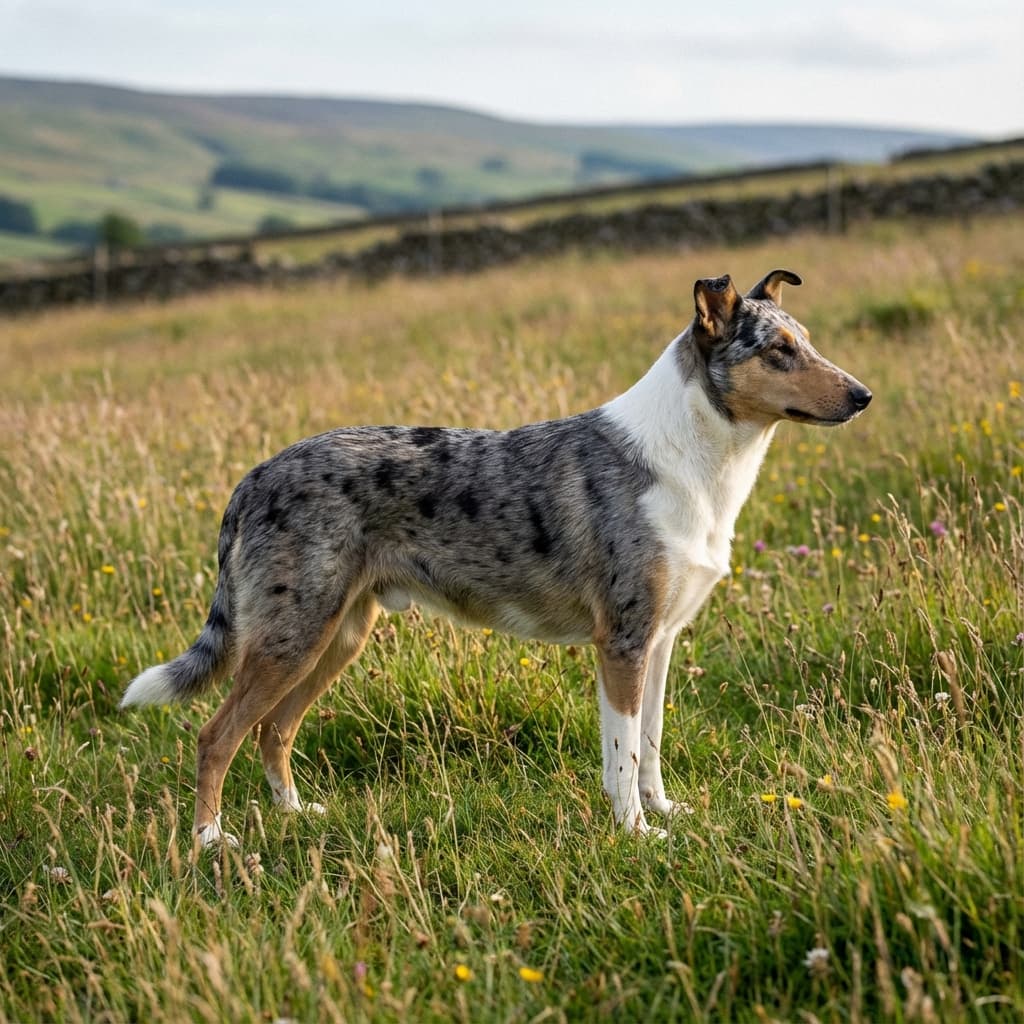
Physically, the Smooth Collie impresses with its beautiful, flat skull with a distinct stop dividing the head into two equal parts. Its almond-shaped, dark brown eyes emanate intelligence and devotion. Medium-sized ears, well-set and proportional, give the dog a vigilant yet friendly expression. The short, smooth coat requires regular but not overly demanding grooming, making this breed relatively easy to maintain.
This friendly, loyal, and exceptionally intelligent dog is an excellent companion for both families with children and single individuals. Its gentle temperament, complete lack of aggression, and natural protective instinct make it an ideal choice for families seeking an active yet balanced companion. On the other hand, the Smooth Collie is a dog with a high energy level, requiring regular physical activity and mental stimulation.
In the following sections of this guide, you will learn details about the health, grooming, training, and history and behavior of this exceptional breed. You will discover how to best care for your dog and ensure it has a happy, active life in your home.
The Smooth Collie stands out with its elegant and harmonious build, which immediately attracts attention. Its silhouette is slim, well-balanced, and free from any heaviness or clumsiness – every anatomical element remains in perfect proportion, creating the image of a dog designed both for work and to be a loyal companion.
Head and expression: The head of the Smooth Collie is crucial to the character of the breed. Viewed from the front or the side, it resembles a well-sculpted wedge with clean lines. In the center point between the inner corners of the eyes, there is a distinct yet gentle stop that divides the head into two equal parts. The skull is flat, and the sides gradually and smoothly taper from the ears to the black nose. The depth of the skull from the brow arch to the lower jaw is never excessive.
Eyes: Medium-sized, almond-shaped, set slightly obliquely. The color is dark brown, except for merle, where the eyes can be blue or speckled. The expression in the eyes is full of intelligence, alertness, and gentleness – it is in the eyes that the unique character of this breed is reflected.
Ears: Moderately large, set neither too close together nor too wide apart on the sides of the head. At rest, they are folded back, and in a state of alertness – raised and directed forward, with the tips naturally drooping.
Coat: Short, smooth, flat, with a harsh texture and dense undercoat. It does not require complicated grooming but needs regular brushing to maintain a healthy, shiny appearance.
Coloring: The breed comes in three basic color variations:
- Sable – from light gold to dark mahogany, with white markings
- Tricolor – black with tan markings and white
- Blue merle – silver-blue with black patches, tan markings, and white
Dimensions: According to the FCI standard (2021), the height at the withers is:
- Males: 56–61 cm
- Females: 51–56 cm
Overall, the appearance of the Smooth Collie is a combination of functionality and aesthetics – it is a dog that not only looks beautiful but whose anatomical structure allows it to effectively perform herding functions and be an active companion.
The Smooth Collie is a dog with a gentle, friendly, and balanced temperament. This breed is known for its exceptional intelligence and ability to learn quickly, which makes cooperation with the owner incredibly smooth and satisfying.
Character towards family: The Smooth Collie is deeply attached to its human family. It loves spending time with household members, showing affection and loyalty at every turn. Its gentle temperament and complete lack of aggression make it an excellent companion for families with children – it is patient, caring, and gentle even with the youngest family members.
Attitude towards strangers: Although not aggressive, the Smooth Collie can be slightly wary of strangers, which makes it a great guard dog. It usually reacts with loud barking to the presence of unknown people near the house, but after a brief introduction to a new person, it quickly shows a friendly disposition.
Relations with other animals: A well-socialized Smooth Collie gets along well with other dogs and pets. Its herding roots may sometimes lead to attempts to herd or organize the movement of other animals (or even children!), but this behavior is easily controlled through proper training.
Emotional needs: This breed does not like to be left alone for long periods. The Smooth Collie is a dog that needs human companionship and emotionally engages in family life. Prolonged loneliness can lead to behavioral problems, such as excessive barking or destructive behavior.
Activity and energy: Although calm and balanced at home, the Smooth Collie is a dog with a high energy level. It requires regular physical activity and mental stimulation. It excels in dog sports such as agility, obedience, frisbee, as well as in traditional herding tasks.
Herding instinct: This breed has retained a moderate hunting instinct, but its herding instinct is much stronger. The Smooth Collie is more inclined to guard the flock and organize the movement of animals than to hunt. In a family environment, it may exhibit these behaviors, trying to herd children or other animals – this is natural for this breed and can be utilized in positive training.
Summary: The Smooth Collie is an intelligent, friendly, loyal, and graceful dog. It fits perfectly into active families that can provide it with the right amount of exercise, play, and attention. Its balanced character and gentleness make it one of the best choices among herding breeds.
The Smooth Collie is generally a healthy and resilient breed, with an average lifespan of 12 to 14 years. However, like any purebred breed, the Smooth Collie may be prone to certain genetic diseases that owners should be aware of.
Most common health issues:
1. MDR1 Gene Mutation (Multi-Drug Resistance):
One of the most serious issues in this breed is a mutation in the MDR1 gene, which causes sensitivity to certain medications commonly used in veterinary medicine. Dogs with this mutation may have toxic reactions to medications such as:
- Ivermectin (an antiparasitic agent)
- Loperamide (used for diarrhea)
- Some anesthetics and chemotherapeutic agents
2. Collie Eye Anomaly (CEA):
CEA is a hereditary condition affecting eye development. It can present in a mild form (no clinical symptoms) or severe (leading to vision loss or blindness). The problem is present from birth and can be diagnosed by a veterinary ophthalmologist as early as 6–8 weeks of the puppy's life. Responsible breeders conduct eye examinations on their dogs to minimize the risk of passing the disease to offspring.
3. Progressive Retinal Atrophy (PRA):
PRA is a group of genetic diseases leading to gradual degeneration of the retina and consequently to vision loss. Symptoms usually appear in middle-aged dogs and progress over time. Genetic testing can help identify carriers of the gene responsible for PRA.
4. Gastric Dilatation-Volvulus (GDV):
Although the Smooth Collie is not a breed with particularly high risk for gastric torsion (this more commonly affects larger breeds with deep chests), owners should be aware of this potentially fatal condition. Symptoms include: abdominal bloating, ineffective attempts to vomit, excessive drooling, and restlessness. GDV is a condition that requires immediate veterinary intervention.
5. Hip Dysplasia (HD):
Although less common in this breed than in larger working dogs, hip dysplasia can occur. Regular orthopedic examinations and maintaining a healthy weight can help minimize symptoms.
6. Dermatological Issues:
Some individuals may be prone to skin allergies, seborrheic dermatitis, or dermatitis. Regular grooming, a proper diet, and veterinary check-ups help maintain healthy skin.
Prevention and Care:
Owners should:
- Choose puppies from responsible breeders who conduct genetic testing
- Conduct an MDR1 test on their dog
- Regularly consult with a veterinarian (check-ups at least once a year)
- Provide a balanced diet and appropriate physical activity
- Monitor the dog's vision and behavior, especially in middle age
- Avoid excessive joint strain in young dogs during their growth period
With proper care, owner awareness, and regular veterinary check-ups, the Smooth Collie can enjoy a long, healthy, and active life.
The care of the Smooth Collie is relatively simple and not very time-consuming compared to its long-haired cousin. Nevertheless, it requires regularity to keep the dog looking healthy and feeling good.
Brushing the coat:
The short, smooth coat of the Smooth Collie does not mat and does not require complicated grooming, but regular brushing is key. Brushing 1–2 times a week with a natural bristle brush or rubber glove is sufficient. Brushing:
- Removes dead hair and dirt
- Stimulates the skin and improves blood circulation
- Distributes natural skin oils, giving the coat a healthy, shiny appearance
- Strengthens the bond between the dog and the owner
Shedding:
The Smooth Collie sheds twice a year – in spring and autumn. During these periods, the intensity of shedding significantly increases. At that time, brushing should be done daily to control the amount of hair in the house. Helpful tools may include:
- Furminator brushes or deshedding tools
- Rubber massage brushes for removing loose hair
- Regular vacuuming and cleaning of the house
Bathing:
The Smooth Collie does not require frequent baths – a bath every 2–3 months or as needed (e.g., after getting dirty during a walk) is sufficient. Bathing too often can strip natural protective oils from the skin and lead to dryness. Gentle shampoos designed for dogs should be used.
Ear care:
Ears should be regularly checked for dirt, excess wax, or signs of infection (redness, unpleasant odor, discharge). Cleaning the ears with a gentle ear care solution should be done every 1–2 weeks or as recommended by a veterinarian.
Eye care:
Eyes should be regularly monitored for tears, excess discharge, or redness. Gently wiping around the eyes with a damp, soft cloth helps maintain cleanliness. If you notice excessive discharge or a change in eye color, consult a veterinarian.
Oral hygiene:
Taking care of teeth is crucial for the overall health of the dog. It is recommended to:
- Brush teeth 2–3 times a week (preferably daily)
- Use dog toothpaste
- Provide dental chews
- Schedule regular veterinary check-ups and professional teeth cleaning as needed
Nail trimming:
Nails should be trimmed every 3–4 weeks or as needed. Overly long nails can cause discomfort, walking problems, and joint damage. If you hear the nails clicking on the floor while the dog is walking – it’s a sign that it’s time to trim them.
Skin inspection:
During brushing, it is worthwhile to regularly check the dog's skin for:
- Ticks and fleas
- Rashes, redness, or wounds
- Growths or new skin changes
With proper, regular grooming, the Smooth Collie can enjoy a healthy, shiny coat and excellent condition throughout its life. Grooming is also a great opportunity to strengthen the bond with the dog and monitor its health.
The Smooth Collie is a dog with a high energy level that requires regular physical activity to maintain physical health and mental balance. This breed was created for intensive herding work, which is why daily movement and mental stimulation are essential for it.
Minimum activity requirements:
Owners should provide the Smooth Collie with:
- At least 60–90 minutes of activity daily
- Two intense walks per day (30–45 minutes each)
- Additional time for free play in the garden or park
- Regular training sessions and mental games
Types of activities:
The Smooth Collie excels in various forms of movement and dog sports:
- Agility – obstacle racing that combines speed, agility, and cooperation with the owner
- Obedience – competitive-level obedience training
- Frisbee (disc dog) – catching a disc in mid-air, ideal for active dogs
- Herding – the opportunity to utilize the breed's natural instincts
- Canicross – running with the dog on a leash
- Bikejoring – biking with the dog running alongside
- Long hikes and trekking – an excellent form of activity for the whole family
Mental needs:
In addition to physical activity, the Smooth Collie also needs mental stimulation. This is an extremely intelligent dog that quickly gets bored if not given proper challenges. Recommended forms of mental stimulation include:
- Training new commands and tricks
- Scent games (searching for hidden treats)
- Interactive toys and puzzles for dogs
- Learning various sports disciplines
- Regular changes in walking routes (new stimuli and scents)
Outdoor activity:
The Smooth Collie loves spending time outdoors with the family. Ideal activities include:
- Running and jogging with the owner
- Playing fetch (ball, frisbee, stick)
- Free play with other dogs in the park
- Swimming (some individuals love water)
- Keeping company in the garden during work or relaxation
Warnings and recommendations:
❌ What to avoid:
- Limiting activity to only short leash walks – this is definitely not enough!
- Leaving the dog alone for long hours without movement
- Monotonous routine without changes and new stimuli
- Too intense exercise on hot days (risk of overheating)
- Provide daily, regular activities
- Adjust the intensity of exercises to the dog's age and condition
- Combine physical activity with mental stimulation
- Ensure access to fresh water during activities
- Avoid intense exercise immediately after meals (risk of bloat)
Consequences of lack of activity:
Insufficient movement can lead to:
- Frustration and behavioral problems (excessive barking, destruction of objects)
- Overweight and obesity
- Joint and muscle problems
- Depression and apathy
- Excessive energy buildup that is difficult to control
Summary:
The Smooth Collie is a dog that needs space, movement, and an active lifestyle. This is not a breed for those who prefer a calm, sedentary lifestyle. However, if you are an active person who loves sports, the outdoors, and regular movement – the Smooth Collie will be the perfect, energetic companion for you, eagerly participating in all your activities.
The Smooth Collie is a dog exceptionally intelligent and eager to learn. Its natural ability to quickly absorb new commands and desire to please its owner make it an ideal candidate for various training programs – from basic obedience to advanced dog sports.
Training methods:
The Smooth Collie responds best to positive reinforcement methods. The recommended approach is:
- Reward-based training: using treats, praise, toys, and play as positive reinforcement
- Avoiding punishment and aggression: dogs of this breed are emotionally sensitive and react poorly to harsh treatment
- Consistency: clear rules and consistent enforcement by all family members
- Short, dynamic sessions: 10–15 minutes of training several times a day instead of long, exhausting sessions
- Variety: introducing new exercises and challenges to prevent boredom
Basic training:
Basic commands that every Smooth Collie should master:
- Sit – basic obedience command
- Stay/Wait – remaining in place
- Come/Here – calling the dog
- Lie down – lying down on command
- Leave it – giving up an object or food
- Loose-leash walking – walking without pulling
Socialization:
Socialization is crucial for the proper development of the Smooth Collie. It should begin as early as possible, ideally during the puppy stage (from 8 to 16 weeks of age). Proper socialization includes:
- Contact with various people (children, adults, elderly)
- Meetings with other dogs and animals
- Exposure to different environments (park, city, forest, beach)
- Getting used to various sounds (cars, vacuum cleaners, fireworks)
- Positive experiences in new situations
Advanced training and dog sports:
Due to their intelligence and willingness to work, Smooth Collies excel in:
- Agility – obstacle racing requiring precision and cooperation
- Obedience – advanced obedience training at a competitive level
- Rally obedience – a combination of obedience with a course containing various tasks
- Herding/herding work – utilizing the breed's natural instincts
- Trick dog – learning impressive tricks and stunts
- Nosework – scent work and searching
- Therapy dog – working with people in hospitals, nursing homes, schools
Training challenges:
Although the Smooth Collie is easy to train, certain challenges may arise:
- Emotional sensitivity: dogs of this breed can be sensitive to the owner's tone of voice and mood. Avoid yelling and harsh treatment.
- Excessive barking: Smooth Collies have a natural tendency to bark (alerting, communicating). Teach the dog the command Quiet or Enough.
- Herding instinct: it may try to herd children, other animals, or even joggers. This can be controlled through training and redirecting energy to appropriate activities.
- Independent thinking: Smooth Collies are intelligent and may sometimes try to solve problems on their own, which can appear as stubbornness. The key is consistency and motivation.
Puppy training:
Basic rules for training Smooth Collie puppies:
- Start training from the first day in the new home
- Teach the puppy its name
- Train housebreaking (going outside)
- Prevent unwanted behaviors (biting, jumping)
- Teach basic commands through play
- Regularly reward good behavior
- Enroll the puppy in group classes for puppies (great socialization)
Adult dog training:
If you adopt an adult Smooth Collie, remember:
- Give the dog time to adapt to the new home (2–3 weeks)
- Establish clear rules and routines
- Assess the dog's training level and skills
- Work on behavioral issues with a professional trainer
- Be patient and consistent – even adult dogs can learn
The role of the trainer/behaviorist:
Although the Smooth Collie is easy to train, it is worth considering:
- Puppy group classes (socialization + basic obedience)
- Obedience courses for beginner owners
- Consultations with a behaviorist in case of problems
- Classes in advanced dog sports (agility, obedience)
Summary:
The Smooth Collie is a trainer's dream – intelligent, eager to learn, capable, and loyal. With the right approach based on positive reinforcement, consistency, and regular training, the Smooth Collie can become not only an excellent family companion but also a successful dog in various sports disciplines and obedience shows. The key is to understand the sensitivity of this breed and to harness its natural desire to please its owner.
A proper diet is key to the health, condition, and longevity of the Smooth Collie. As a medium-sized dog with a high energy level, the Smooth Collie requires balanced nutrition that supports its active lifestyle.
Basic nutrition guidelines:
1. High-quality food:
Choose premium or super premium foods that meet AAFCO (Association of American Feed Control Officials) or FEDIAF (European Pet Food Industry Federation) standards. The food should contain:
- High-quality animal protein as the first ingredient (meat, fish, poultry)
- Healthy fats (omega-3 and omega-6 for healthy skin and coat)
- Digestible carbohydrates (rice, oats, sweet potatoes) as an energy source
- Vitamins and minerals supporting the immune system, bones, and joints
- No artificial colors, preservatives, or fillers
2. Types of feeding:
Owners have several options:
- Dry food (kibble): convenient, economical, helps maintain dental health
- Wet food (canned): more palatable, contains more water, better for dogs with dental issues
- BARF diet (raw meat + vegetables): natural, requires knowledge and preparation
- Homemade diet (cooked meals): full control over ingredients, time-consuming
3. Portions and feeding frequency:
The amount of food depends on:
- The dog's age (puppy, adult, senior)
- The activity level (working dog vs. household companion)
- Health status and metabolism
- Type of food (dry vs. wet)
- Puppies (2–6 months): 3–4 meals per day
- Young dogs (6–12 months): 2–3 meals per day
- Adult dogs (1–7 years): 2 meals per day
- Seniors (7+ years): 2 meals per day, adjusted for decreased activity
4. Adjustment to activity level:
The Smooth Collie is an active dog, so:
- Dogs training for sports or working as herders need more calories
- Dogs with low activity levels need fewer calories to avoid obesity
- Regularly monitor the dog's weight and condition, adjusting portions as needed
5. Hydration:
Fresh water must be available to the dog at all times! This is especially important:
- On warm days
- After intense exercise
- When feeding dry food
6. Foods prohibited for dogs:
❌ NEVER give your dog:
- Chocolate and cocoa (toxic!)
- Onions and garlic (destroy red blood cells)
- Grapes and raisins (kidney damage)
- Avocado (contains persin, toxic to dogs)
- Xylitol (artificial sweetener – toxic!)
- Alcohol, caffeine
- Chicken or other poultry bones (risk of choking, intestinal perforation)
- Salty, fatty, or seasoned human food
7. Treats and rewards:
Treats can make up no more than 10% of the daily calorie intake. Choose:
- Small, low-calorie training treats
- Natural chews (e.g., dried meat, pig ears)
- Healthy snacks (e.g., pieces of carrot, seedless apples)
8. Special diets:
In some cases, the Smooth Collie may require a special diet:
- Food allergies: elimination or hypoallergenic diet
- Digestive issues: easily digestible food for sensitive stomachs
- Obesity: light food with reduced calories
- Kidney or liver diseases: prescription veterinary food
- Seniors: food for older dogs with added glucosamine for joints
9. Preventing bloat:
Although the Smooth Collie is not a breed particularly prone to bloat, it is wise to exercise caution:
- Feed the dog twice a day instead of one large meal
- Avoid intense exercise immediately after eating (wait 1–2 hours)
- Do not allow the dog to drink large amounts of water immediately after a meal
- Avoid feeding from elevated bowls (controversial, consult with a veterinarian)
10. Monitoring weight and condition:
Regularly check the dog's condition:
- Ideal weight: you can feel the ribs under a thin layer of fat, a clear waistline when viewed from above
- Overweight: ribs hard to feel, no waist, sagging belly
- Underweight: ribs clearly visible, prominent hip bones
11. Transitioning to a new food:
When changing food, do so gradually over 7–10 days:
- Days 1–2: 75% old food + 25% new
- Days 3–4: 50% old food + 50% new
- Days 5–6: 25% old food + 75% new
- Day 7+: 100% new food
Summary:
A proper diet is the foundation of the Smooth Collie's health. Choose high-quality food, adjust portions to the activity level, provide constant access to fresh water, and regularly monitor the dog's weight. Avoid table scraps and toxic foods for dogs. With proper nutrition, regular activity, and veterinary care, your Smooth Collie can enjoy a long, healthy, and energetic life.
Characteristic Traits
Pros
- Friendly and loyal character
- Exceptionally intelligent and easy to train
- Gentle temperament ideal for families with children
- Active and full of energy
- Relatively easy care for short coat.
Cons
- Requires a lot of physical activity and mental stimulation
- Intense shedding twice a year
- May be excessively vocal
- Cannot tolerate prolonged solitude.
Behavioral Ratings
Breed History
The history of the Smooth Collie is a fascinating tale of herding dogs that have served humans for centuries in the challenging conditions of the Scottish Highlands. Although the exact origin of the breed remains shrouded in mystery, there are many theories and historical evidence that shed light on the development of this unique breed.
Ancient roots:
It is believed that the ancestors of today's Scottish Shepherds may have been brought to Scotland by the Romans during their invasion of Britain (around the 1st–2nd century AD). The Romans brought herding dogs with them, which they used to guard the cattle and sheep accompanying their legions. These dogs may have interbred with local Celtic dogs, giving rise to herding breeds that later developed in Scotland.
The Middle Ages and breed development:
In the Middle Ages, herding dogs were an essential part of the Scottish economy, which was largely based on sheep farming. Scottish shepherds were valued for their intelligence, endurance, and ability to work in harsh mountainous conditions. They worked in various types of terrain – from windy uplands to wet valleys – guarding flocks of sheep and cattle.
Etymology of the name Collie:
The origin of the name Collie is a subject of discussion. The most popular theories suggest that:
- The name comes from Scottish sheep with black heads called colley or coally
- It may derive from the Celtic word colley meaning useful or faithful
- It may be related to the Old English word col meaning black or coal-like
The 19th century – the breed's flourishing:
The true development and popularization of the Scottish Shepherd occurred in the 19th century, when the breed began to attract attention not only as a working dog but also as a companion and show dog.
Queen Victoria and the rise in popularity:
One of the most significant moments in the breed's history occurred in the 1860s, when Queen Victoria (1819–1901) fell in love with Scottish Shepherds during her visits to Balmoral Castle in Scotland. The Queen was a great dog lover and owned many Collies that she kept at her residences. Her interest in the breed led to a tremendous increase in the popularity of Scottish Shepherds throughout the United Kingdom and beyond.
The emergence of varieties:
In the 19th century, Scottish Shepherds appeared in two coat varieties:
- Rough Collie – with a characteristic rich, dense coat
- Smooth Collie – with a short, smooth coat
First shows and breed standards:
Scottish Shepherds first appeared at dog shows in Britain in the 1860s. In 1867, the breed was showcased at a show in Birmingham. In 1881, the first club dedicated to the Collie breed – the Collie Club in Britain – was established, which set the first official breed standard.
Spread of the breed worldwide:
By the end of the 19th century, Scottish Shepherds were exported to other countries, including the United States, Canada, Australia, and New Zealand. In the United States, the breed gained immense popularity, and the American Kennel Club (AKC) officially recognized the Collie in 1885. The Collie Club of America was founded in 1886.
20th century – popular culture:
In the 20th century, Scottish Shepherds gained even greater fame through popular culture. The most famous representative of the breed was Lassie – a fictional character from novels, films, and a television series, who forever became a symbol of loyalty, intelligence, and courage. Lassie was a Rough Collie (long-haired), but she influenced the popularity of the entire breed, including the short-haired variety.
Smooth Collie vs. Rough Collie:
Although the Rough Collie (long-haired) became more popular in mass culture, the Smooth Collie (short-haired) remained a loyal companion for shepherds and dog lovers who appreciated its elegance and ease of care. In many countries, both varieties are recognized as one breed, differing only in coat type.
FCI standard and modernity:
The Fédération Cynologique Internationale (FCI) officially recognizes the Smooth Collie as breed number 296 in group 1 (Herding and Cattle Dogs), section 1 (Shepherds). The latest FCI standard was updated in 2021.
Contemporary role of the breed:
Today, the Smooth Collie is valued as:
- Family dog – a loyal, friendly companion for families with children
- Working dog – still used in herding work in some regions
- Sporting dog – successful in agility, obedience, and herding trials
- Therapy dog – due to its gentle nature, it excels in animal-assisted therapy
- Show dog – regularly presented at international shows
Population and breed protection:
Although the Rough Collie (long-haired) is more popular, the Smooth Collie is less numerous and is considered a breed in need of protection in some countries. Breeders and breed enthusiasts are working to preserve its unique character, health, and working abilities.
Summary:
The Smooth Collie is a breed with a long and rich history, dating back to ancient times. From Roman herding dogs, through the Scottish Highlands, to modern family homes and international shows – the Smooth Collie remains a breed valued for its intelligence, loyalty, elegance, and versatility. Its history is a testament to the bond between humans and dogs that has lasted for thousands of years.