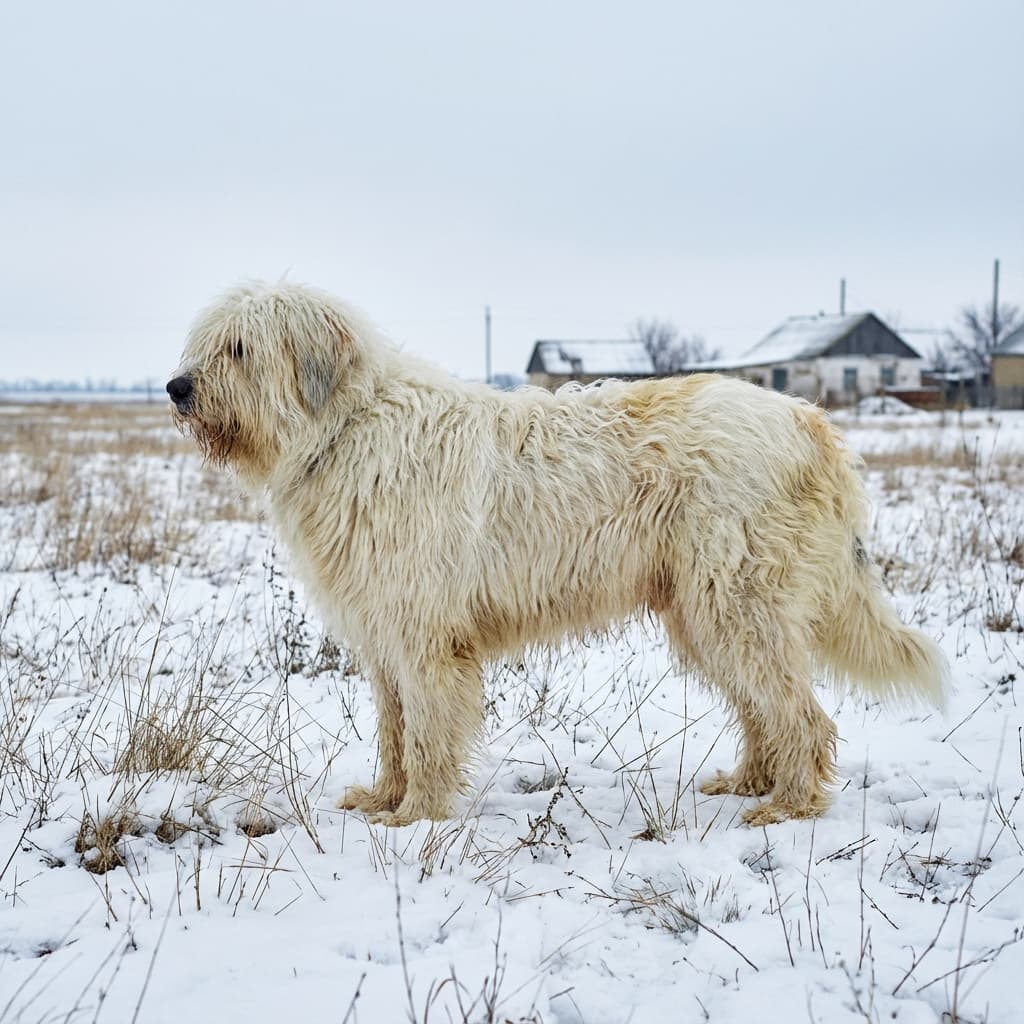
South Russian Shepherd - Yuzhak
FCI Group
1• FCI 326
Size
Large
Origin Country
XX
Height
62-75 cm
Weight
35-50 kg
Lifespan
10-14 years
Temperament
Overview
South Russian Shepherd, also known as Južak (Russian: Južnorusskaja Owčarka), is an impressive breed of shepherd dog originating from the southern steppes of Russia. Since the 19th century, these dogs have successfully guarded sheep herds and properties, utilizing their natural protective and herding instincts. Their exceptional courage, strength, and absolute devotion to their owners make them one of the most reliable guard and herding dogs in the world.
This massive breed is characterized by a strong temperament and independent nature. Južak is not just a guardian of herds – it is a dog with unwavering loyalty to its family and distrust of strangers, which predisposes it to the role of an excellent protector. Its impressive physique covered with long, dense fur creates an even greater impression, and beneath this lush coat lies a powerfully muscled body capable of defending against the largest predators.
The South Russian Shepherd is a dog with high demands – it needs ample space to live, preferably a farm or a house with a large, fenced area. Its intense exercise needs make daily walks and physical activity absolutely essential for its mental and physical health. This is not a breed for apartment dwellers or people leading a sedentary lifestyle.
The strong personality of the Južak requires the owner to have experience and assertiveness. This dog can be dominant and unyielding, so assertive leadership and early socialization are crucial. Its intelligence allows for quick learning of new skills; however, its independent nature means that training requires patience and consistency. A proper diet, rich in protein and tailored to physical activity, is essential – being overweight could lead to joint dysplasia issues.
The characteristic long and dense fur of the Južak requires regular grooming to prevent matting. Its majestic appearance – elongated head with distinct eyebrows and whiskers, strong physique, and various colors (white, gray, shades of yellow) – attracts attention and admiration. Although the breed remains relatively unknown in Western Europe, it enjoys enduring popularity among connoisseurs of herding and guard dogs in Russia and Eastern Europe. The history of this breed, which began in 1898 at the Crimean estate of Askania Nova by Baron Friedrich von Falz-Fein, represents a fascinating chapter in the history of Russian cynology.
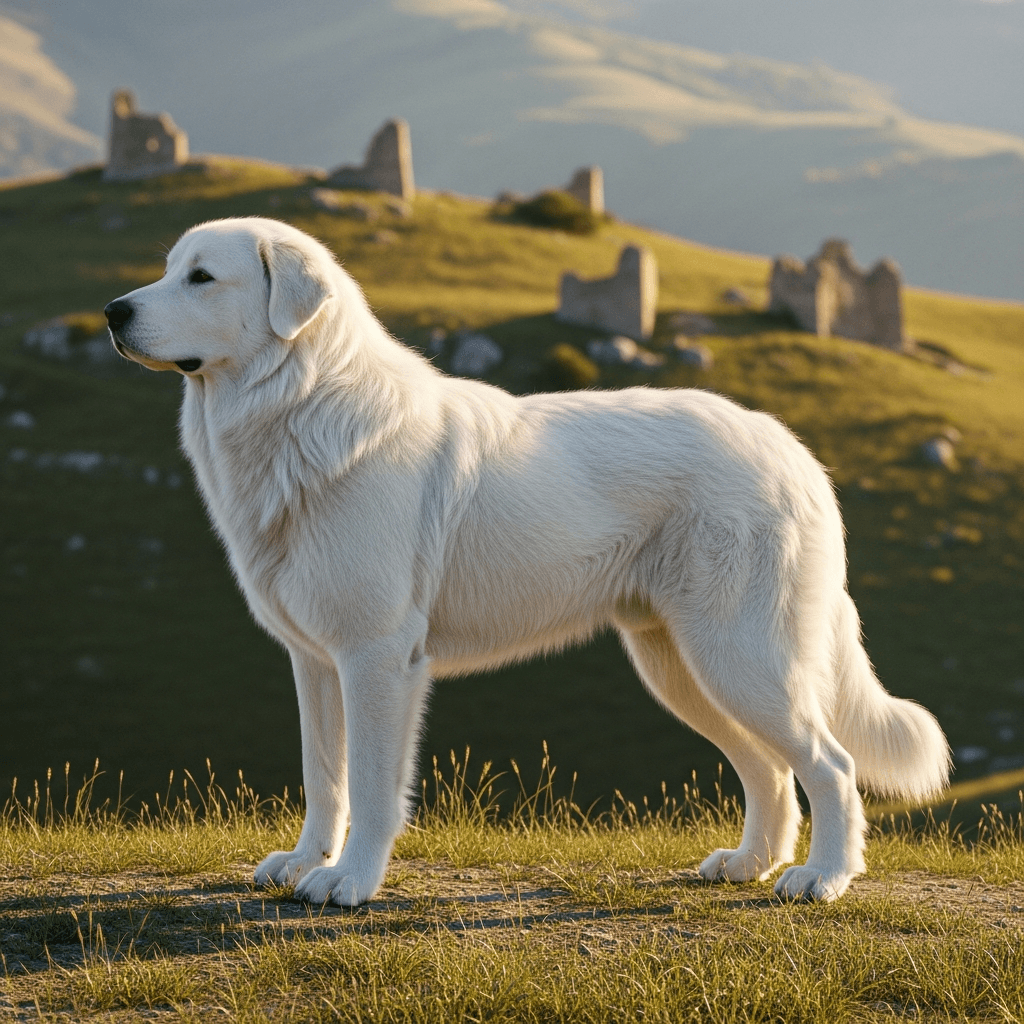
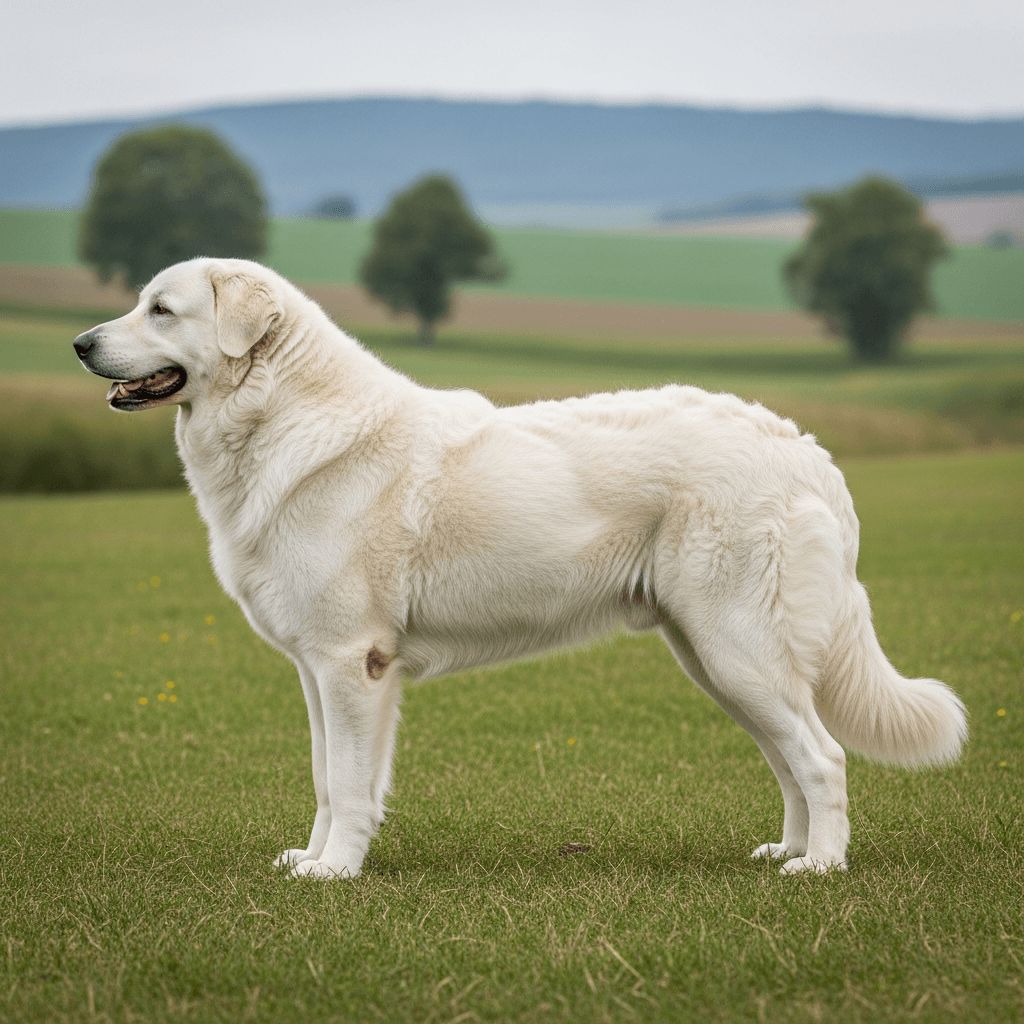
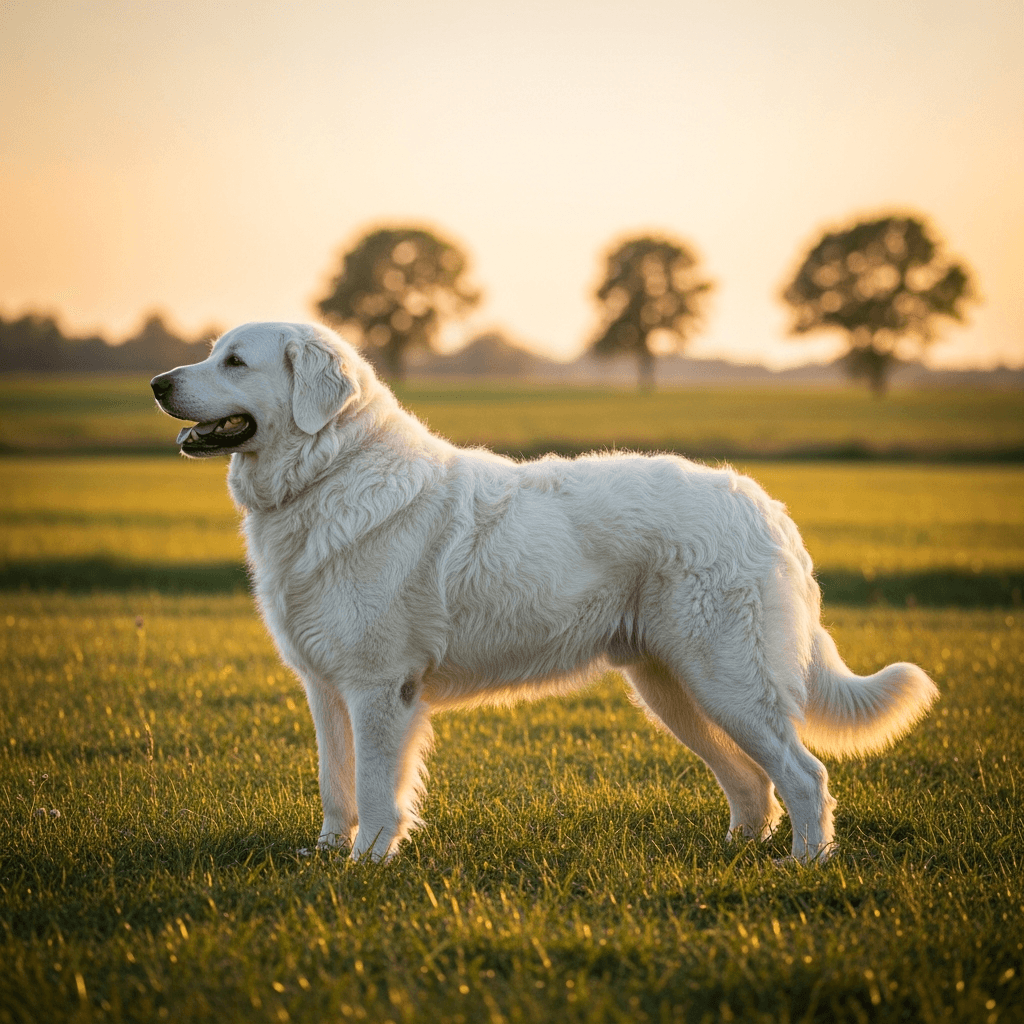
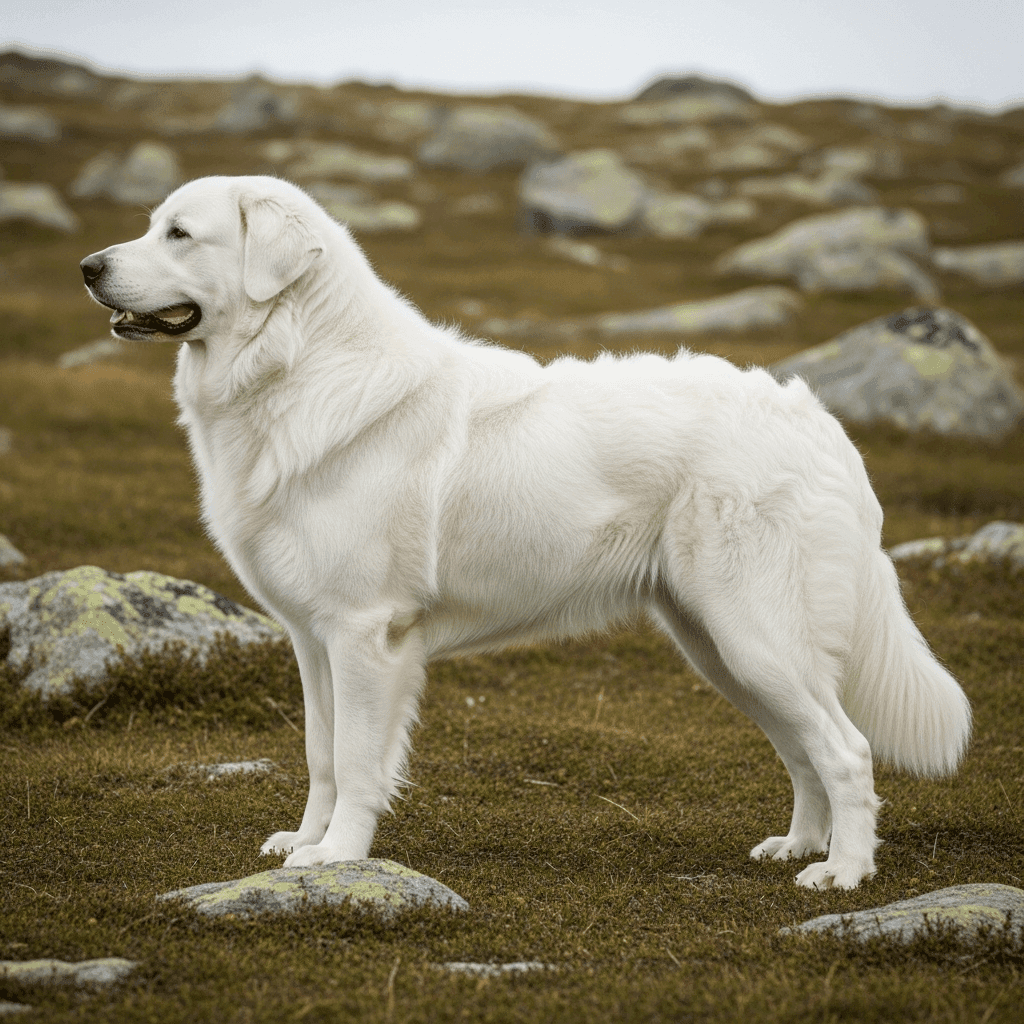
The South Russian Shepherd is a dog with impressive size and a powerful build. The height at the withers for males ranges from 65-75 cm, while for females it is 62-66 cm. The weight of adult individuals ranges from 35 to 50 kg, with males being noticeably heavier and more massive than females. The silhouette is moderately elongated, with well-developed musculature that gives the dog both agility and strength.
The head has a characteristic elongated, wedge-shaped form with well-defined cheekbones and a skull of moderate width. The proportions of the head are harmonious – the length of the skull and muzzle is similar. The eyes are almond-shaped, medium-sized, set slightly obliquely, and come in shades of brown from light to dark. The gaze is penetrating, alert, and expressive. The ears are relatively small, triangular, set low, lying close to the cheeks, and are completely covered by lush fur.
The most characteristic feature of appearance is the long, dense, and coarse coat that covers the entire body, forming a protective layer of 10-15 cm in length, or even more. The hair on the head forms distinct eyebrows, whiskers, and a beard, giving the dog a specific, recognizable appearance. The undercoat is well-developed, providing excellent thermoregulation in various climatic conditions.
The tail is of medium length, with a slight hook at the end; when at rest, it hangs loosely, while in motion or during excitement, it may be raised to the level of the back or slightly higher. The coat color is varied – shades of white, gray, ivory, yellowish, and their combinations are found. Solid light colors are the most common, although dogs with brindle colors are also acceptable.
The silhouette as a whole gives the impression of a massive, powerful dog adapted to the harsh working conditions of the steppe – capable of long marches, fast runs, and confrontations with predators threatening herds. The functional appearance is combined with undeniable beauty, making the South Russian Shepherd one of the most striking herding breeds.
The South Russian Shepherd is characterized by a strong, self-confident temperament combined with independence and a tendency to make decisions on its own. These traits have developed over centuries of selective breeding, where dogs capable of autonomously defending herds against wolves and other predators were chosen, often without direct human assistance.
Loyalty to the family is one of the strongest character traits of the Jużak. This dog forms a deep emotional bond with the owner and family members, to whom it dedicates boundless devotion. At the same time, it exhibits natural distrust of strangers, making it an excellent guard dog. This is not aggression, but vigilance and caution – the Jużak observes strangers from a distance and only reacts when it perceives a real threat.
The guarding and territorial instinct is very strongly developed in this breed. The South Russian Shepherd will defend its territory and family with determination and courage. Its presence alone is deterrent, but in the case of a real threat, the dog will not hesitate to act. Therefore, proper socialization from a puppy is absolutely crucial – it allows the dog to learn to distinguish normal situations from real danger.
The Jużak is an intelligent dog, capable of quickly learning new commands and tasks. However, its independent nature means it prefers to act according to its own judgment, which can lead to resistance during training. This is not a dog that blindly follows commands – it contemplates their meaning and makes its own decisions. Therefore, it requires an owner with a strong personality who can provide consistent, firm, but fair leadership.
This breed is active and energetic, needing plenty of exercise and space to explore. Being confined in a small apartment or lacking activity leads to behavioral problems – boredom, frustration, excessive vigilance, or destructive behavior. The Jużak feels best in a rural or suburban environment, where it can freely patrol the area and utilize its natural instincts.
In the right conditions and with proper upbringing, the South Russian Shepherd becomes an irreplaceable companion – a devoted, courageous, and reliable guardian of the family and property. This is a dog for experienced owners who appreciate a strong character and can provide it with the appropriate living conditions and consistent training.
The South Russian Shepherd is a breed that enjoys generally good health and significant endurance resulting from natural and selective breeding in harsh steppe conditions. The average lifespan is 10-14 years, which is typical for large dog breeds.
A solid body structure and double, dense coat make the Jużak well-suited to endure both high and low temperatures. It is resistant to weather conditions – frost, wind, rain, or heat do not pose a major problem for it. This adaptability was crucial for working in the steppe, where temperature differences can be extreme.
Like most large breeds, South Russian Shepherds may be prone to hip and elbow dysplasia. This is a genetically based condition, which is why responsible breeders conduct radiological examinations of dogs intended for breeding. Owners should ensure that their dog maintains an appropriate body weight and provide sufficient, but not excessive, physical activity during the growth period to minimize the risk of developing dysplasia.
Obesity is another threat that can lead to serious health problems, including joint strain, heart disease, and diabetes. Regular physical activity and a balanced diet tailored to the dog's age, weight, and activity level are crucial for maintaining proper condition. It is important to avoid feeding table scraps and excessive treats.
Due to its long and dense coat, regular checks of the skin for infections, irritations, or external parasites (ticks, fleas) are important. Neglected grooming can lead to matting of the fur, which retains moisture and promotes the growth of microorganisms.
Regular veterinary check-ups – at least once a year – allow for early detection of potential health problems. Vaccinations, deworming, and parasite prevention should be carried out according to the veterinarian's recommendations. With proper care, the South Russian Shepherd can enjoy a long, healthy, and active life.
Taking care of a South Russian Shepherd requires regular and systematic commitment from the owner. The long, thick, and coarse coat with a well-developed undercoat is the breed's hallmark, but it is also the biggest challenge in daily care.
Brushing should be done daily, preferably using metal combs and brushes with long pins that penetrate deeply into the coat and undercoat. Regular brushing prevents the formation of mats, which can be very painful for the dog and lead to skin problems. Neglected fur accumulates moisture, dirt, and parasites, which promotes infections.
During shedding periods – in spring and autumn – the intensity of coat change is particularly high. In these months, the frequency of brushing should be increased to even twice a day to remove dead hair and facilitate the regeneration of new fur. It is worth using professional grooming tools, such as a furminator or rake, which effectively remove the undercoat.
Bathing should be done only when necessary, for example, when the dog is very dirty or before shows. Too frequent washing removes the natural oils that protect the skin and coat, which can lead to dry skin, itching, and deterioration of hair quality. During bathing, shampoos designed for long-haired dogs should be used, and the coat should be thoroughly rinsed and dried to prevent moisture from accumulating near the skin.
It is necessary to regularly check the ears hidden under the long fur. Lack of ventilation promotes the accumulation of wax and moisture, which can lead to fungal or bacterial infections. Cleaning the ears once a week with special veterinary solutions is recommended. Any concerning symptoms – odor, redness, discharge – require consultation with a veterinarian.
Nails should be regularly trimmed, especially if the dog does not naturally wear them down while walking on hard surfaces. Overgrown nails make walking difficult, can grow into the pads, and cause pain and lameness. Trimming every 3-4 weeks is usually sufficient.
Caring for a South Russian Shepherd is not only a matter of aesthetics but primarily of health and comfort for the dog. A well-groomed Jużak looks majestic, and the grooming process further strengthens the emotional bond between the dog and the owner. It is worth considering periodic visits to a professional groomer who can help maintain the coat in optimal condition.
The South Russian Shepherd is a breed with high exercise needs, requiring regular and intense physical activity to maintain physical health and mental balance. This is not a dog that will be satisfied with a short walk around the block – its herding and guarding nature has instilled in it a need for movement, patrolling the area, and being active for a significant part of the day.
Daily walks are an absolute minimum. It is recommended to have at least two walks a day lasting a total of 60-90 minutes. Walks should be varied – not just walking on a leash, but also the opportunity to run freely in a safe, fenced area where the dog can patrol, sniff, and use its natural instincts.
In addition to walks, it is worth introducing additional forms of activity:
- Running – The South Russian Shepherd is a great companion for jogging or bike rides (after reaching full physical maturity).
- Fetch games – balls, frisbees, or other toys that engage the dog in movement.
- Agility or other canine sports – allow for combining physical exertion with mental stimulation.
- Hiking and excursions in forested or mountainous areas where the dog can fully utilize its energy and instincts.
The South Russian Shepherd feels best in a rural or suburban environment where it has access to a large, fenced area. It can then move freely, patrol the surroundings, and fulfill its natural needs. Living in the city or on a small plot without opportunities for activity is inappropriate for this breed, leading to frustration, boredom, and behavioral problems.
It is important that physical activity is tailored to the dog's age. Puppies and young dogs during their growth period (up to about 18 months of age) should not be subjected to excessive exertion or jumping to avoid damage to joints and bones. On the other hand, adult dogs need regular, intense movement throughout their lives.
In addition to physical activity, the South Russian Shepherd also needs mental stimulation. This breed is intelligent and easily bored, so it is worth introducing scent games, educational activities, obedience training, or learning new tricks. Combining physical and mental exertion ensures the dog’s health, emotional balance, and satisfaction with life.
An appropriate amount of exercise helps minimize behavioral problems typical of bored or insufficiently stimulated dogs: excessive alertness, destructiveness, barking, or aggression. A balanced, active South Russian Shepherd is a calm, happy, and content companion.
Training the South Russian Shepherd is a challenge that requires experience, consistency, and a deep understanding of the breed's specifics. The Jużak is a dog with a strong, independent personality that is not prone to blind obedience – it prefers to act according to its own judgment, stemming from its herding and guarding history.
An experienced owner is a key condition for success. A person without experience working with large, strong guarding breeds may encounter serious difficulties. The Jużak requires firm but fair leadership – the owner must be consistent, confident, and able to set clear boundaries. At the same time, brute force or shouting is unacceptable and yields the opposite effect to what is intended.
Early socialization (from the 8th week of life) is absolutely essential. The puppy should be exposed to various people, animals, situations, sounds, and places in controlled, positive circumstances. This helps shape a balanced character and teaches the dog to distinguish normal situations from real threats. Lack of socialization leads to excessive distrust, fear, or aggression.
Basic obedience commands – Sit, Stay, Come, Lie down, No – should be introduced gradually, using positive reinforcement methods. Rewarding desired behaviors with treats, praise, and play is much more effective than punishment. The Jużak is intelligent and quickly learns new skills, but its independence means it may test boundaries and refuse to follow commands if it does not see the point.
Training should be varied and engaging. Monotony leads to boredom and lack of motivation. It is worth introducing diverse exercises, educational games, scent work, and training that utilizes the dog's natural instincts. Short, intense training sessions (10-15 minutes) are more effective than long, exhausting classes.
Consistency is the foundation of success. The rules set by the owner must apply at all times and in all places – lack of consistency causes the dog to start testing boundaries and taking control. At the same time, the owner must be patient – haste and frustration are the enemies of effective training.
It is worth considering working with a professional trainer specializing in herding and guarding breeds. An expert can help develop an individual training plan tailored to the dog's temperament and the owner's needs. Group training sessions with other dogs can be particularly beneficial, further supporting socialization.
Advanced training may include defensive training, IPO (International Prüfungs-Ordnung), herding, or search and rescue. The Jużak has natural predispositions for these activities, and engaging in them provides the physical and mental stimulation it needs.
With the right approach, patience, and consistency, the South Russian Shepherd becomes a well-mannered, obedient companion that simultaneously retains its natural guarding instinct and ability to make independent decisions in threatening situations. It is the balance between obedience and autonomy that makes this breed unique.
The diet of the South Russian Shepherd should be carefully balanced and tailored to its size, age, activity level, and health status. As a large breed dog with high energy needs, Jużak requires high-quality food rich in nutrients essential for maintaining health, condition, and a beautiful coat.
Protein is a fundamental component of the diet. It should come from high-quality animal sources – poultry, beef, lamb, or fish. Protein is essential for building and repairing muscles, supporting the immune system, and maintaining healthy skin and coat. The protein content in food for adult dogs should be at least 22-26%, and for puppies and active dogs – 26-30%.
Fats provide energy and are carriers of fat-soluble vitamins (A, D, E, K). Healthy sources of fats include salmon oil, flaxseed oil, or poultry fat. Omega-3 and omega-6 fatty acids support skin, coat, and nervous system health. The fat content in the food should be around 12-18%.
Carbohydrates (rice, oats, potatoes, sweet potatoes) provide energy and aid digestion. It is important to avoid foods with excessive grain content, especially corn and wheat, which can trigger food allergies. Vegetables and fruits provide fiber, vitamins, and antioxidants.
Regular meals – preferably twice a day at consistent times – help maintain stable energy levels and prevent digestive issues, such as bloating (a risk in large breeds). Portions should be adjusted to the dog's weight and activity level. Feeding should be avoided immediately before or after intense physical exertion.
Fresh water must be available at all times. Proper hydration is crucial for the body's proper functioning, especially during periods of high temperatures or intense activity.
It is important to avoid feeding table scraps, which may be too fatty, seasoned, or contain ingredients harmful to dogs (onion, garlic, chocolate, avocado). Low-quality food can lead to health problems such as obesity, food allergies, or digestive disorders.
Monitoring body weight is essential. Obesity in large breeds leads to serious health problems, including joint dysplasia, heart disease, diabetes, and a shortened lifespan. Regularly weighing the dog and monitoring physical condition (visible ribs under a layer of fat, defined waist) allows for early detection of overweight and dietary adjustments.
It is advisable to consult a veterinarian or animal nutritionist to determine the optimal diet tailored to the individual needs of the dog. Supplementation with vitamins, minerals, or joint support preparations (glucosamine, chondroitin) may be indicated, especially in older dogs or those with health issues.
A proper diet is the foundation of a long, healthy, and active life for the South Russian Shepherd. Investing in high-quality food pays off in the form of health, energy, and a wonderful appearance for the dog.
Characteristic Traits
Pros
- Absolute loyalty to the family
- Strong guarding and defensive instinct
- Resilience to extreme weather conditions
- Intelligence and quick learning ability
- Health resilience and longevity.
Cons
- Requires an experienced and assertive owner
- High exercise needs and ample space
- Distrust of strangers necessitates careful socialization
- Intensive grooming of long fur
- Tendency towards dominance.
Behavioral Ratings
Breed History
The history of the South Russian Shepherd dates back to the 18th and 19th centuries, when the southern regions of Russia – present-day Ukraine, Crimea, and the southern steppes – became the scene of intensive development of merino sheep breeding. Along with the import of sheep from Spain, herding dogs also arrived in Russia – furry, medium-sized dogs resembling the modern Gos d'Atura Catala (Catalan herding dog). These dogs were agile, resilient, and excelled at guarding flocks.
The dogs brought from Spain spontaneously interbred with local herding breeds and sighthound-type dogs that had inhabited the steppes for centuries. As a result of these crossbreeds, a new breed emerged – larger, stronger, and more resilient than its Spanish ancestors, capable of defending flocks against wolves, jackals, and other predators. Thus, the Russian herding dog was born, quickly gaining recognition not only in Russia but also in Western European countries.
In 1867, at the World Exhibition in Paris, the Russian herding dog received a gold medal for beauty, which contributed to its growing popularity and international prestige. However, true systematic breeding work only began in 1898 at the estate of Askania Nova in Crimea.
The owner of Askania Nova was Baron Friedrich von Falz-Fein, a Russian aristocrat of German descent, a passionate zoologist and breeder. Baron Falz-Fein conducted advanced breeding work at his estate aimed at stabilizing the physical and behavioral traits of the breed. Thanks to his efforts, the modern type of South Russian Shepherd was developed – larger, more massive, with characteristic long fur and a strong protective temperament. It was the baron who named the breed Jużnorusskaja Owczarka (South Russian Shepherd).
In the first half of the 20th century, the breed enjoyed great popularity in the southern regions of Russia and Ukraine, where it was used for guarding sheep flocks, protecting farms, and serving as sentry dogs. However, World War II and the difficult years that followed brought a significant decline in the breed's population. Many breeding lines were lost, and the breed was on the brink of extinction.
Thanks to the commitment of enthusiasts and breeders in the 1950s and 1960s, the population of the Jużak was successfully rebuilt. Breeding work was mainly conducted in the Rostov region, Crimea, and other areas of southern Russia. In 1996, the breed was officially recognized by the FCI (Fédération Cynologique Internationale) and assigned to Group 1 (herding dogs and shepherds), Section 1 (shepherds), Standard No. 326.
Today, the South Russian Shepherd is a relatively rare breed outside of Russia and the post-Soviet countries, where it enjoys lasting popularity among lovers of herding and guard dogs. In Western Europe and North America, the breed remains relatively unknown, although it is slowly gaining recognition among connoisseurs who appreciate its history, exceptional defensive abilities, and remarkable loyalty.
The history of the Jużak is a tale of the strength of nature, human determination, and attachment to herding traditions that have shaped one of the most impressive and characterful dog breeds in the world.