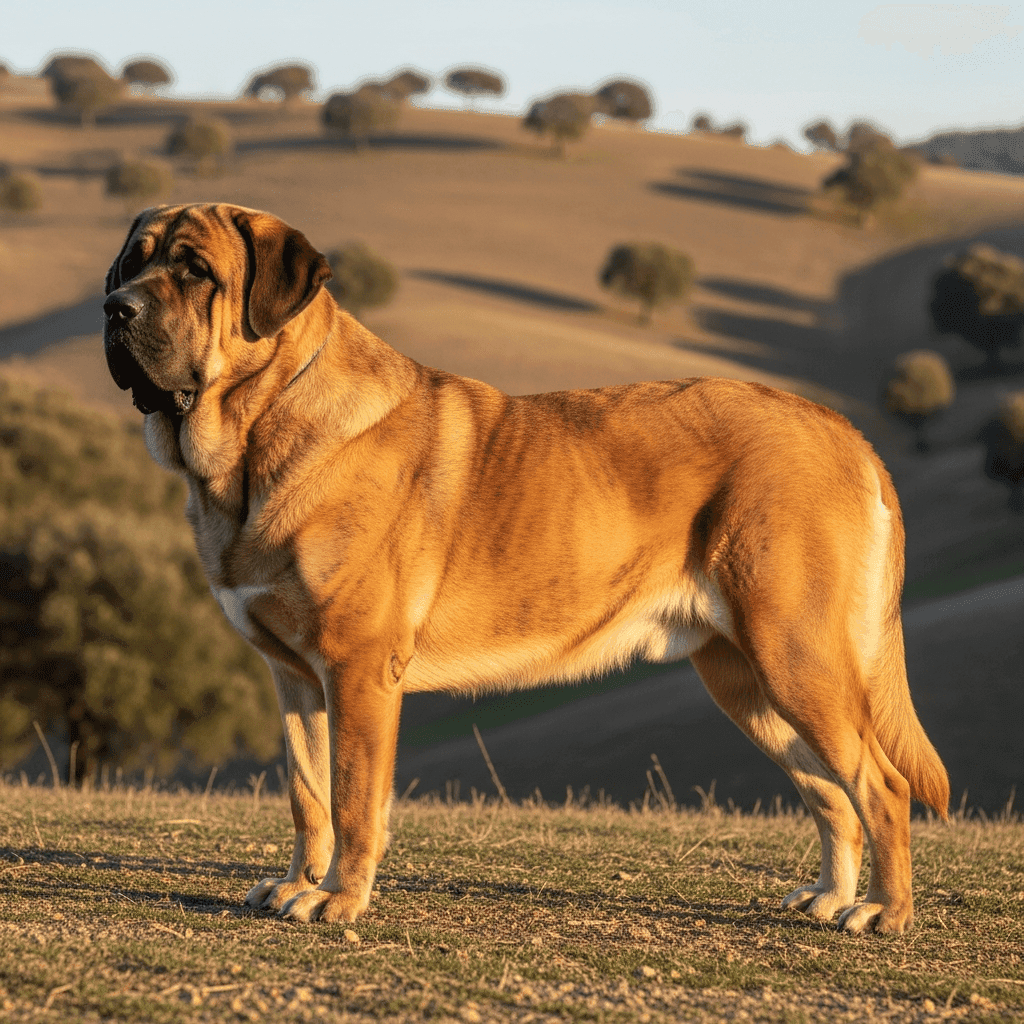
Spanish Mastiff
FCI Group
2• FCI 91
Size
Large
Origin Country
ES
Height
72-80 cm
Weight
60-90 kg
Lifespan
10-12 years
Temperament
Overview
The Spanish Mastiff, also known as Mastín español, is a breed of dog that certainly attracts attention with its imposing stature and majestic appearance. These enormous dogs have their roots in Spain, where for centuries they have served as indispensable guardians of sheep herds. Their history is fascinating and dates back thousands of years, making them one of the oldest guarding dogs in the world. Spanish Mastiffs played a key role in the seasonal migrations of Merino sheep, accompanying shepherds and protecting flocks from dangerous predators like wolves and bears.
One of the most well-known traits of the Spanish Mastiff is its high intelligence, combined with loyalty and a strong protective instinct. These traits make it an excellent guardian, capable of being both calm and balanced, as well as incredibly brave in threatening situations. Mastiffs, despite their powerful build, can be very affectionate and attached to their owners, forming deep bonds with family members. Their presence in the home brings a sense of security and warmth.
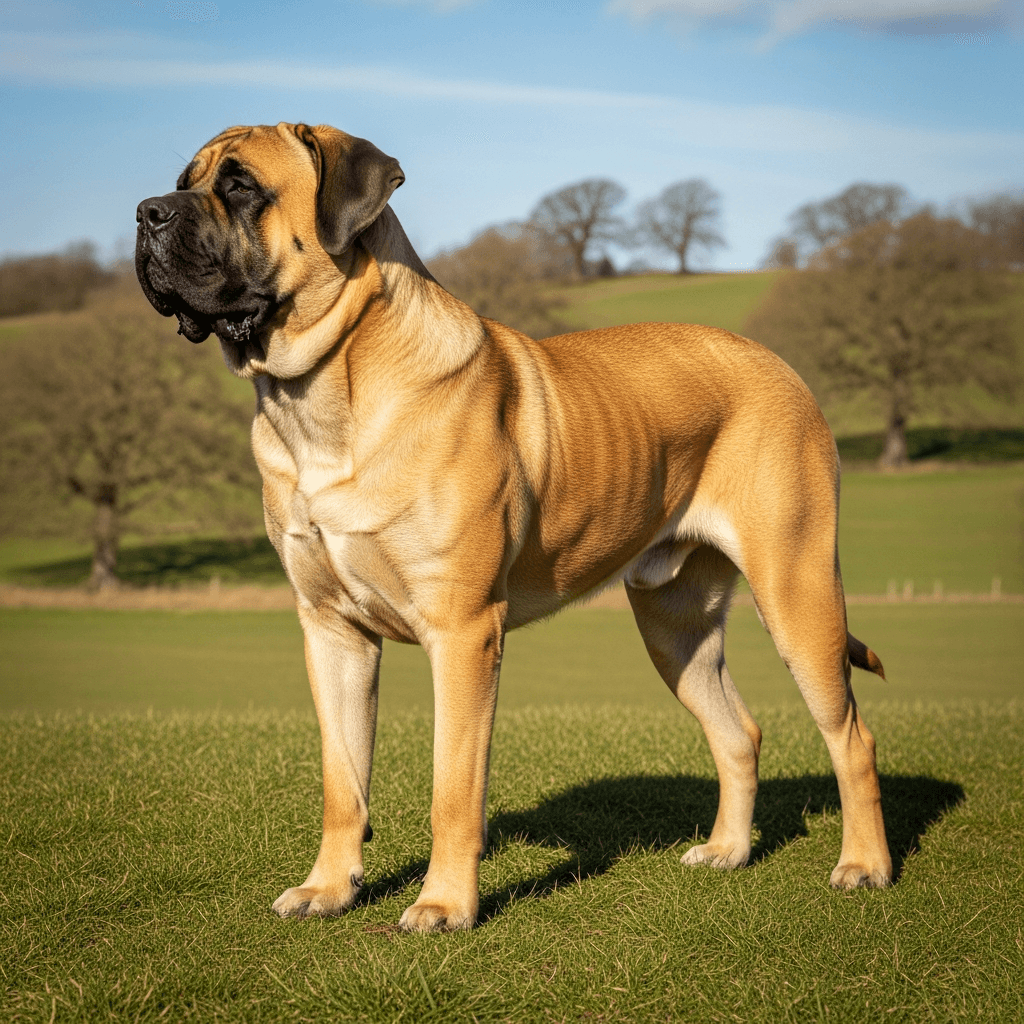
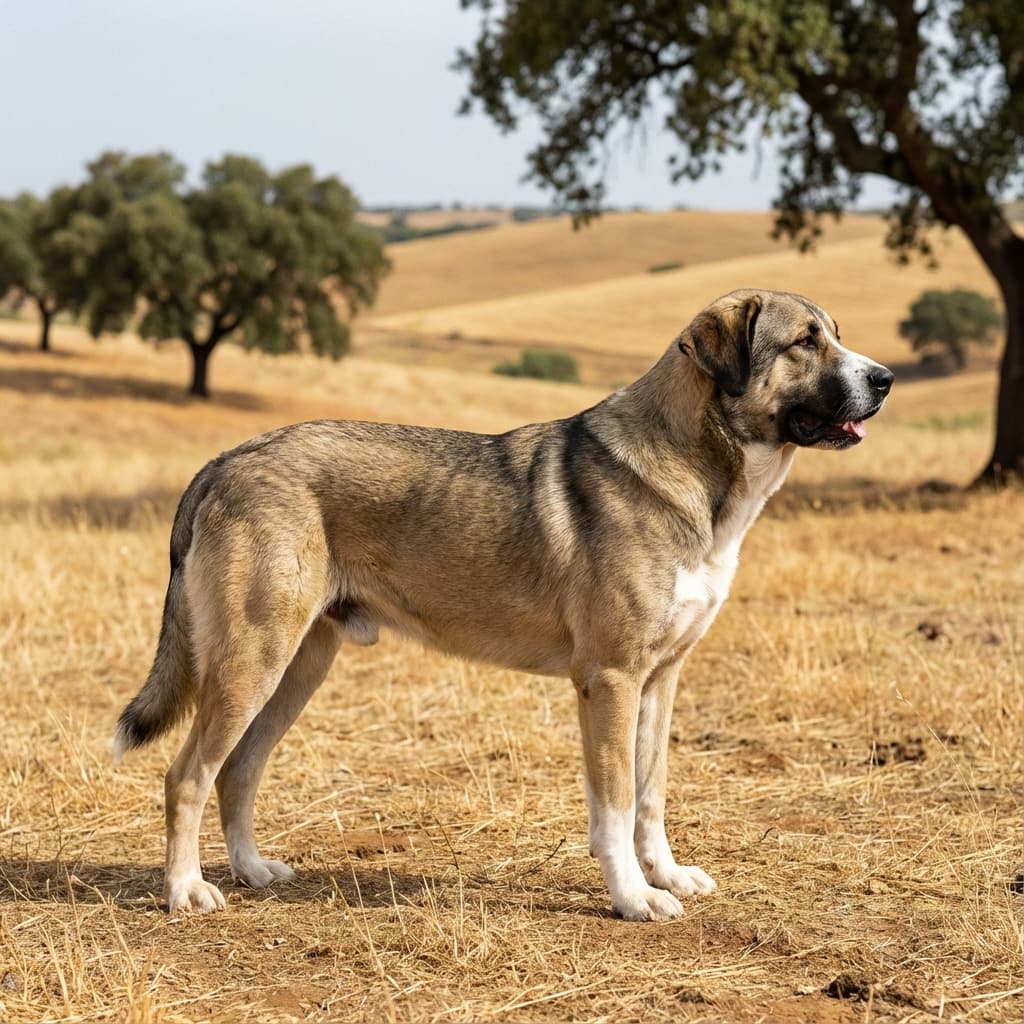
The Spanish Mastiff impresses with its appearance. Its broad, massive head and strong body command respect. The coat of these dogs is of medium length, dense, and rough, providing them protection against adverse weather conditions. The height of the Spanish Mastiff ranges from 72 to 80 cm, and its weight falls between 60–90 kg, making it one of the largest dogs in the world. An interesting fact is the exceptionally flexible skin of the mastiff, which protects it from bites and is one of its distinguishing features.
Although the Spanish Mastiff is naturally calm, it requires proper socialization from a young age. Without proper upbringing, some individuals may become overly distrustful of strangers, which can sometimes lead to behavioral issues. Therefore, it is crucial for prospective owners of these dogs to be ready to invest time in their education and training, which will result in a balanced and friendly companion.
We invite you to continue reading to explore the fascinating world of the Spanish Mastiff. In the following sections, you will find detailed information about the health, grooming, activity, training, nutrition, history, appearance, and behavior of this exceptional breed.
The Spanish Mastiff is a dog with an impressive appearance, characterized by a powerful build and a massive head. Their body is harmonious, with a strong bone structure and a well-muscled silhouette. The height at the withers ranges from 72 cm for females to 80 cm for males, and their weight oscillates between 60 and 90 kg. The head of the mastiff is large, shaped like a conical pyramid, with a wide, massive skull. The nose is black, large, and broad, while the muzzle has a straight back. The eyes are small, almond-shaped, in various shades of hazel, giving them an intelligent and dignified expression. The ears are medium-sized, hanging, and triangular, set above the eye line. The neck is thick and massive, covered with loose skin, forming a characteristic dewlap. The mastiff's tail is thick at the base, carried low, and curled at the end. The coat of the Spanish Mastiff is dense, of medium length, coarse, and comes in various colors such as yellow, fawn, red, black, brindle, or piebald. Their appearance is not only impressive but also functional, making them excellent guardians.
Spanish Mastiffs are dogs with a balanced temperament, capable of being both affectionate and protective. By nature, they are very attached to their owners and family, making them excellent companions. Their distinctive feature is a calm and balanced demeanor, yet in the face of danger, they can display their brave and defensive instincts. Spanish Mastiffs are, however, wary of strangers, which can lead to behavioral issues if they are not properly socialized at a young age. Their intelligence allows them to quickly learn new commands, but they can also be stubborn, which can pose a challenge in training. Early socialization and positive experiences with strangers are extremely important for Mastiffs to become friendly and balanced dogs. Despite their size, they can be gentle with children, but their size may be overwhelming for small kids. Spanish Mastiffs also tend to make deep sounds, making them effective guardians, but this can be problematic in densely populated environments. Their independent nature means they are not dogs that will always cling to their owner at every step, but they maintain a strong bond with them, always watching over their safety.
Spanish mastiffs are generally considered a healthy breed; however, like any other, they have their specific health issues. Their average lifespan is around 10 to 12 years, which is typical for large dog breeds. During the puppy stage, mastiffs may be more delicate, but once they reach adulthood, they become more resilient and robust. It is important to remember that mastiffs are sensitive to high temperatures, which aligns with their original origin from warm climate regions. On the other hand, they may struggle to survive in cold conditions, despite their thick fur, so it is recommended that they sleep in a warm place. It is also crucial for their diet to be properly balanced, as mastiffs tend to gain weight, especially if they are not active enough. Among the most common health problems they may face are hip dysplasia, stomach issues, ear infections, and leishmaniasis, which is a parasitic disease. Regular veterinary visits and maintaining a healthy lifestyle are key to keeping a Spanish mastiff in good health.
Spanish Mastiffs require moderate grooming. Their coat is dense, medium-length, and coarse, which provides them with adequate protection against weather conditions. Regular brushing, especially during shedding season, is recommended to remove dead hair and keep the coat in good condition. Typically, brushing a few times a week is sufficient, and for dogs living indoors, more frequent grooming may be necessary. It is also important to take care of the Mastiff's ears, which are droopy and can be prone to infections. Regular checking and cleaning of the ears will help prevent health issues. Additionally, due to their large mass, it is advisable to regularly check the condition of their nails to prevent overgrowth. Overall, grooming a Spanish Mastiff is not complicated, but it requires consistency and proper attention to their health and hygiene.
Spanish Mastiffs are not extremely active dogs, which makes their physical activity needs moderate. Although they are not sporting dogs, they have good endurance, allowing them to enjoy long walks alongside their owners. They typically need at least two walks a day to meet their physical, social, and olfactory needs. These walks should be varied to stimulate their senses and maintain their mental health. Mastiffs are not suited for intense sporting activities, so one should not expect them to participate in demanding pursuits such as agility or long-distance running. Their natural guarding instinct makes them enjoy spending time observing their surroundings, which can also be a form of activity. It is also important to provide them with opportunities for play and interaction with family members, which strengthens the bond between the dog and the owner.
Training a Spanish Mastiff can be challenging, especially when they are puppies. They require early socialization and learning the rules of living in society. They are often stubborn, which can make motivation to learn difficult; however, a good relationship between the owner and the dog is crucial for achieving positive results. Training should be based on gentle methods, as mastiffs are sensitive and do not respond well to harsh treatment. It is important to introduce basic commands and socialization, which will allow for better control over the dog in various situations. Spanish Mastiffs, despite their size, can be affectionate and devoted, so with proper training, they can become well-balanced companions. It is also worth noting that mastiffs tend to make noise, so training to limit unwanted barking should also be part of the training program.
The diet of the Spanish Mastiff should be properly balanced to ensure its health and well-being. Due to their large mass, mastiffs tend to gain weight, which makes their diet need careful consideration. It is advisable to choose high-quality foods that are tailored to the needs of large breeds. Their meals should contain appropriate proportions of protein, fat, and carbohydrates to support their healthy development and maintenance of body weight. Spanish mastiffs are also very hungry and may have a tendency to overeat, so it is important to control the amount of food given and avoid overfeeding. Regular meals, preferably twice a day, are recommended to maintain energy balance. Water should always be available to ensure proper hydration. It is also advisable to consult with a veterinarian regarding diet, especially for puppies and older dogs, to tailor the diet to their individual needs.
Characteristic Traits
Pros
- High intelligence and loyalty
- Strong protective instinct
- Affection and attachment to family
- Impressive appearance that commands respect.
Cons
- Requires intensive socialization
- May be distrustful of strangers
- Significant space requirements.
Behavioral Ratings
Breed History
The Spanish Mastiff is one of the oldest dog breeds in Spain, with a history that dates back around 4,000 years. Their ancestors, like other Molossers, descended from Tibetan Mastiffs that arrived in Europe via Asia Minor. This breed has been closely associated with the lives of shepherds who needed strong and brave dogs to protect their flocks, especially merino sheep. Spanish Mastiffs played a crucial role in transhumance, the seasonal migration of herds in search of better pastures. Over the centuries, mastiffs gained a reputation as reliable guardians, protecting not only livestock but also people from wild animals. Unfortunately, as traditional breeding methods and pastoral lifestyles began to decline, this breed nearly went extinct. Fortunately, in recent years, efforts have been made to revive the breed, but there are still certain challenges related to maintaining its uniformity.