Brazilian Terrier
FCI Group
3• FCI 341
Size
Medium
Origin Country
XX
Height
33-40 cm
Weight
8-10 kg
Lifespan
12-14 years
Temperament
Overview
Brazilian Terrier, also known as Terrier Brasileiro, is a unique dog breed with a rich history and versatile skills. It originates from Brazil, where it first appeared in the 19th century, resulting from the crossbreeding of European terriers – such as the Jack Russell Terrier, Fox Terrier, and Miniature Pinscher – with local dogs. Its unique combination of hunting and companion traits makes it an extraordinary choice for dog lovers.
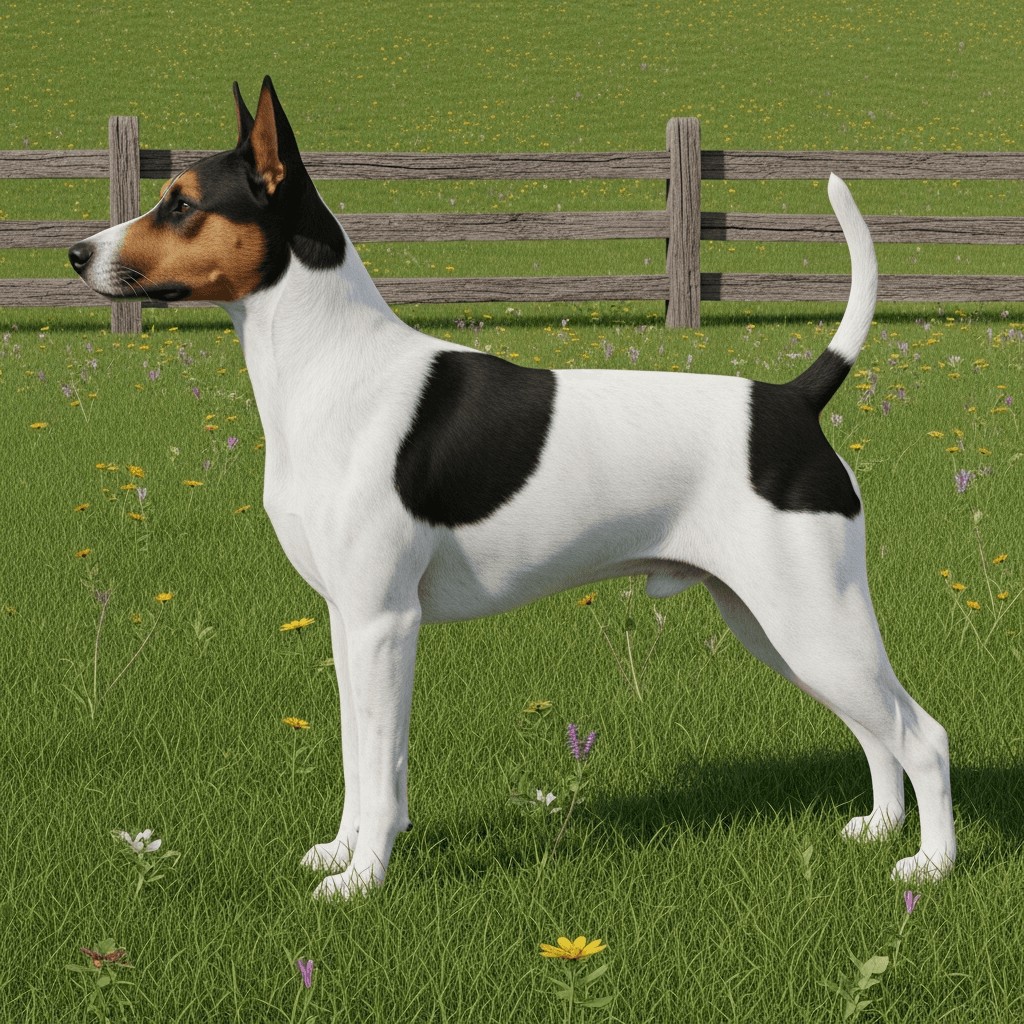
Although it is a medium-sized breed, the Brazilian Terrier continually surprises with its energy and lively temperament. Its square silhouette and rounded body lines give it elegance, while its triangular head and well-set ears highlight its alert expression. The short, smooth coat – most often white with multicolored patches in shades of black, reddish-brown, or blue – adds to its charm and is easy to maintain.
Brazilian Terrier is a dog that loves companionship and always eagerly spends time with its family. Its attachment to loved ones and natural alertness make it an excellent guardian of the home. Although it is not a typical guard dog, its courage and intelligence mean it is ready to defend its loved ones when necessary.
It is worth mentioning its hunting abilities, which make it a great hunter of small game. Thanks to its agility and energy, this dog excels in active dog sports and outdoor play. Its strong hunting instinct means it can be wary of strangers, so it requires early socialization and proper training.
The Brazilian Terrier is not only an energetic hunter but also a loving and loyal friend. Its moderate independence allows it to spend time alone, but it also needs plenty of attention and interaction with its owner. For active families looking for a dog for daily adventures, the Brazilian Terrier is an ideal choice. Its energetic temperament and desire to play make it an invaluable companion. In the following sections of our guide, you will find detailed information about the health, grooming, physical activity, training, nutrition, history, appearance, and behavior of this fascinating breed.
The Brazilian Terrier is a medium-sized dog with a strong but proportional build. Its silhouette is square-shaped, with harmonious, rounded lines that give it an elegant and balanced appearance. The height at the withers for males ranges from 35 to 40 cm, and for females from 33 to 38 cm. The weight of these dogs does not exceed 10 kg, making them agile and lively.
The head of the terrier has a characteristic triangular shape, with a well-developed skull and a distinct stop. The eyes are dark, moderately protruding, with a lively and alert expression that reflects its energetic character. The ears are triangular, well-set, semi-erect, and never cropped.
The neck of the terrier is moderately long and slightly arched, harmoniously connecting the head to the body. Its chest is moderately wide, and the back is short and strongly muscled, providing the dog with good endurance. The tail can be short or long, set low and carried up in a display of confidence.
The coat is short, smooth, and close to the body. The coloration is mainly white with various colored patches – black, reddish-brown, or blue. Light brown markings are also characteristic, appearing on the muzzle and head, giving the dog a unique appearance. The coat is softer on the head, ears, and the inner sides of the limbs.
Overall, the Brazilian Terrier has an elegant, lively appearance that reflects its energetic and active character. It is a harmoniously built dog that attracts attention with its presence and lively temperament.
The Brazilian Terrier is characterized by its lively and sociable temperament. It is a very friendly and loyal dog to its family, but at the same time alert and brave, which makes it a good guard. This breed has a strong hunting instinct, which means it may be distrustful of strangers and may try to chase smaller animals. For this reason, early socialization is crucial for the dog to learn to accept new people and situations.
The Brazilian Terrier is energetic and needs a lot of exercise, making it ideal for active owners who can meet its needs. If it does not get enough physical activity, the dog may become destructive and start to get bored. This breed is also known for its moderate independence, which means it can spend time alone, but it also needs a lot of attention and interaction with the family.
The Brazilian Terrier is moderately easy to train, but requires a firm and consistent approach. It responds well to positive training methods, but can be stubborn, so it is important for the training to be fun and engaging. Despite its medium size, this breed can be quite loud and may bark, making it essential to teach it to be quiet on command.
Overall, the Brazilian Terrier is a dog full of energy and joy, which makes it an excellent companion for active families. It is friendly, loyal, and always ready to play, making it a great family dog for those who can provide it with the right amount of activity and stimulation.
The Brazilian Terrier is a breed that is usually healthy and resilient. The average lifespan of these dogs is between 12 to 14 years. Due to their endurance, they rarely suffer from serious illnesses. However, like any breed, they can be prone to certain conditions.
Some of the most common health issues that may affect the Brazilian Terrier include:
- Hip dysplasia – a joint disease that can cause pain and limit mobility
- Vision problems – some individuals may be prone to eye conditions
- Skin allergies – reactions to certain food or environmental factors may occur
- Thyroid problems – hypothyroidism can affect the dog's metabolism
- Epilepsy – some individuals may be prone to seizures
- Patellar luxation – an orthopedic issue common in small breeds
It is also important to remember that the Brazilian Terrier, although it tolerates warm climates well, can be sensitive to cold due to its short coat. Therefore, it is essential to provide appropriate protection during the cooler months, such as clothing or a blanket.
Due to their tendency to gain weight, attention should be paid to their diet and not overfeed the dog. Regular veterinary visits and proper preventive care are crucial for maintaining their health and ensuring a long, happy life.
Grooming a Brazilian Terrier is relatively simple, thanks to its short and smooth coat. This breed does not require complicated grooming procedures, but regular brushing 2-3 times a week will help remove dead hair and minimize shedding.
Basic grooming procedures include:
- Brushing – 2-3 times a week to remove dead hair and keep the coat in good condition
- Bathing – regularly, but not too often, to avoid disrupting the skin's natural protection; once every few weeks or when the dog gets dirty is sufficient
- Ear hygiene – regular checking and cleaning of the ears to prevent infections
- Dental hygiene – brushing teeth a few times a week to prevent tartar buildup
- Nail trimming – regularly, to avoid discomfort while walking
Due to their active lifestyle, Brazilian Terriers may be prone to getting dirty, so regular baths are recommended, but they should not be too frequent. During shedding periods, more frequent brushing can help remove excess fur.
Overall, the Brazilian Terrier is easy to groom, and its short coat and activity level mean it does not require much attention in this regard. Proper grooming will ensure the dog’s health, comfort, and great appearance.
The Brazilian Terrier is a dog with a high energy level that requires regular physical activity to maintain health and well-being. It is ideally suited for long walks, runs, and outdoor play. Otherwise, it may become bored and start exhibiting destructive behaviors.
Recommended forms of activity:
- Walks – at least 30-60 minutes of intense activity daily
- Fetching – great fun that engages both body and mind
- Running – an excellent companion for jogging or running
- Play with other dogs – socialization and physical activity in one
- Dog sports – agility, flyball, or other sports activities
- Hiking – an excellent companion for hiking trips
Due to its strong hunting instinct, care should also be taken when walking near small animals, as the Brazilian Terrier may have a tendency to chase them. It is recommended to provide at least 30-60 minutes of intense physical activity daily.
Owners who lead an active lifestyle will find in this dog an excellent companion for sports such as running, cycling, or hiking. Regular exercise will not only help keep the dog in good physical condition but also contribute to its mental health by providing the necessary mental stimulation.
It is worth remembering that a dog without adequate activity can become destructive, nervous, or exhibit other undesirable behaviors. Therefore, ensuring the Brazilian Terrier has enough exercise is crucial for its happiness and well-being.
Training a Brazilian Terrier can be a challenge, but with the right approach, excellent results can be achieved. This breed requires consistent and firm training, as it has a strong personality and can sometimes be stubborn. It is best to use positive methods based on rewarding good behavior.
The Brazilian Terrier is intelligent, which means it learns new commands quickly, but it can also show independence, so it is important not to allow situations where the dog dictates the terms. Early socialization is key for the dog to learn to interact with other dogs and people, which will help it become a confident and well-adjusted dog.
Key aspects of training:
- Basic commands – Sit, Lie down, Stay, Come, No
- Socialization – exposure to different people, animals, and environments
- Barking control – learning silence on command
- Leash walking – without pulling and tugging
- Mental stimulation – interactive toys, dog puzzles
- Positive reinforcement – rewarding for good behavior
Training should include not only basic commands but also a variety of activities that will stimulate the dog's mind. Regular training sessions should be short and fun – ideally 10-15 minutes several times a day – to maintain the terrier's attention. Interactive toys that provide additional mental stimulation can also be helpful.
The dog should also be taught not to bark unnecessarily, which can be problematic as this breed is known for its tendency to express itself loudly. Consistency and patience are the keys to success in training a Brazilian Terrier.
The diet of the Brazilian Terrier should be balanced and tailored to its level of activity and age. Proper nutrition is crucial for maintaining the dog's health and well-being. Due to its active lifestyle, it may be prone to weight gain, so it is important not to overfeed it and to follow the portion recommendations.
Feeding recommendations:
- High-quality food – containing the right amount of protein, fats, and other essential nutrients
- Avoiding grains – whenever possible, choose food with low grain content and no artificial additives
- Regular meals – 2-3 times a day for adult dogs, more frequently for puppies
- Portion control – following the manufacturer's feeding guidelines
- Fresh water – constant access to clean, fresh water
It is best to feed the dog high-quality food that contains the right amount of protein, fats, and other essential nutrients. It is also important to ensure regular access to fresh water so that the dog can hydrate after physical activity.
If there are any doubts about the diet, it is best to consult a veterinarian who can help choose the appropriate food and establish a feeding schedule. It is also worth considering introducing natural treats into the diet, such as carrots, apples, or green beans, which can be a healthy alternative to traditional snacks.
Products to avoid:
- Chocolate and cocoa
- Grapes and raisins
- Onions and garlic
- Avocado
- Products containing xylitol
It is important to ensure that the products introduced into the diet are safe for the dog to avoid digestive problems or food poisoning.
Characteristic Traits
Pros
- Energetic and lively temperament
- Easy to care for thanks to short fur
- Excellent companion for active families
- Great hunter for small game
- Intelligent and quick to learn.
Cons
- Requires early socialization
- May be distrustful of strangers
- Needs a lot of attention and interaction
- Strong hunting instinct
- May bark.
Behavioral Ratings
Breed History
The history of the Brazilian terrier dates back to the 19th century, when European terriers – such as the Jack Russell Terrier, Fox Terrier, and Miniature Pinscher – were brought to Brazil by students returning from universities in Europe, mainly from France and England. These small dogs quickly adapted to their new environment and soon interbred with local dogs, leading to the development of a new, unique breed.
The Brazilian terrier was primarily used as a hunting dog for small game, but also as a companion and guard dog on farms. As cities in Brazil developed, families began moving from farms to urban homes, which affected the lifestyle of these dogs. As a result of this process, the Brazilian terrier underwent further evolution, adapting to the changing urban environment.
Milestones in the breed's history:
- 19th century – First crosses of European terriers with local Brazilian dogs
- Early 20th century – Stabilization of the breed's phenotype on Brazilian farms
- 2007 – Recognition of the breed by FCI (Fédération Cynologique Internationale)
- 2022 – Update of the FCI standard (no. 341)
This breed was recognized by the FCI in 2007 under number 341, and since then it has gained popularity not only in Brazil but also in other countries. Today, the Brazilian terrier is valued as a companion dog, and its agility, intelligence, and cheerful disposition make it an ideal choice for active families.
In recent years, this breed has also become a subject of interest for breeders worldwide, who strive to maintain its unique characteristics and temperament. The Brazilian terrier remains a symbol of Brazilian canine culture, combining European roots with local breeding traditions.