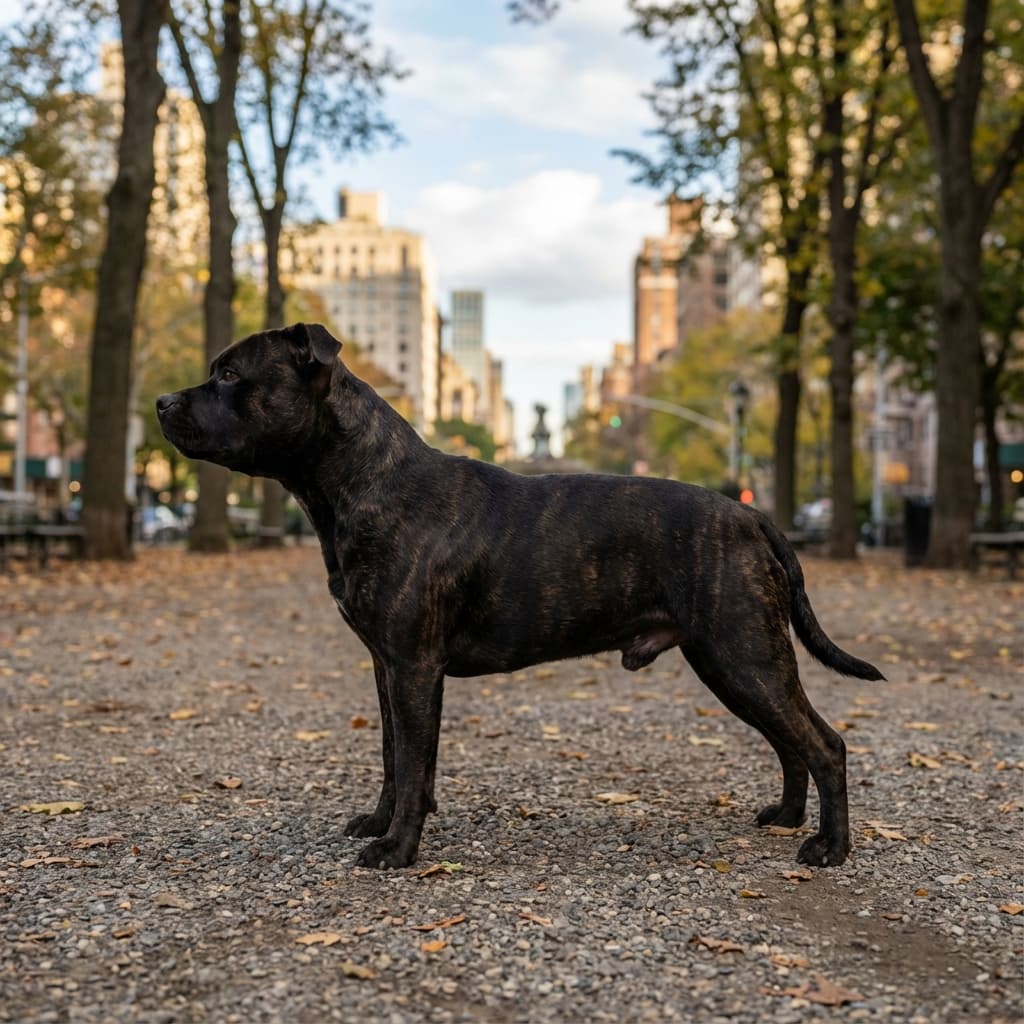
Staffordshire Bull Terrier
FCI Group
3• FCI 76
Size
Medium
Origin Country
GB
Height
36-41 cm
Weight
11-17 kg
Lifespan
12-14 years
Temperament
Overview
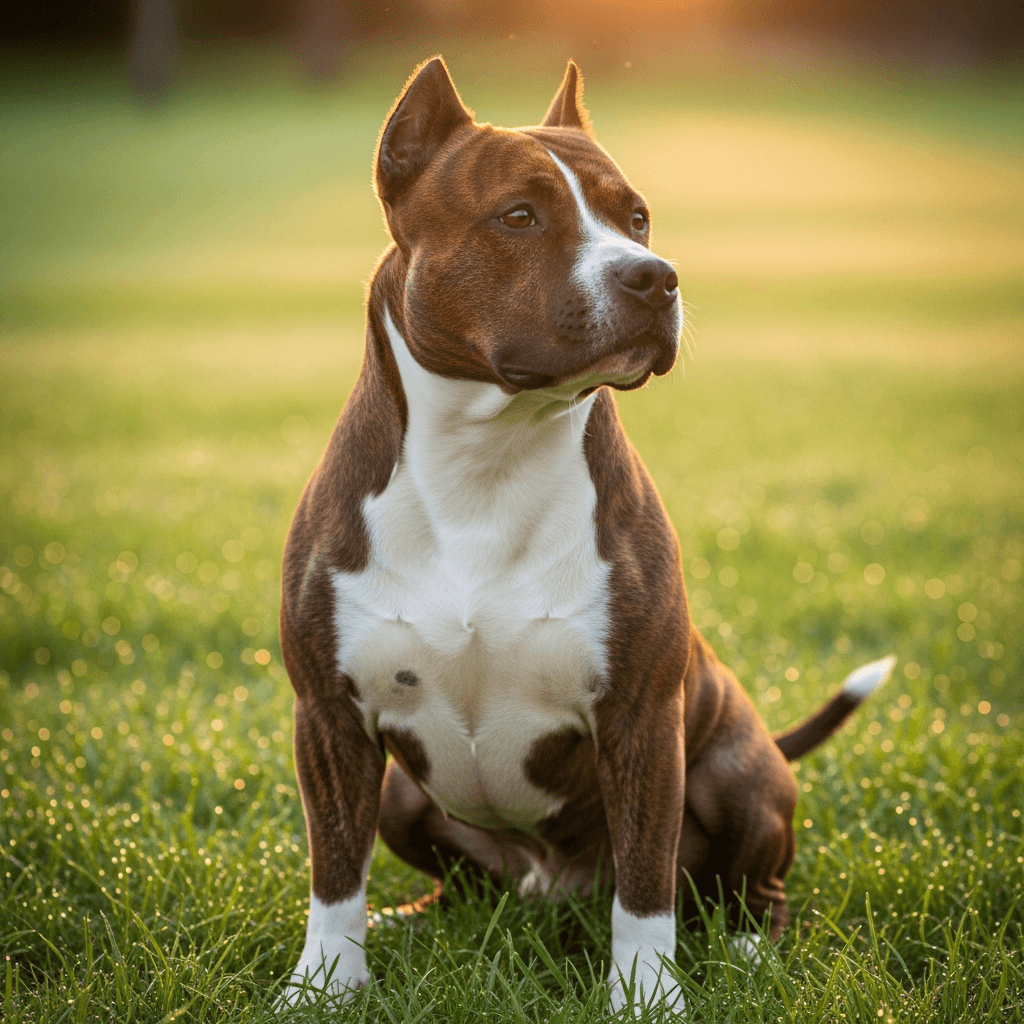
Staffordshire Bull Terrier, often referred to as Staffie or Nanny Dog, is a dog with an impressive, muscular build that combines strength and affection. Although its past is associated with dog fighting and bulls, today it is primarily known for its extraordinary loyalty and deep attachment to family. It is characterized by incredible gentleness towards children, which earned it the nickname nanny dog.
The breed originates from 19th century Staffordshire in England, where it was developed from a cross between English bulldogs and various types of terriers (including the White English Terrier and Manchester Terrier). For decades, breeders have worked to transform its fighting character into a friendly family temperament while maintaining the courage and determination typical of terriers.
The Staffordshire Bull Terrier has a short, smooth coat that comes in many colors. The most commonly seen colors are red, fawn, white, black, and blue, as well as various shades in the brindle version. The height at the withers is 35.5–40.5 cm, and the weight ranges from 11 to 17 kg depending on gender and build. According to the FCI standard (No. 76), dogs of this breed are characterized by:
- A deep, broad chest with well-arched ribs
- A strong, muscular neck
- A distinctive head with a wide skull and a clear stop
- Round, dark eyes looking straight ahead
- Ears of the rose type or semi-erect
The character of the Staffordshire Bull Terrier is unique and full of contrasts. On one hand, it is a fearless and resilient breed, while on the other, it is an incredibly affectionate and loving family member. It loves the company of people, especially children, towards whom it shows angelic patience. Despite its fighting past, a properly raised Staffie does not show aggression towards people – on the contrary, it is full of love, enthusiasm, and devotion.
This is a dog with a high energy level that needs regular walks, playtime, and physical activity. Although it is not one of the overly active breeds, daily exercise and mental stimulation are crucial for its mental and physical well-being. In the following sections of the guide, you will find detailed information about the health, grooming, exercise, training, nutrition, and history of this fascinating breed.
The Staffordshire Bull Terrier is a dog with a compact, athletic, and extremely muscular build, exuding strength despite its relatively small size. According to FCI standard no. 76, this breed is characterized by an ideal balance between power and agility.
Dimensions and proportions:
- Height at the withers: 35.5–40.5 cm (for both males and females)
- Weight: 12.7–17 kg for males, 11–15.4 kg for females
- Body: compact, short, with clearly defined musculature
- Proportions: well-balanced, strong for its size
Head and expression:
The head of the Staffordshire Bull Terrier is short and deep, with a wide skull and a clearly defined stop. The jaws are strong, with large teeth and a perfect scissor bite (the upper teeth perfectly overlap the lower ones). The cheeks have very pronounced, strong masseter muscles. The nose is always black. The eyes are round, medium-sized, dark (preferred color), set straight. Dark eye rims emphasize the intense, intelligent expression. The ears are of the rose type or semi-erect – small and lightweight. Fully dropped or standing ears are undesirable.
Neck and body:
The neck is muscular, relatively short, with a clear outline, gradually widening towards the shoulders. The top line is horizontal. The chest is wide at the front, deep to the sternum, with well-arched ribs. The muscles of the chest are well-developed and clearly defined.
Limbs:
- Front: strong, straight, well-spaced, with clear musculature
- Rear: muscular, with good angulation, providing power and springiness of movement
- Paws are compact, with clearly arched toes
Tail:
The tail is set low, of medium length, tapering towards the end. Carried rather low, it should not be curled over the back.
Coat and colors:
The coat is short, smooth, and close-lying to the body. Allowed colors according to the FCI standard are:
- Red
- Fawn
- White
- Black
- Blue
- Brindle in any of the above colors
- Any of the above colors with white
Undesirable colors: black and tan and liver.
Movement:
The movement of the Staffordshire Bull Terrier is free, strong, and agile. When running, the front and rear limbs move parallel, providing excellent balance and dynamics. This breed exudes energy and vitality in every movement.
The Staffordshire Bull Terrier is a breed with a unique, contrasting temperament. On one hand, it is a dog of fearless courage and unwavering determination, while on the other – an incredibly affectionate, loving, and devoted family member. According to the FCI standard, the breed is characterized by traditional courage and perseverance, along with high intelligence and tenderness, especially towards children.
Temperament towards family:
The Staffordshire Bull Terrier is deeply attached to its human family. It loves the company of household members and does not cope well with prolonged loneliness. It shows exceptional patience and gentleness towards children, hence the nickname Nanny Dog. This is a dog that is:
- Extremely loyal and devoted
- Friendly, full of love and enthusiasm
- Patient with children (with proper socialization)
- Trusting of people, showing no aggression
- Cheerful, joyful, and full of life
Intelligence and personality:
The Staffordshire Bull Terrier is highly intelligent and learns quickly. However, it can be stubborn and independent – a trait inherited from its terrier ancestors. It requires firm yet positive upbringing from a competent owner who knows how to be a leader without using violence. A properly trained Staffie is:
- Obedient and eager to cooperate
- Confident but not dominant
- Active and lively in play
- Alert and attentive to its surroundings
Relationships with other animals:
Due to its terrier heritage, the Staffordshire Bull Terrier may show a tendency to dominate other dogs, especially of the same sex. Early socialization is absolutely crucial to ensure harmonious coexistence with other animals. A properly socialized Staffie can get along well with other dogs, but caution should always be exercised during initial meetings. From a home where it grew up with other animals, it often forms strong bonds.
Energy and activity:
This is a breed with a high energy level that requires regular exercise and mental stimulation. Staffies love:
- Long walks and hikes
- Fetch games and tug-of-war
- Canine sports (agility, obedience)
- Interactions with family and physical play
Potential behavioral challenges:
In the absence of appropriate activity and stimulation, the Staffordshire Bull Terrier may develop destructive behaviors. A bored or left alone dog for long hours may:
- Destroy household items
- Bark or howl excessively
- Dig and burrow (terrier instinct)
- Exhibit excessive excitement
Emotional sensitivity:
The Staffordshire Bull Terrier is very sensitive to changes in its environment and the atmosphere at home. It can sense the emotions of its caregivers and reacts to stress or tension. It needs a stable, predictable environment and clear rules to feel secure. Despite its strong build and brave character, it is a dog with a gentle soul that thrives best in an atmosphere of love and trust.
Summary of character:
According to the FCI standard, the Staffordshire Bull Terrier is a breed that is bold, fearless, and completely trustworthy. With proper upbringing, socialization, and provision of physical and mental activity, it becomes a wonderful family companion – loyal, affectionate, and full of joy for life.
The Staffordshire Bull Terrier is a breed with a solid build and good overall health condition. The average lifespan is 12–14 years, with many individuals living to 15 years or more with proper care. However, like any breed, Staffies have certain predispositions to specific health issues that owners should pay special attention to.
Sensitivity to weather conditions:
Due to its short, smooth coat without an undercoat, the Staffordshire Bull Terrier is susceptible to extreme weather conditions:
- Heat: The breed poorly tolerates high temperatures. Walks on hot days should only take place early in the morning or late in the evening. Ensure constant access to water and shaded areas. Watch for signs of overheating: heavy panting, drooling, weakness.
- Cold: Low resistance to cold means that on chilly days, the dog needs additional protection – clothing or limited time outside. Never leave a Staffie outdoors in low temperatures.
Tendency to overweight:
The Staffordshire Bull Terrier has a tendency to gain weight, which can quickly lead to obesity due to its compact build. Being overweight puts strain on the joints and heart and can accelerate the development of dysplasia. Key principles:
- A balanced diet tailored to activity level
- Controlled portions and regular meals
- Avoiding table scraps
- Regular physical activity
- Systematic weighing and monitoring of body condition
Hereditary conditions and genetic testing:
The Staffordshire Bull Terrier may suffer from certain hereditary conditions. Responsible breeders perform genetic tests on the parents before breeding:
1. L-2-HGA (L-2-Hydroxyglutaric aciduria):
- Rare neuro-metabolic disorder
- Symptoms: ataxia, seizures, coordination disorders, behavioral changes
- Genetic test available before breeding
2. Hereditary Cataract (HC):
- Clouding of the lens leading to vision loss
- Can occur at a young age
- Regular eye examinations by a veterinary ophthalmologist
3. PHPV (Persistent Hyperplastic Primary Vitreous):
- Congenital eye defect
- Can cause vision impairment or blindness
- Detectable by a veterinary ophthalmologist
4. Color Dilution Alopecia (CDA):
- Affects dogs with blue and fawn coats
- Symptoms: hair loss, dry skin, brittle coat
- No causal treatment, only symptomatic
5. Hip and Elbow Dysplasia (HD/ED):
- Abnormal joint development leading to pain and arthritis
- Symptoms: limping, stiffness, reluctance to move
- X-ray examinations (grading: A–E for HD, 0–3 for ED)
- Prevention: weight control, proper diet, avoiding excessive exertion during growth
6. Congenital Deafness:
- More common in white dogs or those with a lot of white
- BAER (Brainstem Auditory Evoked Response) test can detect deafness in puppies
Skin problems:
The short coat and sensitive skin make Staffies prone to:
- Food and contact allergies
- Pyoderma (bacterial skin infection)
- Demodicosis (parasitic disease)
- Reactions to insect bites
Regularly check the skin while brushing and respond immediately to redness, rashes, or itching.
Preventive recommendations:
- Regular veterinary visits: at least once a year for a full examination, every 6 months in older age
- Vaccinations: according to the vaccination schedule
- Worming and parasite protection: regularly as per veterinarian's recommendations
- Oral hygiene: tooth brushing, dental toys, tartar control
- Weight control: systematic weighing and observation of condition
- Genetic tests: before breeding parents (L-2-HGA, HC)
- Orthopedic examinations: assessment of hip and elbow joints in dogs intended for breeding
Symptoms requiring immediate veterinary attention:
- Difficulty breathing, heavy panting
- Limping, reluctance to move, stiffness
- Seizures, loss of balance, uncoordinated movements
- Sudden weight or appetite loss
- Cloudiness of the eye, conjunctivitis
- Vomiting, diarrhea lasting more than 24 hours
- Skin changes: abscesses, redness, persistent itching
Summary:
The Staffordshire Bull Terrier is a breed with a good overall health condition, but requires responsible care. When choosing a puppy, pay attention to the results of genetic tests of the parents and the reputation of the breeder. Regular preventive examinations, a healthy diet, appropriate weight, and physical activity are the keys to a long, healthy life for your Staffie.
The grooming of the Staffordshire Bull Terrier is relatively simple and low-maintenance due to its short, smooth coat without an undercoat. However, regular grooming activities are crucial not only for aesthetics but also for monitoring the dog's health and comfort.
Brushing the coat:
Although the Staffie has a short coat, it requires regular brushing, especially during shedding periods (spring and autumn):
- Frequency: at least once a week, 2–3 times a week during shedding
- Tools: natural bristle brush, rubber grooming mitt, or soft-bristle brush
- Benefits: removal of dead hair, stimulation of skin circulation, distribution of natural oils, skin condition control
Brushing is an excellent opportunity to check for redness, rashes, mats, or parasites on the skin.
Bathing:
The Staffordshire Bull Terrier does not require frequent baths – excessive washing can strip the skin of its natural oils:
- Frequency: once every 2–3 months or as needed (soiling, unpleasant odor)
- Shampoo: mild, dog-specific, suitable for skin type (neutral pH, free of strong detergents)
- Technique: thoroughly wet the coat with lukewarm water, gently massage in the shampoo, rinse thoroughly, dry with a towel
In case of skin allergies or dermatological issues, consult your veterinarian regarding the choice of shampoo.
Eye care:
- Daily checks: for redness, discharge, tearing
- Cleaning: gently remove dried discharge with a damp, soft gauze or cotton ball (separate for each eye)
- Concerning symptoms: cloudiness, pus discharge, redness, squinting – see a veterinarian immediately
Due to the predisposition to hereditary cataracts, regular eye examinations are very important.
Ear care:
- Frequency: check ears once a week, clean as needed
- Technique: use a veterinary ear cleaning solution, apply to gauze or a cotton ball and gently wipe the outer ear (do not insert deeply into the ear canal)
- Concerning symptoms: strong odor, dark discharge, redness, scratching ears, shaking head
Ears that are rose or semi-erect require regular checks to prevent infections.
Nail trimming:
Regularly trim nails to ensure walking comfort and avoid:
- Joint pain (long nails change the positioning of the paw)
- Nails growing into the pad
- Cracks and injuries
Technique:
- Use sharp, dedicated clippers or a guillotine
- Trim carefully, avoiding blood vessels (in dark nails, they are harder to see – trim in small portions)
- If you are afraid to trim yourself, ask a veterinarian or groomer for help
Frequency: every 3–4 weeks or when nails start to click on the floor.
Oral hygiene:
The Staffordshire Bull Terrier is prone to tartar and periodontal disease. Regular oral hygiene prevents pain, tooth loss, and infections:
- Teeth brushing: ideally daily, at least 2–3 times a week
- Tools: dog toothbrush, dog toothpaste (never use human toothpaste!)
- Additions: dental toys, chews, crunchy treats that clean teeth
- Check-ups: regularly check teeth during veterinary visits, professional teeth cleaning under anesthesia if necessary
Skin and coat inspection:
During each brushing, check the skin for:
- Parasites: ticks, fleas, lice
- Skin changes: redness, lumps, bumps, wounds
- Dryness or oiliness of the coat
- Bald patches (especially in blue and fawn dogs – CDA)
Early detection of a problem allows for quick intervention.
Parasite protection:
- Worming: according to the schedule recommended by the veterinarian (every 3–6 months)
- Protection against ticks and fleas: regularly use treatments (spot-on drops, collars, tablets)
- Post-walk checks: check the skin for ticks, especially around the ears, neck, and paws
Additional tips:
- Acclimate to grooming from puppyhood: gently touch the paws, ears, and muzzle so the dog gets used to handling
- Reward calm behavior during brushing, nail trimming, bathing
- Keep tools clean: regularly wash brushes, clippers, towels
- Winter protection: consider clothing on cold days, dry paws after walks in snow/slushy mud
- Summer protection: use UV sunscreen on the nose and ears of dogs with light skin (especially white coats)
Summary:
Grooming the Staffordshire Bull Terrier is uncomplicated but requires consistency. Regular brushing, skin checks, eye, ear, and dental hygiene, as well as nail trimming, are the foundation of your dog's health and comfort. Treat routine grooming activities as a time to bond and observe health – this way, you will quickly notice any potential problems.
The Staffordshire Bull Terrier is a breed with a high level of energy and need for movement. Although it is not as active as some herding or hunting breeds, it requires regular physical and mental exercise to maintain physical health, mental balance, and good behavior.
Minimum activity requirements:
- Walks: at least 2 walks a day, each lasting 30–60 minutes
- Intensity: brisk walks, with opportunities for running and exploring the terrain
- Play: a minimum of 20–30 minutes of active play daily (fetch, tug-of-war, chasing)
- Mental stimulation: daily intellectual exercises (learning commands, scent games, interactive toys)
Types of activities for the Staffordshire Bull Terrier:
1. Walks and hikes:
- Walks in the park, forest, or meadow – variety of terrain stimulates the senses
- Mountain hikes (moderate distances, adjusted to the dog's fitness level)
- Running alongside a bicycle (after growth is complete, i.e., after 12–18 months of age)
Note: On hot days, limit activity to early morning or late evening to avoid overheating.
2. Games and play:
- Fetch: balls, frisbees, toys – Staffies love to bring back items
- Tug-of-war: ropes, tug toys – satisfies instinct and builds muscle (always set rules – the dog must know when to give up the toy)
- Chasing: playing with other dogs in a play area, hide and seek with family members
- Swimming: an excellent low-impact exercise (not all Staffies like water – introduce gradually)
3. Canine sports:
The Staffordshire Bull Terrier, being an intelligent and athletic breed, excels in various sports disciplines:
- Agility: jumps, slalom, tunnels – a great way to utilize energy and build bonds
- Obedience: advanced obedience training, competitions
- Flyball: running, jumping over obstacles, fetching a ball – great team fun
- Weight pulling: Staffies love to use their strength (only after growth is complete, under trainer supervision)
- Nose work: scent exercises, searching for objects – excellent mental stimulation
4. Mental stimulation:
The Staffordshire Bull Terrier needs not only physical movement but also intellectual challenges:
- Interactive toys: dog puzzles, toys with hidden treats (Kong, scent mats)
- Learning new commands: regular training sessions (short, fun, 10–15 minutes)
- Scent games: hiding treats in the house or garden, searching for toys
- Obstacle courses: home parcours with cushions, chairs, tunnels
Adjusting activity to age:
Puppies (up to 12 months):
- Avoid excessive strain on joints (no jumping from heights, intense running on hard surfaces)
- Short, frequent walks (4–5 times a day for 10–20 minutes)
- Play at home and in the garden – free play, without forcing
- Socialization: contact with other dogs, people, and the environment
Adult dogs (1–7 years):
- Full activity: long walks, runs, canine sports
- 2–3 hours of activity daily (walks + play + training)
- Regular physical and mental challenges
Seniors (over 7–8 years):
- Adjust intensity to the dog's condition (watch for signs of fatigue, stiffness)
- Calmer but regular walks (prevents arthritis and joint stiffness)
- Avoid extreme weather conditions
- Continue mental exercises – older dogs also need stimulation
Consequences of insufficient activity:
A Staffordshire Bull Terrier deprived of adequate movement may develop behavioral and health problems:
- Destruction of furniture and objects – a way to release excess energy
- Excessive barking or howling – frustration, boredom
- Hyperactivity – inability to calm down
- Digging holes in the garden – terrier instinct heightened by boredom
- Overweight and obesity – lack of movement with a tendency to gain weight
- Depression, apathy – lack of stimulation leads to sadness
Safety during exercise:
- In heat: limit activity, provide water, avoid hours from 10:00 AM to 4:00 PM
- In cold: consider clothing, shorten outdoor time
- On a leash: always walk on a leash in public places (safety, control)
- Dog park: allow to run off-leash only in a safe, fenced area, after ensuring the Staffie is friendly towards other dogs
- Watch out for joints: avoid jumping from heights in puppies and seniors
Additional recommendations:
- Variety: diversify walking routes, forms of play – monotony bores Staffies
- Company: Staffies love activity with family – run, bike, hike together
- Positive reinforcement: reward the dog for good behavior during walks and play
- Monitor condition: adjust the level of activity to the individual needs and health status of the dog
Summary:
The Staffordshire Bull Terrier is a energetic dog requiring regular physical and mental activity. A minimum of 1.5–2 hours a day should be dedicated to walks, play, and exercises. An active, tired Staffie is a happy, balanced, and obedient companion. Remember: a bored dog is a problematic dog – provide your Staffie with plenty of movement, stimulation, and time with family!
Training a Staffordshire Bull Terrier can be both a rewarding and challenging experience. This breed is intelligent, eager to learn, and capable of quickly absorbing commands, but at the same time, it can be stubborn and independent – traits inherited from terriers. Success in training a Staffie requires patience, consistency, and a positive approach.
Key training principles:
1. Positive Reinforcement:
The Staffordshire Bull Terrier responds best to reward-based methods for desired behavior:
- Rewards: treats, verbal praise, toys, petting
- Timing: reward immediately after the command is performed (the dog must associate the reward with the behavior)
- Avoid physical punishment: violence and aggression lead to fear, stubbornness, or defensive aggression
- Ignore bad behavior (if it is safe) and reward good behavior – the dog will quickly understand what is beneficial
2. Consistency and firmness:
- Clear rules: establish rules and stick to them – the Staffie must know what is expected of it
- All household members must follow the same rules (e.g., if the dog is not allowed on the couch, the ban applies to everyone)
- Firmness without aggression: be confident but calm – yelling and anger undermine trust
3. Early start:
Training should begin as early as possible, ideally from the 8th week of life:
- Puppies learn faster than adult dogs
- Early socialization and training prevent behavioral problems in the future
- The first months of life are a critical period for character development
4. Short, fun sessions:
- Training sessions should last 10–15 minutes (puppies have a short attention span)
- Practice 2–3 times a day (regular, short sessions are more effective than long, infrequent ones)
- End training on a success – the last command should be performed correctly so the dog leaves with a sense of achievement
Basic commands to teach:
1. Sit:
- The basic command, the foundation for further training
- Useful in everyday situations (waiting for food, putting on a leash)
2. Down:
- Calms the dog, helps in controlling excitement
- Essential in situations requiring patience (vet visits, transport)
3. Stay / Wait:
- The dog stays in place until given the signal to move
- Safety: prevents running into the street, escaping through doors
4. Come / Here:
- The most important safety command – the dog returns when called
- Practice in controlled conditions (on a training leash, in the yard), gradually increasing distance and distractions
5. Leave it / No:
- The dog gives up an interesting object (food on the ground, another dog, a bird)
- Prevents the ingestion of dangerous substances
6. Heel / Loose Leash Walking:
- The dog walks next to the owner without pulling
- Requires patience, but is crucial for comfortable walks
Socialization – the foundation of a balanced character:
Socialization is the process of getting to know the world, people, animals, and situations. A properly socialized Staffie is a confident, friendly dog that is unresponsive to typical stimuli:
What socialization involves:
- People: of different ages, genders, appearances (hats, glasses, strollers, crutches)
- Animals: other dogs (of various breeds and sizes), cats, farm animals
- Environment: different settings (city, forest, park, store), noises (cars, trains, fireworks), various surfaces (grass, asphalt, metal)
- Situations: vet visits, car travel, being in crowded places
When to socialize:
- Critical period: 3rd–16th week of life (the puppy is most open to new experiences)
- Continuation: throughout life – regular contact with the outside world
How to socialize:
- Gradual exposure – do not overwhelm the puppy with too many stimuli at once
- Positive experiences – reward calm behavior in new situations
- Controlled meetings with other dogs – choose friendly, balanced dogs as playmates
- Puppy class – a great form of socialization under the guidance of a trainer
Challenges in training a Staffordshire Bull Terrier:
1. Stubbornness and independence:
- The terrier character can lead to ignoring commands
- Solution: be patient, consistent, make training fun (motivate with rewards)
2. Excessive excitement:
- The Staffie can become overly excited (especially during play or greetings)
- Solution: teach the commands Calm or Down, ignore excessive excitement, reward calm behavior
3. Dominance over other dogs:
- May try to dominate, especially over same-sex dogs
- Solution: early socialization, obedience training, controlled meetings, avoid conflict situations
4. Selective deafness:
- The dog may ignore commands if it is distracted by something more interesting
- Solution: build strong motivation (high-value rewards), practice in various situations and conditions (generalization), use a long training leash to practice Come
5. Destructive behaviors due to lack of stimulation:
- A bored Staffie may destroy furniture, dig, bark
- Solution: provide adequate exercise, play, and mental stimulation
Advanced training and sports:
Once the basics are mastered, the Staffordshire Bull Terrier excels in advanced training:
- Advanced Obedience: complex commands, distance work
- Agility: obstacle course – great fun and sport
- Nose work: scent work – searching for objects, scents
- Trick training: learning tricks (shake a paw, spin, retrieve an item by name)
- Therapy dog training: training for therapy dogs (for dogs with gentle temperaments)
When to seek professional help:
If you encounter problems that exceed your skills, do not hesitate to seek help from a behaviorist or trainer:
- Aggression towards people or animals
- Separation anxiety (destruction, howling during absence)
- Excessive reactivity (barking, pulling on the leash at the sight of dogs/people)
- Obedience issues despite consistent training
Early intervention by a behaviorist can prevent the entrenchment of undesirable behaviors.
What to avoid in training:
- Physical violence: hitting, yanking by the neck, electric collars – lead to fear and aggression
- Yelling and verbal aggression: undermine trust, teach the dog to ignore the owner's voice
- Inconsistency: changing rules confuse the dog
- Monotony: boring, repetitive sessions discourage the Staffie
- Coercion: aggressive forcing to perform a command destroys motivation
Summary:
The Staffordshire Bull Terrier is a smart, eager-to-learn breed that achieves excellent results in training with the right approach. The key to success is an early start, positive reinforcement, consistency, and patience. A properly trained and socialized Staffie is a obedient, balanced, and wonderful companion that will happily follow commands and enjoy time spent with family. Remember: training is not just about learning commands, but primarily about building bonds and trust between the dog and the owner.
A proper diet is the foundation of health, condition, and longevity for the Staffordshire Bull Terrier. Due to its compact, muscular build and tendency to gain weight, feeding a Staffie requires special attention and appropriate balancing of nutrients.
Key nutrition principles:
1. High-quality protein:
The Staffordshire Bull Terrier needs a protein-rich diet to maintain strong musculature:
- Protein sources: meat (chicken, beef, turkey, lamb), fish (salmon, mackerel)
- Protein content in food: minimum 25–30% for adult dogs, 28–32% for puppies
- Prefer foods with meat as the first ingredient (not meat meal)
2. Calorie control:
Staffies have a tendency to obesity, so calorie control is crucial:
- Adjust portions to the dog's activity level (an active dog needs more calories than a less active one)
- Avoid overfeeding – stick to the manufacturer's recommendations (adjusted to the dog's weight)
- Limit treats to no more than 10% of daily calorie intake
- Regularly weigh your dog and monitor body condition (you should be able to feel the ribs under a thin layer of fat, but they should not be visible)
3. Healthy fats:
- Fats provide energy and support skin and coat health
- Fat content: 12–18% for adult dogs
- Sources: fish oil (omega-3), chicken oil, flaxseed oil
- Omega-3 and omega-6 support joint health, skin, and cognitive functions
4. Carbohydrates and fiber:
- Carbohydrates provide energy: rice, oats, potatoes, sweet potatoes
- Fiber supports digestion: vegetables (carrots, broccoli, pumpkin), fruits (apples, blueberries)
- Avoid foods high in grains – some Staffies have food allergies to grains
5. Vitamins and minerals:
- The food should contain a complete set of vitamins (A, D, E, K, B) and minerals (calcium, phosphorus, zinc, iron)
- Calcium and phosphorus are crucial for bone and joint health (especially in puppies)
- Supplementation only after consulting with a veterinarian (excess vitamins can be harmful)
Types of food:
1. Dry food (kibble):
Advantages:
- Convenient to store and serve
- Helps clean teeth (reduces tartar)
- Economical
Disadvantages:
- Less moisture (dogs need to drink more water)
- Some dogs prefer wet food
Tips: Choose premium or super-premium foods (higher quality ingredients, better protein, no fillers).
2. Wet food (cans, pouches):
Advantages:
- High moisture content (hydration)
- More palatable for many dogs
- Easier to digest
Disadvantages:
- More expensive
- Shorter shelf life after opening
- Does not clean teeth as effectively as dry food
3. BARF diet (Biologically Appropriate Raw Food):
A diet based on raw meat, bones, vegetables, and fruits:
Advantages:
- Natural, minimally processed
- Full control over ingredients
- Supports dental health (chewing bones)
Disadvantages:
- Time-consuming
- Requires nutritional knowledge (improperly balanced diet can lead to deficiencies)
- Risk of bacteria (Salmonella, E. coli)
Note: If you want to feed BARF, consult with a veterinarian or canine nutritionist.
4. Homemade food (cooked):
Meals prepared at home (cooked meat, vegetables, rice):
Advantages:
- Full control over ingredients
- Ability to adjust for allergies/intolerances
Disadvantages:
- Time-consuming
- Requires supplementation (vitamins, minerals)
Adjusting diet for age and activity:
Puppies (up to 12 months):
- Food for medium breed puppies (puppy formula)
- Higher protein content (28–32%) and calories (growth and development)
- Feeding: 3–4 times a day (up to 6 months), then 2–3 times a day
- Avoid overfeeding (risk of too rapid growth and joint problems)
- Important calcium to phosphorus ratio (1.2:1 to 1.8:1) – too much calcium harms joints
Adult dogs (1–7 years):
- Food for adult medium breed dogs (adult formula)
- Protein 25–30%, fat 12–18%
- Feeding: 2 times a day (morning and evening)
- Adjust portions to activity level (active dogs need more calories)
Seniors (over 7–8 years):
- Food for senior dogs (senior formula)
- Lower calorie content (less activity = lower calorie requirement)
- Addition of glucosamine and chondroitin (joint support)
- High-quality protein, but in moderate amounts (kidney protection)
- Feeding: 2 times a day, smaller portions
Active sport dogs:
- Higher protein content (30–35%) and fat (18–22%)
- Performance or active dog formula
- Electrolyte supplementation after intense exercise
Feeding schedule:
- Regular hours: feed at consistent times (facilitates digestion, regulates metabolism)
- Access to water: fresh water should be available at all times
- Calm after meals: avoid intense activity for 1–2 hours after feeding (prevents gastric torsion)
- Clean bowls: wash bowls daily (hygiene)
Treats and snacks:
- Use treats as rewards during training
- Choose healthy options: dried meat, vegetables (carrots, cucumber), fruits (seedless apples, blueberries)
- Avoid: chocolate, grapes, raisins, onions, garlic, avocados, xylitol (toxic to dogs!)
- Limit treats to no more than 10% of daily calorie intake
Food allergies and intolerances:
The Staffordshire Bull Terrier may be prone to food allergies. Symptoms:
- Skin itching, rashes, redness
- Digestive problems: diarrhea, vomiting, gas
- Chronic ear infections
- Hair loss
Common allergens:
- Beef, chicken, eggs
- Grains: wheat, corn, soy
- Milk and dairy products
Solution:
- Elimination diet (with the help of a veterinarian) – gradually removing potential allergens
- Hypoallergenic food (hydrolyzed protein, novel protein sources: lamb, duck, fish)
- Avoid treats containing allergens
Dietary supplements:
With a balanced high-quality diet, supplementation is usually not necessary. However, in certain situations, a veterinarian may recommend:
- Glucosamine and chondroitin: joint support (especially in seniors or dogs with dysplasia)
- Fish oil (omega-3): skin, coat, joint health, cognitive functions
- Probiotics: digestive support, healthy gut flora
- Vitamins and minerals: only in case of deficiencies (excess can be harmful)
NOTE: Only give supplements after consulting with a veterinarian!
What to avoid:
- Table scraps: often too salty, fatty, seasoned – harmful to dogs
- Cooked bones: break into sharp fragments (risk of intestinal perforation)
- Toxic products: chocolate, grapes/raisins, onions, garlic, avocados, xylitol, alcohol, caffeine
- Excess fat: leads to obesity and pancreatitis
- Constantly changing food: causes digestive problems (if changing food, do so gradually over 7–10 days)
Monitoring weight and condition:
- Weigh your dog regularly (once a month)
- Visually assess condition: ribs should be palpable but not visible; waist should be visible from above
- If the dog is gaining weight, reduce portions or increase activity
- If the dog is losing weight, increase portions or consult a veterinarian (possible health issues)
Summary:
A proper diet is the foundation of health for the Staffordshire Bull Terrier. Feed high-quality food rich in protein, control calories, adjust portions to age and activity, avoid overfeeding and toxic products. Regularly monitor your dog's weight and condition, and consult a veterinarian if in doubt. A healthy diet is an investment in your Staffie's long, happy life!
Characteristic Traits
Pros
- Extremely loyal and devoted to family
- Friendly and gentle with children
- Intelligent and eager to learn
- Short coat requires minimal grooming
- Strong body structure and good condition
- Brave and alert guardian of the home.
Cons
- Requires firm and consistent upbringing
- Needs regular physical and mental activity
- Struggles with prolonged loneliness
- May show dominance over other dogs
- Tendency to gain weight
- Sensitive to extreme weather conditions.
Behavioral Ratings
Breed History
The history of the Staffordshire Bull Terrier is a fascinating tale of transformation from a fighting dog to a loving and loyal family companion. This breed has its roots in 19th century England, specifically in Staffordshire county, from which it derives its name.
The origins of the breed – a cross between bulldogs and terriers:
The Staffordshire Bull Terrier was created as a result of planned crosses between English bulldogs and various types of terriers, including:
- White English Terrier (extinct)
- Manchester Terrier
- Fox Terrier
The breeders aimed to create a dog that combined:
- The strength and courage of the bulldog – a dog used for bull-baiting
- The agility, speed, and determination of the terrier – a dog used for hunting rats and foxes
The era of dog fighting and bull-baiting (19th century):
In the 19th century, brutal entertainments involving animals were popular in England:
- Bull-baiting: dog fights with bulls
- Bear-baiting: dog fights with bears
- Dog fighting: dog duels with each other
- Rat-baiting: killing rats in a timed event (betting)
The newly formed breed – then called Bull-and-Terrier – was perfectly suited for these cruel purposes. It combined fearless courage, jaw strength, endurance, and determination. These dogs were valued by workers and miners from Staffordshire and the surrounding areas of Birmingham and Black Country for their fighting spirit and loyalty.
Ban on fights and change of purpose (1835):
In 1835, the British Parliament passed the Cruelty to Animals Act, prohibiting animal fights, including bull-baiting and bear-baiting. However, dog fighting, as illegally organized events, continued for decades. Nevertheless, breeders began to recognize other qualities of the breed:
- Loyalty and attachment to family
- Gentleness towards children
- Courage and alertness (an excellent home guardian)
Gradually, the breed began to be selected towards being a family dog rather than a fighting dog. Breeders worked on eliminating aggression towards people while retaining courage, strength, and confidence.
Official recognition of the breed (1935):
In 1935, the British Kennel Club officially recognized the Staffordshire Bull Terrier as a distinct breed and approved the first standard. The breed was named after Staffordshire county, the cradle of its development. In the same year, the Staffordshire Bull Terrier Club was formed – the first breed club.
Official recognition meant:
- The introduction of a breed standard (appearance, temperament, proportions)
- The commencement of pedigree records
- The possibility of participating in dog shows
- Selection towards a family dog, not a fighting dog
Transformation of temperament:
Through years of selection, the modern Staffordshire Bull Terrier is a dog with a completely different character than its fighting ancestors:
- Aggression towards people has been eliminated – Staffies are friendly, trusting, and affectionate
- Courage and determination have been retained – but in a positive context (self-confidence, loyalty)
- Gentleness towards children has been enhanced – earning the nickname Nanny Dog (nanny dog)
- Intelligence and willingness to cooperate have been developed – easy to train, obedient
The spread of the breed worldwide:
After recognition by the Kennel Club, the Staffordshire Bull Terrier began to gain popularity outside of Great Britain:
- 1974: Recognition by the American Kennel Club (AKC) in the USA
- 1987: Update of the FCI standard (Fédération Cynologique Internationale)
- Gradual expansion of breeding to Europe, Australia, Canada, South America
Modern role:
Today, the Staffordshire Bull Terrier is one of the most popular family dogs in Great Britain. Its role has evolved from a fighting dog to:
- A family companion – a household dog, friendly towards children
- A sporting dog – agility, obedience, weight pulling
- A therapy dog – working with children and the elderly (gentle, empathetic individuals)
- A show dog – participating in breed shows, breeding
FCI Standard No. 76:
The current FCI (Fédération Cynologique Internationale) standard describes the Staffordshire Bull Terrier as:
- Group 3 – Terriers
- Section 3 – Bull-type Terriers
- Country of origin: Great Britain
- Use: Terrier (companion, family dog)
- Temperament: Traditionally fearless courage and perseverance. Highly intelligent and affectionate, especially towards children. Bold, fearless, and completely trustworthy.
Differences in breeding lines:
There are some differences between breeding lines in different countries:
- British lines: closer to the original standard, more compact, retaining the traditional appearance
- American lines: slightly larger, stronger, more muscular (influence of the American Staffordshire Terrier)
- European lines: varied, some closer to the British type, others more athletic
Confusion with other breeds:
The Staffordshire Bull Terrier is often confused with other bull-type breeds:
- American Staffordshire Terrier (Amstaff): larger (43–48 cm, 25–30 kg), American breeding line
- American Pit Bull Terrier: not recognized by the FCI, larger, more muscular
- Bull Terrier: characteristic egg-shaped head, taller (up to 56 cm)
Despite the similarities, the Staffordshire Bull Terrier is a distinct breed with its own standard and character.
Modern challenges:
Despite the transformation, the breed still faces unjust stereotypes:
- Stigmatization: some people perceive Staffies as aggressive (based on the past, not reality)
- Breed Specific Legislation (BSL): in some countries/regions, bull-type breeds are subject to restrictions (e.g., breeding bans, muzzle requirements)
- Irresponsible breeding: some breeders do not adhere to standards, leading to health and behavioral issues
The future of the breed:
Responsible breeders, trainers, and owners are working on promoting the true image of the Staffordshire Bull Terrier:
- Educating the public (the breed is gentle, not aggressive)
- Selection towards a balanced temperament
- Genetic testing (elimination of hereditary diseases)
- Promoting Staffies as excellent family, therapy, and sporting dogs
Summary:
The history of the Staffordshire Bull Terrier is a fascinating story of transformation – from a fighting dog of the 19th century to a loving, loyal family companion of the 21st century. Through years of responsible breeding, the breed has undergone a spectacular change in character while retaining courage, strength, and a unique bond with family. The modern Staffie is a dog that combines power and tenderness – an excellent example of how breeding can transform a breed to meet the needs of contemporary society.