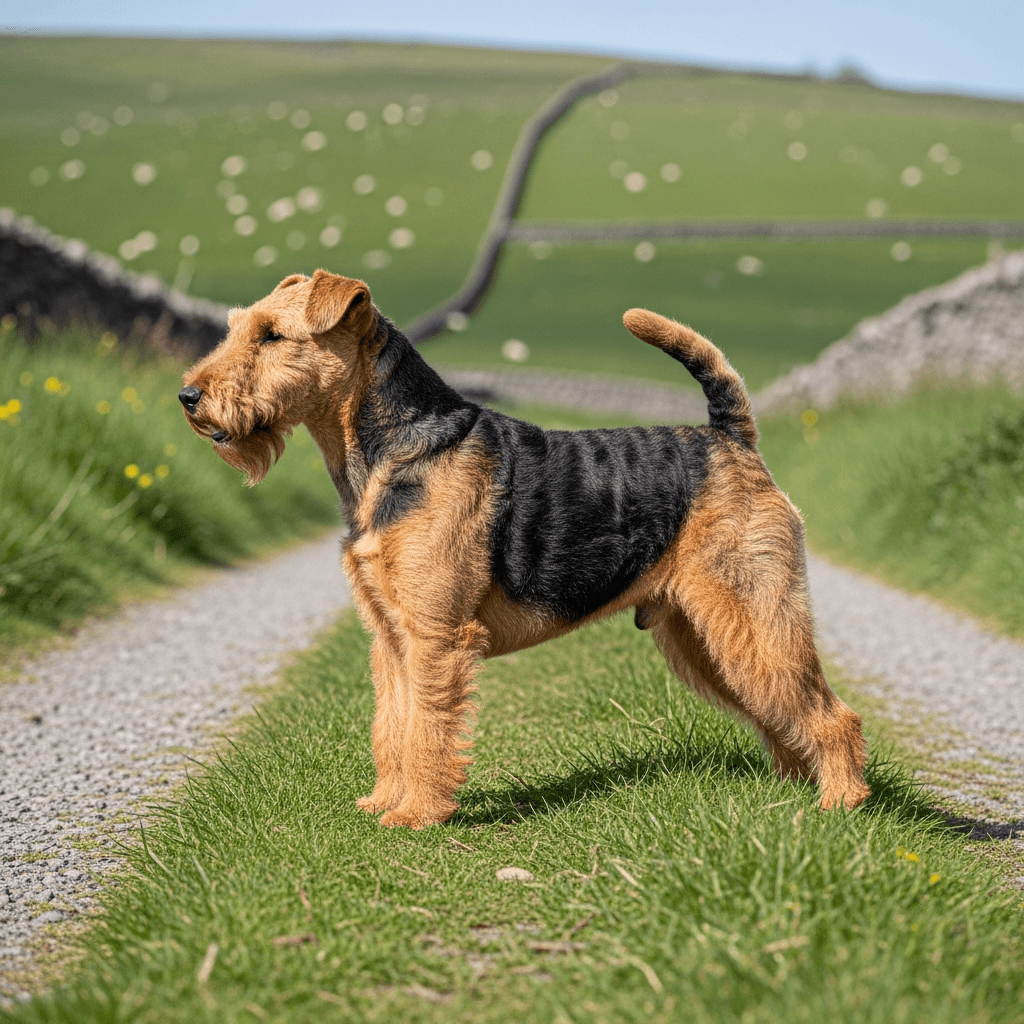
Welsh Terrier
FCI Group
3• FCI 78
Size
Medium
Origin Country
GB
Height
37-39 cm
Weight
9-9.5 kg
Lifespan
12-14 years
Temperament
Overview
The Welsh Terrier, also known as Welsh Terrier, is a fascinating dog breed with a rich history dating back to Celtic times and an extraordinary character that combines courage, intelligence, and loyalty. For centuries, these dogs have captivated with their charm, sharpness, and versatility – both as hunting assistants and devoted family companions.
This breed first appeared in Wales, where it served as a reliable companion for hunters and farmers, actively participating in hunts for various small animals – from foxes and badgers to otters and pests such as rats and voles. Over the centuries, the Welsh Terrier honed its hunting skills, leading to the development of the breed's characteristic traits: courage, perseverance, agility, and a hard coat resistant to adverse weather conditions.
The official name Welsh Terrier was adopted in 1885 when the breed was officially recognized by the UK Kennel Club and separated from other black-and-tan terriers. The Welsh Terrier is a medium-sized dog with a compact, harmonious, and working body structure that combines the strength necessary for working in difficult terrain, agility for entering burrows, and endurance for prolonged effort.
Its most distinctive feature is the hard, wiry coat in the classic black and tan coloration, which effectively protects it from cold, moisture, and injuries while working in dense underbrush or burrows. Importantly for allergy sufferers – minimal shedding and the specific structure of the coat make the Welsh Terrier less prone to triggering allergic reactions, making it a good choice for those sensitive to dog allergens.
The height at the withers of the Welsh Terrier does not exceed 39 cm, and its weight ranges from 9 to 9.5 kg, making it a compact dog, easy to transport and suitable for both living in a house with a garden and in an apartment (provided it gets enough exercise). However, it is not just the harmonious appearance that makes it unique.
The temperament of this breed is equally interesting – the Welsh Terrier is sharp, energetic, full of life, cheerfulness, and readiness for action. Owners must be prepared that this dog requires constant stimulation both physically and mentally. Without regular challenges, activities, and tasks engaging its intelligence, it may become bored and exhibit destructive behaviors such as destroying furniture, digging in the garden, or excessive barking.
A daily dose of intense activity – a minimum of an hour of walks, play, and training – is absolutely key to the happiness and mental balance of the Welsh Terrier. Moreover, dogs of this breed are very devoted and loyal to their family, but by nature, they can be somewhat distrustful and cautious of strangers, making them excellent guard dogs. Therefore, it is crucial that they undergo appropriate, consistent training and intensive socialization from a young age – only then will they become balanced, confident family dogs.
The Welsh Terrier is not a breed for everyone – it requires an experienced or at least determined owner who can provide structure, consistency, activity, and love. In return, they will receive an intelligent, cheerful, loyal, and brave companion ready for any adventure. In the further part of the guide, you will find detailed information about the health, grooming, training, nutrition, history, appearance, and behavior of this fascinating dog. We invite you to discover the extraordinary world of the Welsh Terrier!
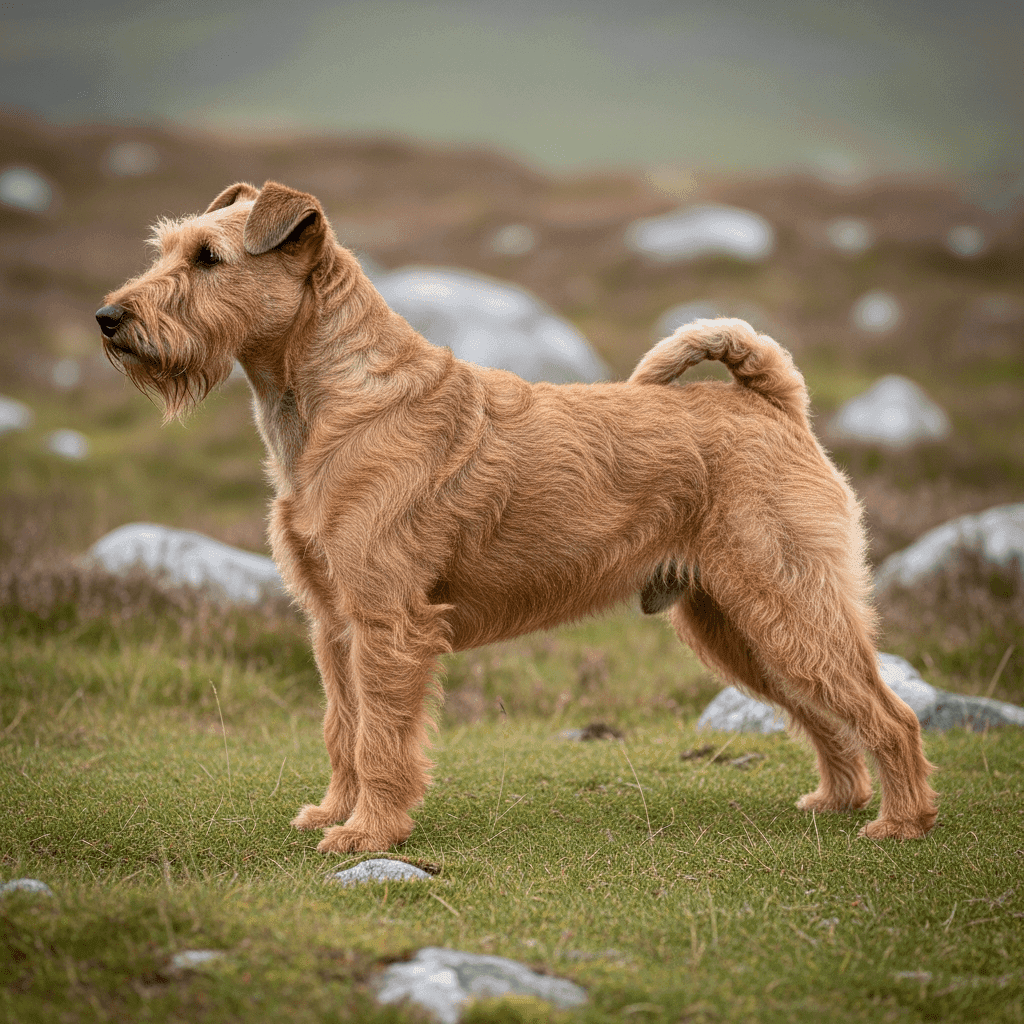
The Welsh Terrier is a dog with a sturdy, harmonious, and working physique, which according to the FCI standard reaches a maximum height of 39 cm at the withers (15.5 inches) and weighs between 9 to 9.5 kg. Its overall appearance exudes energy, vigor, readiness for action, and health, making it an extremely attractive and functional companion for lovers of active terrier breeds.
The characteristic coat of the Welsh Terrier is hard, wiry, dense, and closely fitting to the body, making it exceptionally resistant to adverse weather conditions – cold, moisture, rain, and mechanical damage while working in difficult terrain. The most commonly seen coloration is the classic black and tan, where a black or dark gray saddle covers the back, sides, and upper part of the tail, while the tan appears on the head, limbs, belly, and lower part of the tail. Some individuals may also have a gray-black (grizzle) coloration with tan. This distinctive, elegant color scheme gives them a recognizable and noble appearance.
The head of the Welsh Terrier is long, flat, and rectangular with a slightly defined stop and a medium-length, strong, and deep muzzle. The jaws are strong with an excellent, regular scissor bite. The eyes are relatively small, dark, and deeply set, expressing intelligence, alertness, and confidence typical of terriers. The gaze is penetrating, inquisitive, and full of energy.
The ears have a characteristic small "V" shape, are set quite high, and are carried forward, lying close to the cheeks. The small, neatly placed ears emphasize the alert, action-ready character of this breed. The skull is flat and moderately wide between the ears.
The body structure of the Welsh Terrier is compact, strong, and balanced. The back is short with strong, muscular loins, and the chest is deep and well-developed, reaching to the elbows, which provides the dog with adequate lung capacity, endurance, and condition necessary for prolonged effort. The ribs are well-arched, giving the torso proper volume without excessive width.
The front limbs are strong, straight, well-angled, and parallel, with strong shoulders set at an angle. The hind limbs are well-muscled with strong thighs and correctly angled knee and hock joints, providing the dog with agility, driving strength, and flexibility of movement essential during hunting and play. The paws are small, round, and compact (cat-like), with thick pads and curved claws.
The tail, which was traditionally docked to a length of about 3/4 (though this practice is becoming increasingly rare and banned in many countries), is set high and carried vertically or slightly forward, never curved over the back. A naturally long tail is also acceptable in the standard. The way the tail is carried – confidently and high – fits the overall energetic posture of the dog.
The entire stance of the Welsh Terrier expresses readiness for action, confidence, and vigor. The movement is free, energetic, and efficient, with a good extension of the front limbs and strong propulsion from the rear. During movement, the silhouette remains compact and balanced, demonstrating the functional build of a working terrier created for work in difficult terrain.
The Welsh Terrier is a dog full of temperament, energy, and personality, deeply attached and loyal to its family. Generally, it is obedient and easy to handle for an experienced owner, although it may exhibit a certain degree of independence and stubbornness typical of terrier breeds. This trait requires consistent training and clearly defined boundaries.
According to the FCI standard, the Welsh Terrier is affectionate, obedient, and easily controlled, happy and volatile, rarely skittish. It is brave and fearless, but definitely not aggressive, always ready to stand its ground when necessary. This balance between courage and control makes it an excellent family dog.
The Welsh Terrier can be somewhat wary and cautious of strangers, making it an excellent watchdog, alerting owners to any disturbing movement, sound, or approaching person. It will bark to warn of intruders, but with proper training, it can learn to control this behavior and bark only in appropriate situations.
It requires adequate, intense socialization from a young age to become a well-balanced dog, confident in various social situations – interacting with people, children, other dogs, and animals. Its cheerful, lively disposition makes it an excellent companion for older, responsible children; however, it should be noted that it can be very energetic, lively, and noisy during play, which may be overwhelming for the youngest family members. Interactions with small children should always be supervised.
The Welsh Terrier has a strong hunting instinct and high prey drive, meaning it may instinctively chase small, fast-moving animals such as cats, squirrels, rabbits, rodents, or birds. This behavior is deeply rooted in its genetics as a hunting dog. It is important that it has proper recall training and is under constant supervision during outdoor play, especially in unfenced areas or those with wildlife.
This dog is also quite intelligent, sharp, and quick to learn, which means it requires regular mental challenges, tasks, and activities to avoid boredom and related destructive behaviors. Intellectual games, obedience training, trick training, puzzle toys, nosework, or agility are excellent ways to stimulate the mind of this clever breed.
As a watchdog, the Welsh Terrier will alert to any stranger, unusual sound, or movement, making it a good, vigilant guardian of the home. However, this can lead to excessive barking if not properly trained and taught when barking is appropriate and desired, and when it is unwanted and unnecessary.
In relationships with other dogs, the Welsh Terrier can be confident and sometimes dominant, especially towards same-sex dogs. Early socialization and regular interactions with other well-mannered dogs will help develop appropriate social skills. With dogs it grew up with and knows from puppyhood, it usually gets along very well.
In summary, the Welsh Terrier is an energetic, intelligent, loyal, and brave companion that requires an active, consistent owner ready to provide it with the right amount of exercise, mental stimulation, training, and love. In return, it will offer a dog full of character that will be a devoted, faithful, and cheerful family member for many years.
The Welsh Terrier is a relatively healthy and resilient breed, generally enjoying good health due to responsible breeding and maintaining genetic diversity. The average lifespan is between 12 to 14 years, although with proper care, a healthy diet, and regular activity, many individuals live up to 15-16 years.
However, like any purebred breed, the Welsh Terrier may be prone to certain conditions characteristic of dogs with this body structure, genetics, and size. The most common health issues include:
- Hip Dysplasia – a developmental defect involving an abnormal shape of the hip joint socket, leading to pain, lameness, and degenerative changes
- Legg-Calvé-Perthes Disease (LCPD) – aseptic necrosis of the femoral head, common in small breeds, leading to pain and lameness
- Addison's Disease (Hypoadrenocorticism) – hormonal disorders involving adrenal cortex failure, manifested by lethargy, loss of appetite, and weakness
- Esophageal Achalasia – a neuromuscular disorder affecting swallowing and the transport of food to the stomach
- Ophthalmic Problems – including glaucoma, cataracts, or progressive retinal atrophy (PRA)
- Skin Diseases – contact allergies, atopic dermatitis, bacterial or fungal infections
- Hypothyroidism – hormonal disorders leading to weight gain, lethargy, and skin problems
This breed may also struggle with food and environmental allergies, which require careful selection of food, observation of the dog's reactions, and possible allergy testing by a veterinarian. Allergy symptoms may include itchy skin, hair loss, ear infections, and digestive issues.
A key element in caring for the Welsh Terrier's health is:
- Providing a proper, balanced high-quality diet
- Regular physical activity to support muscle and joint condition
- Maintaining a healthy body weight (obesity significantly increases the risk of health problems)
- Regular veterinary visits (at least once a year, more often for older dogs)
- Current vaccinations and deworming
- Monitoring dental health (tartar, periodontal disease)
- Regular grooming of ears, eyes, and skin
Dogs of this breed are resilient to various weather conditions thanks to their tough, wiry coat, which protects them from cold, moisture, rain, and wind. This coat serves a natural protective function, so it is essential to maintain its proper structure through regular trimming rather than clipping.
However, it is important to remember that with overweight and obesity, serious health problems may arise, including:
- Increased joint stress leading to arthritis
- Cardiovascular problems
- Diabetes
- Respiratory issues
- Shortened lifespan
Therefore, it is crucial to monitor body condition, adjust food portions according to activity level, and ensure regular exercise. With proper veterinary care, a healthy lifestyle, and love from the owner, the Welsh Terrier can enjoy a long, healthy, and active life as a devoted family companion.
The care of the Welsh Terrier is relatively simple in daily maintenance, but requires regularity, attention, and certain specialized treatments characteristic of breeds with hard, wiry coats. Proper grooming not only affects the external appearance but also the health of the skin and the overall well-being of the dog.
Brushing the coat: The coat of the Welsh Terrier is hard, wiry, and dense, which means it does not require intensive daily brushing. However, it is recommended to brush regularly at least once or twice a week to remove dead hair, minimize the risk of tangling (especially in areas where the hair is longer – beard, brow, limbs), and maintain a healthy appearance of the coat. It is best to use a wire brush or a comb with metal teeth.
Trimming: A key element of grooming the Welsh Terrier is hand stripping (hand stripping, trimming), which should be done every 8-12 weeks. This procedure involves manually pulling out dead hair, which:
- Maintains the hard, wiry structure of the coat
- Preserves the intense color and shine
- Prevents dullness and matting
- Supports skin health by removing dead hair
Hand stripping can be time-consuming and requires certain skills or the assistance of a professional groomer specializing in terriers. Clipping with a machine is faster but destroys the structure of the coat, causing it to become soft, fluffy, and lose its characteristic hardness – therefore it is not recommended for show dogs or those used for work.
Ear care: It is important to pay special attention to regular ear cleaning (at least once a week) to prevent the buildup of wax, bacteria, and moisture, which can lead to infections. Specialized ear cleaning solutions for dogs should be used, and the ear should be gently wiped with soft gauze. In case of unpleasant odor, redness, excessive discharge, or if the dog is scratching its ear – consult a veterinarian immediately.
Oral hygiene: Regular tooth brushing 2-3 times a week (preferably daily) will prevent the formation of tartar, periodontal disease, bad breath, and health problems related to oral bacteria. Dental chews and specialized treats that support dental hygiene can also be used.
Nail care: Nails should be trimmed every 3-4 weeks or when they can be heard clicking on a hard floor. Overly long nails can cause discomfort, walking problems, and paw deformities. If the dog is regularly walked on hard surfaces (asphalt, concrete), the nails may wear down naturally.
Bathing: The Welsh Terrier does not require frequent baths – it is sufficient to bathe it once every 2-3 months or when it is truly dirty or smells. Too frequent washing can disrupt the natural lipid protection of the skin and weaken the hard structure of the coat. Mild shampoos designed for dogs with hard coats should be used.
During the shedding period (which is minimal in Welsh Terriers due to the coat structure and regular trimmings), it is advisable to increase the frequency of brushing to remove loose hair. This is one of the advantages of the breed – minimal shedding in the house, making it attractive for those who value cleanliness and allergy sufferers.
Regular, appropriate grooming not only keeps the Welsh Terrier in excellent visual condition but also supports its health, comfort, and longevity, and provides a great opportunity to build a bond with the dog and detect any potential health issues early.
The Welsh Terrier is a dog full of energy, vigor, and enthusiasm for action, which requires a significant amount of exercise, activity, and stimulation to remain healthy, happy, and mentally balanced. Owners should provide him with at least 60-90 minutes of intense physical activity every day, and preferably more if possible.
Ideal forms of activity for the Welsh Terrier include:
- Long, energetic walks – at least twice a day, in varied terrain (park, forest, meadow, field)
- Running – alongside a bicycle (canicross), jogging with the owner, or free running in a fenced area
- Fetching – balls, frisbees, dummies, or other toys – satisfies hunting instincts and provides intense exercise
- Tug of war – excellent fun that engages strength and instincts
- Search and tracking games – nosework, hiding toys or treats for the dog to find by scent
- Dog sports – agility, flyball, earth dog trials, barn hunt
- Swimming – for dogs that enjoy water (not all terriers like to swim)
The Welsh Terrier loves all kinds of active play that combines physical effort with mental challenges. These activities allow him to burn off excess energy, satisfy natural hunting instincts, and maintain good physical and mental condition. Without adequate physical and mental activity, the dog may become bored, anxious, and frustrated, leading to behavioral problems such as:
- Destruction of furniture, cushions, shoes, and other items
- Digging holes in the garden
- Excessive, persistent barking
- Attempts to escape from the garden
- Disobedience and ignoring commands
- Hyperactivity and inability to behave calmly at home
It is also worth considering regular mental activities, which are just as important as physical effort:
- Obedience training and learning new commands
- Playing with interactive toys and puzzles for dogs
- Learning tricks and stunts
- Training advanced skills (agility, nosework)
- Diverse walking routes (new places = new scents and stimuli)
These activities help meet the cognitive needs of the Welsh Terrier and keep his sharp mind in excellent condition. This breed is intelligent and quickly gets bored with repetition, so variety in activities is key.
The Welsh Terrier is not an ideal dog for living in a small apartment without regular access to space for running and outdoor activities. Although it can live in an apartment, it requires particularly intense, long walks and trips to open spaces. Ideally, it thrives in a home with a safe, fenced garden (at least 1.5 meters high fence – the terrier can jump and climb!), where it can run freely, explore, and play without the risk of escaping after a small animal that stimulates its hunting instinct.
For this active, energetic breed, dog sports such as agility (obstacle courses), flyball (races with a ball), earth dog trials (tests in artificial burrows simulating hunting), or nosework (tracking by scent) work perfectly. These activities combine physical effort with intense mental challenges, which is ideal for the intelligent and enthusiastic Welsh Terrier.
Remember that a tired terrier is a happy terrier! The right amount of activity makes him a calm, relaxed, and content companion at home, ready to rest at the owner's feet after a day full of adventures.
Training a Welsh Terrier can be quite a challenge due to its independent, confident, and sometimes stubborn nature typical of terrier breeds. However, with the right approach, patience, consistency, and positive reinforcement methods, this dog quickly learns new skills and can achieve a high level of obedience and advanced skills.
Owners should start training as early as possible, preferably during the puppy stage (from 8-10 weeks of age), to instill desired behaviors, establish hierarchy in the pack (family), and avoid future obedience issues. The earlier training begins, the easier it will be to shape the behavior of the adult dog.
Training methods: It is advisable to use only positive reinforcement methods based on rewards, such as:
- High-value treats (meat, cheese, special training snacks)
- Verbal praise delivered in an enthusiastic tone
- Playing with a favorite toy as a reward
- Petting and physical expressions of approval
These rewards will significantly increase the dog's motivation to learn and cooperate. The Welsh Terrier reacts poorly to harsh training methods, physical punishment, yelling, or coercion, which can destroy its willingness to cooperate, harm the relationship with the owner, and provoke fear or defensive aggression.
Training structure: Regular training sessions should be short (10-15 minutes), intense, and frequent (2-3 times a day), which will help maintain the dog's interest and prevent boredom and frustration. The Welsh Terrier has a fairly short attention span, especially as a puppy, so it is better to conduct many short sessions than one long and exhausting one.
The Welsh Terrier can be somewhat stubborn and independent, so it is extremely important for the owner to be consistent, patient, and firm, not giving up on established training goals. The dog will quickly learn to exploit the owner's inconsistency and will test the boundaries.
Basic commands that should be gradually introduced and reinforced throughout the dog's growth:
- Sit – basic obedience command
- Stay – impulse control, safety
- Come – a key life command, especially important with a strong hunting instinct
- Lie down – calming, control
- No/Leave it – prevents dangerous behaviors
- Wait – patience and self-control
- Heel – walking by the side without pulling the leash
Early and intensive socialization with other dogs, animals, and people is also crucial for ensuring emotional balance and good behavior in various social situations. The puppy should be gradually introduced to:
- Different people (various ages, appearances, genders, behaviors)
- Other dogs of different sizes and temperaments
- Various animals (cats, rabbits, birds – under control!)
- Different sounds (traffic, thunder, fireworks, noise)
- Various environments (city, forest, beach, stores, transport)
- Different surfaces (metal, glass, stairs, elevator)
A well-socialized Welsh Terrier is confident, balanced, and friendly in diverse life situations.
The Welsh Terrier responds well to training based on learning through play, competition, and challenges, making it an excellent candidate for dog sports (agility, flyball, nosework, earth dog trials) or advanced obedience training. These activities not only provide physical exercise but also intense mental stimulation, which is ideal for this intelligent breed.
The key to success in training a Welsh Terrier is:
- A positive attitude and reward-based methods
- Consistency and firmness without aggression
- Patience and understanding of the terrier's character
- Regular, short training sessions
- Early start and intensive socialization
- Rewarding desired behaviors instead of punishing unwanted ones
- Making training enjoyable, not a chore
With the right approach, a Welsh Terrier can become a well-behaved, obedient, and versatile dog, comfortable as a home companion as well as a participant in advanced sports or working activities.
The diet of the Welsh Terrier should be carefully balanced, high-quality, and closely tailored to its energy needs, age, level of physical activity, health status, and individual metabolism. Proper nutrition is the foundation of a long, healthy, and energetic life.
Owners should choose high-quality premium or super-premium dog food that contains the appropriate proportions of nutrients essential for active and energetic dogs:
- Animal protein – a minimum of 25-30% for adult dogs (source: meat, poultry, fish) – builds and maintains muscle mass
- Fats – 12-18% to provide energy and support healthy skin and a shiny coat
- Complex carbohydrates – brown rice, oats, sweet potatoes as a source of long-lasting energy
- Omega-3 and Omega-6 fatty acids – for healthy skin, beautiful coat, and immune system support
- Vitamins and minerals – a complete set for overall health and vitality
- Glucosamine and chondroitin – for joint protection (especially important for active dogs)
It is important not to overfeed the dog, as the tendency for overweight can lead to serious health problems, including:
- Heart and circulatory diseases
- Type 2 diabetes
- Joint problems and arthritis
- Respiratory issues
- Shortened lifespan
Food portions should be carefully measured according to the manufacturer's recommendations and adjusted for:
- The dog's age (puppy, adult, senior)
- Level of physical activity (working dog vs. home companion)
- Body condition (thin, ideal, overweight)
- Health status (allergies, chronic conditions)
- Individual metabolism
Feeding schedule:
- Puppies (2-6 months) – 3-4 meals a day, puppy food for small/medium breeds
- Young dogs (6-12 months) – 2-3 meals a day, gradually transitioning to adult food
- Adult dogs (1-8 years) – 2 meals a day (morning and evening) for stable energy levels
- Senior dogs (over 8-9 years) – 2 meals, senior food with lower calories and higher content of joint-supporting ingredients
It is also worth introducing healthy, natural snacks as a supplement to meals or training rewards:
- Fresh carrots (clean teeth, low calorie)
- Seedless apples (source of vitamins and fiber)
- Cucumbers (hydrating, low-calorie)
- Broccoli in small amounts (vitamins and minerals)
- Cooked meat without seasoning (chicken, beef, turkey)
- Fish (salmon, mackerel – source of Omega-3)
These natural treats will provide additional vitamins and fiber, supporting digestive health and overall condition.
It is essential to avoid feeding toxic or harmful foods to dogs:
- Chocolate and cocoa (toxic, potentially deadly)
- Onions and garlic (destroy red blood cells)
- Grapes and raisins (damage kidneys)
- Xylitol – artificial sweetener (potentially deadly)
- Avocado (contains persin, toxic to dogs)
- Macadamia nuts (toxic)
- Alcohol, caffeine
- Cooked bones (can splinter and damage the digestive tract)
Regular meals (preferably at consistent times) will help maintain stable energy levels throughout the day and prevent excessive hunger, begging, or digestive problems. It is crucial to ensure the dog has constant access to fresh, clean water, especially after intense exercise or on warm days, to avoid dehydration.
If you have questions about the diet, food allergies (symptoms: skin itching, digestive problems, hair loss), special dietary needs, or health issues, it is advisable to consult a veterinarian or a certified pet nutritionist to choose the optimal diet for your pet. Some Welsh Terriers may require specialized food for dogs with sensitive digestive systems, allergies, or chronic conditions.
Proper, balanced nutrition combined with regular physical activity and veterinary care is the foundation of a long, healthy, and energetic life for the Welsh Terrier.
Characteristic Traits
Pros
- A great companion for active individuals and families
- Extremely intelligent and quick to learn
- Resilient to harsh weather conditions
- Minimal shedding and hypoallergenic
- Loyal and devoted to the family
- An excellent watchdog and alert
- Compact size perfect for various living conditions
- Long-lived and generally healthy.
Cons
- Requires a lot of physical and mental activity
- May be distrustful and cautious towards strangers
- Needs intensive socialization from a puppy age
- Strong hunting instinct may lead to chasing small animals
- May show a tendency to excessive barking
- Independent and sometimes stubborn in training
- Requires regular grooming to maintain coat structure.
Behavioral Ratings
Breed History
The history of the Welsh Terrier breed dates back deep into the past – probably as far as pre-Roman times, when Celtic tribes inhabiting the areas of present-day Wales bred small, sturdy dogs with hard coats to assist in hunting small game and combating pests. This breed was originally known as the black and tan terrier (Black and Tan Terrier or Old English Broken-haired Terrier) and was relatively popular among farmers, miners, and hunters in the mountainous, rugged terrains of Wales.
It was primarily used for:
- Controlling pests – rats, mice, and voles that destroyed crops and supplies
- Hunting small game – foxes, badgers, otters
- Entering burrows and flushing out or killing game hiding underground
- Guarding farms and alerting to intruders
For centuries, the Welsh Terrier honed its hunting skills in the challenging, mountainous terrains of Wales, developing the characteristic traits necessary for this type of work:
- Courage and fearlessness in the face of larger opponents
- Perseverance and physical endurance
- Strong hunting instinct and determination
- Hard, wiry coat resistant to weather and damage
- Compact, strong body structure ideal for working in burrows
- Intelligence and independence in decision-making
Its task was to enter the burrows of foxes, badgers, and other predators and to flush out or kill game, which required not only strength and bravery but also agility, intelligence, and determination. This work was dangerous – dogs often fought underground in darkness against opponents of equal or greater size, equipped with sharp teeth and claws.
There is a theory that the Welsh Terrier and the Lakeland Terrier, which show significant physical and temperamental similarities, may have had a common ancestry before the Roman invasion of Britain (43 AD), when their Celtic owners fled from invaders into the Welsh mountains and the Lake District in northern England, isolating their dog populations there.
In 1885, the breed was officially recognized by the UK Kennel Club, marking a milestone in its history. At that time, its name was standardized and changed to Welsh Terrier to emphasize its geographical origin and distinguish it from other similar black-and-tan terrier breeds.
The first Welsh Terrier Club was established in 1886 in the UK, leading to the standardization of the breed's appearance, temperament, and function. Since then, breeders have focused on preserving the working traits of the breed while improving its exterior for show purposes.
The breed reached the United States in the late 19th century and was recognized by the American Kennel Club (AKC) in 1888. In America, the Welsh Terrier gained popularity both as a hunting dog and as a show and family companion.
Although this breed was originally bred exclusively for work in hunting and pest control, in recent decades it has become more popular as a companion dog for active families and individuals who appreciate intelligent, energetic, loyal dogs with character. Modern Welsh Terriers, however, have retained their working instincts and are still used for hunting in some parts of the UK.
Unfortunately, due to the decline in popularity of working breeds, the rise in interest in small companion breeds, and changes in people's lifestyles, the Welsh Terrier is currently considered a relatively rare breed, especially outside of the UK and the United States. In the UK, this breed is on the list of Vulnerable Native Breeds, with a small number of registered puppies each year.
However, enthusiasts of the breed around the world are striving to preserve its authentic traits – both its appearance and working temperament – and promote it as an excellent companion for active owners who value traditional terrier breeds with a rich history.
Throughout its long, fascinating history, the Welsh Terrier has gained a reputation as an intelligent, loyal, brave, energetic, and characterful dog, making it an excellent companion for families and individuals who appreciate an active lifestyle, close contact with nature, and sincere, authentic relationships with a dog of strong personality. Its versatility makes it equally well-suited as a hunting dog, a participant in dog sports, and as a devoted, cheerful companion in everyday family life.