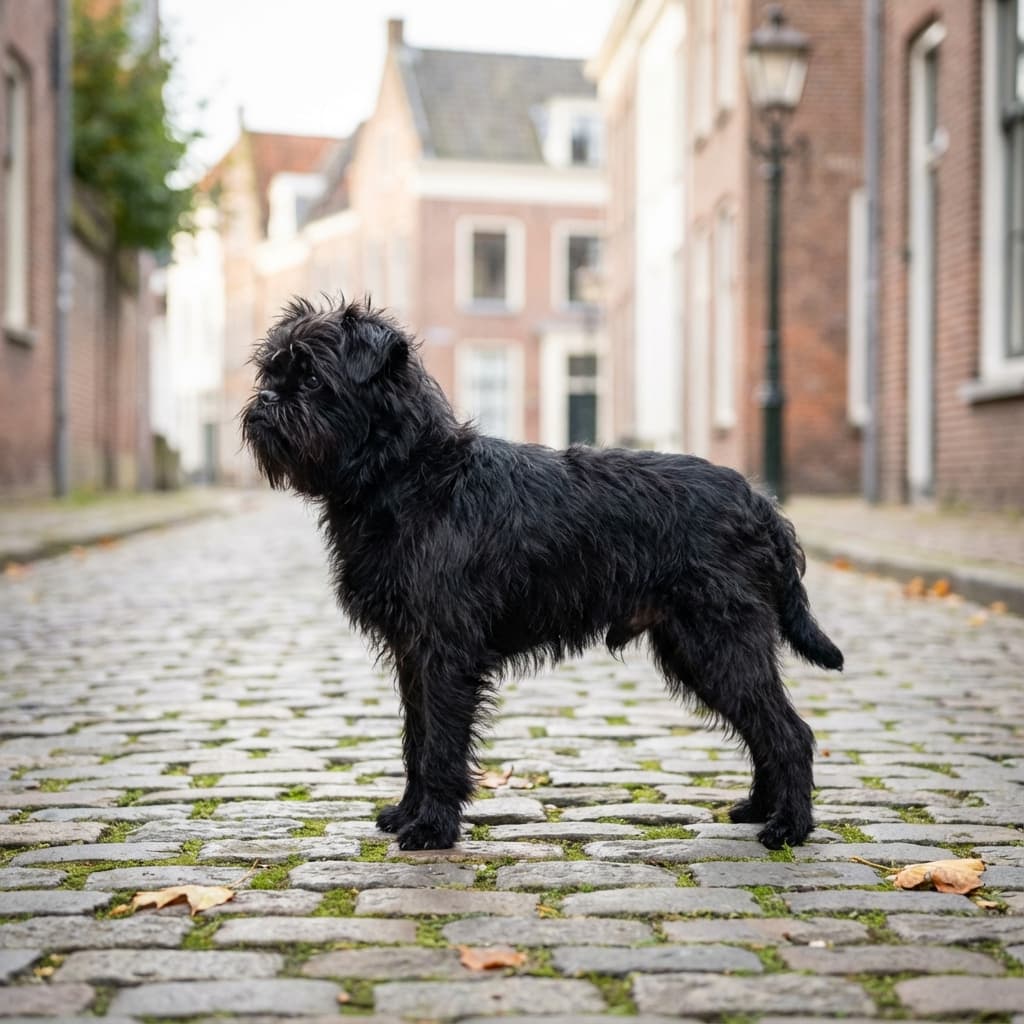
Monkey pincers
FCI Group
2• FCI 186
Size
Small
Origin Country
DE
Height
25-30 cm
Weight
4-6 kg
Lifespan
12-14 years
Temperament
Overview
The Affenpinscher, also known as Affenpinscher, is an extraordinary dog breed with a rich history dating back to the 16th century. Originating from southern Germany, this small canine has been captivating people for centuries with its distinctive, monkey-like facial expression and unique personality. It is a typical companion and house dog, which thrives in urban environments, and its small size makes it an ideal inhabitant of both small apartments and spacious homes.
This breed is characterized by extraordinary courage and a strong personality. Despite its small size, the Affenpinscher is a dog of fearless character, whose curiosity about the world and loyalty to its owners knows no bounds. Its innate protective instinct makes it an excellent watchdog – it loudly warns of the presence of strangers, making it a great choice for those who value a sense of security at home. At the same time, it is a loving and devoted companion that forms deep bonds with the family.
The Affenpinscher's remarkable adaptability allows it to thrive in various living conditions. It does well in small spaces, although it requires regular, moderate exercise to maintain good health. The characteristic rough coat gives it a unique charm but requires regular grooming – the owner must be prepared to consistently care for the dog's appearance. The temperament of this breed is a unique mix of playfulness, intelligence, and a certain degree of stubbornness, making it a fascinating challenge for experienced owners.
Like any breed, the Affenpinscher can be prone to certain health issues, including tendency to obesity, especially in later years. Therefore, it is crucial to monitor its diet and ensure an appropriate level of physical activity. With proper care, this breed can enjoy a long life – typically from 12 to 14 years – remaining a loyal and joyful companion throughout.
The Affenpinscher certainly attracts attention with its unique beauty and expressive personality. It is a wonderful choice for active, engaged owners looking for a small dog with a big character. In the following sections, we will detail all aspects related to this exceptional breed: its appearance, behavior, health needs, grooming, training requirements, nutrition, and fascinating history.
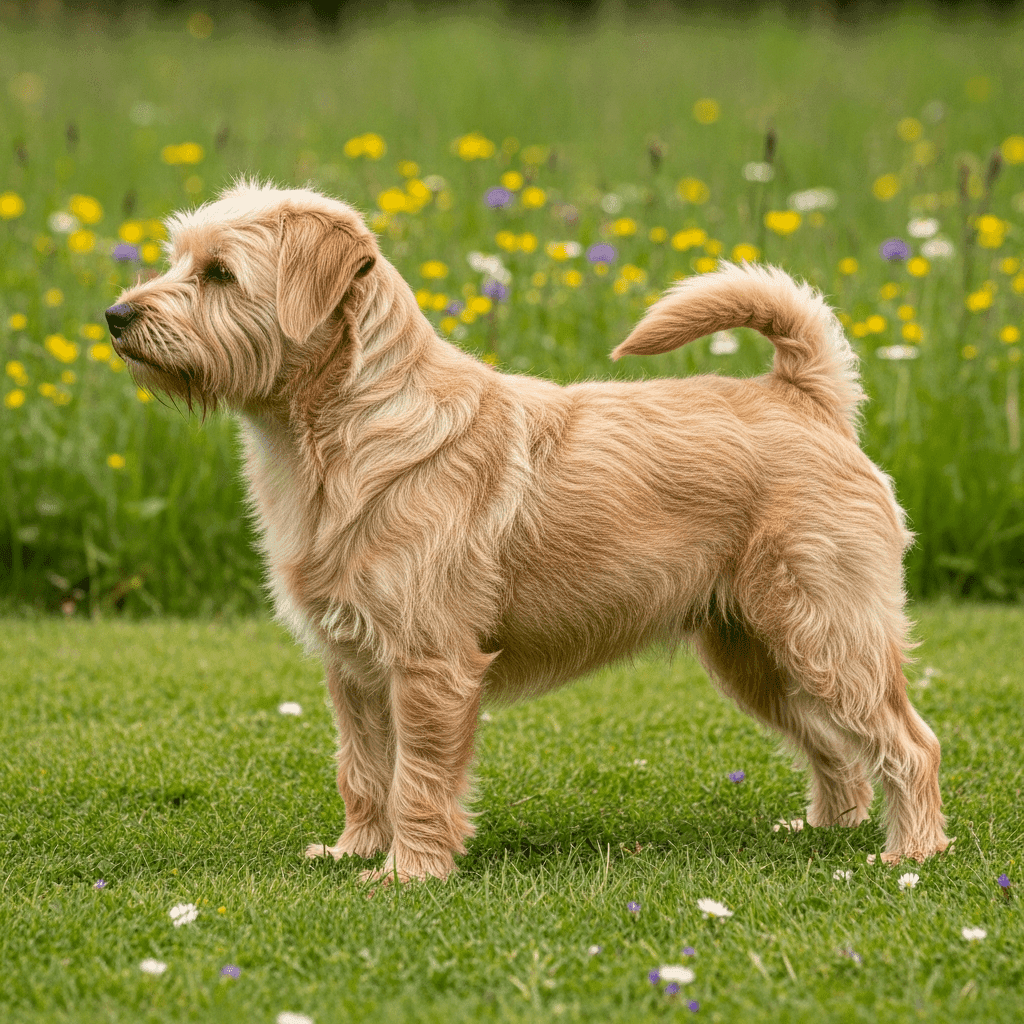
The Affenpinscher is a small dog with a strong and compact build that immediately catches the eye with its distinctive, monkey-like expression. Its height at the withers usually ranges from 25 to 30 cm, and its weight falls between 4–6 kg, making it an ideal dog for apartment living.
The head is one of the most recognizable features of this breed:
- Skull – round, high-domed with a clearly defined forehead and stop
- Nose – large, round, always black
- Muzzle – short and straight, without a turned-up nasal bridge
- Eyes – dark, round, slightly protruding, expressive
- Ears – set high, in a V shape, with the inner edge lying close to the cheeks
The silhouette of the Affenpinscher is compact and proportional:
- Body – strong, stocky, almost square in proportions
- Back line – slightly sloping from the withers to the tail
- Abdomen – moderately tucked up, giving the dog an agile appearance
The coat is a hallmark of the breed:
- Texture – rough, hard, and dense, protecting against moisture
- Characteristic feature – longer hair around the head forming a distinctive collar and emphasizing the monkey-like expression
- Color – most often completely black, but gray, red, and black-and-tan are also acceptable
The appearance of the Affenpinscher is both charming and somewhat wild, giving it a unique character. This breed stands out from other small dogs with its unique, monkey-like expression and proud, confident stance.
The Affenpinscher is a breed with a unique temperament that can be both incredibly charming and demanding for the owner. This is a dog full of character that is not easily dominated.
Key personality traits:
- Fearless courage – despite its small size, the Affenpinscher is extremely bold and is not afraid to confront larger dogs
- Alertness – an excellent observer of its surroundings, always on guard
- Persistence and determination – once it sets its mind to something, it is hard to dissuade it
- Devotion to family – forms deep emotional bonds with its owners
- Explosive temperament – can be impulsive and reacts quickly to stimuli
Relationships with family:
Affenpinschers are extremely loyal companions who become strongly attached to their owners. They make excellent family dogs, although they require consistent training. They are affectionate towards children, but due to their delicate build and tendency towards independence, they are best suited for families with older, responsible children.
Relationships with strangers:
This breed tends to be skeptical of strangers. Their innate guarding instinct causes them to react loudly to visitors, making them excellent alarm dogs. Early and systematic socialization is absolutely crucial to teach a young Affenpinscher appropriate behavior towards new people and in unfamiliar situations.
Hunting instinct and energy:
Originating as rodent-catching dogs, they have retained a strong hunting instinct. They may chase small animals if the opportunity arises, so vigilance is necessary during walks. They are very energetic dogs that require both physical and mental stimulation. Without proper engagement, they may exhibit destructive behaviors or excessive barking.
Barking:
Affenpinschers have a tendency to bark frequently and loudly, which can be a challenge in apartments. Proper training from a young age can help control this behavior, although completely eliminating barking is unlikely – it is simply part of their nature.
In summary, the Affenpinscher is a fun, playful, and full of personality dog that is well-suited for experienced owners who appreciate active, intelligent companions with an independent character.
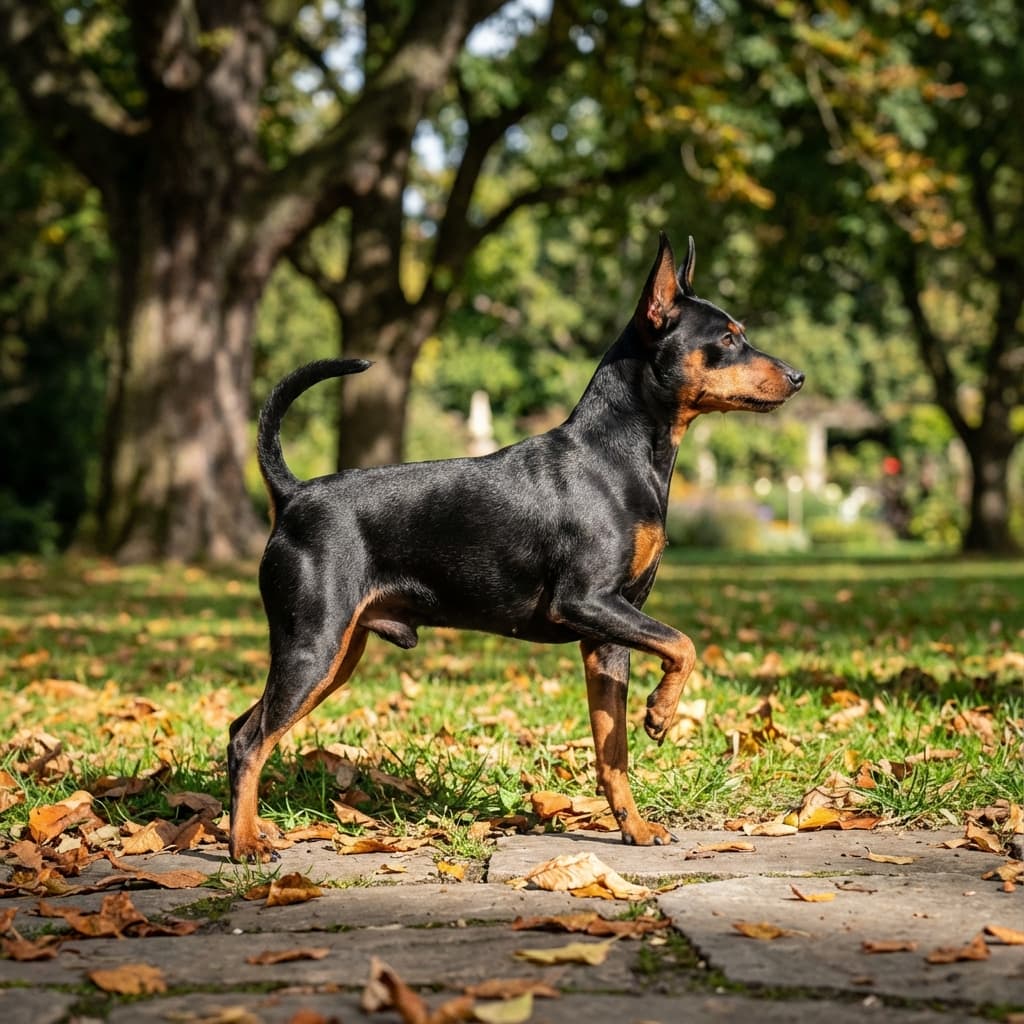
The Miniature Pinscher is generally a healthy and resilient breed, although like most purebred dogs, it may be prone to certain genetic and age-related conditions. The average lifespan is between 12 and 14 years, and with proper care, many individuals live even longer.
Most common health issues:
1. Obesity
The Miniature Pinscher tends to gain weight, especially in older age or with insufficient activity. Obesity leads to many secondary health problems, including heart disease, diabetes, and joint issues. Key measures include:
- Controlling food portions
- Avoiding excessive treats
- Ensuring regular physical activity
- Regularly weighing the dog and monitoring its condition
2. Heart conditions
The breed may be susceptible to various heart diseases, including mitral valve disease. Regular cardiology check-ups, especially for older dogs, are recommended.
3. Eye problems
Miniature Pinschers can suffer from cataracts, which can lead to vision loss if left untreated. Other vision issues include progressive retinal atrophy (PRA).
4. Hip dysplasia
Although rarer in small breeds, it can occur and lead to pain and lameness in later years.
5. Legg-Calvé-Perthes disease
A condition affecting the head of the femur, causing necrosis. It manifests as lameness and pain, usually requiring surgical intervention.
6. Other conditions:
- Hernias – both umbilical and inguinal hernias can occur
- Hypothyroidism – leads to metabolic issues, obesity, and changes in the coat
- Oligodontia – the absence of some teeth, typical for brachycephalic breeds
- Sebaceous cysts – benign skin changes that require monitoring
Preventive recommendations:
- Regular veterinary visits – at least once a year, twice a year for older dogs
- Dental care – tooth brushing, dental treats, professional cleanings
- Weight management – maintaining a healthy body weight is key to a long, healthy life
- Behavior observation – quickly detecting changes in appetite, activity, or mood can prevent more serious problems
- Current vaccinations and deworming – the foundation of health prevention
With proper veterinary care, a balanced diet, and regular physical activity, the Miniature Pinscher can enjoy a long and happy life alongside its family.
The care of the Affenpinscher is not particularly complicated, but it requires consistency and regularity to maintain its characteristic appearance and the health of its skin and coat.
Coat care:
Brushing
The rough, hard coat of the Affenpinscher is quite resistant to tangling, which is a convenience for owners. Nevertheless, it is recommended to brush at least once a week to:
- Remove dead hair and dirt
- Stimulate skin circulation
- Prevent matting, especially around the head and limbs
- Maintain a healthy, shiny coat
For brushing, it is best to use a medium-toothed comb or a brush made of natural bristles, which gently detangle the fur without damaging its structure.
Trimming and hand stripping
To maintain a neat, breed-typical appearance, many people opt for regular trimming of the coat, especially around the eyes, ears, and paws. This can be done at home or by using the services of a professional groomer every 6-8 weeks. Some owners also prefer hand stripping (plucking out dead hair), which helps maintain the proper, hard structure of the coat.
Bathing
Affenpinschers do not require frequent bathing. A bath every 6-8 weeks is sufficient or when the dog gets dirty while playing outside. Too frequent washing can strip the coat of its natural protective oils. It is advisable to use mild shampoos designed for dogs with hard coats.
Ear care:
Due to the shape of their ears, Affenpinschers can be prone to ear infections. Ears should be checked regularly (at least once a week) for:
- Excess wax buildup
- Unpleasant odor
- Redness or swelling
Cleaning the ears with specialized solutions helps prevent the buildup of bacteria.
Dental care:
Regular tooth brushing is extremely important for this breed, which is prone to dental issues, including tartar and periodontal disease. It is recommended to:
- Brush teeth at least 2-3 times a week (preferably daily)
- Use toothpaste designed for dogs
- Provide dental treats and chew toys
- Schedule regular veterinary check-ups and professional teeth cleaning as needed
Nail trimming:
If the nails do not wear down naturally during walks, they should be trimmed every 3-4 weeks. Overly long nails can cause discomfort and walking problems.
Eye check:
Due to their slightly protruding eyes, it is advisable to regularly check them for discharge or irritation and gently clean them with a damp cotton pad.
Regular visits to a professional groomer (every 2-3 months) can be helpful in maintaining the proper condition of the coat and overall health of the Affenpinscher, ensuring a neat appearance and comfort.
The Affenpinscher has moderate physical activity needs, making it an ideal dog for city dwellers, including those living in apartments. Although it is an energetic and lively dog, it does not require intense, hours-long exercise like some larger working breeds.
Basic activity requirements:
Walks
Affenpinschers need at least two walks a day, each lasting 20-30 minutes. Walks should be:
- Moderately energetic – allowing the dog to sniff and explore the surroundings
- Diverse – changing routes provides new stimuli and mental stimulation
- Safe – due to their small size and bold nature, caution should be exercised around larger dogs and potential threats
Play at home and in the garden
In addition to walks, Affenpinschers love various games that help release energy and provide mental stimulation:
- Fetching – they eagerly bring back small balls or toys
- Hide and seek – engages their hunting instinct
- Games with other dogs – socialization and play with peers of similar size
- Tug-of-war games – satisfy their need for physical activity
Interactive toys and mental training
This intelligent breed greatly benefits from mental stimulation. They excel at:
- Puzzle toys where the dog has to find treats
- Searching games – hiding treats around the house or garden
- Short training sessions learning new commands and tricks
- Scent games that engage their natural tracking instinct
Safety notes:
- Leash during walks – due to their strong hunting instinct, they may chase small animals
- Avoiding extreme temperatures – small dogs can overheat or cool down quickly
- Safe fencing – if they have access to a garden, it must be properly secured, as they are agile and curious
- Supervision during play with children – due to their delicate build, they may be accidentally harmed by overly energetic children
Adapting activity to age:
- Puppies – shorter but more frequent play sessions, avoiding excessive strain on joints
- Adult dogs – regular, moderate activity throughout the day
- Senior dogs – adjusting intensity to their capabilities, still regular but calmer walks
Despite their small size, the Affenpinscher is a lively and curious dog that needs not only physical activity but also mental challenges. The right balance between movement and relaxation will ensure their health, happiness, and balanced behavior at home.
Training a monkey terrier can be a satisfying but challenging endeavor. This breed combines intelligence with a significant degree of stubbornness and independence, requiring the owner to have patience, consistency, and the right training approach.
Key training principles:
1. Early start
Training should begin as early as possible, ideally during the puppy stage (8-12 weeks). Young monkey terriers are more receptive to learning and it's easier to shape their behavior before they develop undesirable habits.
2. Positive reinforcement
This breed responds best to methods based on positive reinforcement:
- Rewarding desired behaviors with treats, praise, or play
- Avoiding physical punishment or yelling, which can make the dog become aggressive or even more stubborn
- Immediately rewarding correct behavior so the dog understands the connection between the action and the reward
3. Short and engaging sessions
Monkey terriers have a short attention span and get bored easily. Therefore, training sessions should be:
- Short – 5-10 minutes per session
- Frequent – several times a day
- Diverse – introducing new elements to maintain interest
- Fun – learning through play yields better results than dry repetition of commands
4. Consistency
Due to their stubborn nature, monkey terriers will test boundaries. It is crucial to have:
- Consistent rules for all family members
- Not giving in when the dog tries to push its agenda
- Patience and persistence in repeating commands
Basic commands to teach:
- Sit – a basic control command
- Stay – extremely important for safety
- Come – crucial for off-leash walks
- Lie down – helps to calm the dog
- Leave it – protects against eating dangerous items
Socialization:
Early and systematic socialization is absolutely crucial for this breed. Monkey terriers can be wary of strangers and other dogs, so it is important to:
- Gradually introduce the puppy to various people, including children, adults, and seniors
- Organize controlled meetings with other dogs (especially well-behaved ones)
- Acclimate to different sounds, places, and situations
- Enroll in puppy classes where they learn proper behavior in a group
Barking control:
Monkey terriers are natural home alarms and tend to bark frequently. Training in this area requires:
- Teaching the command Quiet or Enough
- Rewarding calmness when they would normally bark
- Identifying the causes of barking (boredom, anxiety, excess energy) and addressing them at the root
- Not reinforcing barking with excessive attention
House training:
As small dogs, monkey terriers may have a smaller bladder, which requires patience during house training:
- Frequent outdoor trips (every 2-3 hours for puppies)
- Rewarding immediately after they go in the right place
- Avoiding punishment for accidents – clean up without emotion
- Using training pads as a temporary solution
Common challenges:
- Stubbornness – don't give up, be more persistent than the dog
- Dominance – establish a clear hierarchy from the beginning
- Distraction – train in a calm environment, gradually introducing distractions
- Excessive confidence – protect the dog from situations where its bravery could put it in danger
Professional help:
If you encounter difficulties, consider:
- Group classes with a certified trainer
- Individual behavioral consultations
- Obedience courses specializing in small breeds
Despite the challenges, with the right approach and perseverance, a monkey terrier can become a well-mannered, obedient companion. The key to success is understanding its independent nature and adapting training methods to its personality.
The proper diet for the monkey pinscher is crucial for maintaining its health, energy, and proper body weight. Due to the tendency to obesity, special attention should be paid to portion control and food quality.
Basic nutrition principles:
High-quality food
Monkey pinschers should receive premium or super-premium food that contains:
- High-quality animal protein as the first ingredient (chicken, turkey, fish, beef)
- Appropriate proportions of fats, carbohydrates, and fiber
- Vitamins and minerals essential for small breeds
- No artificial colors, preservatives, or fillers
Adaptation to size and age
Foods specially formulated for small breeds should be chosen, as they have:
- Smaller kibble sizes suitable for small mouths
- Appropriate calorie content for the faster metabolism of small dogs
- Ingredients that support joint and heart health
The food should also be selected according to the life stage:
- Puppies (up to 12 months) – puppy food for small breeds, rich in protein and calories to support growth
- Adult dogs (1-7 years) – maintenance food for adult small breed dogs
- Senior dogs (7+ years) – senior food with lower calorie content and additives that support joints and cognitive functions
Portion control and meal frequency:
Monkey pinschers should receive divided portions instead of one large meal:
- Puppies (2-6 months) – 3-4 meals a day
- Young dogs (6-12 months) – 2-3 meals a day
- Adult dogs – 2 meals a day
The portion size depends on:
- The dog's weight and body condition
- Level of physical activity
- Type of food (dry, wet, mixed)
- Manufacturer's recommendations on the packaging
The average adult monkey pinscher (4-6 kg) needs about 150-250 kcal per day, which corresponds to approximately 1/2 - 1 cup of dry food (depending on calorie content).
Treats and snacks:
Due to the risk of obesity, treats should make up no more than 10% of daily calorie intake:
- Choose low-calorie, healthy treats
- Use them mainly as training rewards
- Avoid table scraps, which are often fatty and unhealthy
- Good choices include: pieces of carrot, apple (without seeds), cooked chicken
Forbidden foods for dogs:
- Chocolate
- Onion and garlic
- Grapes and raisins
- Xylitol (sweetener)
- Avocado
- Alcohol and caffeine
- Macadamia nuts
Water:
Fresh, clean water should be available at all times. Small dogs dehydrate faster, so the bowl should be regularly refilled.
Monitoring weight and condition:
Regularly check the dog's weight and condition:
- Rib test – ribs should be felt with gentle pressure but not visible
- Waistline – should be visible when viewed from above
- Tucked belly – should be visible when viewed from the side
If the dog is gaining weight:
- Reduce portions by 10-15%
- Increase physical activity
- Limit treats
- Consult a veterinarian to rule out health issues
Special dietary needs:
Some monkey pinschers may require special diets due to:
- Food allergies – hypoallergenic food with a limited number of ingredients
- Digestive issues – easily digestible food with added prebiotics and probiotics
- Heart diseases – food with controlled sodium content
- Joint problems – food enriched with glucosamine and chondroitin
Transitioning to new food:
If you are changing food, do it gradually over 7-10 days:
- Days 1-2: 75% old food + 25% new
- Days 3-4: 50% old food + 50% new
- Days 5-6: 25% old food + 75% new
- Day 7+: 100% new food
This prevents digestive problems and allows the dog's body to adjust to the new food.
Consultation with a veterinarian:
It is always advisable to consult a veterinarian when choosing a diet, especially in the case of:
- Puppies
- Dogs with health issues
- Older dogs requiring senior diets
- Sudden changes in weight or appetite
A properly balanced diet tailored to the individual needs of the monkey pinscher is the foundation of its health and longevity. Proper nutrition combined with regular physical activity will provide the dog with energy, a beautiful coat, and a long, happy life.
Characteristic Traits
Pros
- Friendly and sociable character
- Excellent guard dog despite small size
- Adaptable to apartment living and urban conditions
- Long-lived with proper care and a healthy diet
- Loyal and devoted to its family.
Cons
- Requires regular coat care and trimming
- Can be stubborn and independent in training
- Prone to health issues such as obesity and heart diseases
- Tendency to bark frequently and loudly
- Distrustful of strangers
- requiring early socialization.
Behavioral Ratings
Breed History
The history of the Affenpinscher is long and fascinating, dating back at least to the 16th century, although the roots of this breed may be even older. It is one of the oldest European dog breeds, whose unique appearance and character have been valued for centuries.
Ancient beginnings:
The ancestors of the Affenpinscher inhabited the region of southern Germany, where they served as working dogs in households and stables. Their main task was catching rodents – rats and mice, which posed a serious problem at a time when food storage was done in primitive conditions. Small, agile, and fearless dogs were perfectly suited for this role.
Historical evidence of this breed can be found in Renaissance art. Albrecht Dürer (1471-1528), the famous German artist, immortalized dogs resembling Affenpinschers in his woodcuts, confirming their presence during this period.
Breed evolution:
Initially, Affenpinschers were larger than their modern counterparts – their size was more similar to standard Pinschers. Over time, as their role as rodent hunters diminished, breeders began to reduce the size of the breed to create ideal companion and house dogs.
In the 19th century, the breed evolved into its current appearance. The characteristic ring of longer hair around the head, which emphasizes the monkey-like expression, became one of the most recognizable features of the breed. The name Affenpinscher comes from this appearance – "affen" means monkey in German.
Official recognition:
The first official entries regarding Affenpinschers in breeding books date back to 1879. It was then that the breed began to be systematically bred and documented. By the end of the 19th and the beginning of the 20th century, Affenpinschers enjoyed immense popularity, especially among the aristocracy and wealthy bourgeoisie, who valued them as elegant house dogs.
At that time, the breed appeared in various coat colors:
- Yellowish
- Reddish
- Gray-white
- Dark gray
- Black-gray
- Pure black
Over time, breeders began to prefer solid black individuals, which became the breed standard, although other colors are still acceptable.
20th century – ups and downs:
At the turn of the 19th and 20th centuries, Affenpinschers were extremely popular, particularly in Germany and other European countries. However, both World Wars had a devastating impact on the breed's population, as they did on many other European breeds. Breeding was interrupted, and many bloodlines were lost.
After World War II, the breed had to be rebuilt from scratch. The number of dogs significantly decreased, and Affenpinschers became a rarity. Thanks to the efforts of dedicated breeders, the breed was preserved, although it never regained its pre-war popularity.
Connection with other breeds:
The Affenpinscher is considered to be one of the ancestors of many modern breeds, including:
- Brussels Griffons – clear resemblance in facial expression and build
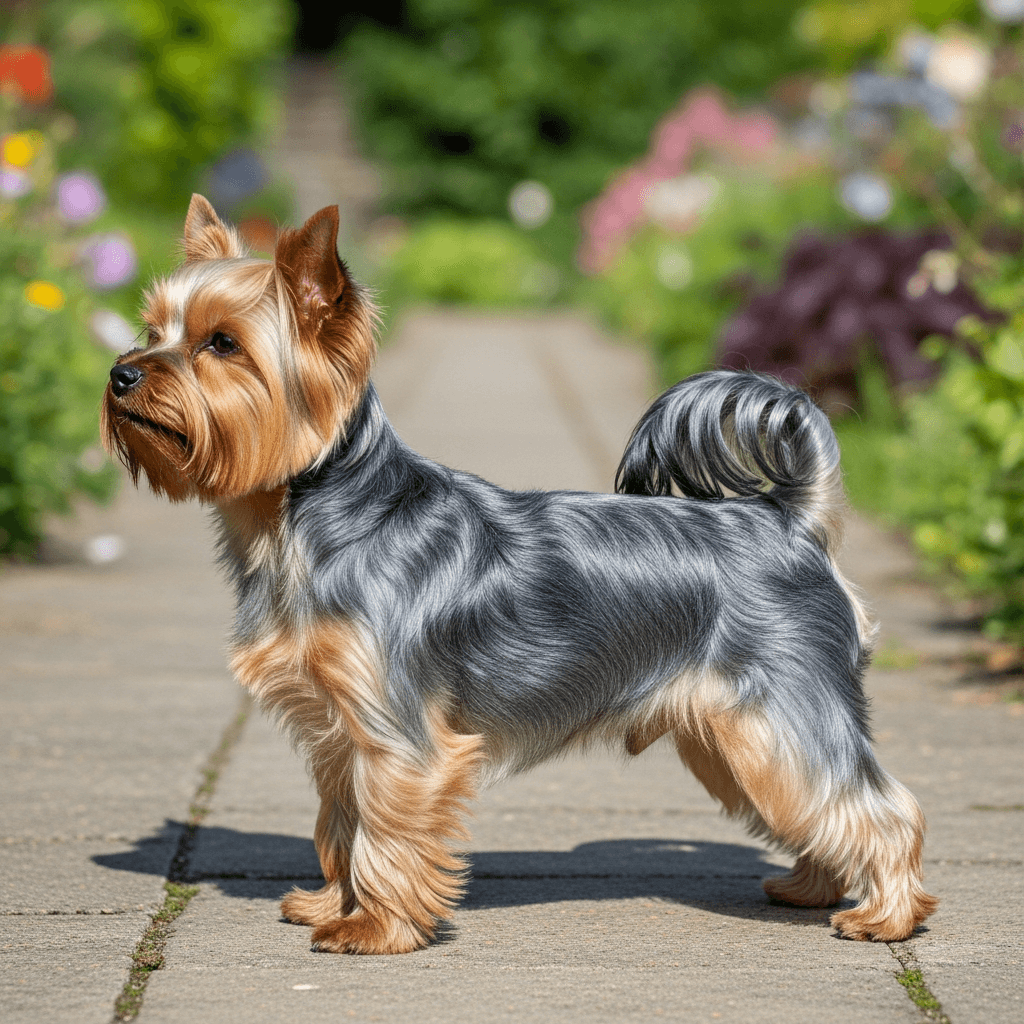
- Yorkshire Terriers – influence on the development of this popular toy breed
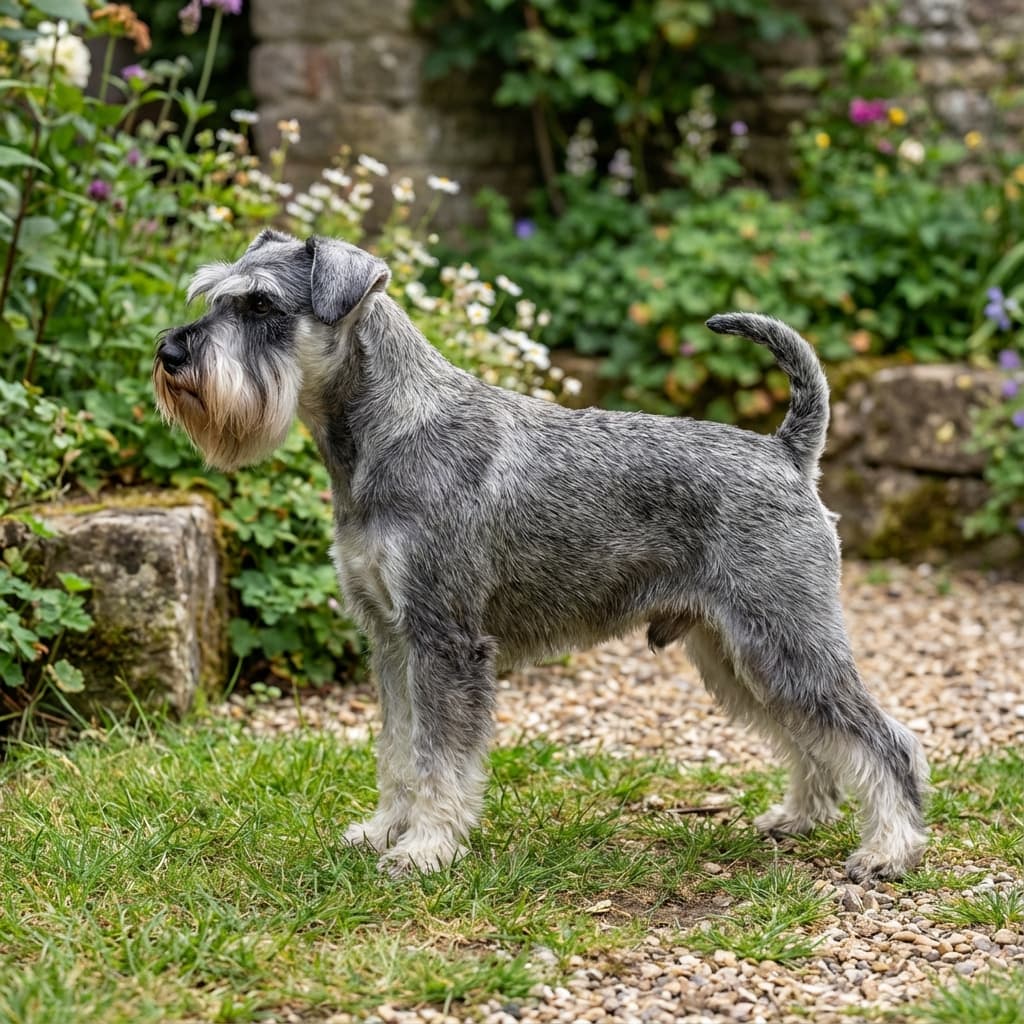
- Other Pinschers – shared roots with Miniature and Standard Pinschers
Modern times:
Today, the Affenpinscher is recognized by all major kennel organizations, including:
- FCI (Fédération Cynologique Internationale) – Group 2 (Pinscher and Schnauzer), Section 1 (Pinscher and Schnauzer Type)
- AKC (American Kennel Club) – Toy Group
- The Kennel Club (UK) – Toy Group
The FCI standard from 2009 defines the modern Affenpinscher as a home and companion dog, emphasizing its historical role and characteristic physical and behavioral traits.
Despite its long history, the Affenpinscher remains a relatively rare breed compared to other popular small dogs. It is a breed for connoisseurs who appreciate its unique appearance, rich history, and distinctive personality.
Cultural heritage:
The Affenpinscher has appeared in numerous works of art, literature, and popular culture. Its distinctive appearance and personality have made it a recognizable symbol of German canine heritage. In 2013, an Affenpinscher named Banana Joe won the title of Best in Show at the prestigious Westminster Kennel Club Dog Show, drawing media attention to this extraordinary breed.
The history of the Affenpinscher is a tale of transformation from a working rodent hunter to a beloved companion, who has won the hearts of owners for centuries with its charming appearance and bold character. It is a living testament to the versatility and adaptability of dogs, which can evolve alongside the needs of human society.