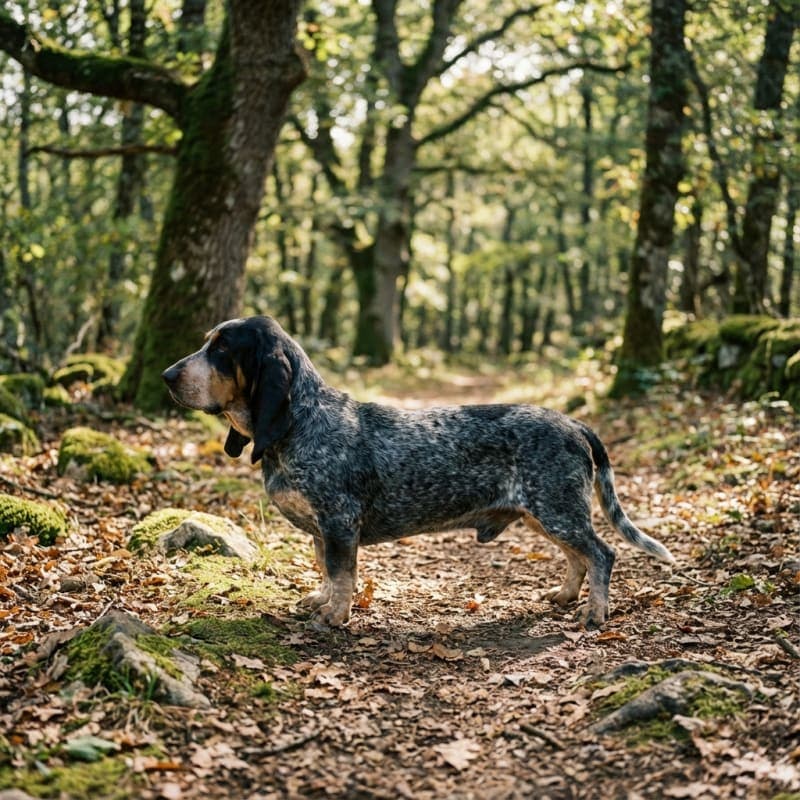
Gascon Basset
FCI Group
6• FCI 35
Size
Medium
Origin Country
FR
Height
34-38 cm
Weight
N/A
Lifespan
10-15 years
Temperament
Overview
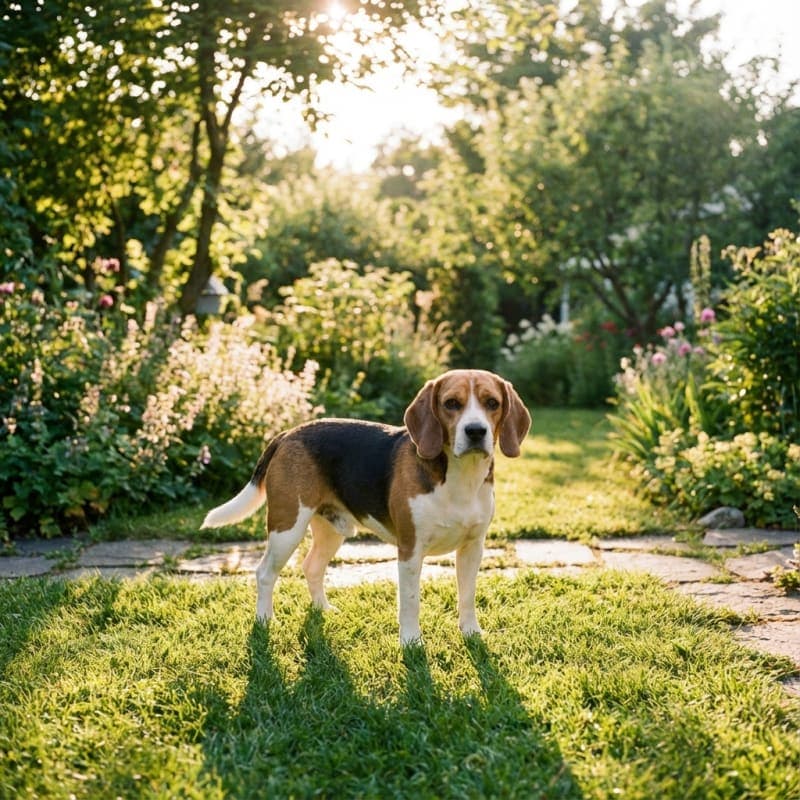
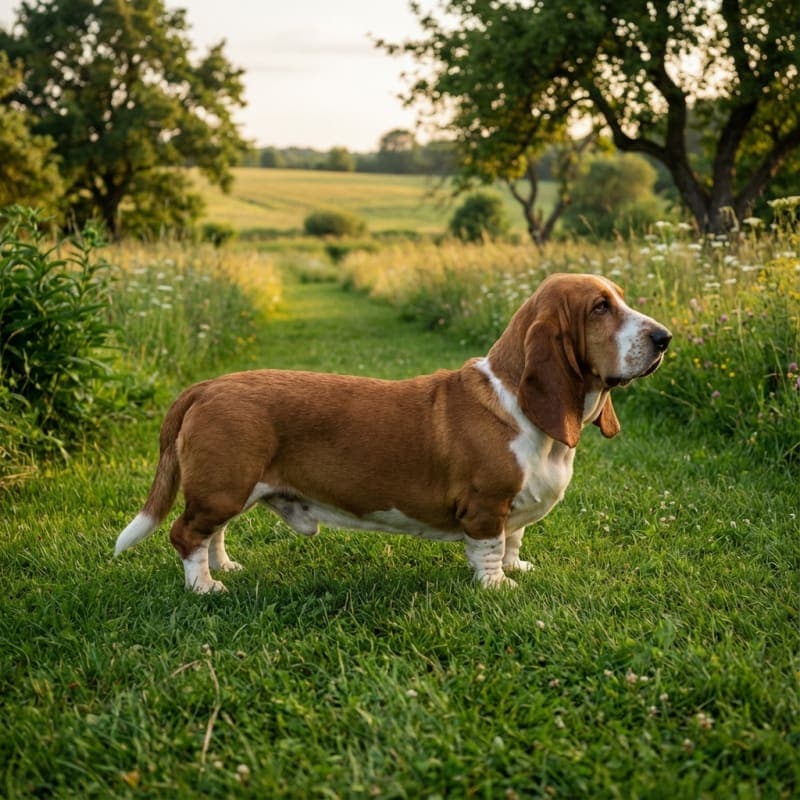
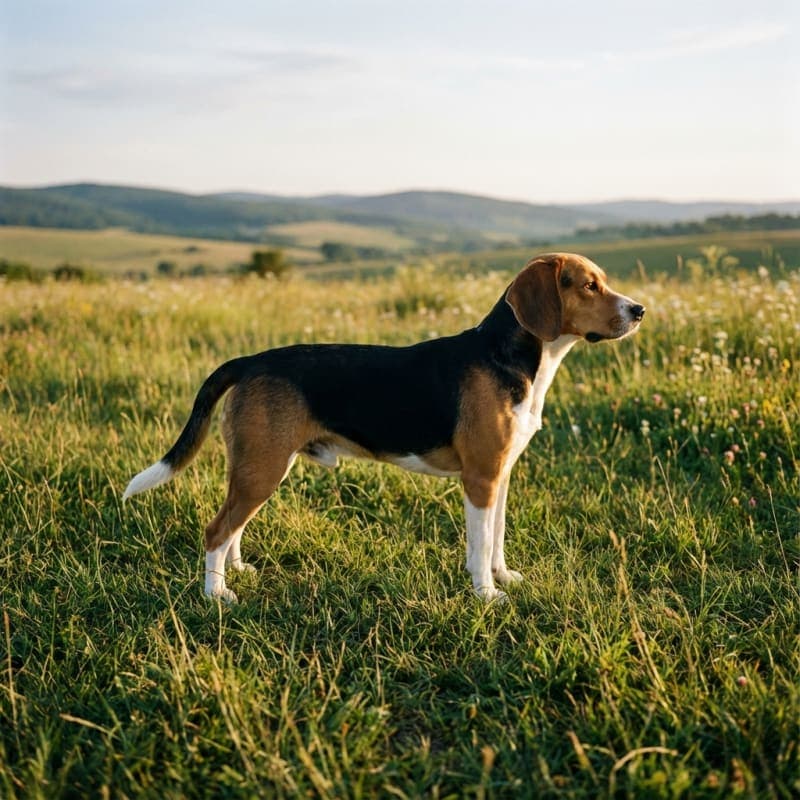
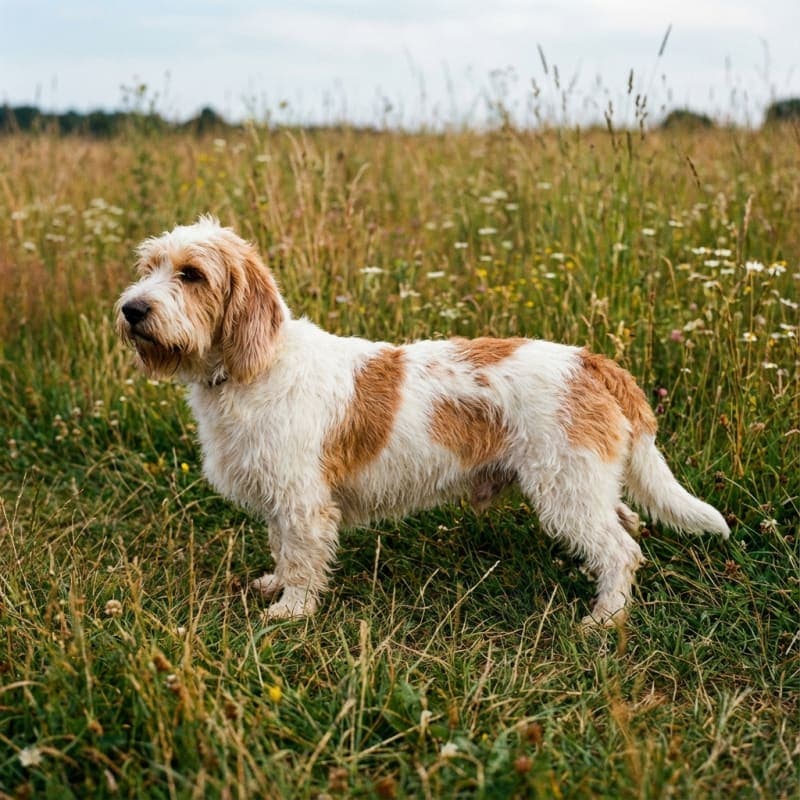
Gascon Basset (Basset Bleu de Gascogne) is a unique breed of hunting dogs originating from southern France, which combines the elegance of an aristocratic dog with excellent hunting abilities. The history of this breed dates back to the late 19th century when hunting enthusiasts from western France undertook the revival of the old Gascon bassets, aiming to preserve their distinctive traits. Thanks to these efforts, a breed was created that continues to amaze with its unique slate blue coat – the result of overlapping black and white spots on a white background, creating a characteristic bluish-gray appearance.
The Gascon Basset is a small-sized dog – its height at the withers ranges from 34 to 38 cm, making it a representative of small hounds according to FCI classification. Despite its compact dimensions, its silhouette is proportional and harmoniously built, combining strength, endurance, and agility. The body proportions are precisely defined: the height-to-length ratio is about 5/8, and the depth of the chest is about 2/3 of the dog's height. This build makes the Gascon Basset both sturdy and not heavy – perfectly adapted for work in the field.
One of the most important features of this breed is its exceptional sense of smell, which makes the Gascon Basset an excellent hunter. The FCI standard describes it as a dog with a "very subtle nose," which uses its senses with remarkable precision. Its temperament is characterized by activity, agility, and liveliness – it is a dog full of energy that loves tracking work. During hunts, it shows intensity and commitment, and its beautiful, resonant voice (described as "beautiful howling voice") allows for effective communication with the hunter and other dogs in the pack.
However, the Gascon Basset is not just a working dog. The FCI standard emphasizes that it is a affectionate and cheerful dog that needs exercise and play. In a home environment, it shows deep attachment to its family and a joyful disposition, making it an excellent companion. Its ability to work in a group is an additional advantage – Gascon Bassets cooperate well with both other dogs and people, making them ideal for families with more than one dog.
Physically, the Gascon Basset stands out with several characteristic features. It has a long, slightly arched neck that smoothly transitions into a wide, well-developed chest providing adequate lung capacity – essential for a hunting dog. Its long, wide ears not only add charm but also serve an important functional role, helping to collect scents from the environment during tracking. Strong, well-built legs enable confident movement across the difficult, mountainous terrain of southern France, where this breed was developed.
In terms of grooming, the Gascon Basset is relatively uncomplicated. Its short, dense coat does not require intensive care – regular brushing once a week is sufficient to remove dead hair and maintain a healthy appearance. However, the long ears require special attention: they should be regularly checked and cleaned to prevent infections, which are a common problem in breeds with drooping ears. Equally important is maintaining oral hygiene through regular tooth brushing or using special dental treats.
In summary, the Gascon Basset is a breed with extraordinary traits and charming appearance, which combines hunting tradition with the qualities of a family dog. We encourage you to further explore information about the health, grooming, training, nutrition, history, appearance, and behavior of this fascinating breed in the following sections of our guide – each aspect shows how versatile and valuable a companion this dog can be.
The appearance of the Gascon Basset is a combination of elegance with a solid, typically basset build. The FCI standard emphasizes that it is "truly a typical basset, indicating the great breed from which it comes; quite solid, but not too heavy." The height at the withers ranges from 34 to 38 cm, placing it in the group of small hounds. Despite its small size, its silhouette is proportional and harmoniously built, giving an impression of both strength and agility.
The head of the Gascon Basset has a characteristic shape:
- Skull: slightly convex when viewed from the front, not too wide; the occipital protuberance is clearly marked; when viewed from above, the back part of the skull has an arched shape (ogival shape)
- Forehead: full, well-developed
- Stop: weakly marked, gentle transition from forehead to nose
- Nose: black, large, with widely open nostrils
- Muzzle: the same length as the skull, strong, with a slightly arched nasal bridge
- Lips: quite drooping, well covering the lower jaw
The eyes are oval and deeply set, dark brown, giving the dog a gentle yet expressive gaze. They may have a slightly sad expression, typical of basset hounds, but also reflect the intelligence and alertness of the breed.
The ears are one of the most characteristic elements of this breed:
- Long and wide, hanging down
- Ending at the level of the nose or slightly below
- Delicate, covered with thin skin
- Set below the line of the eyes
- May slightly curl inward
The coat of the Gascon Basset is short, dense, and semi-dense, making it easy to care for. It covers the entire body with an even layer, protecting the dog from rain and cold during hunts in the humid conditions of southern France.
The coloration is the most important distinguishing feature of the breed:
- Base color: fully mottled in shades of black and white, creating the characteristic "slate blue" effect (bluish-gray)
- Additional markings: light brown (tan/fawn) spots above the eyes, on the cheeks, lips, inner sides of the ears, limbs, and under the tail
- Black spots: may occur on the head, ears, or body
- The name "bleu" (blue) comes from this bluish-gray shade resulting from the overlay of black and white spots
The body structure of the Gascon Basset is precisely defined by the FCI standard:
- Neck: long, slightly arched, without unnecessary loose skin
- Chest: wide and deep (the depth is about 2/3 of the dog's height), well-developed, providing adequate lung capacity – essential for a hound
- Back: wide and strong
- Loin: short and muscular
- Croup: slightly sloping, with well-developed muscles
- Proportions: the ratio of height to body length is about 5/8, giving the dog an elongated, basset silhouette
The limbs are strong and well-built:
- Front: straight or slightly curved (a slight crookedness is accepted), strong bones, well-fitting elbows
- Rear: muscular, with well-defined angles at the joints, providing strength during running
- Paws: oval, compact, with strong pads, adapted for moving over difficult, rocky terrain
The tail is quite long, set high, carried in a sabre-like form (slightly curved). Thicker at the base, it tapers towards the end. When moving, the dog carries it high, which adds to its confidence and elegance.
The overall appearance of the Gascon Basset combines aristocratic elegance with working functionality. It is a dog with a distinctive, unique appearance that immediately attracts attention with its bluish-gray coloration and typically basset silhouette. Despite its small size, it exudes strength, confidence, and readiness to work – all of which make it both an impressive show dog and an effective hunter.
Gascon Saintongeois is a dog with a gentle, friendly, and sociable disposition, combining typical hunting dog traits with excellent family dog qualities. The FCI standard emphasizes that it is a "sensitive and joyful dog" that needs exercise and companionship. Its temperament is characterized by activity, agility, and liveliness, but in a home environment, it can be a calm and balanced companion.
Relationship with family is one of the most important traits of this breed:
- Deep attachment: the Gascon Saintongeois forms strong emotional bonds with the whole family, not choosing a single favorite caregiver
- Affection: loves to be close to its people, eagerly spending time on shared activities
- Joyful disposition: it is a dog full of optimism and positive energy, spreading good humor
- Sociability: does not like to be alone for long periods, needs the presence of family or other dogs
Behavior towards children is generally very positive:
- The activity and agility of the Gascon Saintongeois make it an excellent playmate for older children (over 6-7 years old)
- Its friendly, patient nature makes it an ideal family dog
- It is sturdy enough to play with children without the risk of accidental injury
- However, children should be taught to respect the dog – not to pull its long ears, not to disturb during eating or resting
- Younger children (under 6 years old) should be supervised during interactions with the dog
Hunting instinct is deeply rooted in the character of the Gascon Saintongeois:
- Excellent sense of smell: the FCI standard describes it as having a "very subtle nose" – one of the most important working traits of the breed
- Commitment to work: during tracking, it shows intensity, determination, and focus
- Beautiful voice: a loud, melodic howl ("beautiful howling voice") that it uses to communicate during hunts
- Preferred game: rabbits and hares, although it can also track larger game
- Stubbornness: like most hounds, it can be somewhat stubborn and independent when it picks up a scent – at that moment, the whole world ceases to exist
In practice, this means that the Gascon Saintongeois will sniff intensely during walks, exploring every scent. It may ignore its owner's calls when following an interesting trail, so it is important to keep it on a leash or let it off only in safe, enclosed areas.
Relationships with other dogs are usually very good:
- The Gascon Saintongeois works excellently in a pack – the FCI standard emphasizes that it "works perfectly in a pack"
- It is a sociable dog that readily forms friendships with other dogs
- Well-socialized from puppyhood, it will be friendly towards unfamiliar dogs during walks
- In a home with multiple dogs, it usually finds its place in the hierarchy without conflict
- Its cooperation skills make it a valued member of the dog group
Behavior towards other animals:
- Cats: a strong hunting instinct can cause problems – Gascon Saintongeois were bred to track small animals. Socialization from puppyhood can reduce this behavior, but it will never completely eliminate it. If a Gascon Saintongeois grew up with a cat, it usually accepts it, but a strange cat in the garden may be seen as prey
- Small animals (rabbits, guinea pigs, hamsters): due to its specialization in hunting rabbits, they may be perceived as potential game
- It is best to keep the Gascon Saintongeois away from small pets or introduce them very cautiously under strict supervision
Behavior towards strangers:
- The Gascon Saintongeois is friendly but not intrusive towards strangers
- It usually greets guests with polite reserve or curiosity
- This is not a breed that enthusiastically rushes at every newcomer
- After a moment, when it determines that the situation is safe, it may become more friendly
- It does not show excessive shyness or aggression – it is balanced and confident
Energy level and activity needs:
- The FCI standard describes the Gascon Saintongeois as "active, agile, and lively" – it is not a lazy dog!
- It needs 60-90 minutes of activity daily – walks, play, training
- It loves to explore new places, sniff, and track – walks should be varied and stimulating
- The standard emphasizes: "need to frisk about" – it needs to run freely and play
- A dog that does not get enough exercise and stimulation may exhibit behavioral problems: excessive barking, destructiveness, escaping
Behavior at home:
- After an appropriate amount of exercise, the Gascon Saintongeois is calm and balanced
- It enjoys resting on a comfortable bed but always remains alert to what is happening around
- It may sometimes make characteristic sounds – whines, sighs – expressing satisfaction or asking for attention
- It loves shared rest sessions with the family, often trying to get onto the couch or bed
Stubbornness and independence:
- Like most hounds, the Gascon Saintongeois can be stubborn and independent
- It may have "its own opinion" and does not always want to obey commands immediately
- This is not a breed that listens mindlessly – it likes to understand "why" it should do something
- It requires patient, consistent training based on positive reinforcement
Tendency to bark/howl:
- The Gascon Saintongeois has a beautiful, loud voice that it uses for communication
- It may howl or bark when excited, when it picks up a scent, or when bored or lonely
- This behavior can be controlled through proper training, but completely eliminating whining/howling is difficult – it is a natural form of expression for this breed
- This can be problematic in densely populated neighborhoods or apartment buildings
Separation anxiety:
- The Gascon Saintongeois is a pack dog that does not like being left alone for long periods
- It may develop separation anxiety, manifesting as destruction of objects, excessive barking/howling, attempts to escape
- It works best in homes where someone is around most of the day or where it has the company of other dogs
- Gradual acclimatization to solitude from puppyhood is crucial
Character summary:
The Gascon Saintongeois is a dog full of character, energy, and zest for life. It is loyal, affectionate, sociable, but also stubborn, independent, and equipped with a strong hunting instinct. This is not a breed for everyone – it requires an owner who appreciates its hunting heritage, provides adequate exercise and stimulation, and is patient and consistent in training. For the right person or family, the Gascon Saintongeois will be a faithful, cheerful, and lively companion for many years. Its ability to combine work with play, courage with affection, and independence with attachment makes it a unique breed that deserves the attention of all hound and French breed enthusiasts.
Gascon Hound is a generally healthy and resilient breed that, with proper care, can enjoy good health for many years. The average lifespan is 12-14 years, which is a good result for a dog of this size. However, like any breed, Gascon Hounds can be prone to certain health issues that potential owners should be aware of.
Body Structure-Related Issues:
Due to their long, low body (typical for hounds), this breed may be susceptible to:
- Hip Dysplasia: a malformation of the hip joint, leading to pain, limping, and arthritis. Although it occurs less frequently than in larger breeds, it can affect Gascon Hounds.
- Spinal Problems: a long back and short legs make Gascon Hounds more prone to spinal injuries and intervertebral disc disease (IVDD). A disc herniation can cause pain, neurological issues, and in severe cases – paralysis.
- Arthritis and Joint Problems: particularly in older age, when the cartilage begins to wear down.
How to Minimize Risk:
- Avoid excessive jumping (e.g., from stairs, high furniture).
- Control the dog's weight – obesity further strains the spine and joints.
- Provide regular, moderate physical activity.
- Use steps or ramps if the dog needs to get on the couch or bed.
- Choose puppies from breeders who perform hip joint X-ray examinations.
Ear Problems:
The long, drooping ears of the Gascon Hound are one of the breed's most distinctive features, but they can also be a source of health issues:
- Ear Infections (otitis externa): long ears restrict air circulation, creating a warm, moist environment ideal for bacteria and fungi. This is one of the most common health problems in Gascon Hounds.
- Symptoms: rubbing ears, shaking head, unpleasant odor from ears, discharge, redness.
Prevention:
- Regularly check ears (at least once a week).
- Clean ears with special preparations available from veterinarians or pet stores.
- Dry ears after bathing or walks in the rain.
- Do not insert cotton swabs deep into the ears – it can damage the eardrum.
- Consult a veterinarian at the first signs of infection.
Eye Problems:
- Conjunctivitis: deeply set eyes may be more prone to irritation.
- Ectropion (eyelid turning outward): rare, but can occur in Gascon Hounds.
- Glaucoma: increased intraocular pressure, which can lead to blindness.
Dental Problems:
- Breeds with long jaws may have a tendency to accumulate tartar.
- This can lead to gum disease, cavities, and tooth loss.
- In advanced cases, bacteria from the mouth can enter the bloodstream and damage the heart, liver, and kidneys.
Prevention:
- Regularly brush teeth (ideally daily, at least 2-3 times a week).
- Provide dental chews and treats.
- Regular veterinary check-ups with an oral health assessment.
- Possibly professional dental cleaning under anesthesia (once every few years).
Obesity:
- Gascon Hounds have a strong appetite and can easily gain weight if their diet is not controlled.
- Obesity leads to additional strain on the spine, joints, and heart.
- It shortens lifespan and worsens the dog's quality of life.
Prevention:
- Control food portions according to the recommendations of the food manufacturer or veterinarian.
- Avoid excessive treats.
- Ensure regular physical activity.
- Regularly weigh the dog and monitor its condition.
Other Potential Health Issues:
- Hypothyroidism: underactive thyroid, leading to obesity, lethargy, and skin problems. Requires thyroid hormone supplementation.
- Heart Diseases: rare, but can occur in older age.
- Skin Allergies: can be caused by food, environmental allergens, or parasites.
Veterinary Care – Recommendations:
- Vaccinations: regular vaccinations according to the schedule (puppy, annual boosters).
- Worming: regularly, according to the veterinarian's recommendations (every 3-6 months).
- Flea and Tick Prevention: especially in the spring and summer season.
- Regular Check-ups: at least once a year for a check-up with the veterinarian; in older age (over 7 years) – twice a year.
- Diagnostic Tests: in older age, it is advisable to perform blood, urine, and X-ray tests to detect potential problems early.
Signs that Require Immediate Veterinary Attention:
- Limping, mobility issues, reluctance to move.
- Shaking head, rubbing ears, unpleasant odor from ears.
- Difficulty breathing, coughing, choking.
- Vomiting, diarrhea lasting more than 24 hours.
- Loss of appetite for more than a day.
- Sudden changes in behavior, lethargy, apathy.
- Abdominal swelling, bloating.
- Difficulty urinating or defecating.
Summary:
The Gascon Hound is a generally healthy breed that, with proper care, a balanced diet, regular activity, and routine veterinary visits, can enjoy a long, healthy life. The key to health is prevention – regular ear checks, maintaining oral hygiene, controlling weight, and avoiding excessive strain on the spine. Choosing a puppy from a responsible breeder who conducts health tests on the parents also reduces the risk of genetic health problems. With proper care, the Gascon Hound can be a healthy, active companion for 12-14 years, or even longer.
Grooming a Gascon Basset is relatively uncomplicated due to its short coat, but it requires consistency and attention to several key aspects, especially related to its long ears and specific body structure. With the right grooming routine, the basset will look healthy, tidy, and feel comfortable.
Coat care:
The Gascon Basset's coat is short, dense, and semi-dense, making it easy to maintain. However, it requires regular grooming:
- Brushing: at least once a week, during heavier shedding periods (spring, autumn) – 2-3 times a week
- Type of brush: soft natural bristle brushes or rubber grooming gloves work best, gently massaging the skin and removing dead hair without irritation
- Benefits: regular brushing removes dead hair, distributes natural skin oils, stimulates circulation, minimizes shedding, and allows for early detection of parasites, wounds, or skin changes
- Shedding: Gascon Basset sheds moderately throughout the year, with two heavier shedding periods (spring and autumn). Regular brushing significantly reduces the amount of hair in the home
Bathing:
- Frequency: once every 1-2 months or as needed (e.g., when the dog gets dirty during walks)
- Too frequent baths: can dry out the skin and damage the natural protective barrier of the coat
- Shampoo: use gentle, dog-specific shampoos with a pH suited to dog skin (human shampoos are too acidic for dogs)
- Water temperature: lukewarm, never hot (dogs are sensitive to high temperatures)
- Drying: thoroughly dry with a towel, especially the ears. A hairdryer on the lowest setting can be used if the dog tolerates noise
- After a walk in the rain/mud: simply wipe the paws and belly with a damp towel; there is no need to bathe the entire dog right away
Ear care (KEY ASPECT!):
The long, drooping ears of the Gascon Basset are its trademark, but also the most common source of health problems. They require special attention:
- Checking: at least once a week (better 2-3 times)
- Cleaning: regularly, using special ear cleaning solutions available from veterinarians or pet stores
- How to clean: apply the solution to a gauze pad or cotton ball (NOT cotton swabs!) and gently wipe the visible part of the ear. The solution can also be poured into the ear canal, then gently massage the base of the ear, allowing the dog to shake its head
- Drying: after bathing, walking in the rain, or swimming (if the dog likes water), thoroughly dry the ears to prevent moisture buildup
- Ventilation: occasionally lift the ears to allow air circulation
- Signs of problems: unpleasant odor, discharge, redness, rubbing of ears, shaking head – requires a visit to the veterinarian
Dental care:
- Brushing: ideally daily, at least 2-3 times a week
- Dog toothpaste: never use human toothpaste (contains fluoride which is toxic to dogs). Dog toothpaste comes in meaty flavors that dogs readily accept
- Toothbrush: soft dog toothbrush or finger brush
- Getting used to it: start from puppyhood, gradually introducing the brushing routine. Initially, just touch the teeth and gums with your finger, then introduce the toothbrush
- Alternatives: dental treats, chew toys, collagen chews
- Professional cleaning: every few years, the veterinarian may recommend professional teeth cleaning under anesthesia (especially if tartar builds up)
Nail care:
- Trimming: regularly, when the nails become too long (usually once every 3-4 weeks)
- How to check: if you can hear the nails clicking on the floor while walking, they are too long
- Tools: guillotine or scissor clippers for medium-sized dogs. A nail file/grinder for dogs can also be used
- How to trim: be careful not to cut into the living part of the nail (the "quick"), which contains blood vessels and nerves. In light-colored nails, it appears as a pink part; in dark nails, it is harder to locate, so it’s better to trim small pieces gradually
- If bleeding occurs: use styptic powder or corn starch to stop the bleeding
- Alternative: if the owner does not feel confident, they can have the nails trimmed by a veterinarian or groomer
Paw care:
- Checking: regularly check the paw pads for wounds, cracks, foreign bodies (stones, grass seeds, glass)
- Hygiene between toes: check for dirt, snow (in winter), or sand accumulating between the toes
- In winter: after walking on salted roads, thoroughly wash the paws with lukewarm water to remove aggressive chemicals
- Moisturizing: pads can dry out and crack – special dog balms can be used
Checking skin folds:
- Bassets may have small skin folds, especially around the neck
- These areas should be checked regularly to ensure they are dry and clean
- Moist folds can lead to fungal or bacterial infections
Eye care:
- Regularly check the eyes for discharge, redness, swelling
- If a small amount of discharge appears, it can be gently removed with a damp gauze
- Excessive discharge, redness, or the dog rubbing its eyes requires veterinary consultation
Seasonal care:
- Spring/summer: regular checking for ticks and fleas after walks, using antiparasitic products, being cautious of cut paws from sharp grass or glass
- Autumn: more intensive brushing due to shedding
- Winter: protecting paws from road salt, drying after walks in snow/rain, paying special attention to ears (moisture + cold = risk of infection)
Frequency of treatments – summary:
- Brushing: once a week (2-3 times during shedding periods)
- Checking/cleaning ears: 2-3 times a week
- Brushing teeth: daily or at least 2-3 times a week
- Nail trimming: once every 3-4 weeks
- Bathing: once every 1-2 months or as needed
- Checking eyes, paws, skin: several times a week
Getting used to grooming:
- Start from puppyhood so the dog treats grooming as a normal part of life
- Use positive reinforcement – reward with treats and praise
- Grooming sessions should be short and enjoyable
- If the dog resists, do not force it – it’s better to take breaks and return to the task
Summary:
Grooming a Gascon Basset is not complicated, but it requires consistency and attention to the specific needs of the breed – especially the long ears. With the right grooming routine, which takes about 30-60 minutes a week, the basset will be healthy, clean, and comfortable. Grooming is also an excellent opportunity to build a bond with the dog and to detect potential health problems early. Regular veterinary check-ups complement home grooming, ensuring comprehensive care for the dog.
Gascon Basset is a breed that, despite its small size (34-38 cm), requires regular, moderately intense physical activity to maintain health, good condition, and happiness. The FCI standard emphasizes that this is a "active, agile, and lively" dog that "needs to run freely and play" (need to frisk about). Despite their low stature, Gascon Bassets are working dogs, created for long hours of hunting, which means they have significant energy reserves.
Physical activity requirements:
- Minimum: 60 minutes of activity daily
- Optimal: 90-120 minutes daily, divided into 2-3 sessions
- Type of activity: walks, garden play, scent training, tracking games, swimming (if the dog enjoys water)
- Intensity: moderate – Bassets do not need sprints like greyhounds, but enjoy a steady, even pace that allows for exploration of their surroundings
Walks – a key element of activity:
- Frequency: at least 2-3 times a day
- Duration: 30-45 minutes per walk (longer in the morning and evening, shorter during the day)
- Pace: moderate – Bassets are not sprinters, but rather endurance runners. They enjoy a steady pace that allows for sniffing and exploration
- Variety of routes: very important! Bassets love new scents and stimuli. Walks in different places (forest, meadow, park, city) are mentally stimulating for them
- Sniffing: allow the dog to sniff – it is a natural need for a hound. A walk is not just about movement, but primarily mental stimulation through exploring scents
Important notes regarding walks:
- Leash: due to their strong hunting instinct, Gascon Basset should be kept on a leash in unconfined areas. When they catch a scent, they may ignore calls and run away
- Safe places to let off-leash: fenced dog parks, your own garden with secure fencing (at least 1.5 meters high – Bassets can be surprisingly agile when motivated)
- Leash and sniffing: give the dog time to sniff – do not constantly pull them forward. The leash should be long enough (2-3 meters or flexi) to allow the dog freedom to explore
Additional activities – enriching the dog's life:
- Scent training: hiding treats in the house/garden, searching for toys, scent trails – excellent mental stimulation for a Basset
- Tracking games: mantrailing (tracking people), earthdog trials (simulating hunting in tunnels), nosework – ideal for this breed
- Free running in safe places: allows for "burning off" energy and maintaining natural instincts
- Swimming: if the dog enjoys water, it is an excellent low-impact form of exercise (beneficial for the long bodies of Bassets). Not all Bassets like water – introduce it gradually and without pressure
- Play with other dogs: socialization and running with other dogs is a great way to expend energy
- Interactive games: tug-of-war, searching for hidden toys, dog puzzles
Mental activity – just as important as physical:
Gascon Bassets are intelligent working dogs that need not only movement but also mental stimulation:
- Obedience training – short, varied sessions (5-10 minutes)
- Teaching new tricks and commands
- Puzzles and interactive toys (e.g., Kong with hidden treats, scent mats)
- Scent training – searching for hidden objects
- Exploring new places – new scents are "gymnastics for the brain"
A dog that has mental stimulation is more tired and balanced than a dog that only has monotonous walks.
What happens if a Basset does not get enough exercise?
- Obesity: Bassets have a strong appetite and easily gain weight. Lack of exercise + excess calories = an overweight dog that burdens the joints and spine
- Excessive barking/howling: a bored dog will express its frustration vocally
- Destructiveness: destroying furniture, digging holes in the garden, tearing up cushions
- Behavioral problems: stubbornness, disobedience, running away, aggression
- Separation anxiety: a dog that does not have enough stimulation finds it harder to cope with being alone
- Depression: in extreme cases – apathy, loss of appetite, lethargy
Rules for safely exercising a Gascon Basset:
- Avoid intense jumping: the long, low body makes Bassets prone to spinal injuries. Avoid jumping from stairs, high furniture, agility with high obstacles
- Gradually increase intensity: do not start with 2-hour hikes – build up fitness gradually
- Be cautious in heat: Bassets can overheat on hot days. Walk in the morning and evening, provide access to water, avoid exertion during the hottest hours
- Dog steps: if the Basset is to get on the couch or bed, use steps or a ramp to minimize spinal strain
- Weight control: regularly weigh the dog and adjust feeding + activity to maintain a healthy weight
Activity in different life stages:
- puppy (2-12 months): short, frequent activity sessions (15-20 minutes 3-4 times a day). Avoid intense jumping and running on hard surfaces – bones and joints are still developing. Focus on socialization and play
- Adult dog (1-7 years): full activity – 90-120 minutes daily, various forms of movement and stimulation
- Senior (7+ years): adjust intensity to the dog's capabilities. Older Bassets still need exercise, but in a gentler form. Shorter, more frequent walks, less intense play, more time for rest. Be cautious of arthritis and other age-related issues
Activity and behavior:
Regular movement and stimulation have a huge impact on the behavior of Gascon Bassets:
- Tired dog = calm dog
- Content dog = obedient dog
- Stimulated dog = mentally healthy dog
Many behavioral problems (barking, destructiveness, stubbornness) can be solved or significantly reduced by providing an adequate amount of exercise and mental stimulation.
Summary:
The Gascon Basset is an active, energetic working dog that needs regular physical and mental activity to be happy and healthy. This is not a dog for people who prefer a sedentary lifestyle. It requires an engaged owner who will provide at least 60-90 minutes of activity daily in the form of walks, play, scent training, and exploration. With the right amount of exercise, the Gascon Basset is a calm, balanced companion at home, ready for shared relaxation sessions after a day full of adventures. Investing time in the dog's activity is an investment in its health, happiness, and good relationship with the owner.
Training the Gascon Basset is a fascinating yet patience-demanding task. This breed combines intelligence, independence, and a strong hunting instinct, which means training requires thoughtful strategy, consistency, and a positive approach. The Gascon Basset is not an automatically obedient dog – it was bred to make decisions independently during hunts, which translates into a certain degree of stubbornness in everyday life.
Basic principles of effective training:
- Start early: training should begin as soon as the puppy crosses the threshold of the home (usually 8-10 weeks). The earlier we start, the easier it is to shape desired behaviors.
- Positive reinforcement: Gascon Bassets respond well to rewards (treats, praise, toys). Using physical punishment or yelling is ineffective and can lead to a loss of trust.
- Short, varied sessions: Bassets have a moderate attention span. Training sessions should last 5-10 minutes, several times a day. Variety in exercises keeps the dog engaged.
- Consistency: all family members must use the same rules and commands. Inconsistency confuses the dog and hinders learning.
- Patience: Bassets learn more slowly than some breeds (e.g., Border Collies), but that doesn’t mean they are dumb – they simply need more time and repetitions.
Basic commands – the foundation of training:
Every Gascon Basset should know a few basic commands that ensure safety and facilitate daily life:
- Sit: the easiest command to teach. Useful before eating, going for a walk, and during encounters with other people.
- Stay: the dog remains in place until released. Important for safety (e.g., before crossing the street).
- Down: calms the dog, useful in situations where the dog is excited.
- Come: THE MOST IMPORTANT command for the Gascon Basset due to its strong hunting instinct. Requires intensive training and high-value rewards.
- Leave it: protects the dog from eating something dangerous, chasing a cat, or picking up trash.
- Heel: the dog walks close to the owner, not pulling on the leash.
Recall training – a particular challenge:
Gascon Bassets have a strong hunting instinct – when they catch a scent, the whole world ceases to exist. Therefore, recall training is crucial but also the most difficult:
- Start in distraction-free areas: home, garden.
- Use the best rewards: pieces of chicken, cheese, liver – something the dog doesn’t get every day.
- Gradually increase difficulty: add distractions (other dogs, scents, stimuli).
- Never punish a dog that has returned: even if it returned after 10 minutes of chasing a rabbit – always reward the return. Punishment makes the dog avoid coming back.
- Use a long training leash (10-15 meters): in open areas to maintain control when the dog ignores the recall.
- Be realistic: a Gascon Basset will never be as reliable in recall as a Labrador. There is always a risk that it will ignore the call when it catches a scent.
Socialization – just as important as training:
Socialization is the process of exposing the puppy to various people, dogs, places, sounds, and experiences. The critical socialization period is 3-16 weeks of life:
- Meetings with different people: children, adults, seniors, people in hats, glasses, uniforms.
- Contact with other dogs: puppies, adult dogs, various breeds and sizes.
- Diverse places: park, city, forest, pet store, veterinary clinic.
- Sounds: traffic, thunder (recordings), vacuum cleaner, doorbell.
- Objects: umbrella, stroller, bicycle, car.
A well-socialized Gascon Basset is confident, friendly, and balanced in various situations.
House training:
- Regular schedule: take the puppy outside every 1-2 hours, after eating, after naps, after playtime.
- Designated spot: always the same spot for urination – the dog associates the scent with the action.
- Reward success: when the dog does its business outside, immediately reward (treat + praise).
- Do not punish for accidents: punishments are ineffective and can lead to hiding when urinating. Just clean up without emotion.
- Watch for signals: sniffing, circling, going to the door – signs that the dog needs to go out.
- Patience: full house training can take 4-6 months.
Leash training – teaching not to pull:
- Gascon Bassets love to sniff, which often leads to pulling on the leash.
- Method: stop when the dog pulls. Move only when the leash is loose. Reward walking next to the leg.
- Alternative: allow the dog to sniff during most of the walk (flexi leash), but have designated sections where the dog must walk "at heel."
- Harness instead of collar: reduces the risk of neck injuries when the dog pulls.
Dealing with stubbornness:
Gascon Bassets are known for their stubbornness and independence – this is not a breed that mindlessly obeys every command. How to deal with this?
- Motivation: find what truly motivates the dog (favorite treat, toy, praise) and use it as a reward.
- Make training interesting: monotonous training bores the dog. Introduce variety, games, challenges.
- Don’t fight for dominance: dominance-based methods are outdated and ineffective. Instead, build a relationship based on trust and cooperation.
- Choose your battles: not everything is worth fighting over. If the dog absolutely refuses to obey a command, it’s better to change tactics than to insist.
- Be consistent but flexible: consistency in rules, but flexibility in the approach to training.
Behavioral problems – how to address them:
- Excessive barking/howling: train the "quiet" command, reward silence, identify causes (boredom, anxiety, alarm) and address them. Don’t yell at the dog – it only reinforces barking.
- Destructiveness: provide adequate exercise and mental stimulation, leave Kong toys filled with treats, gradually acclimate to being left alone.
- Running away/ignoring recall: intensive recall training, use a long leash, never let off-leash in unfenced areas.
- Aggression towards other dogs: early socialization, controlled, positive meetings with other dogs, consult a behaviorist if the problem escalates.
- Separation anxiety: gradually acclimate to solitude from puppyhood, don’t make a big ceremony out of departures and arrivals, leave toys and treats.
Advanced training and dog sports:
Gascon Bassets can participate in various activities:
- Mantrailing: tracking people – ideal for a Basset with its excellent sense of smell.
- Nosework: searching for hidden scents – great mental stimulation.
- Earthdog trials: simulating hunting in tunnels (in the USA).
- Obedience: possible, though it requires a lot of patience.
- Rally obedience: less formal than traditional obedience, more like a game.
When to seek professional help:
- Serious behavioral problems (aggression, anxieties, phobias).
- Lack of progress in basic training despite consistent efforts.
- Desire for advanced training (sports obedience, therapy).
A professional trainer or behaviorist can help identify issues and develop an action plan.
Summary:
Training a Gascon Basset is a marathon, not a sprint. It requires patience, consistency, a positive approach, and acceptance that this breed will never be automatically obedient. But with the right approach, a Basset can learn basic commands, good manners, and become a balanced, well-mannered companion. The key is to understand the nature of this breed – it is a working dog, independent, with a strong instinct – and to adapt training methods to its character. Investing time in training and socialization pays off in the form of a happy, confident dog that is a joy to its family.
Proper nutrition is the foundation of health, good condition, and longevity for the Gascon Basset. This breed has a strong appetite and a tendency to obesity, so owners must be particularly attentive to the quality of food, portion sizes, and the balance between energy intake and expenditure.
Basic nutrition guidelines:
- High-quality food: choose premium or super-premium foods that contain high-quality animal protein as the first ingredient (chicken, turkey, lamb, fish). Avoid foods with a high amount of fillers (corn, wheat, soy).
- Age-appropriate food: puppies need puppy food (higher protein and calorie content), adult dogs – adult food, seniors (7+ years) – senior food (fewer calories, joint support).
- Activity level adjustment: active hunting dogs need more calories than low-activity house dogs.
- Portion control: strictly follow the manufacturer's recommendations or those of the veterinarian. Measure portions with a scoop, not "by eye."
- Regular meals: adult dogs – 2 meals a day (morning and evening), puppies – 3-4 meals a day.
Nutrients – what is important for the Gascon Basset:
- Protein (min. 22-26% in adult dog food): builds and regenerates muscles, supports the immune system. Sources: chicken, turkey, lamb, fish, beef.
- Fats (min. 12-16%): source of energy, supports healthy skin and coat. Omega-3 and omega-6 fatty acids (from fish oil, flaxseed) are particularly beneficial.
- Carbohydrates: source of energy. Best sources: sweet potatoes, brown rice, oats, vegetables. Avoid excess corn and wheat (can cause allergies).
- Fiber: supports digestion, prevents constipation. Sources: vegetables, fruits, flaxseeds.
- Vitamins and minerals: support for the immune system, healthy bones, teeth. Good food should contain a full profile of vitamins (A, D, E, K, B group) and minerals (calcium, phosphorus, potassium, magnesium).
- Glucosamine and chondroitin: support joint health – particularly important for Basset Hounds due to their long bodies and risk of spine problems. Many premium foods contain these ingredients.
Dry food vs. wet food vs. BARF diet:
- Dry food (kibble): convenient, cheaper, stores longer, helps clean teeth (chewing kibble mechanically removes plaque). Good for most Basset Hounds.
- Wet food (canned): higher water content, tastier for picky dogs. More expensive, shorter shelf life after opening. Can be mixed with dry food.
- BARF diet (Biologically Appropriate Raw Food): raw meat, bones, vegetables. Requires knowledge and planning to be balanced. Risk of bacterial infections (Salmonella, E. coli). Consult a veterinarian before introducing.
- Homemade food (cooked): possible, but requires careful balancing of nutrients. Consult a veterinarian or dog nutrition specialist.
How much to feed? Portion size:
The manufacturer's recommendations are a starting point, but should be adjusted to the individual needs of the dog:
- Puppies (2-12 months): 3-4% of body weight daily, divided into 3-4 meals. Puppies grow quickly and need more energy.
- Adult dogs (1-7 years): 2-3% of body weight daily, divided into 2 meals. Active dogs may need more, less active – less.
- Seniors (7+ years): often fewer calories (metabolism slows), but more joint and health-supporting ingredients.
- Weight monitoring: regularly weigh the dog and adjust portions. The dog should have a visible waist (seen from above), and ribs should be felt under a thin layer of fat.
Obesity – the most common nutritional problem:
Gascon Basset Hounds have a strong appetite and a tendency to obesity. Overweight leads to:
- Additional strain on the spine and joints → risk of dysplasia, disc herniation.
- Heart and breathing problems.
- Diabetes.
- Shortened lifespan.
How to prevent obesity:
- Control portions – measure food.
- Limit treats – no more than 10% of daily calorie intake.
- Use low-calorie treats (carrots, green beans, seedless apples).
- Ensure regular physical activity (60-90 minutes daily).
- Do not feed from the table – human food is too calorie-dense and often unhealthy for dogs.
- Regularly weigh the dog and adjust feeding.
Treats – how to use wisely:
- Treats are great for training but can lead to obesity.
- Choose healthy options: pieces of chicken, liver, carrots, apples, specialized training treats (small, low-calorie).
- Count calories from treats against the daily food portion.
- Avoid treats with high sugar, salt, and artificial additives.
Water – often overlooked element:
- The dog should have constant access to fresh water.
- Change the water at least once a day.
- Clean the bowl regularly to prevent bacteria buildup.
- The dog should drink about 50-60 ml of water per kg of body weight daily (e.g., a 15 kg Basset = about 750-900 ml daily).
- If the dog drinks significantly more or less – consult a veterinarian (it may be a symptom of illness).
PROHIBITED foods for dogs:
- Chocolate: contains theobromine, toxic to dogs.
- Onions and garlic: destroy red blood cells.
- Grapes and raisins: cause kidney failure.
- Avocado: contains persin, toxic to dogs.
- Xylitol (artificial sweetener): causes a rapid drop in sugar, liver failure.
- Cooked bones: can splinter into sharp pieces and damage the digestive tract.
- Alcohol, coffee, tea: toxic to dogs.
- Dairy products in large amounts: many dogs are lactose intolerant.
Food allergies:
- Some Basset Hounds may develop food allergies (most commonly to beef, chicken, wheat, soy, dairy).
- Symptoms: skin itching, hair loss, digestive problems, ear inflammation.
- Diagnosis: elimination diet (exclusion of potential allergens) or allergy tests.
- Treatment: hypoallergenic food (lamb, fish, potatoes) or homemade diet under veterinary supervision.
Nutrition in different life stages:
- Puppies: puppy food (higher protein, fat, calcium content for bone growth), 3-4 meals a day.
- Adult dogs: adult dog food, 2 meals a day, adjusted to activity level.
- Older dogs (7+ years): senior food (fewer calories, more joint support, more easily digestible protein), 2 meals a day.
- Pregnant/nursing females: puppy food or special food for pregnant females (higher energy requirements).
Supplements – when they are needed:
- Good premium food should provide all necessary nutrients.
- Supplements may be useful in specific situations:
- Glucosamine/chondroitin: for older dogs or those with joint problems.
- Omega-3: for healthy skin and coat, heart support.
- Probiotics: for gut health, after antibiotic therapy.
- Vitamins/minerals: if the homemade diet is not fully balanced.
- ALWAYS consult a veterinarian before giving supplements – excess of certain vitamins/minerals can be harmful.
Feeding schedule – a sample day for an adult Basset:
- 7:00 – First meal (50% of daily portion).
- 7:30 – Walk (minimum 30 minutes after eating to avoid stomach torsion).
- 10:00-16:00 – Training treats in small amounts.
- 18:00 – Second meal (50% of daily portion).
- 18:30 – Walk.
- Water available at all times.
Summary:
Proper nutrition for the Gascon Basset is the key to a long, healthy life. It requires choosing high-quality food, controlling portions, limiting treats, and regularly monitoring weight. Due to their tendency to obesity, owners must be particularly careful and disciplined regarding nutrition. With the right diet, tailored to age, activity, and individual needs, the Gascon Basset can enjoy good condition, a shiny coat, and energy for many years. Investing in healthy food is an investment in the dog's quality of life and reducing the risk of costly health problems in the future.
Characteristic Traits
Pros
- Excellent sense of smell and hunting abilities
- Friendly and affectionate nature
- Works well in a pack
- Joyful and active disposition
- Moderate grooming needs
- Good family dog
- Resilient and agile.
Cons
- Strong hunting instinct
- may follow a trail
- can be stubborn and independent in training
- requires regular physical activity (60-90 minutes daily)
- long ears need frequent cleaning
- prone to obesity
- requires diet control
- may howl or bark loudly
- not suitable for residents without access to a garden.
Behavioral Ratings
Breed History
Gascon Basset (Basset Bleu de Gascogne) is a breed with a rich and fascinating history that reaches deep into the hunting traditions of southern France. Although the official recognition of the breed occurred relatively recently (FCI standard no. 35 approved in 2023, published on 01.08.2023), the roots of the Gascon Basset go much further back in time, connecting with the history of great hounds from the region of Gascony (Gascogne) – one of the most traditional hunting areas in France.
Origin and Early History:
The Gascon Basset descends from the Grand Bleu de Gascogne – one of the oldest and most noble breeds of hounds in France. The Grand Bleu de Gascogne was a dog of the aristocracy, valued for its excellent sense of smell, endurance, and beautiful voice during hunts for deer, wild boar, and wolves. Its history dates back to the Middle Ages, and possibly even to Roman times.
As the centuries passed, hunters from the Gascony region (southwestern France, encompassing today's departments of Gers, Landes, Lot-et-Garonne) began to breed smaller versions of the Grand Bleu – dogs with shorter legs, better suited for hunting smaller game (rabbits, hares) and moving through dense underbrush. These "small hounds" (basset hounds) retained all the advantages of their larger relatives – excellent scenting ability, endurance, beautiful voice – but were more versatile and easier to maintain.
Decline and Revival of the Breed (19th Century):
By the end of the 19th century, the Gascon Basset was on the brink of extinction. Social changes, industrialization, the decline of the aristocracy after the French Revolution, and the reduction of traditional hunting led to the disappearance of many local hunting dog breeds. The FCI standard emphasizes that the breed "was revived in the late 19th century thanks to the initiative of hunters from the west" (western France). These enthusiasts, valuing the tradition and quality of old hound breeds, undertook a revival program for the Gascon Basset.
Their goal was not only to restore the breed but also to:
- Improve morphological traits: standardization of appearance, elimination of structural defects
- Preserve the characteristics of the southern dog (Midi): excellent scent, beautiful voice, endurance, temperament
Thanks to these efforts, the Gascon Basset survived and began to develop, retaining its unique traits and heritage.
Evolution of the Breed in the 20th Century:
Since its revival in the late 19th century, the Gascon Basset has systematically evolved – both in terms of morphology (improvements in structure, coat color, proportions) and the preservation of working traits (scent, hunting instinct, voice). The FCI standard emphasizes that "the evolution was constant both in terms of necessary morphological improvements and the preservation of southern dog traits."
In the 20th century, the Gascon Basset began to gain recognition not only as a working dog but also as a family dog and companion. Its friendly temperament, gentle disposition, cheerful character, and charming appearance made the breed increasingly popular beyond hunting circles.
Official Recognition and Modern Times:
- FCI (Fédération Cynologique Internationale): the Gascon Basset was officially recognized as a separate breed under standard number FCI no. 35
- Current standard: publication date 01.08.2023, effective from 01.09.2023
- FCI Classification: Group 6 (Hounds and Related Breeds), Section 1.3 (Small Hounds), with a working trial
- Country of origin: France
Breed Name – Basset Bleu de Gascogne:
- Basset: from the French "bas" = low, referring to the dog's low, long silhouette
- Bleu: from the French "blue," referring to the characteristic bluish-gray (slate blue) coat resulting from the overlay of black and white spots
- de Gascogne: from the region of Gascony (Gascogne) in southwestern France, where the breed originates
Use of the Breed – Today and in the Past:
The FCI standard specifies that the Gascon Basset is:
- "A hound used for hunting with a shotgun" – that is, modern hunting, where the dog tracks and flushes game for the hunter with a shotgun
- "Sometimes for drives" – that is, hunting where the dog chases game towards the hunter
- "Both alone and in a pack" – can work individually or in a group of dogs
- Preferred game: "rabbit and hare" – specializing in small game, although it can also track larger game (foxes, deer)
Today, the Gascon Basset is used both as a working dog (hunting in southern France, Spain) and as a family dog and companion, valued for its character and appearance.
Gascon Basset vs. Other French Bassets:
France has a rich tradition of breeding bassets – breeds with a low, long silhouette, created for hunting in dense underbrush. The Gascon Basset is one of several French basset breeds:
- Basset Artésien Normand: originates from northern France (Artois and Normandy), more compact
- Basset Fauve de Bretagne: from Brittany, rough, reddish coat
- Basset Bleu de Gascogne: from Gascony, bluish-gray coat, excellent scent
- Grand Basset Griffon Vendéen: from the Vendée region, longer, rough coat
Each of these breeds has its unique traits, but they all share a common characteristic – a low, elongated silhouette and excellent hunting abilities.
Gascon Basset in Culture and Society:
Although the Gascon Basset is not as widely known as some other breeds (e.g., Beagle or Labrador), it holds a strong position in French hunting culture. It is a symbol of tradition, nobility, and the quality of old French hounds. In the Gascony region, it is valued as part of the local cultural heritage.
Gascon Basset Outside France:
- The breed is relatively rare outside France, although it has a following in several European countries (Spain, Italy, Germany, the United Kingdom)
- In Poland and other Central and Eastern European countries, it is a very rare breed
- In the USA and Canada, it is almost absent
- The largest population is in France, where the breed is still used for hunting
Modern Breeding and Breed Protection:
- In France, there are breed clubs that ensure the preservation of the standard, organize exhibitions, working trials, and support breeders
- Breeders carefully select pairs, conduct health tests (hip joint X-rays), and focus on temperament and working traits
- The breed is covered by a pedigree registration system (LOF in France – Livre des Origines Français)
- Working trials are part of the breeding system – dogs must prove their hunting abilities to obtain full breeding titles
Why has the Gascon Basset Survived?
Despite the threat of extinction at the end of the 19th century, the Gascon Basset has survived and developed thanks to:
- The determination of hunters: people who valued the tradition and quality of old breeds
- Versatility: a dog that is both a working dog and a family pet
- Character: friendly, affectionate, cheerful – traits that make people love this breed
- Unique appearance: bluish-gray coat, long ears, typically basset silhouette – recognizable and charming
- Excellent working traits: scent, endurance, voice – still valued by hunters
Summary of History:
The Gascon Basset is a breed with deep roots in the hunting tradition of southern France, which survived the threat of extinction thanks to the passion and determination of hunters from the late 19th century. From its revival to today, it has evolved systematically, retaining its unique morphological and working traits. Today, it is a living testament to the rich history of French hounds, combining tradition with modernity, work with companionship, nobility with friendliness. Although relatively rare outside France, the Gascon Basset has devoted admirers worldwide who appreciate its unique character, charming appearance, and rich cultural heritage.