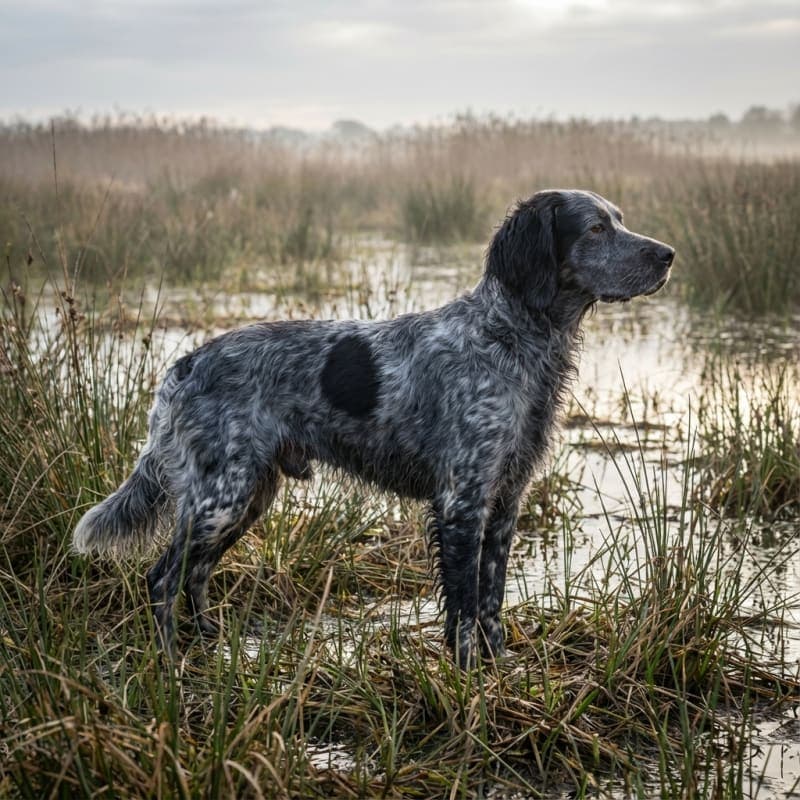
Epagneul bleu de Picardie - Picardy Blue Spaniel
FCI Group
7• FCI 106
Size
Medium
Origin Country
FR
Height
55-60 cm
Weight
20-25 kg
Lifespan
12-14 years
Temperament
Overview
The Epagneul Bleu de Picardie, also known as the Blue Picardy Spaniel, is a dog of impressive beauty and a unique history, with roots tracing back to 19th-century Picardy in France. This breed, regarded as one of the oldest continental spaniel breeds, was created as a versatile hunting dog specializing in hunting snipe, tracking wounded game, and retrieving. It combines elegance, endurance, and functionality, making it an excellent companion for both hunters and active families.
This is a dog of medium proportions with a harmonious body structure, allowing it to work effectively in varied terrain – from forests to marshes to cultivated fields. Its distinctive coat evokes admiration and interest: the bluish-gray speckled fur with black spots creates a unique, elegant appearance that immediately catches the eye during walks.
This breed is known for its exceptional intelligence, eagerness to learn, and willingness to cooperate with its handler, making it relatively easy to train even for less experienced owners. The Epagneul Bleu de Picardie is a very sociable dog that loves contact with people and can form a deep emotional bond with its owner. Its gentle, balanced temperament makes it an excellent fit for families with children, becoming a patient and affectionate playmate.
Despite its high energy and need for intense physical activity, after work or training, it can be surprisingly calm and relaxed at home. Modern specimens of this breed still participate in hunting waterfowl, snipe, quail, and hares, where their skills in tracking, flushing, and retrieving are invaluable to hunters.
Despite its outstanding qualities, the breed remains relatively unknown outside of France, although it is gradually gaining recognition among international hunting dog and spaniel enthusiasts. The Epagneul Bleu de Picardie is a dog that excels both as a specialized hunter and as a loving family companion, engaging in the lives of its household members and always ready for shared outdoor adventures.
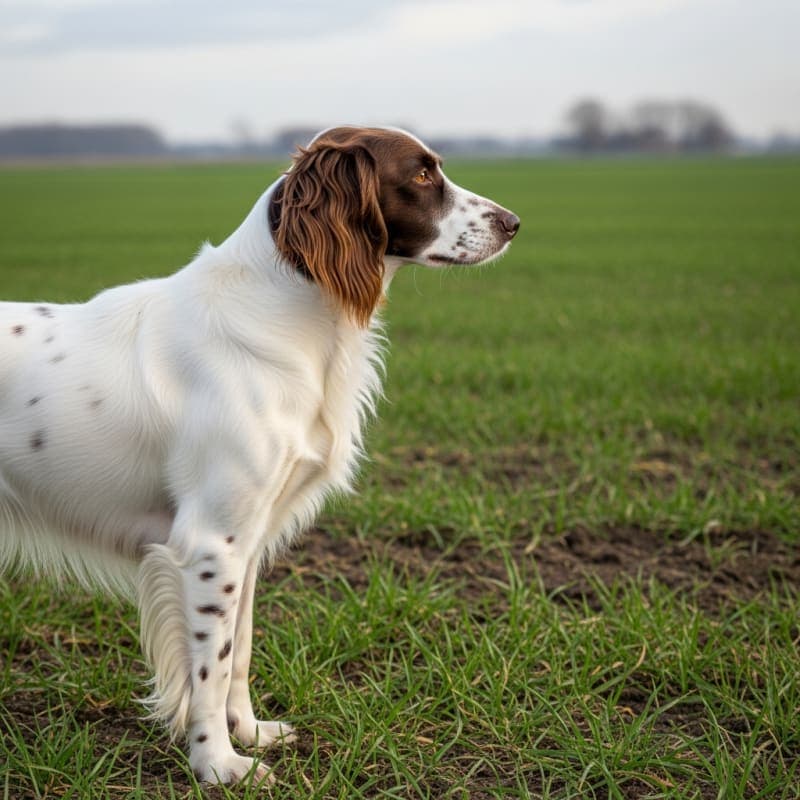
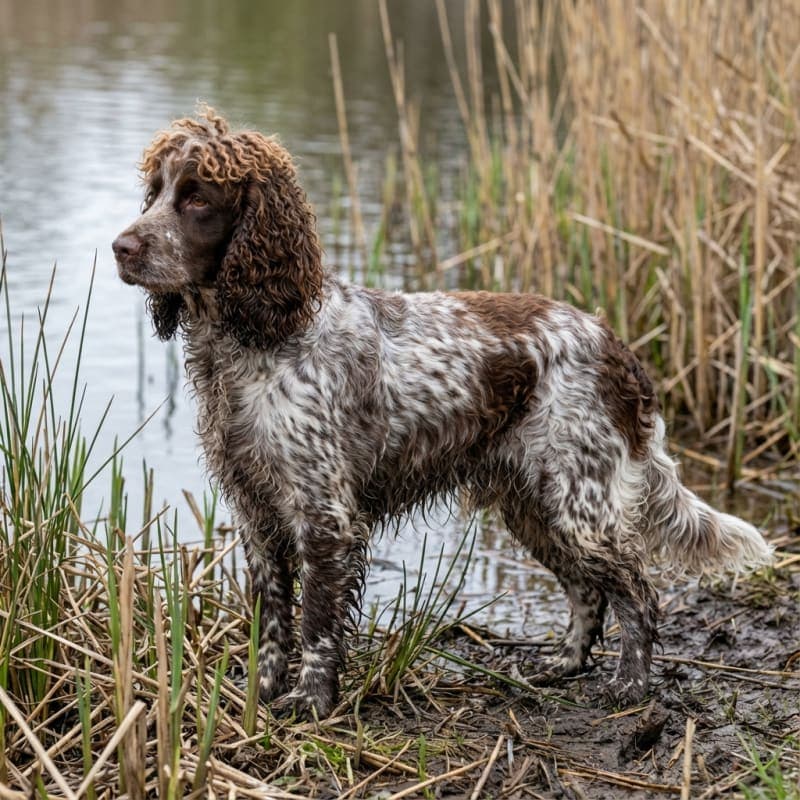
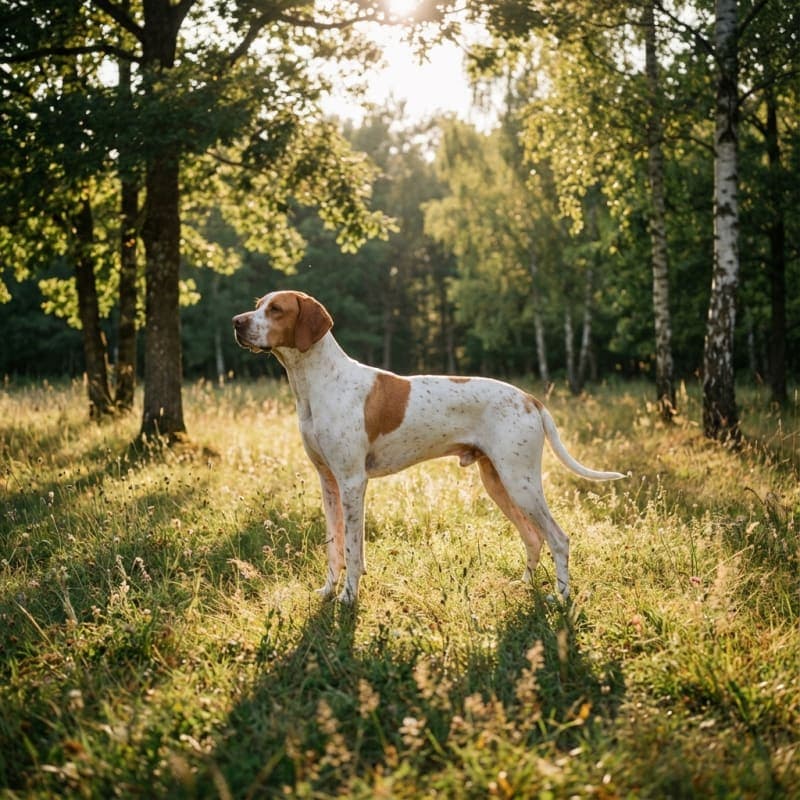
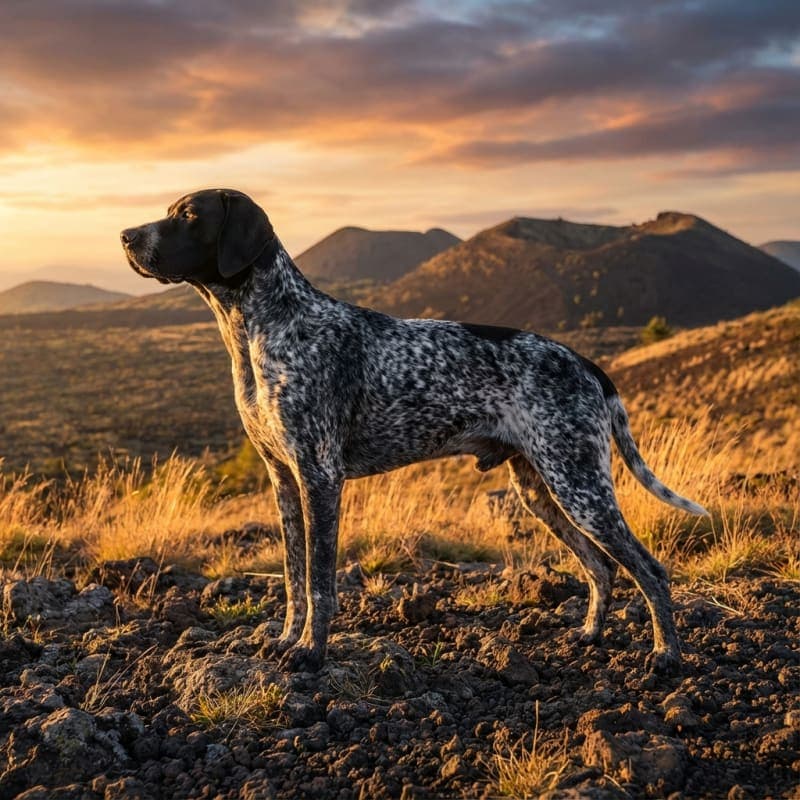
The Epagneul Bleu de Picardie is a dog of medium proportions with a harmonious, attractive body structure, presenting itself with grace and elegance typical of continental spaniels. The height at the withers ranges from 57 to 60 cm for males and from 55 to 58 cm for females. The weight oscillates between 20 and 25 kg depending on gender and physical condition. The silhouette is well-built, strong, and balanced, ideal for prolonged work in difficult terrain.
The head is oval with a moderately pronounced stop, giving the breed a distinctive, noble appearance. The skull is slightly convex, and the muzzle is sufficiently long and wide, corresponding to the proportions of the skull. The eyes are large, dark brown, and gentle, expressing intelligence and a friendly disposition. The gaze of the Epagneul Bleu de Picardie is open and trusting, reflecting its sociable nature.
The ears are long, thick, well-dropped, and lying close to the head, covered with long, wavy hair that forms decorative feathers. They are set at the height of the eye line or slightly below, giving the spaniel a characteristic appearance. Their length and shape contribute to the overall impression of elegance.
The body is strong and muscular, with a well-developed chest of medium depth, reaching to the level of the elbows. The back is straight and strong, the loins are short and muscular, and the croup is slightly sloped. The body proportions are close to square, although it may be slightly elongated.
The coat is the most characteristic feature of the breed. The fur is flat or slightly wavy, thin, and well-adhering to the body, never silky or fluffy. It forms elegant, long feathers on the ears, tail, and the back of the limbs. The color is blue roan with black patches of varying sizes, irregularly distributed over the entire body. Sometimes, there may be small tan markings above the eyes, on the muzzle, on the limbs, and under the tail.
The limbs are strong, well-angled, and parallel, providing free, efficient movement necessary for work in the field. The paws are round, compact, with thick pads and curved claws. The tail is set slightly below the line of the back, carried horizontally or slightly downwards, never curled over the back. It is covered with decorative hair forming a plume.
The overall silhouette presents itself harmoniously and elegantly, combining the functionality of a working dog with an attractive, breed-specific appearance that delights both hunters and lovers of beautiful dogs. When in motion, the Epagneul Bleu de Picardie moves freely, flexibly, and gracefully, demonstrating excellent physical condition and anatomical structure.
The Epagneul Bleu de Picardie is a dog with a remarkably gentle, balanced, and sociable temperament. This breed is characterized by a high level of friendliness and a strong need for interaction with people, making it an excellent companion for families with children of all ages. This dog displays extraordinary patience and gentleness in interactions with the youngest family members, becoming a loving and protective friend to them.
It is deeply loyal and attached to its owners, often seeking their closeness and companionship. The Epagneul Bleu de Picardie is not an independent dog – on the contrary, it needs regular emotional contact and does not feel well when overlooked or isolated from family life. While it can tolerate short periods of solitude, prolonged stays alone at home can lead to boredom, frustration, and potential behavioral problems.
Due to its high intelligence and willingness to cooperate, these dogs are relatively easy to train even for less experienced owners. They quickly learn new commands, tricks, and tasks, responding very positively to positive reinforcement methods. However, it is important to remember that they have a strongly developed hunting instinct, which can lead to following scents or running off in search of interesting smells. For this reason, it is crucial to provide them with a suitable, safe environment during walks and solid recall training.
The Epagneul Bleu de Picardie does not tend to bark excessively, making them excellent neighbors and suitable for living in urban settings (provided they receive adequate exercise). Their calm behavior at home contrasts with the high energy and enthusiasm displayed during work or play outdoors.
This breed exhibits moderate independence, meaning it gets along well with other dogs and pets, given proper socialization from a young age. It is friendly towards strangers, although it may show some reserve upon first contact. Their balanced behavior and friendly nature make them wonderful companions for people of all ages and different lifestyles, as long as they can provide sufficient physical activity and mental stimulation.
At home, after a day full of adventures, the Epagneul Bleu de Picardie transforms into a calm, relaxed companion, happily resting at the owner's feet or seeking opportunities for cuddles and closeness. This duality of character – dynamism in the field and calmness at home – makes them ideal dogs for active families who value both outdoor adventures and quiet evenings in their own home.
The Epagneul Bleu de Picardie is a breed that is relatively healthy and resilient, enjoying good health conditions thanks to a careful breeding program and maintaining appropriate genetic diversity. The average lifespan ranges from 12 to 14 years, although with proper care, a balanced diet, and regular activity, some individuals may live even longer.
Due to its origins and purpose as a working dog, representatives of the breed are generally strong, durable, and well-adapted to intense physical effort. However, like any purebred, they may be prone to certain conditions characteristic of spaniels and medium-sized dogs:
- Ear infections – long, hanging ears create a moist, warm environment conducive to the growth of bacteria and fungi. Regular checking and cleaning of the ears is essential.
- Joint diseases – with age, joint problems may arise, including osteoarthritis or hip dysplasia, especially in individuals that work intensively in the field.
- Obesity – the breed has a good appetite and, with an inappropriate diet or lack of activity, can quickly gain weight, leading to health issues.
- Eye diseases – as with many spaniel breeds, there may be ophthalmic issues, including cataracts or progressive retinal atrophy (PRA).
Health prevention is crucial for maintaining the well-being of the Epagneul Bleu de Picardie. Owners should pay particular attention to:
- Regular veterinary visits (at least once a year, more often for older dogs)
- Current vaccinations and deworming
- Weight and body condition monitoring
- Cleaning and checking ears at least once a week
- Appropriate amounts of exercise tailored to the dog's age and condition
- A balanced diet to prevent obesity
With responsible breeding, appropriate veterinary care, a healthy diet, and regular physical activity, the Epagneul Bleu de Picardie can enjoy a long, healthy, and active life alongside its owner, maintaining vitality and enthusiasm for work even in old age.
The care of the Epagneul Bleu de Picardie is relatively simple and low-maintenance, despite the breed having long, slightly wavy fur with decorative feathers. It does not require professional grooming or frequent visits to a groomer, making it an easy breed to maintain in terms of grooming.
Regular brushing at least once or twice a week is essential to remove dead hair, prevent matting, and keep the coat in good condition. When brushing, it is important to pay special attention to areas prone to tangling:
- Behind the ears and on the neck
- Under the armpits and in the groin
- On the decorative feathers of the limbs, tail, and ears
- In the belly and chest area
It is best to use a brush with metal pins and a comb with dense teeth to detangle thicker parts of the coat. During the intense shedding period (spring and autumn), the frequency of brushing should be increased to 3-4 times a week to minimize the amount of hair in the home.
Ears require special attention and regular checks – long, hanging ears covered with thick fur create a moist environment conducive to the growth of bacteria, yeast, and infections. It is necessary to:
- Check the ears at least once a week
- Gently clean with a specialized dog ear cleaning solution
- Remove excess wax and dirt with a soft gauze
- If there is an unpleasant odor, redness, or excessive discharge, consult a veterinarian immediately
Baths should only be given when absolutely necessary – after getting dirty while working outdoors, coming into contact with unpleasant substances, or when a characteristic dog odor appears. Overwashing can disrupt the skin's natural lipid protection and lead to dermatological issues. It is advisable to use mild shampoos designed for dogs with long fur.
Other grooming elements include:
- Nail trimming – every 3-4 weeks or when they can be heard clicking on the floor
- Oral hygiene – regular tooth brushing 2-3 times a week or providing dental chews
- Paw checks – checking the paw pads, interdigital spaces, and nails after walks in the field
- Coat inspection – after walks in forests and meadows, check for ticks, grass seeds, or other debris
Proper, regular grooming not only positively affects the external appearance but, most importantly, the health, well-being, and comfort of life of the Epagneul Bleu de Picardie. It also provides an excellent opportunity to build a bond with the dog and detect any potential health issues early.
The Epagneul Bleu de Picardie is a dog with very high exercise needs, requiring a minimum of 2 hours of intense physical activity per day. As a breed created for demanding hunting work in challenging terrain, it possesses immense reserves of energy, endurance, and enthusiasm that must be properly channeled to maintain physical and mental balance.
Ideal forms of activity for the Epagneul Bleu de Picardie include:
- Long walks in varied terrain – forests, fields, meadows, wetlands
- Running alongside a bicycle (canicross) or jogging together with the owner
- Retrieving – satisfies the natural instinct to bring back game, using dummies or special toys
- Nosework exercises – tracking, searching for hidden objects by scent, mantrailing
- Swimming – an excellent form of exercise engaging all muscle groups, and the Epagneul Bleu de Picardie is a great swimmer
- Field training – simulating hunting work, flushing, searching, and retrieving
- Agility and dog dancing – for dogs that enjoy challenges and mental stimulation
Due to its strong hunting instinct, special caution should be exercised during walks in unsecured areas. The dog may follow an interesting scent of a bird or wild animal, ignoring the owner's calls. In areas with wildlife or birds, it is better to keep the dog on a long training leash (10-15 meters) until the recall command is mastered perfectly.
Lack of adequate exercise and mental stimulation can lead to serious behavioral problems, such as:
- Destructive behaviors – destroying furniture, chewing objects, tearing cushions
- Excessive barking, whining, and howling
- Hyperactivity and inability to behave calmly at home
- Escaping and wandering in search of adventures
- Frustration and anxiety symptoms
It is worth providing the dog with a variety of activities – combining physical effort with mental stimulation yields the best results for the dog's satisfaction and balance. Interactions with other dogs during joint walks or visits to the dog park are equally important for proper social and mental development.
Important notes regarding activity:
- Avoid intense exercise during the hottest parts of the day (risk of overheating)
- Ensure access to fresh water during and after exertion
- Adjust intensity according to age – puppies and young dogs should not be overworked
- Older dogs may require shorter but more frequent activity sessions
The Epagneul Bleu de Picardie is not a breed for people leading a sedentary lifestyle – it requires an active, outdoor owner ready for daily adventures, hikes, and intense forms of exercise. It is ideally suited for those who engage in outdoor sports, hunters, and families with children leading an active lifestyle.
Training the Epagneul Bleu de Picardie is relatively easy and satisfying due to their high intelligence, willingness to cooperate, and strong motivation to please their handler. This breed is very open to working with the owner, making it a suitable choice even for novice dog owners, as long as they can provide consistency and a positive approach to learning.
Positive reinforcement methods work best – rewards in the form of treats, toys, verbal praise, and petting motivate the dog to quickly learn new commands. The Epagneul Bleu de Picardie reacts poorly to harsh training methods, coercion, or physical punishment, which can destroy its enthusiasm for learning and harm the relationship with the owner.
The basic commands that should be taught first include:
- Sit – a basic obedience command
- Stay – crucial for safety and control
- Come – the most important command when working with hunting dogs
- Lie down – calms the dog in various situations
- Leave it – prevents picking up dangerous objects or chasing game without permission
- Search – engages the natural tracking instinct
Due to their strong hunting instinct, mastering a solid recall is particularly important. A dog working on a scent may become very focused on the task and ignore its surroundings, so recall training should be consistent, regular, and conducted in various conditions with increasing levels of distraction (presence of other dogs, wild animals, interesting scents).
Early socialization from puppyhood is crucial for proper development. The dog should gradually be introduced to:
- Different people (children, adults, seniors)
- Other dogs and animals
- Diverse sounds (traffic, city noise, gunshots – for future hunting dogs)
- Various environments (city, forest, water, fields)
A well-socialized Epagneul Bleu de Picardie is confident, balanced, and can respond appropriately in various life situations.
Training sessions should be:
- Short but frequent – 10-15 minutes several times a day instead of one long, exhausting session
- Diverse – different commands, locations, and forms of exercises keep interest and focus
- Successful – always end on a positive note when the dog has performed the command correctly
- Age-appropriate – puppies have shorter attention spans, older dogs may need a slower pace
It is worth incorporating play elements that mimic hunting work into the training – retrieving various items (dummies, toys), searching for hidden objects by scent, obedience exercises in varied terrain. Such training not only engages the dog's body and mind but also builds a deep bond between the dog and the handler, making learning a shared pleasure and adventure.
For owners interested in developing the natural hunting abilities of the breed, it is worth considering participation in specialized field training, working trials, or training hunts, where the dog can develop its innate skills under the guidance of experienced instructors.
The diet of the Epagneul Bleu de Picardie should be balanced, high-quality, and closely tailored to the dog's level of physical activity, age, health status, and body condition. As an active and working breed, it requires food rich in high-quality animal protein and an appropriate amount of healthy fats to maintain energy, muscle condition, and overall vitality.
Feeding recommendations:
- Animal protein – a minimum of 25-30% of the food composition, coming from meat (beef, chicken, turkey), poultry, or fish
- Fats – 12-18% to maintain energy, healthy skin, and a shiny coat
- Complex carbohydrates – brown rice, oats, sweet potatoes as a source of long-lasting energy
- Omega-3 and Omega-6 fatty acids – for healthy skin, beautiful coat, and immune system support
- Vitamins and minerals – a complete set for overall health, strong bones, and healthy joints
- Glucosamine and chondroitin – for joint protection in active and working dogs
The breed has a tendency to obesity, especially with insufficient activity or overfeeding, so portion control and regular weight monitoring are crucial. Obesity leads to joint problems, heart issues, diabetes, and significantly shortens the dog's lifespan.
Feeding schedule:
- Puppies (2-6 months) – 3-4 meals a day, puppy food for medium breeds with appropriate calcium content
- Young dogs (6-12 months) – 2-3 meals a day, gradually transitioning to adult food
- Adult dogs (1-8 years) – 2 meals a day (morning and evening), dividing the daily portion into two equal meals
- Senior dogs (over 8 years) – 2 meals, senior food with lower calories and higher content of joint-supporting ingredients
- Active/working dogs – possible increase in portions by 10-20% during periods of intense work or training
Treats and training supplements should not exceed 10% of the daily calorie intake. It is essential to avoid giving table scraps and foods that are toxic or harmful to dogs:
- Chocolate and cocoa (toxic)
- Onions and garlic (destroy red blood cells)
- Grapes and raisins (damage kidneys)
- Xylitol – artificial sweetener (deadly dangerous)
- Avocado, macadamia nuts
Healthy, low-calorie snacks include: carrots, apples (without seeds), pieces of cooked chicken, specialized low-fat dog treats.
Access to fresh water must be provided at all times – an active dog needs proper hydration, especially after intense physical exertion, on hot days, or during field work. It is advisable to wait 30-60 minutes after meals before engaging in intense activity to reduce the risk of gastric torsion.
Choosing food: It is worth selecting foods from reputable manufacturers labeled as complete or premium, which contain all necessary nutrients. Consider:
- Dry food (kibble) – convenient, economical, supports dental hygiene
- Wet food (canned) – more palatable, easier to digest
- BARF diet (raw meat and bones) – requires knowledge and consultation with a veterinarian
- Homemade food – carefully balanced by a pet nutrition specialist
Regular consultations with a veterinarian or animal nutrition specialist will help tailor the diet to the individual needs of the dog, taking into account its activity, metabolism, possible food allergies, and health conditions. Proper nutrition is the foundation of a long, healthy, and energetic life for the Epagneul Bleu de Picardie.
Characteristic Traits
Pros
- Intelligent and easy to train
- Very sociable and friendly with children
- Versatile hunting dog
- Gentle and relaxed after exercise
- Beautiful unique coat
- Does not bark excessively.
Cons
- Requires a lot of movement and activity
- Little known outside of France
- Difficult to find outside of its country of origin
- Strong hunting instinct requires control
- Requires regular grooming of coat and ears.
Behavioral Ratings
Breed History
The history of the Epagneul Bleu de Picardie breed is fascinating and goes deep into the past of the Picardy region in northern France. As early as the 19th century, various authors, writers, and hunters described in their works black or black-and-white spaniels called épagneuls du Nord (northern spaniels), which were used for hunting birds in the marshy areas of Picardy and its surroundings.
It was not until the early 20th century that the Epagneul Bleu de Picardie began to be exhibited and judged in a separate category, gradually gaining recognition as a distinct breed. The main difference between the Epagneul Bleu de Picardie and the regular Epagneul Picard (Picardy Spaniel) is the coat color – the bluish roan coat with black patches is a characteristic feature of the blue variety.
In 1938, the breed standard was officially registered, where the general appearance and abilities of the Epagneul Bleu de Picardie were described as follows: A dog quite low to the ground, well built for work. The standard emphasized the breed's functionality as a contact dog for hunting at shooting distance, particularly specialized in woodcock hunting.
The breed was valued by the French aristocracy and wealthy hunters before the French Revolution, but true development occurred after the revolution, when hunting ceased to be a privilege of the nobility. At that time, many farmers, foresters, and hunters began to utilize the skills of these versatile dogs, appreciating their:
- Ability to work in difficult, marshy terrain
- Excellent sense of smell and tracking skills
- Versatility – flushing, pointing, and retrieving game
- Soft mouth
- Endurance and resilience to harsh weather conditions
For a long time, the Epagneul Bleu de Picardie was a breed little known outside its native region in France. Its population has never been large, and breeding focused primarily on preserving working abilities and hunting temperament rather than popularizing the breed for exhibition or companionship purposes.
The FCI standard was updated in 2023, reflecting ongoing care for maintaining the purity of the breed and its characteristic traits. Today, the Epagneul Bleu de Picardie is still used in hunting, particularly for:
- Woodcock and pheasants
- Wild ducks and geese
- Quail
- Hares
Despite its excellent working traits and beautiful, unique appearance, the breed remains relatively rare and little known outside of France. Gradually, however, it is gaining recognition among international enthusiasts of hunting dogs and continental spaniels who appreciate its versatility, friendly nature, and ability to serve both as a specialized working dog and a loving family companion.
The Epagneul Bleu de Picardie is a living example of preserving traditional hunting dog breeds in their original functional form, where working abilities and balanced temperament are more important than fashion or commercialization of the breed. This makes it an authentic, unaltered testament to the long history of cooperation between humans and dogs in the field of hunting.