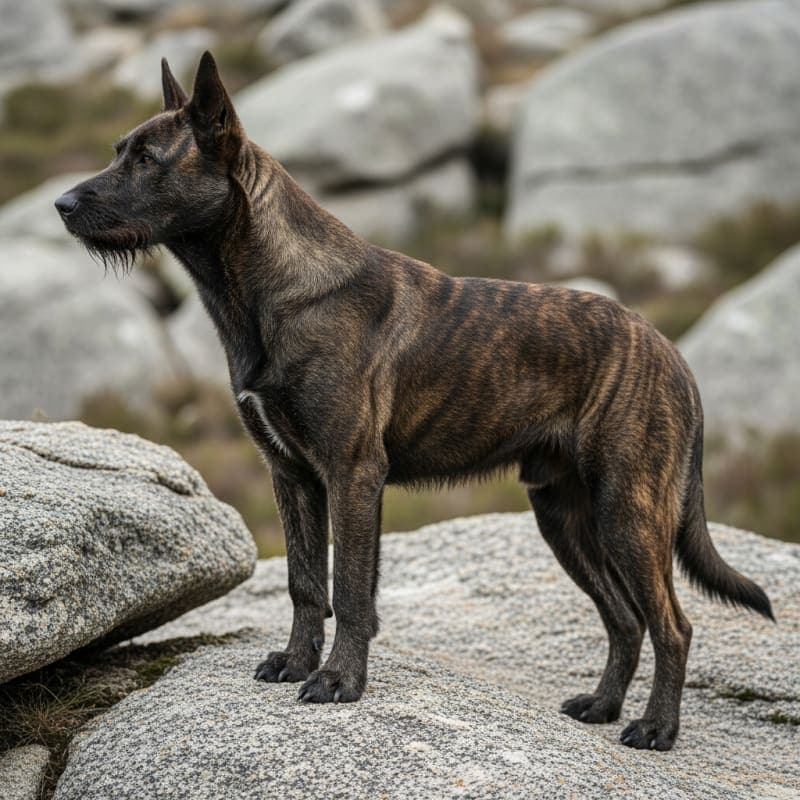
Cão de Castro Laboreiro
FCI Group
2• FCI 170
Size
Large
Origin Country
PT
Height
55-64 cm
Weight
25-40 kg
Lifespan
12-14 years
Temperament
Overview
The Cão de Castro Laboreiro, also known as the Dog of Castro Laboreiro, is a fascinating and one of the oldest herding dog breeds in Portugal. It originates from the picturesque, mountainous region of Melgaço, located at the northern end of the country. The breed's name derives from the village of Castro Laboreiro, situated in the municipality of Melgaço, where these dogs were traditionally bred and used to protect herds and farms.
The Cão de Castro Laboreiro is characterized by its strong, athletic build and impressive, majestic posture, making it an ideal guard dog. Traditionally, it played a key role in the lives of shepherds, protecting flocks of sheep and goats from predators such as wolves, as well as from thieves. Its unwavering character, courage, and alertness are traits that define this breed and make it an excellent choice for those running farms or living in rural areas.
What particularly attracts the attention of enthusiasts of this breed is its exceptional intelligence and ability to make independent decisions. Thanks to these traits, the Cão de Castro Laboreiro easily adapts to various situations and can assess threats. Although it is primarily a guard and working dog, its loyalty and devotion to its owner are undeniable. Owners appreciate its vigilance, bravery, and unconditional readiness to defend its territory and family, making it an invaluable companion.
This breed is extremely versatile and resilient. Its natural ability to work in challenging mountain conditions, with variable weather and a harsh climate, makes it well-suited for various guarding and herding tasks. However, due to its strong, independent, and temperamental character, the Cão de Castro Laboreiro requires an experienced owner with a strong personality who can work with the dog in a consistent yet fair manner. This breed needs clear and consistent guidance to achieve harmony in its relationship with humans and to fulfill its role responsibly.
We invite you to further explore the knowledge about this extraordinary, historical breed. In the following sections of the guide, you will discover detailed information about the health, grooming, exercise needs, training, nutrition, history, appearance, and behavior of the Cão de Castro Laboreiro.
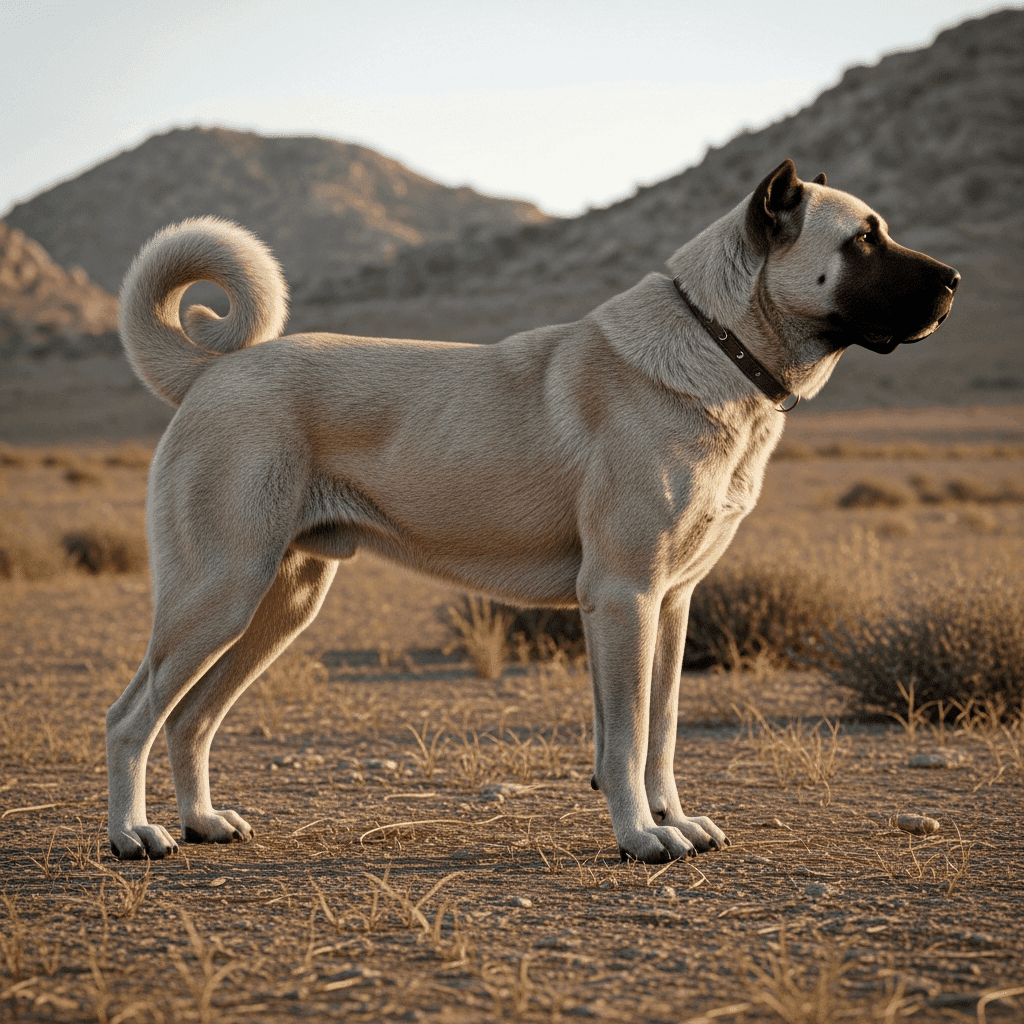
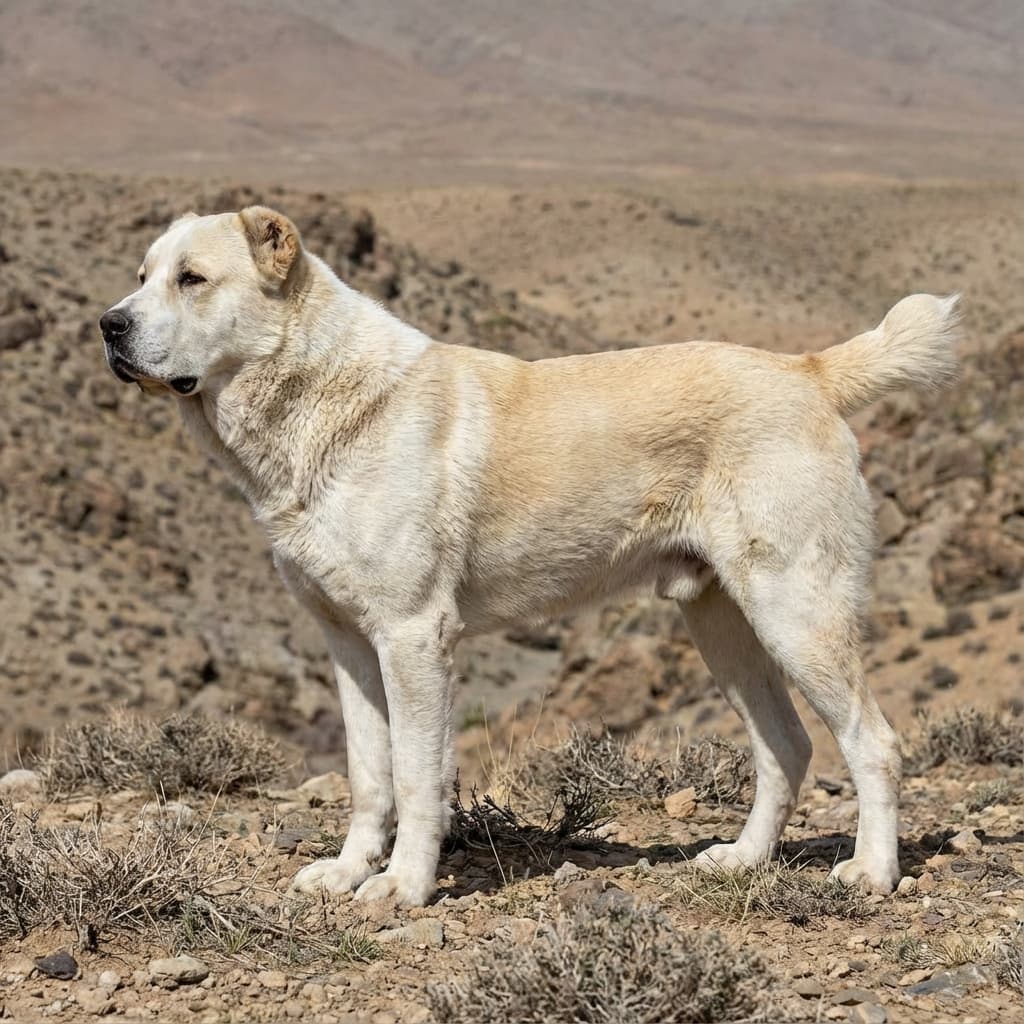
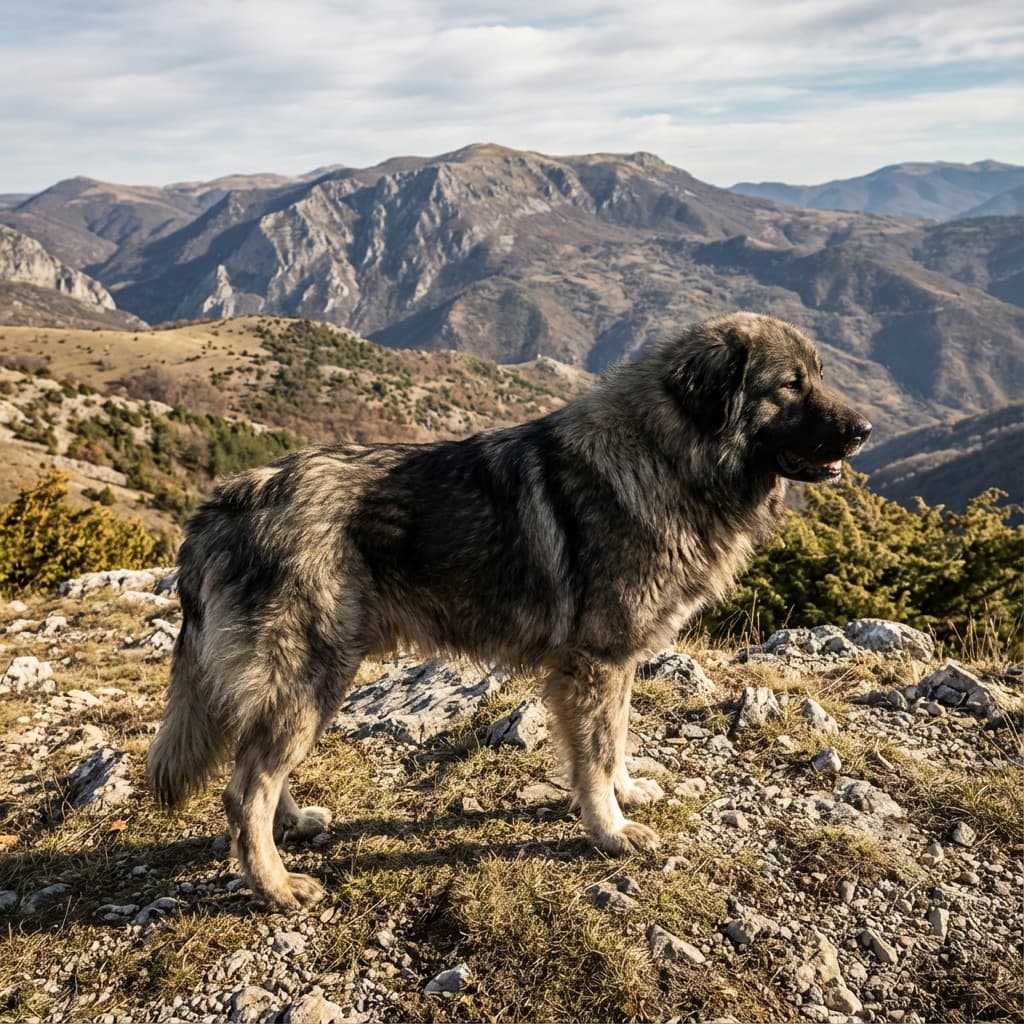
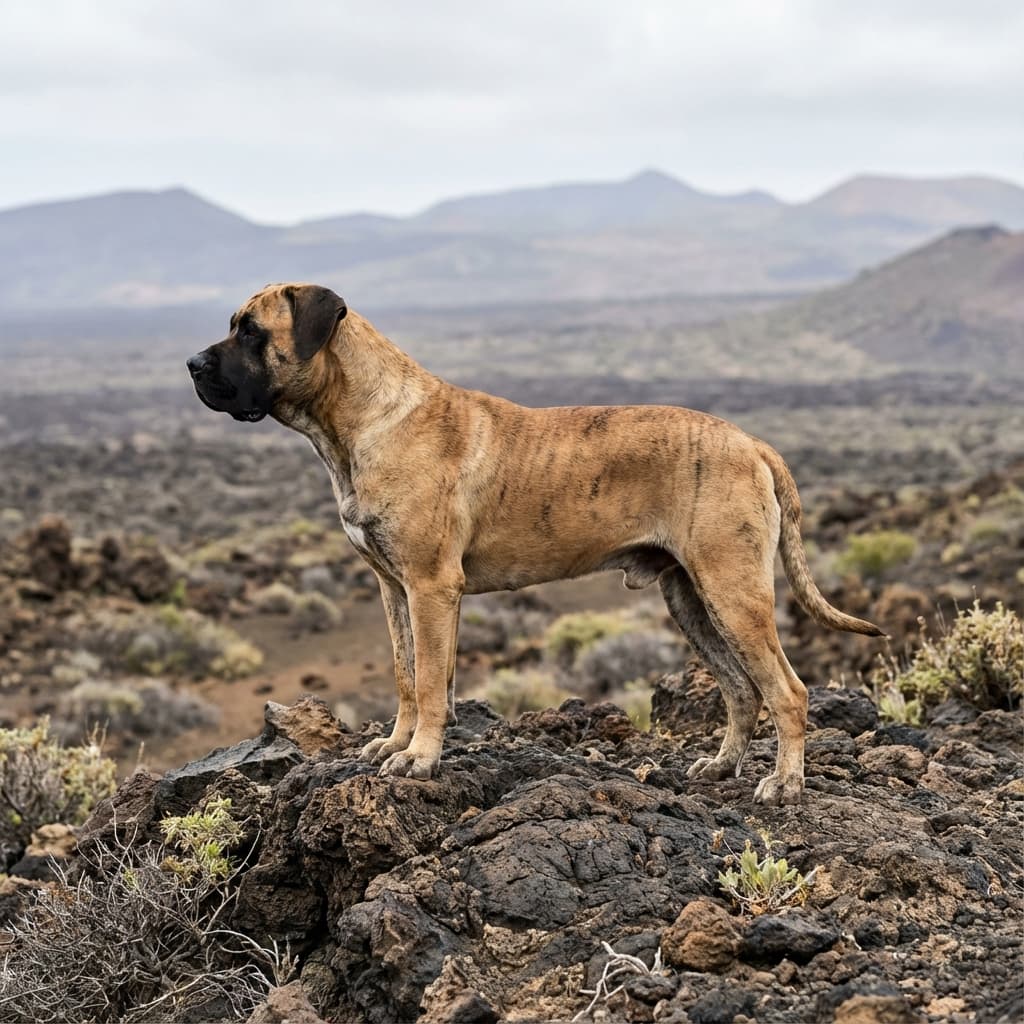
The Cão de Castro Laboreiro is a dog with a strong, well-muscled, and harmonious body structure, which gives it an impressive, majestic, and athletic appearance. According to the FCI standard, the height at the withers for males is from 58 to 64 cm, and for females from 55 to 61 cm. The weight ranges between 30 to 40 kg for males and 25 to 35 kg for females. The silhouette is slightly elongated (subloglinear), giving the dog an elegant and agile appearance, ideal for working in mountainous terrain.
The head is medium-sized, proportional to the body, with distinct lines and a gently defined stop. The muzzle is strong, wide, and proportional to the rest of the head, slightly shorter than the skull (ratio 5:6). The eyes are medium-sized, almond-shaped, and brown, giving the dog a serious, alert, and penetrating expression. The gaze of the Cão de Castro Laboreiro is characteristic – stern, attentive, and full of determination.
The ears are naturally hanging, set quite high and widely spaced, which makes the dog look alert and always ready for action. When the dog is focused or concerned, the ears may be slightly raised forward, emphasizing its alertness.
The coat of the Cão de Castro Laboreiro is short, dense, rough to the touch, and evenly distributed over the body, making it resistant to various weather conditions, including rain, wind, and cold. The most common coat colors are shades of wolf-gray, brown, and black, often with characteristic brindle markings, which makes this dog stand out among other mountain breeds.
The tail is natural, thick at the base, gradually tapering towards the end, and carried low in a resting position, with a characteristic, slightly curved shape resembling a saber. During movement or in a state of excitement, the tail may be raised in an arc, but it is never carried too high above the back.
The overall build and appearance of the Cão de Castro Laboreiro exude strength, confidence, rusticity, and functionality, making it an excellent working and guarding dog, adapted to harsh mountain conditions.
The Cão de Castro Laboreiro is a dog with a strong, independent, and determined character, known for its unwavering loyalty and deep devotion to its family. As a typical guard and herding dog, it has a natural and highly developed inclination to protect its territory, home, family, and the animals entrusted to it, making it an excellent, relentless guardian.
Typically, the Cão de Castro Laboreiro is alert, confident, and cautious towards strangers, which may manifest as a certain distance, reserve, and in situations of potential threat – a decisive defensive stance, but not unjustified aggression. This is a dog that can independently assess a situation and decide whether a given person poses a threat to its family. For this reason, early and intensive socialization is crucial for the dog to learn to distinguish normal, friendly situations from actual threats.
Towards its family, the Cão de Castro Laboreiro is friendly, affectionate, and deeply devoted, often seeking closeness with its owners and enjoying their company. These dogs do well with children, especially if raised alongside them from puppyhood, but due to their size and strong protective instinct, they require appropriate supervision during interactions with the youngest family members.
The Cão de Castro Laboreiro is an intelligent dog with a moderate but stable energy level. It is not a hyperactive breed, but it requires regular physical and mental activity to remain balanced and happy. Their independent character and tendency to think for themselves can lead to training issues if there is a lack of proper socialization, consistent training, and strong but fair leadership from the owner.
Owners should be consistent, confident, and experienced in working with strong-willed breeds. The Cão de Castro Laboreiro is not a breed for novice dog owners, as it requires an understanding of its natural instincts, needs, and the ability to establish a clear hierarchy within the family. With the right approach, the Cão de Castro Laboreiro is a reliable, loyal, brave, and irreplaceable companion and guardian that will defend its family at all costs.
The Cão de Castro Laboreiro is a breed of dog that generally enjoys good health and high resilience, which is a result of natural selection in harsh mountain conditions, where only the strongest and healthiest individuals survived. The average lifespan of this breed is from 12 to 14 years, which is typical for dogs of this size.
Despite their overall durability and resilience, like any breed, the Cão de Castro Laboreiro may be prone to certain health issues. Among the most common health problems are:
- Hip dysplasia (HD) – a genetic condition typical of medium and large dog breeds, involving improper development of the hip joint, which can lead to pain and mobility issues.
- Elbow dysplasia (ED) – similar to HD, this is a genetic condition concerning improper development of the elbow joint.
- Gastrointestinal problems – such as bloating or gastric torsion, which are particularly dangerous in large dog breeds. It is important to avoid intense physical exertion just before and after meals and to feed the dog several smaller portions throughout the day.
It is important for owners to regularly check their pets' health with a veterinarian, conduct screenings (especially regarding joint dysplasia), and ensure proper preventive care (vaccinations, deworming, parasite protection). Early detection of potential health issues can significantly increase the chances of effective treatment and provide the dog with a long, healthy, and active life.
Due to their active lifestyle and good working genes, dogs of this breed are less prone to obesity, but their diet should be well-balanced to avoid health problems related to being overweight, which can lead to joint strain and other conditions.
The Cão de Castro Laboreiro has a coat that requires minimal grooming, making this breed relatively easy to maintain in terms of hygiene and appearance. Their fur is short, dense, coarse to the touch, and very resistant to various weather conditions, including rain, wind, and low temperatures, which was crucial for their role as herding dogs in difficult, mountainous terrain.
Typically, brushing once or twice a week is sufficient using a stiff-bristled brush or a rubber glove to remove dead hair, dirt, and prevent excessive shedding. More intense shedding may occur in the spring and autumn when dogs change their coat to adapt to temperature changes. During these periods, it is recommended to brush more frequently (3-4 times a week) to maintain cleanliness and a healthy appearance of the coat and minimize the amount of dead fur in the home.
Coat care should be done regularly to maintain its healthy appearance and ensure that the dog's skin is clean, free from parasites and irritations. If the dog spends a lot of time outdoors, in the woods or on a farm, it is also worth regularly checking the ears, eyes, teeth, and nails to ensure they are in good condition.
Bathing is not necessary too often – usually once every 2-3 months is sufficient unless the dog is particularly dirty, has rolled in mud, or has an unpleasant odor. In such cases, it is recommended to use a mild, natural dog shampoo that will not irritate the skin or damage the natural protective layer of the coat.
Regular nail trimming (once a month) and checking ears and teeth (weekly) are also important grooming elements that will help keep the dog in excellent health.
The Cão de Castro Laboreiro is a dog with high physical and mental needs. As a working and herding breed traditionally used to guard livestock in challenging, mountainous conditions, it requires a large amount of daily physical exercise and intellectual stimulation to remain healthy, happy, and mentally balanced.
A minimum of 60 to 90 minutes of intense exercise daily is essential to keep the dog in good physical and mental condition. The ideal solutions for this breed include:
- Long, active walks – preferably in varied terrain such as forests, fields, mountains, or parks.
- Running alongside a bicycle – a great form of activity for dogs that enjoy intense exercise.
- Outdoor games – such as fetching, tug-of-war, playing frisbee, or ball games.
- Work tasks – guard work, obedience training, agility, or herding simulations that satisfy the dog's natural instincts.
Dogs of this breed enjoy running and outdoor activity, which allows them to release accumulated energy and maintain a healthy body weight. Additionally, the Cão de Castro Laboreiro loves work and mental challenges, so it is worth introducing various intellectual tasks, training, and strategic games that will stimulate its mind and prevent boredom.
It is also important to remember that dogs of this breed may be prone to wandering and exploring territory, so it is crucial to provide them with a safe, fenced area for play and to avoid situations that may cause fear, anxiety, or the urge to escape. Proper physical and mental activity will also help reduce potential behavioral problems, such as excessive barking, destructive behaviors, or aggression stemming from frustration and lack of engagement.
Cão de Castro Laboreiro is a dog with a strong will, independent and self-reliant character, which makes training a challenge, especially for novice owners. Despite the fact that dogs of this breed are intelligent, observant, and eager to work, they can also be stubborn, distant, and reluctant to mindlessly follow commands if they do not see the point in them or do not recognize the owner's authority.
Owners should use positive reinforcement methods, such as rewards in the form of treats, toys, or praise, to motivate the dog to learn and reinforce desired behaviors. Consistency, patience, and fairness are key elements of effective training for Cão de Castro Laboreiro. Methods based on violence, harsh punishment, or dominance are completely inadvisable and can lead to a loss of the dog's trust and behavioral problems.
Regular training sessions, preferably in short, intense intervals (10-15 minutes several times a day), will help maintain the dog's attention and increase learning effectiveness. It is important to start training at an early age (as early as 8-10 weeks old) to facilitate the dog's acquisition of new commands, skills, and family rules.
This breed responds well to:
- Obedience training – basic commands such as Sit, Stay, Come, Lie Down, Leave it.
- Socialization training – early and intensive socialization with other dogs, people, animals, and various life situations is crucial for the dog to learn to respond appropriately to different stimuli.
- Work training – herding, guarding, or sports tasks that utilize the dog's natural instincts and intelligence.
Due to their natural tendency to guard and protect territory, training in socialization with unfamiliar dogs, people, and situations is equally important to avoid excessive distrust, fear, or defensive aggression in the face of normal, non-threatening life situations. The owner must become a confident, calm, and consistent leader whom the dog will trust and respect, allowing for the development of a harmonious and balanced relationship.
The Cão de Castro Laboreiro diet should be well-balanced, high-quality, and tailored to their active lifestyle, body size, and age. Due to their large size and high energy levels, dogs of this breed require foods rich in protein and nutrients that support growth, maintenance of muscle mass, joint health, and overall well-being.
The food should contain:
- High-quality meat as the main ingredient (chicken, beef, turkey, fish) – a source of animal protein essential for muscles and energy.
- Healthy fats – omega-3 and omega-6 for skin, coat, and joint health.
- Vegetables and fruits – a source of vitamins, minerals, and fiber for digestive health.
- Grains or grain-free carbohydrate sources – rice, oats, potatoes, sweet potatoes – to provide energy.
- Supplements supporting joints – glucosamine, chondroitin, MSM for large breeds predisposed to joint dysplasia.
It is important to avoid low-quality food that may contain artificial additives, preservatives, colorings, or excessive grains, which are not beneficial for the dog's health. It is often recommended to use a diet based on natural ingredients, premium or super premium food, and in some cases, a BARF diet (raw meat, bones, vegetables), which will help maintain a healthy weight, energy, and physical condition.
It is also important for the dog to have constant access to fresh, clean water, especially after intense physical exertion, on hot days, or during fieldwork. It should also be remembered to not feed the dog just before physical activity (a break of 1-2 hours before activity is recommended) to avoid serious digestive issues, such as gastric torsion, which is particularly dangerous in large dog breeds.
It is recommended to feed the dog twice a day (morning and evening) with smaller portions instead of one large meal, which reduces the risk of digestive problems and helps maintain a stable energy level throughout the day.
Characteristic Traits
Pros
- Brave
- alert
- and reliable guardian
- Very intelligent and independent
- Loyal and devoted to their family
- Versatile and resilient in tough conditions
- Minimal grooming effort.
Cons
- Requires an experienced and consistent owner
- May be too dominant or independent
- Needs a lot of exercise and mental stimulation
- Distrustful of strangers (requires socialization)
Behavioral Ratings
Breed History
The Cão de Castro Laboreiro is a breed of dog whose history dates back several centuries and is deeply rooted in the pastoral tradition and culture of northern Portugal. It originates from the mountainous region of Melgaço, located in the Viana do Castelo district, at the northern edge of Portugal, near the border with Spain. The breed's name comes from the small village of Castro Laboreiro, which has been home to these exceptional, hardworking dogs for centuries.
This region is characterized by rugged, mountainous terrain, with elevations reaching up to 1400 meters above sea level, featuring harsh climatic conditions, snowy and foggy winters, and hot, dry summers. It is in such conditions that the Cão de Castro Laboreiro breed developed – resilient, strong, independent, and adapted to work in extreme conditions.
In the past, the Cão de Castro Laboreiro was not only an excellent guardian and herding dog but also an indispensable companion to shepherds, who relied on it to protect their flocks of sheep and goats from wild predators such as wolves, foxes, and bears. These dogs were also used to safeguard farms, homes, and families from thieves and intruders. Their courage, alertness, and independence made them highly valued in pastoral communities.
Over time, with technological advancement, changes in animal husbandry methods, and the modernization of agriculture, the traditional role of the Cão de Castro Laboreiro as a herding dog began to decline. In the 1950s and 1960s, the breed was on the brink of extinction, and the number of dogs drastically decreased. However, in recent years, intensive efforts have been made to protect, restore the popularity, and preserve this unique breed, which has helped secure its unique traits, skills, and genetic heritage.
Today, the Cão de Castro Laboreiro is recognized not only in Portugal, where it is regarded as a national treasure and a symbol of pastoral tradition, but also in other countries in Europe and around the world, where it is seen as a guard dog, companion, and participant in exhibition presentations. The breed was officially recognized by the FCI (Fédération Cynologique Internationale) in 1955 and is classified in group 2, section 2.2 (mountain molossers).