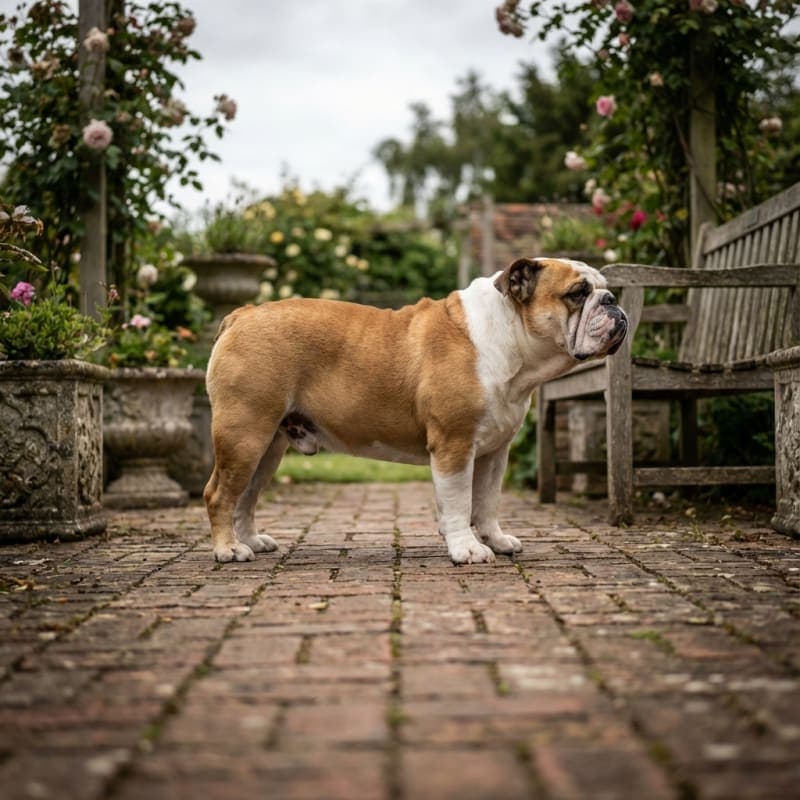
English Bulldog
FCI Group
2• FCI 149
Size
Medium
Origin Country
GB
Height
31-40 cm
Weight
18-25 kg
Lifespan
8-10 years
Temperament
Overview
The English Bulldog, also known as the English Bulldog, is one of the most recognizable dog breeds in the world, originating from the United Kingdom. It captivates with its distinctive appearance – a short, wide muzzle, a massive head, and a strong, stocky build. Its physique may seem intimidating, but beneath this stern image lies a remarkably gentle, loyal, and affectionate companion who can win the hearts of entire families.
The history of the English Bulldog dates back to medieval England, where it was used for bull-baiting – a brutal sport that gave rise to the breed's name. After these fights were banned in 1835, the breed underwent an extraordinary transformation both in temperament and physique. Through careful breeding focused on tempering its nature, the modern bulldog has become a calm, patient, and incredibly friendly dog, especially towards children. Its devotion to family is legendary, and its tendency to form strong emotional bonds makes it one of the most beloved companion dogs.
The English Bulldog is an excellent choice for families looking for a calm, balanced canine that does not require intense physical activity. It loves the closeness of its guardians and prefers to spend time in their company, whether during short walks or lazy afternoons on the couch. However, it is important to remember that this breed has specific health needs – its short muzzle predisposes it to respiratory problems, and its tendency towards obesity requires a controlled diet and regular, albeit moderate, exercise.
This comprehensive guide covers all aspects of life with an English Bulldog – from its fascinating history, through the characteristics of its appearance and temperament, to practical tips on health, grooming, nutrition, exercise, and training. Discover the secrets of this wonderful breed and learn how to ensure your bulldog has a long, happy, and healthy life by your side.
The English Bulldog has one of the most recognizable images in the dog world. Its distinctive silhouette is a combination of a massive, wide head with a short, stocky body, giving it a unique, somewhat warrior-like appearance reminiscent of a brave gladiator.
The head of the bulldog is exceptionally large in proportion to the rest of the body – wide, square, with characteristic skin folds hanging over a very short, broad muzzle. The snout is flattened (brachycephalic), with a clearly defined nasal hump. The lower jaw protrudes beyond the upper, creating a characteristic underbite (prognathism). The eyes are round, dark, widely spaced, and set low on the skull, giving the dog a distinct, almost human expression. The ears are small, thin, shaped like a so-called rose – folded back, exposing the inner part of the ear.
The body structure of the bulldog is extremely characteristic: a wide, deep chest, strong, muscular shoulders, and relatively short, strong limbs with thick bones. The torso is compact and solidly built, with broad shoulders and a narrower rear, giving the silhouette a pear shape. The line of the back slightly slopes towards the rear (the so-called roachback). The tail is short, set low, straight or slightly curled (the so-called screw tail), never carried high.
The coat of the bulldog is short, smooth, dense, and close to the body, with a silky texture. It comes in a variety of colors:
- Brindle – stripes in shades of red, fawn, or black
- Solid – red, fawn, white, yellow-fawn
- Spotted – combinations of white with any of the above colors
- Piebald – large colored patches on a white background
The mask on the muzzle is most often black or dark brown. The height at the withers is about 31-40 cm, while the weight ranges between 18-25 kg (females) and 23-25 kg (males). Despite its relatively small height, the bulldog gives the impression of a solid, compact, and powerful dog. Its adorably ugly appearance (ang. sourmug) is the result of conscious breeding selection that shaped this unforgettable physiognomy full of character.
The behavior of the English bulldog is one of its greatest assets and often surprises those who associate this breed solely with its harsh, warrior roots. The modern bulldog is a dog with an exceptionally gentle, calm, and balanced temperament, which is far removed from its aggressive ancestors used for bullfighting.
Character towards family: The English bulldog is extremely attached to its guardians and needs their close presence. It is a dog that loves the company of people and prefers to spend time at the center of family life. Its loyalty and devotion are legendary – it forms strong emotional bonds with every family member. It is exceptionally patient and gentle with children, making it an ideal family dog. It can accompany children in play for hours, maintaining angelic patience even when the little ones are overly energetic.
Temperament and energy: Unlike many other breeds, the English bulldog is not a high-energy dog. It prefers a calm, relaxing lifestyle and loves lazy afternoons spent on the couch next to its owner. It is not overly active and does not demand intense exercise – short walks and moderate play fully satisfy its needs. This trait makes it an excellent companion for older individuals, families with small children, and city dwellers living in smaller spaces.
Behavior towards strangers: English bulldogs are naturally quite reserved towards strangers, but they rarely show aggression. Their initial reactions may be cautious and observant, but after a short time of acquaintance, they usually accept new people as long as they do not feel threatened. They are not overly barky dogs, although they can alert their owner to an unexpected guest with a deep, resonant voice.
Relationships with other animals: Most English bulldogs get along well with other dogs and pets, especially when they are properly socialized from puppyhood. They may exhibit some dominance towards same-sex dogs, but generally, they are tolerant and friendly. Their lazy temperament means they rarely initiate conflicts.
Personality and quirks: Bulldogs are known for their sense of humor and funny behaviors. They can be the family comedians – their quirky snoring, wheezing, slurping while eating, and funny sleeping positions provide their owners with endless entertainment. Some bulldogs have a tendency to stubbornness, which can pose a challenge during training, but at the same time, their independence and strong personality are part of their charm.
Emotional needs: The English bulldog is a breed that does not tolerate prolonged loneliness. Its strong attachment to the family means that long periods of separation can lead to separation anxiety. It is a dog that feels best in homes where someone is present for most of the day. Its need for physical closeness is enormous – bulldogs love cuddling, sitting on laps (despite their considerable weight!), and sleeping in their owner's bed.
In summary, the English bulldog is a calm, affectionate, loyal, and funny companion that fits well into various types of families and lifestyles. Its balanced temperament, patience with children, and moderate activity needs make it one of the most popular companion dogs in the world.
The English Bulldog is a breed that requires special attention regarding health due to its specific anatomical structure and genetic predispositions. Owners should be aware of potential health problems and take preventive measures to ensure their bulldog has a long, comfortable life.
1. Brachycephalic Obstructive Airway Syndrome (BOAS)
The most serious health issue for bulldogs is their brachycephalic skull structure – the shortness of the muzzle and flattening of the face lead to a range of respiratory disorders:
- Narrowing of the external nostrils (stenotic nares)
- Elongated soft palate that obstructs airflow
- Eversion of the laryngeal saccules
- Tracheal hypoplasia (narrow trachea)
Symptoms of brachycephalic syndrome include: loud snoring, snorting, difficulty breathing (especially during exertion or in heat), exercise intolerance, cyanosis (blue tongue), and fainting. In severe cases, surgical correction (shortening of the palate, widening of the nostrils) may be necessary. It is extremely important to avoid exposure to high temperatures – bulldogs are extremely sensitive to overheating and can suffer fatal heat strokes.
2. Skin Problems
The characteristic skin folds on the face and body of bulldogs require regular care, as they are prone to:
- Skin fold dermatitis (intertrigo) – bacterial or fungal infections caused by moisture and heat
- Allergic dermatoses – allergic skin inflammation (atopy), food allergies
- Demodicosis – parasitic skin disease caused by Demodex mites
- Pyoderma – bacterial skin infections
3. Orthopedic Problems
- Hip dysplasia – abnormal development of the hip joint leading to discomfort and lameness
- Patellar luxation (luxatio patellae) – dislocation of the kneecap from its normal position
- Intervertebral diseases – compression of the spinal cord that can lead to pain and paralysis
4. Ocular Problems
- Entropion – eyelashes irritating the cornea
- Proptosis (prolapse of the eyeball) – due to shallow eye sockets
- Conjunctivitis and cherry eye (prolapse of the third eyelid gland)
- Cataracts and corneal dystrophy
5. Obesity
Bulldogs have a strong tendency to gain weight, which further burdens their respiratory system, joints, and heart. Weight control through a balanced diet and regular, moderate activity is crucial for the health of this breed.
6. Cardiological Problems
- Pulmonary valve stenosis
- Heart valve defects
7. Reproductive Problems
Due to the large head of the puppies and the narrow pelvis of the females, most births in bulldogs end in cesarean section. Natural births are rare and risky.
Prevention and Healthcare:
- Regular veterinary visits (at least once every 6 months)
- Weight control and a balanced diet
- Avoiding intense exertion in heat
- Daily care of skin folds
- Monitoring symptoms of respiratory problems
- Vaccinations and deworming according to schedule
- Prevention against external parasites
The average lifespan of an English Bulldog is 8-10 years, although with proper care, some individuals may live to be 12-14 years old. Conscious care, prevention, and prompt response to symptoms of illness are key to ensuring a bulldog has the longest and healthiest life possible.
The care of an English bulldog is relatively simple compared to long-haired breeds, but it requires regularity and special attention to specific areas that are prone to health issues. Systematic grooming not only improves the dog's appearance but primarily prevents infections and ensures comfort.
1. Care of skin folds
The most critical element of bulldog grooming is daily care of skin folds, especially those on the face. Moisture, sweat, food residue, and dirt accumulate in the creases, creating an ideal environment for bacteria and fungi.
How to clean the folds:
- Use a soft, damp cloth or a gauze pad soaked in warm water
- Gently wipe each fold, removing dirt and moisture
- Thoroughly dry the folds with a dry towel or gauze – moisture in the folds leads to infections
- If necessary, apply special fold care products (powder, protective ointments)
- Pay special attention to the fold above the nose – this is the most common site for infections
2. Brushing the coat
Despite their short hair, bulldogs shed throughout the year, with increased shedding in spring and autumn. Regular brushing (2-3 times a week) with a soft brush or rubber glove:
- Removes dead hair
- Stimulates blood circulation in the skin
- Distributes natural skin oils, giving the coat a shine
- Allows for the detection of any skin changes, ticks, or wounds
3. Baths
Bulldogs do not require frequent baths – once every 4-6 weeks is sufficient, unless the dog is particularly dirty or has an unpleasant odor. Bathing too often can dry out the skin and lead to dermatological problems.
Bathing tips:
- Use a mild dog shampoo, preferably for brachycephalic breeds
- Avoid getting water in the eyes and ears
- Thoroughly rinse out the shampoo – residues can irritate the skin
- Very carefully dry the dog, especially the skin folds
4. Eye care
The large, protruding eyes of a bulldog are prone to irritation, inflammation, and dryness. Check the eyes daily and gently wipe them with a damp gauze pad, removing any dried discharge from the corners of the eyes. If the eyes are red, excessively watery, or there are abnormal discharges – consult a veterinarian.
5. Ear care
The rose-shaped ears are prone to wax and dirt accumulation. Once a week, check the ears and clean them with a special dog ear cleaning solution and a cotton ball or gauze pad. Do not insert cotton swabs deep into the ear – you could damage the eardrum. If the ears have an unpleasant odor, are red, or the dog shakes its head – consult a veterinarian (this could be an infection).
6. Nail care
The bulldog's nails should be trimmed every 3-4 weeks if they do not wear down naturally during walks. Overly long nails can cause discomfort, changes in gait, and spine problems. Use special dog nail clippers or seek the services of a veterinarian/groomer.
7. Dental hygiene
Bulldogs are prone to dental problems – tartar, gum disease, cavities. Regular tooth brushing (ideally daily, at least 2-3 times a week) with a dog toothbrush and toothpaste prevents these issues. Dental chews and special food that supports oral hygiene can also be used.
8. Care of the tail and anogenital area
The short, screw-shaped tail can create a fold above the anus where dirt accumulates. Regularly check this area and clean it with damp wipes.
Additional recommendations:
- Get the dog used to grooming procedures from a puppy age
- Only use products dedicated to dogs
- Monitor the skin for redness, rashes, hair loss, or unpleasant odors
- If in doubt – consult a veterinarian or professional groomer
Proper care of an English bulldog is not difficult, but it requires consistency and patience. Regular grooming prevents many health problems and ensures the dog’s comfort, health, and good appearance.
The English Bulldog is a breed that does not require intense physical activity – on the contrary, its specific anatomical structure limits its exercise capabilities and requires a cautious approach to workouts. Proper dosing of movement is key to the health and well-being of the bulldog.
Why can't bulldogs be overly active?
The short muzzle and brachycephalic skull structure cause breathing difficulties, especially during exertion. Bulldogs have a significantly limited ability to cool their bodies through panting, which means that:
- They tire quickly
- They are extremely susceptible to overheating
- They do not tolerate high temperatures and humid air
- They can suffer from heatstroke (potentially fatal)
Optimal activity for the English Bulldog:
1. Walks
Bulldogs need 2-3 short walks a day, each lasting about 15-20 minutes. Walks should be at a calm pace – bulldogs are not dogs for running or jogging. The best times for walks are:
- Early morning (before the air heats up)
- Late evening (after sunset)
- Avoid walks on hot days (above 20-22°C), especially in full sun
2. Indoor play
Bulldogs love gentle games that engage their minds and bodies without excessive effort:
- Scent games – hiding treats around the house, scent mats
- Gentle tug-of-war (without excessive force)
- Fetching (short distances, avoid jumping)
- Interactive games – Kong toys, dog puzzles
- Obedience training – mental stimulation is just as important as physical
3. Swimming (with caution)
Most bulldogs cannot swim due to their large heads, heavy bodies, and short limbs, which make them prone to sinking. If you want to introduce your bulldog to water:
- Always use a dog life jacket
- Never leave a bulldog unsupervised near water
- Swimming in shallow water under strict control can be a good low-intensity exercise
WARNINGS – What is prohibited:
- ❌ Intense exertion – running, jumping, climbing
- ❌ Exercising in heat (temperature above 22°C)
- ❌ Long walks (over 30 minutes without a break)
- ❌ Exertion immediately after a meal (risk of gastric torsion)
- ❌ Dog sports requiring endurance (agility, flyball, canicross)
How to recognize signs of overheating and fatigue?
During exercise, closely observe your bulldog. Immediately stop the activity and provide coolness and water if you notice:
- Very loud, excessive panting
- Cyanotic tongue or gums (cyanosis)
- Excessive drooling
- Staggering, lack of coordination
- Refusal to move further, lying down
- Vomiting or diarrhea
- Disorientation, lethargy
If you suspect heatstroke, immediately contact a veterinarian – this is a life-threatening condition!
Benefits of proper activity:
- Weight control and prevention of obesity
- Strengthening muscles and joints
- Improving cardiovascular condition (to a moderate extent)
- Mental stimulation and prevention of boredom
- Strengthening the bond with the owner
- Reducing stress and undesirable behaviors
Tips for owners:
- Always carry drinking water for your dog during walks
- On hot days, wet the bulldog's belly and paws with cool water
- Choose walking routes with access to shade
- Invest in a cooling mat or vest for your bulldog
- Regularly monitor your dog's weight – excess weight further burdens the respiratory system
In summary, the English Bulldog is a dog with low exercise needs, preferring short, calm walks and gentle play. The key is to find a balance between providing adequate activity and avoiding overloading the respiratory system and overheating. Less is more when it comes to this wonderful but care-demanding breed.
Training an English bulldog can be challenging due to its strong, independent personality and natural tendency to be stubborn. However, with the right training methods and patience, a bulldog can become a well-mannered, obedient companion.
Personality traits affecting training:
- Stubbornness – bulldogs are known for their stubbornness and may ignore commands if they don't see the point
- Independence – they prefer to make their own decisions
- Sensitivity – they do not respond well to harsh training methods
- Greediness – they love food, which can be used as motivation
- Laziness – short training sessions are more effective than long ones
Key principles for effective bulldog training:
1. Positive reinforcement
The most effective method for training a bulldog is reward-based training. Use:
- Treats (small, low-calorie, quickly swallowed)
- Verbal praise (enthusiastic, cheerful tone of voice)
- Petting and cuddling (bulldogs love physical contact)
- Favorite toy as a reward
❌ Avoid physical punishment and yelling – bulldogs are emotionally sensitive and may become scared, distrustful, or even more stubborn.
2. Short, frequent training sessions
Bulldogs have limited attention spans and get bored quickly. Optimal training sessions are:
- 5-10 minutes each time
- 2-3 sessions a day
- End on a positive note (success)
3. Consistency and repetition
Bulldogs need clear, consistent rules. All family members should:
- Use the same commands (e.g., Sit, Stay, Come, Lie down)
- Reward and correct behaviors in the same way
- Not change the rules (e.g., if getting on the couch is forbidden, it cannot be allowed even once)
4. Start training early
The earlier you start training a bulldog puppy, the easier it will be to shape its behavior. The critical socialization period is 3-14 weeks of age – during this time, exposure to various stimuli (people, animals, places, sounds) is essential.
Basic commands to teach:
1. Sit
Hold a treat above the dog's nose and slowly move it back over its head. The dog will naturally sit. As soon as it does, say Sit, give the reward, and praise.
2. Stay
Ask the dog to sit. Show it an open hand in front of its nose and say Stay. Step back. If the dog does not move, return, reward, and praise. Gradually increase the distance and duration.
3. Come (recall)
The most important command for the dog's safety. Use a long leash for training. Say Come and gently pull the leash. When the dog approaches, reward it generously. Never call the dog to punish it – it should always be associated with a positive experience.
4. Lie down
From a sitting position, hold a treat in front of the dog's nose and slowly lower it to the floor. The dog will naturally lie down, following the hand. Say Lie down, reward, and praise.
5. Leave it
Show the dog a treat in a closed hand. The dog will try to get it (sniffing, licking). Ignore this. When it stops trying, say Leave it and reward with a treat from the other hand.
House training (potty training):
- Take the puppy out every 2-3 hours and after meals, naps, and playtime
- Choose a specific spot for potty needs
- When the dog goes in the right place – immediately praise and reward
- For accidents in the house – do not punish, just quietly clean up
- Use a crate (dogs naturally avoid soiling their sleeping area)
Socialization:
Proper socialization is crucial for developing a balanced temperament. Expose the bulldog puppy to:
- Different people (children, adults, seniors, people in glasses, hats, etc.)
- Other dogs and animals (under control)
- Different environments (park, city, car, veterinarian)
- Sounds (vacuum cleaner, doorbell, traffic)
- Getting used to touch (grooming, examination at the vet)
Behavioral problems and their solutions:
1. Stubbornness and ignoring commands
- Find motivation that works (better treats, toy)
- Shorter sessions to avoid boredom
- End training before the dog completely loses interest
2. Jumping on people
- Ignore the dog when it jumps (turn away, fold your arms)
- Reward when all four paws are on the ground
- Teach the Sit command as an alternative
3. Biting (puppies)
- Redirect the behavior to chew toys
- When the puppy bites too hard, say loudly Ouch! and stop playing
- Do not encourage biting hands during play
4. Separation anxiety
- Gradually get the dog used to short periods of solitude
- Do not make a ceremony out of leaving and returning
- Leave interactive toys (Kong with food)
- Consider a crate as a safe haven
When to seek professional help?
If you notice serious behavioral problems (aggression, extreme fear, destructiveness), consult a dog behaviorist or certified trainer. Early intervention can prevent the establishment of undesirable behaviors.
Final tips:
- Be patient – bulldogs learn slower than working breeds
- Keep a sense of humor – bulldogs can be amusingly stubborn
- Never give up – consistency pays off
- Training is an ongoing process, not a one-time event
- Use training as a way to strengthen the bond with your dog
Despite their stubbornness, the English bulldog is an intelligent dog that wants to please its owner – it just needs the right motivation, patience, and consistency. With the right approach, you can raise a well-mannered, obedient, and happy companion.
Proper nutrition for an English bulldog is a key element in maintaining its health, especially in the context of this breed's strong predisposition to obesity and specific health issues related to brachycephalic structure, allergies, and sensitivity of the digestive system.
Basic nutritional needs of a bulldog:
1. Balanced diet
The food for bulldogs should contain:
- High-quality animal protein (poultry, lamb, fish) – 18-25% of the food composition; protein supports muscle mass and recovery
- Moderate amount of fats (10-15%) – provides energy, supports skin and coat health, but excess leads to obesity
- Low glycemic index carbohydrates (sweet potatoes, brown rice, oats) – energy without sharp sugar spikes
- Fiber – aids digestion and prevents constipation
- Omega-3 and omega-6 fatty acids – healthy skin, counteracts inflammation
- Vitamins and minerals – comprehensive health support (calcium for bones, vitamins A, E, C for immunity)
2. Portion and calorie control
Bulldogs have a tendency to gain weight due to low activity and slow metabolism. Key rules:
- Measure portions according to the dog's weight and the manufacturer's feeding guidelines
- Monitor weight – weigh the dog regularly (weekly for puppies, monthly for adults)
- Adjust calories to the activity level (bulldogs are low activity = lower demand)
- Include treats – they should make up a maximum of 10% of daily calorie intake
3. Meal frequency
- Puppies (2-6 months) – 3-4 meals a day
- Young dogs (6-12 months) – 2-3 meals a day
- Adult bulldogs (12+ months) – 2 meals a day
- Seniors (7+ years) – 2 meals a day, possibly smaller portions, more frequently
Regular feeding times help control appetite and teach cleanliness.
Types of food for English bulldogs:
1. Dry food (kibble)
- ✅ Advantages: convenience, long shelf life, supports dental hygiene (mechanical cleaning)
- ❌ Disadvantages: less moisture, may be harder to chew for bulldogs with dental issues
- Choose: premium/super-premium foods dedicated to medium breeds, brachycephalic dogs, or dogs with allergies
2. Wet food (canned)
- ✅ Advantages: high moisture, easier to digest, palatability
- ❌ Disadvantages: more expensive, shorter shelf life after opening, does not support dental hygiene
- Use: as a supplement to dry food, for dogs with dental issues or poor appetite
3. BARF diet (Biologically Appropriate Raw Food)
- Raw meat, meaty bones, vegetables, fruits
- ✅ Advantages: natural, high protein, control over ingredients
- ❌ Disadvantages: time-consuming, risk of bacteria (Salmonella, E.coli), requires dietary knowledge
- Note: consultation with a veterinarian recommended before introduction
4. Home-cooked diet
- Cooked meat, rice, vegetables
- ✅ Advantages: full control over ingredients, freshness
- ❌ Disadvantages: requires supplementation of vitamins and minerals, time-consuming
- Consult with a veterinary nutritionist to avoid deficiencies
Special diets for bulldogs with health issues:
1. Allergies and food intolerances
Bulldogs often suffer from allergies (itching, skin problems, vomiting, diarrhea). Solutions:
- Hypoallergenic food – limited number of ingredients (Limited Ingredient Diet)
- New protein source – lamb, duck, game, fish (avoid chicken, beef if allergic)
- Hydrolyzed food – protein broken down into smaller molecules (less allergenic)
- Elimination diet – under veterinary supervision to identify allergens
2. Overweight and obesity
- Weight loss food (light/weight management) – fewer calories, more fiber
- Increase vegetable intake (carrots, broccoli) as a filling addition
- Avoid table scraps and fatty treats
3. Sensitive digestive system
- Easy-to-digest food (digestive care) – smaller pieces, prebiotics, probiotics
- Food for sensitive stomachs – single protein source, white rice as carbohydrate
4. Joint issues (dysplasia, arthritis)
- Food with glucosamine and chondroitin – supports cartilage regeneration
- Omega-3 fatty acids (fish oil) – anti-inflammatory action
PROHIBITED products for bulldogs (toxic):
- ❌ Chocolate – theobromine (deadly toxic)
- ❌ Onions and garlic – damage to red blood cells
- ❌ Grapes and raisins – acute kidney failure
- ❌ Avocado – persin (toxic)
- ❌ Xylitol (sweetener) – rapid drop in sugar, liver failure
- ❌ Alcohol
- ❌ Cooked bones (chicken, pork) – easily splinter, injure the digestive tract
- ❌ Fatty meat and skins – pancreatitis
- ❌ Milk and dairy products (in large amounts) – lactose intolerance, diarrhea
Healthy treats and additions:
- ✅ Carrots – low-calorie, supports dental health
- ✅ Apples (without seeds) – vitamins, fiber
- ✅ Blueberries – antioxidants
- ✅ Cooked meat without seasoning (chicken, turkey)
- ✅ Natural yogurt (unsweetened) – probiotics
- ✅ Pumpkin – supports digestion, regulates stool
- ✅ Broccoli (in small amounts) – vitamins
Hydration:
- Water should be available 24/7
- Regularly change the water (at least twice a day)
- Wash the bowl daily
- Monitor intake – reduced consumption may indicate health problems
Practical feeding tips:
- Avoid feeding directly before or after exercise – increases the risk of gastric torsion
- Elevate bowls to chest level – makes eating easier, reduces air swallowing
- Slow feeder bowl – slows down eating, reduces the risk of choking
- Gradual change of food – for 7-10 days mix old and new food, increasing the proportion of new
- Consult dietary changes with a veterinarian – especially in case of chronic diseases
Weight and body condition control:
The ideal weight for an adult bulldog is 18-25 kg (females) and 23-25 kg (males). Body condition assessment:
- ✅ Normal weight: ribs palpable under a thin layer of fat, visible waist from above, belly tucked
- ❌ Overweight: ribs hard to feel, no visible waist, hanging belly
- ❌ Underweight: ribs, spine, and hip bones clearly visible
Proper nutrition for an English bulldog is a investment in its length and quality of life. A balanced diet, portion control, avoidance of allergens and toxic products, and regular weight monitoring are the foundations of your bulldog's health. If in doubt, always consult with a veterinarian or veterinary nutritionist.
Characteristic Traits
Pros
- Exceptionally gentle and calm temperament
- Excellent family dog
- Patient and affectionate towards children
- Strong attachment to caregivers
- Low need for physical activity
- Ideal for apartments and seniors.
Cons
- Serious respiratory problems
- High sensitivity to high temperatures
- Strong tendency to obesity
- Demanding care for skin folds
- High veterinary care costs
- Short lifespan.
Behavioral Ratings
Breed History
The English Bulldog has one of the most fascinating and tumultuous histories among all dog breeds. Its journey from a brutal gladiator in the fighting arenas to a tender family companion is a testament to the remarkable transformation a breed can undergo due to conscious breeding and the changing needs of society.
Medieval Roots – Bull-Baiting Dogs
The history of the bulldog dates back to the 13th century in England, where this breed was specifically bred for the terrifying sport known as bull-baiting. This sport, popular among all social classes, involved setting dogs on a confined bull – the dog was to grab the bull by the nose and hold on for as long as possible, despite the animal's violent attempts to free itself.
To meet these demands, breeders selectively bred dogs with specific traits:
- Low, stocky build – allowed dogs to avoid the bull's horns
- Wide, massive jaw with an underbite – provided a powerful grip and the ability to breathe through the nose while holding onto the bull
- Short, flattened muzzle – a shorter snout allowed for breathing during the grip
- Loose skin on the head – folds diverted blood from the eyes when the dog was injured
- High pain threshold – resistance to injury
- Extraordinary courage and determination – dogs did not back down despite injuries
The name bull dog comes directly from this brutal sport – literally, a dog for bull fighting.
Cultural and Social Context
Bull-baiting was not seen as cruelty, but as a popular entertainment and a way to tenderize meat before slaughter (it was believed that adrenaline improved meat quality). Fights took place in urban squares, and participation was common. This breed was a symbol of English masculinity, bravery, and determination.
Ban on Fights and Breed Crisis (1835)
In 1835, the British Parliament passed the Cruelty to Animals Act, which banned bull-baiting and dog fighting. This event marked a turning point for the English bulldog – without its original functional purpose, the breed faced extinction. The population dramatically declined as most owners saw no reason to keep aggressive, difficult dogs without the possibility of using them in fights.
Breed Transformation – From Warrior to Companion (1850-1890)
A handful of enthusiasts and breeders who recognized the potential of the bulldog as a companion dog undertook a heroic effort to transform the breed. Their goals were:
- Elimination of aggression – breeding dogs with a gentle, stable temperament
- Preservation of distinctive appearance – maintaining unique physiognomy
- Improvement of health – reducing extreme traits that led to health problems (though not fully effectively)
This process took several decades and required careful selection – aggressive individuals were excluded from breeding, while gentle, friendly bulldogs became the foundation of a new breeding line.
Dog Shows Era and Standard Formalization (1860-1886)
In 1860, the English bulldog first participated in a dog show in Birmingham, marking the beginning of a new era for the breed. Breeders began to focus on appearance and temperament rather than fighting abilities.
In 1864, the first bulldog lovers' club (Bulldog Club Incorporated) was established, and in 1875, the official Bulldog Club was founded in England – the oldest bulldog breed club in the world. In 1886, the Kennel Club (the main canine organization in the UK) approved the official standard for the English bulldog, which defined the desired traits of appearance and temperament.
Bulldog as a National Symbol of the United Kingdom
In the 19th and 20th centuries, the bulldog became an unofficial symbol of the British nation. Its assigned traits – determination, courage, stubbornness, loyalty, and stoic endurance – were seen as a reflection of the British national character. The figure of John Bull (the personification of England) was often depicted with a bulldog by his side.
During World War I and II, the bulldog was used in British propaganda as a symbol of resistance and resilience. Winston Churchill, the Prime Minister of the United Kingdom, was often compared to a bulldog due to his firm, unyielding character, and he himself owned bulldogs.
International Expansion (Late 19th – 20th Century)
English bulldogs quickly gained popularity outside of Great Britain:
- United States – The American Kennel Club (AKC) recognized the breed in 1886; the Bulldog Club of America was established in 1890
- Europe – the breed spread across the continent
- Australia, Canada, New Zealand – along with British colonists
The bulldog became one of the most recognizable breeds in the world, a mascot for universities (e.g., Yale University – mascot Handsome Dan), sports teams, and companies.
Modern Era – Controversies and Breeding Reforms (21st Century)
In recent decades, the English bulldog has become the center of debate on dog breeding ethics. Extreme anatomical traits (brachycephalic skull structure, skin folds, short limbs) lead to serious health problems:
- Respiratory difficulties (brachycephalic obstructive airway syndrome)
- Thermoregulation issues (overheating)
- Difficult births (most end in cesarean sections)
- Short lifespan (8-10 years)
Canine organizations, veterinarians, and activists are calling for reform of breeding standards to prioritize health over appearance. Some countries (e.g., the Netherlands, Norway) are introducing regulations limiting the breeding of brachycephalic breeds with extreme traits.
At the same time, breeding initiatives such as:
- Olde English Bulldogge – a reconstruction of a healthier version of the historical bulldog
- Continental Bulldog – a Swiss breed created by crossing English bulldogs with Olde English Bulldogge, aimed at improving health
Heritage and Cultural Significance
The English bulldog remains one of the most iconic dog breeds in the world. Its image is widely used in popular culture – from company logos (e.g., Mack Trucks), through sports mascots, to films and advertisements. Its history reflects the evolution of the relationship between humans and animals – from exploitation for brutal purposes, through conscious transformation, to contemporary ethical dilemmas related to breeding.
The English bulldog is a living monument to British history – a testament to both the dark past of animal fights and humanity's ability to redesign the fate of an entire breed. Despite health issues, its unmatched character, devotion, and unique appearance ensure it remains one of the most beloved companion dogs worldwide.