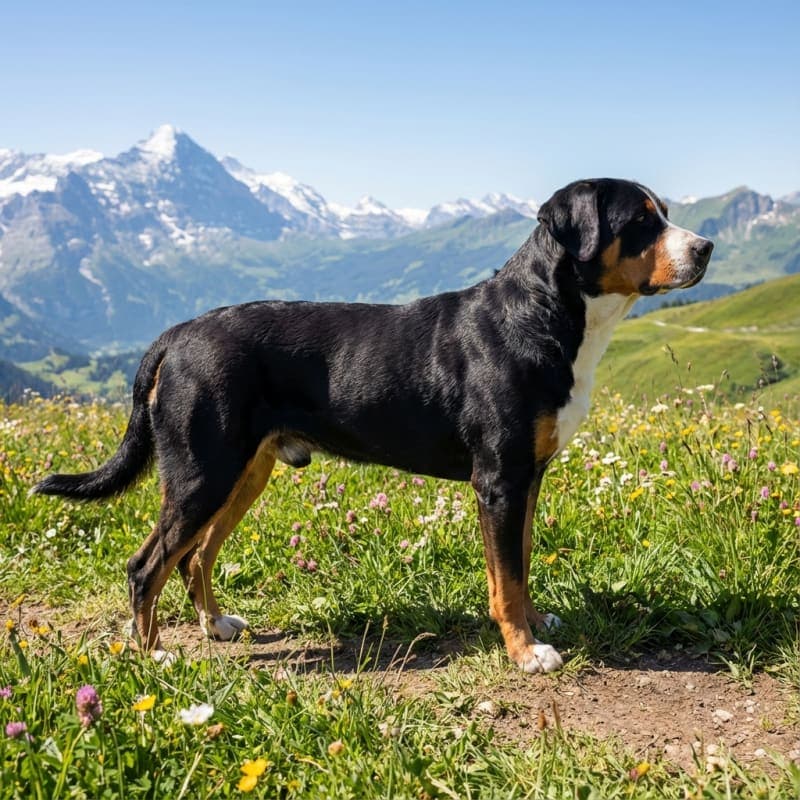
Large Swiss Mountain Dog
FCI Group
2• FCI 58
Size
Large
Origin Country
CH
Height
60-72 cm
Weight
45-64 kg
Lifespan
9-11 years
Temperament
Overview
Large Swiss Mountain Dog, also known as Grosser Schweizer Sennenhund, is a breed that fascinates with its impressive physique and characteristic tricolor coat. Originating from Switzerland, these dogs were originally used as guard and draft dogs that worked on alpine farms. Their history dates back to the Roman conquests when they were involved in transporting goods, herding cattle, and protecting farms. Today, they serve not only as loyal companions but also as vigilant protectors and loving family dogs.
The character of large Swiss Mountain Dogs is extremely calm and balanced, making them ideal companions for families, especially those with children. Their personality is full of energy and enthusiasm for life, while they are also incredibly devoted to their owners and family members. They require close contact with people and active participation in family life, which further strengthens their emotional bond. Moreover, their high intelligence significantly facilitates the training process and learning of new commands, although they may sometimes display a certain independence of character, which presents a pleasant challenge for experienced handlers.
Large Swiss Mountain Dogs are characterized by a strong protective and guarding instinct, making them excellent watchdogs and family defenders. However, they are friendly towards strangers, though they maintain a certain natural caution and distance. Their massive, well-muscled body structure and proportional body length to height at the withers attract attention and command respect. This breed comes in three classic colors: black as the base, white creating distinctive markings, and brown-red (tan) adding beauty.
Thanks to their physical endurance and natural agility, large Swiss Mountain Dogs are capable of various physical activities and dog sports. Their longevity, averaging from 10 to 12 years, makes them excellent companions for many years of shared life. However, it is important to remember about proper grooming, especially during the intense shedding periods in spring and autumn, and regular physical activity to ensure their optimal physical and mental health and a long, happy life alongside the family.
In summary, the large Swiss Mountain Dog is a breed full of energy, love, and devotion that requires commitment and an active lifestyle, but rewards with unconditional loyalty, reliable protection, and deep friendship for many years. To learn more about their health, specific grooming needs, exercise requirements, training techniques, optimal nutrition, and the fascinating history of the breed, we invite you to continue reading our comprehensive guide.
Large Swiss Mountain Dog is a breed of dogs with a massive and perfectly muscled build, exuding strength and harmony of proportions. It is characterized by the classic tricolor coat of Swiss mountain dogs, with deep black as the dominant base color, vibrant brown-red (tan) markings, and distinct white markings creating a symmetrical pattern.
Head and Face:
- The head is strong and proportional to the massive body, with a flat and wide skull and a well-defined stop.
- The muzzle is strong and square, with a straight nasal bridge and a black, well-developed nose.
- The eyes are almond-shaped and medium-sized, ranging in color from brown to dark brown, giving the dog a sharp, intelligent, and friendly expression.
- The ears are triangular, medium-sized, set high, and lie flat against the cheeks at rest, raised forward when alert.
- The jaw is strong with a perfect scissor or pincer bite.
Body Structure:
- The torso is slightly longer than the height at the withers (approximately 10:9 ratio), with a strong, straight back and a wide, deep chest reaching to the elbow joints.
- The withers are well-defined and muscular.
- The loins are wide and muscular, providing a solid structure to the rear of the body.
- The front limbs are strong, straight, and parallel with well-developed bones and muscles.
- The hind limbs are heavily muscled with well-angled knee and hock joints.
- The paws are compact, round, and facing straight forward.
The tail: It is harmoniously set as an extension of the back line, reaching at least to the hock joint. At rest, it is carried loosely down or with a slight curve at the tip, while in motion it is raised higher, but never above the back line, forming an elegant arc.
The coat: The fur is double and dense, consisting of a thick, dense undercoat providing thermal insulation and a medium-length (3-5 cm), closely lying outer coat with a straight or slightly wavy texture. This coat structure makes these dogs well-suited to various weather conditions, including the alpine climate with cool temperatures.
Tricolor coat:
- Base color: Deep, shiny black covering most of the body.
- Brown-red (tan) markings: Above the eyes (eyebrows), on the cheeks, on both sides of the muzzle, on the chest (two spots), on all four limbs, under the tail.
- White markings: A distinct white mark on the forehead (blaze), a white band running across the bridge of the nose and chin, a white chest (Swiss cross), white paws, and a white tip of the tail.
The silhouette of the large Swiss Mountain Dog combines the strength of a working dog with elegance and harmony of proportions, creating an impressive, dignified appearance that undoubtedly attracts attention and admiration. Their massive, muscular build not only makes them beautiful but also effective workers on farms, in transport, and as guard dogs in alpine farms.
Large Swiss Mountain Dog is known for its balanced temperament and friendly, loyal character, making it an excellent family dog. These dogs are extremely sociable and people-oriented, forming a deep, strong emotional bond with family members and desiring constant contact and participation in family life.
Character towards family:
- Devotion and loyalty to their owners are unwavering – this breed treats the family as its pack and is ready to protect it
- Great with children – shows natural patience, gentleness, and protectiveness towards the youngest family members
- Friendly towards other pets – with proper socialization, they coexist well with other dogs and animals
- Requires closeness – this is not a dog that can be left alone for long hours; it needs companionship and attention
- Cheerful and playful – despite their massive build, they maintain a puppy-like joy for life for many years
Guarding and protective behavior: In everyday situations, they are alert and sensitive to their surroundings, which makes them excellent guard and watchdogs. Despite their large, impressive stature, they have a gentle disposition and are friendly towards strangers, but maintain a certain natural caution and distance from unfamiliar people until they assess the situation. They are not aggressive without reason, but in the event of a threat to the family, they react decisively and bravely, utilizing their strong instinct to defend their territory and loved ones.
Intelligence and ability to learn: Large Swiss Mountain Dogs are intelligent and eager to learn, making them relatively easy to train using positive training methods. They quickly grasp new commands and tasks, although they require consistent, patient approach. Due to their natural desire to cooperate with people and please their handler, they are inclined to follow commands. However, they may sometimes display some independence of character and stubbornness, which is typical for working breeds, so it is important to approach them with love, respect, and understanding.
Activity and energy needs: Due to their high energy and working background, they need regular physical and mental activity to remain happy, healthy, and mentally balanced. Their natural desire for play, activity, and interaction with people makes them excellent companions for active families leading a dynamic lifestyle. Without the appropriate amount of exercise and mental stimulation, they can become bored and exhibit behavioral problems.
Socialization and social behavior: This breed is known for its moderate behavior towards other dogs – they are usually friendly and tolerant, but may show some dominance towards same-sex dogs. They may also exhibit some jealousy towards new animals introduced into the family, which requires appropriate, gradual socialization and supervision. Early and intensive socialization of puppies with various people, animals, places, and situations is crucial for developing a confident, well-adjusted dog.
Overall, the large Swiss Mountain Dog is a breed that combines strength and power with intelligence and affection, creating a unique companion for any dog lover who can provide this breed with an active lifestyle, consistent training, and plenty of love. It is a dog that will repay boundless loyalty and devotion for many years of shared life.
Large Swiss Mountain Dog, like many large and giant dog breeds, is prone to certain characteristic health issues that prospective owners should be aware of. The average lifespan of this breed is between 10 to 12 years, which is typical and relatively good for dogs of this massive size and build.
Most common orthopedic conditions:
- Hip dysplasia (HD) – a congenital developmental defect of the hip joint, leading to pain, lameness, and arthritis. Responsible breeders perform X-ray examinations and only select dogs with normal results for breeding.
- Elbow dysplasia (ED) – a similar condition affecting the elbow joints of the front limbs.
- Arthritis and osteoarthritis – a natural consequence of large body mass and joint stress, especially in older dogs.
- Osteochondrosis (OCD) – a cartilage development disorder, most commonly seen in rapidly growing puppies.
Ophthalmic problems:
- Cataracts – gradual clouding of the eye lens, leading to vision loss.
- Glaucoma – increased intraocular pressure, which if untreated can lead to blindness.
- Progressive retinal atrophy (PRA) – a hereditary condition leading to vision loss.
- Entropion and ectropion – eyelid defects where the eyelids roll inward or outward.
Other conditions:
- Epilepsy – neurological disorders leading to seizures of varying intensity.
- Gastric torsion (GDV) – a potentially fatal emergency condition typical for breeds with deep chests. It requires immediate veterinary intervention.
- Heart problems – dilated cardiomyopathy and other cardiovascular conditions.
- Hyperthermia – due to their thick, dark coat and massive build, the breed is sensitive to high temperatures.
Weight management: Due to their massive build, large Swiss Mountain Dogs can be prone to obesity, which leads to additional joint stress, joint problems, and a shortened lifespan. It is important to regularly monitor their weight, provide a balanced, appropriately portioned diet, and ensure regular, moderate physical activity. It is particularly crucial to avoid excessive weight gain in rapidly growing puppies – their skeleton and joints need time to develop properly.
Temperature tolerance: It is worth noting that this breed handles cold conditions and winter climates well due to its dense, double coat, but is not adapted to hot climates and high temperatures. During the summer, they should be provided with sufficient shade, cool water, and air-conditioned spaces, avoid intense exertion during the hottest hours of the day, and never be left in a closed, heated car.
Health prevention: Regular veterinary visits are crucial for maintaining the overall health of the dog and for early detection of problems. Annual check-ups, vaccinations as recommended by the specialist, regular parasite prevention (deworming, protection against ticks and fleas), and monitoring of joint health, especially in older dogs, are recommended. Before purchasing a puppy, it is advisable to check the health test results of the parents (X-ray examinations of joints, ophthalmic examinations, genetic tests), which increases the chances of a healthy dog with good longevity potential.
Grooming a Bernese Mountain Dog is relatively simple and not very time-consuming, making this breed attractive to many dog owners looking for a dog with moderate grooming needs. Their double coat consists of a dense, soft undercoat providing thermal insulation and a medium-length (3-5 cm), tightly adhering outer coat with a straight or slightly wavy texture.
Brushing and coat care:
- Under normal conditions (outside of shedding periods), brushing the dog once a week with a brush with metal pins or a comb is sufficient to remove dead hair, prevent matting, and distribute natural skin oils throughout the coat.
- During the spring and autumn shedding seasons (intense shedding), it is necessary to increase the brushing frequency to daily, using a furminator or a special undercoat brush to help the dog shed excess dead fur and minimize the amount of hair in the home.
- Bernese Mountain Dogs are not particularly prone to excessive shedding outside of the two periods of intense shedding, making them relatively easy to groom on a daily basis.
- Regularly check the areas behind the ears, on the neck, and in the groin where the coat may mat.
Bathing: Regular baths are recommended only if the dog is exceptionally dirty, has an unpleasant odor, or after intense activity in mud. Too frequent bathing (more often than once every 6-8 weeks) can expose the dog's skin to dryness and irritation and disrupt the natural balance of skin oils. Use only gentle, dog-specific shampoos with a neutral pH, suitable for the coat type.
Ear hygiene: Special attention should be paid to regular cleaning and checking of the ears, especially since the breed has droopy ears that can trap moisture and promote bacterial growth. Check the ears at least once a week, cleaning the ear flaps with a special dog ear cleaning solution using a cotton ball or gauze. Look for signs of redness, unpleasant odor, or excessive discharge that may indicate an infection requiring veterinary consultation.
Oral and dental hygiene: Regular tooth brushing (ideally daily or at least 2-3 times a week) with a toothbrush and toothpaste designed for dogs is crucial for preventing tartar buildup, gum disease, and bad breath. Additionally, dental chews, chewing toys, and special treats that support oral hygiene can be used.
Nail care: Nails should be regularly trimmed (usually every 3-4 weeks) using special clippers or guillotines for large breed dogs to prevent excessive growth, which can lead to discomfort, walking problems, and pain. If you hear clicking nails on the floor while the dog is walking, it means they are too long and need trimming. Be careful not to cut the blood vessels inside the nail (the so-called "quick").
Skin and body check: During each grooming session, it is worth conducting a thorough inspection of the dog's skin, body, and limbs, checking for the presence of:
- Ticks, fleas, or other external parasites
- Wounds, scratches, lumps, or abnormal skin changes
- Irritations, rashes, or areas of hair loss
- Checking the paws and paw pads for wounds or foreign bodies
Overall, proper and regular grooming not only positively affects the aesthetic appearance of the dog but also its well-being, comfort, and overall health. Additionally, regular grooming sessions are an excellent opportunity to strengthen the bond between the dog and the owner and for early detection of potential health problems, allowing for quick intervention and treatment.
Large Swiss Mountain Dog is an active and energetic breed that requires regular, moderate to intense physical activity to remain physically healthy, mentally balanced, and happy. Due to their working background and natural predispositions, they need significantly more exercise than the typical companion dog.
Minimum activity requirements: During the day, they should have at least 60-90 minutes of active movement, which can be divided into several sessions. This may include:
- Walks – at least 2-3 walks a day (each lasting 20-30 minutes), ideally at a moderate to brisk pace
- Running – slow running in a safe, fenced area where the dog can freely explore and run
- Fetch games – throwing a ball, frisbee, or other toys
- Long hikes – mountain trips, forest trails, trekking (especially on cooler days)
- Swimming – excellent low-impact activity, especially for dogs with joint issues
Activity environment: Due to their strength, size, and energy, these dogs feel best in open spaces where they can run freely, explore, and utilize their natural condition. The ideal environment includes:
- A home with a large, safely fenced garden or plot
- Proximity to walking areas – forests, parks, meadows, recreational paths
- Access to various walking trails for activity variety
Mental stimulation: Large Swiss Mountain Dogs are very intelligent and need not only physical but also intensive mental stimulation to remain happy and avoid boredom that can lead to behavioral problems. It is worthwhile to engage them in:
- Obedience training – learning new commands and tricks
- Scent games – searching for hidden treats, scent trails
- Interactive toys – puzzles, Kong filled with treats, food-dispensing toys
- Dog sports – agility, obedience, rally obedience, carting (pulling a cart), weight pulling
- Task training – learning to perform simple household tasks (bringing items, closing doors)
Puppy activity – IMPORTANT LIMITATIONS: It is important to avoid excessive exertion in large Swiss Mountain Dog puppies, as their bones, joints, and ligaments are still developing and are very susceptible to injuries and permanent damage. Activity guidelines for puppies include:
- Limit intense exertion until at least 12-18 months of age (full skeletal maturity)
- Apply the 5-minute rule – 5 minutes of walking for each month of age, twice a day (e.g., a 3-month-old puppy: 15 minutes × 2 = 30 minutes a day)
- Avoid jumping from heights, running on hard surfaces, intense running after a bike
- Allow the puppy to self-regulate its pace – do not force further activity when tired
- Focus on socialization and mental stimulation instead of intense physical exercise
Adjusting for age and condition: As the dog matures, the intensity, duration, and difficulty of training can be gradually increased to help maintain a healthy body weight, strong musculature, and good mental well-being. For older dogs (over 7-8 years), activity should be adjusted to their capabilities, focusing on regular, calmer walks instead of intense exercise.
Attention to high temperatures: Due to their thick, dark coat and massive build, large Swiss Mountain Dogs are sensitive to high temperatures and the risk of overheating. During the summer:
- Plan intense activities for early morning or late evening, when temperatures are lower
- Avoid exercising in full sun and the hottest hours of the day (11:00 AM - 4:00 PM)
- Always provide access to fresh, cool water
- Monitor for signs of overheating (heavy panting, excessive drooling, weakness)
- Consider water activities (swimming) as an alternative
This breed has a natural tendency to be active and happy, so providing them with the appropriate level of regular physical and mental activity is absolutely crucial for their physical health, mental balance, and overall life satisfaction. Without the right amount of movement and stimulation, they may develop behavioral problems such as destructive behaviors, excessive barking, hyperactivity, or depression.
Training a Bernese Mountain Dog can be relatively easy and rewarding, but it requires patience, consistency, and a positive approach. This breed is intelligent, eager to cooperate, and learns quickly; however, they can sometimes exhibit a certain independence typical of working breeds, which may pose minor challenges in the learning process.
Starting training early: It is advisable to begin training as early as possible, preferably during the puppy stage (from 8-10 weeks of age), to help the puppy develop positive habits, appropriate behavior, and a strong bond with the handler. Early training includes:
- Basic commands – sit, down, heel, stay, come
- House training – learning to eliminate in designated areas
- Leash walking – learning to walk calmly without pulling (especially important for such a large and strong breed)
- Getting used to handling – touching paws, ears, and muzzle, which will facilitate later grooming and vet visits
Training methods – positive reinforcement: Owners should use only positive training methods that are based on rewarding good behavior (treats, verbal praise, toys, petting), which helps build a strong, trust-based bond between the dog and the owner. Avoid physical punishment and negative training methods that can harm the relationship and induce fear or aggression.
Characteristics of the training process:
- Intelligence and eagerness to learn – the breed quickly absorbs new commands, often requiring just a few repetitions
- Natural willingness to cooperate – due to their working background and human orientation, they are inclined to listen to commands and please the handler
- Independence and stubbornness – they can be somewhat stubborn and have their own opinions, especially if they don’t see the point in a command or are bored. This requires consistency and patience from the handler
- Emotional sensitivity – they are sensitive to the tone of voice and mood of the handler, so a positive atmosphere is crucial
- Need for motivation – keep training sessions short (10-15 minutes), dynamic, and varied to maintain their interest and motivation
Socialization – a key element of training: Training regarding intensive, early socialization should be an integral part of the puppy's development to ensure they are well-adjusted to family life and society. Socialization includes:
- Different people – men, women, children, elderly people, people in hats, glasses, uniforms
- Other animals – dogs of various breeds and sizes, cats, farm animals
- Different places – city, countryside, pet stores, parks, forests, public transportation vehicles
- Various stimuli – sounds (cars, sirens, noise), different surfaces (metal, wood, plastic), objects (umbrellas, carts)
Proper socialization will help prevent behavioral problems such as anxiety, defensive aggression, excessive shyness, or reactivity to unfamiliar stimuli.
Advanced training and sports: It is worthwhile to introduce varied exercises and challenges to utilize the breed's natural intelligence and working potential. Bernese Mountain Dogs excel in:
- Advanced obedience training (obedience, rally obedience)
- Carting – pulling a cart or sled (traditional work of this breed)
- Weight pulling – pulling weights (strength sport for dogs)
- Agility – obstacle courses (with proper conditioning preparation)
- Scent tracking – mantrailing, nosework
- Animal-assisted therapy – dog therapy in hospitals, nursing homes, schools
Typical training challenges:
- Pulling on the leash – due to their strength and mass, it requires early and consistent training for loose leash walking
- Jumping on people – puppies may jump in greeting, which is cute but unacceptable in a 60-kilogram adult dog
- Excessive resource guarding – may require special training for sharing toys and food
- Boredom during repetitions – introduce variety into training sessions
Preventing behavioral problems: Proper, regular training and providing sufficient physical activity and mental stimulation will help prevent behavioral problems that can arise from boredom, frustration, and lack of structure. Issues such as destructive behaviors, excessive barking, hyperactivity, or stubbornness are often the result of insufficient engagement of the dog.
In summary, the Bernese Mountain Dog is a breed that responds excellently to positive, consistent training conducted with love, respect, and patience. With the right approach, they become well-trained, obedient, and balanced dogs that are a joy and pride to their owners.
A proper, balanced diet is a key element of health, longevity, and well-being for a Bernese Mountain Dog. Due to their large body mass, high energy, and activity level, it is important that their diet is carefully selected and rich in high-quality nutrients that support muscle, joint, coat health, and overall condition.
Basic dietary requirements:
- High-quality protein (25-30% dry matter) – sourced from meat (chicken, beef, lamb, fish), which supports the development and maintenance of muscle mass as well as joint and ligament health
- Healthy fats (12-18% dry matter) – a source of energy and essential for skin, coat, and brain function health. Omega-3 and omega-6 fatty acids from fish oil and flaxseed oil are particularly important
- Complex carbohydrates – a source of long-lasting energy from brown rice, oats, sweet potatoes, and vegetables
- Fiber – supports digestive health and proper peristalsis from vegetables, fruits, and whole grains
- Vitamins and minerals – comprehensive support for the immune system, bones, teeth, and vision
Adjusting the diet to age and activity: The food should be tailored to the age, body weight, and physical activity level of the dog:
- Puppies (0-18 months) – food for large or giant breed puppies, specially formulated to support controlled, gradual growth and proper skeletal development without overloading the joints. IMPORTANT: Avoid foods with excessive calcium and protein content that can accelerate growth and increase the risk of dysplasia
- Adult dogs (18 months – 7 years) – food for adult large breed dogs, with appropriate caloric content adjusted to the activity level (active vs. moderately active)
- Senior dogs (over 7 years) – senior food with reduced caloric content, increased glucosamine and chondroitin for joint support, antioxidants
Weight and portion control: Owners should pay special attention to the amount of food given to prevent excessive weight gain, which can lead to serious health problems:
- Obesity increases joint stress, leading to osteoarthritis, dysplasia, spinal problems
- Shortens lifespan by 1-2 years
- Increases the risk of diabetes, heart disease, respiratory problems
Feeding recommendations:
- Feed 2-3 times a day – dividing the daily portion into smaller meals reduces the risk of gastric torsion (GDV)
- Follow the manufacturer's recommendations for portion sizes, adjusting them to the individual metabolism and activity level of the dog
- Monitor treats – they should not make up more than 10% of the daily caloric intake
- Avoid feeding immediately before or after intense exercise – reduces the risk of gastric torsion
- Use elevated bowls for food and water – reduces strain on the neck and spine
Water: Fresh, clean water should always be available without restrictions to ensure proper hydration, especially after physical activity and on warm days. Large dogs drink significant amounts of water – check and refill the bowl several times a day.
Supplementation: It is worth considering adding supplements that support health, especially for older or active dogs:
- Glucosamine and chondroitin – support joint health, cartilage, and prevent arthritis
- Omega-3 fatty acids (from fish oil) – support joint, skin, coat health, cognitive function, and cardiovascular system
- Probiotics – support digestive health and the immune system
- Antioxidants (vitamins E, C) – support the immune system and slow down aging processes
Before introducing any supplementation, consult with a veterinarian to ensure it is appropriate and safe for your dog's individual needs.
Types of food:
- Dry food – convenient, economical, helps with oral hygiene through mechanical cleaning of teeth
- Wet food – higher hydration, tastier, easier to digest
- BARF/raw diet – requires a thorough understanding of nutritional needs and balancing ingredients, consultation with a veterinary nutritionist
- Home-cooked diet – requires careful planning and supplementation to provide all necessary nutrients
Regardless of the type of food chosen, the priority is the quality of ingredients – choose premium or super-premium foods with high meat content, free from unnecessary fillers, artificial colors, and preservatives.
Monitoring and adjustment: Regular check-ups with the veterinarian and monitoring weight and condition (checking ribs, waist) will help adjust the diet to the individual needs of the dog, as well as monitor their overall health status. Every dog is different, so what works for one may require adjustment for another.
In summary, a balanced, high-quality diet tailored to age, body weight, and activity level is the foundation of a long, healthy, and happy life for a Bernese Mountain Dog.
Characteristic Traits
Pros
- It excels as a loyal family and companion dog
- High intelligence greatly facilitates training and learning commands
- Strong protective and guarding instincts safeguard the family and property
- Relatively long lifespan for a large breed (10-12 years)
- Balanced
- composed temperament ideal for families with children
- Versatility – performs well in dog sports and work
- Beautiful
- distinctive tricolor appearance.
Cons
- Requires significant regular physical activity and mental stimulation
- Needs close
- constant contact with family and cannot stand loneliness
- May show some independence and stubbornness during training
- Susceptibility to joint dysplasia and other orthopedic issues
- Sensitivity to high temperatures and risk of overheating
- Intense shedding during the spring and autumn coat change
- Requires ample living space and access to a fenced area.
Behavioral Ratings
Breed History
The history of the Greater Swiss Mountain Dog dates back to ancient times and is closely linked to the development of alpine civilizations in Switzerland. This fascinating breed has its roots in molossers – powerful war and working dogs that were brought to the alpine region by Roman legions during their conquests of Europe about 2000 years ago. These massive dogs were used by the Romans as war dogs, guard dogs, and to watch over military camps.
Development in the Swiss Alps: After the fall of the Roman Empire, the descendants of these molossers remained in the alpine regions of Switzerland, where for centuries they were crossbred with local dogs, adapting to the harsh mountain conditions and the needs of the local farming population. Over time, they evolved into multifunctional working dogs that:
- Guarded herds of cattle on alpine pastures
- Pulled carts and sleds with goods, milk, and cheese to towns and markets
- Protected farms and homesteads from wild animals and unwanted visitors
- Assisted butchers in transporting meat (hence another name: butcher's dog)
These dogs were an integral part of mountain life and were highly respected among alpine farmers and shepherds for their strength, endurance, loyalty, and versatility.
Decline and rediscovery of the breed: By the late 19th and early 20th centuries, with industrialization and mechanization of transport, the traditional role of draft dogs significantly diminished. Cars, tractors, and cable cars replaced dog teams, leading to a drastic decline in population and near extinction of the Greater Swiss Mountain Dog. The breed was on the brink of extinction, and most attention was focused on smaller and trendier Swiss herding dogs, such as the Bernese Mountain Dog.
Professor Albert Heim – the father of the breed: In 1908, during the jubilee dog show in Langenthal to celebrate the 25th anniversary of the Swiss Kennel Club (Schweizerische Kynologische Gesellschaft – SKG), two large, short-haired dogs with tricolor coats were presented to Professor Albert Heim – a prominent geologist, mountaineer, and great promoter of Swiss herding dogs.
Professor Heim, known for his deep knowledge and passion for native dog breeds, immediately recognized in them representatives of an old, declining variety of large mountain dogs or butcher's dogs, whose ancestors were once widely distributed throughout Europe as guard, draft, and cattle-driving dogs. Heim was convinced that these dogs represented the authentic, original form of Swiss herding dogs and decided to rescue and reconstruct the breed.
Recognition and revival of the breed:
- 1909 – The dogs were officially recognized by the SKG as a separate breed under the name Großer Schweizer Sennenhund (Greater Swiss Mountain Dog) and registered in volume 12 of the Swiss Stud Book
- 1912 – The Greater Swiss Mountain Dog Club (Klub für Grosse Schweizer Sennenhunde) was established to promote the breed, protect it from extinction, and maintain its purity
- February 5, 1939 – The International Canine Federation (FCI) published the first official breed standard, granting the breed international recognition
Development in the 20th and 21st centuries: Over the following decades of the 20th century, breeders gradually rebuilt the breed's population, focusing on preserving traditional working traits, characteristic appearance, and balanced temperament. In the 1950s and 1960s, the breed began to gain popularity not only in Switzerland but also in other European countries, particularly Germany, Austria, and France.
From the 1970s and 1980s, Greater Swiss Mountain Dogs reached North America, where they gained recognition as excellent family, companion, and working dogs. In 1995, the breed was officially recognized by the American Kennel Club (AKC).
Contemporary role: Today, Greater Swiss Mountain Dogs are valued in many countries around the world primarily as family, companion, and guard dogs. Although their traditional role as draft dogs has largely faded into the past, some enthusiasts still train them in sports such as carting and weight pulling to preserve their working heritage and natural abilities.
With their calm temperament, reliable loyalty, and versatility, Greater Swiss Mountain Dogs are particularly appreciated as family dogs for active families who can provide them with adequate exercise, engagement, and love. This breed stands as a living testament to the rich history of the Swiss Alps and the traditional, symbiotic relationship between humans and dogs.
Their history is a fascinating tale of survival, determination, and revival – from ancient Roman molossers, through centuries of work in alpine farms, near extinction, to contemporary recognition as one of the most distinctive and valued Swiss breeds. Professor Albert Heim, through his vision and determination, saved this magnificent breed from oblivion, ensuring its place in the hearts of dog lovers around the world for generations to come.