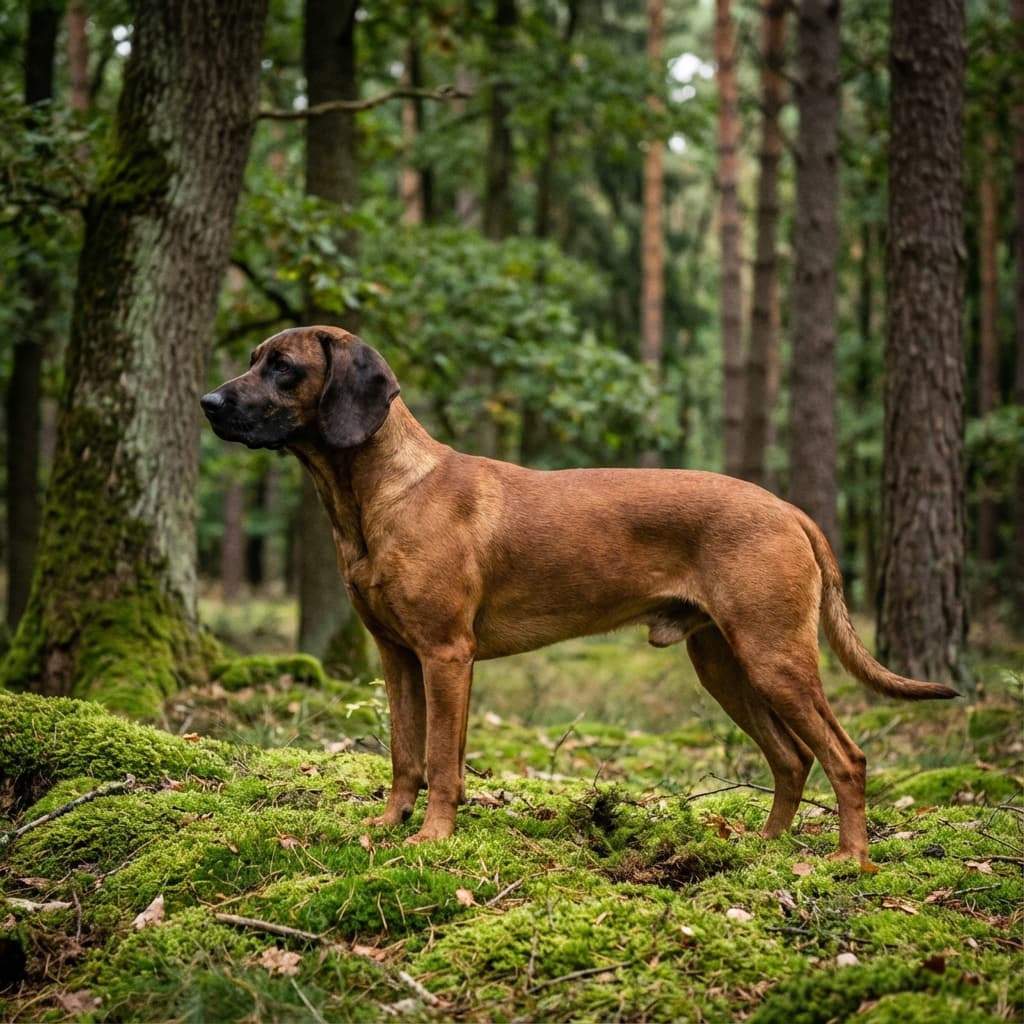
Hannover Hound
FCI Group
6• FCI 213
Size
Medium
Origin Country
DE
Height
48-55 cm
Weight
25-40 kg
Lifespan
11-13 years
Temperament
Overview
The Hanoverian Scent Hound, also known as the Hanoverian Scent Hound, is a fascinating hunting dog breed with deep roots in German hunting history. Since the Middle Ages, when these dogs were an essential part of royal hunts, Hanoverian Scent Hounds have gained recognition for their extraordinary ability to track wounded game. Their outstanding sense of smell and exceptional hunting instinct make them indispensable companions for professional hunters and foresters.
As time passed and firearms were introduced, the demand for dogs capable of precisely searching for wounded game increased, leading to further development and refinement of this breed. The Hanoverian Scent Hound, created in the Kingdom of Hanover, combines boundless loyalty to its handler with the ability to work in the most challenging terrain conditions. Their average size and well-muscled, athletic body provide endurance during prolonged work in nature.
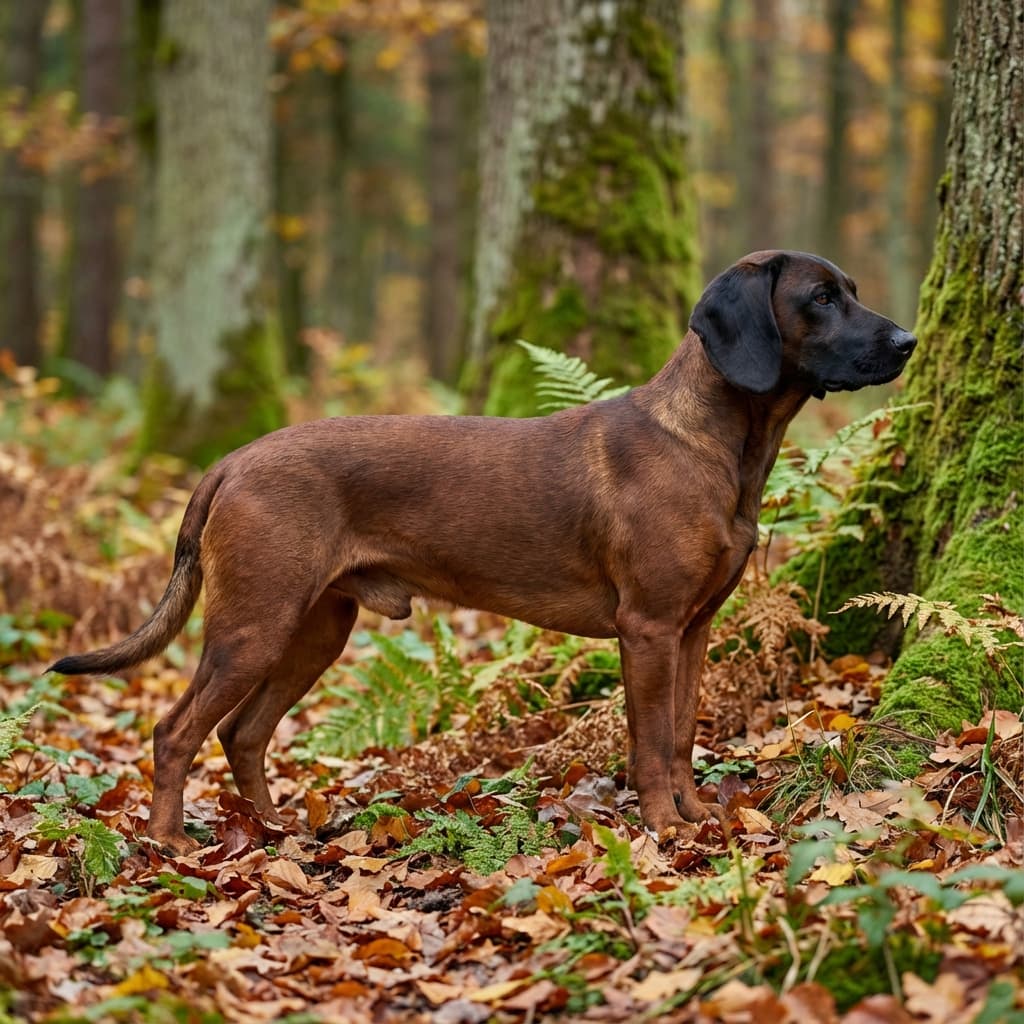
These dogs are characterized by a distinctive coat in shades of deer red or brindle that catches the eye. Their distinct, slightly wrinkled head with dark, expressive eyes adds to their seriousness and intelligence. Although their temperament is calm and balanced, Hanoverian Scent Hounds are exceptionally sensitive to the needs of their handler and require a lot of exercise and mental stimulation.
The ideal environment for these dogs is vast rural or forested areas where they can freely explore and hone their tracking skills. If you are an active person who is close to nature and hunting, the Hanoverian Scent Hound will surely be an excellent companion for you. As you prepare to welcome this dog into your home, it is worth paying attention to the further sections of the guide, which detail the health, grooming, exercise, training, nutrition, history, appearance, and behavior of this extraordinary breed. Intrigued? Learn more about the Hanoverian Scent Hound and discover all the secrets of this remarkable, specialized hunting breed.
The Hanoverian Bloodhound is a medium-sized dog with a well-built, strong, and muscular physique that reflects its purpose as a working dog. Height at the withers for males ranges from 50 to 55 cm, and for females from 48 to 53 cm. Their weight varies from 30 to 40 kg for males and from 25 to 35 kg for females, making them dogs with a solid but not overly heavy build.
This breed is characterized by a wide, slightly wrinkled head, with a broad nose and large, well-opened nostrils that allow for excellent scent detection. The eyes are dark, expressive, and full of intelligence, giving them a serious, focused appearance. The ears are of medium length, set high, and close to the head, which is typical for this breed of tracker.
The chest is wide and deep, reaching to the elbows, which provides a large lung capacity and endurance during prolonged tracking. The coat is short, dense, and rough to the touch, in colors ranging from light red deer to dark brown deer, often with brindled patterns that give the dog a distinctive appearance.
The tail is of medium length, slightly curved, set high, and carried in line with the back or slightly above. The movement of the Hanoverian Bloodhound is energetic, flexible, and free, with a long stride, making it an excellent companion in difficult forest and mountainous terrain.
The Hanoverian Bloodhound has a characteristic temperament that combines calmness, confidence, and deep loyalty to its owner. They are sensitive to their owner's emotions, while also being balanced and reserved in interactions with strangers. Their strong hunting instincts make them very focused during tracking work, which makes them indispensable companions for professional hunters and foresters involved in tracking wounded game.
In relation to strangers, they may be somewhat distrustful and reserved, but towards their owners, they are exceptionally friendly, devoted, and loyal. This breed does well in the company of other dogs, thanks to its natural social instincts and experience working in groups. However, due to their high desire to hunt and strong hunting instinct, it is wise to be cautious with other pets, especially smaller ones like cats or rodents.
The Hanoverian Bloodhound is a dog that requires constant mental and physical stimulation to avoid boredom, which can lead to destructive behavior or excessive barking. Their moderate sensitivity makes them very responsive to training methods based on punishment or harsh corrections, so the most effective techniques are those based on positive reinforcement and motivation.
Overall, the Hanoverian Bloodhound is a dog that thrives best in an active, rural, or forested environment where it can fully utilize its natural tracking abilities and enjoy the company of people and other dogs. This is not a breed for those seeking a calm, low-maintenance house pet.
The Hanoverian Bloodhound is a breed that generally enjoys good health and resilience, but like any breed, it can be prone to certain health issues characteristic of dogs with this body structure. The average lifespan of a Hanoverian Bloodhound is between 11 to 13 years, which is typical for dogs of this size.
It is important to pay attention to regular veterinary visits to monitor the dog's health and carry out necessary vaccinations and deworming. This breed may be susceptible to ear infections, which is a fairly common problem among dogs with long, drooping ears that restrict ventilation of the ear canal. Regular cleaning and checking of the ears is therefore essential.
It is also good to take care of their dental health, as these dogs may be prone to dental issues such as tartar buildup or gum disease. Their short coat makes them relatively resistant to temperature changes; however, in extreme weather conditions, they may require additional protection, especially during cool, wet days.
Thanks to their muscular body and active lifestyle, Hanoverian Bloodhounds rarely have issues with obesity, which is beneficial for their overall health, cardiovascular system, and joints. However, it is important to monitor their weight and adjust the amount of food according to their level of physical activity.
The care of the Hanoverian Hound is relatively simple and does not require much effort or specialized knowledge. Their short, dense coat does not require complicated grooming or frequent visits to a professional groomer. Regular brushing once a week is enough to remove dead hair, maintain the natural shine of the coat, and keep the skin in good condition.
Particular attention should be paid to ear cleaning to prevent infections, which can be a problem for this breed with long, drooping ears. Ears should be regularly checked and cleaned with a gentle solution recommended by a veterinarian, especially after long walks in the field.
The coat of the Hanoverian Hound is resistant to various weather conditions and has natural protection against moisture; however, during intense heat, it is important to ensure that the dog has access to shade and fresh water. Baths should only be given when necessary to avoid removing the natural oils that protect the skin and coat.
Nail care should be regular, especially if the dog does not naturally wear them down while walking on hard surfaces. Overly long nails can cause discomfort and walking problems. Overall, the Hanoverian Hound does not require special, time-consuming grooming, making it an attractive choice for people who do not have experience caring for dogs that require professional grooming.
The Hanoverian Bloodhound is a breed of dog that needs plenty of exercise and physical activity outdoors. The daily dose of exercise should be at least 90-120 minutes to meet their energy needs and working instincts. These dogs are designed for hard work in the field and feel best when they have the opportunity to run freely, explore their surroundings, and sniff out trails.
Walking in the woods or taking them into mountainous terrain, where they can sniff and search for scent trails, is the most satisfying for them and aligns with their natural instincts. Due to their strong tracking instinct, the Hanoverian Bloodhound can be somewhat stubborn and focused on the trail, so it is important that their walks are interesting, engaging, and varied.
It is also worth introducing various forms of activity, such as running in the field, playing fetch, circuit training, as well as tracking training or mantrailing, which perfectly utilize their natural talents. These dogs are very intelligent and need both physical activity and mental stimulation to avoid boredom, which can lead to inappropriate behavior, destruction, or excessive barking.
The Hanoverian Bloodhound is not a breed for people leading a sedentary lifestyle or living in small apartments without access to natural areas. This is a dog for active people with access to nature.
The training of the Hanoverian Bloodhound can be a challenge, as these dogs have a strong, independent hunting instinct and an innate drive to follow a scent trail. A key element of training is to start as early as possible, ideally from a puppy aged 8-12 weeks. It is important to approach training with patience, consistency, and an understanding of the breed's specifics, using methods based on positive reinforcement.
Hanoverian Bloodhounds are intelligent and eager to learn, but they can also be stubborn and selectively listen to commands, especially when focused on a scent trail. For this reason, they need a firm yet gentle approach that does not rely on punishment or harsh corrections. Sessions should be short (10-15 minutes), interesting, and engaging to maintain their attention and motivation.
It is worth introducing various forms of training, such as basic obedience (commands: Sit, Stay, Come, Lie down), agility, and above all, tracking, to meet their physical and mental needs. Specialized tracking training is particularly recommended, as it allows the dog to utilize its natural talents.
Training should also be supplemented with socialization to help the dog learn to cope in different situations, with other animals, and with various people. The Hanoverian Bloodhound may be more demanding in training than typical family breeds, so prospective owners should be prepared for a long-term commitment to the upbringing process and ideally seek the help of an experienced trainer familiar with hunting breeds.
The diet of the Hanoverian Bloodhound should be well-balanced and tailored to their level of physical activity and stage of life. Due to their average size, athletic build, and moderate appetite, it is advisable to choose high-quality premium or super-premium foods that fully meet their nutritional needs.
It is good for the food to be rich in animal protein (a minimum of 25-30%), which is essential for maintaining their muscle mass, overall condition, and the energy needed for long tracking. The source of protein should be meat (chicken, beef, deer, fish), rather than plant products or low-quality meat meals.
It is also worth introducing vegetables, fruits, and supplements into the diet that can support joint health (glucosamine, chondroitin), the immune system (vitamins C, E), and coat condition (omega-3 and omega-6 fatty acids). It is important to avoid giving the dog scraps from the table, as some foods safe for humans can be harmful or toxic to dogs (e.g., chocolate, onions, garlic, grapes).
Meals should be served regularly, twice a day (for adult dogs), and the dog should have constant access to fresh, clean water. Weight control is also important to prevent health problems associated with obesity or underweight. The amount of food should be adjusted to the dog's level of activity – working or very active dogs will need more calories than less active dogs.
Characteristic Traits
Pros
- High loyalty to the guardian
- Exceptional sense of smell and hunting instinct
- Excellent endurance in difficult conditions
- Calm and sensitive temperament
- Good health and resilience.
Cons
- Requires a lot of movement and stimulation
- Needs space to explore
- Can be demanding in training
- Strong hunting instinct
- Not for beginner owners.
Behavioral Ratings
Breed History
The history of the Hanoverian Hound dates back to the early Middle Ages, when these dogs, derived from the so-called liam hound (leash-trailing dogs), were used for tracking wounded game by aristocrats and royal families. As early as around 500 AD, the liam hound played an extraordinary role during the establishment of clan laws among Germanic tribes.
Over the centuries, with the introduction of firearms, hunting methods for large game changed. There was an increased demand for dogs capable of precisely tracking wounded animals that could escape significant distances after being shot. The liam hound provided the best conditions for this task and gradually transformed into a specialized Liam-Scenthound (a dog that tracks wounded animals).
In the Kingdom of Hanover, this breed began to be more consciously bred to improve its tracking abilities and adapt to the changing needs of hunting. In 1894, a registered breeders' club, the Verein Hirschmann e.V., was established, which has been dedicated to the protection, development, and promotion of this breed for over 130 years. Thanks to their efforts, the Hanoverian Hound has become an undisputed specialist in tracking wounded game such as deer, roe deer, and wild boar.
This breed is considered a treasure of Germany's hunting culture and is still widely used in professional hunting, especially in challenging mountainous and forested conditions. With its unique history, outstanding tracking skills, and extraordinary loyalty, the Hanoverian Hound remains one of the most valued and respected breeds among hunters, foresters, and working dog enthusiasts worldwide.