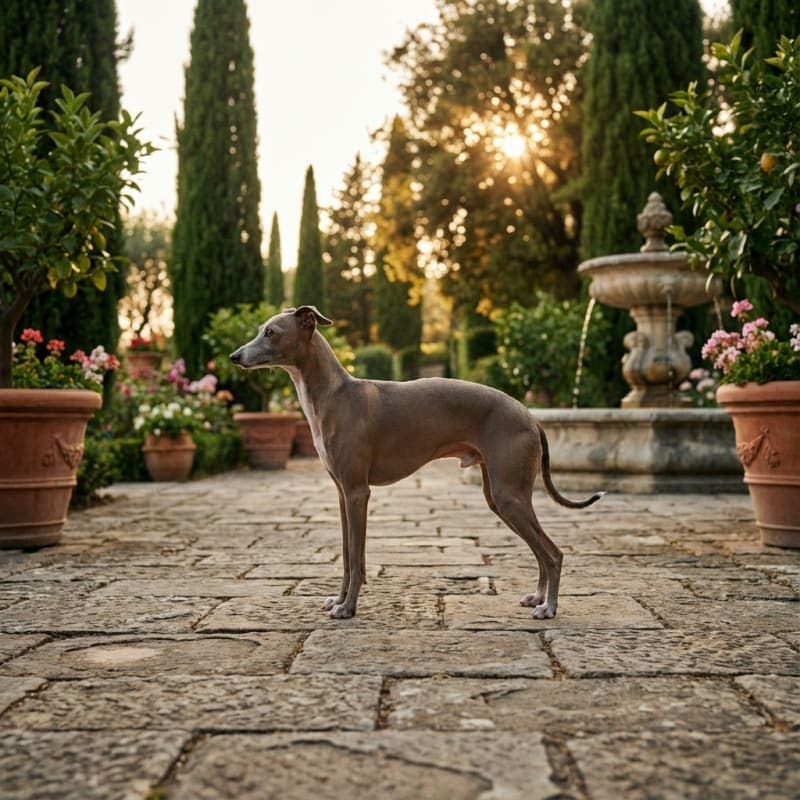
Italian Greyhound
FCI Group
10• FCI 200
Size
Small
Origin Country
IT
Height
32-38 cm
Weight
3-5 kg
Lifespan
12-14 years
Temperament
Overview
The Italian Greyhound, also known as Piccolo Levriero Italiano, is a breed of dog that has captivated with its elegance and grace for centuries. Originating from Italy, this breed combines extraordinary running skills with a gentle, mild temperament. Despite its small size, the Italian Greyhound exudes strength, speed, and grace, making it a unique representative of the miniature sighthound group.
Its slender, square silhouette and height at the withers ranging from 32 to 38 cm add to its unique charm. Its body weight does not exceed 5 kg, making it one of the smallest representatives of purebred dogs. The long, narrow head with a flat skull and large, round expressive eyes attract attention and give this dog an intelligent, alert expression. Small, high-set ears emphasize its elegance.
The coat of the Italian Greyhound is short, silky, and delicate to the touch, and the coloration comes in various shades – from black, through gray, to fawn or cream. Each individual of this breed looks exceptionally distinguished and stylish.
The Italian Greyhound requires a close bond with its owner and cannot stand loneliness. Its lively temperament, gentle nature, and strong attachment to people make it a wonderful companion for life. It forms a special bond with children and other household members, making it an ideal family dog. Thanks to its high intelligence, it learns quickly, which facilitates the training and upbringing process.
Over the centuries, this breed has been a favorite of European aristocracy, which has given it a refined, noble image. Today, the Italian Greyhound is a valued companion dog that can provide immense joy, love, and loyalty to its owners. We invite you to further explore knowledge about this extraordinary breed in the following sections of our guide, where you will discover more details about the health, grooming, physical activity, training, nutrition, history, appearance, and behavior of the Italian Greyhound.
The Italian Greyhound is a dog with a remarkably harmonious appearance that attracts attention with its elegance, grace, and sophistication. Its silhouette is slender, proportional, and fits into a square body shape – the length of the torso is similar to or slightly less than the height at the withers, giving it an extremely aesthetic, balanced look.
The head of the Italian Greyhound is elongated, narrow, and flat, with slightly rounded sides. The length of the skull constitutes about half of the total length of the head. The eyes are large, expressive, round, and full of intelligence, giving the dog a vigilant, attentive expression. The ears are small, delicate, set high on the head, and carried elegantly on the neck or folded back.
The neck is long, muscular, and arched, which emphasizes the noble appearance of the dog. The back is straight, well-muscled, and the chest is narrow, deep, and strong, allowing the dog to breathe freely during a fast run. The tail is thin, set low, and tapering towards the end, carried low at rest and arched during movement.
The coat is short, silky, delicate, and smooth, making this dog look extremely attractive and easy to keep clean. The coloring of the Italian Greyhound is diverse and can take shades such as: black, gray, slate, fawn, cream, and various combinations of these colors. Small white markings on the chest and paws are permissible.
All together, it creates an image of a dog that is not only extraordinarily beautiful but also full of energy, charm, and joy of life. The Italian Greyhound is a true model of grace and distinction in the world of dogs.
The Italian Greyhound is a dog with a unique temperament that combines affection, liveliness, loyalty, and deep attachment to people. This breed loves companionship and needs close contact with its owners. Italian Greyhounds are known for being extremely friendly towards children, making them excellent family dogs. Their temperament is gentle yet full of energy, which makes them joyful, playful companions for everyday moments.
Italian Greyhounds have a high hunting instinct, which means that during walks they may show a tendency to chase small animals such as birds, squirrels, or cats. Therefore, it is very important to provide them with appropriate walking conditions and to supervise them when in unfamiliar areas or in the presence of wild animals.
This breed is also quite emotionally sensitive and reacts to changes in the environment and the moods of household members. For this reason, socialization from a young age is crucial for the proper mental development of the dog. The Italian Greyhound is intelligent and easy to train, but due to its curious, sometimes distracted nature, it may be difficult to keep its attention for long periods. For this reason, positive training methods based on rewards, praise, and play are the most effective.
The Italian Greyhound is a dog that forms strong emotional bonds with its owner and cannot tolerate prolonged loneliness. Left alone for long periods, it may exhibit signs of anxiety, stress, or destructive behaviors. It is an excellent companion for active individuals who value close, warm contact with their dog and can dedicate time and attention to it.
The Italian Greyhound is characterized by a good state of health and an average lifespan of 12-15 years. Despite its delicate, slender appearance, it is a dog naturally adapted for intense physical activity and fast running.
However, its slender body structure and thin bones make it susceptible to mechanical injuries, such as bone fractures, joint sprains, or ligament tears – especially during uncontrolled, intense running on uneven terrain or stairs. Therefore, it is important to avoid places with uneven surfaces during walks and not to allow the dog to engage in too intense, sudden activity without proper supervision.
The Italian Greyhound is sensitive to temperature changes – due to its short coat and slim body structure, it does not cope well with cold climates. In winter, it is advisable to equip it with a warm coat or sweater and to avoid walks during the coldest parts of the day. This dog feels much better in warmer conditions.
The breed has a slight tendency to some health issues, such as:
- Gastric torsion – particularly in dogs that eat large portions at once
- Epilepsy – occasional cases in the breeding line
- Patellar luxation – an orthopedic problem typical for small breeds
- Dental problems – requiring regular oral hygiene
Regular vet visits, appropriate health prevention, a healthy diet, and controlled physical activity are crucial to keep the Italian Greyhound in excellent health for many years.
Taking care of the Italian Greyhound is relatively simple and low-maintenance, thanks to its short, smooth, and silky coat. Unlike many other long-haired dog breeds, Italian Greyhounds do not require intensive, time-consuming grooming.
Brushing should be done at least once a week to remove dead hair, minimize shedding, and keep the coat in excellent condition. It is best to use a soft brush or a rubber grooming glove, which will also stimulate the skin and improve circulation.
Bathing should be done only when necessary – ideally once every few months or in case of visible dirt. Too frequent washing can remove the natural oils from the skin and coat, which protect the dog from harmful external factors. It is advisable to use gentle shampoos specifically designed for dogs with sensitive skin.
Ear hygiene is very important – ears should be regularly checked for dirt, excess wax, and unpleasant odors that may indicate a developing infection. Cleaning the ears should be done gently, using special veterinary products.
Oral hygiene is another key aspect of grooming. Regular tooth brushing (ideally several times a week) prevents the buildup of tartar and dental problems such as gum disease or cavities.
Nail trimming should be done regularly to avoid discomfort while walking and joint damage. If the nails click on the floor while walking, it means they are too long and need to be trimmed.
Taking care of the Italian Greyhound is quick, enjoyable, and inexpensive, making this breed even more attractive to dog lovers who value simplicity and convenience.
The Italian Greyhound is a dog with a high need for movement and physical activity, requiring regular walks and opportunities for free running. It is ideal to provide them with at least one long walk a day (45-60 minutes) and additional chances to run outdoors in a safe, fenced area.
This breed is known for its exceptional speed, agility, and energy, so it is worth giving them a chance for free, fast running in parks, in fenced spaces, or in designated dog runs. The Italian Greyhound loves games of fetch, chasing balls, and other interactive physical games that engage both its mind and body.
Despite their delicate appearance, Greyhounds are very energetic and need regular physical exertion to maintain health, good condition, and mental balance. Lack of adequate activity can lead to boredom, excess energy, and destructive behaviors at home.
However, it is advisable to avoid walks on uneven, steep terrain, as the Greyhound's body structure makes it more susceptible to injuries such as joint sprains or bone fractures. This dog also does well with mental exercises at home, such as scent games, learning tricks, or interactive toys, making it an ideal companion for those with limited access to large outdoor spaces.
It is also important to adjust the intensity of exercise to the dog's age, condition, and health status. Puppies and older individuals require less intense but regular activity.
Training an Italian Greyhound can be a pleasant and rewarding experience, but it requires patience, consistency, and the right, positive approach. This breed is intelligent and eager to learn, but can also be quite distracted and sensitive, which makes maintaining the dog's attention during training a bit of a challenge.
The most important thing is to use positive training methods based on rewards, praise, and play to encourage the dog to actively cooperate. Avoid punishment, yelling, and the use of violence, as the Italian Greyhound is a sensitive dog and may react with fear, withdrawal, or loss of trust in the owner.
Training sessions should be short, dynamic, and varied to keep the dog's interest – ideally lasting 10-15 minutes several times a day. It is best to conduct training in a calm, quiet place where the dog will not be distracted by other stimuli.
Socialization from a young age is extremely important to acclimate the Italian Greyhound to various stimuli, environments, people, and other animals. This will help the dog become confident, calm, and easier to handle in different life situations.
Regular mental exercises, such as learning new tricks, scent games, interactive play, or obedience training, are an excellent way to develop the dog's cognitive abilities and strengthen the bond with the owner.
The Italian Greyhound responds well to training when conducted in a calm, friendly, and patient atmosphere, making it a pleasure for both the dog and its caregiver.
The nutrition of the Italian Greyhound should be carefully considered, balanced, and tailored to its age, weight, physical condition, and activity level to ensure health, proper development, and a long life.
Italian Greyhounds have a tendency to gain weight, so it is very important to not overfeed the dog and to strictly follow the manufacturer's feeding guidelines or the veterinarian's recommendations. It is best to choose high-quality dry or wet foods that contain the right amount of animal protein, healthy fats, and complex carbohydrates.
It is also a good practice to supplement the diet with fresh fruits and vegetables (e.g., carrots, apples, broccoli, pumpkin), which provide valuable vitamins, minerals, and fiber that support proper digestion. However, it is important to avoid giving harmful products to the dog, such as: chocolate, onions, garlic, grapes, raisins, avocados, xylitol, and salty snacks.
Regular meals, preferably served in two or three portions a day, help maintain a healthy weight and good well-being. For puppies, more frequent feeding (3-4 times a day) is recommended to support their rapid growth and development.
It is very important to always provide the dog with access to fresh, clean water to avoid dehydration, especially on warm days and after intense physical activity.
Monitoring the dog's weight and condition is crucial – regular check-ups will allow for the quick detection of any health issues and adjustment of the diet to the changing needs of the dog's body. If in doubt, it is best to consult a veterinarian or an animal nutritionist who can help create a personalized feeding plan for the Italian Greyhound.
Characteristic Traits
Pros
- Elegant appearance and exceptional grace
- Gentle and friendly nature
- High intelligence facilitates training
- Ideal companion for families with children
- Small size and easy care
- Strong emotional bond with the owner.
Cons
- Does not tolerate long periods of solitude
- Requires regular physical activity
- Delicate body structure requires caution
- Sensitive to low temperatures
- High hunting instinct can be problematic.
Behavioral Ratings
Breed History
The Italian Greyhound has a long, fascinating history that dates back to ancient Egypt. This breed descends from small hounds that were already present at the court of the pharaohs, as confirmed by numerous depictions of these dogs in ancient frescoes, papyri, and sculptures.
From Egypt, this breed made its way to Greece, specifically to ancient Laconia, where it gained immense popularity among the aristocrats. On numerous ancient vases, mosaics, and Greek ceramics, one can find images of small, slender dogs resembling the modern Italian Greyhound.
In the 5th century B.C., the breed arrived in Italy, where it became even more popular, becoming a symbol of elegance, refinement, and nobility. During the Renaissance, the Italian Greyhound reached the peak of its fame, becoming a favorite of the European aristocracy – princes, counts, kings, and popes. These dogs were kept in palaces, where they accompanied their owners during daily activities and ceremonial events.
In paintings by renowned artists from this period, such as Titian, Velázquez, Carpaccio, and Giotto, representatives of this breed can often be seen, highlighting their high social status and the status of companion dogs of the elite. Their elegance, grace, and loyalty attracted the attention of wealthy owners who valued them not only for their beauty but also for their devotion and intelligence.
In the 19th century, this breed began to lose popularity, and its numbers significantly decreased. However, thanks to the efforts of dedicated breeders and dog lovers from Italy and other European countries, it was saved from extinction and introduced into modern breed breeding.
Today, the Italian Greyhound is a valued companion dog worldwide, enchanting with its beauty, character, and historical heritage. Its history continues to inspire dog lovers, and the breed itself enjoys growing popularity both in Europe and on other continents.