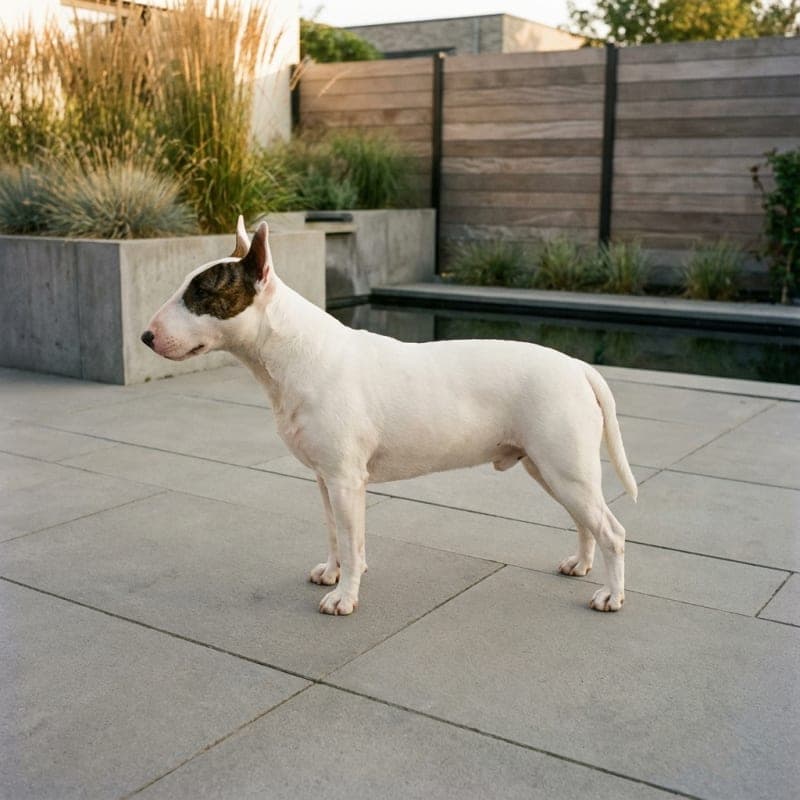
Miniature Bull Terrier
FCI Group
3• FCI 359
Size
Small
Origin Country
GB
Height
N/A
Weight
N/A
Lifespan
10-15 years
Temperament
Overview
The Miniature Bull Terrier, also known as the Miniature Bull Terrier, is a unique dog breed with a distinctive appearance and lively temperament. Originating from the United Kingdom, it was bred in the 19th century by James Hinks as a smaller version of the standard bull terrier. Since then, it has gained international recognition as an excellent companion and family dog. The Miniature Bull Terrier is characterized by its unique egg-shaped head and muscular, compact body structure, which gives it the appearance of a dog full of strength and determination, despite its compact size.
Classified in group 3 FCI (Terriers, section 3 - bull type terriers), it has a rich history dating back to the times when it was used for dog fighting and rat hunting. Today, despite its warrior ancestry, it presents a balanced temperament and a friendly attitude towards people, especially children, making it an excellent family dog.
Owners of Miniature Bull Terriers emphasize their high intelligence and constant desire to play, which makes them ideal companions for active families and people who enjoy spending time outdoors. The temperament of this breed can be described as energetic, brave, and full of life. The Miniature Bull Terrier never bores its owners and always finds a way to entertain or engage them in activity.
One of the most recognizable features of this breed is its distinctive head - long, strong, and deep, with a descending profile line resembling the shape of an egg. The narrow, triangular eyes give the Miniature Bull Terrier an intense, determined look. The coat can be diverse, but dogs are most often found to be completely white or white with colored patches. The coat is short, shiny, and hard, which significantly facilitates daily grooming.
The Miniature Bull Terrier does not require excessive grooming - regular brushing is enough to maintain a healthy appearance of its coat. Despite its natural stubbornness, it responds well to training based on positive reinforcement and play. Owners should provide it with an adequate amount of physical activity, as it is an energetic dog that needs regular walks, playtime, and mental challenges.
In terms of health, the Miniature Bull Terrier may be prone to certain conditions, including skin issues (allergies, dermatoses), heart diseases, eye defects, and urinary system problems. Therefore, regular veterinary visits, a properly balanced diet, and systematic physical activity are extremely important. The Miniature Bull Terrier can become a wonderful life companion, provided that its owners understand its needs and specific character.
In summary, the Miniature Bull Terrier is a breed that combines strength, intelligence, courage, and a friendly character. It is a dog that requires commitment from its owners, but in return, it offers unconditional love, loyalty, and endless energy. A well-raised and properly socialized Miniature Bull Terrier becomes an ideal companion for single individuals, active couples, and families with children.
The miniature bull terrier is a dog with a unique and distinctive appearance, characterized by its specific physical traits. The most recognizable feature of this breed is its egg-shaped head - long, strong, and deep, with a flat skull between the ears. The profile line creates a gentle, elegant arch that slopes down from the top of the skull to the nose, without a distinct stop (the transition between the forehead and the muzzle). This unique head structure gives the miniature bull terrier an unmistakable, recognizable look.
The eyes are small, dark, narrow, and triangular, set at an angle, which gives the dog an intense, determined, and intelligent expression. The ears are small, thin, closely set on the skull, and should be held upright in a vertical position. The nose should be black, with well-developed nostrils.
The body of the miniature bull terrier is strongly built, muscular, and harmonious, making the dog appear strong and compact despite its small size. The neck is long, strong, muscular, and slightly arched, without loose skin. The torso has a well-rounded shape with a visible arch of the ribs, indicating good chest capacity. The chest is deep and wide, ensuring adequate respiratory efficiency and endurance during exertion.
The back is short, strong, and straight, and the underline gently rises from the deep breastbone to the belly, creating an elegant outline. The tail is short, set low, and carried horizontally. At the base, it is thick, gradually tapering towards the end.
The limbs of the miniature bull terrier are straight, strong, muscular, and perfectly parallel, allowing for confident, free, and efficient movement. The front limbs are straight and strong, with well-developed shoulder blades. The hind limbs are muscular, with well-angled knee and hock joints, providing good propulsion during running.
The miniature bull terrier has a short, close-lying, shiny, and hard coat, which may develop a soft undercoat in winter. The coat color can vary. The most commonly seen dogs are completely white or white with colored patches on the head. Other color variations are also acceptable: brindle, black, red, fawn, or tricolor. In the case of colored dogs, the base color should dominate. Spots on a white background (blue or liver) are undesirable.
The height of the miniature bull terrier should not exceed 35.5 cm at the withers - this criterion distinguishes it from the standard bull terrier, which has no height restriction. The weight is not strictly defined, but the dog should appear massive and harmonious in its build, maintaining body proportions appropriate to its gender - males should look masculine, and females feminine.
In summary, the miniature bull terrier is a dog that not only impresses with its strength, musculature, and compact build but also attracts attention with its unusual egg-shaped head and intense gaze. Its appearance makes it stand out among other terrier breeds, and its balanced structure makes it an excellent companion for active individuals and families.
The miniature bull terrier is a dog with a strong, determined character and a vivid temperament. It is full of energy, courage, self-confidence, and an incessant desire to play, making it an ideal companion for active families and individuals who enjoy spending time outdoors. Its balanced disposition makes the miniature bull terrier friendly towards people, including children, which makes it an excellent family dog. Although it can be stubborn and independent, its natural curiosity about the world and eagerness to learn enable it to quickly absorb new commands and skills, provided that training is conducted consistently and using positive methods.
The miniature bull terrier is also a very social dog that is strongly attached to its family. It loves spending time with its owners, participating in all household activities, and being the center of attention. Its loyalty and attachment to family members are incredibly strong, making it a great watchdog - it will always defend its territory and loved ones if it senses a threat.
This breed, despite its fighting and wild origins (dog fighting, rat hunting), can be disciplined, obedient, and balanced, as long as it is properly trained and socialized from a young age. The FCI standard emphasizes that the miniature bull terrier should be brave, full of vigor, but at the same time obedient and friendly towards people.
Early and systematic socialization is extremely important to teach the miniature bull terrier how to properly react to various situations, people, and other animals. A well-socialized dog will be more confident, calm, and less prone to fears or unwanted defensive reactions. The miniature bull terrier may exhibit territorial behaviors towards strange dogs, so early acclimatization to contact with other animals is crucial.
Dogs of this breed can also be quite territorial and alert, so it is worthwhile to teach them how to behave in the presence of unfamiliar people and animals. Proper training based on positive reinforcement will help shape desired behaviors and eliminate the risk of aggression or excessive distrust. Owners should be consistent, patient, and firm in their approach to help the dog understand what is expected of it.
The miniature bull terrier is also a very intelligent and sharp dog that learns quickly, but at the same time can be stubborn and independent in thinking. It requires a strong but fair leader who will establish clear rules and be consistent in enforcing them. Without proper guidance and boundaries, the miniature bull terrier can become difficult to manage.
In summary, the miniature bull terrier is a dog with a strong character that needs appropriate training, socialization, and regular physical and mental activity to become a balanced, obedient, and well-mannered companion. With its intelligence, courage, and willingness to learn, the miniature bull terrier can be a wonderful companion for active individuals, experienced dog owners, and families with children who understand its specific needs.
The Miniature Bull Terrier, like any dog breed, can be prone to various health issues, both genetic and acquired. Knowing the potential health problems will allow owners to better care for their pet and respond to early signs of illness. One of the most common health issues in this breed is skin disorders, which can occur as a result of food, environmental, or contact allergies. The Miniature Bull Terrier may suffer from atopic dermatitis, dermatoses, and sensitivity to flea bites. Owners should pay attention to any changes in their dog's skin, such as itching, redness, hair loss, rashes, or excessive scratching. Regular baths using gentle, hypoallergenic shampoos and the use of appropriate grooming products can help maintain healthy skin and coat.
Another significant health issue may be heart diseases, including aortic valve stenosis and dilated cardiomyopathy. The Miniature Bull Terrier may also be prone to congenital heart defects. Therefore, regular veterinary visits, including periodic cardiological examinations (ECG, echocardiogram), are crucial to monitor heart health and detect potential problems at an early stage. A well-balanced diet rich in nutrients that support heart function (omega-3 fatty acids, taurine, L-carnitine) is key to maintaining cardiovascular health.
The Miniature Bull Terrier is also susceptible to eye problems, such as primary lens luxation (PLL), cataracts, entropion (inward rolling of the eyelid), and corneal issues. Owners should watch for any symptoms such as excessive tearing, redness of the eyes, squinting, corneal cloudiness, or changes in vision. If any concerning symptoms are noticed, it is essential to consult a veterinary ophthalmologist immediately.
Other health issues that may affect Miniature Bull Terriers include kidney diseases, such as kidney dysplasia and polar kidney dystrophy, which can lead to chronic kidney failure. Regular blood and urine tests allow for early detection of urinary system problems.
In addition to these conditions, the Miniature Bull Terrier may also suffer from dental and oral problems, including periodontal disease, tartar buildup, and cavities. Regular tooth brushing (preferably daily), using appropriate dental treats, and professional dental cleaning by a veterinarian will help maintain healthy teeth and gums and prevent serious bacterial infections.
The Miniature Bull Terrier may also be prone to congenital deafness, especially in white individuals or those with a large amount of white in their coat. Hearing tests (BAER test) in puppies allow for early detection of this condition.
In summary, the health of the Miniature Bull Terrier requires regular care, attention, and prevention from owners. With proper grooming, a balanced diet rich in nutrients, regular physical activity, and systematic veterinary visits (including specialized examinations), the quality of life of this energetic, brave, and devoted dog can be significantly improved, and many health problems can be prevented.
The care of a miniature bull terrier is relatively simple and low-maintenance, making this breed attractive to people who do not have much time for complicated grooming procedures or experience in professional grooming. The coat of a miniature bull terrier is short, close-fitting, shiny, and hard, which means it does not require frequent washing or trimming. However, regular brushing is recommended to remove dead hair, dirt, and to stimulate the skin to produce natural oils that give the coat a healthy shine.
It is best to use natural bristle brushes, rubber grooming gloves, or brushes with short, soft bristles, which allow for gentle cleaning of the coat without irritating the skin. Brushing 2-3 times a week is sufficient to keep the coat in excellent condition. During shedding periods (spring, autumn), it is advisable to increase the brushing frequency to daily to more effectively remove dead hair.
A miniature bull terrier may also require regular but not too frequent baths - usually once every 2-3 months or as needed when the dog gets dirty. Too frequent bathing can lead to dry skin and disrupt the natural pH balance, which can exacerbate skin problems. For dogs with sensitive skin or a tendency to allergies, it is recommended to use hypoallergenic shampoos that are gentle and specifically designed for dogs with sensitive skin. After bathing, it is important to thoroughly dry the dog with a towel or a hairdryer set on low heat.
In addition to coat care, owners of miniature bull terriers should also regularly take care of cleaning their pet's ears and eyes. Ears should be checked weekly and gently cleaned as needed with special preparations available in pet stores or damp cotton pads. Dirt, wax, and moisture can accumulate in the ears, which can lead to bacterial or fungal infections. Cotton swabs should not be inserted deeply into the ear canal.
The eyes of a miniature bull terrier also require regular checking. If discharge appears in the corners of the eyes, it should be gently removed with a damp, clean cotton pad. If the discharge is abundant, purulent, or the dog shows signs of irritation (redness, tearing, squinting), a consultation with a veterinarian is necessary.
Taking care of a miniature bull terrier's teeth is a key element of grooming and the overall health of the dog. Regular tooth brushing (ideally daily or at least 3-4 times a week) with a toothbrush and toothpaste designed for dogs will help prevent the buildup of plaque, tartar, and periodontal disease. Additionally, it is worth using dental treats, chew toys, and special bones that mechanically clean the teeth. Regular visits to the veterinarian for oral check-ups and possible professional teeth cleaning (scaling) under anesthesia are also extremely important.
The nails of a miniature bull terrier should be regularly trimmed - usually once every 3-4 weeks, depending on their growth rate and wear during walks. Overly long nails can cause discomfort while walking, joint problems, and the risk of ingrown nails. It is best to use special clippers or nail grinders for dogs. If the owner does not feel confident performing this procedure, it is advisable to seek help from a veterinarian or a professional groomer.
In summary, caring for a miniature bull terrier is not complicated, but it requires regularity, attention, and consistency from the owners. With proper care of the coat, skin, ears, eyes, teeth, and nails, one can ensure the dog has a healthy, well-groomed appearance and comfort, which will contribute to its overall well-being, health, and a long, happy life.
The miniature bull terrier is a dog full of energy, vitality, and enthusiasm, which requires regular, intense physical activity and mental stimulation to maintain health, good condition, and balanced behavior. Daily walks, outdoor play, and various forms of activity are crucial to meet its physical and mental needs. Owners should provide their miniature bull terrier with a minimum of 60-90 minutes of activity daily, divided into several sessions - in the morning, during the day, and in the evening.
Long, energetic walks, running in the park, playing fetch, tug-of-war, or racing with other dogs are excellent ways to spend time with your pet and meet its needs. The miniature bull terrier loves activities that engage both its body and mind. Therefore, it is worth incorporating elements of obedience training, searching for hidden objects, or learning new tricks during daily walks.
The miniature bull terrier does well in various forms of physical activity and dog sports, such as agility, flyball, frisbee, rally obedience, or running with the owner. This dog is very intelligent, physically agile, and eager to participate in games and exercises, making it an ideal companion for active individuals, athletes, and outdoor enthusiasts. Due to its endurance, strength, and determination, the miniature bull terrier can accompany its owner during jogging, biking, or trekking, provided it is properly trained, gradually accustomed to such activities, and its physical condition allows it.
However, it is important to remember that the miniature bull terrier can be stubborn, independent, and overly confident, so it is essential to use positive training methods based on rewarding desired behaviors during physical activities. Joint play and activities should be enjoyable for the dog and a source of joy, which will help build a strong emotional bond between the dog and the owner and strengthen its obedience.
If there is a lack of adequate exercise and mental stimulation, the miniature bull terrier may become overly excited, bored, frustrated, or destructive, which can lead to behavioral problems such as destroying items in the house, excessive barking, digging holes in the garden, or attempts to escape. Therefore, it is crucial for owners to regularly plan time for shared activities with their pet and provide various forms of play and challenges.
The miniature bull terrier also loves playing with other dogs, so it is worth regularly organizing meetings with well-socialized, friendly dogs at the dog park or during walks. Contact with other animals will help it develop social skills, learn appropriate behaviors, and release excess energy in a positive way.
In summary, the miniature bull terrier is a dog that needs regular, intense, and varied physical activity and mental stimulation. With the right amount of exercise, play, training, and challenges, you can ensure its health, happiness, balanced behavior, and excellent physical and mental condition. The miniature bull terrier is an excellent choice for active individuals and families who are ready to dedicate time and energy to daily shared activities with this wonderful, energetic, and devoted dog.
The miniature bull terrier is a very intelligent, sharp, and eager to learn dog, but also stubborn, independent, and self-confident, which can pose a challenge during training, especially for inexperienced owners. To achieve the best results and raise an obedient, balanced dog, owners should use positive training methods based on reinforcing desired behaviors through rewards (treats, praise, play), rather than punishment or dominance.
Training a miniature bull terrier should begin as early as possible, starting from 8-10 weeks of age, to create a solid foundation for future behavior and teach the puppy the basic rules of living in a home and society. Introducing basic obedience commands such as Sit, Lie Down, Stay, Come, Leave It should be woven into daily interactions with the dog. Early training will also help build a positive relationship based on trust, respect, and cooperation between the owner and the dog.
The miniature bull terrier is very social and enjoys participating in family activities, making it an ideal learning partner. Training should be conducted in a playful manner and through short, intense sessions so that the dog does not lose interest and motivation to learn. Regular training sessions lasting 10 to 15 minutes, conducted several times a day, are much more effective than long, exhausting training sessions that can lead to boredom and frustration.
It is also extremely important to ensure systematic and comprehensive socialization of the miniature bull terrier from an early age. Introducing it to various situations, environments, sounds, smells, encounters with other dogs, animals, and people of different appearances and behaviors will help it become a confident, calm, and balanced dog that does not react with fear, aggression, or excessive distrust to new stimuli. A well-socialized miniature bull terrier will be friendlier, more open, and easier to handle.
Owners should also ensure that their miniature bull terrier has the opportunity to explore the world in a safe manner, which will contribute to its overall emotional, cognitive, and social development. Walks in different places (park, forest, city), visits to new locations, car trips, and participation in group activities for dogs are excellent ways to enrich the life experiences of a miniature bull terrier.
A well-trained miniature bull terrier is a dog that will be obedient, balanced, self-confident, and friendly. Regular training based on positive reinforcement will help maintain good manners, eliminate undesirable behaviors, and build a strong, positive bond between the dog and the owner. Owners should be patient, consistent, firm, yet fair and positive in their approach to training to achieve the desired goal.
The miniature bull terrier responds very well to positive motivation - treats, praise, toys, and play with the owner. Methods based on fear, punishment, or dominance can lead to deteriorating relationships, loss of trust, fears, and increased stubbornness and resistance. Therefore, it is crucial to use modern, science-based training methods that respect the dog's nature and build its self-confidence.
It is also worth considering enrolling the miniature bull terrier in puppy or adult dog group classes led by experienced behavioral trainers. Such classes will assist in socialization, learning obedience, and developing the dog's social skills in a controlled environment.
In summary, training a miniature bull terrier requires commitment, patience, consistency, and a positive approach, but with the right approach, regular practice, and systematic socialization, one can raise a balanced, obedient, self-confident, and friendly dog that will be a wonderful companion for its family.
Proper, balanced nutrition for the miniature bull terrier is key to maintaining its health, good physical condition, vitality, and longevity. Owners should ensure a diet that provides all the essential nutrients in the right proportions - proteins, fats, carbohydrates, vitamins, minerals, and fiber. The diet of a miniature bull terrier should include high-quality commercial foods (dry or wet) or a home-cooked diet that contains the appropriate amount of animal protein (meat, fish), healthy fats (omega-3 and omega-6), vegetables, fruits, and necessary vitamins and minerals.
It is important to pay attention to the ingredient list of the food and avoid low-quality products that contain artificial additives, preservatives, colorings, flavorings, fillers (wheat, corn, soy in large amounts), or meat of unspecified origin. The best foods for miniature bull terriers are those that contain at least 25-30% animal protein and 12-18% fats, and are also enriched with glucosamine and chondroitin to support joint health.
The miniature bull terrier has a tendency to obesity, especially in the absence of adequate physical activity, so it is extremely important to control the amount of food given and avoid overfeeding. It is recommended to divide the daily portion of food into two or three smaller meals, which will help maintain the dog's proper weight, prevent digestive problems, and reduce the risk of gastric torsion. Regular weighing of the miniature bull terrier (once a month) will allow owners to monitor its weight and adjust the diet as needed.
Owners of miniature bull terriers should also ensure their dog has constant access to fresh, clean drinking water throughout the day. Proper hydration is crucial for the body's proper functioning, temperature regulation, digestion, and kidney health, especially after intense physical activity or on hot days.
It is also worth considering introducing natural, healthy treats into the miniature bull terrier's diet, such as carrots, apples (without seeds), bananas, strawberries, broccoli, or cooked meat, which can serve as a healthy snack between meals or a reward during training. However, it should be remembered that treats should not make up more than 10% of the dog's daily caloric intake.
For miniature bull terriers with sensitive digestive systems, allergies, or food intolerances, it may be worth considering switching to an elimination diet or hypoallergenic food developed in collaboration with a veterinarian or dog nutrition specialist. The most common food allergens in dogs are beef, chicken, wheat, corn, soy, and dairy.
Owners should also avoid giving the miniature bull terrier harmful products, such as chocolate, onions, garlic, grapes, raisins, avocados, poultry bones (risk of choking), sweets, products containing xylitol, and fatty leftovers from the table.
In summary, the diet of a miniature bull terrier should be balanced, high-quality, tailored to its individual needs, age, level of physical activity, and health status. Proper nutrition, weight control, adequate water intake, and avoidance of harmful products will help maintain the health, good physical condition, vitality, and long, happy life of this energetic, devoted, and wonderful dog.
Characteristic Traits
Pros
- Intelligent and eager to play
- an excellent companion for active families
- easy to care for thanks to short hair
- brave and full of life
- loyal and attached to the family.
Cons
- Can be stubborn and independent
- Requires regular and intense physical activity
- Prone to health issues (skin
- heart
- eyes
- kidneys)
- Needs consistent training and socialization.
Behavioral Ratings
Breed History
The history of the miniature bull terrier dates back to the early 19th century and is closely linked to the development of its larger counterpart - the standard bull terrier. The origins of this breed are associated with Great Britain, where in the 1850s James Hinks, a breeder from Birmingham, began work on standardizing the bull terrier type. Hinks crossed old English bulldogs, white English terriers (now extinct), and dalmatians to create a dog with a unique appearance, characterized by an oval head, elegant body lines, and a white coat.
The bull terrier in its current form was first publicly presented at a dog show in Birmingham in 1862, where it gained immense recognition among dog lovers and breeders. The breed quickly became popular as a fighting dog, companion, and guard dog. In 1887, the Bull Terrier Club was established to promote, protect, and develop this exceptional breed.
The most interesting aspect of the bull terrier standard is the fact that it does not specify exact weight or height requirements, only emphasizing that the dog should give the impression of maximum substance relative to its size, while maintaining quality, proportions, and balance appropriate to its gender. This flexibility allowed for the natural development of two variants of the breed - standard and miniature.
The smaller variant of the bull terrier had been known since the early 19th century, but before World War I, it lost popularity and was removed from the Kennel Club breed register in 1918. For the next two decades, the breed teetered on the brink of extinction, and its future seemed uncertain.
In 1938, a turning point in the history of the miniature bull terrier occurred. A group of breed enthusiasts, led by Colonel Richard Glyn, began efforts to revive and protect this unique breed. The Miniature Bull Terrier Club was established, contributing to the breed's re-recognition by the Kennel Club and the establishment of an official standard.
The standard for the miniature bull terrier is identical to the standard for the standard bull terrier with one key exception - a height restriction was introduced. The miniature bull terrier must not exceed 35.5 cm (14 inches) at the withers, which is the main difference between the two varieties of the breed. Despite its smaller size, the miniature bull terrier retains all the characteristic features of its larger cousin - an oval head, muscular body, energetic temperament, and bold character.
Over the following decades of the 20th century, the miniature bull terrier gradually regained popularity worldwide. The breed was officially recognized by the International Canine Federation (FCI) and classified in Group 3 (Terriers), Section 3 (Bull-type Terriers). The modern FCI standard No. 359 was published on July 5, 2011.
Today, the miniature bull terrier enjoys stable popularity as a companion and family dog. Despite its fighting origins (dog fighting, rat hunting), the modern miniature bull terrier is a dog with a balanced temperament, friendly towards people, loyal, and devoted to its family. The breed has retained its characteristic courage, determination, and confidence, while also developing the ability to be a wonderful life companion for active individuals and families.
In summary, the miniature bull terrier is a breed with a rich, fascinating history dating back to the 19th century, which has survived difficult periods of obscurity and, thanks to the dedication of enthusiasts, has returned as one of the most recognizable and valued terrier breeds in the world. Its unique oval head, muscular appearance, and energetic, bold character make it a symbol of strength, determination, loyalty, and attachment.