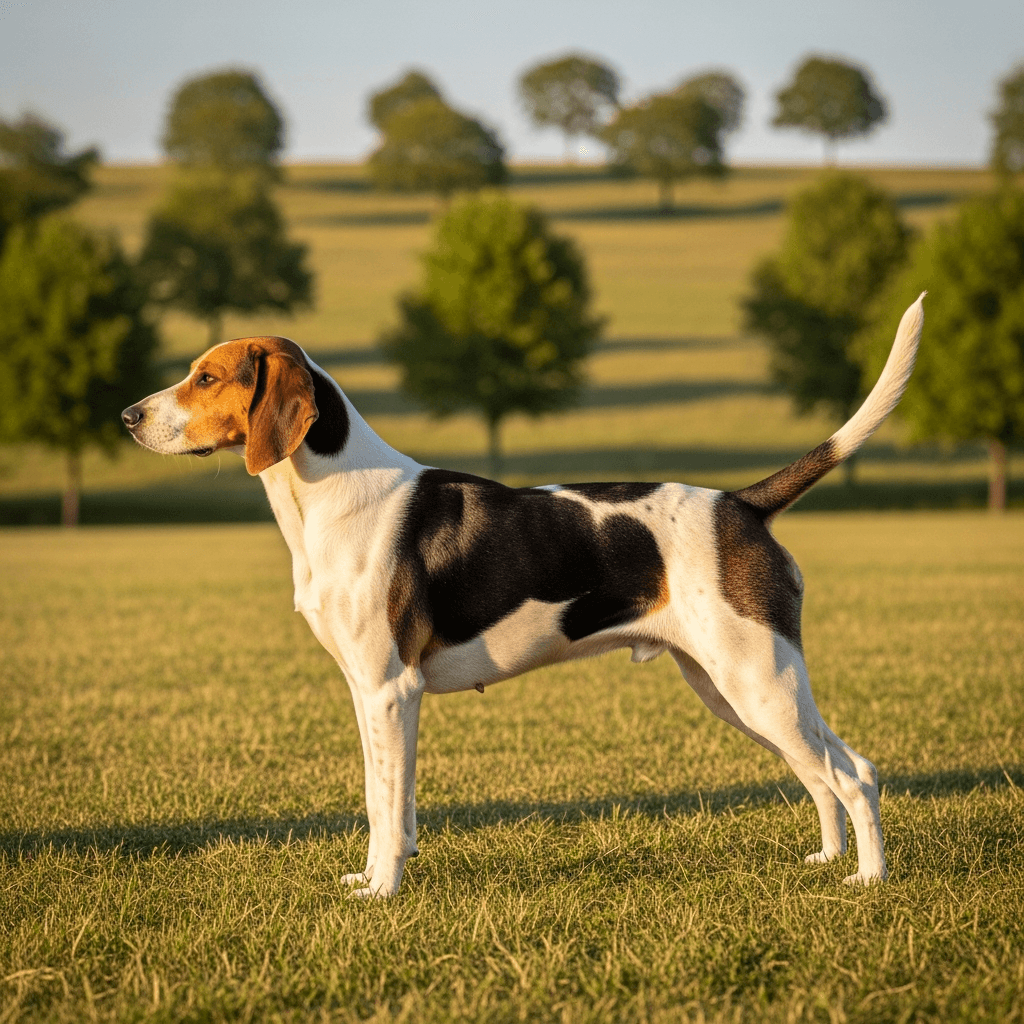
Small Anglo-French Hound
FCI Group
6• FCI 325
Size
Medium
Origin Country
FR
Height
48-56 cm
Weight
25-30 kg
Lifespan
11-13 years
Temperament
Overview
The Small Anglo-French Hound, also known as Anglo-Français de Petite Vénerie, is a unique breed of hound with a rich history dating back to the 16th century. Bred in France, this dog was an invaluable support for hunters during small game hunts, such as hares, foxes, and wild rabbits. Through carefully conducted crossbreeding of various hound breeds, including the Beagle, Poitevin, and other French hounds, a breed with unique hunting traits and character emerged.
Its balanced silhouette and solid build without signs of massiveness make it both agile and durable. These traits are extremely valuable during long hours of hunting in challenging terrain. The Small Anglo-French Hound is distinguished by its elongated head with proportional dimensions, slightly convex skull, and well-pigmented nose with widely opened nostrils, which provides it with excellent scenting ability. Medium-width, flexible ears set below the eye line and large, brown eyes with a gentle yet lively expression create a friendly appearance that captivates many hound lovers.
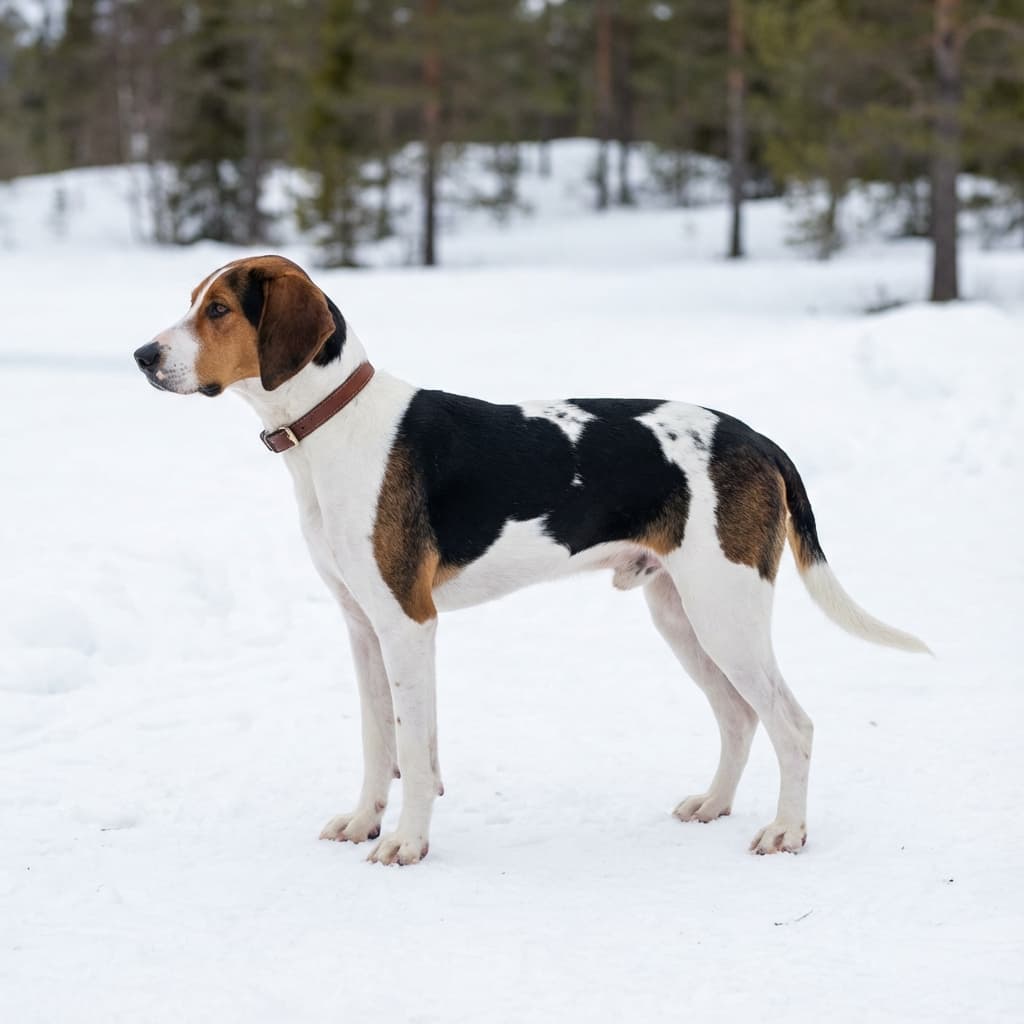
This hunting dog possesses a strong body with a straight, firm back and a deep chest reaching at least to the level of the elbows, which ensures its endurance during long chases. Its tail, of medium length and relatively thin, covered with dense hair, is always held high while working. The coat of the Small Anglo-French Hound is short, dense, and smooth to the touch, with coloration that can be tricolor (white, black, and brown) or bicolor (white and orange), making it even more visually appealing and easily recognizable in a pack.
The height of this dog at the withers ranges from 48 to 56 cm, placing it in the medium-sized dog category, and its weight fluctuates between 25 and 30 kg. The lifespan is around 11-13 years, which is typical for dogs of this size and activity level. It is worth noting that the Small Anglo-French Hound is a breed that requires a significant amount of exercise and regular physical activity. Its sociability and strong need for contact with other dogs make it an ideal companion for active individuals living in the countryside or those with large, fenced areas.
Although the Small Anglo-French Hound is an intelligent and eager-to-please dog, its curiosity about the world, high hunting instinct, and tendency to follow scents can sometimes pose a challenge during obedience training. These dogs need a consistent, patient owner who understands their nature and can provide the right amount of stimulation, both physical and mental. Therefore, prospective owners should be prepared to dedicate time and attention to training and properly guiding their pet, preferably in an environment where the dog can fulfill its natural instincts. With this, the Small Anglo-French Hound will be a wonderful companion that will surely bring much joy and satisfaction.
The Anglo-French Hound is a medium-sized dog with a clearly balanced and solid build without signs of massiveness. In profile, its silhouette resembles that of a well-established French hound. The height at the withers ranges from 48 to 56 cm, and the weight oscillates between 25 and 30 kg, making it suitable for long chases after game.
The head is elongated, not too wide, with a slightly pronounced occipital bump. The skull is slightly rounded but not domed, and the transition from the forehead to the muzzle (stop) is barely marked. The well-pigmented nose with widely open nostrils provides excellent scenting ability. The muzzle is moderately elongated, somewhat pointed in appearance, with a straight or slightly arched bridge of the nose. The upper lip covers the lower lip.
The eyes are large, brown, with a gentle but lively expression that gives it a friendly appearance. The ears are set low, below the eye line, gently attached, flexible, slightly twisted, of medium width, and reach at least two fingers beyond the end of the nose.
The neck is slender, without a dewlap. The back is firm and straight, the loins are quite short and muscular, and the croup is slightly sloping and fairly long. The chest is deep, reaching at least to the level of the elbow, and well-developed. The ribs are long and moderately rounded.
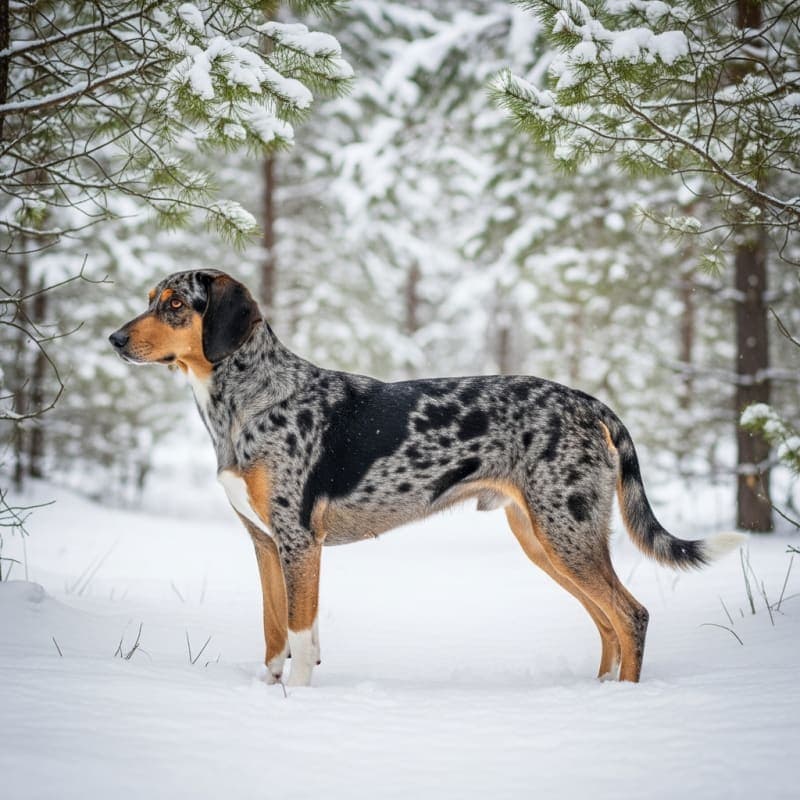
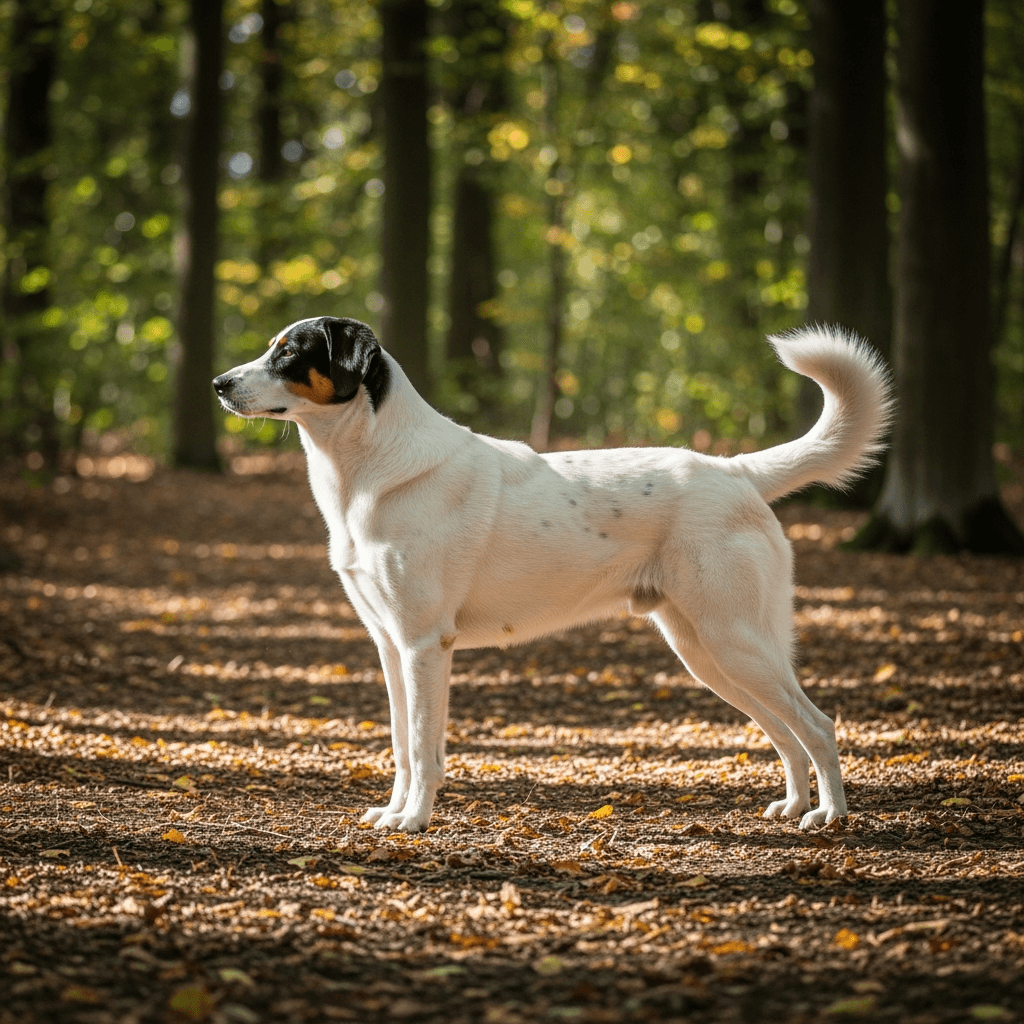
The coat is short, dense, and smooth to the touch, making the dog resistant to various weather conditions during hunting. The coloration can be tricolor (white with black patches and light brown markings) or bicolor (white with orange patches), making this breed very visually appealing and easily recognizable in a pack of hounds.
The tail is of medium length, thin, well-set on the loins, and covered with dense hair. The front limbs are straight, muscular with well-developed shoulders, and the hind limbs are strong with clearly defined joint angles.
The Anglo-French small hound is a dog with a distinct hunting instinct, which gives it a natural tendency to chase small animals and follow a trail. This trait, while desirable in a hunting context, requires the owner to pay special attention during walks in areas where wild animals may be present.
It is a particularly sociable dog, which feels great in a group of other dogs. This breed was developed to work in a pack of hounds, so loneliness can be especially difficult for it and lead to behavioral problems such as excessive barking or destruction of belongings. It should not be kept as the only dog in the house – the ideal situation is to have at least one companion for play and rest.
The Anglo-French small hound is intelligent and eager to cooperate, but its hunter's mind makes it easily distracted, especially when it catches an interesting scent. This can lead to challenges during obedience training and requires patience and consistency from the owner.
The breed is characterized by a high energy level, which means it needs a significant amount of exercise and physical activity every day. A dog that is not sufficiently tired may exhibit destructive behaviors or excessive excitability.
The Anglo-French small hound can be very vocal – its melodic, loud voice, so valued during hunting, can be bothersome to neighbors, especially if the dog lives in a city or densely populated area. It is usually friendly and gentle towards people, especially those it knows, but may be somewhat wary of strangers. Proper upbringing and socialization from a young age are crucial to ensure the dog behaves appropriately in various social and environmental situations.
The Anglo-French Hound has an average lifespan of 11 to 13 years, which is typical for dogs of this size and activity level. This breed is generally healthy, resilient, and sturdy; however, like any other breed, it can be prone to certain conditions characteristic of hounds and medium-sized breeds.
Common health issues in this breed include:
- Epilepsy – occurs in some individuals and requires monitoring and possibly pharmacological treatment
- Hip dysplasia – a developmental joint disease that can lead to lameness and pain, especially in active dogs
- Kidney diseases – some breeding lines may be prone to kidney problems
- Ear infections – long, drooping ears require regular checking and cleaning to prevent moisture buildup and the development of infections
It is important to provide the dog with adequate exercise and avoid obesity, as being overweight can lead to many health problems, including joint strain, heart disease, and diabetes. The Anglo-French Hound is quite resilient to extreme temperatures due to its thick coat, but after winter walks, its coat should be thoroughly dried, especially the belly and paws, to prevent colds.
Regular veterinary visits (at least once a year), vaccinations according to schedule, deworming, a nutritious diet, and attention to physical condition are key elements in ensuring the health and longevity of this dog. Breeding control is also important – choosing puppies from trusted breeders who screen their dogs for genetic diseases.
The care of the small Anglo-French hound is relatively simple and not very time-consuming, making it a suitable choice for those looking for a dog with low maintenance requirements. Its short coat requires minimal attention, but regular grooming helps maintain a healthy appearance and skin condition.
It is recommended to brush the dog once a week using a special grooming glove for hounds or a soft brush with natural bristles. This helps remove dead hair, improves blood circulation in the skin, and provides shine to the coat. During shedding periods (spring and autumn), it is advisable to increase the brushing frequency to 2-3 times a week.
Baths should only be given when necessary, usually 3-4 times a year or when the dog is particularly muddy after hunting or walking. Bathing too frequently can strip the natural oils from the coat that protect the skin from environmental factors. Use a gentle shampoo designed for dogs.
An important aspect of grooming is regularly checking the ears, preferably once a week. The long, drooping ears of the small Anglo-French hound are prone to moisture buildup, wax accumulation, and the development of fungal or bacterial infections. Ears should be gently cleaned with a special ear cleaning solution for dogs and checked for any unpleasant odor or redness.
Additional grooming elements include:
- Nail trimming – if they do not wear down naturally during walks, they should be regularly shortened
- Oral hygiene – brushing teeth 2-3 times a week prevents tartar buildup
- Paw inspection – checking paw pads after walks, especially after hunting in rough terrain
The Small Anglo-French Hound is a dog with a very high need for physical activity. This breed was specifically developed for long chases during hunts, which means it requires a significant amount of movement and regular, intense exercise every day.
Every day, the dog should have at least 1.5-2 hours of intense activity, which can include:
- Long walks (5-10 km daily) with opportunities to run and explore the terrain
- Running alongside a bicycle in a safe area
- Playing fetch with other dogs
- Tracking training or scent exercises that stimulate its natural instincts
- Hunting or simulated hunting for working dogs
The Small Anglo-French Hound is ideally suited for rural living, where it can run freely and explore its surroundings in a safe, fenced area. Living in an apartment in the city is not recommended for this breed unless the owner can provide several hours of outdoor activity each day.
Otherwise, the dog may become overly stimulated and exhibit destructive behaviors, such as destroying furniture, excessive barking, or attempts to escape. Lack of adequate activity can also lead to health problems, including obesity and joint diseases.
It is important to provide companionship with other dogs during play and walks, as this is a breed that thrives in groups and needs social interactions with other canines.
A good fence in the yard at least 1.5 meters high is essential to prevent escapes. The Small Anglo-French Hound has a strong tendency to follow scents and explore its surroundings, and its hunting instinct may drive it to cover significant distances in search of game.
For active individuals who love long hikes, jogging, or living close to nature, the Small Anglo-French Hound will be the perfect, tireless companion for adventures.
Training a small Anglo-French hound can be challenging, but it is achievable with the right approach, patience, and consistency. This dog is intelligent and eager to cooperate, but its strong hunting instinct and tendency to follow scents can cause it to easily lose interest during standard obedience training.
The most effective training methods are based on positive reinforcement – rewarding desired behaviors with treats, praise, and play. Physical punishment or aggressive methods are ineffective and can harm the relationship with the dog and its motivation to learn.
Key training principles for the small Anglo-French hound:
- Short, intense sessions – training sessions should last 10-15 minutes but be repeated several times a day. This helps keep the dog focused and engaged.
- Diversity of exercises – monotony quickly bores these dogs, so it's worth changing training locations and types of exercises.
- Early socialization – from puppyhood, the dog should be exposed to various situations, people, animals, and environments to grow into a confident and balanced adult dog.
- Consistency – everyone in the household must use the same commands and rules to avoid confusing the dog.
- Scent training – utilizing the natural tracking instinct positively through nosework or mantrailing exercises can be very satisfying for the dog.
Basic commands that a small Anglo-French hound should master:
- Sit – a basic command that facilitates control.
- Stay – crucial for safety, especially when the dog wants to follow a scent.
- Come – the most challenging command for a hound, requiring intensive training with high rewards.
- No – a command that interrupts undesirable behaviors.
Due to their high hunting instinct, recall training is particularly important and requires a lot of time. It is advisable to start in a safe, fenced area with minimal distracting stimuli, gradually increasing the difficulty.
These dogs can be stubborn, which requires patience and a positive attitude from the owner. For those without experience in training hounds, it is recommended to seek the help of a professional trainer or enroll in group classes.
The diet of a small Anglo-French hound should be carefully tailored to its very active lifestyle and high energy levels. Owners should provide the dog with high-quality food that contains all the essential nutrients, an appropriate amount of protein, and healthy fats.
Nutrients in the diet:
- Protein (25-30%) – essential for building and repairing muscles, particularly important for active working dogs. The best sources are poultry, beef, and fish.
- Fats (12-18%) – a source of energy and omega-3 and omega-6 fatty acids, which support healthy skin and a shiny coat.
- Carbohydrates – a source of long-lasting energy, preferably from rice, oats, or sweet potatoes.
- Vitamins and minerals – support immunity, bone health, and joint health.
It is recommended to feed two meals a day – in the morning and evening – to maintain a steady energy level in the dog and prevent bloating that can occur after one large meal. The amount of food should be adjusted to the dog's weight, age, and activity level – usually 300-400 grams of dry food per day for an adult dog of this breed.
It is important to avoid giving human food and treats that can lead to obesity, digestive problems, and picky eating habits. Foods that are particularly dangerous for dogs include chocolate, onions, garlic, grapes, and avocados.
A dog that is not properly fed and does not get enough exercise can quickly gain weight. Obesity leads to serious health problems, including:
- Hip dysplasia and orthopedic issues
- Heart and circulatory diseases
- Diabetes
- Shortened lifespan
Water should always be available, especially after intense physical activity, to ensure proper hydration. Hunting dogs can lose significant amounts of fluids while working, so it's a good idea to carry a portable bowl and water during long walks or hunts.
For particularly active or working dogs, it is worth considering sport dog food with higher protein and calorie content. If in doubt about the diet, it is best to consult a veterinarian who can help choose the appropriate nutrition.
Characteristic Traits
Pros
- Friendly and sociable towards people
- High intelligence and eagerness to learn
- Resilient and agile in hunts
- Ideal for active individuals who love nature
- Excellent sense of smell and tracking instinct.
Cons
- Requires a lot of movement and activity
- Can be challenging in obedience training
- Does not tolerate solitude
- Very vocal – often barks
- Strong hunting instinct – tendency to escape.
Behavioral Ratings
Breed History
The history of the small Anglo-French hound dates back to the 16th century, when in France, a country with rich hunting traditions, it began to be systematically bred to assist hunters during hunts for small game such as hares, foxes, wild rabbits, and deer. This breed was created as a result of thoughtful and careful crossbreeding of various hound breeds, which allowed for the development of a dog with optimal traits for hunting in diverse terrain.
The main breeds used in the creation of the small Anglo-French hound were:
- Beagle – a British hound known for its excellent sense of smell and endurance
- Poitevin – a French hound with outstanding hunting abilities
- Harrier – a medium-sized hound
- Petit Gascon-Saintongeois – a French hound used for hunting hares
- Petit Bleu de Gascogne – another French hound breed
These crossbreeds aimed to create a dog of medium size that would be agile enough to move through dense underbrush, yet sturdy enough to chase game for many hours. The goal was also to achieve a dog with an excellent sense of smell, a melodic voice, and the ability to work in a pack.
In 1983, the breed was officially registered in the standard of the Fédération Cynologique Internationale (FCI) under number 325, confirming its significance among hounds and sanctioning its breed characteristics. The standard was published on January 26, 1983, and belongs to Group 6 (Hounds and related breeds), Section 1.2 (Medium-sized hounds).
This breed was and still is particularly popular among French hunters, who appreciate it for its outstanding hunting skills, endurance, excellent sense of smell, and ability to work in a group. The small Anglo-French hound is mainly used for collective hunts, where a pack of dogs works together, tracking and chasing game while hunters follow on horseback or on foot.
Although the small Anglo-French hound is not commonly bred as a companion dog outside the hunting environment, it is valued for its working skills, character, and exceptional beauty. In some European countries, the breed is gaining popularity among those seeking an active dog for canine sports such as tracking or mantrailing.
Today, the breed remains relatively rare outside of France, where it is still actively used in hunting. Breeders are committed to preserving the traditional working traits of the breed and its health through selective breeding and genetic control.