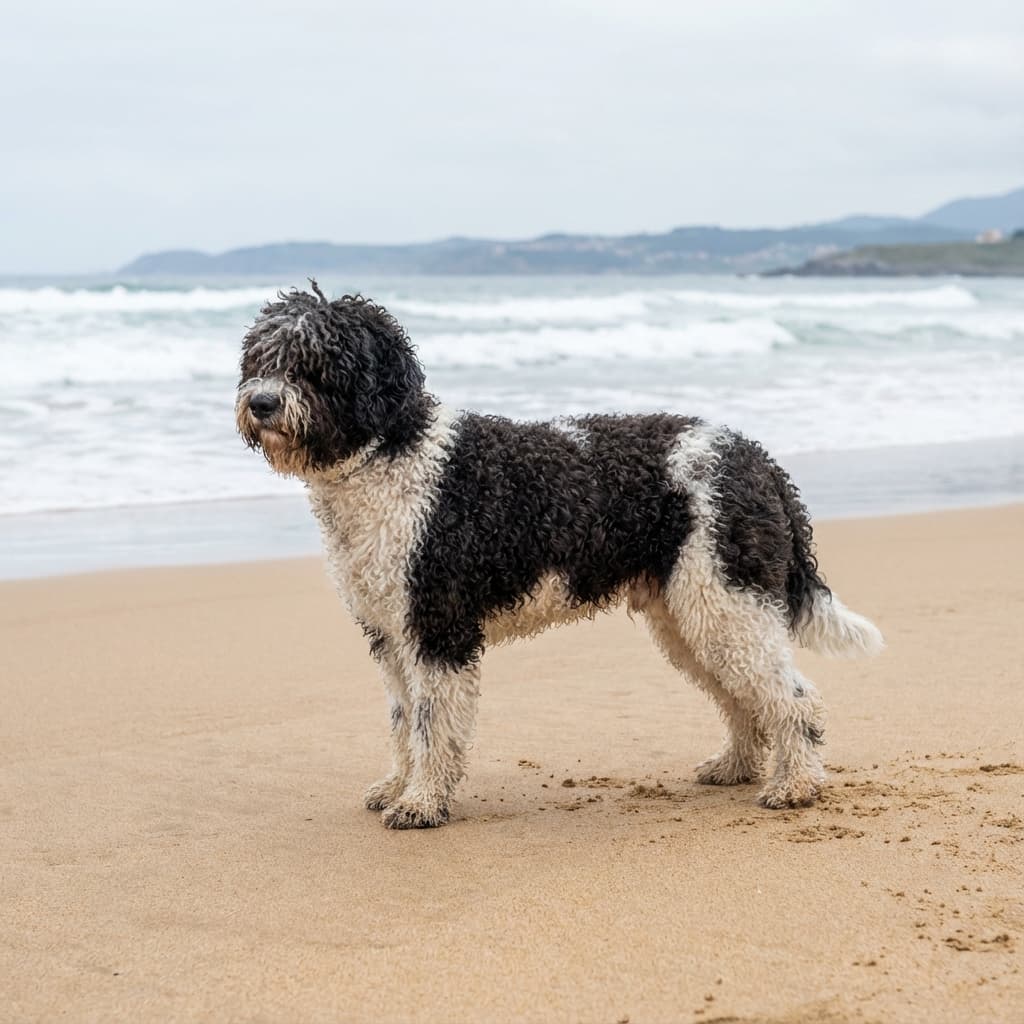
Spanish water dog
FCI Group
8• FCI 336
Size
Medium
Origin Country
ES
Height
40-50 cm
Weight
14-22 kg
Lifespan
10-14 years
Temperament
Overview
The Spanish Water Dog, known as Perro de agua español, is an incredibly versatile breed that has been present on the Iberian Peninsula for centuries. Its history dates back to ancient times when these dogs served herding functions, assisted fishermen, and participated in waterfowl hunting. Today, the Spanish Water Dog is recognized worldwide as an excellent companion, working dog, and athlete.
A characteristic feature of this breed is its athletic build with harmonious proportions and medium size, making it an agile and durable worker. The most recognizable element of its appearance is the curly, woolly coat, which can form distinctive cords. This coat is a natural adaptation to the humid marshy conditions and variable climate of the regions where the breed originated. It comes in various colors: black, brown, white, and their combinations, giving each individual a unique appearance.
The temperament of the Spanish Water Dog is as impressive as its appearance. These dogs are devoted, obedient, and cheerful, making them excellent companions for families with children. Their high intelligence allows them to learn quickly and adapt to various living conditions. This breed exhibits exceptional work ability, making it a great working dog – whether in herding sheep, water work, or rescue operations.
Owners of the Spanish Water Dog must be aware that this is a very active breed that requires regular exercise and mental stimulation. These dogs are ideal for people leading an active lifestyle who can dedicate time to long walks, water play, obedience training, or dog sports such as agility. Without the appropriate amount of exercise and activities, they may become bored and exhibit undesirable behaviors.
Physically, the Spanish Water Dog presents as a well-proportioned dog with a muscular body, strong limbs, and a clearly defined chest. The head is proportional, with a flat skull, expressive eyes in shades of hazel or chestnut, and triangular, hanging ears. Overall, it creates an image of a dog full of energy, strength, and elegance.
In summary, the Spanish Water Dog is a breed that combines beauty, intelligence, and versatility. It is an excellent choice for those seeking a reliable working dog as well as for families desiring a loyal, active companion. Its cheerful disposition, devotion, and readiness to work make it an ideal partner for anyone who can meet its physical and mental needs.
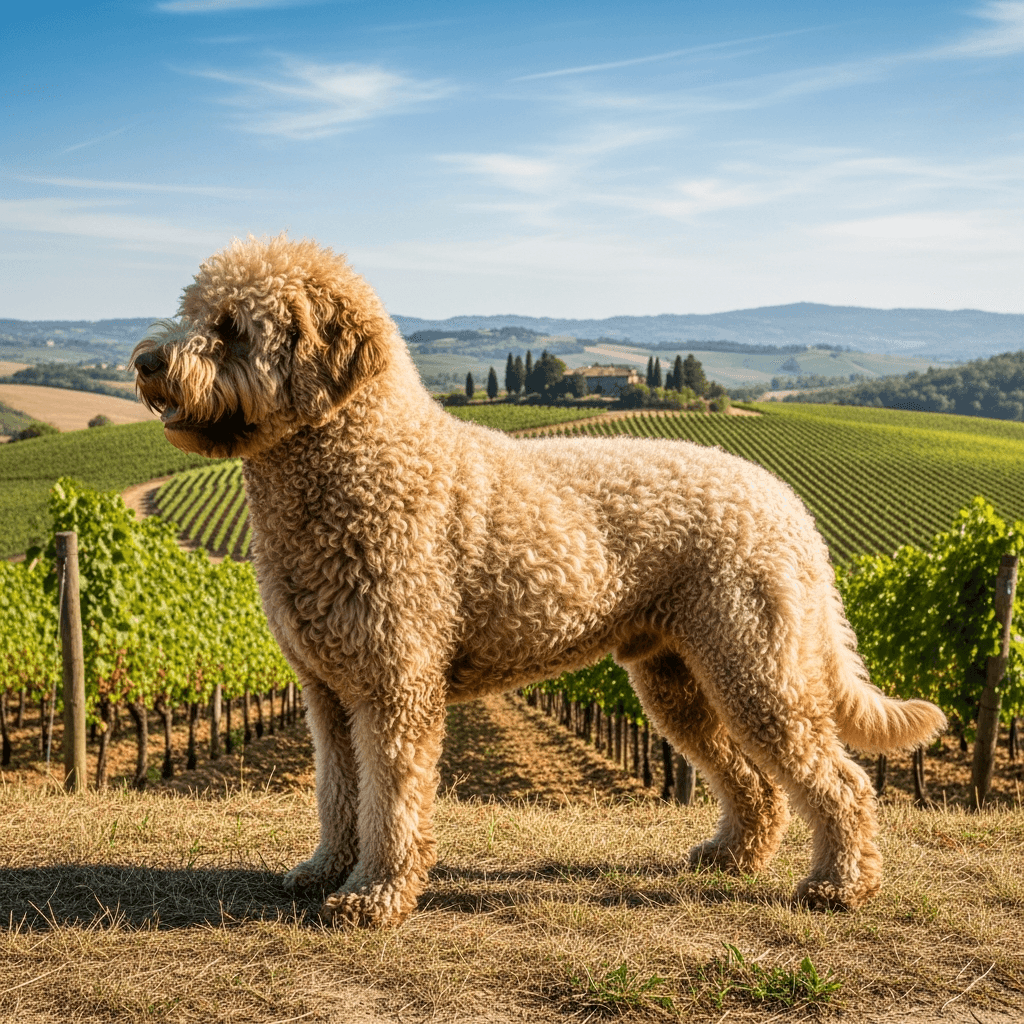
The Spanish Water Dog is a breed with a distinctive and unique appearance, characterized primarily by its curly, woolly coat and harmonious, proportional silhouette. These dogs have a strongly built, athletic body that is well-muscled and adapted for work in challenging terrain and water conditions.
Dimensions and proportions: The height at the withers ranges from 40 to 50 cm, with males typically being slightly larger than females. The weight fluctuates between 14 to 22 kg, classifying the breed as medium-sized dogs. The body length to height at the withers maintains a ratio of 9:8, giving the silhouette a slightly elongated, harmonious shape. The depth of the chest is about half the height at the withers, indicating a well-developed lung capacity – crucial for working dogs.
Head and muzzle: The head of the Spanish Water Dog is well-carried, strong, with a flat skull and a slightly defined stop (the transition between the forehead and muzzle). The muzzle is proportional, with a straight profile. The eyes are set slightly obliquely, expressive, lively, in shades ranging from hazel to chestnut, giving the dog an intelligent and alert expression. The ears are triangular, medium-sized, and hanging, which adds charm and gentleness to the dog.
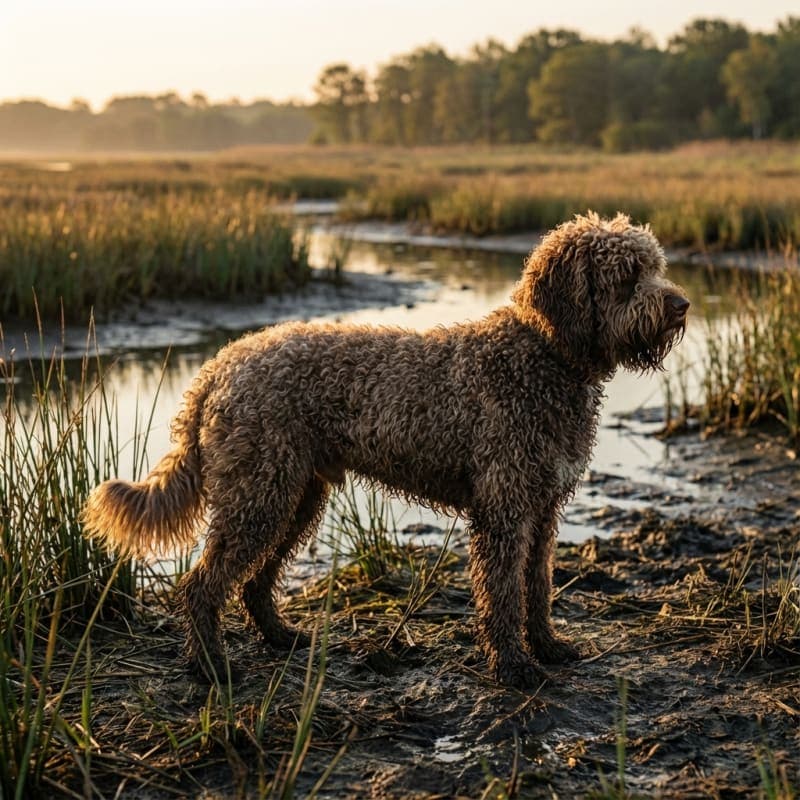
Coat – the most important breed characteristic: The coat of the Spanish Water Dog is curly, dense, woolly, and uniform throughout the body. It tends to form characteristic cords, which is a natural adaptation for working in moist, marshy areas. The coat serves both a protective function against changing weather conditions and an aesthetic one.
Coat colors: The breed comes in various colors:
- Solid: black, brown (in various shades), white
- Two-colored: black and white, brown and white
Body structure: The torso is strong, with a well-defined chest and a slightly tucked-up belly. The limbs are straight, strong, well-muscled, with sturdy paws adapted for swimming. The tail is set at medium height, usually docked (in countries where this is permitted), although it is increasingly being left at its natural length.
Overall, the Spanish Water Dog presents itself as a rustic yet elegant dog with excellent physical condition, attracting attention with its unique appearance, characteristic coat, and harmonious body structure, perfectly adapted for work in the field and water.
The Spanish Water Dog is characterized by a balanced, friendly, and joyful temperament, making it an excellent companion for both families with children and active, single owners. This breed is known for its devotion to its guardians and cheerful disposition, which makes interactions with these dogs extremely satisfying.
Intelligence and ease of learning: The Spanish Water Dog is an exceptionally intelligent breed, quickly absorbing new commands and eagerly cooperating with humans. Thanks to these traits, these dogs are very easy to train and can be taught a variety of tasks – from basic obedience commands to advanced tricks and working roles (herding sheep, water rescue, agility).
Need for activity and stimulation: This is a breed with high exercise needs. These dogs love play, movement, and being outdoors. Regular walks, runs, swimming, and games with a ball or frisbee are essential to satisfy their natural energy. Without proper physical and mental stimulation, the Spanish Water Dog can become bored, which may lead to destructive behaviors such as chewing furniture, excessive barking, or digging holes in the garden.
Guarding instinct: Although the Spanish Water Dog is naturally friendly towards people, it also displays alertness and a tendency to alert owners to suspicious situations. It is not an aggressive breed, but it can be a good watchdog that will notify of the presence of strangers. However, proper early training is important to ensure that their barking does not become excessive or bothersome.
Relationships with other animals and children: The Spanish Water Dog usually gets along well with other dogs, provided there is proper early socialization. It can live harmoniously with other pets, although its herding instinct may lead it to try to control the movement of other animals. This breed is great in families with children, as long as the children are taught to respect the dog and handle it appropriately. Their energy and liveliness can sometimes be overwhelming for very small children, so adult supervision is recommended.
Character at work: The Spanish Water Dog is a working dog in every sense of the word. It is eager to cooperate, persistent, resilient to tough conditions, and capable of making decisions independently in the field. Its versatility means it can be used in many areas – from traditional sheep herding to assisting fishermen, and modern dog sports and therapy.
In summary, the Spanish Water Dog is a breed that combines intelligence, devotion, friendliness, and versatility. Its cheerful disposition, willingness to work, and need for activity make it an ideal companion for those leading an active lifestyle and ready to provide it with the right amount of exercise, play, and mental challenges.
The Spanish Water Dog is a breed known for its generally good health and longevity, with an average lifespan of 10 to 14 years. This breed is characterized by a high resistance to diseases and is considered one of the more resilient and healthy dog breeds. However, like any breed, there are certain health issues that owners should pay particular attention to.
Common health issues:
- Ear infections: Due to the structure of their ears (hanging, triangular) and frequent contact with water, the Spanish Water Dog is prone to bacterial and fungal ear infections. Regular checking, cleaning, and drying of the ears after bathing or swimming is crucial to preventing these problems.
- Hip dysplasia (HD): Although it is not a common issue in this breed, some individuals may be affected by hip dysplasia. X-ray examinations of the joints are recommended for dogs intended for breeding.
- Eye diseases: Some lines may be prone to cataracts or progressive retinal atrophy (PRA). Regular ophthalmic examinations can help detect these conditions at an early stage.
- Skin allergies: Like many breeds, the Spanish Water Dog may be sensitive to environmental or food allergens, which can manifest as itching, skin redness, or hair loss.
- Obesity: This breed tends to maintain a healthy weight, but with insufficient exercise or overfeeding, it can develop overweight, leading to joint, heart problems, and a shortened lifespan.
Prevention and healthcare: To keep the Spanish Water Dog in excellent condition, owners should provide:
- Regular physical activity (at least one hour a day)
- A balanced diet appropriate for age, weight, and activity level
- Regular veterinary check-ups (at least once a year)
- Vaccinations according to the vaccination schedule
- Regular deworming and protection against external parasites
- Ear cleaning after every contact with water
- Monitoring the condition of the coat and skin
In summary, the Spanish Water Dog is a breed with good health condition and high resilience, which with proper care, a balanced diet, and regular exercise can enjoy a long, healthy, and active life. It is crucial to ensure prevention, especially regarding ear hygiene and maintaining a proper body weight.
Grooming a Spanish Water Dog may seem complicated at first glance due to their characteristic, curly coat, but in reality, it is not particularly difficult as long as a few basic rules are followed. The coat of this breed is woolly, curly, and self-cleaning, which means it does not require intensive brushing; in fact, brushing is discouraged as it can ruin the natural structure of the curls and cords.
Coat care:
- No brushing: One of the biggest advantages of this breed is that it does not require daily brushing. The coat naturally forms curls and cords, and brushing could untangle and damage their structure. Instead, occasional separation of overly large clumps of fur with fingers is sufficient.
- Clipping: The coat should be clipped to an even length at least twice a year, preferably in spring and autumn. Clipping helps maintain the coat in good condition, prevents excessive matting, and facilitates cleanliness control. For show dogs, clipping should maintain the breed's natural appearance and allow for evaluation of the hair structure. The coat should not be clipped too short – the optimal length is 3-12 cm.
- Bathing: A Spanish Water Dog should be bathed only when necessary, when it is really dirty. Too frequent bathing can strip the coat of its natural protective oils. After bathing, gently squeeze the water out of the coat with a towel (do not rub!) and allow it to dry naturally – avoiding a hairdryer helps maintain the natural structure of the curls.
- Does not shed: A significant advantage of the breed is that it does not shed in large amounts, making it more suitable for people with mild allergies (though it is not a fully hypoallergenic breed).
Other grooming aspects:
- Ears: Regularly check and clean the ears, especially after bathing or swimming. Droopy ears and a moist environment promote bacterial and fungal infections. Use special ear cleaning solutions and dry them thoroughly.
- Eyes: Monitor the condition of the eyes and remove any discharge with clean, damp gauze.
- Nails: Regularly trim the nails (if they do not wear down naturally during walks) to prevent walking issues and discomfort for the dog.
- Teeth: Regularly brush the dog's teeth (a few times a week) to prevent tartar buildup and periodontal disease.
In summary, grooming a Spanish Water Dog is relatively easy and low-maintenance, as long as owners respect the natural character of the coat and do not attempt to brush it excessively. Key aspects include regular clipping, ear hygiene after contact with water, and basic nail and dental care. This way, the dog will maintain its health, comfort, and beautiful, natural appearance.
The Spanish Water Dog is a breed with high physical activity and mental stimulation needs. It is a working dog that loves to be active and requires regular, intense exercise to maintain physical health, mental balance, and overall life satisfaction. This breed is not suitable for people with a sedentary lifestyle or those who cannot dedicate time to daily activities with their dog.
Minimum exercise requirements: It is recommended to provide at least an hour of intense activity daily, although most individuals will happily accept two or more hours of exercise. Lack of adequate movement can lead to frustration, boredom, excessive barking, destructive behaviors, and health problems such as obesity or joint diseases.
Types of activities ideal for the Spanish Water Dog:
- Swimming: As the name suggests, the Spanish Water Dog loves water and is extremely skilled in it. Swimming is an excellent full-body exercise that engages muscles, improves fitness, and does not strain the joints. Regular trips to lakes, rivers, or the sea will be a true delight for these dogs.
- Running and walking: Long, energetic walks and jogging are the foundation of activity for this breed. These dogs have tremendous endurance and gladly accompany their owners on long trails.
- Agility and dog sports: Thanks to their intelligence, agility, and willingness to cooperate, the Spanish Water Dog excels in agility, flyball, frisbee, and other dog sports. This is a great way to provide both physical exertion and mental stimulation.
- Herding work: For dogs from working lines, herding sheep is an ideal form of activity that engages their natural instincts and abilities.
- Games and play: Fetching, playing with a ball, searching for hidden objects (nosework), or educational games are excellent ways to provide the dog with both movement and mental challenges.
- Obedience exercises and tricks: Regular training sessions, learning new commands and tricks are an important element of mental activity, which is just as essential as physical movement.
Mental stimulation: In addition to physical activity, the Spanish Water Dog also requires regular mental stimulation. The intelligence of this breed means they get bored quickly if there are no challenges for them. Scent games, dog puzzles, learning new commands, and varied activities help keep the dog in good mental shape.
Consequences of lack of activity: A Spanish Water Dog deprived of adequate movement and activities may exhibit a range of undesirable behaviors:
- Excessive barking
- Destructive behaviors (chewing furniture, destroying objects)
- Digging holes in the garden
- Hyperactivity and difficulty concentrating
- Weight and physical condition problems
- Depression and apathy
In summary, the Spanish Water Dog is a breed for active individuals who can dedicate time to daily, intense exercise and various activities. These dogs excel in water sports, agility, herding work, and as companions for runners and hiking enthusiasts. The key to a happy and healthy Spanish Water Dog is providing it with the right amount of movement, mental stimulation, and activities that engage its natural instincts and abilities.
The Spanish Water Dog is a breed known for its exceptional intelligence and ease of training, making it one of the most versatile dogs in terms of learning ability. With high cognitive skills, excellent memory, and a willingness to cooperate with humans, these dogs learn quickly and joyfully take on various tasks – from basic obedience commands to advanced tricks and specialized work.
Positive training methods: The key to effective training of the Spanish Water Dog is the use of positive training methods based on positive reinforcement, such as rewarding good behavior (treats, play, praise), while avoiding punishment and negative reinforcement. This breed is very sensitive to the tone of voice and mood of the owner – it responds excellently to praise, encouragement, and positive energy, while punishment can cause stress, uncertainty, and reluctance to cooperate.
Building bonds: Training is not just about learning commands, but above all about building a strong bond between the dog and the owner. The Spanish Water Dog is a breed that craves closeness to humans and greatly values shared activities. Regular, positive training sessions strengthen this bond and make the dog even more eager to cooperate.
Principles of effective training:
- Short, intense sessions: The best results come from short (10-15 minutes), but regular training sessions that maintain the dog's attention and prevent boredom.
- Diversity: The Spanish Water Dog quickly gets bored with repetition, so it's important to introduce variety – change the training location, practice different commands, introduce new tricks and challenges.
- Consistency: All family members should use the same commands and rules to avoid confusing the dog.
- Patience and consistency: Although this breed learns quickly, each dog has its own pace and needs time to master new skills.
- Immediate rewards: The reward should come immediately after the desired behavior is performed so that the dog can associate it with the specific action.
Types of training for the Spanish Water Dog:
- Basic obedience: Commands such as Sit, Stay, Come, Down, Lie Down are the foundation that every dog should master.
- Advanced training: This breed has the potential to learn very advanced commands and sequences of actions, making it suitable for specialized tasks (water rescue, nosework, tracking).
- Agility and dog sports: The Spanish Water Dog excels in sports that require agility, speed, and cooperation with the handler.
- Herding work: For working-line dogs, herding sheep is a natural occupation that engages their instincts and abilities.
- Therapy and emotional support: Due to their gentle nature and intelligence, some individuals can be trained as therapy dogs.
Socialization: Early socialization is crucial for the proper development of the Spanish Water Dog. Puppies should be gradually introduced to various people, dogs, animals, environments, sounds, and situations to grow into confident, balanced adult dogs. Group classes for puppies are an excellent opportunity to learn proper behavior and interact with other dogs.
Challenges in training: Although the Spanish Water Dog is generally easy to train, it may exhibit some characteristic traits:
- Independence: As a working dog, it may sometimes make its own decisions, so consistency in training is important.
- Energy: Excess energy can sometimes make it difficult to focus – therefore, it's worth providing the dog with a short physical warm-up before training.
- Sensitivity: Too harsh treatment can discourage the dog from cooperating and weaken its confidence.
In summary, the Spanish Water Dog is a breed ideal for those seeking an intelligent, eager-to-learn companion. With the application of positive training methods, consistency, patience, and regular sessions, these dogs can achieve an impressive level of obedience and master a wide range of skills. Regular training and mental stimulation are crucial not only for skill development but also for keeping the dog in good mental condition and preventing behavioral problems.
The diet of the Spanish Water Dog should be well-balanced and tailored to its age, weight, activity level, and individual health needs. As an active and energetic breed, the Spanish Water Dog requires an appropriate amount of nutrients that support its physical condition, joint health, coat quality, and overall vitality.
Basic nutrition principles:
- High-quality food: It is recommended to use high-quality dog food (dry or wet) that contains animal protein as the main ingredient (poultry, beef, fish), healthy fats (omega-3 and omega-6 fatty acids for skin and coat health), and an appropriate amount of vitamins and minerals (calcium, phosphorus for bones and joints, vitamins A, E, D for immunity).
- Avoiding grains and fillers: Some dogs may be sensitive to grains (wheat, corn), so it is worth considering grain-free or limited-grain food rich in vegetables and potatoes.
- Animal protein: As a working dog, the Spanish Water Dog needs an adequate amount of protein (minimum 20-25% in adult dog food, 25-30% for puppies) to support muscle development and regeneration.
Adjusting portions to activity level: The amount of food should be adjusted to the individual activity level of the dog:
- Very active dogs (herding work, dog sports, intense exercise) will require more calories.
- Moderately active dogs (daily walks, occasional swimming) should receive standard portions according to the manufacturer's feeding guidelines.
- Older or less active dogs should receive fewer calories to avoid overweight.
Meal rhythm: Regular meals served at set times (preferably twice a day for adult dogs, 3-4 times for puppies) help maintain a steady digestion rhythm, prevent overeating, and facilitate weight control. Avoid feeding the dog directly before or after intense exercise to minimize the risk of gastric torsion.
Access to fresh water: Fresh, clean water should be available to the dog at all times, especially after intense exercise, swimming, or on hot days. Proper hydration is crucial for kidney health, digestion, and thermoregulation.
Weight monitoring: The Spanish Water Dog tends to maintain a healthy weight, but owners should be vigilant for signs of overweight, such as:
- No visible waist
- Difficulty feeling ribs under the coat
- Decreased activity and desire to play
- Breathing problems after exertion
In case of overweight, reduce food portions, increase physical activity, and consult a veterinarian regarding an appropriate diet.
Supplementation (optional): In some cases, it may be worth considering supplementation:
- Omega-3 fatty acids (fish oil) support skin, coat, and joint health.
- Glucosamine and chondroitin may support joint health, especially in older or very active dogs.
- Probiotics support digestive health.
Before introducing any supplementation, consult a veterinarian.
Prohibited products: Never feed the Spanish Water Dog harmful products for dogs, such as:
- Chocolate, coffee, cocoa (toxic)
- Onion, garlic (damage red blood cells)
- Grapes, raisins (toxic to kidneys)
- Avocado (contains persin, toxic to dogs)
- Chicken and fish bones (can cause choking or intestinal perforation)
Regular veterinary visits: Regular veterinary check-ups (at least once a year) allow for monitoring the dog's health, weight, coat condition, and adjusting the diet to changing needs (puppy → adult dog → senior dog).
In summary, the diet of the Spanish Water Dog should be balanced, high-quality, and tailored to its individual needs. It is crucial to provide an adequate amount of animal protein, healthy fats, vitamins, and minerals, as well as to adjust portions to the dog's activity level. Regular weight monitoring, access to fresh water, and avoiding harmful products are the foundation of a healthy, long life for the Spanish Water Dog.
Characteristic Traits
Pros
- Versatility and high intelligence
- Dedication and loyalty to family
- Excellent abilities to work in water and on land
- Ease of training and quick learning
- Ideal for active families
- Minimal shedding.
Cons
- Requires a lot of movement and physical activity
- Needs regular mental stimulation
- Can be demanding for inactive individuals
- Prone to ear infections
- Requires regular grooming.
Behavioral Ratings
Breed History
The history of the Spanish Water Dog dates back very far and is closely linked to the Iberian Peninsula, where this breed has been present for centuries. Its roots are shared with the French Barbet, an ancient breed of water dogs, traces of which can be found in many European countries. The Spanish Water Dog is one of the oldest representatives of water dogs, and its presence in what is now Spain has been documented since the Middle Ages.
Name and Distribution: The largest population of the Spanish Water Dog was found in Andalusia, a region in southern Spain, where this breed was known as Turco Andaluz (Turkish dog from Andalusia) or simply Perro Turco (Turkish dog). This name likely stems from the mistaken belief that these dogs arrived in Spain with Turkish traders, although it is more probable that they have local, Iberian origins.
Traditional Uses: For centuries, the Spanish Water Dog has served three main functions:
- Herding Dog: In the mountainous and marshy regions of Andalusia, these dogs were indispensable helpers for shepherds, herding sheep, goats, and cattle. Their intelligence, independence, and decision-making ability made them ideal for working in difficult terrain.
- Fishermen's Assistant: Along the coasts of the Mediterranean Sea and the Atlantic Ocean, the Spanish Water Dog assisted fishermen – retrieving nets, catching fish that escaped from the nets, and transporting messages between boats and the shore. Its swimming abilities and resistance to cold water made it an excellent working dog.
- Hunting Dog: This breed was used in hunting waterfowl – retrieving shot ducks, geese, and other birds from the water and hard-to-reach marshy areas.
Adaptation to the Environment: The characteristic curly, woolly coat of the Spanish Water Dog is a natural adaptation to the variable climatic conditions of the marshy regions of Andalusia, where there were periods of intense moisture and drought. This coat protected the dogs from moisture, cold, and intense sunlight, allowing them to work in diverse weather conditions.
Recognition and Standardization of the Breed: Despite its long history, the Spanish Water Dog remained a local breed for centuries, known mainly in Andalusia. It was not until the 20th century that efforts began for the official recognition and standardization of the breed. In 1985, the first breed club was established in Spain, and in 1999, the Spanish Water Dog was officially recognized by the International Canine Federation (FCI) and classified in group 8 (retrievers, flushing spaniels, water dogs), section 3 (water dogs).
Contemporary Role: Today, the Spanish Water Dog has gained popularity worldwide, not only as a working dog but also as a family companion, sports dog, and therapy dog. This breed is still used in traditional roles (herding sheep, water rescue), but also in modern fields:
- Dog Sports: Agility, flyball, frisbee, nosework
- Therapy and Emotional Support: Therapy dogs in hospitals, nursing homes, schools
- Rescue: Water rescue, searching for missing persons
- Education: Educational programs for children and the elderly in Spain
Preserving Heritage: In Spain, efforts are being made to preserve traditional working lines of the Spanish Water Dog and protect its unique history and functions. This breed is not only a symbol of the cultural heritage of Andalusia but also a living testament to the versatility and adaptability of dogs to diverse conditions and tasks.
In summary, the Spanish Water Dog is a breed with a rich, centuries-old history, which has played key roles as a herding dog, fishermen's assistant, and hunter of waterfowl since medieval times. Thanks to its versatility, intelligence, and resilience, this breed has survived for centuries and found new roles in the modern world while retaining its traditional traits and skills.